
Investing In Our Chiefs Makes Stronger Communities
The graduation of 5,892 chiefs and assistant chiefs from the National Police College, Embakasi ‘A’ Campus quietly marks one of the most practical investments in how Kenya is governed.
It was an intensive induction, paralegal and security management programme, designed to strengthen the very first line of government authority Kenyans interact with every day.
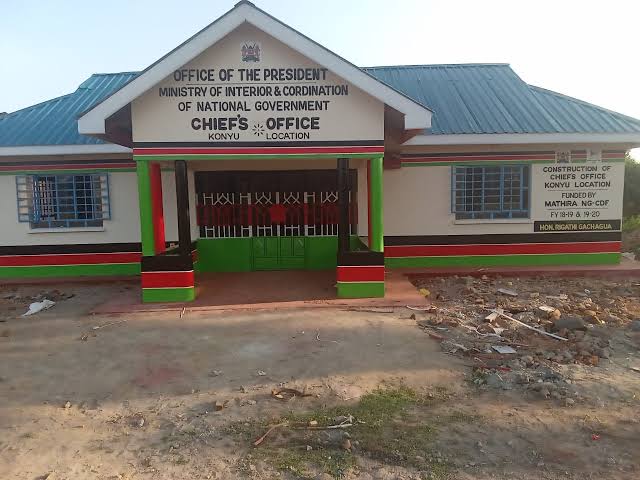
For many households, a functioning chief’s office is the difference between calm and chaos, between help and helplessness.
When there’s a land dispute in Turkana, a birth document needed in Kwale, or a security scare in Marsabit, the first knock is rarely on a ministry door – it’s on the chief’s.
That is what makes chiefs and assistant chiefs unique.
As National Government Administration Officers (NGAOs), they are not abstract symbols of the state. They are the state – present, visible, and accountable – at the village, sub-location and location level.
Yet for years, the demands on these officers have grown while structured training has lagged behind.
Some had gone over 25 years without formal refresher training, even as legal expectations, security threats and public scrutiny became more complex.
The three-week paramilitary training programme – rolled out in three cohorts throughout 2025 – was a direct response to that gap.
It focused on paralegal skills, security coordination, disciplined leadership and lawful decision-making, all aimed at improving how authority is exercised on the ground.
This was not about turning chiefs into soldiers. It was about professionalising public administration – ensuring that power is applied with clarity, restraint and a firm understanding of the law.
Because when the frontline of government is underprepared, it is not policy that suffers first.
It is families, livelihoods and community trust.
The programme is rooted in the Jukwaa la Usalama framework, which emphasizes community-based approaches to safety and stability.
Through the training, chiefs strengthened their ability to resolve disputes, understand legal procedures, spot early warning signs of insecurity and coordinate more effectively with the National Government Administration Police Unit (NGAPU) and other agencies.
In higher-risk regions, including parts of North Eastern Kenya and the Rift Valley, additional paramilitary training and appropriate arming reflect a practical acknowledgement of the realities officers face – balancing community protection with their own safety.
At its core, this initiative recognizes a simple truth: security is not built only in command centres – it is built where people live.
Strengthen the institutions closest to citizens, and order follows. Neglect them, and instability finds room to grow.
Quiet as it may seem, this graduation is a reminder that when government chooses to invest in its frontline, the impact travels far beyond the parade ground – into homes, markets, farms and streets across the country.