
Nithi Bridge: It Was Never Just Driver Error
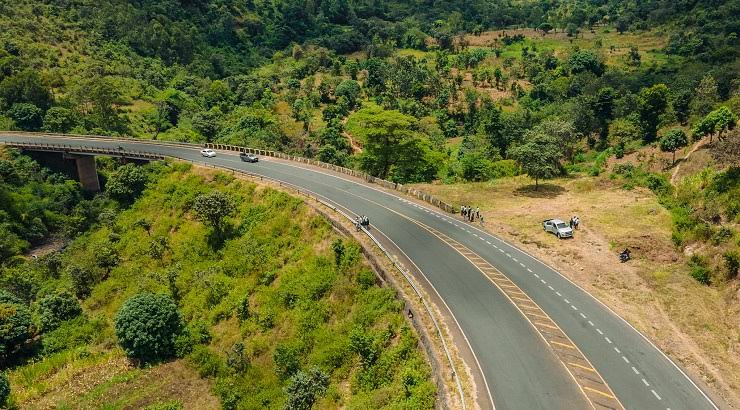
If you’ve ever driven down toward Nithi Bridge, you know that feeling. It’s a long descent, with an hairpin bend you don’t quite see until you’re already in it.
Quiet tension builds up inside the car, and the prayerful types always murmur a prayer. A lot of people subconsciously start thinking of their kids and unfinished plans.
Almost always, there’s an almost audible sigh of relief when a vehicle clears the infamous black spot.
For years, every time there’s an accident there, explanations are usually similar:
“The driver lost control.”
“We got a brake failure.”
“Was the driver over speeding?”
Unfortunately, the driver usually carries all of the blame. But maybe it was never just about the driver.
That stretch of the Makutano – Embu – Meru (A9) road has restrictive geometry – steep gradient, tight curves, limited sight distance.
Experts and engineers call it challenging terrain. The locals, meanwhile – just think it’s jinxed and dangerous.
Honestly, though – there’s a part we don’t talk about enough – the road design.
In countries where safety is taken seriously, blackspots are not managed with warning signs alone. Or, prayers.
If a part of the road gets multiple accidents, it is redesigned, re-aligned and re-engineered.
Now there’s a plan to realign and reconstruct Nithi Bridge – not just patch it – but correct the geometry itself.
Through KeNHA, the project is moving under an EPC (Engineering, Procurement and Construction) model – meaning the contractor handles the full design and build package.
In plain language: the objective is to fix the root cause, not just the symptoms. Because good infrastructure is supposed to protect you even when a driver makes small mistakes.
If there’s a safer gradient, it means fewer runaway vehicles after brakes fail. A better sight distance affords the driver earlier reaction time.
In addition, heavier trucks and buses endure lesser strains of the road has a smoother curvature.
It’s basically tapping into basic physics to protect the people using the bridge.
Beyond the human tragedy, there’s an economic angle too. Every serious crash disrupts transport between Nairobi, Embu, Meru and further north.
It affects PSVs, freight movement, insurance costs, emergency services – slows things down and cripples the economy.
Rebuilding Nithi Bridge isn’t about development slogans – it’s about admitting that design has consequences.
Road safety isn’t a luxury feature – it’s basic infrastructure maturity.
If this realignment works – if that stretch becomes predictable instead of feared – then something bigger has shifted.
In a Nutshell ….
The Nithi Bridge realignment reflects what the First World campaign is really about – not slogans, but systems.
It’s the shift from reacting to tragedy to preventing it – from blaming behaviour to correcting design.
When a country fixes a known blackspot properly and permanently, it signals something deeper: a commitment to safety, predictability and long-term thinking.
It’s that kind of structural discipline that’s quietly building a First World Kenya.