
The Economic Logic Behind William Ruto’s Kazakhstan Tour
For many Kenyans, Kazakhstan sounds distant.
The kind of country you only hear about during geography lessons, boxing tournaments or as a set on random Netflix flicks.
So when President William Ruto travelled there this week, the immediate question online was predictable:
Why Kazakhstan?
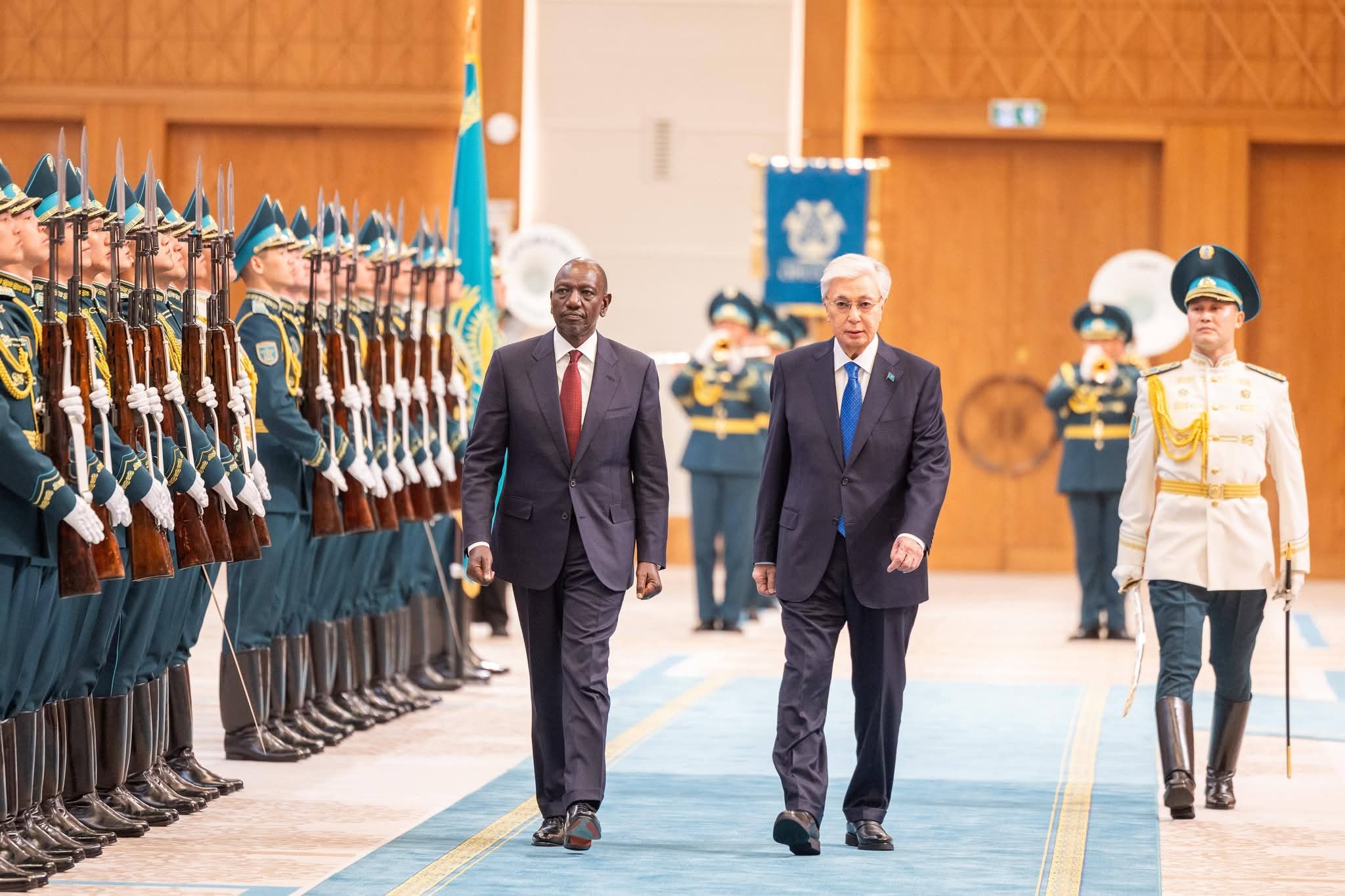
But beneath the politics and social media jokes, the visit was largely about markets, trade routes, investment and positioning Kenya in a part of the world that is becoming increasingly important economically.
And the numbers already explain part of the reason.
According to the Tea Board of Kenya’s 2025 report, Kenya’s tea exports to Kazakhstan grew by nearly 187% in a single year, reaching 24.44 million kilograms.
Kazakhstan is now Kenya’s sixth-largest tea export market, accounting for about 3.7% of total export volumes.
That matters because tea is not just another export.
The sector supports more than 750,000 smallholder farmers and roughly 6.5 million Kenyans directly and indirectly.
At the same time, traditional markets like Iran have become harder to rely on because of geopolitical tensions and sanctions-related risks.
Kenya is therefore under pressure to diversify where it sells its products – and Central Asia is increasingly becoming part of that strategy.
More importantly, Kazakhstan is not just a market on its own.
It also acts as a regional gateway into Central Asia, connecting Kenya to a wider consumer base stretching into countries like Uzbekistan, Kyrgyzstan, and parts of Russia – a combined market of more than 70M people.
That partly explains why the visit produced ten separate bilateral agreements covering sectors ranging from ICT and trade to mining, infrastructure, finance, tourism, and space technology.
One of the key agreements focuses on ICT and e-government cooperation, with Kenya looking to learn from Kazakhstan’s heavily digitised public service system – where over 90% of government services are processed online.
For Kenya, that directly links to ongoing expansion of platforms like eCitizen and broader public service digitisation.
Another agreement centered on transport and infrastructure cooperation, particularly around logistics and transit systems.
Kazakhstan currently plays a strategic role in the “Middle Corridor” trade route linking Asia and Europe – something Kenya appears keen to study as it positions itself as a regional trade and logistics hub in East Africa.
Trade and investment featured heavily throughout the visit.
Kenya’s National Mining Corporation signed cooperation agreements tied to mining, oil, gas, and rare earth exploration.
Investment agencies from both countries have established frameworks aimed at reducing barriers for investors and opening direct business links between private sectors.
Export promotion agencies also signed agreements targeting expanded market access for Kenyan tea, coffee, flowers, leather products and processed foods into Central Asia.
There were also deals around tourism, financial cooperation, diplomatic training and even space technology – particularly in satellite data and earth observation that can support agriculture, climate monitoring and disaster response.
Viewed from a distance, the trip may have looked unusual.
But economically, it reflects something Kenya has been trying to do more aggressively in recent years.
Kenya is looking beyond traditional partners, secure new markets, build new trade corridors, and place itself inside emerging global economic networks before competition becomes tighter.
Because in the current global economy, countries are no longer competing only through politics.
Increasingly, they are competing through access – to markets, logistics routes, investment capital, technology, and influence.