
A Peek into Kenya’s New GBV and Femicide Report
Gender-Based Violence, including the killing of women and girls, has been rising quietly, steadily, and often behind closed doors.
In January 2025, President Ruto appointed a high-level Technical Working Group, chaired by former Deputy Chief Justice Dr. Nancy Baraza, to answer one urgent question:
Why, despite laws and institutions, are women still unsafe?
Their findings, presented in November 2025, are impossible to ignore.
About one in three women has experienced physical violence since the age of 15. More than one in ten has experienced sexual violence.
Between 2022 and 2024 alone, at least 1,639 women were killed, with the numbers rising year after year.
Most of these killings were not random acts.
They were carried out by people known to the victim – partners, relatives, or familiar faces.
Women aged 30 to 44 are most affected, but cases involving teenage girls are increasing. Nairobi, Nakuru and Meru report the highest numbers – though experts warn that under-reporting remains widespread.
How is The System Failing?
First, femicide is legally invisible.
Kenya does not recognise it as a distinct crime. Killings of women are recorded simply as homicide, erasing the gendered patterns that could help prevent future violence.
Second, survivors face broken justice pathways.
Police stations, hospitals, and courts are under-resourced and poorly linked, especially outside major towns. For many survivors, seeking justice becomes another form of trauma.
Third, families and communities often block accountability.
Cases are quietly “settled” through elders or informal arrangements, pressuring survivors to withdraw complaints and allowing perpetrators to walk free.
The digital space hasn’t helped much either.
While social media has amplified awareness, it has also fueled victim-blaming, misinformation, and the spread of harmful content that re-traumatises survivors.
Recommendations of the Report
The Working Group calls for GBV and femicide to be declared a national crisis, triggering urgent coordination and funding.
It urges Parliament to create a specific crime of femicide, making investigation and prosecution clearer and more effective.
Out-of-court settlements in serious GBV cases should be criminalised.
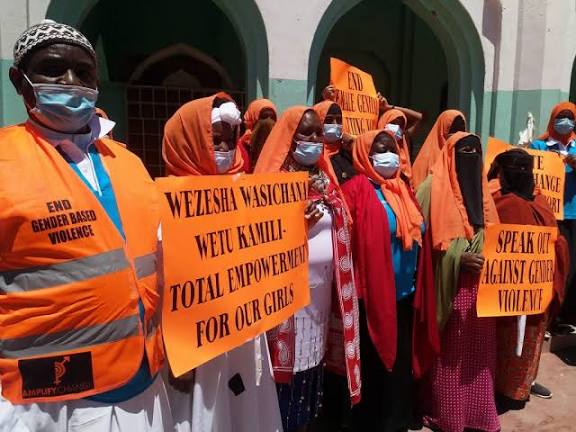
Survivor support must be expanded through one-stop recovery centres, mental health services, and economic empowerment to break cycles of dependence.
The report also proposes fixing accountability gaps by establishing a National GBV and Femicide Database, supported by real-time tracking and standardised reporting across institutions.
Digital platforms, media, and influencers would be guided by a GBV Digital Ethics Code to reduce harm online.
Most critically, it calls for proper funding – including a National GBV and Femicide Fund and ring-fenced county budgets.
In a Nutshell ….
GBV and femicide are not private family matters.
They are violations of constitutional rights, a threat to national development, and a measure of how seriously Kenya values human dignity.
Ending this crisis will require law, leadership and culture change.