
Cabinet Resolutions: AI, Digital Jobs and a Payroll Cleanup
Not every Cabinet decision comes with a groundbreaking ceremony or a new building on the skyline.
Sometimes, the most consequential decisions are the ones that shape how government works, how jobs are created, and how a country positions itself for the future.
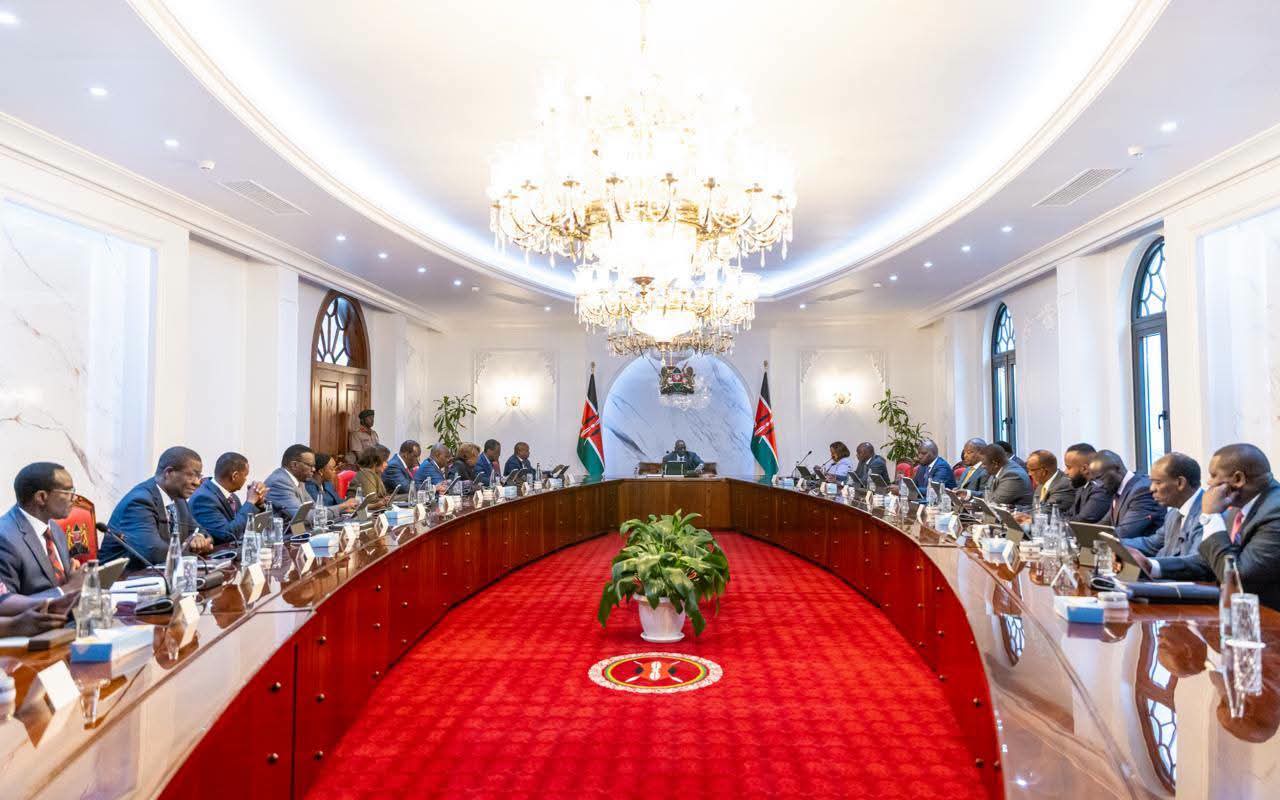
Tuesday’s Cabinet meeting at State House largely focused on those kinds of systems – government efficiency, digital transformation, jobs, and Kenya’s place in an increasingly competitive global economy.
Cleaning Up Government Payrolls
One of the biggest decisions was a government-wide crackdown on payroll fraud after an audit uncovered suspected irregularities worth Ksh6.2 billion across just 12 State Departments.
Cabinet directed investigators to pursue those behind the alleged fraud, recover public funds and prosecute anyone found culpable.
The government also plans to migrate ministries and agencies onto a revamped payroll system aimed at eliminating ghost workers, duplicate payments and payroll manipulation.
The move is expected to improve accountability in public spending and reduce leakages that have historically strained government finances.
Betting on Artificial Intelligence
Cabinet also established a Standing Committee on Artificial Intelligence, which will coordinate Kenya’s AI strategy and oversee adoption of the technology across government.
Officials say the initiative is intended to support innovation, improve service delivery and prepare Kenya for the rapidly evolving digital economy.
Artificial intelligence is increasingly influencing sectors such as healthcare, finance, education, agriculture and manufacturing.
As countries race to adopt and develop the technology, Kenya is seeking to position itself as one of Africa’s emerging digital economies rather than simply becoming a consumer of global innovations.
Targeting Thousands of Digital Jobs
Another major decision was the adoption of a new National Business Process Outsourcing (BPO) Policy.
The government believes Kenya’s youthful population, English proficiency and expanding digital infrastructure give it a competitive advantage in attracting outsourced services, including customer support, data processing and technology-enabled services.
Globally, the outsourcing industry employs millions of people and generates billions of dollars annually
Kenya sees the sector as one of the key avenues for creating large-scale employment opportunities, particularly for young people entering the labour market.
Expanding Kenya’s Economic Reach
Cabinet also approved negotiations on a long-term economic partnership with China and endorsed petroleum cooperation agreements with Rwanda and South Sudan.
At the same time, Nairobi will host the Secretariat of the Alliance of African Multilateral Financial Institutions, further strengthening Kenya’s profile as a regional financial and diplomatic centre.
These agreements are expected to deepen trade relations, improve investment opportunities and reinforce Kenya’s ambitions of becoming a strategic economic hub for East and Central Africa.
Goals
Viewed together, the decisions taken at Tuesday’s Cabinet meeting point to a broader theme:
Economic transformation increasingly depends on systems that work.
Cleaning up public payrolls, preparing for artificial intelligence, creating digital jobs and strengthening international partnerships may not always dominate public attention.
Yet these are the building blocks that increasingly define competitive economies.
And as conversations around a First World Kenya continue, the challenge is becoming more about building efficient institutions, embracing new technologies and creating opportunities that can sustain growth over the long term.