
Modernised Ithookwe Airstrip Opens New Economic Links for Kitui
Image: defaultFor a long time, flying in Kenya felt like something reserved for Nairobi technocrats, tourists or expatriates rushing through JKIA terminals.
Meanwhile, places like Kitui relied almost entirely on the road. This means long hours, unpredictable travel, and journeys that can easily eat an entire day.
That’s partly why the ongoing upgrade of Ithookwe Airstrip is important.
Quietly, without much national noise, the airstrip is being transformed into a more serious regional transport link.
It’s built with focus around speed, access and movement.
The project is now in its final stages, with a newly paved 950M asphalt runway, modernized to aviation standards through proper grading, compaction and surface finishing.
There’s also a new terminal building complete with VIP lounges and reception areas, alongside supporting infrastructure including a secure perimeter fence and bitumen-standard parking.
There’s also internal access roads, and an expanded aircraft apron for smoother ground operations.
But beyond the construction itself, the real story is what this changes.
A trip between Kitui and Nairobi or Mombasa can now take roughly 35 minutes by air.
This is a major shift from the long and often exhausting road travel many residents and investors have been used to for years.
And once transport starts becoming faster and more predictable, other things begin moving too.
Investors looking at Kitui’s mining potential suddenly see easier access.
Tourism around the South Kitui Game Reserve becomes more practical. Emergency medical evacuations become faster.
Even small-scale trade and business mobility start opening up differently.
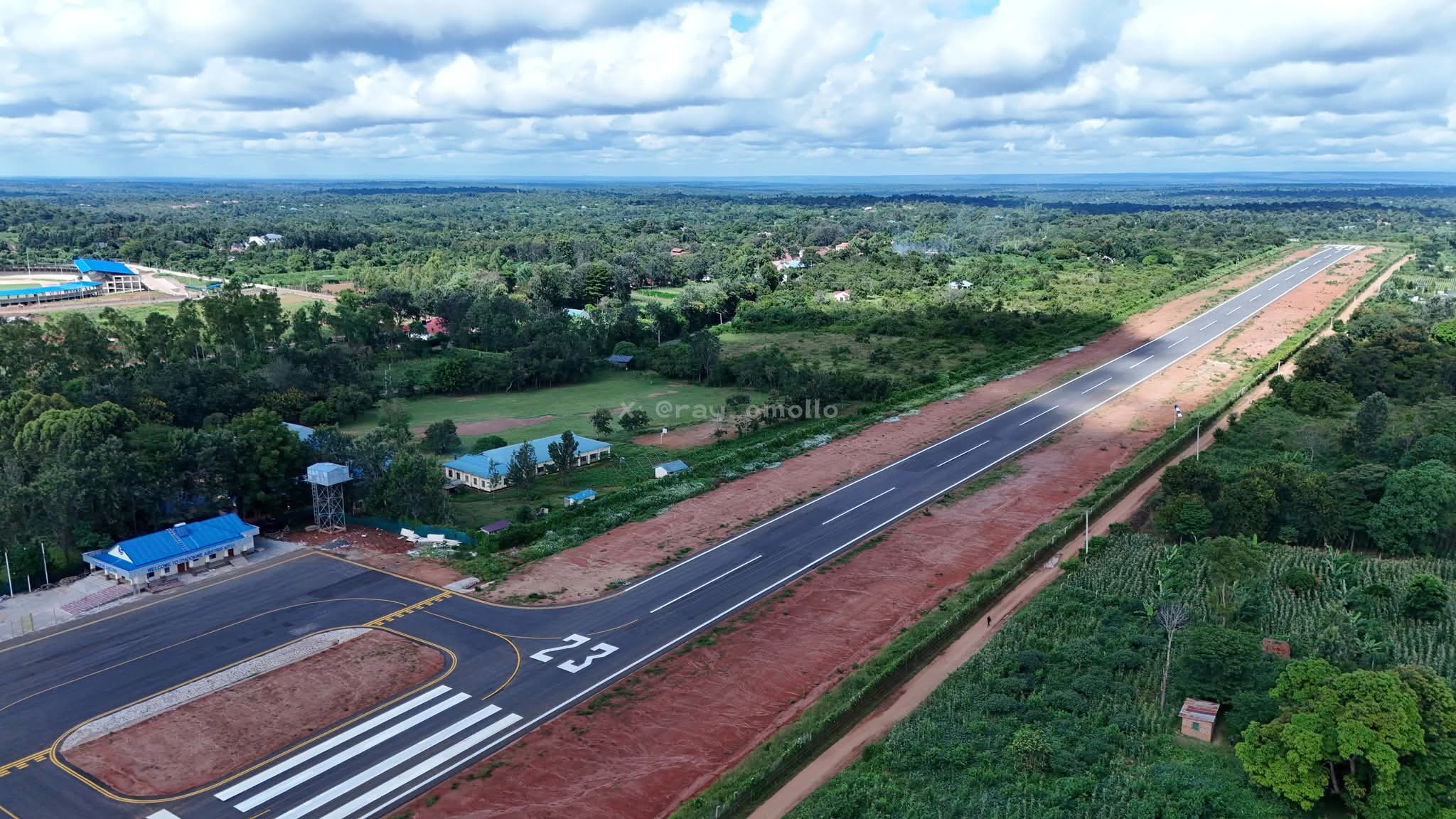
The airstrip is also strategically positioned to strengthen regional connectivity between Nairobi, Mombasa, Garissa, Wajir, and the wider lower eastern region – quietly placing Kitui into a bigger economic map.
Importantly, the project isn’t just about movement.
Security and operational control have also been built into the upgrade through monitored entry and exit systems overseen by the State Department for Internal Security and National Administration, helping ensure smoother and safer operations as activity around the facility grows.
Maybe that’s the bigger conversation here.
Sometimes development doesn’t arrive loudly.
Sometimes it looks like a shorter journey, with a smoother landing and faster access.
And over time, those small shifts are usually what change the direction of entire regions.