US President Donald Trump Sends Message To Laikipia Residents Amid Ebola Scare
The United States government has broken its silence over the volatile biosecurity crisis in Laikipia, issuing an emergency diplomatic assurance to Kenyans that its military-backed Ebola bio-isolation facility poses absolutely no public health threat to local residents.
In an official diplomatic brief released by the U.S. Embassy in Nairobi on Wednesday, June 3, 2026, President Donald Trump’s administration aggressively defended the infrastructure project at the Laikipia Air Base. The statement frames the facility as a vital regional asset designed to absorb epidemiological shocks rather than a biological hazard.
Washington Assures Fearing Residents of Strict Containment
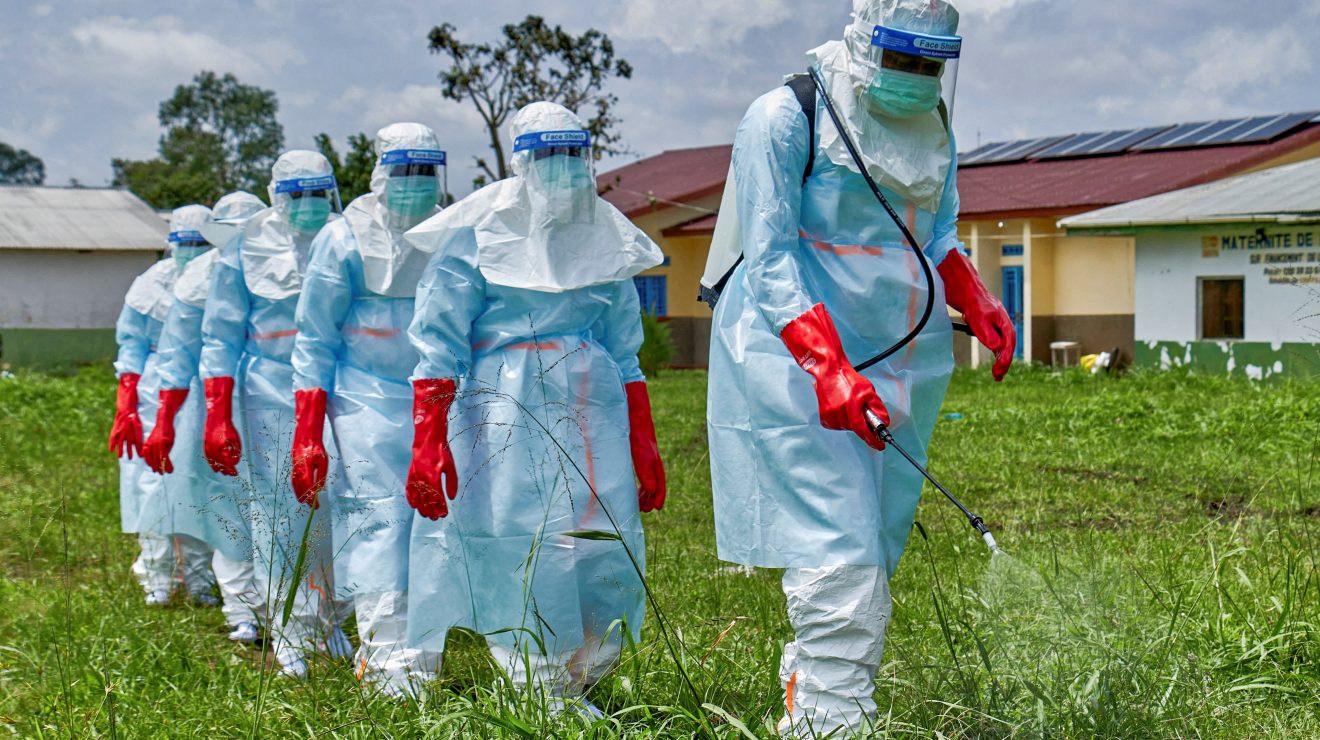
The U.S. Embassy sought to de-escalate massive public panic and conspiracy theories surrounding the containment protocols of the facility, which is designated to isolate American personnel exposed to the lethal Bundibugyo Ebola virus strain in neighboring Democratic Republic of Congo (DRC).
“The bio-isolation facility in Laikipia is part of a holistic response to prevent the spread of the disease and lessen health risks for the region as a whole; it does not pose a risk to nearby communities,” the U.S. Embassy’s press release maintained.
According to the Trump administration, building high-tech regional capacity to isolate and test asymptomatic individuals will actually cushion Kenya’s domestic healthcare system. The embassy argued that the facility ensures American patients will not drain or overwhelm Kenya’s existing clinical resources, preserving local doctors and hospitals to assist Kenyan citizens exclusively.
Beyond the brick-and-mortar facility in Laikipia, Washington revealed it is actively collaborating with Afya House to strengthen border checkpoints, expand diagnostic lab capabilities, and improve real-time disease surveillance across Kenya’s 25 newly mapped high-risk counties.
A Ksh65 Billion Geopolitical Health Package
To counter allegations of exploiting Kenya as a “dumping ground” for lethal pathogens, the U.S. government detailed a massive financial offensive aimed at fighting the hemorrhagic fever across East and Central Africa:
-
Direct State Support: Direct U.S. State Department funding to combat the active outbreak has officially surpassed Ksh20 billion ($150 million) for containment and humanitarian operations.
-
UN Humanitarian Funding: Washington has injected an additional Ksh45 billion ($340 million) through United Nations humanitarian channels specifically targeting frontline response activities in the DRC, Uganda, and South Sudan.
The embassy framed the current standoff as an extension of a decades-long public health alliance between Washington and Nairobi, referencing historical collaborations in fighting HIV/AIDS and malaria.
Diplomatic Damage Control After Fatal Protests
The Trump administration’s rapid diplomatic intervention comes just 48 hours after a volatile Madaraka Day march ended in bloodshed on the streets of Nanyuki.
On Monday, June 1, hundreds of angry residents and activists marched toward the Laikipia Air Base, waving placards and tree branches to protest the facility’s proximity to dense urban estates. The demonstration deteriorated into a violent, two-hour standoff when protesters tried to breach the military installation, prompting security forces to open fire—an incident that left two demonstrators dead and several others seriously injured.
While local organizers under Patrick Wahome have issued a hard deadline of June 9 for the complete closure of the site, and the High Court maintains a strict injunction freezing the project, the U.S. Embassy’s firm defense signals that Washington has no immediate intention of dismantling its strategic epidemiological outpost in East Africa.