Hannah Benta Issues Legal Ultimatum Following Viral Videos
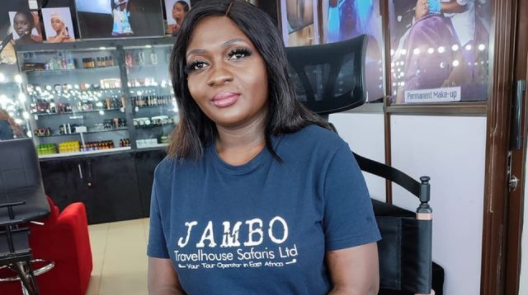
In her first official public address since a private video was leaked online, content creator Hannah Benta has released a stern statement condemning the violation of her privacy. Posting to her verified Instagram account on Sunday, March 22, 2026, the mother of two called for immediate accountability and warned of looming legal consequences for those sharing the content.
A Stand Against Gender-Based Violence
Benta moved to clarify her identity and role beyond the headlines, introducing herself as a mother to her son, Baby K, a daughter, and a sister. She urged the public to disregard various “pseudo” accounts that have been falsely claiming to represent her in recent days.
In a poignant reflection on the incident, Benta categorized the leak not just as a breach of trust, but as a form of Gender-Based Violence (GBV). She argued that the unauthorized distribution of the footage constitutes emotional, psychological, and economic abuse. “The private matter circulating was meant for private eyes only,” she stated. “The leak of my privacy is a violent violation.”
Two-Hour Deadline for Takedowns
The statement included a direct and urgent warning to individuals and platforms currently hosting or circulating the video. Benta issued a two-hour ultimatum for the content to be deleted globally across all social media and messaging platforms.
Failure to comply, she warned, would result in aggressive legal action. “We will pursue this matter legally to the very end,” she noted, emphasizing that her current priority is protecting her family’s well-being and seeking formal justice against the culprits.
A Call to Action for Institutions
Beyond her personal legal battle, Benta appealed to national leadership and human rights organizations to intervene. She specifically called upon:
By framing the leak as a criminal act rather than a mere “scandal,” Benta joins a growing number of public figures advocating for stricter enforcement of the Computer Misuse and Cybercrimes Act to protect victims of non-consensual media sharing.