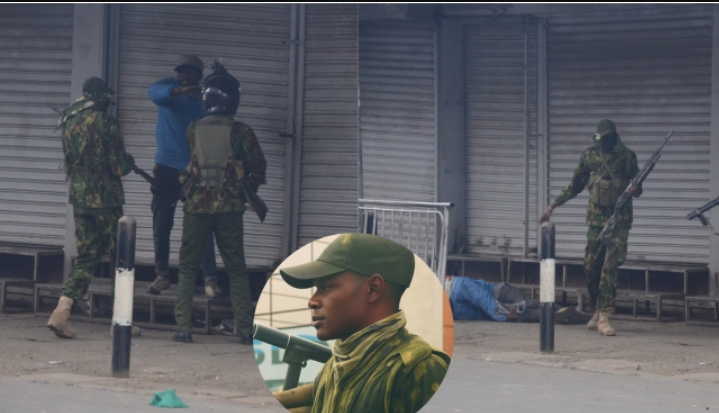
Police Officer To Face Murder Charges In Boniface Kariuki Shooting

The Director of Public Prosecutions (DPP) has approved murder charges against police officer Klinzy Barasa Masinde in connection with the death of hawker Boniface Kariuki. Kariuki was fatally shot during the June 17 Nairobi protests, which were originally organized to highlight concerns over extrajudicial killings.

Barasa and fellow constable Duncan Kiprono were interdicted after video footage emerged showing them manhandling the unarmed mask vendor before one of them shot him at close range along Moi Avenue, leaving him for dead.

On Wednesday, the DPP informed the court that Barasa will be formally charged on Friday before High Court Judge Justice Kimondo. Conversely, Kiprono has been released, as the DPP stated that no murder charges would be pursued against him.

Read also; Gachagua Responds To Ruto’s Directives To Police, Urging Them To Shoot Looters

Following the incident, which ignited widespread public outcry and further protests against police brutality, Kariuki was admitted to the hospital with four bullet fragments lodged in his brain. Doctors had previously removed two other fragments while he was still alive. Pathologists have indicated that Kariuki’s brain may have ceased functioning before his death was officially announced over a week after the shooting.

Police Disperse Candlelight Vigil For Slain Vendor Boniface Kariuki

A candlelight vigil held in memory of Boniface Kariuki, a 24-year-old mask vendor fatally shot last month, was dispersed by police officers using tear gas on Wednesday night. The vigil took place along Mondlane Street at Imenti House, the site where Kariuki was shot.

Videos circulating show mourners gathered with lit candles in tribute to Kariuki before police intervention. Clouds of white tear gas smoke filled the air, causing some attendees to scatter, though others remained.

The vigil preceded Kariuki’s funeral, scheduled for Friday, July 11. It was held just hours after friends and family attended a requiem mass for him at All Saints Cathedral in Nairobi.

Boniface Kariuki was reportedly unarmed when he was shot at point-blank range by a police officer during the June 17 protests. He had been present at the demonstration to sell face masks. The incident, captured on camera, generated significant public outrage as Kariuki fought for his life in the Intensive Care Unit (ICU) at Kenyatta National Hospital (KNH).

Ironically, the June 17 protests were organized to demand justice for the death of blogger-cum-teacher Albert Ojwang, who had died in police custody shortly before. The public outcry following Kariuki’s shooting led to the arrest of two police officers seen harassing him before one fired the shot. The legal proceedings in this case are ongoing.

Kariuki succumbed to his injuries on Monday, June 30, nearly two weeks after the shooting, having been declared brain-dead the previous day. An object suspected to be a rubber bullet had been removed from his skull during emergency surgery upon his arrival at KNH.

Following his death, Kariuki’s family expressed concern over the escalating hospital bill, which had surpassed Ksh3.5 million, and appealed for public assistance to clear the debt. Political leaders from Murang’a County, where Kariuki’s family resides, visited them and presented a Ksh1 million donation from President William Ruto to help cover funeral expenses.

Family of Slain Mask Vendor Boniface Mwangi Kariuki Appeals for Help Ahead of Burial, Demands Justice

Emily Wanjira, the family spokesperson for the late Boniface Mwangi Kariuki, has made an emotional appeal for financial support to help the family lay their loved one to rest, while also reaffirming the family’s resolve to pursue justice.

Speaking to the media on Wednesday evening after a requiem mass held at ACK, Wanjira opened up about the grief and hardship the family has endured in the three weeks since Kariuki’s tragic death.

“It has been a tough journey for us. Ever since his demise, it has been tragic for the past three weeks. It has been painful,” she said.

Kariuki, a well-known mask vendor, was reportedly shot and left fighting for his life for two weeks before he succumbed to his injuries. His death has left the family in mourning and struggling with funeral expenses.


Memorials and Burial Plans

A memorial service for Kariuki was held earlier on Wednesday at All Saints Cathedral in Nairobi. That evening, mourners gathered again for a candlelight vigil held at the very spot where Kariuki was shot — a somber moment of reflection for family, friends, and supporters.

His burial has been scheduled for Friday, and the family is now appealing for public support to meet the cost of funeral arrangements.

“For well-wishers, kindly come along. The Paybill is still the same: 7682551. Account name is your name. Kindly support us so that we can end this matter and focus on looking for justice,” Wanjira urged.


Justice Now the Family’s Priority

While grappling with grief and financial strain, the family’s focus remains firmly on accountability. Wanjira reiterated that what the family needs most — beyond support — is justice.

“That is the only thing we want as a family,” she said.

The case, initially filed under a miscellaneous application, has now been formally upgraded to a murder charge. The family is expected to return to court on Thursday to follow up on the legal proceedings.

Wanjira issued a stern warning to any parties who may attempt to interfere with the case:

“Please don’t. This case is everywhere now — it’s ready. Let it proceed through the right channels as per the Constitution.”


A Message of Gratitude and Resilience

In her closing remarks, Wanjira extended sincere thanks to the public, friends, and the media for their continued support during this difficult time. She emphasized the family’s determination to see the case through and their belief in divine guidance and community solidarity to help them find justice.

“Thank you for standing with us. We believe with God and your support, we will win.”

The tragic death of Boniface Mwangi Kariuki has become a powerful symbol of the human toll behind recent events in Kenya, as the country continues to grapple with questions of police accountability and respect for human life.

Boniface Mwangi, Protest Shooting Victim, Dies After Weeks On Life Support

Boniface Mwangi Kariuki, the mask vendor who was shot in the head during the June 17 protests, has died. Kariuki passed away at 3:15 PM on Monday, June 30, at Kenyatta National Hospital, nearly two weeks after the shooting incident that sparked national outrage. He had been in the Intensive Care Unit (ICU) since the shooting.

His family, speaking to the press while announcing his death, revealed that the hospital bill had escalated to over KSh 3.5 million, and no government institution had offered assistance. They are now appealing to Kenyans for financial help.

“All I can say is that we have a tough task ahead, as getting him out of there [the mortuary] is hard because we do not have money. We are seeking help from Kenyans,” stated Jonah Kariuki, Boniface’s father, who also emphasized his demand for justice. “I want justice for my son because my son did not do anything wrong. I knew that in the future, he was my only hope. He was my only son, as the rest are daughters.”

This tragic development comes just a day after the family confirmed that Boniface had been declared brain dead on Sunday, June 29, around midnight. At that time, a family spokesperson had stated that with his brainstem no longer functioning, they were simply awaiting doctors to declare him clinically dead. Legal frameworks in Kenya prevented the family from switching off life support until his heart ceased beating.
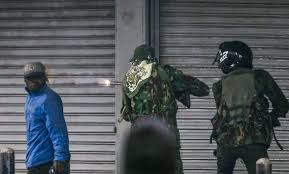
The Shooting and Aftermath

During the June 17 protests, Boniface Mwangi Kariuki, an unarmed mask vendor, was captured on camera being assaulted by two police officers. One officer then shot him at point-blank range in the head. He was left bleeding on the ground before fellow protesters rushed him to the hospital. An emergency surgery at Kenyatta National Hospital hours later successfully retrieved a bullet from his skull.

The shooting ignited a significant public outcry from human rights defenders and the public, not only due to his unarmed status but also because the protest itself was a call against police brutality.

Police Response and Investigations

Hours before Kariuki succumbed to his injuries, former police spokesperson Charles Owino offered a controversial perspective during a Monday morning interview. He claimed that Kariuki had insulted the police officers. “It was a very simple exchange. If you listen to that clip closely, you will hear the boy abusing the policeman. But as an officer, you must have restraint—and shoot him with a rubber bullet, not a live one. You can see what this has done to the image of the police so far,” Owino stated.

Regarding Klinzy Baraza Masinde, the police officer who allegedly pulled the trigger, Owino suggested he was a young recruit with less than two years of service who took the insults personally, leading to a “rash reaction.”

The two police officers involved in the shooting were arrested shortly after the incident. On June 19, they were arraigned at the Milimani Law Courts, where the judge granted a request from both the prosecution and the defense to hold them for 15 days, allowing for further investigations by the Independent Policing Oversight Authority (IPOA).

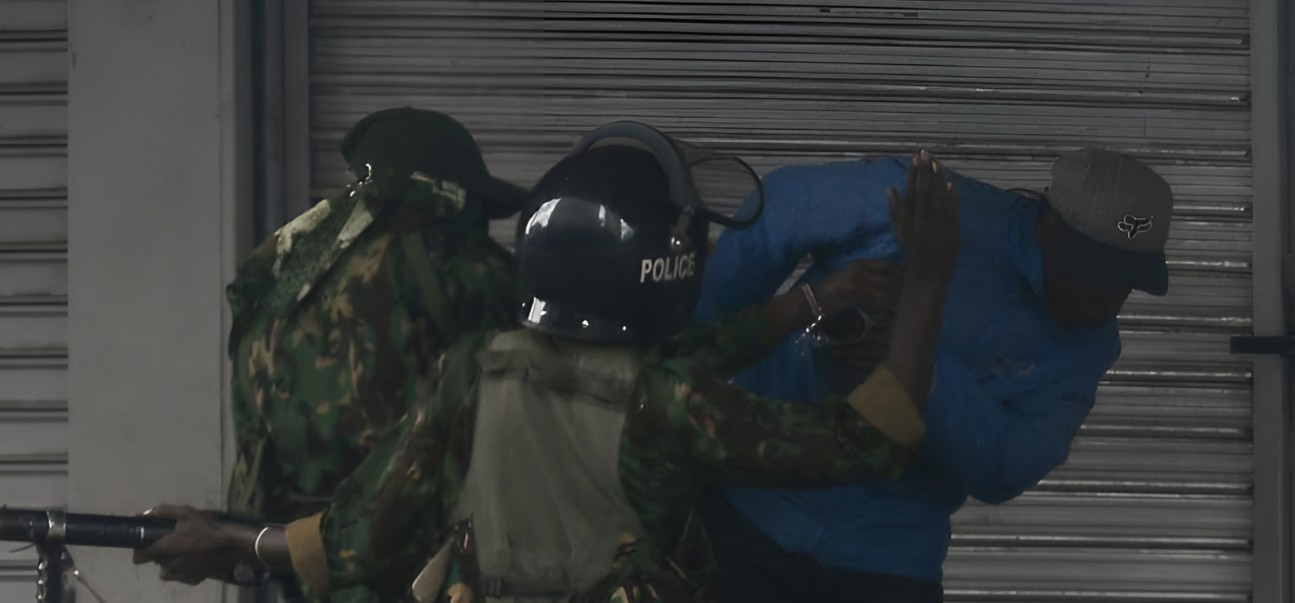
Government waives 816K bill of innocent hawker killed by police officer

In a major relief effort aimed at easing the burden on families affected by recent political unrest, the Kenyan government—through the Ministry of Health—has announced a full waiver of medical bills for all patients injured during the Nairobi protests held on June 17 and 25, 2025.

The directive, issued under the leadership of Health Cabinet Secretary Aden Duale, includes the outstanding bill for the late Boniface Mwangi Kariuki, a young mask vendor whose shooting during the demonstrations drew national outrage and amplified demands for police accountability.

“The recent demonstrations…resulted in injuries and emotional distress for many Kenyans. As a Ministry, our hearts go out to all those affected. We remain committed to ensuring they receive the care and support they need,” read an official statement from CS Duale.

Relief for Affected Families

As per the directive, Kenyatta National Hospital (KNH) has been instructed to waive all hospital bills for protest-related injuries, with the expenses now charged to the hospital’s Disaster Emergency Fund.

This includes the medical bill of KSh 815,805 accrued by Boniface Kariuki, who was placed on life support after being shot in the head during the June 17 demonstrations. He was declared brain dead on June 30.

Kariuki’s case had become a heartbreaking symbol of the cost of civil unrest, with his family previously lamenting the soaring hospital fees and lack of government support, even as their son’s condition sparked widespread public sympathy.

Human Rights Crisis

The government’s action comes amid growing scrutiny over the handling of recent protests. Originally peaceful, the demonstrations on June 17 and the June 25 Gen Z-led anniversary protests turned violent, marred by police crackdowns, the use of tear gas, and alleged live rounds.

According to ongoing investigations by the Kenya National Commission on Human Rights (KNCHR), these confrontations resulted in multiple injuries and fatalities. Boniface’s shooting, reportedly while conducting his usual business selling face masks, shocked the nation and intensified calls for justice.

Rare Move Toward Accountability

In a rare but significant development, the police officers linked to Kariuki’s shooting have since been arrested and arraigned. This step toward accountability has been welcomed by rights groups and citizens, many of whom hope that Kariuki’s case will mark a turning point in the fight against impunity during state operations.

While the medical bill waiver brings financial relief, many Kenyans see it as a tacit acknowledgment of state responsibility in the chaos that unfolded.

“It’s a welcome gesture,” said a family member of Kariuki, “but it cannot replace what we lost. What we need is justice.”

A Nation in Reflection

As Kenya continues to reel from the aftermath of the protests, the waiver serves as a small but meaningful step by the state in addressing the suffering of affected families. However, for many—including Kariuki’s family—the ultimate resolution lies not in financial assistance, but in truth, justice, and meaningful police reforms.