
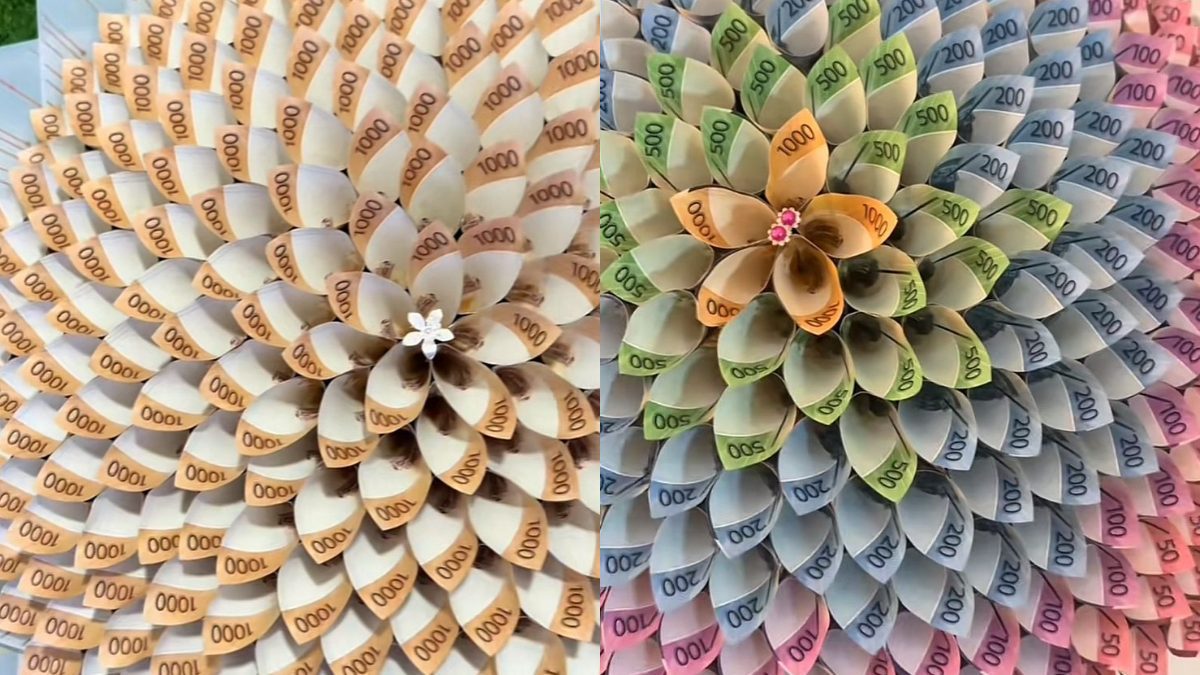
In the vibrant landscape of Kenyan gifting, where grand gestures often involve “soft life” aesthetics and high-impact visuals, the Central Bank of Kenya (CBK) has officially stepped in to play the role of the ultimate “vibe killer.”
The Money Trend
The regulator recently issued a stern warning to the public against the trending practice of creating “money bouquets,” a popular gift where banknotes are intricately folded, glued, or stapled into floral-style arrangements. According to the CBK, this practice is far from harmless romance; it is a direct act of currency misuse that threatens the physical integrity of the Kenyan Shilling.
The regulator emphasized that banknotes are national symbols and public property intended for circulation, and the process of transforming them into “flowers” often leads to permanent damage that renders the notes unfit for use.
The technical concerns raised by the CBK are significant, as the use of staples, pins, and adhesives causes perforations and residue that can lead to banknotes being rejected by automated teller machines (ATMs) and electronic counting systems. Furthermore, the excessive creasing required to achieve the floral look weakens the fibers of the paper, leading to premature tearing and a shortened lifespan for the currency.
The CBK reminded Kenyans that the cost of printing and replacing mutilated currency is a burden borne by the taxpayer, and under the Central Bank of Kenya Act, the defacement of legal tender is a punishable offense that could result in heavy fines or imprisonment. By cracking down on the “shilling rose,” the regulator aims to ensure that currency remains clean and functional within the economy.
Flaunting Cash
The directive sparked an immediate and colorful firestorm of reactions across social media, with netizens divided between logic and humor. On platforms like X and TikTok, a large section of the “relieved” crowd supported the move, with many recounting frustrating experiences where shopkeepers refused to accept notes that bore glue marks or staple holes from previous bouquet arrangements. Conversely, the more humorously inclined Kenyans were quick to point out the irony of the situation, with many joking that they lacked the financial capacity to even make a “money single-flower,” let alone a full bouquet. Some TikTok creators teased that the CBK was “taxing romance,” while others lamented the end of an era of creative gifting, asking if “money cakes” and “money fans” would be the next targets of the regulator’s watchful eye.
What’s the effect?
Entrepreneurs in the gifting and florist industry expressed a mix of confusion and caution, with many wondering how to pivot their business models to meet the high demand for cash gifts without falling foul of the law. While some lamented that romance in Kenya was being “over-regulated,” legalists on social media reminded the public that owning the value of the money does not grant the right to destroy the physical paper, which belongs to the Republic. As the era of the money bouquet faces a digital and legal sunset, the conversation has shifted toward safer alternatives, such as digital transfers and gift cards. Ultimately, the CBK’s warning serves as a reminder that while love may be priceless, the paper used to express it must be handled with the utmost care to keep the national economy blooming.