
Co-op Bank’s Digital Strategy Delivers KSh 30Bn Profit Before Tax in Strong Q3 Results

Co-op Bank has announced a robust set of results for the nine months to September 2025, posting a Profit Before Tax of Ksh30Bn.

This is a solid 12.1% rise from Ksh26.8Bn reported over a similar period in 2024.

After-tax profit rose by 12.3% to Ksh21.6Bn, underscoring the Bank’s steady growth trajectory under the ongoing “Soaring Eagle” Transformation Agenda.

Alongside the strong earnings, the Board declared an interim dividend of Ksh1.00 per share, a significant vote of confidence in the institution’s financial strength and outlook.

Balance Sheet Gains Reflect Solid Customer Confidence

Co-op Bank’s balance sheet continued to expand, supported by sustained customer activity and enhanced operational efficiency.

Key highlights include:

  • Total Assets jumped 8.6% to KSh 815.3 billion, reflecting ongoing investments in digital infrastructure and customer-facing services.
  • Customer Deposits grew 6.7% to KSh 548.6 billion, showing deepening customer trust and steady onboarding.
  • Net Loans & Advances rose 6.6% to KSh 406.5 billion, driven by increased uptake across retail and MSME segments.
  • Shareholders’ Funds surged 24.5% to KSh 164.2 billion, boosted by KSh 12.5 billion in retained earnings.

The Bank maintained a competitive Return on Equity of 19.4%, placing it among the top-performing financial institutions in the region.

Cost Efficiency Gains From a Decade of Transformation

Operating income rose 13.9% to Ksh67.4Bn, buoyed by a 22.8% growth in net interest income.

Operating expenses increased moderately by 15.4%, as the Bank continued investing in digital channels and branch optimization.

Notably, Co-op Bank’s Cost-to-Income Ratio stands at an improved 45.1%, a remarkable shift from 59% in 2014 – a direct outcome of its long-term Growth and Efficiency journey.

Digital Momentum Powers 90% of All Transactions

A key pillar of Co-op Bank’s performance is its accelerating digital adoption.

The Bank reported that over 90% of transactions now take place through digital and alternative channels, supported by:

A revamped and re-engineered Co-op Bank App (formerly Mco-opCash), enabling seamless digital onboarding.

A robust omni-channel ecosystem spanning web, mobile, USSD, 616 ATMs and CDMs, and a vast network of 16,000+ Co-op kwa Jirani agents.

Co-op Bank also consolidated its leadership in payments, retaining its position as Kenya’s largest issuer of Visa cards.

To strengthen its relevance to global travellers and traders, the Bank launched a multi-currency prepaid card, enhancing value for both retail and business clients.

Modernising Systems: Kingdom Bank Migration

A major milestone in 2025 was the successful migration of Kingdom Bank to the Finacle Core Banking System.

The upgrade provides a scalable backbone to drive innovation, agility, and group-wide synergies across Kenya and South Sudan.

Additionally, the Group rolled out a new Trade and Treasury System – a platform designed to speed up cross-border and domestic trade flows, optimise treasury operations, and strengthen risk management.

Empowering MSMEs: Digital Credit and Training

Co-op Bank continued to support small businesses, disbursing Ksh54.2Bn in e-Credit mobile loans year-to-date.

Out of this, Ksh8.2Bn was channelled directly to MSMEs.

The MSME loan book now represents 16.7% of the Bank’s portfolio, serving 254,707 MSME customers, with 70,010 entrepreneurs trained in credit management, business skills, and financial literacy.
Extending Reach Through a Strong Physical Network

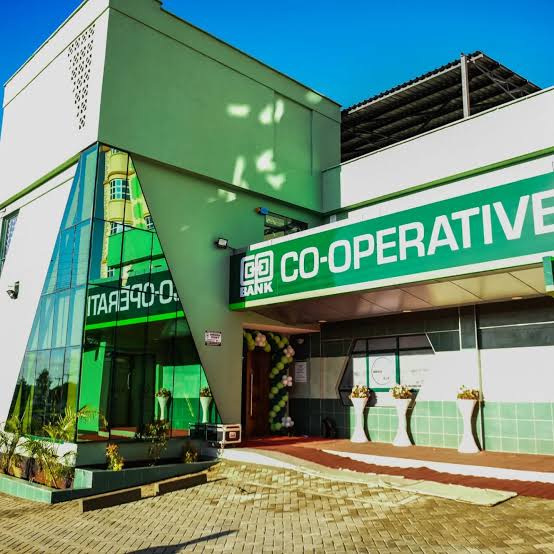
Despite its digital momentum, Co-op Bank continues to invest in physical expansion to ensure inclusive access.

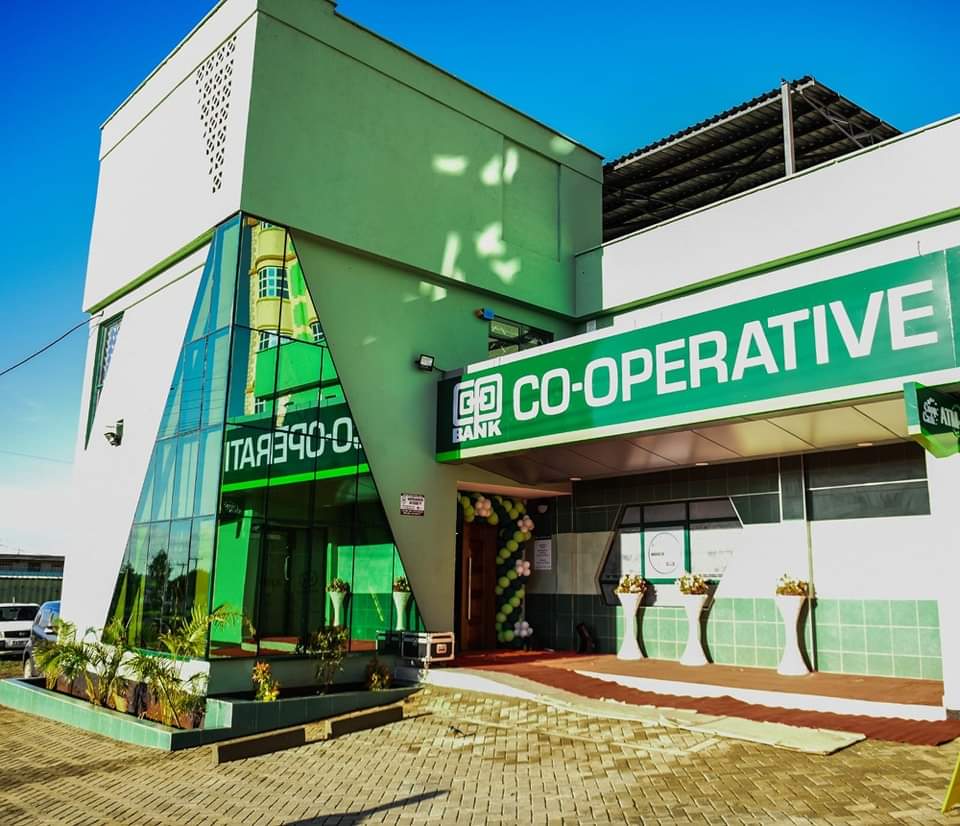
Branch network has grown to 217 outlets, including new locations in Laare, Kibwezi, Rumuruti, Eastleigh BBS Mall, Eldama Ravine, Eldoret, and others opened since June 2024.

The Bank maintains a nationwide network of 619 FOSA outlets, critical for reaching underserved and rural communities.

The Group benefits from the strength of the 15-million-member co-operative movement, with a deep and growing customer base of over 9.4 million account-holders.

This extensive presence – spanning branches, ATMs, agents, and FOSA units – continues to anchor the Bank’s leadership in community banking and co-operative finance.

Outlook: Sustained Growth Anchored on Resilience and Innovation

Co-op Bank’s Q3 performance reinforces the Bank’s disciplined strategy of balancing growth with operational resilience.

The combination of a large physical footprint, an expansive digital ecosystem, and unmatched ties to the co-operative movement positions the Group for sustainable growth through 2025 and beyond.

As the Bank continues executing the Soaring Eagle Transformation Agenda, its focus remains clear: customer-centric innovation, prudent risk management, and inclusive economic empowerment.


Co-op Bank Rides on Digital Growth and Customer-Centric Strategy to Post Strong Half-Year 2025 Results

The Co-operative Bank of Kenya has announced a robust half-year performance for the period ending June 30, 2025, underscoring its resilience and adaptability in a challenging economic climate.

The Group reported a profit before tax of Ksh17.5 billion, representing an impressive 11% growth compared to Ksh15.8 billion recorded in the same period last year.

Profit after tax stood at Ksh12.4 billion, reflecting sustained profitability driven by strategic investments in digital banking, diversified revenue streams, and a strong focus on customer experience.

Total assets surged to Ksh730.8 billion, up from Ksh671.1 billion in June 2024, signaling steady balance sheet growth.

Customer deposits also rose significantly to Ksh543.7 billion, from Ksh497.4 billion the previous year, supported by the bank’s extensive branch network, digital channels, and agency banking model.

The bank’s digital banking platforms continued to deliver stellar performance, with over 85% of all transactions now happening outside physical branches.

Mobile and internet banking uptake has grown rapidly, offering customers seamless and secure services.

Co-op Bank’s non-interest income registered notable growth, reaching Ksh14.2 billion from Ksh12.6 billion, boosted by increased transaction volumes across digital channels and trade finance.

Meanwhile, net interest income rose to Ksh25.6 billion, up from Ksh23.8 billion, reflecting prudent asset-liability management.

The Group maintained a strong capital position, with total capital adequacy at 18.5%, well above the regulatory minimum.

Liquidity levels remained healthy at 42.3%, positioning the bank to meet customer needs and pursue growth opportunities.

Group Managing Director & CEO Gideon Muriuki credited the performance to the bank’s cooperative model, strong partnerships, and relentless innovation in delivering value to members and customers alike.

“Our focus remains on deepening financial inclusion, growing our digital footprint, and supporting key sectors of the economy, particularly SMEs and the cooperative movement,” Muriuki said.

Looking ahead, Co-op Bank aims to further leverage its technological investments, diversify its offerings, and strengthen customer relationships as part of its long-term growth strategy.

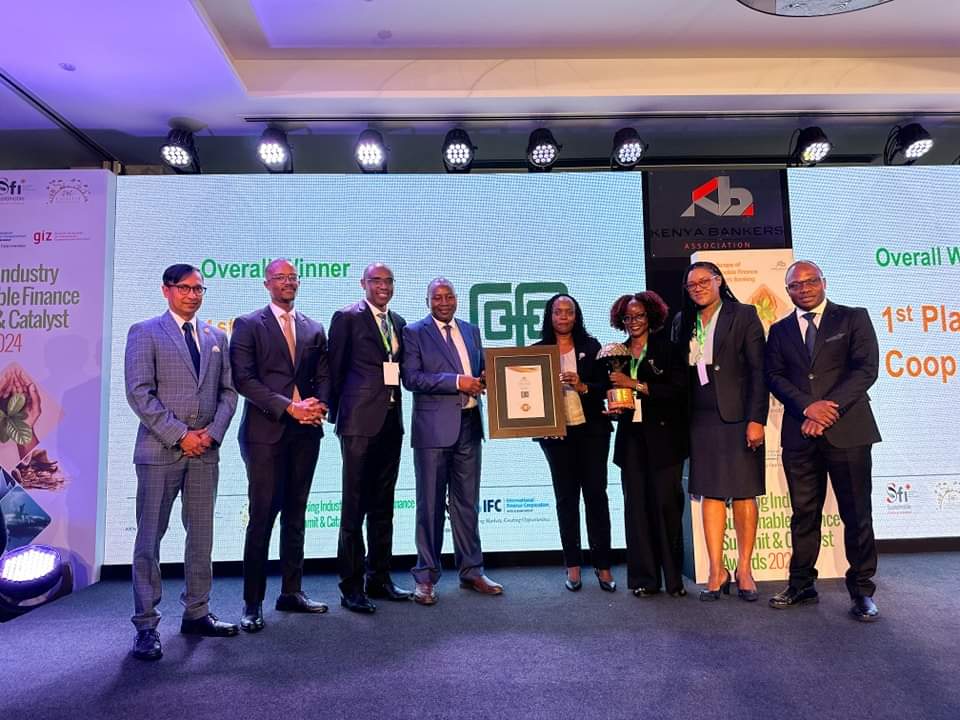
Co-op Bank Crowned Overall Winner at 2024 Sustainable Finance Catalyst Awards

In a resounding testament to its leadership in sustainable banking, Co-op Bank Kenya has once again been named the Overall Winner at the 2024 Sustainable Finance Catalyst Awards, hosted by the Kenya Bankers Association (KBA).

This marks the fifth time in seven years that the bank has secured this prestigious accolade, following previous wins in 2017, 2019, 2022, and 2023.

A Legacy of Sustainability

The Sustainable Finance Catalyst Awards celebrate financial institutions that embed sustainable practices into their core operations.

These principles challenge banks to balance financial profitability with broader economic, environmental, and societal priorities.

Co-op Bank’s consistent triumph highlights its unwavering commitment to these ideals, positioning it as a trailblazer in the Kenyan banking industry.

Through initiatives like green financing, financial inclusion, and community empowerment, Co-op Bank ensures its business practices positively impact both people and the planet.

The bank has also embraced cutting-edge technology, offering seamless services like M-Pesa integration, mobile banking, and a comprehensive USSD platform, making financial services accessible across Kenya.

Beyond Banking

The 2024 win comes as no surprise, given Co-op Bank’s recent accolades on the global stage.

In September 2023, it was honored as the Best SME Financier in Africa at the Global SME Finance Awards in Mumbai, India.

This recognition was a nod to its tailored financing solutions for small and medium enterprises, reflecting a robust strategy to empower local businesses.

Additionally, Co-op Bank’s vast network of branches and ATMs ensures accessibility, even in remote areas, while its customer-centric approach solidifies its reputation as a bank that genuinely serves its community.

Driving a Sustainable Future

Co-op Bank’s successes are not just a celebration of past achievements but a clear signal of its vision for the future.

By integrating sustainable finance principles into its strategy, the bank sets a high standard for the Kenyan financial sector.

As the world increasingly prioritizes sustainability, Co-op Bank’s leadership is a beacon of what responsible banking can achieve.

The 2024 award is a well-earned recognition of Co-op Bank’s ability to innovate, empower, and inspire.

Here’s to a future where sustainable finance continues to shape the lives of individuals and communities across Kenya and beyond.

Co-op Bank maintains market lead with Ksh16.4 Billion Profit in First Half of 2023

Co-op Bank Group is pleased to report a Profit Before Tax of Kshs. 16.4 Billion for the first half of 2023, representing a 7.4% growth compared to Kshs. 15.3 Billion recorded in the first half of 2022. This points to a Profit after Tax of Kshs. 12.1 Billion compared to Kshs. 11.5 Billion reported in 2022.

Key Performance highlights:

Financial Position

The Group has registered sustained growth as follows;

  • Total Assets grew to Kshs. 664.9 Billion, a 10.1% growth from Kshs 603.9 Billion in the same period last year.
  • Net loans and advances grew to Kshs. 365.4 Billion, a 10.7% growth from Kshs.330.1 Billion in 2022.
  • Customer deposits grew to Kshs 463.9 Billion, a 9.7% increase from Kshs.423.0 Billion.
  • External funds from development partners have increased by 43.6% to Kshs.59.4 Billion from Kshs. 41.4 Billion in 2022.
  • Shareholders’ funds have grown to Kshs. 108.3 Billion, an 11.9% increase from Kshs. 96.7 Billion in 2022.

Comprehensive Income

  • Total operating income grew by 3.0% from Kshs. 34.4 Billion to Kshs. 35.4 Billion.
  • Net interest income grew by 2.3% from Kshs 21.1 Billion to Kshs 21.5 Billion.
  • Total non-interest income grew by 4.0% from Kshs. 13.3 Billion to Kshs. 13.8 Billion.
  • Total operating expenses decreased by 0.1% from Kshs. 19.2 Billion to Kshs. 19.1 Billion.

Cost Management

The Group reports excellent efficiency gains from the various initiatives to record a Cost-to-Income Ratio of 46.0% in H12023 from 59% in FY2014 when we began our Growth & Efficiency journey.

Credit Management

The Group prudentially made provisions of Kshs. 2.9 Billion which has enhanced the Bank’s Loan Loss Reserve/ Coverage levels to 71.1%.

Strong Digital Footprint

A new Core Banking System goes Live as the Bank successfully upgraded the core banking system to the latest version of Finacle from Infosys, which was rated globally as the top core banking system in 2022 by Gartner.

The new banking system delivers enormous benefits which include;

  • Enhanced Security: The new system features advanced security measures to protect customer data and assets more effectively.
  • Improved Performance: The new system is more efficient, processing transactions and requests faster.
  • Increased Flexibility and agility: The new system is designed to be more flexible, allowing us to respond to changing customer needs more effectively.
  • Better User Experience: The new system features a more intuitive and user-friendly interface, making it easier for customers to access and manage their accounts.
  • Through our digital channel strategy, the Bank has successfully moved 91% of all customer transactions to alternative delivery channels, a 24-hour contact centre, 546 ATMS, mobile & internet banking and over 17,000 networks of Co-op kwa Jirani agents.
  • We have successfully migrated our customers to the Omni-channel, integrating accessibility and user experience. Our Omni-channel interfaces online banking through personal computers, mobile phones and USSD availing our services to all customers through their preferred channel yet retaining the same experience from wherever they are.
  • MCo-op Cash Mobile wallet continues to drive substantial non-funded income streams with 5 Million customers registered and Kshs 41.3 Billion in loans disbursed in the first half of 2023, averaging Kshs. 6.9 Billion per month.

Wide Branch Network

The Bank has grown the branch network to 191 (4 in South Sudan). New seven (7) Branches (Kimana, Matuu, Thika Kwame Nkrumah, Greenwood Mall – Meru, Kenol Makuyu, Hindi – Lamu and Bamburi – Mombasa) opened in 2023, whereas five Branches (Kabarnet, Iten, Kasarani, Kamakis and Chwele) opened last year.

Subsidiaries

Co-op Consultancy & Bancassurance Intermediary Ltd posted a Profit Before Tax of Kshs 591.3 Million in   Q22023, riding on strong penetration of the Bancassurance business.

  • Co-operative Bank of South Sudan which is a unique joint venture (JV) partnership with the Government of South Sudan (Co-op Bank 51% and GOSS 49%) made a Profit before tax of Kshs 205.1 Million in Q22023. This performance, however, translated to a monetary loss of Kshs 36.5 Million attributable to hyper-inflation accounting occasioned by currency devaluation of the South Sudanese pound.
  • Co-op Trust Investment Services Ltd contributed Kshs. 106.8 Million in Profit Before Tax in Q22023, an impressive 25% growth. The Subsidiary has Funds Under Management of Kshs. 197.3 Billion.
  • Kingdom Bank Limited (A niche MSME Bank) has contributed a Profit before Tax of Kshs. 521.9 Million in Q22023, a remarkable growth of 29% from Kshs. 405.9 million reported last year.

External funds from Development Partners

The Bank signed a KShs. 12.6 Billion long-term credit agreements with global institutional investors led by the German fund, Deutsche Investitions und Entwicklungsgesellschaft (DEG). The fund will strengthen the bank’s capital base and support appropriate lending to MSMEs for future growth.

Environmental Social and Governance (ESG)

The Bank continues to implement a best-in-class ESG policy framework supported by an ESG implementation roadmap, group-wide ESG champions and ESG Governance.

Our portfolio of loans above USD 1 Million comprises Kshs. 37.4 Billion which is Green (33.2%) and Social (66.8%) affirming our commitment to sustainable banking.

Additionally, the Bank has published its first TCFD (Task Force on Climate-related Financial Disclosures) report with the Central Bank of Kenya and is getting ready to report as per ISSB (International Sustainability Standards Board) inaugural sustainability standards-IFRS S1 and IFRS S2 effective 01 January 2024.

Co-op Bank Foundation, the Group’s social investment vehicle, continues to provide Scholarships to gifted but needy students from all regions of Kenya. The sponsorship includes fully paid secondary education, full fees for University education, Internships, and career openings for beneficiaries. The foundation is fully funded by the bank and has supported 10,264 students since the inception of the program.

Co-op Bank Capacity-building & Technical Assistance Fund

The Bank established a Kshs. 100 Million Fund to support agricultural co-operatives with capacity-building and digitization. The Bank has carried out capacity-building at 30 Co-operatives in the coffee, dairy, potatoes, poultry, cotton, and cereals subsectors, expected to impact over 50,000.00 individual farmers.

Direct Settlement System (Coffee Exchange)

Following a competitive selection process, the Bank has been appointed to provide the clearing and settlement platform for coffee trade by the Nairobi Coffee Exchange (NCE).

The Direct Settlement System (DSS), developed internally by the bank’s ICT and Innovations team, is a mission-critical infrastructure for the delivering of the much-desired transparency in the trading and settlement of trades at NCE for the benefit of all players in the coffee value chain notably farmers.

Accolades

The Bank’s Director of Finance and Strategy Caroline Karimi was recognized at the Angaza Awards 2023 for her role in steering and shaping the financial services sector through her leadership. Angaza Awards were established in 2020 to recognize Africa’s Leading Women in Banking and Finance.

The Bank’s Head of Agriculture Co-operatives Business Esther Kariuki was named the African Banker of the Year 2023 for driving innovative agricultural lending models and practices that not only made small-holder farmers bankable but also made them attain competitive credit records superior to comparable borrowers in other sectors.


Adults and Food: Embarrassing Moments at an All-You-Can-Eat Buffet

I got my first buffet experience when I was twelve. It was mildly embarrassing, but served serious lessons on humanity and social skills.

My father took us for a Chrismas Day treat at a fancy restaurant along Banda Street. It was a kid’s affair – my five cousins and I.

My cousins thought it would be fun. I knew my father well enough, but I kept mum.

The restaurant was decked out in colored lights, a gigantic Christmas tree with a flashing replica of the Star of David at the peak. It was not faux cedar. I still recall it’s aromatic smell to this day.

We waltz in. Father is up ahead, with us in a single file behind him. Think of mother duck and her ducklings. He raises his hand – the STOP signal.

He turns – and, beckons us closer. Like a soccer coach’s last minute prep talk to his players before a crucial match.

In a conspiratorial half-whisper, father says:

Hey, kids – we don’t eat chicken in restaurants. Your mums are cooking at home. Ok? Pick what I pick, and nothing more.”

Turns out that the restaurant had a special All-You-Can-Eat buffet offer for Christmas Day. For a standard price, a guest could eat all they could.

Already, there was a line at the buffet table – open dishes with silver tongs. We joined the line, father up ahead.

Except, it seemed that father didn’t have his usual appetite. At the start of line, he picked a slice of watermelon, and pineapple. A single scoop of Pilau, skipped the bowl half-filled with diced Chapati – dipped for a single scoop of meat stew.

Father made sure we skipped the Chapati.

The line was not moving. Father wheeled us around the bottleneck, a couple of adults – visibly agitated to the end of the line. Some seriously spicy Kachumbari.

We found an empty table. We were disappointed. Who skips Chapati? At that moment, father scored dismally in the popularity ratings.

Father spent a few minutes watching us nibbling at fruit slices. He tapped his plate – signal for LOOK UP – and pointed with his lips at the buffet line.

Listen up, kids. Do not be that, when you grow up.” Father says.

The buffet line’s bottleneck. A couple of guests were mobbing a few bowls like a pack of seagulls.

The bowls had the best offerings of the buffet: Chicken wings, grilled ribs and pork chops. We watched.

A lady, quite well-dressed with an handbag clutched under an armpit, shouldered away two men to emerge – with an overloaded plate.

She had a plate balanced high with chicken wings, meat stew dripping off the side – and, two grilled ribs in her spare hand.

Kids, the buffet shall always test your self-discipline. A buffet can easily show a person’s lack of shame or compassion for one another.” Father says.

We soon lost appetite, the more we watched how people behaved on the buffet table. Every so often, we saw somebody grab something from the tray with their hands instead of the tongs.

Or, someone in the line sneezing – no handkerchief.

The Chapati bowl – a dude picked a few pieces, decided they are taking too much space on plate and chucked them back.

Suddenly, father called for the bill. He offered to pay using his Co-op Bank ATM card. He rarely carried cash.

This festive season restaurants, family and corporate events will have a buffet-style food layout. It’s a prudent learning opportunity for the young.

As you go out for meals and trips, have an eye for money-saving tips and offers to save money.

Like father, for instance.

He rarely spent money he didn’t plan for. In end-month shopping trips, he would ask mother to prepare a shopping list, and they’d discuss it against their budget.

And, always – used his Co-op Bank ATM Card to pay.

Father would always insist on eating first in the house before these shopping trips. It’s a trick to avoid spending money on snacks, if we went shopping hungry.

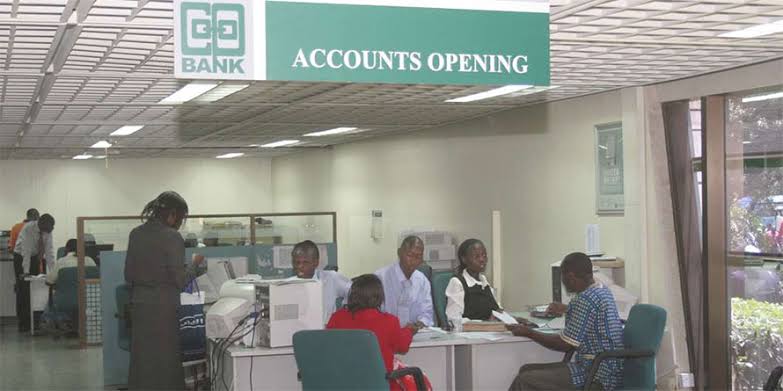
To make the most of this Christmas season, visit the nearest Co-op Bank branch – open an account and receive your ATM card.

It is a Visa Debit card and you can use it for cashless shopping at no extra cost.

Merry Christmas!

A side hustle that you can easily set up

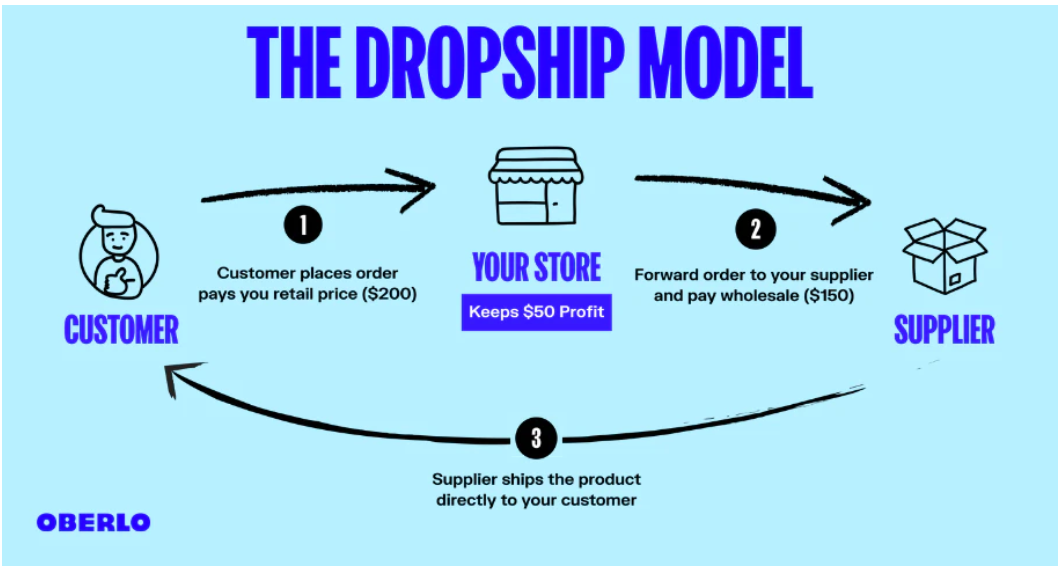
If you’re looking for a side hustle that you can easily set up, then allow me to introduce you to the concept of “drop shipping”. That is a fancy word to describe bringing in goods from China and reselling them in Kenya.

And you really could do this for any product -granted there is a local market here in Kenya. So we could talk about doing drop shipping for shisha bongs… We all know a slay queen or two who love their shisha. Or you could do this with clothes and shoes.

The headache when it comes to this side hustle is down to marketing for sustained business and making the payments.

Think about it. You have a passion for sneakers right? Most likely, so do your friends. But that is an exhaustible market because they will not always be buying shoes, month-in and month-out. That means that one of your daily tasks will be marketing on IG and Facebook to get more customers so the endeavour actually pays off throughout the 12 months of the year.

So now that you have decided to sell sneakers to sneakerheads, it is time to identify a supplier. You could choose to go through websites like Amazon or perhaps the Chinese sneaker company has their own website. You place your order and have to pay up for it. How do you go about this without falling prey to scammers who simply want to phish your credit card details? Or how do you go about this without too much of a hustle? Well, that is where Co-op Bank comes in because they have a solution tailor-made just for you. These solutions include:

Online card payments
Boost your sales by integrating into our online card payment solution to receive card payments from customers from different banks and from anywhere in the world.

These are Co-op Bank ATM’s, Debit or Credit Cards. All payments for purchases or goods delivered can easily be checked off by swiping these cards.

With card payments, it’s easier to track stock levels, and enjoy an easy check out flow.

PDQ/POS

This is a device that refers to a payment terminal accessed by Visa cards to make electronic fund transfers. They are common in malls, supermarkets and fuel stations.

POS stands for Point Of Sale in a business outlet. PDQ stands for ‘Process Data Quickly’.

Co-op Bank avails PDQ/POS machines to their clients. These machines greatly boost sales by enabling them receive card payments from customers from different banks.

A trader enjoys timely reports, easier tracking of income and expenses.

Lipa Na M-Pesa Till Number

Co-op Bank provides this service in partnership with Safaricom M-Pesa service. The bank offers to process a till number for their client’s businesses, at no charge.

This helps a business to receive cashless payments via Lipa na M-Pesa Till Number – usualy displayed at payment point at the business premises.

The money clients pay through the Till number is deposited directly into the client’s Co-op Bank account.

The payments paid into the account can be accessed anytime via Co-op Bank’s mobile banking platform, ATMs, Co-op Kwa Jirani agents, Internet banking or at any branch across the republic.

M-Pesa Paybill 400200

Co-op Bank’s official M-Pesa Paybill number – 400200 – enables a trader to receive payments directly into their Co-op Bank account.

The money reflects into the account immediately. One can also check for the payment confirmation via mobile banking or internet banking platforms.

Alternatively, one can receive notifications via text if they have subscribed to the MCo-op Cash SMS notifications.

The funds are accessible anytime via the banks’s mobile banking platform, Co-op Kwa Jirani agents, ATMs, Internet banking or at the branch.


M-Coop Cash

This feature is not limited to business owners, but to everyone with a Co-op bank account. It’s applicable to all needs that require exchange of money.

Encourage colleagues, family members, clients or business associates who have Co-op Bank accounts to send money directly account using the MCo-op Cash App or via USSD *667#.

How does a business boost sales?

  • Easier tracking of expenses.
  • Timely business reports.
  • Easy check out flow.

Instant payment confirmation via SMS notifications or via internet banking platform.

Payments are deposited into Co-op Bank account – easy access anytime via mobile banking platform, ATMs, Co-op Kwa Jirani agents, internet banking and at the branch.

How does a client register for Co-op Bank online banking?

You can log in and transact using any internet-enabled device including mobile phone, tablet, laptop or desktop computer.

Registration is INSTANT and FREE of charge. All you need is your National ID and any of your Co-op Bank ATM cards. Click here to register.

You’ll create your own username and password, which you can re-set anytime in case you forget or feel the need to change.

Every time you log in or do a transaction, you’ll have to enter an OTP (One Time Password) which is sent to your mobile number or email address.

This is a security feature Co-op Bank has in place to keep accounts secure.


A side hustle that you can easily set up

If you’re looking for a side hustle that you can easily set up, then allow me to introduce you to the concept of “drop shipping”. That is a fancy word to describe bringing in goods from China and reselling them in Kenya.

And you really could do this for any product -granted there is a local market here in Kenya. So we could talk about doing drop shipping for shisha bongs… We all know a slay queen or two who love their shisha. Or you could do this with clothes and shoes.

The headache when it comes to this side hustle is down to marketing for sustained business and making the payments.

Think about it. You have a passion for sneakers right? Most likely, so do your friends. But that is an exhaustible market because they will not always be buying shoes, month-in and month-out. That means that one of your daily tasks will be marketing on IG and Facebook to get more customers so the endeavour actually pays off throughout the 12 months of the year.

So now that you have decided to sell sneakers to sneakerheads, it is time to identify a supplier. You could choose to go through websites like Amazon or perhaps the Chinese sneaker company has their own website. You place your order and have to pay up for it. How do you go about this without falling prey to scammers who simply want to phish your credit card details? Or how do you go about this without too much of a hustle? Well, that is where Co-op Bank comes in because they have a solution tailor-made just for you. These solutions include:

Online card payments
Boost your sales by integrating into our online card payment solution to receive card payments from customers from different banks and from anywhere in the world.

These are Co-op Bank ATM’s, Debit or Credit Cards. All payments for purchases or goods delivered can easily be checked off by swiping these cards.

With card payments, it’s easier to track stock levels, and enjoy an easy check out flow.

PDQ/POS

This is a device that refers to a payment terminal accessed by Visa cards to make electronic fund transfers. They are common in malls, supermarkets and fuel stations.

POS stands for Point Of Sale in a business outlet. PDQ stands for ‘Process Data Quickly’.

Co-op Bank avails PDQ/POS machines to their clients. These machines greatly boost sales by enabling them receive card payments from customers from different banks.

A trader enjoys timely reports, easier tracking of income and expenses.

Lipa Na M-Pesa Till Number

Co-op Bank provides this service in partnership with Safaricom M-Pesa service. The bank offers to process a till number for their client’s businesses, at no charge.

This helps a business to receive cashless payments via Lipa na M-Pesa Till Number – usualy displayed at payment point at the business premises.

The money clients pay through the Till number is deposited directly into the client’s Co-op Bank account.

The payments paid into the account can be accessed anytime via Co-op Bank’s mobile banking platform, ATMs, Co-op Kwa Jirani agents, Internet banking or at any branch across the republic.

M-Pesa Paybill 400200

Co-op Bank’s official M-Pesa Paybill number – 400200 – enables a trader to receive payments directly into their Co-op Bank account.

The money reflects into the account immediately. One can also check for the payment confirmation via mobile banking or internet banking platforms.

Alternatively, one can receive notifications via text if they have subscribed to the MCo-op Cash SMS notifications.

The funds are accessible anytime via the banks’s mobile banking platform, Co-op Kwa Jirani agents, ATMs, Internet banking or at the branch.


M-Coop Cash

This feature is not limited to business owners, but to everyone with a Co-op bank account. It’s applicable to all needs that require exchange of money.

Encourage colleagues, family members, clients or business associates who have Co-op Bank accounts to send money directly account using the MCo-op Cash App or via USSD *667#.

How does a business boost sales?

  • Easier tracking of expenses.
  • Timely business reports.
  • Easy check out flow.

Instant payment confirmation via SMS notifications or via internet banking platform.

Payments are deposited into Co-op Bank account – easy access anytime via mobile banking platform, ATMs, Co-op Kwa Jirani agents, internet banking and at the branch.

How does a client register for Co-op Bank online banking?

You can log in and transact using any internet-enabled device including mobile phone, tablet, laptop or desktop computer.

Registration is INSTANT and FREE of charge. All you need is your National ID and any of your Co-op Bank ATM cards. Click here to register.

You’ll create your own username and password, which you can re-set anytime in case you forget or feel the need to change.

Every time you log in or do a transaction, you’ll have to enter an OTP (One Time Password) which is sent to your mobile number or email address.

This is a security feature Co-op Bank has in place to keep accounts secure.


Co-op Bank Group makes 10 billion in profit in six months

Co-op Bank Group is pleased to report a Profit Before Tax of Kshs.10.5b for the second quarter of 2021, a commendable 10% growth compared to Ksh.9.6b recorded in the second quarter of 2020.

This represents a strong Profit After Tax of Kshs.7.4b compared to Kshs.7.2b reported in second quarter of 2020.

The bank reported growth in different areas in the same period last year. Notably, Total Assets grew by Kshs.59.1b to Ksh.573b up from Kshs.513b.

In the credit department, net loans and advances book grew by Kshs29b above the previous years Kshs.272b.

Other notable growths include investments in Government securities from Kshs.182b to Kshs.301b.

The group attributes this growth to several factors: A robust Credit Management initiative and the De-centralization of Loan Portfolio Management

In credit management, there’s a Credit Risk Adaptation Project dubbed ‘Project Kilele’ that’s supported by a Global consulting firm which involves an end-to-end assessment of credit risk management practices, an effort to strengthen portfolio assessment and risk frameworks.

Besides, this seeks to enhance collection platforms aligned to the new business operating environment.

The Decentralization of Loan Portfolio Management to the Branches, Lending Units and Relationship Management teams has enhanced collection activities.

The project dubbed ‘3C’ (Connect, Collect, Cure) entails proactive management of the Credit book re-assigned from Remedial Credit to Branches and Business Segments.

Co-op Bank Group also attributes success to A Strong Digital Footprint.
This has enabled the bank move 93% of all customer transactions to alternative delivery channels, an expanded 24-hour contact centre, mobile banking, 576 ATMs, internet banking and over 25,000 Co-op Kwa Jirani banking terminals.

The key focus lies on digital banking, with the all-telco Mco-op Cash Mobile Wallet continuing to play a pivotal role in the growth of non-funded income with 5.2 Million customers registered and loans worth Kshs 33.5 Billion disbursed year-to-date, averaging Kshs. 5.6 Billion per month.

The bank also pursues a unique model of retail banking services through Sacco FOSAs that enables the bank provide wholesale financial services to over 479 FOSA outlets, and issue over 1.4 million Sacco-Link cards.

The group’s Subsidiaries, too, continue to post impressive statistics.

Co-op Consultancy & Insurance Agency posted a Profit Before Tax of Kshs 433.8 Million, riding on strong penetration of Bancassurance business.

However, Co-op Bank of South Sudan – that’s a unique joint venture (JV) partnership with the South Sudan Govt (Co-op Bank 51% and GOSS 49%) returned a monetary loss of Kshs 290 Million in Q22021 attributable to hyperinflation accounting due to currency devaluation of the South Sudanese pound.

Co-op Trust Investment Services contributed Kshs. 47.9 Million in Profit Before Tax in Q22021, with Funds Under Management standing at Kshs. 179.4 Billion.

Kingdom Bank Ltd (which Co-op Bank holds a controlling 90% equity interest), has contributed a Profit Before Tax of Kshs. 275 Million in Q22021.

This is compared to 2020 full year loss of Kshs. 124 Million.

In regard to Long Term Financing for MSME’s, Sustainable Agriculture and Health sectors, the Group secured a long-term financing facility from the IFC (International Finance Corporation) in 2020, amounting to Kshs. 8.25 Billion for on-lending to MSMEs at affordable terms.

The proceeds of the facility will support customers operating Micro, small and medium enterprises (MSMEs) and businesses undertaking climate-smart projects, including agricultural inputs and sustainable agricultural practices, renewable energy, energy efficiency and related areas.

Co-op Group has also partnered with IFC and Philips in a first-of-its-kind support in Africa, for health sector operators towards purchase of essential medical equipment and strengthen their response to COVID-19.

It makes available a US$ 300 million kitty to provide risk-sharing facilities to help small businesses acquire the equipment and tools they need by way of loans and leases.

The Co-op Bank Group continues to execute a proactive mitigation strategy anchored on a strong enterprise risk management framework, to enable uninterrupted access to banking services.

IFC partners with Co-op Bank and Phillips to help African Health providers access essential medical equipments

IFC, a member of the World Bank Group, today launched a partnership with Philips and Co-op Bank to help smaller businesses in Africa’s health sector purchase essential medical equipment and strengthen their response to COVID-19.

The partnerships are the first under the IFC-led Africa Medical Equipment Facility, designed to provide risk-sharing facilities to help small businesses access up to $300 million in loans and leases.

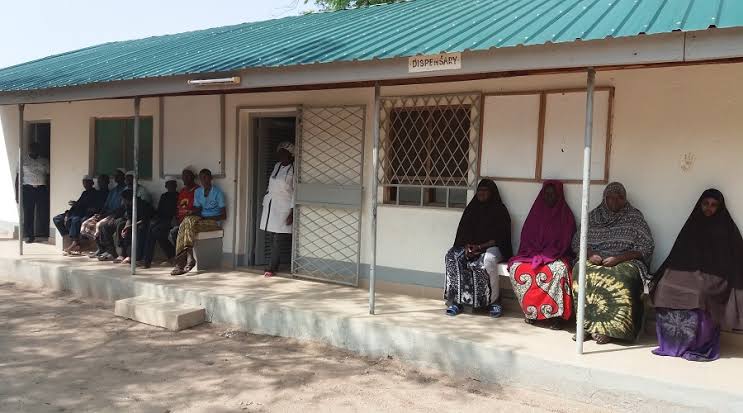
A local dispensary in rural Kilifi, Kenyan coast (file image)

Through the facility, IFC is partnering with medical equipment manufacturers and local financial institutions to support healthcare providers in East & Central Africa.

The loan size to smaller healthcare providers -which serve more than half of Africa’s population, including low-income patients – is expected to range from $5,000 to $2 million, to help them lease or purchase equipment.
Currently, most smaller healthcare operators in Africa cannot secure bank loans due to their perceived high investment risks, meaning they can’t afford medical equipment, renovations, or to recruit qualified personnel.

“Many smaller healthcare businesses in Africa don’t have the equipment they need to respond to COVID-19 and deliver other vital services,” said Makhtar Diop, IFC’s Managing Director.

Unlocking access to finance can save lives now and will, in the long term, strengthen healthcare systems across the continent.”

Supported by the International Development Association Private Sector Window (IDA-PSW) Blended Finance Facility and the Global Financing Facility for Women, Children and Adolescents (GFF), the facility falls under IFC’s Global Health Platform, which was launched to help developing countries fight the coronavirus pandemic and increase their healthcare systems’ resilience.

“Lack of access to affordable quality healthcare is one of the most pressing issues of our time,” said Winfried Jansen, Health Systems Leader, Philips Africa.

“Philips aims to contribute substantially to improving healthcare in Africa through innovative solutions that are tailored to local needs. Many clinics on the continent would like to invest in new medical technology but find it difficult to obtain the necessary finance. Together with Philips Capital and through this partnership with IFC we are enabling healthcare facilities to make quality healthcare available to a large group of people.”

IFC expects to expand the Africa Medical Equipment Facility to more countries and invites interested financial institutions and equipment manufacturers to contact IFC to explore partnerships

The five major ‘Not To Do’ things when hitching a lift in someone’s car!

There’s an unofficial creed to follow when riding in someone’s private car. It’s a little like crashing in someone’s crib. In Kenya, it goes a notch higher….

Here’s a few pointers to follow.

Agree to the owner’s views on contentious matters in the duration of the drive. Topical matters that demand loyalty or some societal bias, say politics or sports, the car owner enjoys a monopoly of ideas.

Just pray that he commands some decent acumen.

The trick is to steer the conversation from sports if his team is hanging by a thread from possible relegation.

It’s your duty to curse errant drivers you meet on the road. It doesn’t matter how incompetent he is, remember which team you rooting for.

A special bonus is earned if you roll down the window and scream at a clueless boda boda guy.

You hail from an angry republic – it’s time to vent that anger.

Thou shall not touch the stereo. I repeat, for all austerity. Aside, it makes sense: it is HIS stereo. Make a prayer that the tape cassette playing rhumba on loop gets jammed.

Sometimes, providence may smile in your direction and your host has an ear for good music.

Enjoy the ride, but do not sing along if the host is not – hitching a lift doesn’t give you an arena to showcase hour vocal prowess.

Asking for a lift in the village comes with additional tags. Cars get scratched by overgrown hedges. Cars get stuck in mud, or hit undersides on big rocks.

Follow the driver’s cue: if he wants to check out the car, get out too. Make a scene. Get sprawling on the ground to check the car’s innards. Is there a scratch?

This is the perfect time to remember high fuel taxes, county funds and how that doesn’t reflect in decent roads.

Be aware of your standing in society. Are you important? Or is there someone else more important’er?

Enroute, the host may be inclined to offer someone else a lift.

In Kenya, the front seat is sovereign. Be sure to offer your seat if you deem the other passenger as of higher social standing. Chances are they’ll turn it down, but, woe unto you if the host has to ask you to vacate the seat.

If you’ve been this embarrassed, then you’ll jump at the slightest opportunity to own your own ride.

Perhaps, it’s time to make your own playlist and enjoy it on a long drive.

There is a simple way – by taking advantage of an awesome, pocket-friendly financing deal thanks to Co-op Bank in partnership with World Navi – heavyweights in automobile acquisition.

Co-op Bank has partnered with World Navi to enable their clients to import vehicles safely, with upto 80% asset financing!

The importation process takes no more than 60 days. The car is delivered to your doorstep, like pizza!

This is a chance to make your opinions count on the long drive.

Click here to learn more about the financing deal.

Why is Joginder Singh such a timeless legend in the world of motorsport?

Joginder Singh.

If that name doesn’t ring a bell, and evoke pleasant Easter memories, well, you missed out on exciting exploits of a motoring sport legend.

Joginder Singh (file image)

Joginder is non-arguably the greatest driver to cast in the now-defunct Safari Rally, mid-60’s to late mid-70’s.

The Safari Rally was traditionally set over the Easter weekend, and for good reason – it’s the rainy season.

It was an endurance rally, and only the best in terms of driving skills, hands-on engine tinkering experience and physical endurance could hope to complete it.

Joginder, who later earned the moniker ‘The Flying Sikh’, proved his mettle in all aspects.

The legend had started out as a spanner boy in his father’s garage, and this greatly inspired his exploits behind the wheel.

The Flying Sikh grabbed his first victory in 1965, in a Volvo PV544, with his brother as the co-driver. He later switched to a Mitsubishe Colt Lancer 1600 GSR to clinch victory in 1974, and 1976.

It’s in this Colt Lancer that Joginder’s feats made him world famous.

For instance, the 1968 Safari Rally was planned to run the entirety of the Great Rift Valley, and end in Nairobi.

Joginder got the No.1 car tag – which, in rallying circles, is considered jinxed. And it proved so, halfway in the rally.

He was flagged off the ramp first, but, halfway, his Mitsubishi Colt developed clutch problems.

It was rainy and getting stuck was normal.

Somewhere on Mau Escarpment, he watched around 20 of his competitors zoom past in a spray of muddy water, as he tried fixing his transmission.

His Colt couldn’t engage forward gears, just the reverse gear.

Joginder, being Joginder, turned his Colt around and started playing catch up, in reverse.

Subsequently, he managed to overtake almost all of them, stuck in the mud along the route – in reverse gear!

In that rally, he finished 3rd – having driven the last half in reverse gear – in extremely muddy conditions.

Easter hasn’t always been so boring, and slow. It was a season of adrenaline-filled rally fiesta.

The menu was two-way: Either extremely muddy, or extremely dusty.

Motoring was raw. The rally cars were pretty basic – none of the fancy bells and electronic assists in modern cars. To triumph, you had to be in the game.

Easter would find us hogging cattle ruts in the route picked by the rally organisers. If beyond the region, it was a favorite past time following the live reports of the rally via the national broadcaster.

That’s how Joginder Singh gained immortality, and genesis of the saying: He drives like Joginder…

This year, Easter has been ruined by the ravaging pandemic that has resulted in curfews and lockdowns. There’s not much to choose from, in terms of marking Easter with your family.

However, while observing the measures, one can still have an Easter break in select restaurants, outdoor camp grounds and some bit of travel.

One easy way to be safe is to avoid tangible cash – as security against scheming thieves and the pandemic.

The use of Co-op Bank Visa cards is a sure fire way to keep safe from the virus, and take advantage of awesome discounts negotiated by Co-op Bank for their clients using the Co-op Visa cards, Co-op ATM’s and Co-op Credit cards.

You’ll have fun with family shopping for gifts, paying for fuel or food and accommodation – and still get to save a lot of money.

To learn more about discounts availed by use of Co-op Visa cards, click here.

Happy Easter!

Want to experience terror? Riding in a fisherman’s dug-out canoe beats bungee-jumping!

You haven’t lived if you haven’t sunk your toes in the white sands and gulped for breath in the ocean surf on the Kenyan coast.

People tell awesome stories of their coastal retreats, albeit generously peppered with hyperbole.

This story is neither awesome, nor laced with additives. My first solo trip had lots of fun moments, but Son of Adam is wired to record the outrageous. Normal is boring.

Well, cue in my first semester break. I had decided to backpack to the coast. Backpacking is the fall-back option for travel enthusiasts on a budget. None of my mates was crazy enough to join, so I had to travel solo.

I had pored over a tourist map detailing exquisite spots to visit. I couldn’t miss a visit to Wasini Island.

Wasini Island is an idyllic tourist island on South Coast. It’s the far most island, and a quick perusal online described a land of positivity, friendly people with a mixed heritage.

Wasini is a few nautical miles to Tanzania, or Zanzibar. That’s why ‘mixed heritage’ tagged at my heart strings – I’ve always liked to meet people from these lands.

A shoestring budget notwithstanding, I landed at Shimoni. This is a small town, that’s serves the island. There’s a dock, with all sorts of boats – fishing boats, passenger boats to the island and beyond, tanker boats, and other sorts.

The locals are drawn like magnets to visitors. A lone, backpacking student got noticed in an heartbeat. Even less to recognise a budget traveller!

The boat fees to cross to the island are varied. I chose the lowest. Turns out that I chose a dug-out canoe. This was a fisherman from the island who had delivered his day’s catch to the mainland.

My prior sailing experience was limited to a few rounds in a boat at Uhuru Park. I was then five or six, on a family day out over Christmas. It wasn’t exactly sailing, those boats have pedals!

The canoe is long and narrow. A lot like the biblical path to heaven. We squeezed in, the fisherman and I facing each other on opposite ends.

He hands me a container, a jerry can cut in half. Says nothing. He grabs a pair of oars and pushes off the pier.

When you make a bad decision, the universe is ruthless. I realised, immediately. The canoe started filling up. Am trying to lift up my back pack. The fisherman points at the half-container with his lips. He’s rowing.

I have to keep throwing out water with the container! My backpack is getting wet! The sea is tossing us in the air like balloons! Am literally inches away from the water!

It was dusk – at some point all I could see were tiny dots of light across an endless expanse of black water!

If you’ve watched ocean documentaries, then you’d know the horrors that abound in the deep sea.

I was shaking. Half from the chilling cold, and the other from the fear of the unknown! I found myself praying – even calling on my ancestral gods!

Some how, we made it across. I could have voted that nonchalant fisherman the greatest sea captain that ever sailed.

In retrospect, I discovered that in times of uncertainty, my default setting is deeply religious. Thankfully, the people and the general ambience on Wasini Island gifted me with an incredible holiday.

Presently, it’s an easy choice of pocket friendly options available for travel enthusiasts – courtesy of a partnership between travel magnates Bonfire Adventures and Co-op Bank.

Co-op Bank has negotiated a deal for clients wishing to book a Easter holiday retreat through Bonfire Adventures.

There’s a major discount up for grabs if payments are done with Co-op ATM cards, Co-op Credit cards or Co-op pre-paid cards.

Bonfire Adventures have an amazing array of travel packages covering the Kenyan coasts in its entirety. All exclusive resorts and spots from the North to the South Coast, it’s a once-in-a-lifetime Easter offer.

To learn more about the Co-op Easter travel discounts, click here.

Happy Easter!

Co-op Bank leads the industry as it releases a 14 billion report for Year 2020

Co-op Bank Group is reporting a Profit before Tax of Kshs. 14. 3 Billion for the financial year 2020 compared to Kshs. 20. 7 Billion recorded in 2019, and a Profit after tax of Kshs 10.8 Billion compared to Kshs 14.3 Billion in 2019.

This is a 23% reduction on account of increased Covid 19-related loan loss provisions and the absorption of currency translation losses in our South Sudan operation.

The Group has taken loan loss provisions of Kshs. 8.1 Billion,being a 220% increase from Kshs. 2. 54 Billion in 2019 in appreciation of the challenges that businesses and households are grappling with from the disruptions occasioned by the ongoing pandemic.

We continue to actively engage our customers to support them through this period, by re-aligning the servicing of facilities, funding and transactional needs as the situation unfolds. A total of Kshs.49 Billion in loans have been restructured to support customers impacted by the pandemic.

The Group has sustained the Balance Sheet growth with an Asset Base of Kshs. 537 Billion as at 31st December 2020.

The Group continues to implement proactive enterprise risk management initiatives to ensure uninterrupted business operations in the following ways;

Fortification of our digital channels to support uninterrupted access to banking services by customers; over 92% of our services are now on alternative bankingchannels.

Enhancement of digitization of internal bank processes and engagement platforms, to build contactless capabilities for both customers andstaff.

Adoption of a work-from-home model for the safety and wellness of bank teams,and ensuring safe spaces for staff who continue to serve in physical touch points.

Robust engagement with regulators to ensure full compliance andsupport.

Key financial highlights include; –

Balance sheet; The Group has seen sustained Balance Sheet growth as hereunder;

Total Assets grew by Kshs 80 Billion (+18%) to Kshs. 537 Billion compared to Kshs 457 Billion in the same period last year.

Net loans and advances book grew by Kshs 20 Billion(+8%) from Kshs.266.7 Billion to Kshs. 286. 6Billion.

Investment in Government securities grew by Kshs.44. 1 Billion (+37%) to Kshs. 161.9 Billion compared to Kshs.117.8 Billion in 2019.

Customer deposits grew by 13.8% from Kshs. 332.8 Billion to Kshs 378.6 Billion.

Borrowed funds from development partners grew by Kshs. 19.6 Billion (74.2%) to Kshs 46 Billion from Kshs.26.4 Billion in2019.

Shareholders’ funds grew to Kshs. 90.7 Billion (+14.4%) from Kshs. 79.3 Billion in 2019 enabling us to continue pitching for big ticket deals.

Profit &Loss

Totaloperatingincomegrewby11.1%fromKshs48.5BilliontoKshs53.8 Billion.

Total non-interest income grew by 1.9% from Kshs 17.2 Billion to Kshs 17.5 Billion.

Net interest income grew by 16.1% from Kshs 31.3 Billion to Kshs 36.3 Billion.

Total operating expenses grew by 41.7% from Kshs 27.8 Billion to Kshs.39.4 Billion on account of higher loan loss provisions.

Innovative Customer DeliveryPlatforms

Through our multi-channel strategy, the Bank has successfully moved over 92% of all customer transactions to alternative delivery channels, an expanded 24-hour contact centre, mobile banking, 576 ATMs, internet banking and over 23,000 Co-op Kwa Jirani banking terminals.

A successful Universal Banking model and the implementation of Sales Force Effectiveness has seen the Group serve over 8.8 million Account holders across allsectors.

Key focus on digital banking,with the all-telco Meo-op Cash Mobile Wallet continuing to play a pivotal role in the growth of non-funded income with 5 Million customers registered and loans worth Kshs 58.5 Billion disbursed in 2020.

Over 116,000 customers have taken up the MSME packages that we rolled out in 2018, and 10,750 have been trained on business management and planning. We have earmarked Kshs 23.5 Billion for MSME lending, with Kshs.16.8 Billiondisbursed to date through our E-Creditsolution.

Our unique model of retail banking services through Sacco FOSAs enabled us provide wholesale financial services to over 479 FOSA outlets, and issue over 1.4 million Sacco-Linkcards.

Co-op Bank has engaged a global consulting firm to conduct a Credit Risk Adaptation Project named ‘Project Kilele’.

Key objectives of the project are:

End-to-end assessment of credit risk management practices by undertaking a comprehensive diagnostic review touching on each area of credit risk, including credit risk management framework with a key focus on riskgovernance, credit risk appetite, origination and underwriting process, credit approval process, credit scoring/rating models, and pricing.

Strengthen portfolio assessment and risk frameworks.

Enhance Collection platforms aligned to the new business operating environment.

Subsidiaries

Co-op Consultancy & Insurance Agency posted a Profit before tax of Kshs 788.6 Million as at 31st Dec 2020, riding on strong penetration of Bancassurance business.

Co-operative Bank of South Sudan that is a unique joint venture (JV)partnership with Government of South Sudan (Co-op Bank 51% and GOSS 49%) made a Profit before tax of Kshs 107.8 Million in 2020.

This performance however translated to a monetary loss of Kshs 1.65 Billion attributable to hyper inflation accounting occasioned by currency devaluation of the South Sudanese pound.

Co-op Trust Investment Services contributed Kshs. 70 Millionin Profit before tax in 2020, with Funds Under Management standing at Kshs. 127.5 Billion compared to Kshs. 102.1 Billion as at 31st December 2019.

Kingdom Bank (former Jamii Bora Bank) has a profit before tax loss of Kshs.76.3 Million for the year.

Kshs. 49 Billion Loans Restructured to Support Customers on Covid-19 With the Covid-19 crisis, the Bank has proactively engaged all customers and reviewed the following;

Customers requiring an interest moratorium period,

Customers requiring a better structure/longer repayment period, and,

Customers requiring additional funding to manage the crisis.

In total, a portfolio of over Kshs. 49 Billion has been re-aligned to offer our customers this much-needed support.

Kingdom Bank Limited

Kingdom Bank Limited is a fully-fledged Commercial Bank, licensed and regulated by the Central Bank of Kenya, with over 444,000 customers in 17 branches.

The acquisition offers Co-op Bank the opportunity to cross-sell and deepen product offering to the enhanced customer base and create a niche bank to offer specialized credit offerings that include MSME Banking, Microfi nance, Youth & Women Banking, Asset Finance and Leasing.

The subsidiary reported a loss of Kshs.76.3 Million for the year 2020 and is expected to turn around its performance in 2021.

MSMEFinancing

The Group secured a long-term financing facility from the IFC (International Finance Corporation) amounting to Kshs. 8.25 Billion for on-lending to MSMEs at affordable terms.

The proceeds of the facility will support customers to better cope with the disruptions brought about by the pandemic, especially those operating in the following key business areas;

Micro small and medium enterprises(MSMEs)

Businesses undertaking Climate-Smart Projects, including agricultural inputs and sustainable agricultural practices, renewable energy, energy efficiency and relatedareas.

Corporate Social investment

Co-operative Bank Foundation has provided Scholarships to gifted but needy students from all regions of Kenya.

The sponsorship includes; fully paid secondary education, full fees for University education, Internships and career openings for beneficiaries.

The foundation is fully funded by the bank and has so far supported 7,713 studentssince the inception of the program.

The bank gave a cash donation of Kshs. 100 Million to the Covid 19 Emergency Respond Fund.

Being cognizant of the huge role that we play in supporting communities especially during this period, we continue to operate in an economically, socially and environmentally-responsible manner.

Dividend Payment

While maintaining adequate capital buffers in light of the current operating environment, the Board of Directors has approved a dividend payment of Kshs. 1.00 per ordinary share held (2019 – Kshs 1.00) to be paid on or about 14th April 2021 to the shareholders registered on the Bank’s Register at the close of business on 31st March 2021.

This will be a much-needed relief in a pandemic year to the over 15 million­ member Co-operative movement that predominantly owns the bank.

Accolades

It was another notable year as the Bank received recognition both locally and internationally, including the following;
Co-op Bank was named Bank of The Year in Kenya, in The FT Banker 2020 Awards run by the Financial Times of London.

Co-op Bank was named Best Bank in Kenya at the African Banking Awards 2020 organised by EMEA Finance.

This is the third time around, having also won in 2018 and 2019.

Co-op Bank signed up to the United for Wildlife 2018 Mansion House Declaration, thereby joining the United for Wildlife’s (UfW) Financial Taskforce committing to fight the illegal trafficking in wildlife, by way of building illegal wildlife trade into existing financial crime compliance programs.

MetroTrans Sacco acquires 45 brand new buses in a financing deal with Co-op Bank

MetroTrans Sacco, one of the leading PSV transport Sacco’s operating in Nairobi, has today received 45 new buses at Isuzu East Africa with financing from Co-op Bank in form of a lease worth Kes 225 Million.

The lease will enable the Sacco to respond to increased demand in their existing routes, and to also serve their customers better by offering cashless payments enabled by technology company SWVL that allows users to make and track bookings through the SWVL app.

The buses were financed through Co-op Bank’s leasing arm – Co-op Bank Fleet Africa.

Under the leasing agreement, MetroTrans will lease the buses for a period of four (4) years after which they will be sold to individual Sacco members including drivers.  This empowers the Sacco members to own matatus which they would otherwise not have been able to acquire.

Co-op Bank is the first bank in Kenya to offer leasing services to the matatu sector.

The MD of Isuzu E.A, Rita Kavashe hands over the keys to Mr. Oscar Rosana, Ceo MetroTrans Sacco while Mr. Edward Mutuaruhiu Head Of Sacco Banking at Coop Bank (extreme right) and Mr. John Mathu, Chairman MetroTrans Sacco (left) looks on.

MetroTrans is one of Kenya’s leading transport Saccos, with investments in PSV transportation, logistics and supplies.

The Sacco has been in operation since 2011 and currently operates 51-seater, 33-seater and 14-seater matatus on various routes within Nairobi including Nairobi – Utawala, Nairobi – Kabiria , Nairobi – Kawangware and Nairobi – Kasarani – Mwiki. They have also expanded their operations to Bomet.

Speaking at the launch held at Isuzu Head Office in Nairobi the Chairman of MetroTrans Sacco, Mr. Oscar Rosana, lauded the partnership between Metrotrans Sacco and Co-op Bank that enabled acquisition of the new fleet of buses, which will significantly boost the income of Sacco members.

“The acquisition of these buses is timely, as it will improve the incomes of our members by addressing the increase in demand we have experienced in recent times. Furthermore, our partnership with SWVL to provide cashless payment solutions is consistent with Government guidelines intended to minimise the use of cash in favour of cashless transactions in an effort to reduce the risk of spreading COVID-19”.

Speaking at the same function, the Director of Co-operatives Banking at Co-op Bank, Mr. Vincent Marangu said,

“Co-op Bank is the preferred choice for PSV companies and Sacco’s since we understand their business model very well and have the right solutions to cater for their needs. We have a dedicated Transport and Housing Co-operatives department that supports over 900 transport companies and Saccos with working capital, payment and collection solutions to assist them effectively manage their fleets”.

He further adds: “This year alone we have approved financing for over 200 PSV vehicles worth Kes 870 Million, through asset finance and leasing. We are proud to be the first bank in Kenya to offer this service to matatus and look forward to more Sacco’s taking it up.”

Significant sacrifices mama mboga makes that keep us going, things would be different without her

In the midst of the frenetic chaos due to the marauding Coronavirus, I’ve had my heart heavy with guilt.

That rarely happens. A similar feeling befell me once in a matatu, to town. Am sitting on the first seat, next to the door. It’s a semi dark 14-seater van – as loud as they come. There’s a young lady sitting in front – passenger seat – next to the driver. She has a bare elbow on the open window frame.

It’s early, and as chilly as a witch’s tit. To add pepper to an already peppered sauce, chilly wind is blasting through at a hundred miles an hour, straight to my face. (Rongai matatus’ hardly follow the standard Michuki rules).

I lean forward and tap the young lady, on the shoulder. She has earphones on. I need that window wound up, lest my modest foundation is blown dry off my face. Or, Lord Almighty, chip my Rihanna lipstick.

Aside: Dear reader, how does someone use earphones in a matatu blasting thousands of decibels?

Anyways, she ignores my tap. I lean forward and shout in her ear: CLOSE THE WINDOW! She flinches like a girl does at the sight of a roach, but ignores.

I tap her again, on the alternate shoulder. She doesn’t look up – but thrusts a note in my direction, and holds. In the dim light, I can faintly see a crisp 500 shilling note. She had mistaken my tap on the shoulder as the Kenyan Conductor-Speak for ‘Pay up!’

I do three things in perfect sequence: Take the note. Settle back on the seat. Look around. Half the load is napping, or scrolling their phones. I beckon the conductor (who’s mostly hanging half-out of the vehicle) to make a stop. I alight.

Most people riding high on the moral ladder wouldn’t have taken the Kes.500 note. But in my case:

  1. I haven’t lately held a spot on the moral ladder higher than the height of my knee.
  2. This is Nairobi – and the streets are what they are. She’d have done the same, right?
  3. Karma had chosen me, a mere mortal, to serve justice. She was really mean.
  4. It was those Godforsaken dates, when we almost die of financial malnutrition. Mostly.

The guilt had almost killed me that week. I kept reminding myself just how mean the lady had been – I mean, she hadn’t cared if I went down with pneumonia.

Well, I’ve since taken a fairly huge slice of street charity to atone for it.

This week, though, I’ve been guilty for the indifferent manner I’ve been treating Mama Mboga. She deserves better. She’s been instrumental in my survival journey as I make do in this city.

Each morning at 5am, I pick hot Mandazi from her stand. Sometimes, I don’t even pay. Every other evening, I pick assorted boiled foods – Githeri, beans, Nduma – then grab some veggies. Sometimes, she’d be at her stand at 11pm, to feed our drunken bums.

She has aligned herself for the fight against Coronavirus. Other than scolding us to heaven-come to wash our hands at the stand, she declines cash. She prefers that we send money direct to her Co-op Bank account. She adds that it’s free!

I sent money from M-Pesa straight to her Co-op Bank account at NO CHARGE using the Paybill number 400200. I thought its empty talk, but, yes, its free! It’s then that I got to know her real name.

That’s the source of my guilt.

Mama Mboga is actually Rosemary. Just like my mum in the village. All these years, I haven’t known her real name! Ain’t that incredibly messed up?

Businesses and farmers to gain as Co-op Bank seals a landmark 95% vehicle financing deal with Toyota Kenya

Toyota Kenya and Co-operative Bank have entered into a strategic financing partnership that will enable the bank’s customers to purchase commercial and personal vehicles under Toyota Kenya’s portfolio, including Toyota, Suzuki, Hino and Yamaha.

This Scheme is expected to assist business recover from the ravages of Covid-19, as customers require to place a down-payment as low as 5% to purchase the vehicles, as financing of up to 95% will be provided.

In addition, repayment of the loan is for a long period of up to 60-months.

The iconic Toyota Landcruiser Pick Up: One of the vehicles in the financing deal.

Co-op Bank will also extend a ​Kshs. 500,000 working capital loan – without additional security – to the successful applicants of the Toyota Vehicles. What’s more, to give  customers some relief to enable them build cash for repaying the loan, customers will enjoy a grace period of 2 months​ (60 days) before they begin paying back the loan.

The new partnership also allows fleet customers under Coop Fleet Africa, the leasing arm of Co-operative Bank Group, to acquire more units. This is an amplification of the existing deal that only covers the commercial segment with the financing of the Hiace van and Hilux pickups.

Managing Director Toyota Kenya, Arvinder Reel, in lauding the improved deal said the pandemic demonstrated the need to support individuals and sectors that are at the heart of the country’s economy with flexible options to acquire key assets for their operations.

“Our partnership with Co-op Bank goes beyond just the sale of the vehicles. We are saying this is an improved partnership since customers will also receive professional training for their drivers under the Toyota Advanced Driving program and the Yamaha Riding Academy, for those who purchase the Yamaha motorbikes,” he said.

“From our lineup of quality, durable and reliable commercial and passenger vehicles, Toyota Kenya shall continue prioritizing solutions that support Kenyans towards their personal and business re-building in the wake of the pandemic,” he said.

Toyota Kenya has over the years been a great champion of growing the local automotive industry through the production of various models under its stable, hence building the local content supply chain, transferring technology and creating direct and indirect jobs for Kenyans.

DEAL SIGNED-OFF: (L-R) Managing Director Toyota Kenya, Arvinder S. Reel, Ag Director Corporate & Institutional Banking at Co-op Bank Jacqueline Waithaka and Co-op Bank Fleet Africa Leasing Managing Director Robert Mbugua display the deal documents following the sign-off the joint financing deal that will offer up to 95% financing for the purchase of Toyota vehicles.

“Currently, Toyota Kenya locally assembles 11 varied models which includes Hilux & Land cruiser pick-ups, Hino trucks and Yamaha motorcycles,” he noted.

On behalf of Co-op Bank, the Director of Corporate and Institutional Banking, Mrs. Jacquelyne Waithaka said that the scheme is available for those customers who want direct acquisition of the vehicles, or for leasing. The bank has made the terms flexible to accommodate MSME’s, Co-operatives, Corporate, Individuals and Farmers, to support them re-tool their businesses as the economy re-opens.

Even after the lifting of the interest rate capping, the two firms have agreed to keep the borrowing rate at 13% on reducing balance.

Co-operative Bank lights up the property market by launching the innovative Good-Home ‘Property Hub’

Co-operative Bank has launched The GoodHome Mortgage Property Hub where clients can access bank-approved properties for residential and commercial use.

This is a one-stop shop that will serve the twin purpose of giving developers financed by the bank a ready market for their properties, while at the same time giving buyers a wide range of properties to choose from.

Chris Chege, the Head of Mortgage Finance at Co-operative Bank and Jacquelyne Waithaka, the bank’s Director of Corporate & Institutional Banking launch the GoodHome Property Hub at KUSCCO Center, Upperhill on 28th September 2020. Looking on are Patrick Macharia, the Property Hub Manager and other members of staff who serve customers at the Property Hub.

Customers will access property solutions at both the physical office located at KUSCCO Center, Upperhill and virtually through goodhome.co.ke.

The hub will also provide access to financing through the GoodHome Mortgage which is available in all major currencies to Kenyan Individuals, SMEs, Corporate companies and Co-operatives including those in the Diaspora.

Our team of experts have also developed a wide range of solutions for specialized groups such as landlords, contractors and Co-operative Societies in line with the affordable housing program which is one of the key pillars in the Government’s Big 4 agenda.

Jacquelyne Waithaka, the Director of Corporate & Institutional Banking at Co-operative Bank and Chris Chege, the Bank’s Head of Mortgage Finance launch the GoodHome Property Hub at KUSCCO Center, Upperhill on 28th September 2020. Looking on are Patrick Macharia, the Property Hub Manager and other members of staff who serve customers at the Property Hub.

Co-operative Bank is one of the leading mortgage financiers in Kenya and has provided mortgage solutions since 2009.

The property hub further enhances the bank’s capacity to serve all sectors of the real estate market, in line with its mission of providing innovative and relevant services to a wide range of retail and corporate customers.

What best describes the feeling of getting to your house after a long day at work?

After a hard day’s hustle, and errands – what’s the first thing you do when you get into your house?

Kick off the irksome heels?

Flop on the stained coach and switch on the thumping music system?

Unclip tight clothing to free long-suffering appendages?

There’s no place like home. This is your personal space – you can be you.

It matters not if it’s a sprawling estate on endless acreage fraught with servants, or, a tiny, cramped, windowless box in a maze of floors and staircases somewhere in the city.

This is home, and there’s nowhere else the heart would rather be. And, these are just urban rentals. The homeowners are usually on another, higher level.

Have you seen how hard faces and hearts melt into emotional mirages when discussing the journey to building the first home?

The first home is often a rewarding culmination of an intense journey of endless personal sacrifice, sweat, blood and tears. The patience and inner drive needed to transform a barren piece of rocky land into a haven of dreams, is not a mean feat – and it’s painstakingly slow – akin to pulling out multiple bee stings.

Also Read: https://www.ghafla.co.ke/sponsored/co-op-bank-partners-with-isuzu-and-simba-colt-to-stir-the-motoring-industry-with-an-incredible-95-vehicle-financing-scheme/

In between dishonest building crews bent on fleecing by overcharging for supplies and inflating the casuals tally, most home builders contend with taxing day jobs. Site supervision is relegated to multiple calls to the foreman – energy sapping and financially draining.

And, no, hiring a relative as a supervisor at your building site always ends in tears – and, irreparable family damages.

To fill in this gap, numerous construction firms have been formed. Depending on the level of work, these firms usually charge a percentage higher – but, all factors held constant – it’s the safer bet for the busy corporate home builder.

Along the Kenyan coastal zone, one building firm stands out – Riziki Home Solutions.

Interestingly, Riziki Home Solutions is lady-owned, and ran. This firm has steadily created a comfortable niche in residential and business structure development. As it is, once a potential home owner signs a contract and settles half of the agreed final payment, the firm handles every aspect of the process – from ground breaking to final touches – within an agreed time frame.

There’s some truth in the adage that what a man can do a woman can do twice better.

The firm is staffed with lady professionals, from architects, civil engineers and all craftsmen in between. Read plumbers, electricians, interior décor and landscaping experts.

Riziki Home Solutions Director, one Ms. Sarah Riziki doesn’t mince words, in her swivel leather seat behind a swarthy mahogany desk in her spacious office on the mezzanine floor, on one office block off Nkrumah Road.

“We started off as a tiny cowboy outfit – with the bare minimum we needed to make a successful project – one architect, one engineer, one plumber, et al. At the time, we all had day jobs till we ran the first few projects. We all quit and got into it fulltime” Says Ms. Sarah.

“Thanks to a solid financial partner, Co-op Bank, we’ve been able to expand, and build a credible working reputation”.

As we speak, Riziki Home Solutions is taking advantage of the Biashara Indelee Na Isuzu Campaign.

Co-op Bank has partnered with Isuzu and Simba Colt in a vehicle financing deal that gives clients up to 95% funding on selected vehicle brands to boost Micro, Small and Medium Enterprises (MSMEs).

The construction firm has signed up for a fleet of Isuzu trucks and pick-ups: the TFR series, the N-series NHR; and the F-Series models – FRR, FSR.

The Biashara Iendelee Na Isuzu Campaign also allows clients a Ksh.500,000 working capital facility, a 60 day repayment-grace period, a negotiated motor vehicle insurance cover and the longest, flexible re-payment periods in the market – 5 years.

Get home and kick off your heels, enjoy your personal space and just be yourself.

This is home.


This is how cereal, fruit & vegetable traders get easy financing for brand new trucks to ferry produce, cut transit losses and irksome middlemen

Do you know why bananas are a sure fixture in the breakfast basket in every hotel? Or, in your own kitchen, or sneaked into your school lunch basket?

The fruit is loaded with healthy benefits. It’s loaded with fibre – both soluble and insoluble.

The soluble fiber has the tendency to slow down digestion and keep you feeling full for a longer time.

In Nairobi, and other major towns across the region, the banana is the fastest moving fruit in grocery stalls, street vendors and supermarket fruit stands. Its available all year round, and a common staple in most households.

The versatility is boundless.

Ripe? You game.

Chopped and tagged with other fruits as pudding? Even better.

Peeled raw and chopped into tire shapes and fried? Who doesn’t miss that cuisine?

The banana also features heavily in every urban bachelor’s dwelling. Its affordable – and a high -energy fruit.

In Kenya, many regions grow bananas. The richest, though, and famous for their banana-cultured lifestyles, are the Kisii people. In hot pursuit is the Meru region.

The banana trade is booming, but the blunt edge is borne by traders – on the transport part. It’s really hectic. But necessity is the mother of innovation, right?

In banana-rich Kisii and Meru region, traders have joined up to form empowerment groups. This enables them to pool resources and hire a single hauling truck, as opposed to the previous trend to just source for available transport at the main markets.

One step further, is that these trading groups have evolved to be financial outfits, and got duly registered. Each member has a membership number to the group, and deposits money directly to the group’s central account.

For Co-op Bank, these trader groups enjoy customized services, and expert financial advice. The bank has assiste4d the group acquire Safaricom till numbers that deposit money directly to the group’s account.

Despite the prevailing financial melt-down spurred by the pandemic, Co-op Bank has renewed a vehicle financing deal financing deal that is set to empower such registered groups – like, the banana traders.

The Biashara Iendelee campaign deal gives clients up to 95% funding on selected vehicle brands to boost Micro, Small and Medium Enterprises (MSMEs).

These are versatile lorry and pick-up trucks ideal for business, from Isuzu Kenya and Simba Colt.

For Isuzu, models available are: Pickups – TFS & TFR series. Trucks: N-series Models – NHR, NKR, NQR, NPR; Isuzu F-Series models – FRR, FSR.

For Simba Colt, Co-op Bank clients can pick the versatile Mitsubishi Canter FE 71, 84,85CG, 85CH, Mitsubishi Trucks and assorted Mitsubishi Pickups.

If they wish, these groups can also apply for a Ksh.500,000 working capital facility to ride out the crippling Covid-19 season. Other exciting perks is the 60 day loan-grace-period, a negotiated motor vehicle insurance cover and the longest, flexible re-payment periods in the market – 5 years.

There’s really no need for your group to incur losses due to delayed transport from the farm to the market – NO MATTER THE DISTANCE!

This is why a poultry-based startup idea has irresistible merits and worth your time!

There has been an intense global campaign to influence food sustenance, especially in developing countries. Leading scholars and economists across the globe have extensively released publications in that regard, and the view is unanimous: The next crop of millionaires in Africa will come from the agribusiness sector.

After the Covid-19 pandemic hit, corporate and private businesses have taken financial hits resulting in massive pay cuts for employees – or, the less pleasant and life-changing job layoffs and contract terminations.

Agribusiness beckons.

Sheriff Poultry Farm in Bamburi, Mombasa is a classic study on how a well-thought out investment in this sector can turn around plummeting fortunes. What’s more? Improving the livelihood of several lads by generating wage-paying jobs.

The founder of the robust poultry farm is an energetic, jovial lad – perhaps, early 30s’ – and has clocked a decade in a regional cement manufacturing company. He’s Abubakar Mwinyi, but known in the sprawling Bamburi Mwisho hood simply as Sheriff.

In January, just a month after the first case of the pandemic had broken, a third of the employees had received a letter from HR that declined to renew their contracts.

Thankfully, the company had awarded a severance package.

Sheriff didn’t grow up in a farming household, and didn’t have much experience. He had to learn from scratch. Sheriff sourced for online manuals and joined digital farming platforms. After lots of research, he settled on poultry, for several reasons.

The capital required doesn’t break the bank. It’s not labor intensive, and is flexible – start small – lower the risks. He didn’t need much land, his courtyard would be apt.

After a tiered chicken structure by a local fundi, Sheriff visited a hatchery in Kilifi County, and bought 50 chicks – one month’s old. His research sparked his interest in the Ken-Bro variety. This breed is versatile, either for eggs or as table meat.

It has notable resistance to disease compared to purebred layers, and attains weight for meat in just 3 months. If one opts for eggs, they require 6 months.

Sheriff was eyeing the meat business – cafés, restaurants and eateries. He also enjoyed home grown advantage – well known. He had ready market.

One month in, the entrepreneur realized how costly the venture is. The birds were fully house-bred, meaning the feeds cost twice as much as a similar project would cost in free range option. They were eating into his savings – poultry feeds are costly.

At 3 months, Sheriff sold the entire flock to a local café owner, at a good market price. He realized profit – but, at this stage – he valued the experience more. The first flock was his first dive into the deep end of the pool.

Using the earnings, he leased some space from his next door neighbor and fenced it. Now, he could rear his next flock partly in a deep litter system, and free range. After the usual fumigation and sanitation of the premises, he had doubled his purchase – he brought in 100 birds.

Since, Sheriff Poultry Farm has grown in leaps and bounds. It has diversified to host turkeys, water ducks and guinea fowls. The farm formulates own feeds.

Abubakar credits his success to a good relationship with Co-op Bank. After his first sale, Co-op Bank had assisted him register an M-Pesa Till number at no cost for his business – and linked it to his bank account.

Now, through New Co-op Bank Internet Banking, Abubakar easily monitors his account through his mobile phone. It’s now easier to pay for feeds or raw materials directly from his account, pay salaries. He gets to pay his utility bills – water and electricity bills conveniently using his phone.

It’s easy to self-register on New Co-op Bank Internet Banking, just click here, and enjoy the world of banking at your fingertips!

Finally, there is an exciting offer getting Kenyan men thrilled over household shopping!

Therapy doesn’t have a handbook.

To handle stress and depressing situations, many people find their peace in different things. A lot of people want to travel to new places, meet new places. A road trip is very therapeutic – there’s magic in the open road. If lucky, an open-top roadster is a blessing.

A famous global poet admitted to spending lone time at a remote waterfall. The sheet of water endlessly falling down the cliff to end in white foam and mist on the rocks below soothes the soul.

For other souls, hiking over difficult, remote trails works magic. A fair amount of bird watching along the route adds to the allure. Perhaps, it’s the smell of the woods, or the addictive testosterone as body limits are pushed to the extreme.

In some of these cases, being in an area without cellular network coverage is the secret. In the normal daily hustle and bustle, the gadgets never stop ringing. So many people to talk to, so many deals to close, so many deadlines to meet – its sheer heaven to get away from the madness once in a while.

It’s a chance to recharge the soul’s batteries.

On the domestic front, shopping comes as an easy option – it’s very therapeutic. The ladies love to shop. Most Kenyan ladies will go nuts with a good shopping spree. Needless to say, lots of emotional baggage is left behind in malls and arcade aisles. Its nature, perhaps.

Universally, however, men have never been taken in by shopping. It’s a necessary evil, an insufferable feat. A lot of men will gladly pass the monthly shopping chore to their spouses for a quiet drink and easy banter at the neighborhood barbershop.

This month, though, there’s a deal that has got Kenyan men visibly excited about household shopping. Granted, there are numerous comical scenes of a willing dad, trying to pick a brand of detergent from a couple of brands, but, still…..

This deal that’s changing the perception is The Angukia Discount Promotion in collaboration with Naivas Supermarket.

Shopping online from Naivas Supermarket has its perks.

When a Co-op Bank client shops online on Naivas and pays with the Co-op Visa Card, the client enjoys a refund on the delivery fee for all purchases worth above Ksh.1, 000.00. This Delivery Fee Refund is automatically deposited in the client’s Naivas E-wallet within 24 hours to be used in the next purchase.

The Angukia Discount Promo runs from 24th July – 18th September, 2020.

This online shopping deal has changed the hassle that has menfolk avoiding household shopping like the plague.

What’s more?

Co-op Bank clients can easily track their money from the comfort of their homes, through the New Co-op Internet Banking platform. A client can pay shopping and utility bills like KPLC, Water Bills, etc. It’s also easy, fast and secure to transfer cash between accounts within the banks, or other banks.

It’s easy to self-register on New Co-op Internet Banking, click here. Or, visit the nearest Co-op Bank branch for assistance from the banking staff.

All you need to know about Co-op Bank’s APIs and its impact in customer service delivery

Co-op Bank has invigorated its API platform. This is a vital cue in promoting partnerships and innovation and building disruptive business models and platforms to deliver seamless customer experience.

Co-op APIs are here to boost small business owners, fin-tech’s or techie’s to grow their businesses and improve overall customer experience.

But, then, are we really conversant with API’s?

What is an API?

A simple definition says it’s an application program interface (API).

It is a code that allows two software programs to communicate with each other.

An API defines the correct way for a developer to request services from an operating system (OS) or other application and expose data within different contexts and across multiple channels.

An Open API is also known as a public API are published on the internet and allows the owner of a network-accessible service to give universal access to customers.

Exposing data with an API can improve the customer experience because it provides greater functionality and scope of services within a single application or other digital property.

Co-op Bank offers simple APIs – aptly tagged ‘restful’ – that allows clients to quickly integrate and manage payments on web or mobile application. This is inspired by a belief in the creation of technologies that support innovation and in the creation of systems that have a positive impact on the lives of the people in the society.

The bank has in place a continuous innovation plan to open up the banking space using the latest and thoroughly tested technologies.

Co-op Bank APIs fall into two categories – transactional and account information services.

The Transactional APIs which involve:

Send money from a Co-op Bank account to an M-Pesa wallet.

Pesalink send to account – Enables clients to use Pesalink to send money from a Co-op Bank account to another bank account in a different bank.

Internal Funds Transfer – Enables clients to transfer funds from a Co-op Bank account to another Co-op Bank account.

Instant Notification Service – Sends real-time notifications to a customer’s accounting system of any activities in the respective customer’s account, like debits or credits.

The Account Information Services APIs have these functions:

Account Status Inquiry – This allows a client access the account balance around the clock.

The balances may be in various forms:

Cleared Balance

Booked Balance

Blocked Balance

Available Balance

Arrears Amount

Un-Cleared Balance

Overdraft limit

Co-op Bank open APIs eases up tedious programming tasks to enable clients focus on their core tasks and responsibilities.

To learn more about Coop Bank API’s, click here or visit the nearest branch.

Did you know that a piggy bank for your kids has an immense impact in their adult years?

The piggy bank.

This contraption has for generations been an endless source of happiness and grief for kids, in equal measure. It’s full of lessons – and it’s an instructional aid in the financial maze the kid will inevitably find himself growing into.

A basic piggy will come as a convectional box, with a slit hole. But with time they’ve metamorphosed into interesting figures and figurines – disguised in colorful themes based on comics or fantasy heroes, say Spiderman, or Donald Duck. It’s the coin-slit at the top that matters.

These are lots of ways a piggy bank is beneficial to your kid:

  • A piggy bank instills the long-term savings discipline into a kid. Once a kid gets a piggy and some coins, the natural instinct is to insert the coins into the slit. The lesson starts when the kid tries to remove the coins – and fails.

That’s where the piggy bank beats the money jar as an instructional aid.

  • It’s easier to teach kids how to have goals, and the saving culture towards achieving the goals. Once a piggy bank is given, set a goal for the kid spaced out at intervals: perhaps a coveted toy to be bought. The kid will show lots of enthusiasm to achieve this.

Fast forward to a few years, the kid will find it easier saving towards that family house.

  • A piggy bank enables a kid to focus on financial lessons. Kids learn better with visual cues. The lessons start as early as possible.

Saving is a habit, not an innate ability.

  • Allows an avenue in which kids can be involved in day to day spending management talks, and financial management.

For adults, financial management practices are increasingly taking a significant section of their time. It makes sense to have a platform that makes it easier to manage finances from a central point. In the current shifts to manage the global pandemic Covid-19, one of the safer practices is to go cashless.

Co-op Bank clients are a step ahead.

The New Co-op Internet Banking allows clients to access personal and business financial transactions online easily and securely from anywhere, round the clock.

A client can transfer cash from an account to another Co-op Bank account, or a different bank. It’s easy to handle standing orders, paying utility bills, et al. This has really revamped the world of banking.

To join and self-register on New Co-op Internet Banking, click here. One can also visit the nearest Co-op Branch and learn how digital banking has come full circle.

Co-operative Bank spurs tech innovators by launching the “Akili Kali Innovation Challenge”

Co-operative Bank today launched the Co-op Akili Kali Innovation challenge that is focused on engaging and partnering with technology innovators to address the gaps and challenges faced by Cooperative Societies.

The challenge, which is supported by the International Finance Corporation (IFC), is a call for passionate innovators to collaborate with Co-operative Bank in building the next generation of financial solutions beneficial to the Co-operative movement and its membership of over 20 million Kenyans.

Applications may be submitted through the Co-operative Bank website by 7th August 2020. The shortlisted candidates will be taken through a 5-week co-development and co-design program supported by a dedicated team from Co-operative Bank and nominated Cooperatives, after which a virtual demo event will be held to select one or more winners.

The winners stand to be awarded a cash reward of up to Kes 5M and an opportunity to integrate and launch their innovation with Co-operative bank.

Co-operative Bank is looking for technology innovators that can rapidly develop solutions to build value for Co-operatives and enable them to service members’ demands more efficiently while ensuring that the essence of the Co-operative movement, which is engrained in enabling both national and social development for individuals through a shared economy, is sustained.

The new innovations will also give co-operatives a competitive edge and strengthen their resilience in the rapidly changing financial landscape in Kenya, particularly in light of the myriad challenges occasioned by COVID-19.

The Co-operative Movement in Kenya is the largest in Africa and among the top 10 globally, with over 22,000 registered Co-operatives and over Kes 600B in savings. Co-operatives play a major role in all the key sectors of the economy including Education, Agriculture, Housing and Transport.

It employs more than 500,000 people besides providing opportunities for self-employment to many more.

Co-operative Bank has a long history with the Co-operative movement, having been started by coffee farmers back in 1968 and now owned 64.56% by Co-operatives through a special purpose vehicle known as Co-op Holdings Limited.

Speaking during the rollout of the Co-op Akili Kali Innovation Challenge, the Bank’s Director of Co-operatives Banking, Mr. Vincent Marangu, noted that the growth trends of co-operatives in Kenya indicate a great opportunity for co-operatives to offer valuable services to existing and potential new members whose demand for more and better services has grown with the digital revolution.

Co-op Bank opens APIs in a bid to promote partnerships and innovation among corporates, Sacco’s and SMEs

Co-operative bank has opened its APIs to help promote partnerships and innovation & build disruptive business models and platforms that deliver a seamless customer experience.

An application program interface (API) is code that allows two software programs to communicate with each other. An API defines the correct way for a developer to request services from an operating system (OS) or other application and expose data within different contexts and across multiple channels. An Open API also known as a public API are published on the internet and allows the owner of a network- accessible service to give a universal access to customers.

APIs are simple and easy to use, and accessible from web or mobile application. They provide an easier and faster way of partnering with Fintechs. Besides being a safe and secure mode of transacting, APIs enable real time update of payment status to deliver a seamless customer experience.

The Bank believes in co-creation and innovation that enables people, businesses and the society to grow. It believes that innovative products and services that benefit their customers and the public in general are key to success.

With the Co-op APIs dubbed Co-opConnect, the Bank aims to publish as many banking services as possible enabling their Corporate and Sacco customers to add value to their mobile apps & web services.

There’s two categories – the account information services APIs and the transactional APIs.

The Transactional API’s feature the regular banking functions:

Internal Funds Transfer – transfer funds from a Co-op Bank account to another Co-op Bank account.

Pesalink send to account – this enables customers to use Pesalink while sending money from a Co-op Bank account to another bank account in a different bank.

Instant Notification Service – real time notifications to a customer’s accounting system of any activities in the respective customer’s account i.e debits and credits.

Send money from a Co-op Bank account to an M-Pesa wallet.

Account Information Service APIs

This category shows the account balance as at a given time. The balances have many variations:

Cleared, Booked, Blocked, Available, Un-cleared Balance and Arrears Amounts. Clients also use this feature to access their overdraft limits information.

Other features on the Account Information Service APIs include:

Account Transaction Inquiry – Shows the status of a specific transaction. For example was a cash deposit successful.

 Account Mini Statement – Shows the latest 10 transactions in your account.

Exchange Rate Enquiry – Show the days foreign exchange for all major world currencies e.g. USD, GBP, EUR, CAD etc. that are offered by Co-op Bank.

Account Validation – Confirms that a provided account (mostly from a third party) is a valid account number within the bank’s system.

Status Enquiry – shows status of a specific request for example if you send a Pesalink transaction on Open Banking the status enquiry API will provide an update whether the transaction has reached Co-op Bank and is been processed.

Before launching an innovation, Co-op Bank ensures that it weighs the business needs and the prevailing market situation versus the opportunity. This ensures that it meets the customer need and keeps up with the changing market trends.

Co-op API’s can be accessed by clicking on this link.

Laikipia County and Co-op Bank in a joint venture to fund over 7000 entrepreneurs through the Laikipia Entreprise Fund

The Laikipia County Government and the Co-operative Bank of Kenya (Co-op Bank) have today launched the Laikipia Enterprise Fund with an initial kitty of Ksh 300 million, to offer affordable financing and business support to co-operatives and entrepreneurs in Laikipia County.

To kick-off the Fund, the bank and the county government have entered into an Interest-Sharing and Guarantee Arrangement.  This is aimed at supporting two key segments;

First, to empower co-operatives in Laikipia County through affordable financing and Consultancy Services, to enable them have sufficient liquidity for lending to members, and strengthen their management structures, and

Second, to support over 7,000 entrepreneurs in Laikipia County recover from the challenges of the Covid-19 Pandemic by way of affordable financing and training.

Borrowers will pay single-digit interest rates, which makes this arrangement perhaps the most affordable lending program in Kenya today. The low interest rate has been made possible by the interest-sharing arrangement, whereby the Laikipia County Government will be offering an interest subsidy of 5 per cent, thereby reducing the bank lending rate from 12.1 per cent to 7.1 per cent per annum for all borrowers.

Co-op Group Managing Director Gideon Muriuki

In addition, borrowers will enjoy a reduced appraisal fee at 1.5 per cent of the approved loan amount.

Co-op Bank will match three times the amount that the County Government will place in the Enterprise Fund, to ensure as many borrowers benefit from the opportunity. In addition to financing, the bank will make available the full basket of services that include digital banking tools, workshops for business training, and capacity-building consultancy services for co-operatives.

Repayment period for the loans will be upto 12 months for SMEs and upto 18 months for co-operatives.

The county government shall undertake initial vetting of loan applicants as provided for in the Laikipia County Enterprise Fund Regulations 2020. Co-op Bank will further appraise for qualification.

The Laikipia Enterprise Fund commences operations immediately.

Jamii Bora Bank accepts Co-op Bank’s offer for 90% Stake

The acquisition of 90% of Jamii Bora Bank Limited by The Co-operative Bank of Kenya was successfully approved. The highlights:

  1. Co-op Bank has been pleased to note that the shareholders of Jamii Bora Bank, have pursuant to an Extra Ordinary General Meeting held on 1st July 2020 unanimously approved Co-op Bank’s offer to acquire 90% of the bank. This will be through the subscription of 224,153,154 new class of Ordinary Shares that would enable Co-op Bank inject Kshs.1 Billion and appoint a Board to run the business.
  2. The Co-operative Bank Group is one of the largest banks in the region with an asset base of over Kshs.470 billion, predominantly owned by the over 15 million member Kenya Co-operative movement. The following are the related companies;

Subsidiaries

  • The Co-operative Bank of Kenya Limited.
  • Co-optrust Investment Services Limited – 100%.
  • Co-op Consultancy & Insurance Agency Limited – 100%
  • Kingdom Securities Limited – 60%.
  • Co-operative Bank of South Sudan Limited – 51%.

Associates

  • CIC Insurance Group – 24.7%.
  • Co-op Bank Fleet Africa Leasing Limited – 25%.

  1. Jamii Bora Bank is a fully-fledged Commercial Bank, licensed and regulated by the Central Bank of Kenya, with over 444,000 customers in 17 branches and employs over 190 staff. The Bank has a strategic niche in MSME banking, offering working capital and trade finance solutions. Jamii Bora Bank has also the following businesses;
  • Jamii Bora Leasing Limited.
  • Jamii Bora Insurance Agency Limited.
  1. The next steps will now be the regulatory approvals notably from Central Bank of Kenya, Capital Markets Authority and the Competition Authority of Kenya.
  2. The strategic entry of Co-op Bank coming in as a 90% strategic owner is an “Inclusive Growth Model” that particularly safeguards the existing shareholders of Jamii Bora; in that they will now share in the expected future Transformation gains/profitability growth.

This acquisition will strengthen both institutions leveraging on the Co-operative Bank’s well-established Universal Banking model as well as our successful business Transformation Agenda/Turnaround riding on the bedrock of the 15 million member co-operative movement and a Kshs.470 Billion balance sheet.

Co-op Bank had a profit of Kshs.20.7 Billion as at 31st December 2019 and on 23rd April 2020 paid out over Kshs.5.9 Billion in dividends to our shareholders.

The secret to successfully invest in a Matatu and still keep your sanity intact

There’s never a dull moment on Kenyan roads, for our Matatu crews. It’s a world of pulsating adrenalin, theatrics and daredevil stunts. It’s a constant rush against time, deadlines and the endless hide-and-seek with lawmakers donning the white, peaked caps.

In every teen’s struggle with identity, a large percentage has given serious thought to join a Matatu crew as a lifetime career choice. I mean, it seems so cool. The conductors are usually awash with currency, and decked in the latest fashion trends. This industry, unlike uptight office careers, allows a lot of freedom. Dress code. For who?

Hair styles?

You fancy hair dyed bright red? Dreadlocks? Punk hairstyles with clean-shaven sides? In this industry, this is game!

The city is vibrant with color from awesome graffiti on pimped-up Matatu rides. Its pure art. It’s a culture that celebrates diversity of tastes and doesn’t give credence to tribal origins. Striking graffiti themes ignore color, creed or origins.

Sports. Music. Hollywood. Hip hop. Ghetto. These graffiti themes unify people in the city as one.

An occasional brush with the law adds a bad-boy image to the trade. The perpetual rush to beat deadlines, or make some quick cash may inspire an illegal turn, or a prohibited pick and drop. These episodes are usually well-managed and the two strange bedfellows have learnt to share the limelight.

A lot of people depend on this trade, indirectly. There’s youth who earn bread by merely calling out passengers at bus termini. Large hordes of hawkers sell their wares in the Matatu as they wait for their clients.

Regretfully, some of these Matatu make stunts on the road that sometimes result in loss of life, or damage to property. There has been calls and movements to sensitize proper driving practices. Increased awareness has had positive impact as passengers now readily call out recklessness.

The uncelebrated souls in this trade are the invisible owners and investors. Think of the insane levels of stress one has to endure on a daily basis, with a bunch of unapologetic clowns running your investment worth millions of shillings?

Unless a proper business strategy is in place, early trips to the doctor for stress-related complications are inevitable.

At Parklands, there is an open-air auto garage – cluttered on one section with written off engine blocks, bonnets and dusty car seats. This yard belongs to a cheeky, jovial Arab gentleman who invites freelance mechanics to work freely, as long as they source for spares from his shop. It’s always busy, and noisy.


His name is Nawaz Khan, or simply as The Mechanic. Nawaz likes to narrate of his journey in the Matatu trade, of which his family has invested tens of millions. In the early days, before the famous Michuki Laws that trimmed the insanity in the streets, Nawaz always had high blood pressure.

One driver has been arrested.

One Matatu has been rear-rammed on Mombasa Road – designated route is Thika Road.

One Matatu has been nabbed transporting illegal substances.

The calls would come through all day long, always something needing attention with his vehicles. He wouldn’t get off the streets, though. Nawaz had literally grown up in a Matatu – watching his father drive.

Luckily, the Michuki Laws had the Matatu owners form Sacco’s. Each investor gave up the daily running of his vehicles to the Sacco, and settle with weekly bank remittances. This greatly worked in Nawaz’s favor: work fulltime in his auto-spare business.

On a weekly basis, Nawaz uses his phone to check his Co-op Bank account. With the New Co-op Internet Banking, Nawaz easily requests for bank statements for free.

It’s inevitable that a lot of riff raff hang out at his yard for the odd jobs, and he recently lost his wallet. The New Co-op Internet Banking had allowed him to easily block the Co-op Bank cards in the lost wallet. Since then, he has embraced cashless transactions.

The New Co-op Internet Banking allows a lot of other activities: Buying airtime and internet bundles directly from the account, make utility payments like cable TV, water and power bills, and lots more.

Harambee Sacco launches instant card-issue to members

One of the leading Savings & Credit Co-operatives in Kenya, Harambee Sacco has today launched instant card-issuance to members. This means that members of Harambee Sacco can, from today apply for and instantly receive a Visa Debit card and immediately start using the card to transact in the usual way at any Visa-branded outlet including ATMs, Co-op Bank Agents or to shop at Visa-branded outlets and online stores.

This instant card-issue system is enabled by the Co-operative Bank. It gives the Sacco the capability to print Visa Debit Cards right at the branch, at that very moment a customer applies for a card.

This is a first for Sacco’s, and a huge change from the current practice where members have to wait for up to two weeks to receive their Visa debit cards.

Harambee Sacco is one of the largest Sacco’s in Africa with over 70 thousand members, an asset base of Ksh 30 B and runs 6 branches spread across the country.

Speaking at the launch held at head office of the Sacco – Harambee Sacco House, the Chairman of Harambee Sacco Mr. Macloud Malonza lauded the partnership between Harambee Sacco and Co-operative Bank that enabled the new solution, which will significantly boost convenience for Sacco members saying;

“The launch of this instant card issuance is timely, indeed overdue, as it will greatly enhance convenience for our members who from today no longer have to wait for weeks before they receive their cards. Furthermore, this instant issuing of cards is consistent with Government guidelines intended to minimise the use of cash in favour of cashless transactions in an effort to reduce the risk of spreading COVID-19. As a Sacco, we invite our members who do not as yet have debit cards to visit our branches and apply.”

Speaking at the same function, the Director of Co-operatives Banking at Co-op Bank, Vincent Marangu said, “This launch is the latest among various digital banking solutions provided by the bank to enhance the efficiency of Co-operative Societies for the benefit of their members and prosperity of the Co-operative Movement at large.  This instant card issuing solution will be rolled out to all Sacco’s that are providing Visa Debit cards to members through the Bank.”

With the roll-out of instant card issuance, Co-op Bank will extend this service to millions of Kenyans through the regulated Sacco’s in Kenya.

To dads making selfless sacrifices for their families – Happy Father’s Day!

My third floor balcony overlooks a fish market. It’s nothing fancy, just a smattering of polythene paper stalls. The smell of fish sometimes is overwhelming, and the view is an eye-sore. But it’s the people in the market that are close to my heart. I like watching the vendors call out to their customers – each lady has a characteristic call – sometimes a whistle, a screech.

The most intense moments happen when the fishermen bring in their catch. This trade calls for a level of roughness, some bit of violence. A lot of the fishermen are usually tipsy, and will likely head back to the drinking dens after the sale.

Over time, I’ve noticed the rough, tipsy fishermen never sell all their catch. There’s always a bunch of fish sewn over their gills set aside from the sale. This is meant for their families. However carefree these men may appear to be, they always have their families in mind.

Their wives and kids come first.

This is what being a father means. From my balcony, I can see the pride and purpose in their steps as they first head home to deliver the daily bread, then stroll out for a stiff drink with their peers.

Back in the days, festive seasons would bring me a heavy cloud of sorrow. Christmas, Easter, occasional birthdays…name them all. I’d dread them. Because we always had to slaughter some animal. In the village, we’d be close to the animals we kept – and it’d take days before I got over it.

This ceremony was a masculine affair, and I still think of the chilly mornings. It was always early, before the children woke up. As the eldest son, sleeping in was a luxury. My father would rap on my door (my brothers and I lived in a separate house) – and whisper hoarsely:

“Ken! Ken! Go get the goat!”

I didn’t like it, but I’d jump out of bed. In those days, you’d be teased for days for a sign of weakness. In those days, it was deemed manly to show no fright at the sight of blood.

I’d grab the chosen goat and disappear into the semi-dark banana grove behind the main house. For a few minutes, I’d kneel with the goat’s head in my arms. I’d try to explain to the goat why it had to go down this way. I always felt like Judas Iscariot, with his 30 pieces of silver.

Shortly, father would appear with a knife and a small bucket. He’d wrestle the goat to the ground, and tie up his feet. He’d ask me to kneel on her back – to hold her down. Then, time would slow down…..

The overpowering smell of blood would hit me first. Then, the smell of sweat, and dung on father’s khaki overalls would join in. Nausea almost always overran me, and I would retch and vomit.

Father would look at me softly, and sometimes pat me on the head.

“Don’t worry, Ken. They die so that we may live”.

It’s been several decades, and these sacred memories never leave me. Memories of these solemn words, told over a bleeding goat.

Father is now retired, and no longer wrestles goats on festive days.

He now runs a butchery, albeit from home. He’d used a section of his pension, and I had acquired a Coop Bank loan – we jointly own this venture. His role is to source for live animals from the community – he’s gifted with amazing people skills. I take over from the slaughterhouse – distribution to various retail outlets and institutions, like hospitals and hotels.

It’s easy business, thanks to the New Co-op Internet Banking that allows me to manage my Co-op Bank account from one place. It allows real-time monitoring of payments to the butchery account through the Co-op Bank M-Pesa pay bill number 400200, and direct cash transfers via M-Coop Cash App.

I can also access banking features like statements, buying airtime and internet data direct from my account. The New Co-op Internet Banking allows convenient fund transfers to M-Pesa or any local bank account.

Towards dusk, I send the old man a message on his phone: Happy Father’s Day.

Fatherhood is a tricky responsibility and there’s no handbook, yet. A big part of who we are is a reflection of the fatherhood we grew up with…

The chilly mornings in the countryside inspire thoughtful reflections on eventual retirement

If it doesn’t presently hog your mind, the thought of retirement is a pensive moment for a lot of people. What is it like to have no work deadlines, board meetings and back-to-back meetings every morning? How does it feel to know one is living the last third of one’s life?

In the wake of the Covid-19 lockdown, working from the village has been an inspiring period. The countryside is full of energy, for the conscious one. Open your eyes, soak it in.

They say, to know an area you have to study the natives.

In my case, I had a perfect study subject, my elderly father – now gracefully retired and approaching his sunset. Perhaps, that’s why he has a thing for sprightly, early mornings and lazy sunsets.

From the wide veranda below the grass eaves of his Thingira, Papa watches the sun rise. The compound is wide, and green with dewy grass. Icy cold droplets of dew catch the early rays of the sun, and reflect it in a glassy show of purity. The lone Ayrshire cow, off leash, grazes silently along the Kei Apple fence.

He sits alone, pensive, in his aged lawn chair. On the first days of the lockdown, I’d wake up early and join him. I’d quickly learn it’s not his favorite time for chit chat, and we’d sit silently staring over the beautiful valley – bespoke with rising plumes of early morning fires from the conical huts on the countryside.

The chilly mornings, we’d think. While I’d think of my colleagues, the antiseptic smell of stationery in the office and the incessant ruckus of hawkers and hooting cars, I’d wonder what the old man was thinking about.

I asked once.

Well, the new pandemic was troubling him. While Papa had lived through some of the most iconic moments in the country’s history, nothing had prepared him for this pandemic. Some were ecstatic, happy moments – like November 17th, 2006 when the Maasai Mara Game Reserve was declared one of the Seventh Wonders of the World.

For a retired game warden, it was a good moment to be alive.

On the political front, August 27th 2010 had dawned with his beloved country checking in a new constitution.

The old man was pensive, for most of his family lived in the city, and am the only one who had managed to leave the city before the lockdown. He didn’t seem pacified when I mentioned his granddaughter and son in the city would be alright, as they’d certainly follow government directives.

My kids were college students in the city, and lived together in a rented flat. I’d speak to them often, and had asked them not to worry the old man with details of the lockdown.

One chilly morning, as the orange orb of light oozed its rays over the valley, Papa had demanded to know how I knew his grandkids were okay.

I slowly explained that banking had come full circle, since then. It was slow, but it helped that he was a Co-op Bank member too, channeling tea and coffee payments through his account there.

In that chilly morning, with the Ayrshire cow grazing only a few feet away, I had taught him about MCo-op Cash App – and how that seamlessly allowed me to pay bills for my kids directly.

“What bills?” He’d demanded.

“All of them. Rent, KPLC bills, DSTV bills, water bills….” I’d told him.

Naturally, he wanted to help. He still had tea bonuses in his Co-op Bank account.

I showed him how MCo-op Cash App allowed me to check account balances, withdraw funds, get account statements and even apply loans. There is also the MCo-op Cash Paybill number 400200 that allows direct deposits to a Coop Bank account.

Papa didn’t have a ‘city phone’ as he refers to smart phones. However, his phone can still handle Co-op Bank’s USSD number *667#, for a similar banking menu, but…..

“Get the rope, she’s about to get a calf!” He shouts, pointing at the cow.

Visit the nearest Co-op Bank branch or click here, to learn about Mobile banking (M-Coop Cash) and its ingenious ways that eases up banking.

#StaySafe.

An interesting account of the tense moments at the Nairobi County lockdown barrier on Thika Road

Have you travelled to Nairobi City from other counties, lately?

Well, the lockdown road blocks are a thing – to stem the rapidly spreading Covid-19 pandemic. The tension, the uncertainty as one waits for clearance to leave or enter the city is almost tangible.

The Thika Road block, for instance.

This road block has been mounted off Thika Town, at the Del Monte Factory point. It’s meant to stem the flow of humanity to and from Eastern and Central region. Its perhaps one of the busiest, round the clock.

This is where I am, on a cool Wednesday afternoon seeking to re-enter the city after a few weeks working from the rural home.

A mile or so to the actual block, we join the queue of cars. There are a smattering of armed police officers on foot patrol, holding brief conversations here and there. Presently, a smiling officer asks passengers in our van to alight and walk towards the front of the queue.

The policy is that only the driver stays in a vehicle, to the road block. It’s a work staff van, and everyone has permits. But, still, everyone is silent and nervous.

We alight and start the walk.

The slow mile to the check point feels weird. It’s laden with dreadful feelings. Will I pass the test once again? Have I interacted with a risky person of late?

Dear Lord, I know I’ve sinned and fallen short …. You get it, right? It’s ok to be prayerful.

The walk to the road block testing point reminds one of the 999 steps to the famous Heaven’s Gate. No, not that heaven. We talking of one of the world’s most spectacular locations – a stunning tourist attraction in Hunan, China.

The 999-step stairway to Heaven’s Gate is an architectural wonder, winding up a stunning piece of landscape around Tianmen Mountain. Global tourists have made iconic challenges climbing, hiking and even driving up the steps. It commands a Mecca-kind of reverence for wanderlusts.

Well, the testing tents have a long queue.

It’s easy to ignore the happenings in the tension leading up to the tests, but there’s a lot happening – especially on the business level.

While the pandemic has slowed down and closed up lots of businesses, it has also spawned a couple. At the Thika Road check-point, there’s a lot of personnel around the clock – and this has attracted entrepreneurs.

The road block has security officers, medical officers, charity organizations’ staff and elements of administration. This obviously needs welfare planning from refreshments, feeding and other essential services.

On our queue as we await our turn on the test, a lady in a smart orange apron comes along. She’s balancing colorful, blended juice in tumblers on a tray, selling at Kes. 50/- a piece. They seem tantalizing.

Anything to make us release the tension of the looming tests.

“Have some juice, brother. You are sweating”, she tells me.

“Ok, what’s in it?” I ask, pointing to a reddish-yellow tumbler on her tray.

“Oh, that’s mango juice blended with guava…Its delicious” She says, handing it to me.

“Sina cash, tutalipa vipi?” I ask.

I also want to treat my colleagues. The bill comes to Kes.200.

“I prefer cashless payments. Cash ni risky sana kwa hii road block”. She says. Her name is Naomi.

Naomi visibly lights up. She’s well spoken.

She informs us that she has a Co-op Bank account, and the bank recently assisted her get a till number at no cost on which clients can send money straight to her account. Alternatively, we could also pay through Coop Bank’s M-Pesa pay bill number 400200 straight to the account.

In my case, though, I opted to pay via M-Coop Cash app on my phone. It was easy and convenient – to send money from my Coop Bank account straight to hers – via M-Coop Cash app.

For a minute, we forgot the tension leading up to the test.

For startups or established business owners, learn more on E-commerce Business Solutions or visit the nearest Co-op Bank branch. The bank shall also assist you acquire M-Pesa till numbers to facilitate cashless payments at no cost.

#StaySafe.

The various types of boda boda riders, from interesting to the irritating!

What’s it with the boda boda guys?

They are sometimes a deplorable lot, morally decadent and vulgar loudmouths. Yet, an integral part of the social fabric that holds communities together.

It’s no wonder then that everyone has a favorite boda boda guy.

Like apples in a barrel, they come in a variety. While the group largely has outstanding, morally upright individuals, a barrel of apples definitely won’t lack a pair or so of rotting specimen – and, this is what tarnishes an otherwise good past time.

There are several types in this barrel.

The Talkative Fellow will not let you settle on the bike seat properly, before he starts talking. It doesn’t matter if you are listening or not….he’ll rat out on which of his colleagues takes a shower or doesn’t. He’ll remind you of the day the beer truck tipped over at the market. They are conniving bastards – he calculates his speed based on the distance to your destination, so that every story doesn’t hang off halfway.

Sometimes, the talkative fellow hasn’t brushed his teeth, for days. Now, that’s a bad day for you!

The Political Rider keeps tabs on the political trends of the day.

“Hey, unaona huyu jamaa wetu akipata hii kiti tena?” He asks, wind blowing spittle backwards into your face.

You don’t like politics, but he keeps turning his head to catch your reply.

“Hapana, hajafanya kitu – huoni hii bara bara inataka repair?” You answer, timidly.

You realize it’s a mistake the minute you let the words fly out. He skids to a halt, dust flying. He turns to face you. Oblivious of time, the political rider then lurches into a 10-minute monologue on why the incumbent is still his candidate of choice. After a while, getting fidgety, you remind him that the next elections are still three years short.

“Maisha ni siasa, rafiki”, He says, sighing in exasperation at your apparent ignorance. Mercifully, he fires up his rickety bike.

The rider that puts your inner strength and fortitude to the test, is The Filthy, Dirty Rider. This guy hasn’t had a change of clothes in recent times. Sometimes, he’s dreadlocked and God-knows-what lives in those dreadlocks.

In a twist of irony, this type is usually very popular around bus termini, and their bikes? Oh, man. Their bikes are spotless, shiny and kitted out with fancy gadgetry.

The filthy guy lets the bike market itself. He doesn’t sit on it as he waits for clients. You’ll point the parked shiny bike – and the rider shall emerge from the shed. Since you’ve already made your pick, you’ll have to endure the ride.

You’ll suffer a mixture of disgusting body smells.

The Professional Rider.

This is the most likeable guy. He’s punctual and well-dressed in jeans, boots and heavy jackets. Unlike his peers above, he has a functional cell phone, and most clients call for services. Before the lockdown, business would run well past the night as he’s created a trustworthy client base.

One such professional is challenging his boda boda peers in my locality.

When Covid-19 pandemic struck, he’s had to change with the times. He’d invested in masks and sanitizers. The social distance directive that advises one client on a bike? He takes it seriously.

On payments, he’s turned to cashless payments. He has a Co-op Bank account. Recently, he learnt that Co-op Bank assists business owners to get M-Pesa Till numbers for their businesses, he didn’t waste time. The bank assisted him get one for his bike business at no cost!

A boda boda guy with an M-Pesa till number sticker on the fuel tank! That’s ingenious!

Now, his clients pay his bills via the M-Pesa till number on the bike’s tank, and the money is deposited straight into his Co-op Bank account.

Business owners can learn more on E-commerce Business Solutions or visit the nearest Co-op Bank branch. The bank shall also assist you acquire M-Pesa till numbers to facilitate cashless payments at no cost.

#StaySafe.

The Co-operative Bank jolts banking sector by a record Kshs. 5.1 Billion profit in first quarter 2020

The Co-operative Bank Group has an encouraging winning angle against the obstacles occasioned by the ravaging pandemic to report a Profit before Tax of Kshs 5.1 Billion for the first quarter of 2020, a performance closely reflecting last year’s 2019 first quarter results. Profit after Tax was Kshs 3.6 Billion.

The Group has a comprehensive mitigation strategy to cancel out an unpredictable working environment demanded by the Covid-19 pandemic. They have a strategy intended to ensure full banking services continue being accessible to customers in a safe environment consistent with the Ministry of Health guidelines. Most attention has been thrust to digital channels, and branches remain open albeit with constant attention to detail to keep clients safe.

The report has a few highlights;

  1. Profit&Loss
  • Total operating income grew by 12.5%from Kshs11.1Billion to Kshs12.5 Billion
  • Total non-interest income increased by 19% from Kshs 4.2 Billion to Kshs 5.0
  • Billion
  • Net interest income increased by 8.5% from Kshs 6.9Billion to Kshs 7.5 Billion

Total operating expenses grew by 20.6% from Kshs 7.3 Billion on account higher loan loss provision and staff expenses.

  1. Balance sheet
  • Total assets grew by Kshs 44.7% (+10.5%) to Kshs 470.4 Billion from Kshs 425.7 Billion recorded in the first quarter 2019.
  • Net loans and advances book grew by 24.5 Billion (9.8%) to stand at Kshs 276.2 Billion compare to Kshs 251.6 Billion in 2019.
  • Investment in government securities grew by Kshs 22. 9 Billion (+11.5%) to Kshs 115.9 Billion compared to Kshs 103.9Billion in 2019.
  • Customer’s deposits grew by 6.9% from Kshs 317.8 Billion to Kshs 339.6 Billion.
  • Borrowed funds from development partners grew by Kshs 3.7 Billion (+15.5%) to Kshs 27.4 Billion compared to Kshs 23.7 Billion in 2019.
  • Shareholders’ funds grew from Kshs 82.0 Billion (+12.7) from Kshs 72.8 Billion in 2019.This has enabled the bank to continue to pitch for big ticket deals.
  1. Innovative customer delivery platform.
  • Through our multi-channel strategy ,the bank has successfully moved almost 90% of all customers transactions to alternative delivery channels ,an expanded 24-hour contact center ,mobile banking ,584 ATMs, internet and over 16,700 Co-op Kwa Jirani Banking agents
  • A successful universal banking model and the implementation of Sales Force Effectiveness has seen the group serve over 8 Milllion Account holders across all sectors.
  • Key focus on digital banking ,with all -telco MCo-op Cash mobile wallet continuing to play a pivotal role in the growth of non-funded income with 5.6 Million customers  registered  and loans with over Kshs. 16 Billion disbursed in quarter 1 2020
  • Over 85, 252 customers have taken up the MSME packagers that we rolled  out in 2018, and 5,000 have been trained on business management and planning .We have earmarked  Kshs 15.2 Billion to MSME lending ,with Kshs 12.4 Billion disbursed to date.
  • Our unique model  of retailing  banking services  through Sacco FOSAs enabled us provide  wholesale financial services to over 479 FOSA outlets and issue over 1.8 million Sacco -link cards .

In a press release, Dr. Gideon Muriuki, Group Managing Director & CEO, also gave credence to the bank’s subsidiaries, like The Co-op Bank of South Sudan with a profit before tax of Kshs.20.7 Million before tax in first quarter 2020. Another major one is the Co-op Consultancy and Insurance Agency with a Kshs.250.5 Million contributed as at 31st March, 2020; and Co-op Trust Investment adding Kshs.20.5 Million.

In addition, the Group has re-aligned close to Kshs.15 Billion to cushion their clients servicing loans from the effects of the pandemic. Co-op clients have had loan repayment periods lengthened, adjusted interest moratorium periods and additional funding if need be to ride out the difficult period.

The Board of Directors have also approved the talks leading to 100% acquisition of Jamii Bora Bank Ltd, which has an asset base of Kshs.20.5 Billion. Due diligence for the acquisition is ongoing.

The Co-op Bank foundation also reports providing scholarships to a tally of 7,657 gifted but needy students across the country since inception. These scholarships cover includes full fees from secondary too university level, internships and later job openings.

Recently, Co-op Bank also boosted the Covid-19 Emergency Response Fund with a cash donation of Kshs.100 Million.

In light of these details, it’s not a surprise that Co-op Bank was named Overall Winner of the Kenya Banker’s Association (KBA) 2019 Sustainable Finance Catalyst Award.

The saying ‘Good Old Days’ is outdated, and this is why the new times are hundred times better!

Good riddance to the good old days.

It’s debatable if the past days indeed merit the ‘Good Old Days’ tag. If you flinch whenever you hear that line, you ain’t alone. Everything new is better.

Old days versus new days, which is better?

The progressive amongst us would fight tooth and nail for new times. Healthcare is better. Roads and rail systems are better. In the so-called ‘Good Old Days’, simple mail would take ages to reach the intended party. There’s been huge strides in human rights activism and community awareness on topical issues like gender equality, FGM or even cattle rustling.

New is certainly better.

In urban and rural landscapes, a shopping center would have an influential, family-run business. This business would occupy an imposing building middle of the settlement, or a major street. The major flaw with such family-ran businesses, is that they’d be named after the family patriarch, and tag the sons.

Like, Mungai & Sons Textiles. Or, Mutisya & Sons Enterprises.

It didn’t matter if that family had a single son and several daughters, they’d be ignored. In some cases, the sons in a family would be useless drunks in that society, they’d still be tagged beside the founding father in the business.

Luckily, thanks to a spirited gender equality campaign, things have changed. The feminine gender has proved to be better entrepreneurs and better business minds to not run generational investments to the ground.

Bang in the middle of Kericho Town’s business district, nestled in a behemoth of a glass building, runs a girl-run business that’s the envy of other family-owned businesses.

We celebrate Jebet & Daughters Bakers Ltd, in Kericho Town.

Jebet is a robust, brilliant lady – perhaps in her early 60’s – who founded and grew a baking business from a modest, cramped corridor-shop in the late 90’s. While it’s hard to picture her humble beginnings considering her current level, Rebecca intimates a difficult start. She’d dropped from school and found employment as a house girl, but quit after a few months to follow her passion. She’d rent a tiny shop off a corridor.

She’d bake tea cakes, then popularly known as Kaimati – and deliver to other businesses within her street.

Over the years, Jebet would grow from a tiny shop, rent bigger space, and hire staff. Besides, she’d juggle this motherhood as she was blessed with twin daughters one year into the business. However, the father to the twins passed away in a road crash. She’d chosen to remain strong and focused to keep her business afloat, and raise her daughters.

Those were the hard days. The business has grown to command a huge section of the bread industry in the Rift Valley. She’d incorporate her daughters, after college. Jebet and Daughters Ltd was born, and has since landed contracts to supply bread and confectionery to government establishments, NGO’s and learning institutions.

During this interview, the business mogul shuns formalities – insists to be addressed simply as ‘Jebet’. She’s quick to credit their success to a good working relationship with their banking partner, Co-op Bank.

Becky tells us that Coop has heavily invested in the convenient e-Commerce solution. It allows her to easily and safely make transactions with institutions, and receive instant updates on payments.

All payments are made to her business’s Co-op bank account, and the e-Commerce solution has an outstanding real-time processing speed. For NGO’s clients, the solution also allows payments in any currency – GBP, USD, EURO, or KES, which is convenient for both parties.

On her shop network in various streets, which used to run 24 hours before the Covid-19 pandemic, she insists on cashless payments. The Co-op Bank M-Pesa Paybill number 400200 is displayed conspicuously – allows direct payments to her Co-op Bank account. This is the same case with outlets in neighboring towns – the bank had assisted her get M-Pesa Till numbers for each outlet. All this is done free of charge.

It’s fascinating to learn how this business lady runs her business from a central office, and still find time for chit chat. Her business template would be a good starting point for other business owners with a desire to survive the harsh economic state in the country.

Visit the nearest Co-op Bank branch to learn about the e-Commerce solution for your business, or log into the online banking platform. The bank shall also assist you acquire M-Pesa till numbers to facilitate cashless payments.

Long live Jebet & Daughters Bakers Ltd, Kericho.

Does your neighborhood have that oddly-paired, yet popular couple that would break your heart if they moved away?

Every apartment block, or neighborhood has that one couple. That one couple that defines the life of that settlement. It’s usually a couple of seemingly mismatching partners – either in temperament or physical parameters.

The husband may be a dark, menacing, unsightly beast, while the wife comes off as fragile, beautiful and comely. The Beauty and the Beast fairy tale scenario. In other instances, the wife may be a landmine always waiting to explode, often in cross-balcony angry altercations – perhaps, even physical tussles. The hubby, though, contrasts as a living teddy bear, hard to irritate and always smiling.

Yet, they live happily.

I have been a Ruaka resident ever since I landed in Nairobi. Everyone knows everyone in my neighborhood – akin to an Ujamaa Village in pre-independence Tanzania.

Presently, I live in an apartment block off the main street, Munyeki Street. This section is hailed as Ruaka’s main artery in grocery and cereals.

This neighborhood has that one interesting couple.

Nyawira is a pleasant, bubbly, middle-aged light-skinned lady with a ground floor shop selling cereals and general household goods. She is always smiling and her infectious laughter rings along the busy street all day long. As expected, her shop is always ringed with customers – some haggling just for haggling’s sake.

Directly across the street, there’s Nyawira’s husband with a wholesale and retail charcoal outlet. He’s not a man of many words. He’s fondly known amongst resident college students as Mr. Grumpy. Stacked along his shop’s veranda, there are rows and rows of metallic tins brimming with charcoal. Unlike his chatty wife across the street, Mr. Grumpy’s premises is a No-Haggling Zone.

“Nipe makaa ya fifty”, a client says. Mr. Grumpy points at the relevant metallic tin.

The regulars know Mr. Grumpy’s work ethics. No one offers cash. There’s a colored poster on his door with a Lipa Na Mpesa Till Number 400200. All clients pay via the number, and Mr. Grumpy checks his battered phone. The number allows direct deposits to their Co-op Bank account.

Across the street, it sounds like a fun fair. Nyawira is juggling business with a couple of women and a little bit of good-natured banter.

“Mi staki mniletee Corona hapa!” Nyawira shrieks. “Keep distance. I still have a husband to look after!”

They entirely turn to look at Mr. Grumpy lounging in his seat across the street. Mr. Grumpy adds a new brow line to his usual scowl, for effects.

“Na staki pesa cash hapa.” Nyawira is at it again. “If pesa zenu ziko kwa bank account, piga transfer direct to my Co-op Bank account.”

“What if I don’t bank with them?” Asks Lucy, new at the shop.

“Usijali mamaa,” Nyawira soothingly assures her. “Co-op Bank iko na solution noma sana. Wana accept payments even from other banks. Ama vipi bwanangu?” She teases her husband scowling across the street.

“Inaitwa the e-Commerce solution by Co-op Bank.” Mr. Grumpy growls. “Ata ukiwa na Dollars ama Pounds wako sawa”.

Legend has it that Mr. Grumpy has a definite number of daily words, and perhaps such a statement may have exhausted it. No worry, his cheery wife will make up for it.

Real comedy comes when a customer wants items form both shops. They pick a tin of charcoal from Mr. Grumpy and cross the street to pick groceries from Nyawira. Since it’s the same till number, there’s a comical exchange between them as they confirm the bills and payments.

If this couple ever decides to move from this street, a lot of us shall weep, and grieve in sack cloth. That unlikely couple is the life of our neighborhood.

#GoDigitalBanking

Why the local barber shop is a favorite daily stop for your man, though he takes a monthly shave!

There’s a common myth that’s taken root around us.

Has you heard someone say men do not engage in gossip? Well, let this myth be put to death by public stoning, just because it’s a lot of paperwork getting the largely conservative government to approve and provide a suitable firing squad.

Men gossip, and generally spread slander and hearsay to a great extent.

The only difference from women – accepted as ‘genetically programmed’ for gossip – is that the male gender is tactical while at it. Also, men hardly gossip out of spite or indignation but rather as a form of mild entertainment.

The male gender also rarely keep grudges. Out of sight, Out of mind.

Perhaps, the main reason that fuels the myth, is that men have a singular respect for their audience, and venue of this gossip. No self-respecting man will blurt information to a random neighbor they only meet on the stair landing.

Men have a circle of friends, and, most importantly, a purely masculine ‘gossip’ space devoid of the other gender that Biblically shaved Samson.

The Barber Shop. That neighborhood Kinyozi.

In the pre-Covid-19 days, the local barber shop was always packed. It was a typical man cave. Men would meet every evening after work to swap war stories. Modern war stories? Well, exaggerated versions of work and love conquests, EPL probable winners and definite losers…….list is endless.

In between, someone remembers that some flashy foreigner living on 2nd floor in his apartment block ships in mysterious bulky boxes every Tuesday at midnight. That juicy gem doesn’t leave the hallowed man cave.

A casual stroll to my Kinyozi gets me disappointed. I needed a trim, and stories. Its open, but none of the usual crowd. The seasoned barber/owner – Ricaldo – is also not at the premise, and his apprentice tells me he’s doing a house call.

In the face of the pandemic, Ricaldo has had to re-think tactics to keep his business afloat. He no longer allows a crowd at the premises. He offers new clients sanitization fluids and a surgical face masks free of charges. For regular clients, he does house calls – a client calls and makes an appointment for home services.

I know, not much for macho war stories in the house with the missus and kids around, neh? Can this pandemic end already!

Ricardo charges a small fee above the service fees, depending on the client’s home address to manage the overheads shuttling all over the estate.

He further embraced cashless payments for obvious reasons – liquid cash increases the risk of Covid-19 infection, and security concerns.

Ricaldo has a Co-op Bank account which allows clients to send money directly into the account using the Lipa Na M-Pesa Paybill number 400200 (at no cost). He’d also visited the local Co-op Bank branch whose staff assisted him acquire a Till Number for his barber shop – any payments are sent to his account. He monitors his apprentice’s payments in real time.

Ricaldo leans towards me. Like, someone with a huge secret.

“Well, I visited Kioko’s apartment block and got called to a door on 2nd floor. Turns out its full of some flashy foreigners….” He trails off.

“And? Come on, man!”

“Never mind. Just know they paid me very well – in US dollars and Sterling pounds. Directly to my Co-op Bank account – na si unapenda mushene jamaa!”

That’s how I first learnt of Co-op Bank’s iconic E-commerce solution for business owners.

Contact the nearest Co-op Bank branch for more details.


How a flashy pair of Fourth Formers easily rip off an entire batch of newcomers (monos) of their prized pocket money

Nkubu Town is a mid-tier business and residential township in Meru County. While previously ranked ‘sleepy’, the town’s in hot pursuit of the county’s major administrative sibling – Meru town, just a couple of miles north. High rise business projects are slowly changing the town’s skyline, and I had a dream to be part of this new tide.

I chose to invest into the hardware business field – supply building materials. While I had majored in business in college, my folks (who were the principal financiers) had little faith in this venture. The ravaging Covid-19 virus situation also didn’t help. I had to be different.

I was also informed that the construction field was filled with fraudsters. Conniving contractors are a dime a dozen. I didn’t say lest I gave off a cocky vibe, but I’ve had encounters with fraudsters that had weaned me off.

The first was an experience in my first week in high school.

A day or two after reporting day, we had settled in class in the evening. An innocent bunch of ‘green monos’ – freshly issued uniforms crisp and fitting. We still hadn’t started lessons, as belated reporting was ongoing. We hadn’t met all the teachers, yet.

Presently, a pair of smartly dressed gents in fitting blazers and blue jeans (and, white sneakers) enter our class. They introduce themselves as Biology and Chemistry teachers. They are well-informed, and pleasantly casual. While one intimates that he’s wishing for an administrative allocation as our class teacher, the other says he’s keen on drama – wants to know if there are any acting enthusiasts in our lot.

The entire class instantly wanted to be the ‘Next Break-out Star’ in Drama Club!

After a while, they tell of their purpose to visit. They express regret that they welcoming us with bad news. The bad news? One of their colleagues – a Physics teacher – had passed on just a day earlier. The school tradition is that students and teachers contribute to some welfare fund for the bereaved family.

Long story cut short, a pair of flashy, smart-talking Fourth Formers ripped us off our pocket money, after a tall story. They were so good – they successfully repeated that charade in four streams. Of course, they couldn’t be traced.

I lost Kes.500 on that evening’s preps.

For my business, I decided to learn from one of the town’s most established hardware merchants – The Kinoti G.K Hardware. The business is located in an iconic building along the highway that splits the town.

Meeting the gentleman took a while, but I learnt a lot as I waited at the premises. One, he rarely worked there. He ran the business from home. Two, the customers rarely came to the premises. All day long, I’d see pick-up trucks getting loaded for deliveries to construction sites.

When we met, the pleasant gentleman was keen to share his business strengths, on a mentorship role.

He had opted for cashless payments, and its success to the E-commerce solution offered by his banking partner, Co-op Bank.

E-commerce afforded him a variety of advantages.

Customers do not need to be physically present. Payments can be transacted at any time from any location in the world and delivery is done. For instance, Kenyans in the diaspora with construction projects in their rural homes would pay make payments directly to his Co-op Bank account. Delivery of materials to the site is then made.

With an outstanding real-time processing speed with average authorisation response times typically below 2 seconds, such clients would find it very convenient, and safe.

There’s more sales, too, as E-commerce allows flexibility for multiple currencies – Kes, USD, GBP and Euro.

Besides, a customer enjoys a variety of cards: International VISA credit and debit cards, pre-paid cards.

While I’d like to serve clients even in the diaspora, I said that am targeting local customers. The merchant advises me to visit Co-op Bank. They’d assist me get a Lipa Na MPesa till number for my business.

In the face of danger with the Covid-19 pandemic, it’s safer to go cashless with the E-commerce solution from Co-op Bank.

#StaySafe #StayHome


Ghafla!
Privacy Overview

This website uses cookies so that we can provide you with the best user experience possible. Cookie information is stored in your browser and performs functions such as recognising you when you return to our website and helping our team to understand which sections of the website you find most interesting and useful.