“We Are Not Targeting M-Pesa!”- CS John Mbadi Clears Air On Proposed Digital Taxes In Finance Bill 2026

National Treasury Cabinet Secretary John Mbadi has moved to reassure anxious citizens that the government will not impose any new or extra charges on M-Pesa transactions under the contentious Finance Bill, 2026.

Speaking during an open public engagement forum at Jevanjee Gardens in Nairobi, Mbadi addressed growing public panic, clarifying that the state’s latest tax raid is aimed squarely at multi-billion dollar foreign digital card companies rather than ordinary mobile money users.

Clarification to Safaricom

To prevent market jitters, Mbadi revealed that top Treasury officials held high-level discussions with Safaricom management last Friday to break down the exact mechanics of the proposed taxation framework.

“We sat with Safaricom last Friday, we discussed this, and they have understood very clearly that the platforms we are targeting are these card providers, these people who provide the platform for doing business,” Mbadi explained. “We are not introducing any other extra charges that are going to affect money transfer through M-Pesa.”

Going After Untaxed Global Giants

The Cabinet Secretary explicitly pointed out that international card payment processors have been reaping massive profits from Kenya’s booming digital economy while repatriating revenues without paying local corporate taxes. Using a practical example, Mbadi highlighted the tax loopholes the Finance Bill, 2026 intends to seal.

“For example, I have a Visa card in my pocket. I use that Visa card. The bank that gives me the Visa card pays the owner of that platform, and most of them are not even Kenyans,” the CS noted. “That person pays no tax to the Kenyan government, and that is what we are saying is not fair.”

According to the Treasury boss, the new legislative amendments are strictly designed to expand the tax base by capturing transactions handled by non-resident financial service providers, ensuring a level playing field for indigenous fintech platforms.
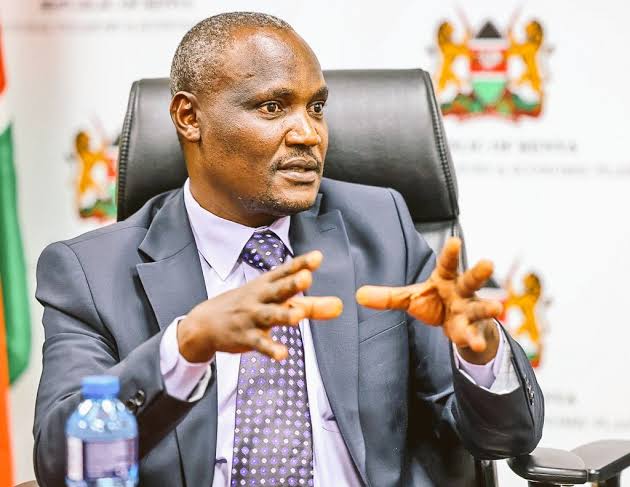
CS John Mbadi Outlines Government Strategy To Counter Hefty Oil Prices

Treasury Cabinet Secretary John Mbadi has credited a strategic agreement with oil marketers for shielding Kenyan consumers from the full impact of surging global oil prices. Speaking during an interview on Ramogi TV on Wednesday, May 13, Mbadi explained that the government negotiated a uniform arrangement for fuel importation and transport costs, which has acted as a critical stabilizer for local pump prices.

According to the Cabinet Secretary, without this intervention, fuel costs in Kenya would have reached unsustainable levels. He highlighted that the agreement specifically addressed transport logistics, ensuring that even as external pressures mounted, the domestic cost of moving fuel remained fixed. “Fortunately, we agreed on uniform transport costs,” Mbadi stated, noting that if these costs had been allowed to rise alongside global trends, the price at the pump would have skyrocketed.

Mbadi’s message to Kenyans

Despite these efforts, Mbadi warned that Kenya remains highly vulnerable to international shocks because it is entirely dependent on imported petroleum. He pointed to the ongoing conflict in the Middle East as a primary driver of instability, noting that the closure of the Strait of Hormuz—a vital maritime artery for global oil—has severely disrupted supply chains. The CS noted that these geopolitical tensions have forced importers to source products from more distant markets, further complicating the logistics of keeping Kenya fueled.

Mbadi also defended the government-to-government fuel importation framework, arguing that it has helped maintain a predictable shipping schedule and absorbed some of the immediate economic pressure. However, he maintained a realistic tone regarding the limits of government control. “The global fuel prices have doubled, and if they increase out there, we must also increase them here in Kenya,” he added, emphasizing that while domestic agreements can soften the blow, the country cannot entirely decouple itself from the realities of the global energy market.

Treasury CS Mbadi Explains Why Free Education Is Not Possible

Treasury Cabinet Secretary John Mbadi has delivered a sobering reality check to the nation regarding the feasibility of universal free education, citing severe budget constraints that make such a policy currently impossible. Speaking during an interview on Ramogi TV on Tuesday, February 3, 2026, Mbadi clarified that while public pressure for relief is mounting, the government’s role remains limited to subsidizing education costs rather than clearing them entirely. He emphasized that the national budget allocation for the education sector is simply insufficient to cover the total fees for all learners, leaving a significant balance that must still be met by parents.

To illustrate the magnitude of the financial challenge, the Cabinet Secretary outlined the sheer scale of enrollment across the country’s learning institutions. With approximately 11 million learners in primary school and 4 million in secondary school, the subsidy bill alone is staggering. At the primary level, where each pupil receives a subsidy of Ksh 3,000, the total cost amounts to roughly Ksh 33 billion. In secondary schools, the government allocates Ksh 22,000 per student, which translates to a massive Ksh 88 billion annually. Mbadi pointed out that combining these two figures already pushes the education budget beyond recommended limits, even before accounting for the 650,000 students in universities and other tertiary institutions.

The Cabinet Secretary further broke down the actual costs of schooling to highlight the gap between government support and reality. He noted that boarding schools cost nearly Ksh 75,000 per child annually, while day schools cost around Ksh 35,000. Under the current framework, the government subsidizes only Ksh 22,000 for boarding students and Ksh 12,000 for day scholars, leaving parents to shoulder the remaining balance. Mbadi argued that even if the state attempted to turn all secondary schools into day schools to save money and then tried to clear their fees in totality, the move would still be unsustainable for the current education budget.

Mbadi’s cutting point

Addressing common suggestions for reform, Mbadi debunked the idea that consolidating various bursaries, such as the CDF and county funds, would provide enough capital to fund free education. He revealed that he had once entertained such a proposal but ultimately found it to be unviable. He cautioned Kenyans against comparing current demands to the legacy of former President Mwai Kibaki, noting that even the landmark free primary education policy of that era was limited in scope and did not extend to every child or every level of learning.

Ultimately, the CS argued that financing truly free education in Kenya would require a radical reallocation of funds from other vital sectors, such as health or infrastructure, a trade-off that the Treasury is not currently prepared to make.

No New Taxes in 2025? Treasury CS John Mbadi Says ‘Enough Is Enough’

In a rare moment of fiscal relief, Treasury Cabinet Secretary John Mbadi has given Kenyans something to breathe easy about: no new tax hikes in the upcoming Finance Bill 2025.

Yes, you read that right – no adjustments to Value Added Tax (VAT), employment taxes, or other key levies.

CS Mbadi during a recent press briefing in Nairobi (Image: Files)

Speaking candidly with the Bunge la Wananchi caucus in Nairobi on February 3, Mbadi made it clear – the government has hit its taxation ceiling.

We cannot overtax Kenyans anymore,” he declared. “There’s no more room for additional taxes, especially on employment income. Not under my watch.”

This announcement comes as a small but notable relief for many Kenyans already grappling with multiple deductions – from the Social Health Insurance Fund to the Affordable Housing Levy and other statutory contributions that chip away at take-home pay.

Speaking of the Affordable Housing Levy…

Let’s not forget that back in October 2023, the government secured court approval to enforce the 1.5% levy on gross salaries, with employers matching that amount – bringing the total deduction to 3%.

So while Mbadi’s declaration might ease fears of new taxes, the deductions already in place aren’t going anywhere.

Pension Funds Get a Break

On the bright side, Mbadi is also championing an amendment to the Pensions Fund Act, aiming to exempt pension savings from taxation.

His reasoning? A mix of personal and public interest:

When I retire, I’d like to receive my pension in full – without surrendering a chunk of it to taxes. And I believe every Kenyan deserves the same.”

This move isn’t just about lightening the tax load.

It’s also designed to encourage a savings culture and offer better protection for retirees.

What This Means for You

While there’s no promise of tax reductions, the fact that the government is pressing pause on new tax hikes is significant.

It reflects growing recognition of the financial strain many Kenyans face.

But here’s the kicker: no new taxes doesn’t mean no existing burdens.

Deductions for health insurance, housing, and pensions will still apply. The real question is – will these measures be enough to ease the cost of living?