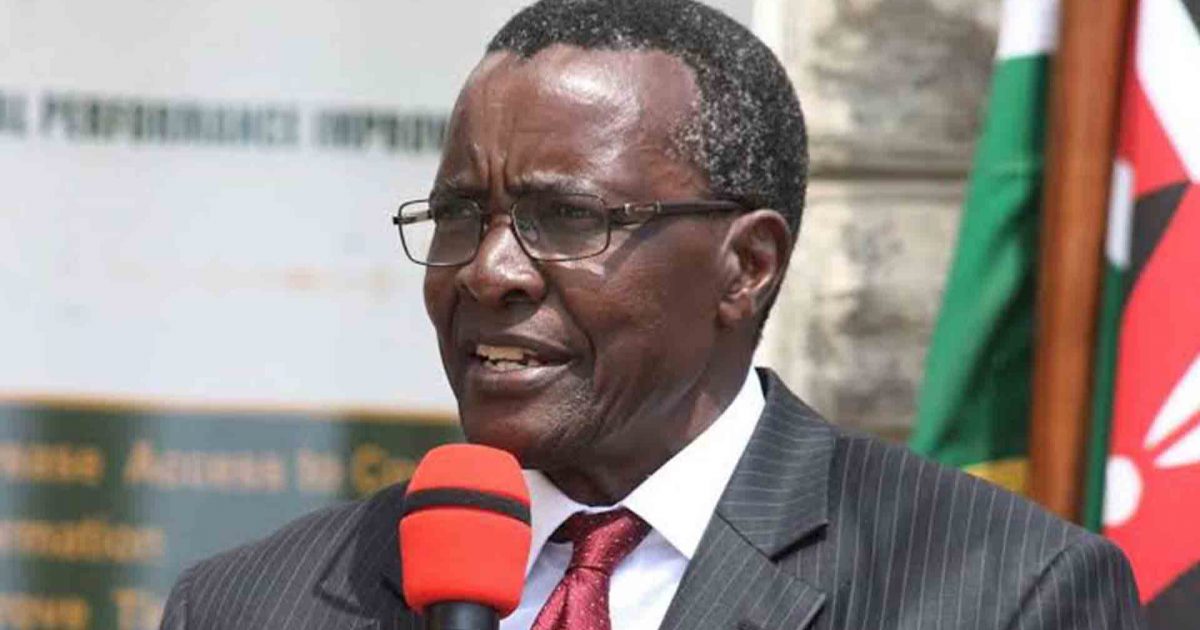
Former CJ David Maraga Slams Parliament For Failure To Impeach President Ruto

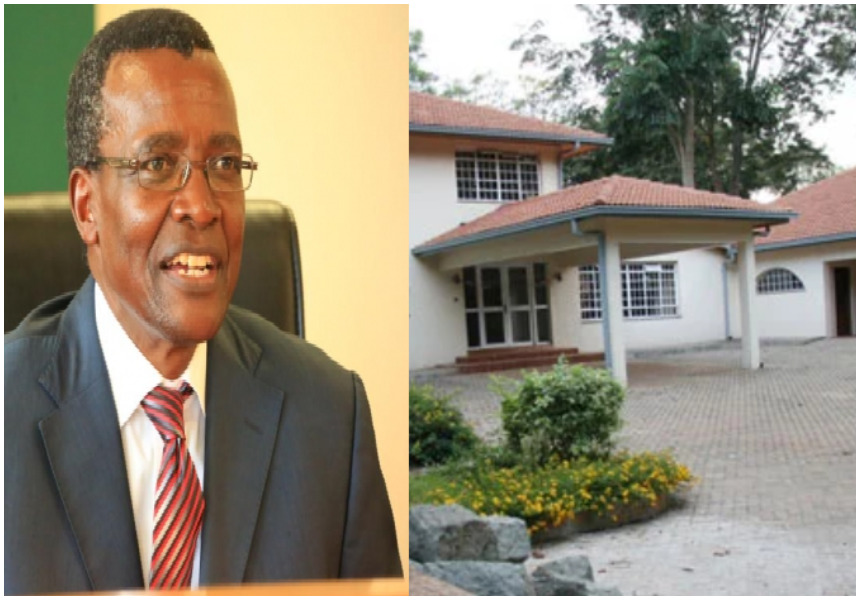
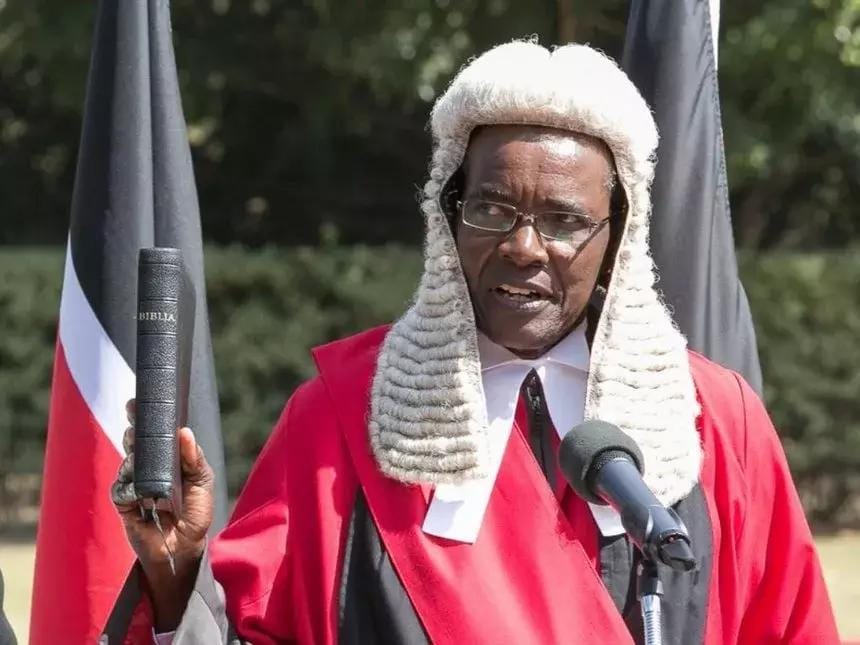
Former Chief Justice David Maraga has sharply criticized the Kenyan Parliament for its perceived inaction regarding the impeachment of President William Ruto. Speaking on Citizen TV on Tuesday, July 15, Maraga argued that, given the widespread public clamour for Ruto to leave office before the 2027 General Election, Parliament should have already initiated impeachment proceedings against the Head of State.

Maraga, who has publicly stated his intention to challenge Ruto in the upcoming polls, further accused the legislative arm of government of being unduly influenced by the President. He posited that this alleged control is the primary reason why no progress has been made on ousting Ruto from office.

“Parliament has the power to impeach the President. He has violated countless provisions of the Constitution,” Maraga asserted. “If Parliament were doing its work, the President would not be in office today,” the Chief Justice Emeritus added, underscoring his belief that sufficient grounds for impeachment already exist.

Maraga reiterated that, aside from a voluntary resignation, an impeachment by Parliament remains the only other legal avenue for the President to exit office before the conclusion of his first term.

“What people are saying when they are talking about ‘Wantam’ is that President Ruto to resign. If you are not resigning Parliament, are you listening? Impeach this President and get him out,” Maraga urged, directly challenging the legislative body.

Grounds and Process of Impeachment in Kenya

In Kenya, a motion of impeachment against the President can be moved on specific grounds:

  • Gross violation of a provision of the Constitution or any other law.
  • Serious reasons to believe that the President has committed a crime under national or international law.
  • Gross misconduct.

The impeachment process itself is a two-stage procedure involving both the National Assembly and the Senate, as meticulously outlined in Article 145 of the Constitution of Kenya, 2010.

A Member of the National Assembly (MP) intending to move an impeachment motion must first submit a copy of the proposed motion, clearly stating the grounds and particulars of the allegations, to the Clerk of the National Assembly. This proposed motion must then be supported by at least one-third (1/3) of all the members of the National Assembly (i.e., a minimum of 117 out of 349 members), with their signatures endorsing the motion.

Once officially submitted and approved by the Speaker, the motion proceeds to a debate, setting the stage for a pivotal vote within seven days. Should the National Assembly vote to support the impeachment motion, it must garner the endorsement of a formidable two-thirds majority of its members.

If successful, the Speaker of the National Assembly promptly informs the Speaker of the Senate, signalling the transfer of proceedings to the upper house. Crucially, during this transition period, the President retains all official functions, ensuring continuity of government until a final determination is reached.

Within seven days of receiving the National Assembly’s resolution, the Senate convenes to address the charges. The Senate has the option to appoint a special committee of eleven of its members to delve into the allegations. This committee, tasked with a thorough investigation, must report back to the full Senate within ten days, stating whether the particulars of the allegations against the President have been substantiated. Throughout this investigative phase, the President is afforded the fundamental right to appear before the committee, either in person or represented by legal counsel, to present their defence. This due process is akin to what transpired during the impeachment proceedings involving former Deputy President Rigathi Gachagua.
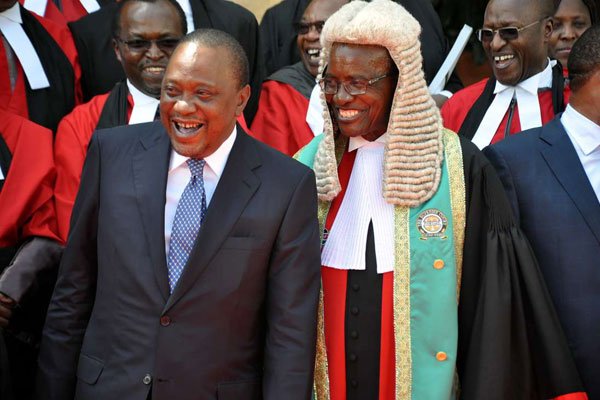
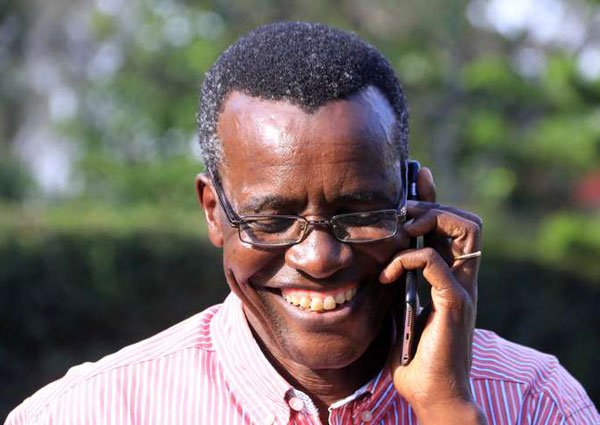
“I drank hard and except for providing for the bare necessities, I ignored my family” CJ Maraga opens up on being an alcoholic 

Chief Justice David Maraga is entitled to making sober decisions that affect the whole country but in his earlier years, he made a few wrong decisions that haunted him for a long time.

Speaking in an interview with Daily Nation, the Supreme Court head opened up about his earlier love for the bottle and how it almost ruined his life.

He spoke at a summon in at Nyambaria Boys High School in Nyamira County during the institution’s alumni service.

CJ Maraga confessed that he lived a serious party life for almost 28 years. He confessed he started drinking while in High School.

“There was a hill near Kisii School where we would go to drink. I continued with this habit all through to the time I worked as an advocate. From 1963 to 1991, I was a different person,” he said.

“After I finished one week, I would be like, ‘Friends, where are we going this weekend?’ We would then either meet in Nakuru, Nairobi or Kisii and spend the entire weekend enjoying. Generally, I thought I was living well, enjoying life, drinking and all that. What bothered me every day was my inner battle to quit the bottle, one week after the other.”

Ignored family

He said love for the bottle also made him neglect his family.

“I drank hard and except for providing for the bare necessities, I ignored my family and literally mark timed for about 20 years. I did not bother to further my professional career,” the CJ said. 

Adding:

“But something kept bothering me and I kept telling myself that I was not doing the right thing. Towards the end of 1991, I developed a strong urge encouraging me to go to church where my wife and our daughter, who was the only child then, were attending,” he added. 

After realizing that he was heading in the wrong direction, Maraga decided to change his life by becoming a christian.

“I made a decision to organise my life after having told myself that I was not born to live such a pathetic life. You are not just a statistic. God knows you as an individual. Be different. Stop being like the rest of the people in the world,” said Maraga.


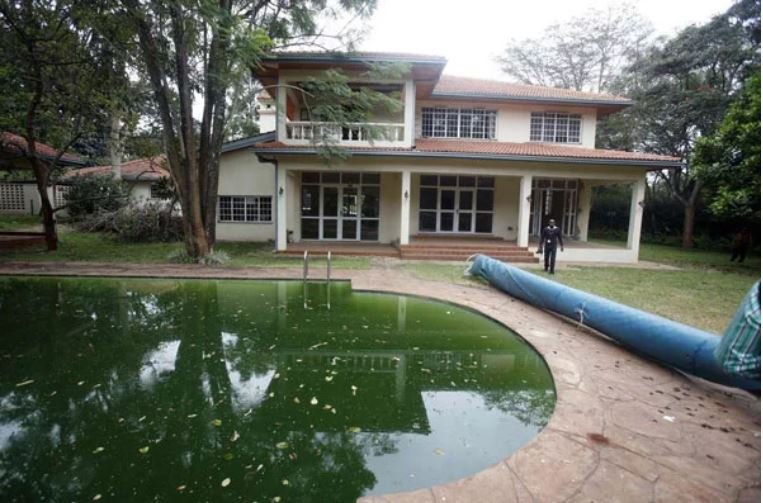
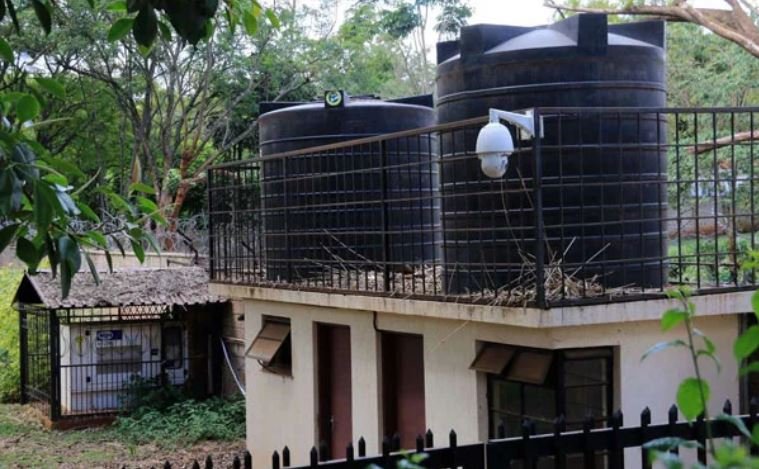
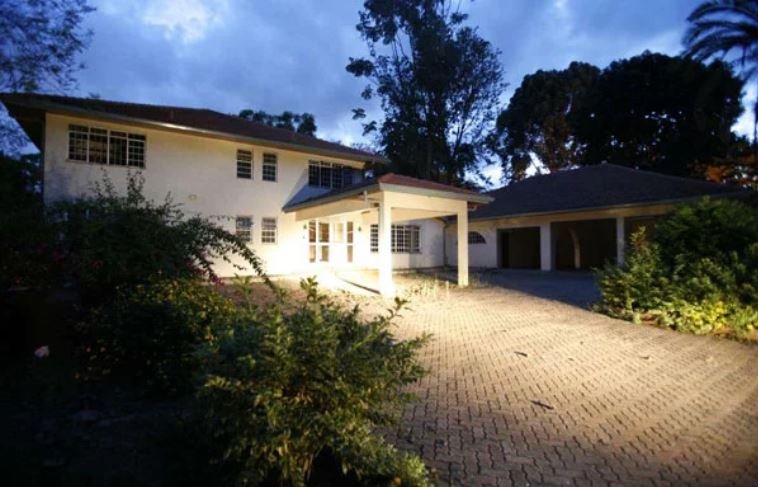
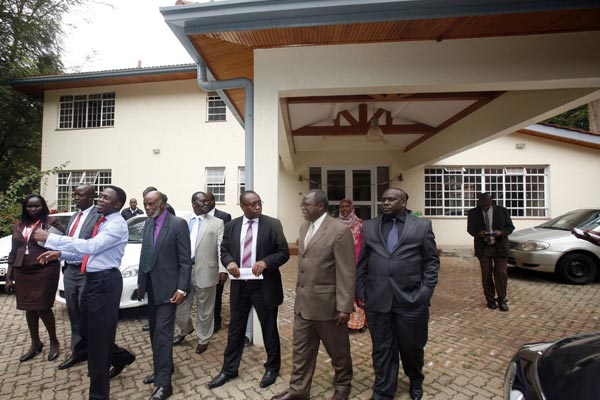
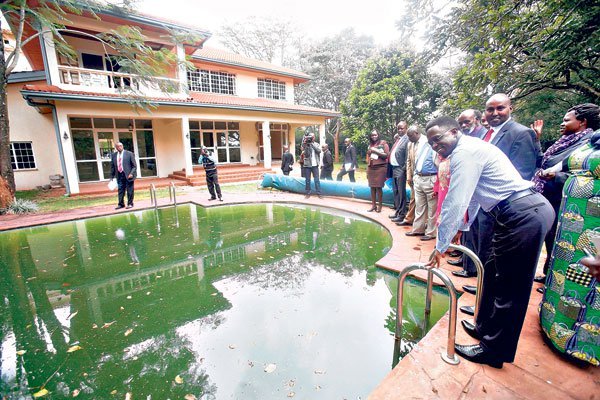
6 photos of Kes 310 million deserted home in Runda that’s meant to be CJ David Maraga’s official residence

The official residence of the Chief Justice has been deserted for 5 long years. Taxpayers’ money was used to purchase the expensive home which no CJ has ever lived in it.

Judiciary spent a whopping 31o million to buy a palatial home for the CJ in the leafy Runda suburb. The house however remains unoccupied since it was bought in 2013.

The 310 million mansion was bought from a company linked to former Machakos Senator Johnson Muthama. Flamboyant lawyer Donald Kipkorir represented the Judiciary in the purchase of the house.

Gladys Boss Sholei in the mix

CJ’s official residence remains unoccupied apparently because of it was bought under controversial circumstances. Former Judiciary Chief Registrar Gladys Shollei and seven other people were charged for failure to comply with procurement laws when buying the house.

The Uasin Gishu Woman Representative was fired from Judiciary for financial impropriety. She was recently  acquitted by the court.

Below are photos of the official CJ’s house in Runda:


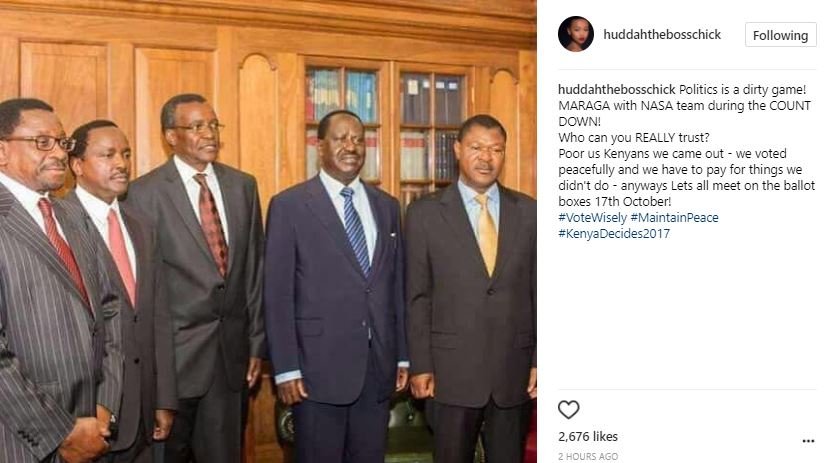
Huddah Monroe pulls down controversial Raila Odinga and CJ Maraga post after public backlash

Huddah Monroe castigated Chief Justice David Maraga claiming that Supreme Court’s decision to annul the results of August 8th election was influenced by Nasa’s November 1st 2016 meeting with the CJ.

The socialite shared a photo of Nasa leaders’ meeting with the CJ last year and claimed the meeting happened during ‘the countdown’.

“Politics is a dirty game! MARAGA with NASA team during the COUNT DOWN! Who can you REALLY trust? Poor us Kenyans we came out – we voted peacefully and we have to pay for things we didn’t do – anyways Lets all meet on the ballot boxes 17th October! #VoteWisely#MaintainPeace #KenyaDecides2017” Huddah posted.

Huddah’s decision to question the credibility of the Supreme Court drew widespread criticisms prompting her to pull down the post.

The socialite hit back at her critics in a subsequent post, she was specifically irked by people who claimed her business would suffer as a result of her decision to stick her nose into politics.

“Yoooo! This shit gotta stop!

DO NOT TELL ME who I can support and who I can’t!

I am not even trying to get 100% of Kenyans to support my business! 70% of my business is not even in KENYA to start with!

I am no PREACHER! I am a HUSTLER! I have survived this far and I can survive anywhere!

Unfollow if you feel like I am not on your side!

DONT take “YOU ARE A BUSINESS WOMAN” to stop me from posting my decision!

TUHESHIMIANE na UJINGA pelekeni mbali! NONSENSE!

AND – I TURN OFF commenting so you can shove your opinions up your assholes! ??

#BushMentality #CaveMentality #UncivilizedMentality”


President Uhuru’s tribal remarks during his tour of Nyamira turn ugly as Judicial Service Commission takes action

The head of state played tribal politics during his tour of Nyamira County in a bid to woo Kisii people to re-elect him for a second term. His move is now haunting him.

During his visit to Nyamira county last month, President Uhuru Kenyatta asked residents to give him another term in office saying that his government had given ‘their son’ a job, referring to Chief Justice David Maraga.

The head of state said that Maraga, Education Cabinet Secretary Fred Matiang’i and Central Bank of Kenya chairman Mohamed Nyaoga were appointed because the government had  Kisii people’s interests at heart.

President Uhuru Kenyatta greets locals during his tour of Nyamira County

The president’s worrisome remarks have made the Judicial Service Commission (JSC) and the Chief Justice himself to blast him – both issued a statement on Monday in regard to what he said in Nyamira.

“This could have been misconstrued to imply a political hand in the appointment of the Chief Justice. There is neither room nor opportunity for the president to discharge this function in a political manner. Any implication, deliberate or inadvertent, that the appointment of the CJ was part of a political scheme is a grave distortion of law and fact. The Judiciary, in exercise of its authority, is only subject to the constitution and the law, and not to any person or authority,” JSC secretary Anne Amadi said in a statement.

Chief Justice David Maraga

“I have restrained myself from responding to these false statements so as not to give them undue prominence or credence. However, they continue to be claimed and peddled around as if they are the truth, and in total disregard of their corrosive effect on the perception of the independence of the Judiciary. My office requires me to be apolitical, and I have not and will never involve myself in any political activity. I am not a Chief Justice of a community or a county but the head of the Judiciary of the republic of Kenya. I took an oath dedicated to serve all irrespective of their, social, economic or political status. I would urge other players in the political and media scene to help me in this regard and refrain from making statements or reports that wrongly project me and the Judiciary as partisan,” CJ David Maraga said in a statement.