
Why Gen Z’s Are Not Willing To Sire Kids

For decades, the standard blueprint for adulthood was clear- education, career, marriage, and then—inevitably—children. However, for Generation Z, that final step is increasingly being viewed as an optional, and often undesirable, add-on. In 2026, data suggests a seismic shift in global demographics, with birth rates in many regions hitting historic lows as young adults consciously choose the “childfree” path.

This isn’t just a passing phase; it is a calculated response to a world that feels increasingly inhospitable to traditional family structures. Here is a look at the core reasons why Gen Z is saying “no” to parenthood.

1. The “Affordability Anxiety”

The most immediate barrier is purely mathematical. In 2026, Gen Z is navigating a “low-hiring, low-firing” economy where the cost of living has outpaced wage growth for years. Between skyrocketing urban rents and the staggering price of childcare—which now averages over $10,000 annually in many developed nations—the financial “entry fee” for parenthood feels insurmountable.

Many young adults are choosing to prioritize their own financial survival over the KSh 30 million-plus commitment required to raise a child to age 18. For a generation still living with parents longer than any before them, the “American Dream” of a house and a nursery feels like a relic of a bygone era.

2. Climate Anxiety and the “Dying World” Narrative

For many in Gen Z, the decision to remain childfree is an ethical one. “Climate anxiety” is no longer an abstract concept; it is a backdrop to daily life. With 2025 and 2026 seeing record-breaking heatwaves and environmental instability, a growing segment of the population questions the morality of bringing new life into a world facing resource scarcity.

Surveys indicate that nearly 38% of Gen Z feel that the climate crisis makes parenthood an irresponsible choice. They aren’t just worried about a child’s carbon footprint; they are worried about the quality of life that child would have in a destabilized future.

3. The Pursuit of “Radical Agency”

Unlike previous generations who viewed children as a central pillar of their identity, Gen Z places a premium on personal agency and self-actualization. The rise of the “DINK” (Double Income, No Kids) lifestyle on social media isn’t just about showing off; it’s about a cultural shift toward individualism.

  • Career and Travel: Many prefer the freedom to pivot careers, travel spontaneously, and invest in their own mental health without the emotional and physical “drain” of child-rearing.

  • Pet Parenthood: The shift toward “fur babies” is real. Gen Z is increasingly channeling their nurturing instincts into pets, who offer companionship without the lifelong financial and logistical burdens of human children.

4. Changing Gender Dynamics and the “Motherhood Penalty”

The “motherhood penalty”—the documented hit to a woman’s career and earnings after having a child—is a major deterrent for Gen Z women, who now outpace men in higher education. With the rise of feminist discourse surrounding “emotional labor” and the “mental load,” many young women are rejecting the traditional expectation that they must sacrifice their professional ambitions and physical autonomy for a family. They are choosing “girl math” and “girl dinner” over “mom guilt” and “school runs.”

The Longevity of the Trend

While some critics argue that Gen Z is simply “delayed” and will eventually change their minds, the structural issues—housing, climate, and the cost of living—remain unaddressed. As we move through 2026, the choice to remain childfree is becoming a normalized and celebrated identity, reshaping everything from real estate (with a demand for smaller, luxury urban units) to the travel industry (with the rise of “adults-only” experiences).

For Gen Z, saying no to children isn’t necessarily a rejection of family; it is an embrace of a different kind of future—one where fulfillment is measured by experiences, freedom, and stability rather than the continuation of a bloodline.


Betty Kyallo And Charlie Lemmy Announce Pregnancy

Media personality Betty Kyallo and her Gen Z boyfriend Charlie Lemmy have announced that they are expecting their first child together!

The couple took to their social media to announce the exciting news through an exquisite photoshoot.

Betty Kyallo glowed in purple as she flaunted her protruding belly as Charlie stood by her side.

Betty Kyallo posted the photo and captioned:

“We’ve been cooking something oh so so sweet. God is the greatest.”

Their fans could not hesitate to fill the comment section with congratulatory messages

Betty Kyallos sister Gloria Kyallo commented with love emojis.

Mulamwah wrote:

“Congratulations Betty”

Read also; Chiki Kuruka Defends ‘Çhildless’ Women As Pressure Mounts On Husband Bien To Sire Children

The relationship question

Charlie and Betty Kyallo’s relationship has been among the unique ones that exist in the modern world.

Despite their huge age difference, they have managed to silence critics who thought it wouldn’t be a lasting one.

Three weeks ago, the two lovebirds celebrated their 2nd year of love as Charlie teased on expecting a baby with Betty. It was a clear hint that the two orchestrated the whole thing and they were awaiting their big reveal.

They are yet to reveal the gender of their unborn.

Congratulations are in order for the couple!

Gen Z’s Announce Plan To Build Multi-Million Hospital To Treat Patients For Free

What if we take matters into our own hands? What if we don’t rely on the government to ‘lead’us into misery and we do things on our own? These are among the questions that the Gen Z ‘s have been able to come up with in trying to deal with the corruption that has been drowning Kenyans over the years.

Moment of epiphany

From fighting the government to showing solidarity when it matters, the generation has proved to be unruly and independent when it comes to fighting some unjust practices.

Recently, numerous Gen Z’s took to their social media to hint that they’re ready to buid their own hospital that would offer free medical treatment to patients.

According to most of their sentiments, the hospital will be free of charge. No consultation fees, no treatment fees, etc. They will fully fund and cater for everything themselves.

This, they tend to achieve by making regular contributions.

Their decision came shortly after Numerous Kenyans visited a boy monikered ‘Kaluma Boy’ who has been taking care of his sick dad all by himself. According to reports, Kaluma’s dad suffered a stroke and wasn’t able to receive proper medical care.

Shortly after, Kenyans started rallying together and created a paybill number to funnel the money through.

In a story time explaining what happened to his father, Kaluma Boy relayed that he had been sick for over a year, having suffered a stroke and gone into a three-month coma in August 2024.

Following the latter, The Gen Z revolution has yet again taken a new twist that has left numerous Kenyans in awe.

Though it is not clear who will spearhead the building of the hospital or where it will be located, most Gen Z’s have expressed their interest in contributing and making the dream come true.


Gen Z Protests: Reflections, One Year Later

They marched, screamed and streamed it all in real-time.

In 2024, Kenya’s political terrain was jolted by something no one saw coming – not quite a revolution, not quite a riot, but a raw, powerful Gen Z uprising that took a Finance Bill and tore it down in front of the whole world.

The government blinked. And for once, Kenya paused to listen to its youngest citizens.

A year later, what do we have? What changed? What didn’t?

This is the Gen Z Anniversary Scorecard – the pulse check on a year that taught us that rage is real, but so are the risks.

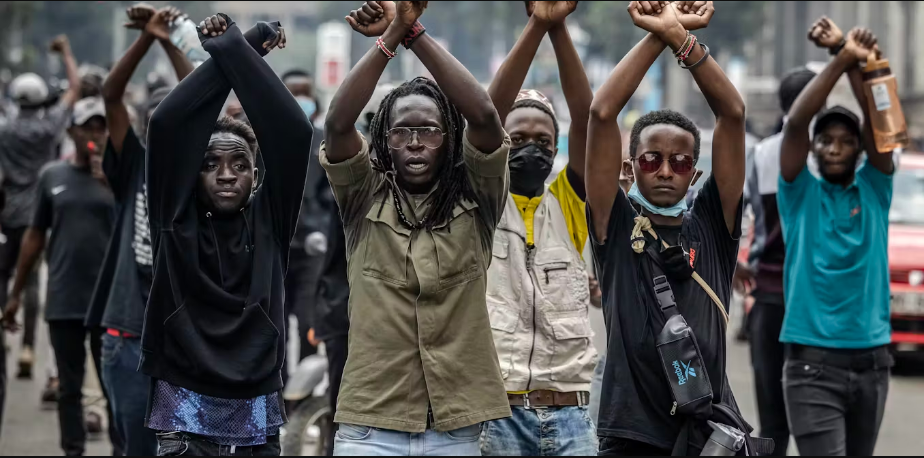
Scenes from the streets during the Gen Z Riots of 2024 in Nairobi CBD (Image: Files)

The Wins: When The System Flinched

Let’s start with what went right – because some things did.

The Finance Bill 2024/25? Rejected on Arrival.

The youth pushed, the system folded. A rare, almost cinematic moment of public pressure working. The streets spoke louder than the suits.

Opening Dialogue

From presidential listening tours to hurried press briefings, the noise turned into a reluctant conversation. Leaders were forced to show up, not just speak up.

Civic Awakening

Dormant civil society? Re-activated. Apolitical youth? Now political. It wasn’t just Gen Z. Churches, unions, even mama mbogas found their voice again.

A Shifted National Focus

Cost of living. Tax justice. Police brutality. Unemployment. Suddenly, these weren’t just hashtags – they were headlines.

The Losses: When Fire Burns 

But for every chant that echoed, a silence followed – the kind that comes from loss, confusion, and fear.

Lives Lost. Dreams Interrupted.

69 dead. 32 disappeared. 627 arrested. Names, not just numbers – youth who never made it home, and families still waiting.

Chaos Hijacked the Cause

Looters disguised as protesters. Property damaged. Innocents caught in crossfire. Rage opened the door, but anarchy walked in.

Investor Panic. Economic Bruises.

Nairobi and Kisumu turned red zones on risk maps. Trade slowed, tourism dipped, the World Bank issued warnings. Growth projections trembled.

Polarization Deepened.

Not everyone clapped for Gen Z. Some tuned out. Some retreated into fear and fatigue. Rage alienated as much as it rallied.

PNo Structural Shifts.

The Finance Bill was pulled. But what replaced it? Few legal reforms, little institutional change. Momentum flickered out.

The Lesson: Rage Alone Isn’t Enough 

This was a beautiful mess – raw emotion, real pain, digital strategy, physical bravery. But as the dust settles, we must admit: it wasn’t enough.

Why?

Because leaderless movements burn fast and fade faster.

Because rage without a roadmap leads to reaction, not reform. Because Kenya deserves more than momentary anger – it deserves vision.

The Challenge: From Protest To Power

So now, we ask:

Can Gen Z convert street fire into political infrastructure?

Can the government codify change, not just concede?

Can we protest without losing lives?

Because if 2024 was about raising fists, 2025 must be about raising standards.

This isn’t the end of the story – it’s a call to write a better next chapter.

Rage cracked the door open. But only strategy will walk through it.

Families of “Gen Z” Victims Call For Peaceful Commemoration March On June 25

Families of young Kenyans who lost their lives during last year’s “Gen Z” led protests against the Finance Bill have announced plans for a peaceful remembrance march on June 25, 2025. The families, accompanied by prominent activists, have issued a formal notice to the Central Police Station, seeking permission for the procession.

The planned march aims to commemorate the lives lost during the June 2024 demonstrations by laying flowers outside Parliament, where most of the victims died. This symbolic gesture seeks to honor their memory and continue the push for justice and accountability. Participants intend to gather to issue a memorandum outlining their grievances, calling for investigations into the events of last year, demanding accountability from those responsible, and proposing concrete measures to prevent similar tragedies in the future.

Among the families present at the Central Police Station to issue the notice were Gillian Munyao, the mother of Rex Masai, and other parents whose children were killed during the protests. Activist Boniface Mwangi, present at the notification attempt, claimed that officers at Central Police Station were initially refusing to accept the letter, prompting calls for public solidarity.

The initiative comes amidst ongoing protests sparked by the death of Albert Ojwang’, drawing parallels between the two incidents and highlighting persistent concerns over police brutality and the right to peaceful protest in Kenya. While some opposition leaders have called for June 25 to be declared a public holiday in honor of the fallen youths, the government, through spokesperson Isaac Mwaura, has dismissed the proposal, urging Kenyans to proceed with their normal economic activities on that day.

Survey Shows That Kenyans Now View Gen Zs as National Heroes

In the latest episode of “Who’s the Real Kenyan Hero?” a new Infotrak poll conducted on September 27-28 has revealed that drumroll… former Prime Minister Raila Odinga is still the reigning champion of national heroism! He’s like that superhero who refuses to retire, and honestly, who can blame him? With 800 adults from all over Kenya giving their two cents via Computer Assisted Telephone Interviews (CATI), Raila came out on top, proving he’s still got that magic touch.

Raila bagged 18% of the national vote, showing that even though he’s no longer in office, he’s still the MVP in Kenyans’ hearts. Nyanza region? Oh, they’re practically throwing a parade for him with a whopping 30% support. The Western region and Coast weren’t far behind either, clocking in at 23% and 22%, respectively. Clearly, the former PM’s legacy of democracy and reform is the gift that keeps on giving!

But wait, here comes Faith Kipyegon, sprinting right behind Raila! With 11% of the votes, this track star is proving she’s more than just fast on her feet. Central and Eastern Kenya have basically made her their queen, waving their foam fingers for her as a symbol of pride and pure athletic awesomeness.

Now, you’d think being the actual President would give William Ruto some serious hero points, but alas, only 8% of the respondents gave him that title. The Western region gave him a tiny pat on the back with 11%, but in Nyanza? Well, let’s just say they were too busy waving Raila flags. Sorry, Mr. President, politics is a tough game!

Other names tossed into the hero hat included Deputy President Rigathi Gachagua and Nairobi’s favorite no-nonsense MP Babu Owino, both clocking in at 8%. Gachagua’s fan club mainly hails from Central Kenya, while Babu Owino is busy signing autographs in Nairobi and Nyanza.

And hold onto your seats, folks, because Generation Z – yes, the TikTok-loving, meme-sharing Gen Z – racked up a hefty 23% of mentions for their activism in environmental protection and social justice. These kids are out here saving the planet and possibly the world, one hashtag at a time.

In the “Most Influential” category, guess who’s still king? Yep, Raila Odinga, once again. He secured 26% of the vote, proving he’s not just a hero – he’s the influencer (move over, Instagram). His knack for stirring up public debates and getting people riled up for elections is second to none. President Ruto took second place with 7%, while Rigathi Gachagua and Babu Owino continued to make waves with 6% and 5%, respectively.

This poll just goes to show that in Kenya, heroism is as complex as its political landscape. Whether you’re a seasoned political gladiator or a record-breaking athlete, there’s room on the hero podium for everyone… but it’s still Raila’s world, and we’re all just living in it.