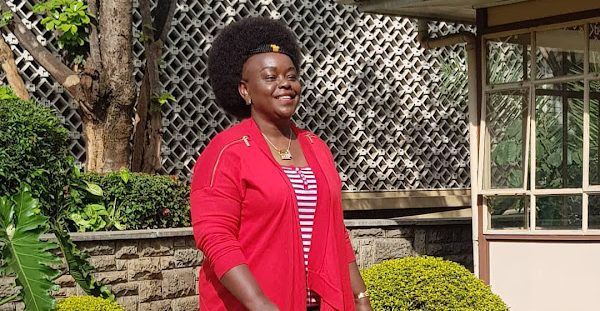
Suba North MP Millie Odhiambo has publicly opened up about her decision to refuse dowry payment from her Zimbabwean husband, Magugu Mabona, following a recent viral social media incident involving a public retrieval of dowry cattle during a couple’s split.
For the outspoken lawmaker, the practice of paying dowry is an unnecessary expense in marriage, asserting that what truly matters are the vows of commitment between two people.
Equating Worth to Cows is a “No No”
Millie Odhiambo took to social media to explain her reasoning, stating that she chose to forego the tradition entirely, which eliminates the possibility of a public or private return of livestock if the marriage were to dissolve.
“I rarely comment on people’s personal lives, but I hope you see why I refused dowry payment for me. When I love a man, a simple word of ‘I love you and I commit to you’ suffices.”
She views a public exchange of vows as the ultimate show of commitment. The MP stressed her respect for those who follow the custom but maintained it was not for her:
“An exchange of vows publicly shows commitment to stay together. But equating my worth to cows is a no no for me. I respect those who choose that path, though. It’s just not a thing for me.”
Dowry and Luo Cultural Traditions
The MP’s comments also offer an interesting contrast to the traditional customs of the Luo community, where her husband is not from.
Luo custom dictates that dowry, or at least a portion of it, must be repaid to formally dissolve a customary marriage. However, two symbolic pieces of livestock are traditionally retained by the wife’s family, even in the case of divorce:
- A Cow: Kept as a permanent record that the woman was honorably married and is not being returned in disgrace.
- A Goat: Represents the possibility of reconciliation, ensuring that communication lines remain open between the two families.
Millie Odhiambo’s decision effectively sidesteps these complex and often stressful cultural obligations, preferring a commitment based solely on mutual vows.