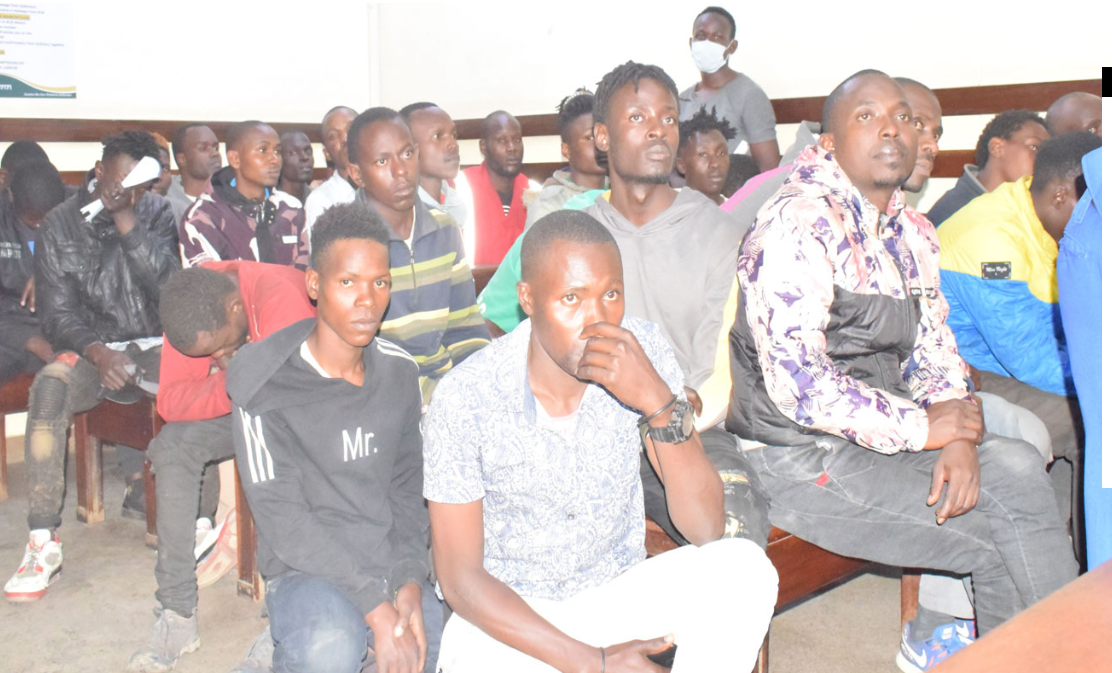
Fifty young Kenyans arrested during the 2024 Gen Z protests in Ongata Rongai have been acquitted, bringing an end to a prolonged legal battle that stretched for nearly two years.
The group was freed by the Ngong Law Courts, closing a case that began at the height of nationwide anti-government demonstrations.
End of a Two-Year Legal Ordeal
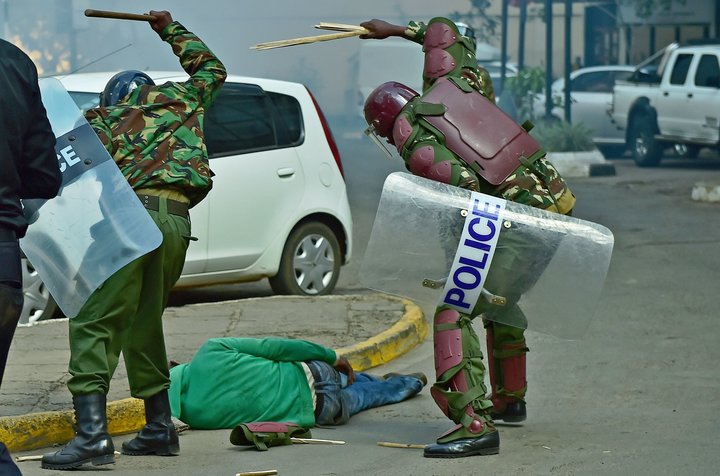
The arrests took place during the wave of protests that swept across the country in mid-2024, largely driven by public anger over the controversial Finance Bill 2024 and the rising cost of living.
Security forces had rounded up dozens of young people in Ongata Rongai as demonstrations intensified, with many facing charges that kept them tied up in court for months.
Their acquittal now marks a significant legal victory, effectively ending a chapter that had weighed heavily on the accused and their families.
A Protest Movement That Shook the Nation
The Gen Z-led protests became one of the most defining political moments in recent Kenyan history. Driven by economic frustration and digital mobilisation, the demonstrations spread rapidly across major towns and cities.
Hundreds of protesters were arrested nationwide as tensions escalated between citizens and law enforcement.
Justice at Last
For the 50 youths, the court’s decision represents more than just freedom—it signals closure after a long period of uncertainty and legal strain.
The ruling underscores the broader impact of the protests, not only on Kenya’s political landscape but also on the lives of the young people who found themselves at the centre of it.
The release of the BBC Africa Eye documentary Blood Parliament has sent shockwaves across Kenya, laying bare damning allegations of the Kenya Defence Forces’ (KDF) involvement in the brutal crackdown on unarmed civilians during the June 25, 2024, protests.
The documentary has triggered a national outcry online, as Kenyans grapple with grief, anger, and a profound sense of betrayal.
Many expressed disbelief that the KDF—once one of the country’s most trusted institutions—could be implicated in such violence. Capturing the prevailing mood, Willis Evans Otieno wrote:
“I was genuinely shaken to learn that the KDF, an institution we once held with deep respect, was part of this horror. Imagine: a Kenyan soldier, armed and trained to defend life, shooting an unarmed civilian from just 25 metres away. Who sent them? Who gave the order?”
Others echoed this sentiment.
@KenyaUnchained lamented, “Almost one year and no one held accountable,” while @okinyitj angrily observed, “In some countries, the military rescues citizens. In Kenya, the power-hungry set the military on its own people.”
For many, trust in the nation’s institutions has been deeply shaken.
“We do not have a country,” declared @James041, while @RBryan275 wrote, “We will need a new KDF once the People’s Government is installed. This one is fully compromised.”
Allegations that the military was deployed without proper parliamentary approval further fueled the outrage.
“There was no parliamentary approval for their internal dispatch,” pointed out @KigiriP, while users like @EricNyamweya demanded to know: “Who gave the order?”
The revelations have not only shattered faith in the military but have also reopened old wounds. Some users connected the events to past tragedies like the Githurai massacre and suspicious cremations at military barracks.
@LyshyaB observed:
“If it’s true, now you can connect the dots of Githurai and the cremations done those few days at the army barracks.”
The emotional toll was heavy.
“I have cried and cried for our beloved… So heartbreaking. Beautiful souls. May God comfort their families,” wrote Alice Bossy.
Although a few, such as @Mwana_Hara_Kati, urged caution about the documentary’s origins, suggesting Western media bias, the majority of Kenyans found the evidence too compelling to ignore.
Calls for mainstream Kenyan media to cover the revelations grew louder.
“Silence from the media is not neutrality; it’s complicity,” declared @Bloc_Sokoro.
Prominent investigative journalist John-Allan Namu praised the documentary as a
“devastating account of the June 25th murders outside Kenya’s parliament. Curdles the blood.”
Questions around the chain of command and political responsibility dominated online discussions.
@KenMwohe asked,
“Who was in charge of internal security? Who sanctioned this?”
As Kenya confronts the chilling revelations of Blood Parliament, one thing is clear: the demand for justice is growing louder by the day.
“We shall remember not to forget,” vowed @RonnyReagan, reflecting the collective resolve of a nation unwilling to let the victims of June 25th be forgotten.
Would you also like a second version that’s a bit sharper and more news-report style, depending on where you plan to use it?
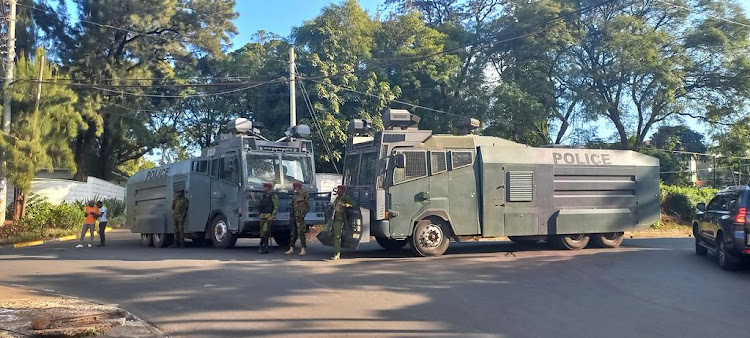
All roads leading to State House have been closed off, with police officers stationed to control traffic and prevent access.
Several roadblocks have been set up, restricting both motorists and pedestrians from entering the area. Officers, equipped with batons and firearms, have established a blockade near State House Girls’ School.
Processional Way is also closed near Serena Hotel, and access to State House from Argwings Kodhek has been blocked near the Chinese Embassy. Additionally, entry to the town center is restricted at Silver Spring Roundabout.
“This is a secured area. We are not allowing any access today,” a police officer informed Star journalists.
Police and military trucks are stationed near the State House fence, and the roads are notably less congested.
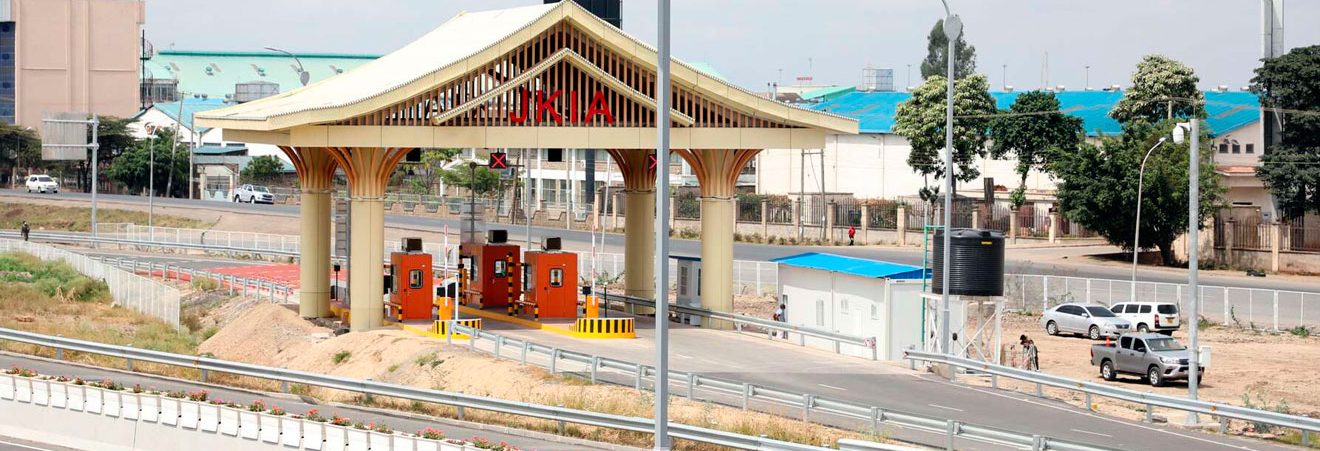
A team of security officers from various units has been deployed to ensure the safety of travelers and the smooth operation of JKIA in light of anticipated protests targeting the airport. Reports indicate that a group of demonstrators plans to occupy the facility.
A recent spot check revealed a significant presence of officers, including those from the General Service Unit (GSU) and anti-riot units from the Administration Police Service.
Sources within the security apparatus reported that the deployment followed a lengthy meeting on Monday between senior security officials and the Kenya Airports Authority (KAA) at the airport.
At the primary screening area, the main entrance to the airport, hundreds of armed security personnel were stationed from 6 a.m. onwards.
This area, typically monitored by regular officers from the JKIA police station, has been reinforced with additional GSU officers from the nearby Embakasi Training School.
Despite the increased security measures, airport services continued without interruption, with comprehensive security checks being conducted for all entering the facility.
Some companies at the airport have advised their employees to stay home as a precaution.
Acting Inspector General of Police Douglas Kanja issued a reminder on Monday about the legal repercussions of breaching security and entering protected areas.
“In anticipation of the demonstrations scheduled for July 23, 2024, it is essential to remind the public of the legal restrictions governing access to protected areas,” Kanja stated on Tuesday evening.
He explained that the Protected Areas Act Cap 204 Laws of Kenya prohibits unauthorized entry into designated protected zones.
“According to the Protected Areas Order, as detailed in Legal Notice No. 9 of 2011, the Second Schedule includes the LPG Plant, the Bitumen Plant, and Petroleum depots at the Embakasi Aviation Depot (JKIA),” he said.
Kanja also noted that Section 58 of the Kenya Civil Aviation Act No. 21 of 2013 outlines penalties for trespassing on government or licensed airfields.
“We urge all participants in the demonstrations to adhere to these legal requirements and avoid entering or interfering with protected areas. The National Police Service is committed to enforcing these laws,” Kanja warned.
The National Police Service has reiterated its commitment to upholding human life’s sanctity while moving to suppress nationwide protests, banning demonstrations in Nairobi’s CBD and surrounding areas on Thursday.
In a statement issued Wednesday evening, Acting Police IG Douglas Kanja expressed regret over peaceful demonstrations escalating into violence, resulting in casualties and property damage due to infiltration by criminals.
“While Article 37 of the constitution guarantees the right to assemble and picket to present petitions to public authorities, it equally underscores the NPS’s pivotal role in national security,” Kanja’s statement emphasized.
Kanja further disclosed credible intelligence indicating plans by organized criminal groups to exploit Thursday’s planned protests on July 18, 2024, for attacks and looting.
“The absence of centralized leadership in previous protests has hindered safety measures. Therefore, no demonstrations will be allowed in Nairobi’s Central Business District and adjacent areas until further notice to safeguard public security,” the statement clarified.
Kanja urged the public to collaborate with law enforcement to maintain order within Nairobi’s CBD on Thursday.
“We urge the public to remain vigilant in crowded areas and support collective safety by providing information that aids police in crime detection and prevention,” Kanja urged.
The statement follows chaotic Tuesday protests in various regions, including reported injuries and fatalities amidst clashes between protesters and security forces.
Today, Tuesday, is expected to witness another round of protests aimed at pressuring the government to take accountability for the lives lost during the previous mass disobedience sparked by the unpopular Finance Bill, 2024.
Since the first Occupy Parliament protests on June 18, President William Ruto has implemented drastic measures, including withdrawing the Bill and firing his entire Cabinet except for one minister. However, these actions have done little to appease the youthful demonstrators, popularly known as Gen Z.
Activist Boniface Mwangi confirmed on Monday evening that the peaceful protests would proceed as planned until the government takes responsibility for the deceased protesters.
“So let’s not think we have won anything yet because we don’t have anything tangible we can say we have won. Why can’t the President call the families of those who died and apologise because he hasn’t done any of that,” Mwangi said.
The government has acknowledged that at least 25 protesters died during the protests, although the Kenya National Commission on Human Rights (KNCHR) put the death toll at 41, with 360 injuries.
Speaking virtually at a town hall dialogue organised by Africa Uncensored, Mwangi, who has been at the forefront of the anti-government protests, said it’s going to be a long fight until justice is served for the victims.
“The thing is, what we are asking for at this particular stage is justice for the victims. We need compensation for the victims and all the alleged killer cops prosecuted,” he said.
“We are also saying that the housing levy needs to be scrapped, bring back NHIF, we don’t want this SHIF thing. The problem we have is that if we leave the streets, he will not listen to us,” Mwangi added.
Mercy, another speaker at the town hall dialogue also attended by Busia Senator Okiya Omtatah, said their demands go beyond merely holding the government accountable.
“One life lost is one too many,” she said, adding that “repentance without restitution is just hot air.”
“We cannot afford to play a game of numbers when it comes to people’s lives. We cannot come and ask whether it was 40 people or whether it was one person, 15, or 30 people,” she said.
The protesters also want the President to hold the dismissed office holders accountable for any commissions or omissions on their end.
“We cannot clap for fish for swimming, that’s what it’s supposed to do,” she said.
Mwangi urged those who cannot join the protests to stay home in solidarity.
“As Omtatah said, the streets are the biggest stage you can ever have because when you disrupt people’s lives, the government listens, and that’s why the Constitution gives the right to protest.”