
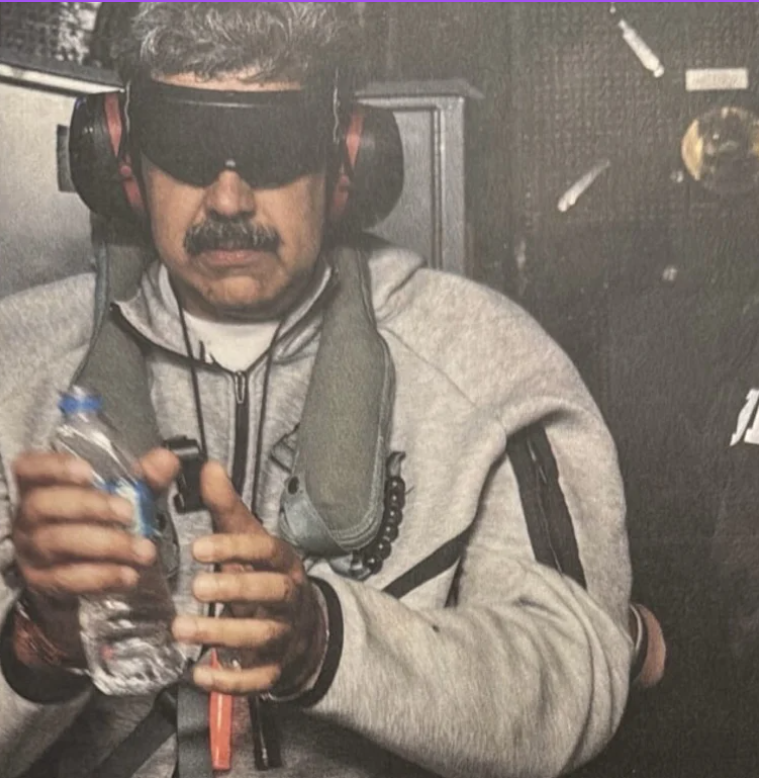
For months, US intelligence agencies closely tracked Venezuelan President Nicolás Maduro, monitoring nearly every aspect of his daily life. A small surveillance team — which included a source inside the Venezuelan government — followed where the 63-year-old slept, what he ate and wore, and even, according to senior military officials, details about his pets.
By early December, a covert plan known as Operation Absolute Resolve was finalised after months of preparation and rehearsals. Elite US forces had even constructed a full-scale replica of Maduro’s Caracas safe house to practise entry routes. The operation represented a level of US military intervention in Latin America unseen since the Cold War.
The mission was kept under extreme secrecy. Congress was neither informed nor consulted in advance, and once the final details were set, military leaders waited for ideal conditions. Officials said they wanted to preserve maximum surprise. Although President Donald Trump approved the mission four days earlier, it was delayed due to weather and cloud cover.
“Through Christmas and New Year, our forces remained on standby, waiting for the right triggers and the president’s order,” said General Dan Caine, the highest-ranking US military officer, during a Saturday briefing.
‘Good luck and godspeed’
That order came at 22:46 EST on Friday (03:46 GMT Saturday). Trump later said the operation had nearly gone ahead several times before conditions finally aligned. “It opened up, and we said: go,” he told Fox & Friends.
According to Gen Caine, Trump wished the troops “good luck and godspeed.” The timing — shortly before midnight in Caracas — allowed US forces to operate largely under cover of darkness.
What followed was a two-hour-and-20-minute operation involving air, land and sea forces, stunning officials in Washington and observers worldwide. Several regional leaders condemned the raid, with Brazil’s President Luiz Inácio Lula da Silva calling it “an extremely dangerous precedent for the international community.”
Trump monitored the mission from his Mar-a-Lago resort in Florida alongside CIA Director John Ratcliffe and Secretary of State Marco Rubio, watching a live feed of the operation. “It was incredible to see,” Trump said. “The speed, the violence — it was an amazing job.”
A massive military deployment
The operation came amid the largest US military build-up in the region in decades, including thousands of troops, an aircraft carrier and dozens of warships. Trump has accused Maduro of narco-terrorism and drug trafficking.
The first visible signs of the mission appeared in the skies. US officials said more than 150 aircraft — including bombers, fighter jets and reconnaissance planes — were deployed overnight. Loud explosions rocked Caracas around 02:00 local time, with plumes of smoke rising across the city.
Residents described windows shaking, helicopters circling overhead and neighbourhoods plunged into darkness. Videos circulating online showed aircraft flying low over the capital and smoke rising from multiple sites.
BBC Verify has confirmed strikes at five locations, including Generalissimo Francisco de Miranda Air Base, La Carlota airfield and the Port of La Guaira. US officials said air defence systems and other military targets were hit. Trump also suggested the US disabled power across Caracas before the mission began. “It was dark, and it was deadly,” he said.
‘They knew we were coming’
As strikes continued, US ground forces — including members of Delta Force — moved into the city. Heavily armed and carrying blowtorches to breach reinforced doors, they reached Maduro’s safe house shortly after 02:01 local time.
Trump described the compound as a fortified military stronghold. US troops came under fire on arrival, and one helicopter was struck but remained airborne. “The apprehension force moved with speed, precision and discipline,” Gen Caine said.
As the operation unfolded, Rubio began notifying members of Congress, a move that later drew criticism. Senate Democratic leader Chuck Schumer called the action reckless, citing the lack of congressional authorisation and a post-operation plan. Rubio argued advance briefings would have risked leaks — a claim Trump echoed.
Inside the compound, Maduro reportedly attempted to flee to a secure room but was overwhelmed before he could escape. “He was bum-rushed so fast he never made it inside,” Trump said, adding that deadly force had been a possibility if Maduro resisted.
US officials confirmed several American troops were wounded, though none were killed. Venezuelan authorities have not reported casualty figures.
By 04:20 local time, helicopters carrying Maduro and his wife, Cilia Flores, had left Venezuelan airspace. They were transferred into US Justice Department custody and flown toward New York to face criminal charges. Roughly an hour later, Trump announced the capture to the world.
“Maduro and his wife will soon face the full might of American justice,” he declared.