Matatu Operators Withdraw Fleets As Angry Demonstrators Block Key Transport Routes

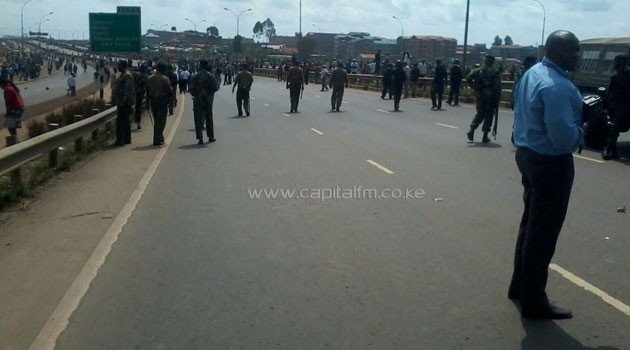
Commuters across multiple major towns were stranded on Monday morning as violent protests over skyrocketing fuel prices erupted, completely paralyzing public transport systems in Embu, Chuka, Nyahururu, and Thika.

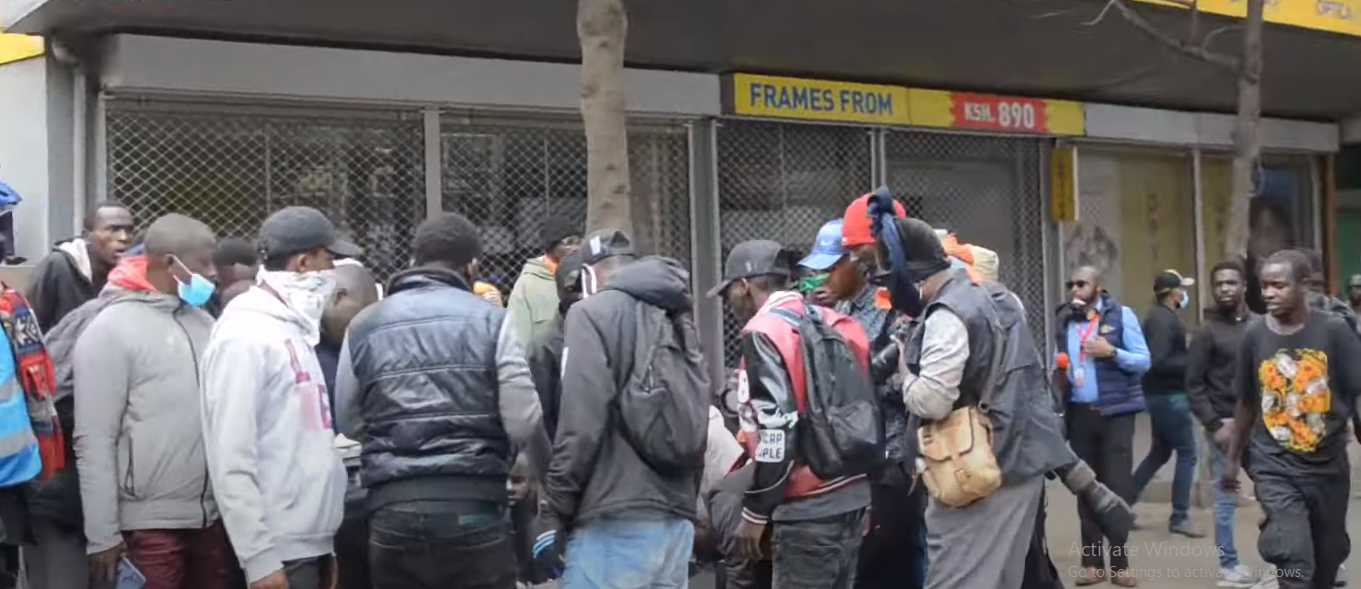
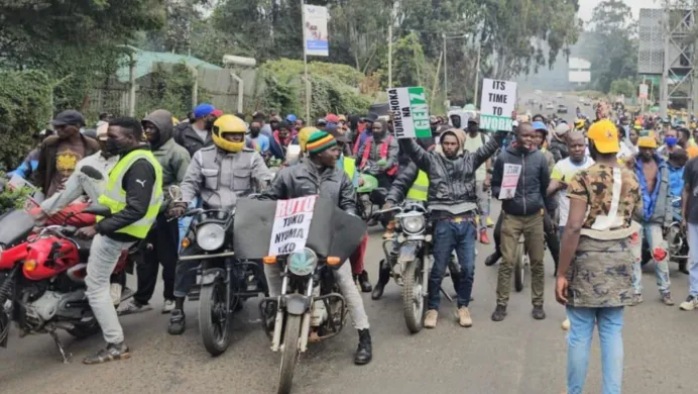
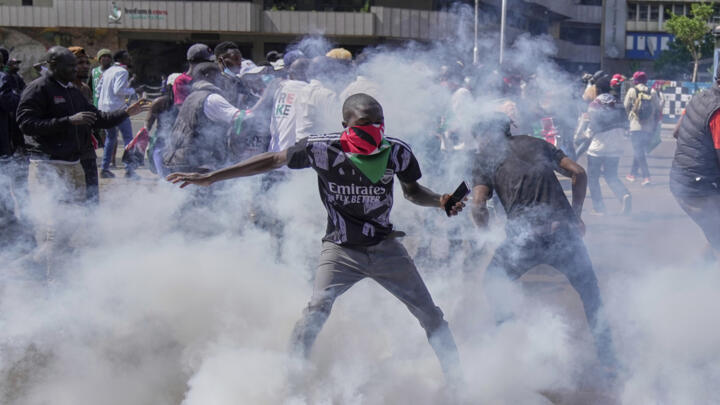
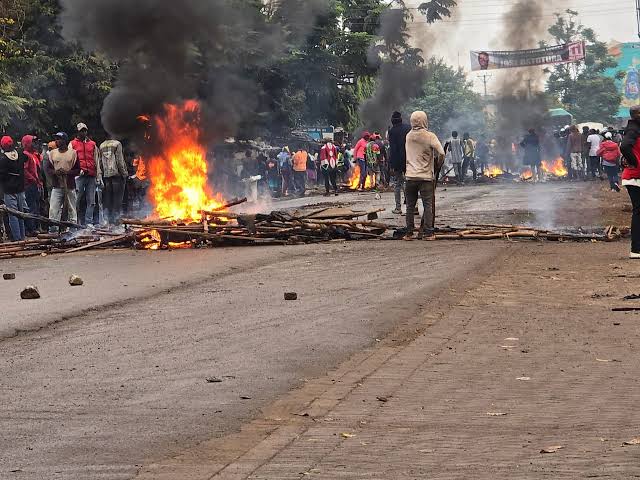
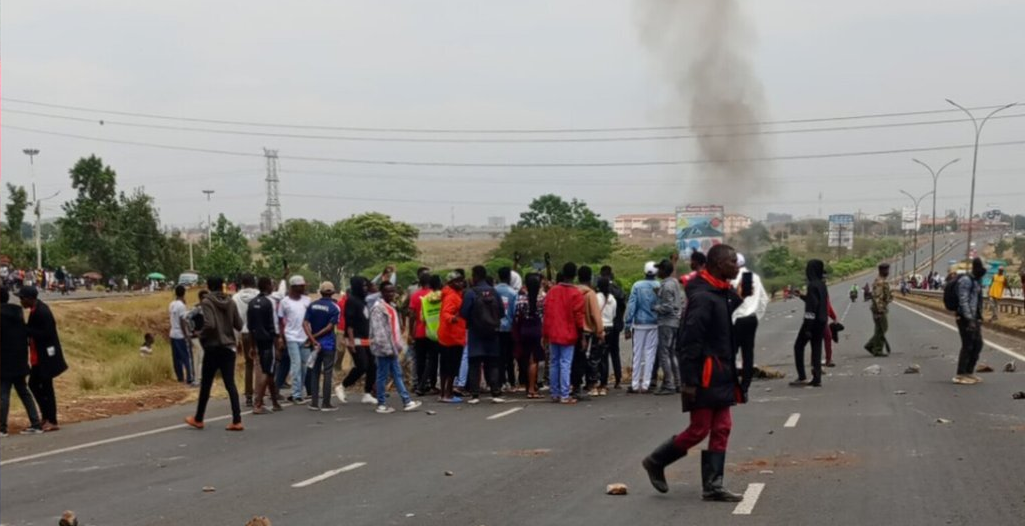
Demonstrators took to the streets early in the morning, barricading key highways and lighting bonfires on major thoroughfares. The escalating tension forced public service vehicle (PSV) operators to rapidly withdraw their fleets from the roads, leaving thousands of commuters with no way to travel.

Operators Withdraw Fleets to Evade Destruction

While the chaos brought businesses to a standstill, the transport sector clarified that the strike was not officially organized by matatu owners. Instead, operators grounded their vehicles out of sheer panic and the need to protect their investments.

The Embu Matatu Owners Association Chairman, Abraham Gicovi, explained that operators had to make a quick executive decision as the protests turned chaotic.

“We decided to withdraw our vehicles after protesters started lighting fires on the streets,” Gicovi stated. “We feared some vehicles could be attacked or burnt.”

Despite pulling their vehicles to safety, Gicovi noted that the transport sector fully sympathizes with the demonstrators. He argued that the government has failed to cushion Kenyans against punitive fuel hikes and the broader economic distress crushing ordinary citizens.

A Fragile Truce Broken

The sudden unrest caught many by surprise, coming just days after public transport federations had officially called off a planned nationwide strike. The reprieve followed high-level crisis talks between transport stakeholders and President William Ruto at State House, Mombasa, on Friday.

However, the grassroots anger over the fuel prices evidently bypassed the boardroom agreement, as citizens took matters into their own hands on Monday morning.

Public Support Mixed with Fear

While local residents who spoke during the demonstrations expressed deep frustration with the current economic situation, many strongly condemned the criminal elements hijacking the pickets. Reports emerged of rowdy youth stoning passing vehicles and targeting motorists who attempted to navigate the blockades.

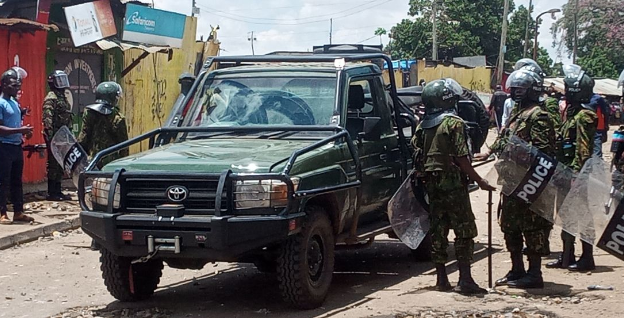
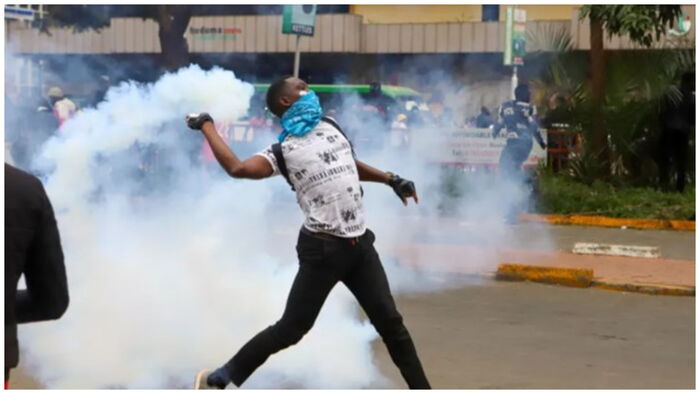
Anti-riot police officers were deployed across the affected towns, engaging in running battles with the crowds and firing tear gas to dismantle the bonfires in a bid to restore normalcy to the critical transport corridors.

Three Dead In Ruiru Boda Boda Crash As Fuel Price Protests Turn Fatal

Three people have been confirmed dead and two others seriously injured following a horrific motorcycle crash in Kimbo, Ruiru, on Monday, May 18, 2026. The tragedy occurred amid escalating nationwide protests against soaring fuel prices, which have severely disrupted transport networks across Kenya.

According to eyewitness accounts, the accident involved boda boda riders who were reportedly speeding away in an attempt to evade illegal toll points set up by demonstrators along the road. The chaotic scramble led to a high-speed collision, resulting in instant fatalities and critical injuries.

Police officers arrived at the scene shortly after the incident to retrieve the bodies and clear the wreckage. Authorities have yet to issue an official statement on the identities of the deceased or the medical status of the two surviving victims.

Rising Casualties Nationwide

The fatal crash in Ruiru adds to a mounting casualty count as the #RejectFuelPrices demonstrations turn increasingly volatile. Reports of violence and clashes between security forces and protestors have emerged from several regions:

  • Thika: Multiple protestors reportedly sustained gunshot wounds after confrontations with anti-riot police.

  • Nakuru: Unconfirmed reports indicate that a demonstrator was tragically run over and killed by a vehicle during a chaotic street protest.

  • Nairobi: Key transport arteries, including the Thika Superhighway, faced severe blockades, with isolated incidents of vehicles being torched by rowdy crowds.

Transport Gridlock and Economic Backlash

The unrest follows a comprehensive transport shutdown spearheaded by public service vehicle (PSV) operators, boda boda riders, and commercial drivers. The strike was triggered by the Energy and Petroleum Regulatory Authority’s (EPRA) recent pricing review, which introduced historic hikes for both petrol and diesel, a move operators argue completely eradicates their profit margins and drives up the baseline cost of living.

Law enforcement agencies remain heavily deployed across major urban centers and highways to dismantle illegal barricades, deter property destruction, and restore traffic flow as millions of commuters face unprecedented travel disruptions.

“Not A Battlefield”- Amnesty International Warns Police Ahead Of Today’s Protests Over Fuel Prices

As Kenya braces for planned demonstrations today, Tuesday, April 21, 2026, the human rights group Amnesty International has issued a stern warning to the National Police Service (NPS) against the use of excessive force. In a statement released on Monday evening, the organization reminded law enforcement that Article 37 of the Constitution guarantees every citizen the right to peaceful and unarmed assembly.

The rights group called upon Inspector General of Police Douglas Kanja to ensure that officers facilitate and protect protesters rather than attempting to suppress them.

Facilitation, Not Permission

Addressing the recent friction between police commanders and protest organizers regarding “official notification,” Amnesty clarified the legal standing of such requirements.

“The purpose of protest notifications is to coordinate public safety, not to request permission,” the statement read. “The Police bear a primary responsibility for collectively facilitating and protecting this right, not for suppressing it.”

Amnesty referenced a history of past demonstrations marred by arbitrary arrests, the harassment of journalists, and the obstruction of medical personnel, warning that such actions have no place in a constitutional democracy.

Individual and Command Accountability

The rights group emphasized that officers and their commanders could be held personally and criminally liable for human rights violations. Citing recent court rulings, Amnesty underscored that:

  • Firearms should only be used when strictly unavoidable to protect life.

  • Live ammunition against protesters is illegal.

  • Treating protest zones as “battlefields” is a violation of constitutional standards.

The “New Fuel Prices” Catalyst

The current wave of unrest has been driven by a massive online campaign on X (formerly Twitter), where Kenyan youth have mobilized against the latest Energy and Petroleum Regulatory Authority (EPRA) review.

Although President William Ruto recently directed a VAT reduction that brought petrol down to Ksh 197.60 and diesel to Ksh 196.63, the revision has done little to calm public anger. Many Kenyans argue that the prices—which initially peaked at over Ksh 206—remain fundamentally unaffordable, leading to the call for mass action today.

As protesters take to the streets, the eyes of international observers are now on IG Douglas Kanja to see if the police will adhere to the “professionalism and restraint” he promised during his press briefing at Vigilance House last Friday.

Boda Boda Riders Threaten Protests Over New Motorcycle Regulation Bill

Boda boda riders across Kenya are threatening nationwide demonstrations if the government proceeds with the implementation of the contentious Motorcycle Regulation Bill currently before Parliament.

The Boda Boda Safety Association of Kenya (BBSAK) appeared before the Parliamentary Committee on Transport, strongly opposing the bill and labeling it “retrogressive” and “punitive.” In their memorandum to the committee, boda boda operators described the proposed legislation as fundamentally flawed, overly bureaucratic, and financially unsustainable.

A core argument from the operators is that the bill duplicates the existing mandate of the National Transport and Safety Authority (NTSA), thereby creating regulatory confusion. They also contend that it undermines the constitutional roles of county governments and risks politicizing a vital economic sector.

Among the key concerns raised during the meeting were the bill’s proposals for establishing 47 county-level Motorcycle Transport and Safety Boards and requiring mandatory SACCO membership for all riders. The Association warned that such provisions are not only punitive but could also foster widespread corruption within a sector that has been instrumental in Kenya’s economic growth and job creation.

“The Bill is a solution in search of a problem,” BBSAK stated, cautioning that its implementation could significantly increase operational costs for riders, further exacerbate regulatory confusion, and lead to substantial economic setbacks for thousands of livelihoods.

Despite these grave concerns, members of the Parliamentary Committee on Transport largely backed the bill. They encouraged the boda boda representatives to propose specific amendments rather than outright rejecting the entire proposal. “You have an opportunity to shape laws that work for you. Don’t dismiss the bill entirely, propose changes,” advised Bureti MP Komingoi Kibet. Laikipia East MP Mwangi Kiunjuri acknowledged some of the associations’ concerns, advocating for strengthening existing institutions like the NTSA instead of creating parallel regulatory systems.

However, security concerns were also prominently highlighted by committee members. MPs Abdi Saney and Hussein Weytan noted the alarming increase in the use of motorcycles in various criminal activities, including drug trafficking, violent robberies, and attacks on civilians.

In response to these security challenges, the Office of the Inspector-General of Police proposed the formation of a multi-sectoral coordination committee. This committee, intended to comprise representatives from the NTSA, the police, the Council of Governors, and rider associations, would aim to facilitate joint planning and enforcement efforts to address both regulatory and security issues within the boda boda sector. The proposed demonstrations signal a looming confrontation between the government’s regulatory ambitions and the economic anxieties of the widespread boda boda community.

Death Toll On Saba Saba Protests Rises Amidst Calls For Accountability

The recent “Saba Saba” protests on July 7, 2025, a day deeply significant in Kenya’s history for its association with pro-democracy movements, have tragically escalated into widespread violence, resulting in a soaring death toll and renewed calls for accountability.

Mounting Casualties and Arrests

The state-funded Kenya National Commission on Human Rights (KNCHR) reported on Tuesday, July 8, that the death toll from Monday’s demonstrations had tragically surged to 31, making it the highest single-day casualty count since the current wave of protests began. In addition to the fatalities, the KNCHR documented 107 injured individuals and over 500 arrests across various counties. There were also reports of two enforced disappearances. These figures underscore the intensity of the clashes between protesters and security forces.

The demonstrations, primarily driven by a youthful demographic, were initially sparked by outrage over the death of blogger Albert Ojwang in police custody last month. This incident fueled long-standing grievances concerning police brutality, alleged corruption, and the rising cost of living. Protesters are demanding an end to excessive force by law enforcement and have intensified calls for President William Ruto’s resignation. The Saba Saba date itself (July 7) commemorates the 1990 pro-democracy protests that pushed for a multi-party system in Kenya, adding a historical resonance to the current demands for governance reform.

Police Response and Allegations of Excessive Force

Reports from human rights organizations and eyewitnesses indicate that security forces responded with considerable force. Police deployed tear gas, water cannons, rubber bullets, and reportedly, live ammunition to disperse crowds. Disturbing accounts also emerged, particularly from Nairobi and Kajiado counties, of a heavily armed, unmarked convoy of individuals in balaclavas operating with military-style precision, using high-caliber firearms and showing little intent to make arrests. These reports have led to mounting concerns about extra-judicial killings and a deliberate attempt to obscure accountability. The Law Society of Kenya and the Police Reforms Working Group have accused police of violating court orders by deploying heavily armed forces and using unmarked vehicles.

Calls for Accountability and International Concern

The KNCHR has strongly condemned all human rights violations and urged accountability from all responsible parties, including police, civilians, and other stakeholders. The United Nations High Commissioner for Human Rights, Volker Türk, expressed deep concern over the killings and renewed his call for calm, restraint, and full respect for the freedoms of expression, association, and peaceful assembly. He emphasized the need for prompt, thorough, independent, and transparent investigations into all reported killings and alleged violations of international human rights law, stressing that those responsible must be held to account. The UN Human Rights Office has offered to support Kenyan authorities in these investigations.

Raila Odinga Demands Police Reforms & National Dialogue Amidst Protest Crackdown

Opposition leader Raila Odinga is demanding immediate police reforms to bridge the widening chasm between civilians and law enforcement, alongside a national conclave aimed at addressing the escalating number of protest-related killings across the country. Odinga’s calls come as the nation reels from the deadly Saba Saba Day protests on Monday, July 7, which resulted in at least 10 fatalities and numerous injuries as police clashed with demonstrators.

Despite being anticipated to lead a rally at Kamukunji Grounds, Odinga was notably absent, reportedly due to extensive police roadblocks and skirmishes that prevented his access. His demands for dialogue follow a day of intense confrontations, where unarmed protesters faced tear gas and, in some instances, live ammunition.

Read also; Unmarked Squad Vehicles Linked To Fatalities On Saba Saba Protests

Odinga stated that Kenyans are currently grappling with many of the same core issues that ignited the historic 1990 Saba Saba protests, including severe economic hardships, a skyrocketing cost of living, and persistent human rights violations, particularly concerns over police brutality and arbitrary arrests. He emphasized that the rising death toll during demonstrations, coupled with pervasive poverty, underscores an urgent need for fundamental change in governance and policing.

His push for a national dialogue echoes a similar sentiment recently voiced by Interior Cabinet Secretary Kipchumba Murkomen, who also called for talks to end the ongoing protests. However, Odinga’s demands go further, explicitly targeting systemic police reform to ensure accountability and prevent future fatalities. He warned that continued violent crackdowns risk eroding Kenya’s hard-won economic and political gains and destabilizing the nation. Odinga stressed that a genuine dialogue, rather than force, is the only path to de-escalating tensions and finding sustainable solutions to the nation’s challenges.

Police Issue Stern Warning Ahead Of Saba Saba Protests Amidst Widespread Road Blocks

The National Police Service (NPS) issued a strong warning on Sunday night regarding the conduct of the planned Saba Saba Day protests, which have already brought parts of the country to a near standstill this Monday morning, July 7, 2025.

In a statement signed by police spokesperson Muchiri Nyaga, the NPS declared that armed protesters would be dealt with according to the law, should they be found with weapons. They also cautioned against attempts to breach protected government installations or restricted areas like Parliament and State House, stating that such actions violate The Protected Areas Act and would “attract immediate legal action.”

Vandalism and Provocation Will Not Be Tolerated

The NPS specifically addressed concerns stemming from previous incidents of vandalism and looting witnessed in Nairobi and other towns. They warned that

“Looting, vandalism of any form and destruction of property, blocking roads, or even incitement to violence under the guise of protests shall not be tolerated. Such acts are criminal and shall be met with lawful action by security agencies.”

The public was also cautioned against provoking police officers who are lawfully carrying out their duties. Conversely, police officers were urged to maintain professionalism to safeguard the NPS’s reputation amidst recent claims of brutality. The statement reassured Kenyans that police would protect lives and property despite the prevailing tensions.

Nairobi Commute Paralyzed Despite Court Order

Despite the NPS’s warnings, Nairobi commuters faced significant disruption this Monday morning as extensive police roadblocks brought major city roads to a standstill. Thousands attempting to reach the Central Business District (CBD) and surrounding areas found their journeys severely hampered, leading to widespread delays and frustration.

This police action unfolded despite a court order explicitly prohibiting the erection of such roadblocks ahead of the planned protests. Roads particularly affected by the early morning lockdown included sections of Thika Road at Roysambu, Kasarani, and Guri Nanak; Mombasa Road at GM and Bunyala Roundabouts; and the Eastern Bypass at 75 Roundabout, among other key arteries.

Kenyans Abroad Condemn Crackdown On Protests, Warn Of Tyranny

Kenyans living abroad have issued a strong condemnation of the Kenyan government’s “brutal crackdown” on peaceful protesters and its “illegal orders” to shut down live media coverage, warning that the country is “sliding into tyranny.”

In a statement released from Washington D.C. on Wednesday, the diaspora community accused the Kenya Kwanza administration of attacking unarmed citizens and gagging the press during nationwide demonstrations. These protests mark one year since the initial “Gen Z” protests began.

“When a government fires on its own people and shuts down the media, it ceases to be leadership— it becomes tyranny,” the statement declared. The group emphasized that while Kenya is experiencing pain, its people “will not be silenced.”

Demands for Protection of Rights and Press Freedom

The diaspora community called on President William Ruto to publicly assure the nation that no lives would be lost, no Kenyan would be kidnapped or tortured for exercising their rights, and that peaceful assembly would be fully protected. They stressed that these are basic constitutional guarantees the government “must not ignore.”

Furthermore, they demanded the immediate reversal of the “illegal shutdown” of broadcasting signals for NTV, KTN, and Citizen TV.

“This blatant violation of constitutional press freedoms demands the harshest public and legal condemnation,” the statement read. The Communications Authority of Kenya had reportedly ordered these media outlets to cease live coverage after protests intensified on Tuesday afternoon.

Withdrawal of Force and Accountability for Violence

The third demand from the diaspora was the immediate withdrawal of all armed and uniformed forces deployed to intimidate, harm, or suppress peaceful protests. “Protesters came unarmed, in peace, bearing wreaths, not weapons. In response, the government unleashed teargas, riot police, and brute force upon its own people,” the statement noted.

Human rights groups have reported a grim toll from the clashes, with at least eight Kenyans killed and over 80 others receiving specialized treatment, some for gunshot wounds. The state-funded Kenya National Commission on Human Rights confirmed tracking protests in 23 counties, recording over 400 injuries and more than 60 arrests.

In Nairobi, access to Parliament and the president’s office was barricaded with razor wire, and all access roads were blocked by police. Protesters clashed with officers in major cities including Mombasa, Kisumu, Nakuru, and Nyahururu, where police reportedly fired tear gas, used batons, and even live rounds to disperse crowds.

Deadly Clashes Erupt As Protests Mark One Year Since Anti-Government Demonstrations

At least 16 people have been killed and 400 injured in nationwide rallies across Kenya on Wednesday, June 25, as demonstrators clashed with police during protests against alleged police brutality and government corruption. The casualties, which include protesters, police, and journalists, primarily occurred in the capital, Nairobi, with injuries stemming from live fire, rubber bullets, and beatings, according to reports from Amnesty International and the Kenya National Commission on Human Rights.

Commemorating Last Year’s Protests and Renewed Grievances

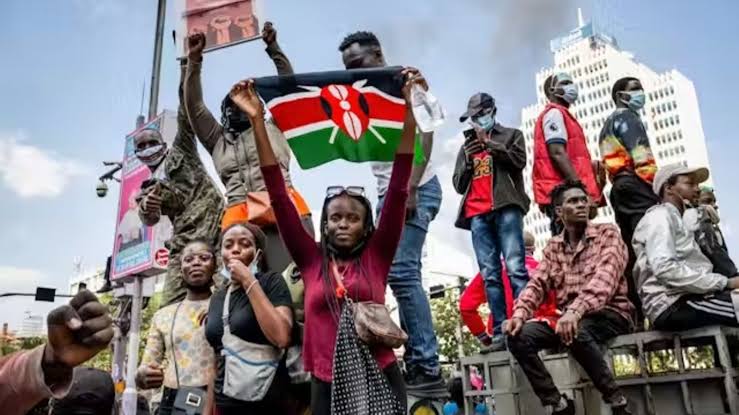
The demonstrations mark the first anniversary of the 2024 youth-led protests against proposed tax hikes, during which human rights groups claim at least 60 people were killed by security forces. Thousands took to the streets yesterday to commemorate those events, with some in Nairobi waving Kenyan flags and placards bearing images of last year’s victims. Chants of “Ruto must go,” targeting President William Ruto, whose proposed tax increases ignited last year’s unrest, echoed through the crowds.

“I’ve come here as a Kenyan youth to protest. It is our right for the sake of our fellow Kenyans who were killed last year,” said Eve, a 24-year-old woman, to AFP. “The police are here… they are supposed to protect us, but they kill us.”

Angel Mbuthia, chair of the youth league for the opposition Jubilee Party, emphasized the significance of the day for young people, stating, “It is extremely important that the young people mark June 25th because they lost people who look like them, who speak like them… who are fighting for good governance.”

Widespread Clashes and Government Crackdown

Clashes between demonstrators and police, who deployed tear gas and wielded batons, were reported across the country. In Nairobi, police blocked main roads leading to the central business district, and government buildings were barricaded with razor wire.

Beyond the capital, protests and isolated clashes were reported in various towns, including Matuu, approximately 100km (62 miles) from Nairobi, as well as the port city of Mombasa, Kitengela, Kisii, and Nyeri. Citizen TV reported that protesters even torched court facilities in Kikuyu, on the outskirts of Nairobi.

In response to the unrest, the government ordered TV and radio stations to halt live coverage of the protests. NetBlocks, a global internet tracker, reported restrictions on the social media platform Telegram, and Kenyan broadcaster KTN was taken off air later on Wednesday, according to an official at its parent company, Nation Media Group. Al Jazeera’s Malcolm Webb, reporting from Nairobi, noted the widespread police violence against the protests, citing local media reports of about a dozen people being treated for gunshot wounds.

Mounting Anger Over Police Brutality and Disappearances

The anniversary protests come amid escalating anger over police brutality. This sentiment intensified following the death of

At least 16 people have been killed and 400 injured in nationwide rallies across Kenya on Wednesday, June 25, as demonstrators clashed with police during protests against alleged police brutality and government corruption. The casualties, which include protesters, police, and journalists, primarily occurred in the capital, Nairobi, with injuries stemming from live fire, rubber bullets, and beatings, according to reports from Amnesty International and the Kenya National Commission on Human Rights.

Commemorating Last Year’s Protests and Renewed Grievances


The demonstrations mark the first anniversary of the 2024 youth-led protests against proposed tax hikes, during which human rights groups claim at least 60 people were killed by security forces. Thousands took to the streets yesterday to commemorate those events, with some in Nairobi waving Kenyan flags and placards bearing images of last year’s victims. Chants of “Ruto must go,” targeting President William Ruto, whose proposed tax increases ignited last year’s unrest, echoed through the crowds.

“I’ve come here as a Kenyan youth to protest. It is our right for the sake of our fellow Kenyans who were killed last year,” said Eve, a 24-year-old woman, to AFP. “The police are here… they are supposed to protect us, but they kill us.”

Angel Mbuthia, chair of the youth league for the opposition Jubilee Party, emphasized the significance of the day for young people, stating, “It is extremely important that the young people mark June 25th because they lost people who look like them, who speak like them… who are fighting for good governance.”


Widespread Clashes and Government Crackdown


Clashes between demonstrators and police, who deployed tear gas and wielded batons, were reported across the country. In Nairobi, police blocked main roads leading to the central business district, and government buildings were barricaded with razor wire.

Beyond the capital, protests and isolated clashes were reported in various towns, including Matuu, approximately 100km (62 miles) from Nairobi, as well as the port city of Mombasa, Kitengela, Kisii, and Nyeri. Citizen TV reported that protesters even torched court facilities in Kikuyu, on the outskirts of Nairobi.

In response to the unrest, the government ordered TV and radio stations to halt live coverage of the protests. NetBlocks, a global internet tracker, reported restrictions on the social media platform Telegram, and Kenyan broadcaster KTN was taken off air later on Wednesday, according to an official at its parent company, Nation Media Group. Al Jazeera’s Malcolm Webb, reporting from Nairobi, noted the widespread police violence against the protests, citing local media reports of about a dozen people being treated for gunshot wounds.

Mounting Anger Over Police Brutality and Disappearances


The anniversary protests come amid escalating anger over police brutality. This sentiment intensified following the death of Albert Ojwang, a 31-year-old blogger and teacher, who was killed in custody earlier this month after being arrested for criticizing a senior officer. Six people, including three police officers, have been charged with his murder, all having pleaded not guilty.

While police have stated that protests are permitted if “peaceful and unarmed,” a group of peaceful protesters last week was reportedly attacked by a large gang of motorbike-riding “goons,” who are known to work in tandem with police.

On Tuesday, several Western embassies, including those of the United States, the United Kingdom, and Canada, released a joint statement urging all parties to “facilitate peaceful demonstrations and to refrain from violence,” also condemning the use of plain-clothed officers in unmarked vehicles. In response, Kenya’s Ministry of Foreign Affairs stated that any policing violations would be addressed through government institutions, reminding that “diplomatic partnerships flourish best in mutual respect, open channels and a recognition of each other’s unique governance contexts.”

Disillusionment with Ruto’s Government

The protests also reflect growing resentment among Kenya’s youth towards President Ruto, who assumed power in 2022 promising rapid economic progress. Many are disillusioned by continued stagnation, corruption, and high taxes, despite last year’s protests forcing Ruto to cancel an unpopular finance bill.

Furthermore, human rights groups have documented over 80 disappearances of government critics since last year’s protests, with dozens still missing. This has led many to accuse Ruto of returning Kenya to the “dark days” of its 1980s and 90s dictatorship. While Ruto previously pledged an end to abductions, he adopted an unapologetic stance in a speech on Tuesday, vowing to “stand by” the police and warning protesters against using force or insulting law enforcement, stating, “You are threatening our nation.”

A 31-year-old blogger and teacher, who was killed in custody earlier this month after being arrested for criticizing a senior officer. Six people, including three police officers, have been charged with his murder, all having pleaded not guilty.

While police have stated that protests are permitted if “peaceful and unarmed,” a group of peaceful protesters last week was reportedly attacked by a large gang of motorbike-riding “goons,” who are known to work in tandem with police.

On Tuesday, several Western embassies, including those of the United States, the United Kingdom, and Canada, released a joint statement urging all parties to “facilitate peaceful demonstrations and to refrain from violence,” also condemning the use of plain-clothed officers in unmarked vehicles. In response, Kenya’s Ministry of Foreign Affairs stated that any policing violations would be addressed through government institutions, reminding that “diplomatic partnerships flourish best in mutual respect, open channels and a recognition of each other’s unique governance contexts.”

Disillusionment with Ruto’s Government

The protests also reflect growing resentment among Kenya’s youth towards President Ruto, who assumed power in 2022 promising rapid economic progress. Many are disillusioned by continued stagnation, corruption, and high taxes, despite last year’s protests forcing Ruto to cancel an unpopular finance bill.

Furthermore, human rights groups have documented over 80 disappearances of government critics since last year’s protests, with dozens still missing. This has led many to accuse Ruto of returning Kenya to the “dark days” of its 1980s and 90s dictatorship. While Ruto previously pledged an end to abductions, he adopted an unapologetic stance in a speech on Tuesday, vowing to “stand by” the police and warning protesters against using force or insulting law enforcement, stating, “You are threatening our nation.”
Foreign Embassies Urge Peace & Transparency In Protest Anniversary

As Kenya prepares to commemorate the one-year anniversary of the 2024 anti-Finance Bill protests on June 25, 2025, a coalition of foreign embassies and high commissions in Kenya has issued a joint statement. Released on June 24, the statement calls upon both the Kenyan government and the public to ensure peaceful demonstrations, uphold human rights, and guarantee transparency in addressing any protest-related violence.

Honoring the Fallen and Upholding Rights

The envoys began their address by remembering those who lost their lives during the protests last year. They reaffirmed every Kenyan’s constitutional right to peaceful assembly and freedom of expression, stating,

“We remember those who lost their lives and reaffirm every Kenyan’s right to peaceful assembly and to express themselves.”

A Call for Peaceful Demonstrations and Compliance with Law

With anticipated protests on June 25, the foreign missions urged all parties to facilitate peaceful demonstrations and actively avoid violence. They specifically condemned the use of plain-clothed police officers in unmarked vehicles, noting that this practice undermines public trust and has already been declared unlawful by Kenya’s High Court. The statement emphasized the need for full compliance with this ruling.


Concerns Over Disruption and Intimidation

The joint statement also highlighted concerns about the alleged use of “hired goons” to infiltrate and disrupt peaceful gatherings. The diplomats stressed that protecting the right to protest is crucial for maintaining civic space and safeguarding Kenya’s democratic integrity, expressing their disturbance by such tactics.

Demand for Transparency and Justice

Concluding their statement, the envoys reiterated their call for transparent and independent investigations into all incidents of violence against peaceful demonstrators. They underscored that accountability is not only vital for achieving justice but also essential for restoring public confidence in the institutions designed to serve and protect citizens.

The joint statement was endorsed by the embassies and high commissions of Australia, Canada, Denmark, Finland, Germany, Ireland, the Netherlands, Norway, Sweden, Switzerland, the United Kingdom, and the United States.

One Protestor Reportedly Injured After Teargas Exploded On His Hand

During Wednesday, June 25, protests in Nairobi CBD, a demonstrator was severely injured when a tear gas canister reportedly exploded in his hands. Footage seen by Kenyans.co.ke shows the young man being rushed to a waiting motorcycle, his left hand bleeding profusely, as another individual applied a cloth to help control the bleeding.

The protester had reportedly picked up the tear gas canister and was attempting to throw it back at police officers, a common practice during demonstrations.

This incident follows recent warnings from Dr. Austin Omondi, founder of Medics for Kenya, against this dangerous activity, often called “returning officers.” Dr. Omondi cautioned on social media that handling tear gas canisters could lead to serious injuries, especially to the hands, and even necessitate amputation.

“Do not handle tear gas canisters by trying to throw them back at police. They will only explode in your hands, leading to possible amputation. Be peaceful and unarmed even as you exercise your constitutional rights,” he stated.

Last year, during the June protests, a similar incident occurred when a tear gas canister exploded in a police officer’s hands during deployment, leading to the loss of both his hands. This happened because the officer detonated the canister but delayed its release.

Read also; Police Spokesperson Warns Officers Against Reckless Firearm Use In Protests

It’s important to note that tear gas, despite its name, is not a gas. It’s a fine aerosol of solid particles usually dispersed by a pyrotechnic explosion within a canister or grenade. While these agents primarily irritate the eyes, skin, and respiratory system, causing temporary incapacitation, improper handling can lead to severe injuries. The explosive charge designed to disperse the irritants can, in rare cases, malfunction and detonate with greater force, causing burns or other injuries. A direct explosion in someone’s hand can result in severe burns, lacerations, shrapnel wounds, and chemical burns from prolonged contact.

-Source-Kenyans

Six People Shot In Homa Bay Following Anti-Government Protests In Homa Bay

Six people were admitted to Homa Bay County Teaching and Referral Hospital on Thursday with gunshot wounds after they were injured in protests against the government.

The protests broke out in Homa Bay Town on Thursday morning and quickly turned violent, with protesters clashing with police.

The six people who were admitted to hospital include four men and two women. They were all injured by gunfire during the protests.

Two of the men, who were shot in the upper thigh, are in a stable condition but are awaiting surgery. The other four people are also in a stable condition.

Homa Bay Town was deserted on Thursday morning after the police repulsed the protesters, paralyzing business and transport.

So far, 26 people have been arrested in connection with the protests, including Kagan ward MCA Reuben Ochuka.

The protests were called in response to the recent increase in fuel prices. The government has condemned the violence and has called on the opposition to hold peaceful demonstrations.

The injured protesters are being treated at the Homa Bay County Teaching and Referral Hospital. The hospital’s CEO, Dr. Peter Ogolla, said that the two men who were shot in the upper thigh are in a stable condition and are awaiting surgery. The other four people are also in a stable condition.

The protests in Homa Bay Town are the latest in a series of anti-government protests that have been taking place across the country in recent weeks. The protests have been called in response to the recent increase in fuel prices. The government has condemned the violence and has called on the opposition to hold peaceful demonstrations.

Death Toll In Kisumu Anti-Government Protests Rises To Two

The death toll in Kisumu following Wednesday’s anti-government protests has risen to two after a victim succumbed to gunshot injuries.

David Ouma, 32, was shot in the abdomen by police in Ahero and was rushed to Jaramogi Oginga Odinga Teaching and Referral Hospital (JOOTRH) on Wednesday evening. He died in the operating theater while being prepared for surgery.

Four more victims of police shooting were brought to the facility last night for treatment. Amos Odhiambo, 37, was shot in the lower abdomen in the Car wash area near Kondele. Peter Ayub, 24, was shot in the left arm in Manyatta. A 19-year-old teenager identified as Daniel Ouma was shot in the mouth at Nyamasaria. Victor Oreme, 26, who was shot in the back, is also recuperating at the facility.

Kisumu County has now recorded a total of 13 victims of police shootings out of which two have died.

The protests were called by the opposition coalition Azimio la Umoja to protest against the recent increase in fuel prices. The protests turned violent in some parts of the country, with protesters clashing with police and looting businesses.

The government has condemned the violence and has called on the opposition to hold peaceful demonstrations.

The death of David Ouma is a tragedy and a reminder of the need for restraint on the part of the police. The government must ensure that the police are held accountable for their actions and that the victims of police violence are given justice.

Police Arrest More Than 600 In Nairobi Protests

Police in Nairobi arrested more than 600 people on Wednesday, July 12, 2023, during chaotic protests that were organized by the Azimio la Umoja coalition.

Nairobi regional police commander Adamson Bungei said the individuals were rounded up at various places in the city county for taking part in the demonstrations, which he termed illegal.

“They are being interrogated before we know the way forward,” Bungei said.

Police declared the demonstrations illegal, arguing that there was no official notification on the same as required by law.

More than five people were shot dead across the country during the protests, and dozens were injured in the ensuing confrontations between police and protesters.

Interior Cabinet Secretary Kithure Kindiki said the leaders, organizers, and financiers of Wednesday’s demonstrations would be arrested and punished.

In a press statement, Kindiki said the government had mobilized all law enforcement agencies to investigate, arrest, and prosecute those involved in the planning and execution of the crimes allegedly committed during the demonstrations.

The protests were organized by Azimio la Umoja in response to the recent Supreme Court ruling that nullified the presidential election results. The coalition is demanding a fresh election.

The protests were met with a heavy police presence, and there were reports of police brutality.

The government has condemned the violence, and Kindiki said that those responsible would be brought to justice.

The protests have raised tensions in Kenya, and it is unclear what will happen next.