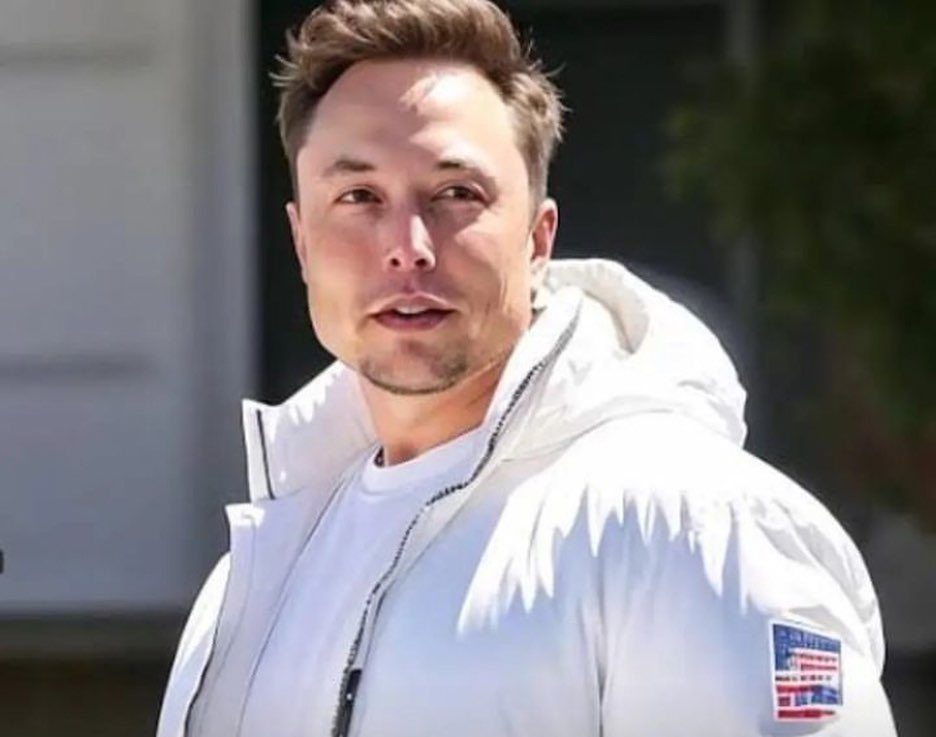
Elon Musk Sparks Debate After Claim Linking Feminism and Childlessness to Women’s Happiness

Tech billionaire Elon Musk has sparked a heated online debate after sharing a controversial statement on his social media platform, X, about women’s happiness, feminism and declining birth rates.

The post, which touched on sensitive issues around gender roles, family structures and modern lifestyles, quickly attracted widespread reactions from users across the platform.

The Controversial Statement

On June 29, 2026, Musk shared a brief message with his millions of followers, writing:

“Feminism and lack of children has killed the happiness of so many women.”

The comment quickly gained traction, with thousands of users engaging in discussions about whether social changes, economic pressures or personal choices are influencing modern relationships and family life.

Economic Pressures and Changing Lifestyles

While some users agreed with Musk’s perspective, others argued that the issue is more complex and linked to economic realities.

Some commentators pointed to rising living costs and changing workplace demands as major factors behind smaller families.

User @TravisJonVought argued:

“It’s the flooded and suppressed economy forcing two-earner households.”

Others connected social changes to broader economic systems, suggesting that financial pressures have influenced how people approach marriage, careers and parenthood.

Mixed Reactions Online

The post divided opinions, with some users supporting the idea that traditional family structures play an important role in happiness.

One user, @Prince_gbade, wrote:

“Feminism promised women they could have it all, but convinced them to throw away the only things that actually matter: family and children. It didn’t liberate women; it just left them lonely.”

However, other users criticised Musk’s statement, arguing that happiness is personal and cannot be defined by one path.

Some responses also drew criticism for using harsh language toward women who choose not to have children.

Women Challenge Musk’s Perspective

Several women on the platform pushed back against the billionaire’s comments, questioning his authority to define what makes women happy.

User @tgkodssw responded:

“Pedophiles, assault, sexism and unequal labour have killed the happiness of women actually.”

The user later added:

“Why do you think you speak for women? The audacity of that.”

Other users shared personal experiences, including the challenges and sacrifices associated with motherhood.

One user, @sonoracleaners, wrote:

“Yeah I had one and that’s all it took for me to say NO MORE! This baby factory is closed!”

Debate Over Whether Children Equal Happiness

Some users also questioned the assumption that having children automatically leads to greater happiness.

User @ShadowOptimizer wrote:

“Actually, it’s very hard to believe children directly lead to happiness after watching the boomers.”

They added:

“I don’t think it will make me happy, so where’s the evidence?”

The discussion highlights an ongoing global debate about family, gender expectations, personal fulfilment and the changing meaning of success in modern society.
Elon Musk’s Fortune Takes Major Hit After SpaceX Shares Plunge

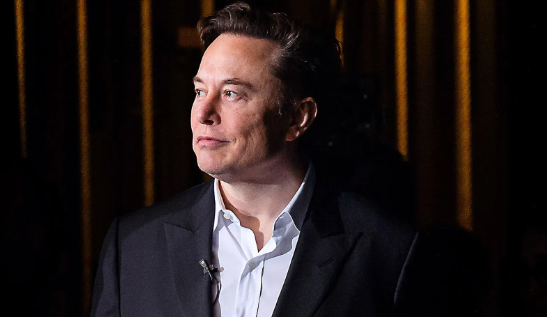
Elon Musk has reportedly suffered a dramatic decline in his record-breaking fortune just days after becoming the first person to reach trillionaire status.

According to reports, a sharp sell-off in SpaceX shares has wiped hundreds of billions of dollars from the tech billionaire’s wealth, reversing a historic rise that briefly pushed his net worth to unprecedented levels.

The decline came shortly after SpaceX completed what was described as the biggest Initial Public Offering (IPO) in history, with the company debuting on the market at a valuation of nearly $1.77 trillion.

At its peak on June 16, SpaceX shares reached $225.64, pushing Musk’s estimated net worth to a record $1.45 trillion.

A Sudden Market Reversal

The surge was short-lived. SpaceX shares have since dropped more than 31% from their peak, with the decline stretching across three straight trading sessions.

The biggest blow came on Monday, when the stock fell 16.4% — its steepest single-day drop since the company entered the Nasdaq.

That fall alone reportedly wiped about $152 billion from Musk’s wealth.

During pre-market trading on Tuesday, shares dropped as low as $147, taking the stock below its initial opening price of $150.

“Investors were wary of the substantial cash required to fund technological ambitions,” Jose Torres, senior economist at Interactive Brokers, said.

Why Investors Pulled Back

The sell-off was triggered by several concerns surrounding SpaceX’s financial plans.

Investor confidence was affected after the company announced plans to issue bonds to raise at least $20 billion. The funds are expected to help refinance a short-term loan and support expansion into artificial intelligence.

Despite SpaceX holding more than $100 billion in cash, the move to raise additional funds raised concerns about the amount of capital required to support Musk’s long-term ambitions.

Further pressure came from environmental, social and governance concerns, with MSCI assigning SpaceX a CCC rating, the lowest level on its sustainability scale. The rating reflected concerns around the company’s handling of environmental and governance risks.

Heavy Spending and Financial Challenges

While SpaceX’s IPO created thousands of new millionaires among its employees, the company’s financial performance remains under pressure.

SpaceX reportedly recorded a $4.9 billion net loss in 2025, followed by another $4.28 billion loss in the first quarter of 2026.

The losses have been linked to heavy investment in projects including the Starship programme and artificial intelligence infrastructure.

Is Elon Musk Still a Trillionaire?

The answer depends on the valuation method used.

Forbes estimates Musk’s wealth remains around $1.1 trillion despite the market decline. However, some analysts argue that the recent drop below SpaceX’s listing price means his trillionaire status may have already disappeared in real-time market terms.

Regardless of the exact figure, the volatility highlights the risks of having a fortune heavily tied to a single company, especially one that has only recently entered public markets.

Musk remains the world’s richest person, but his position at the 13-figure wealth level is facing renewed pressure.

Elon Musk Becomes First Person Ever To Top A $500 Billion Net Worth

Tech mogul Elon Musk made history this week, becoming the first individual ever to achieve a net worth exceeding $500 billion (Ksh 65 trillion). The milestone was reached on Wednesday afternoon, New York time, when his fortune briefly peaked at $500.1 billion, according to the Forbes billionaires index.

This massive wealth surge is primarily fueled by the strong performance of his key companies, including the electric car giant Tesla, the rocket company SpaceX, and his artificial intelligence startup, xAI.

Tesla’s Rise Solidifies Musk’s Lead


Musk’s status as the world’s richest person is now firmly cemented, putting significant distance between him and rivals. His wealth is closely tied to his stake of over 12% in Tesla, whose shares have climbed by over 20% this year.

On Wednesday alone, Tesla shares were over 3.3% higher at the close of New York trading. Investors have reportedly welcomed Musk’s recent decision to focus more time and attention on his business ventures rather than political activities, a shift noted by Tesla board chair Robyn Denholm in September.

This financial acceleration places Musk far ahead of Larry Ellison, the Oracle founder, who currently holds the second spot globally with a fortune of about $350.7 billion. Ellison briefly surpassed Musk last month after a surge in Oracle shares driven by strong cloud and AI outlooks.


Ambitious Pay Package and Future Focus

Musk’s wealth could grow even more exponentially. The Tesla board recently outlined a potential pay package worth over $1 trillion if Musk achieves a list of ambitious targets over the next decade. These goals include boosting Tesla’s value eightfold, selling 12 million Tesla cars, and deploying one million AI robots.

The company is currently navigating fierce competition, particularly from China’s BYD, as it simultaneously transitions its business model to focus heavily on AI and robotics. In a sign of confidence in the firm’s direction, Musk also announced last month that he had purchased about $1 billion worth of additional Tesla shares.

Elon Musk shares thoughts on Starlink’s entry into the Kenyan market

American billionaire Elon Musk has stirred discussions about the impact of Starlink’s introduction to the Kenyan market, hinting that its arrival has pushed local tech companies to elevate their standards. Musk, known for his outspoken social media posts, shared his views after Kenyan President William Ruto defended the decision to allow Starlink’s entry despite objections from local firms.

President Ruto, speaking on the sidelines of the United Nations General Assembly (UNGA), addressed concerns from local internet service providers (ISPs) about Starlink, which they viewed as a foreign entity threatening to dominate the market. However, Ruto emphasized that his administration supports open competition, believing it will lead to improved services and products for Kenyans.

Musk echoed Ruto’s perspective in a post on X (formerly Twitter), humorously noting that Starlink’s entry has led to better service offerings in Kenya. “As the President of Kenya says, Starlink pushes local competitors to offer improved services,” Musk stated, suggesting that the satellite-based internet provider has prompted existing players to innovate and enhance their services.

Local Resistance

During a business forum, President Ruto acknowledged the initial resistance from local ISPs, who feared that Starlink’s advanced technology and competitive pricing would diminish their market share. Despite this opposition, Ruto emphasized that competition is essential for transforming Kenya’s digital landscape, ensuring better value for consumers.

Businesses in Kenya have embraced Starlink as an alternative internet solution, particularly due to its reliance on satellites rather than traditional fibre optic cables. This satellite technology requires less ground infrastructure and offers more resilience, especially in rural and remote regions.

Currently, Kenya’s internet infrastructure is heavily dependent on submarine cables. Since the country’s first underwater cable connection in 2009 during President Mwai Kibaki’s tenure, six submarine cables have been in operation. However, these cables are susceptible to disruptions, which can result in service outages.

To meet the growing demand for faster, more reliable internet, the Kenyan government is constructing two more undersea cables. This expansion is expected to increase the country’s internet capacity, lower costs, and enhance competition, as Kenya moves into a new digital era marked by the diversification and improvement of internet services, with Starlink playing a key role in this transition.

Elon Musk plans to charge X users a monthly subscription fee to combat bots

Elon Musk, the CEO of X (formerly Twitter), has announced that the social media platform will soon start charging its users a monthly subscription fee. The move is seen as a strategic response to combat the proliferation of bots on the platform.

Musk made the announcement during a live-streamed conversation with Israeli Prime Minister Benjamin Netanyahu. He confirmed that X has 550 million monthly users as of now who generate 100 million to 200 million posts per day.

Musk did not provide specific information about how much the monthly fee would cost users or what additional features would be included in the subscription at the lowest tier.

X users have reacted with mixed emotions to the announcement. Some have vowed to leave the platform if it starts charging users. Others have dismissed the announcement as one of Musk’s antics, noting that he previously wanted to charge verified users for the blue badge but ended up restoring it.

Would you be willing to pay a monthly subscription fee for X?

This is a question that only you can answer. It depends on a number of factors, such as how much you use X, how much value you get from it, and how much you are willing to spend on a monthly subscription.

If you are a heavy user of X and you find it to be a valuable platform, then you may be willing to pay a monthly subscription fee. However, if you are a light user or you do not find X to be particularly valuable, then you may be more likely to leave the platform if it starts charging users.

Ultimately, the decision of whether or not to pay a monthly subscription fee for X is a personal one.

Tech rivalry intensifies as Zuckerberg allows Musk jet tracker on Threads

The rivalry between tech billionaires Mark Zuckerberg and Elon Musk is heating up, after Meta CEO Zuckerberg allowed a college student, Jack Sweeney, to track Elon Musk’s private jet on the newly launched Meta app, Threads.

Sweeney set up his Threads account, @elonmuskjet, on Friday, but it was quickly taken down by Threads and Instagram. Meta later restored the account, saying that the removal was an error.

Sweeney’s account tracks the location of Musk’s private jet using publicly available data. Musk has previously expressed displeasure with the account, and he offered Sweeney $5,000 to shut it down. Sweeney refused, and he instead asked for $50,000 and a Tesla car.

The decision to allow Sweeney to track Musk’s jet on Threads is likely to be seen as a victory for Sweeney, and it could also be seen as a way for Meta to needle Musk. Threads is a new app, and it is still in its early stages of development. The app is similar to Twitter, and it is rumored that Meta is hoping to compete with Twitter in the social media space.

The decision to allow Sweeney to track Musk’s jet could also be seen as a way for Meta to defend itself against a lawsuit filed by Twitter. Twitter is suing Meta, alleging that Meta copied Twitter’s app and recruited former Twitter employees to develop Threads. Musk has responded to the lawsuit by saying that “competition is fine, cheating is not.”

The decision to allow Sweeney to track Musk’s jet is a significant development in the rivalry between Zuckerberg and Musk. It remains to be seen how Musk will respond to the decision, but it is clear that the rivalry between the two tech billionaires is only going to heat up in the months to come.

Ghafla!
Privacy Overview

This website uses cookies so that we can provide you with the best user experience possible. Cookie information is stored in your browser and performs functions such as recognising you when you return to our website and helping our team to understand which sections of the website you find most interesting and useful.