EPRA Explains Why Falling Global Oil Prices Have Yet to Lower Fuel Costs in Kenya

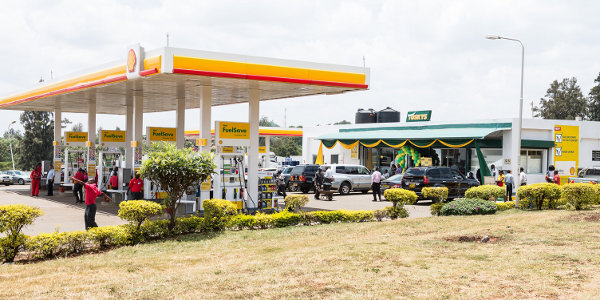
The Energy and Petroleum Regulatory Authority (EPRA) has explained why the recent drop in global oil prices has not yet resulted in lower fuel prices in Kenya, saying motorists may have to wait between 30 and 45 days before any reductions are reflected at the pump.

Speaking during an interview on Wednesday, July 1, 2026, EPRA’s Petroleum and Gas Director, Edward Kinyua, said the fuel currently being sold in Kenya was imported weeks ago, when international oil prices were considerably higher.

Fuel imports take up to 45 days

Kinyua noted that global oil prices began declining after a truce eased tensions in the Middle East, but the effects are not immediate because of the time it takes to process and transport fuel to Kenya.

“The supply and pricing of fuel are highly dependent on the geopolitical environment. This was one of the worst crises. But I am happy to note that there is a truce and the global oil prices are dropping,” he said.

He explained that before the Middle East conflict, the Free on Board (FOB) price of super petrol averaged US$686 per tonne before rising to US$1,061 per tonne at the height of the crisis.

During the same period, diesel prices increased from US$637 to US$1,383 per tonne, while kerosene climbed from US$681 to US$1,500 per tonne.

According to Kinyua, the delay in lower prices reaching consumers is caused by the entire fuel supply chain, from refining to shipping and eventual delivery to Kenya.

“The international oil prices have dropped, but remember that the barrel has to go into a refining process and then the logistics of ordering, loading, voyage and discharging,” he explained.

“Between now and when the barrel arrives in Mombasa, it takes between 30 and 45 days. That is why it may not be immediately reflected at the pump because whatever we have now was ordered about 30 days earlier.”

EPRA explains temporary fuel quality changes

Kinyua also addressed concerns over the government’s temporary relaxation of fuel quality standards, saying the move was intended to safeguard Kenya’s fuel supply during disruptions caused by the Middle East conflict.

He noted that Kenya has steadily lowered the sulphur content in fuel over the years to reduce environmental pollution.

“Before 2015, we were at 500 parts per million. We then went to 50 parts per million. Last year in August, we adopted an even stricter standard of 10 parts per million,” he said.

Kenya had relied on fuel with a sulphur content of 50 parts per million (ppm) for nearly a decade before transitioning to the cleaner 10 ppm standard in 2025.

However, Kinyua said supply disruptions linked to the closure of the Strait of Hormuz forced the country to diversify its fuel imports by sourcing products from Europe and India, where many refineries still produce fuel meeting the 50 ppm specification.

“This crisis broke out, and we started diversifying our sources. Because of the closure of the Strait of Hormuz, we had to source fuel from Europe and India. Many suppliers in those countries are still producing fuel at 50 parts per million,” he said.

Kinyua maintained that the temporary adjustment was necessary to ensure Kenya maintained adequate fuel stocks while global supply chains stabilise.

EPRA Intervenes To Shield Consumers By Blocking Pipeline Tariffs

The Energy and Petroleum Regulatory Authority (EPRA) has stepped in to shield motorists from an additional silent surge in pump prices by rejecting a steep transport tariff increase requested by the Kenya Pipeline Company (KPC).

According to a gazette notice released on Friday, May 15, 2026, the energy regulator instead approved a multi-year tariff framework that keeps pipeline transport charges completely flat for the current year, with only marginal adjustments permitted over the next two financial years.

EPRA retained the previous tariff at KSh 5.44 per cubic metre per kilometre for the 2025/2026 cycle. It will then permit a slight rise to KSh 5.53 for the 2026/2027 fiscal year, and cap it at KSh 5.83 for 2027/2028.

EPRA Crushes KPC’s Bid for Steeper Hikes

The regulator’s approved rates fell significantly short of KPC’s ambitious demands. The state corporation had petitioned to immediately hike transport charges to KSh 5.56 per cubic metre per kilometre, with a steady trajectory leading to KSh 6.61 by 2028, arguing the extra revenue was critical to fund major infrastructure overhauls.

Had EPRA granted KPC’s request, the ballooning distribution costs would have been directly factored into depot pricing. This would have driven retail fuel prices even higher for consumers in Nairobi and inland hubs like Nakuru, Eldoret, and Kisumu.

Regional Depot Tariffs Trimmed

Beyond the primary pipeline lines, the regulator also slashed KPC’s proposed regional depot storage and handling fees to ease pressure on oil marketing companies:

  • Nairobi Terminal: KPC wanted KSh 2,912.27 per cubic metre; EPRA capped it at KSh 2,851.80.

  • Kisumu Depot: KPC requested KSh 4,330 per cubic metre; EPRA scaled it back to KSh 4,234.41.

  • Eldoret Depot: KPC requested KSh 4,330 per cubic metre; EPRA restricted it to KSh 4,238.42.

Timing Amid a National Transport Crisis

The regulatory pushback comes at a highly volatile moment for the country’s transport sector. Public transport operators have grounded fleets in a nationwide strike that has paralyzed major towns since Monday, May 18.

The transport strike was ignited just a day prior to the gazette notice, when EPRA’s mid-month review sent shockwaves through the economy by spiking Super Petrol by KSh 16.65 and Diesel by a historic KSh 46.29. While the regulatory capping of pipeline tariffs stops further immediate inflation at the pump, it does little to lower the current record-high prices fueling public anger.

Nairobi Central OCS Arrested For Releasing 64 Fuel Protest Suspects Without Authority

Chief Inspector Dishen Angoya, the Officer Commanding Station (OCS) at the Central Police Station in Nairobi, has been arrested for allegedly releasing 64 suspects who had been detained during Monday’s violent fuel price protests.

Angoya was taken into custody on Tuesday, May 19, 2026, by the Deputy Regional Police Commander and is facing charges of abuse of office. Authorities are investigating the circumstances under which the 64 individuals, who were arrested for various public order offences, were freed without lawful clearance.

“Kindly be informed that today at 1200hrs, Chief Inspector Dishen Angoya, the OCS Central Police Station, Nairobi Region, was arrested… for the offence of abuse of office after allegedly releasing 64 prisoners arrested for offences relating to public order without lawful authority,” a police signal stated.

At the time of his detention, the senior officer reportedly complained of high blood pressure and remains under police guard pending arraignment.

DCI Hunts Protesters After Sh4.5M Vehicle Torched

The OCS’s arrest unfolds alongside a massive crackdown by the Directorate of Criminal Investigations (DCI) following a chaotic Monday that left parts of the capital in ruins.

Detectives have launched an intensive forensic probe into the torching of a Mazda CX-5 belonging to a United Democratic Alliance (UDA) politician along the Thika Superhighway. The DCI confirmed that cybercrime teams are analyzing viral video footage to identify and track down the rowdy youths who ambushed the motorist and set the vehicle ablaze.

The highway incident was part of a larger, near-total transport shutdown. Matatu operators, digital cab drivers, and boda boda riders withdrew their fleets to protest the historic fuel price hikes announced on May 14.

The economic paralysis forced the Energy and Petroleum Regulatory Authority (EPRA) into a six-hour emergency meeting on Monday night. EPRA subsequently issued a rare mid-cycle pricing revision, knocking Sh10.06 off diesel (now retailing at Sh232.86) and increasing kerosene by Sh38.60 (now Sh191.38), while leaving Super Petrol unchanged at Sh214.25 in Nairobi.

Casualties and Mass Arrests Confirmed

Providing an official update on the toll of the demonstrations, Interior Cabinet Secretary Kipchumba Murkomen confirmed that the unrest across Nairobi, Nakuru, Kajiado, and Kakamega counties turned fatal.

According to the Ministry of Interior, four people lost their lives and at least 30 others sustained severe injuries. Security agencies arrested a total of 348 suspects nationwide.

CS Murkomen issued a stern warning against the destruction of property, stating that the government will deal firmly with individuals engaging in organized criminal activities under the guise of exercising constitutional rights.

EPRA cuts diesel price by Ksh 10

The Energy and Petroleum Regulatory Authority (EPRA) has announced revised fuel prices that will take effect from May 19 to June 14, 2026, following growing concerns raised by public transport operators over alleged fuel adulteration.

According to EPRA, the latest review was influenced by complaints linked to the large price difference between diesel and kerosene, a situation that stakeholders argued could encourage the illegal mixing of petroleum products.

Diesel Drops, Kerosene Shoots Up

Under the new pricing structure, diesel prices in Nairobi have been reduced by KSh 10.06 per litre, offering some relief to motorists and transport operators.

However, kerosene prices have risen sharply by KSh 38.60 per litre, marking one of the most significant increases in recent months.

Meanwhile, the price of super petrol remains unchanged during the review period.

New Nairobi Fuel Prices

Following the adjustment, motorists in Nairobi will now pay:

  • KSh 214.25 per litre for super petrol
  • KSh 232.86 per litre for diesel
  • KSh 191.38 per litre for kerosene

The revised prices are expected to spark fresh debate among consumers, especially households that rely heavily on kerosene for cooking and lighting.

Concerns Over Fuel Adulteration

The changes come amid pressure from transport sector players who had warned about possible fuel adulteration practices caused by the wide pricing gap between diesel and kerosene.

Industry stakeholders argued that some unscrupulous dealers could be tempted to mix the cheaper kerosene with diesel to maximise profits, potentially damaging vehicles and affecting fuel quality standards.

EPRA has not indicated whether further adjustments could be made in the coming months, but the latest review is likely to have a direct impact on transport costs, household budgets, and the broader cost of living.

Diesel Hits Record High: EPRA Announces Sharp Fuel Price Hikes For May-June Cycle

Kenyans are facing a significant economic shock following the Energy and Petroleum Regulatory Authority’s (EPRA) latest monthly review. In a statement released on Thursday, May 14, 2026, the regulator announced substantial increases in the prices of Super Petrol and Diesel, effective from May 15 through June 14, 2026. Historic Surge in Diesel CostsThe most dramatic adjustment in this cycle is the record-breaking spike in Diesel prices, which have surged by Ksh 46.29 per litre. Super Petrol has also seen a notable increase of Ksh 16.65 per litre.

Meanwhile, Kerosene remains the only fuel category with an unchanged price, largely due to government intervention. In Nairobi, the new maximum retail prices are:Super Petrol: Ksh 214.25 Diesel: Ksh 242.92 Kerosene: Ksh 152.78 For the first time in Kenya’s pricing history, Diesel—the primary fuel for transport, manufacturing, and agriculture—is significantly more expensive than Petrol, retailing at over Ksh 28 higher.Global Factors and Supply Chain DisruptionEPRA attributed the steep climb to a sharp rise in the average landed cost of imported refined petroleum. Between March and April, the landed cost for Petrol rose by 10%, while Diesel recorded a massive 20.32% increase, jumping from approximately USD 1,073 to USD 1,292 per cubic metre. The regulator noted that as a net importer of refined fuel, Kenya remains highly vulnerable to international market volatility.

Analysts point to the ongoing conflict in the Middle East and the continued closure of the Strait of Hormuz—a vital global oil artery—as the primary drivers behind the global supply tightening and subsequent price hikes. Government Subsidy to Cushion ConsumersDespite the aggressive price adjustments, the government has moved to prevent even higher costs at the pump. EPRA confirmed that approximately Ksh 5 billion from the Petroleum Development Levy (PDL) Fund will be utilized to subsidize Diesel and Kerosene prices during this 30-day cycle. Without this subsidy, the cost of Diesel would have likely breached the Ksh 250 mark in the capital. The new pricing structure is expected to exert immediate pressure on the cost of living, with experts warning of a ripple effect on transport fares and the price of basic commodities across the country. These rates will remain in force until the next review scheduled for mid-June.

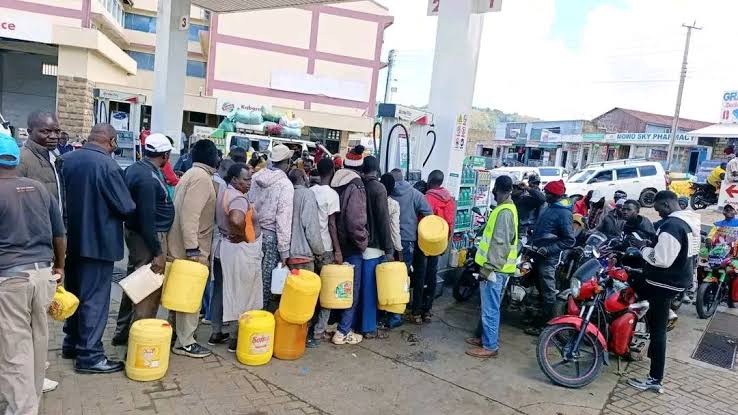
Fuel Shortage Hits Nairobi as Motorists Queue Amid Supply Delays

A fresh fuel shortage has gripped parts of Kenya, with Nairobi emerging as the hardest hit, as motorists spend hours queuing at filling stations in search of petrol and diesel.

Long queues and disruptions

The shortage, which began earlier this week, saw several stations run dry from Tuesday into Wednesday. Along key routes such as Thika Superhighway and Eastern Bypass, long lines of vehicles caused traffic congestion, with some drivers being turned away due to depleted supplies.

The situation has also spread to surrounding areas including Rongai, Embakasi, South C and Lang’ata, where limited fuel availability has triggered panic buying and rationing at some outlets.

Fears ahead of price review

The disruption comes just days before the anticipated fuel price review by the Energy and Petroleum Regulatory Authority, raising concerns among consumers about a potential increase in pump prices.

Cause of the shortage

Officials from the Kenya Bureau of Standards have attributed the shortage to delays in clearing fuel cargo at the Port of Mombasa. The delays are reportedly linked to certification document issues, which have slowed down the release of shipments.

Authorities say efforts are underway to resolve the backlog and restore normal supply, but the situation continues to inconvenience motorists and disrupt transport across affected areas.

EPRA slashes fuel prices after outrage from Kenyans

The Energy and Petroleum Regulatory Authority (EPRA) has announced a downward revision of fuel prices, offering much-needed relief to millions of Kenyans amid ongoing cost-of-living pressures.

The new prices, which take effect at midnight, see the cost of Super Petrol drop by KSh9 to retail at KSh197.60 per litre. Diesel has recorded an even bigger reduction, falling by KSh10 per litre, while kerosene prices remain unchanged.

VAT Reduction Eases Pressure

In addition to the price cuts, the government has lowered Value Added Tax (VAT) on fuel from 16 percent to 8 percent, further easing the burden on consumers.

The combined effect of reduced pump prices and lower taxation is expected to bring down transport and energy costs across the economy.

Relief for Households and Businesses

The price adjustment comes as welcome news for households and businesses that have been grappling with high fuel costs in recent months.

Lower diesel prices, in particular, are likely to have a ripple effect on the cost of goods and services, given its central role in transportation and logistics.

Kerosene Holds Steady

While petrol and diesel users benefit from the reductions, kerosene prices have been left unchanged, meaning households that rely on it will not see immediate relief.

Outlook

EPRA maintains that fuel prices are influenced by global oil market trends, exchange rates, and government policy measures such as taxation.

The latest revision signals a shift aimed at cushioning consumers, with many now watching to see whether the trend of lower prices will continue in the coming months.

Petrol up by Ksh 28!

Motorists and households are set to feel the pinch after the Energy and Petroleum Regulatory Authority (EPRA) announced a sharp increase in fuel prices for the period between April 15 and May 14, 2026.

In its latest review, EPRA indicated that the price of Super Petrol will rise by KSh28.69 per litre, while Diesel will see an even steeper increase of KSh40.30 per litre. Kerosene prices will remain unchanged.

Under the new pricing, Super Petrol, Diesel, and Kerosene will retail at KSh206.97, KSh206.84, and KSh152.78 respectively, effective at midnight for the next 30 days.

Global Oil Prices Drive Increase

The regulator attributed the spike to rising global oil prices, which have significantly increased the landed cost of imported fuel. As Kenya relies entirely on imported refined petroleum products, local prices remain highly sensitive to international market trends.

According to EPRA, the average landed cost of Super Petrol rose by 41.53 percent, from US$582.11 per cubic metre in February to US$823.87 in March. Diesel recorded an even sharper increase of 68.72 percent, while Kerosene surged by 105.15 percent over the same period.

“The increases have been driven by escalated prices in the international market,” EPRA said in a statement.

Government Interventions

In an effort to cushion consumers, the government has reduced Value Added Tax (VAT) on petroleum products from 16 percent to 13 percent following recent legal adjustments.

Additionally, about KSh6.2 billion will be drawn from the Petroleum Development Levy (PDL) to help stabilise pump prices.

Despite these measures, the pressure from global markets has outweighed relief efforts, resulting in higher fuel costs.

Other Factors at Play

EPRA also noted that its pricing did not include Super Petrol delivered by One Petroleum ex MT Paloma, in line with an earlier government directive.

The authority further explained that fuel is traded internationally in US dollars, meaning exchange rate fluctuations also influence local prices. In March, the Kenya shilling averaged 130.08 against the dollar, reflecting a slight weakening.

Impact on the Economy

EPRA maintained that its pricing framework, guided by the Petroleum Act 2019, is designed to ensure fair competition while allowing oil marketers to recover costs.

The regulator reaffirmed its commitment to balancing consumer protection with investor interests, even as global energy market volatility continues to impact domestic prices.

With the new rates taking effect at midnight, Kenyans should brace for increased transport and energy costs in the coming weeks.

Wandayi Warns of Possible Fuel Price Spike Over Unauthorised Imports

Energy and Petroleum Cabinet Secretary Opiyo Wandayi has cautioned that fuel prices in Kenya could rise by up to KSh14 per litre if unauthorised shipments of super petrol are allowed into the market.

According to Wandayi, such imports pose a serious threat to the stability of the country’s fuel supply chain and risk reversing recent efforts to maintain relatively stable pump prices.

Firm Action on Questionable Consignment

In response to the issue, the CS directed the Energy and Petroleum Regulatory Authority (EPRA) to immediately freeze any payments linked to the flagged fuel consignment. He also instructed the importing company to withdraw all related invoices without delay.

Wandayi emphasised the need for strict compliance with Kenya’s government-to-government fuel importation framework, noting that any deviation could disrupt supply systems and trigger unnecessary market volatility.

Protecting Consumers from Price Shocks

The CS further underscored the importance of vigilance in managing fuel imports, warning that irregular shipments could lead to artificial shortages or unjustified price increases.

He maintained that safeguarding the integrity of the supply chain is critical to protecting consumers from sudden and potentially steep increases in fuel costs.

Focus on Market Stability

With fuel prices already a key concern for households and businesses, Wandayi reiterated the government’s commitment to ensuring transparency and discipline within the sector.

His warning comes amid heightened scrutiny of fuel supply processes, as authorities seek to prevent disruptions that could place additional financial strain on Kenyans at the pump.

EPRA Cracks Down on Adulterated Fuel as Nationwide Inspections Expose Non-Compliant Stations

The Energy and Petroleum Regulatory Authority (EPRA) has intensified its crackdown on petrol stations selling adulterated fuel, shutting down some outlets and imposing fines on others in a move aimed at protecting motorists and enforcing national fuel standards.

The action follows a nationwide inspection carried out between January and March 2026, during which the regulator conducted 2,713 fuel quality tests across 758 petroleum sites.

Majority compliant, but violations uncovered
According to EPRA, the vast majority of stations met the required standards, with 753 sites—representing over 99 percent—found to be compliant. However, five stations were flagged for serious violations, including selling fuel adulterated with kerosene, distributing high-sulphur products, and diverting export-bound fuel into the local market.

Fuel adulteration, often involving the mixing of petrol or diesel with kerosene, can damage vehicle engines, reduce performance, and pose safety risks to consumers.

Closures, fines, and legal action
EPRA took enforcement action against the offending outlets, with some stations shut down and others penalised. In certain cases, operators were allowed to resume business after upgrading fuel quality and paying fines running into hundreds of thousands of shillings.

However, other cases remain unresolved, with fuel supplies impounded and matters proceeding through the courts. Authorities have maintained that strict penalties are necessary to deter malpractice in the sector.

Under the Petroleum Act 2019, dealing in adulterated fuel is a serious offence that can attract heavy fines or imprisonment, underscoring the government’s firm stance on fuel quality compliance.

Ongoing monitoring and consumer protection
EPRA has reiterated its commitment to continuous monitoring of petroleum products across the country. The regulator conducts regular inspections of fuel during storage, transportation, and sale to prevent adulteration and illegal diversion of export-designated products.

To strengthen enforcement, members of the public are being urged to report suspicious fuel activity through EPRA’s hotline, SMS service, or USSD code (*363#).

Renewed focus on fuel integrity
While the number of non-compliant stations remains relatively low, the findings highlight persistent risks within the sector. EPRA says it will continue ramping up surveillance and enforcement to ensure that all fuel sold in Kenya meets the required standards.

The crackdown serves as a reminder to both operators and consumers of the importance of maintaining fuel integrity—protecting not only vehicles, but also public safety and confidence in the country’s energy sector.

Government Assures Steady Fuel Supply Amidst Rising Prices

The Kenyan government today moved swiftly to reassure citizens about the stability of fuel prices and supply, despite recent volatility in global crude oil markets. Addressing concerns among motorists and businesses, the Ministry of Energy emphasized that robust strategic reserves and proactive measures are in place to cushion consumers from significant price hikes.

Speaking at a press briefing in Nairobi, Energy Cabinet Secretary Dr. Amina Ali stated, “We understand the anxieties that arise from global oil price fluctuations. However, I want to assure all Kenyans that our national strategic petroleum reserves are currently at optimal levels, providing a comfortable buffer against external shocks.” Dr. Ali highlighted that the country holds sufficient stock to cover over three months of national consumption, far exceeding the East African Community (EAC) regional standard.

The Ministry further revealed that the government is actively utilizing the Petroleum Development Levy Fund to stabilize pump prices.

“This fund allows us to absorb a portion of the international price increases, ensuring that the burden on the ordinary mwananchi is minimized,” explained Principal Secretary for Petroleum, Mr. John Mwangi.

He added that the government is also exploring new long-term supply agreements with oil-producing nations to further diversify its import sources and secure more favorable terms, reducing reliance on spot market purchases.

The assurance comes as the transport sector, manufacturing industries, and agricultural producers have expressed concerns about potential disruptions and cost increases. John Kamau, the chairman of the Matatu Owners Association, welcomed the government’s statement, noting, “Stable fuel prices are critical for our operations. Any hike directly affects fares and the cost of doing business. We hope these measures hold.”

Analysts from the Institute of Economic Affairs also weighed in, with Dr. Mary Kilonzo commenting, “The government’s transparency on strategic reserves and the active use of stabilization mechanisms are positive steps. However, long-term solutions lie in exploring local energy sources and enhancing energy efficiency across sectors to reduce our import dependency.”

The Ministry confirmed that it is closely monitoring the geopolitical situation affecting oil-producing regions and global demand trends. It pledged to maintain open lines of communication with oil marketers and industry stakeholders to ensure seamless supply chain operations and prevent any speculative hoarding. Kenyans are urged to continue their daily activities without fear of impending fuel shortages or drastic price changes, as the government remains vigilant in safeguarding energy security.

Fuel costs per liter will be reduced by Sh7.

In a surprising development, the government has announced a reduction in fuel prices, despite the ongoing increase in global oil prices.

The Energy and Petroleum Regulatory Authority (EPRA) has slashed the price per liter of petrol by Sh7.21, diesel by Sh5.09, and kerosene by Sh4.49.

This decision diverges from the prevailing trend of rising oil prices, as major oil-producing nations have agreed to extend production cuts, typically resulting in higher prices.

However, Kenya’s unique situation points to two primary factors contributing to the decrease:

  1. Favorable Pricing in Government Oil Agreements: According to an EPRA insider, the price reduction is linked to fair pricing arrangements in the current government-to-government oil contracts with Gulf companies.
  2. Strengthening Kenyan Shilling: The insider also noted a significant strengthening of the Kenyan shilling, appreciating by nearly 30 units against the US dollar since the beginning of last month. This appreciation renders oil imports more affordable.

Earlier, President William Ruto had hinted at relief at the pumps during his visit to the South Rift region. He assured Kericho residents of his efforts to revitalize the economy.

The President expressed optimism about several economic indicators, including the strengthening of the Kenyan shilling against the US dollar.

“I asked you to give me a little chance to uplift this economy. It had plummeted into the trench. Now, I’ve pulled it out of the trench. You can see how the dollar is gradually stabilizing. Today, you will be informed that fuel prices are easing up because we want to ensure Kenya moves forward without the burden and risks of debt. We must tread carefully as a nation,” Ruto emphasized.

EPRA Announces New Fuel Prices

New fuel prices have been issued by the Energy and Petroleum Regulatory Authority (EPRA) for the period of February 15, 2024, to March 14, 2024.

The EPRA said in a statement on Wednesday, February 14, 224, that the prices of gasoline, diesel, and kerosene will be reduced by Ksh1.

“In accordance with Section 101(y) of the Petroleum Act 2019 and Legal Notice No.192 of 2022, EPRA has calculated the maximum retail prices of petroleum products, which will be in force from 15th February to 14th March 2024,” EPRA stated.

In the country’s capital, super petrol, diesel and kerosene will now retail at Ksh206.36, Ksh195.47 and Ksh193.23 effective midnight for the next 30 days.

“The prices are inclusive of the 16% Value Added Tax (VAT) in line with the provisions of the Finance Act 2023, the Tax Laws (Amendment) Act 2020 and the revised rates for excise duty adjusted for inflation as per Legal Notice No. 194 of 2020,” EPRA added.

Good News For Kenyan Drivers As EPRA Slashes Fuel Prices For The Holidays

The Energy and Petroleum Regulatory Authority (EPRA) has announced a welcome price drop for Super Petrol, Diesel, and Kerosene, effective December 15th, 2023. This decrease, in line with the Petroleum Act 2019 and Legal Notice No.192 of 2022, comes just in time for the festive season.

Fill your tank for less!

  • Super Petrol will cost Sh212.36 per litre, representing a Sh5 decrease.
  • Diesel will see a Sh2 drop, bringing the price down to Sh201.47 per litre.
  • Kerosene also enjoys a price cut, now retailing at Sh199.05 per litre, Sh4 lower than before.

Why the change?

Global oil price fluctuations and currency exchange rate adjustments influenced the revised pricing. EPRA, as the regulatory body, regularly reviews and updates fuel prices to ensure fairness and transparency in the energy market.

Benefits for everyone:

The lower fuel prices mean:

  • Reduced transportation costs: This can ease pressure on household budgets and make travel more affordable, especially during the holidays when many Kenyans visit family and friends.
  • Boosted economic activity: Lower fuel costs can have a ripple effect, potentially stimulating economic activity across various sectors.

Fuel Prices Increase in Kenya

The Energy and Petroleum Regulatory Authority (Epra) has announced a revision of fuel prices in Kenya, effective September 15, 2023.

The new prices are as follows:

  • Petrol: Sh 211.64 per liter, up from Sh 194.68 per liter
  • Diesel: Sh 200.99 per liter, up from Sh 179.67 per liter
  • Kerosene: Sh 202.61 per liter, up from Sh 169.48 per liter

This is the highest increase in fuel prices in Kenya since the introduction of the fuel subsidy in 2019.

The increase has been attributed to the rising cost of crude oil on the international market. The price of Brent crude oil, the international benchmark, has increased by more than 50% since the beginning of the year.

The increase in fuel prices is likely to have a significant impact on the cost of living in Kenya. Transportation costs are likely to go up, which will put pressure on businesses and consumers.

The government has said that it is monitoring the situation and will take steps to mitigate the impact of the increase in fuel prices.

In the meantime, consumers are advised to conserve fuel and use alternative modes of transportation whenever possible.

Fuel Prices Remain Unchanged in August 2023

The Energy and Petroleum Regulatory Authority (EPRA) has announced that fuel prices will remain unchanged in August 2023. This is despite the average landed cost of imported fuel having increased in July by 64% for super petrol, 4.29% for diesel and 7.41% for kerosene.

The decision to keep fuel prices unchanged was made in order to cushion consumers from the spike in pump prices as a consequence of increased landed costs. The government will be compensating oil marketers for the difference from the Petroleum Development Fund (PDF).

This means that a litre of super petrol will continue retailing at Sh194.68 in Nairobi, diesel at Sh179.67 and kerosene will go for Sh169.48. In Mombasa, motorists will continue paying Sh191.62 for a litre of super petrol, Sh176.63 for diesel and Sh166.43 for kerosene.

The unchanged prices will remain in force until September 14, 2023.

This is the second time in a row that fuel prices have remained unchanged in Kenya. The last time this happened was in August 2022.

The decision to keep fuel prices unchanged is a welcome relief for Kenyans who have been struggling with the high cost of living. However, it is important to note that the prices of fuel are likely to go up in the coming months, as the global oil market remains volatile.

The government is urged to continue taking steps to cushion consumers from the impact of rising fuel prices. This could include increasing the fuel subsidy or providing tax breaks to motorists.

VAT On Fuel To Increase Pump Prices, Affect Transportation & Manufacturing

The Energy and Petroleum Regulatory Authority (EPRA) has announced that it will increase fuel prices on June 30, 2023, following the implementation of a 16% VAT on petroleum products.

The new VAT rate will inevitably lead to an increase in pump prices, which will have a ripple effect on transportation costs, affecting commuters, businesses, and the overall cost of goods and services.

The transportation sector, including public transportation and logistics companies, will face the immediate brunt of the fuel price hike. With higher fuel expenses, transport operators may be forced to increase fares to maintain profitability. This, in turn, can result in an added financial burden on commuters who rely on public transport for their daily commute.

Manufacturers will also feel the impact of the increased VAT on petroleum products. The rise in fuel prices will lead to higher operational costs, as transportation expenses for raw materials and finished goods will increase. This could lead to higher prices for consumers, as manufacturers pass on the increased costs to them.

The inclusion of a VAT on petroleum products is expected to have far-reaching consequences for Kenyans. The new tax will increase the cost of living for many people, and it could also have a negative impact on the economy.

Here are some of the key impacts of the VAT on fuel:

  • Increased transportation costs: The rise in fuel prices will lead to higher transportation costs for businesses and individuals. This could make it more expensive to transport goods and people, which could have a negative impact on the economy.
  • Higher prices for goods and services: The increased cost of transportation could lead to higher prices for goods and services. This is because businesses will need to pass on the increased costs to consumers.
  • Reduced economic growth: The higher cost of living and doing business could lead to reduced economic growth. This is because businesses may be less likely to invest and hire new workers if their costs are rising.

The VAT on fuel is a significant policy change that will have a major impact on Kenyans. It is important to understand the potential impacts of this policy so that we can mitigate the negative effects and maximize the positive ones.

Ghafla!
Privacy Overview

This website uses cookies so that we can provide you with the best user experience possible. Cookie information is stored in your browser and performs functions such as recognising you when you return to our website and helping our team to understand which sections of the website you find most interesting and useful.