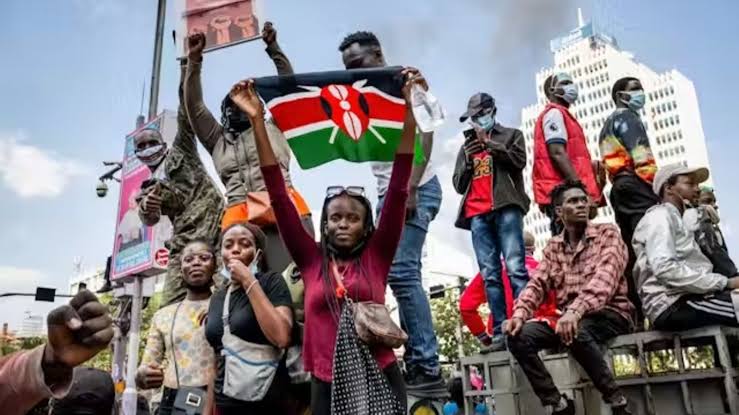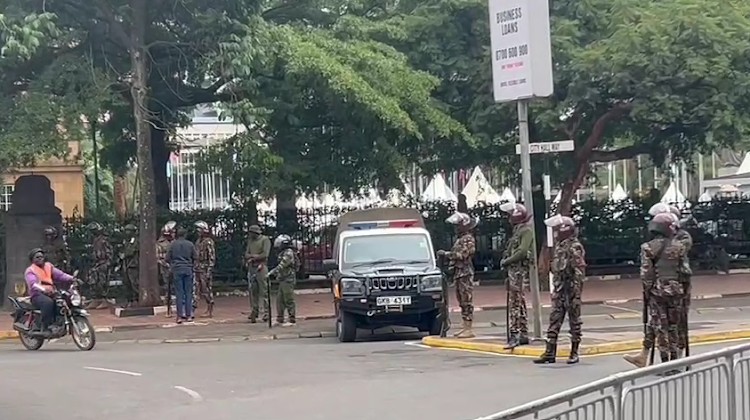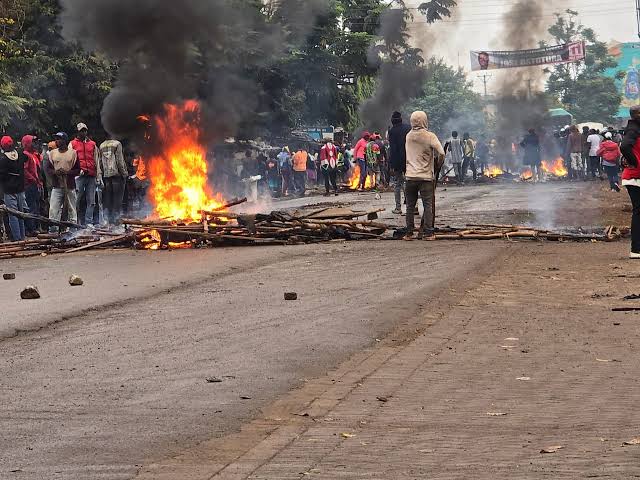
Police Lockdown- Major Highways Barricaded As Gen Z Memorial Protests Begin

Major transit corridors and entry points into Nairobi were brought to a standstill on Thursday morning, June 25, 2026, as police mounted extensive roadblocks across the capital. The massive security operation left thousands of commuters stranded as nationwide demonstrations marking the second anniversary of the historic Gen Z protests officially kicked off.

Despite the state’s insistence that Thursday would remain a normal working day, the transport network faced unprecedented disruptions.

Major Traffic Flashpoints and Gridlock

A city-wide security sweep heavily restricted movement along core highways connecting residential hubs to the Central Business District (CBD).

  • Thika Superhighway: Police established multiple checkpoints at Ruiru, the Eastern Bypass junction, Allsops, and Roysambu.

  • Waiyaki Way: A major bottleneck was created at the 87 Junction, cutting off motorists traveling from Limuru toward the city.

  • Outer Ring Road & Mombasa Road: Commuters were seen boarding commercial lorries and trucks out of desperation as standard Public Service Vehicles (PSVs) ground to a halt.

  • Satellite Towns: In Ongata Rongai, security forces erected barriers at the Tumaini area and Maasai Lodge, effectively sealing off residents from traveling toward Nairobi.

A spot check within the CBD revealed ghost-town-like conditions, with Haile Selassie Avenue reporting unusually low traffic volumes and heavily beefed-up security patrols.

Long-Distance Transport Suspended

Fearing potential volatility and property destruction, several prominent long-distance transport companies proactively halted operations. Major long-distance courier and PSV operators, including Guardian Angel, canceled scheduled morning departures to monitor the evolving security situation on the highways.

Context and Internal Government Contradictions

Today’s protests serve to commemorate June 25, 2024—the historic climax of the anti-Finance Bill protests that saw youths breach Parliament. Security agencies remain on high alert due to fears that criminal elements might infiltrate the peaceful memorial processions.

The heavy police deployment also exposes a communication rift within the state’s security apparatus. On Wednesday evening, Interior Cabinet Secretary Kipchumba Murkomen openly contradicted Nairobi police leadership; while the CS confirmed that the government had received a formal notification for a peaceful protest, Nairobi’s top police commanders had previously denied receiving any such paperwork.
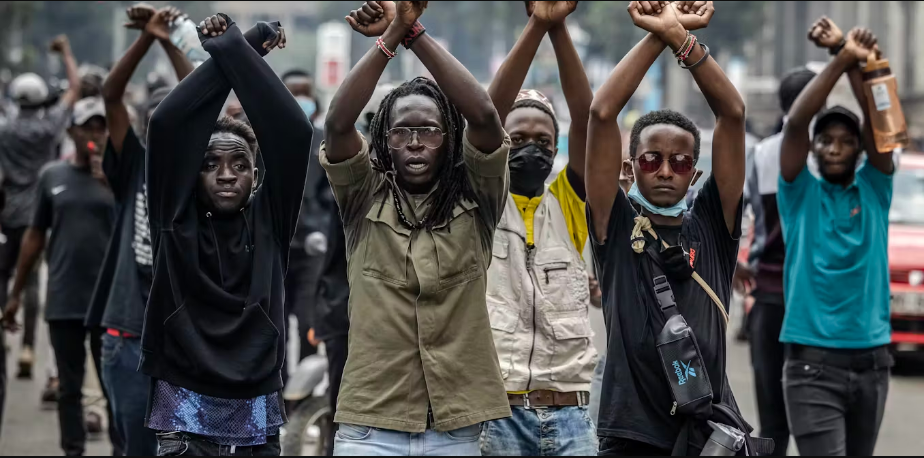
President Ruto Draws Hard Line On National Security Ahead Of June 25 Protest Anniversary

President William Ruto has issued a stern warning against lawlessness, property destruction, and economic disruption as Kenya approaches the anniversary of the historic June 25 anti-government protests.

Speaking on Friday, June 19, 2026, at State House, Nairobi, during the National Productivity and Performance Conference, the President emphasized that while the right to picket is constitutionally guaranteed, it must never compromise national stability or the safety of Kenyan workers.

“An Organized Society”

Addressing the delegation, the Head of State argued that the country’s workforce requires a secure and predictable environment to drive the economy. He warned that any engineered instability would severely derail Kenya’s ongoing developmental progress.

“We are a country that believes viciously in order, we are a civilized nation, we are an organized society, we believe in the rule of law,” President Ruto declared.

While acknowledging the public’s right to express grievances through lawful petitions, Ruto made it clear that state security agencies remain highly vigilant and will firmly resist any attempts to incite chaos or target private property.

Key Takeaways from the Security Alert

Factor Details
State Position Constitutional freedoms must operate strictly within the framework of the law; lawlessness will not be tolerated.
Economic Context Public agitation must not interfere with the safety of workers or ongoing economic transformation.
International Response The U.S. Embassy in Nairobi has issued a proactive security advisory for its citizens.

Diplomatic Community on High Alert

The heightened political tension has already drawn international attention. Notably, the United States Embassy in Nairobi has issued a security advisory to its citizens, cautioning them to brace for potential unannounced demonstrations, severe traffic disruptions, and a heavy police presence—particularly within the Nairobi Central Business District (CBD) and other major cities.

Despite the looming anniversary, President Ruto maintained that the government’s priority is preserving national discipline and ensuring essential services run without interruption.

Death Toll On Saba Saba Protests Rises Amidst Calls For Accountability

The recent “Saba Saba” protests on July 7, 2025, a day deeply significant in Kenya’s history for its association with pro-democracy movements, have tragically escalated into widespread violence, resulting in a soaring death toll and renewed calls for accountability.

Mounting Casualties and Arrests

The state-funded Kenya National Commission on Human Rights (KNCHR) reported on Tuesday, July 8, that the death toll from Monday’s demonstrations had tragically surged to 31, making it the highest single-day casualty count since the current wave of protests began. In addition to the fatalities, the KNCHR documented 107 injured individuals and over 500 arrests across various counties. There were also reports of two enforced disappearances. These figures underscore the intensity of the clashes between protesters and security forces.

The demonstrations, primarily driven by a youthful demographic, were initially sparked by outrage over the death of blogger Albert Ojwang in police custody last month. This incident fueled long-standing grievances concerning police brutality, alleged corruption, and the rising cost of living. Protesters are demanding an end to excessive force by law enforcement and have intensified calls for President William Ruto’s resignation. The Saba Saba date itself (July 7) commemorates the 1990 pro-democracy protests that pushed for a multi-party system in Kenya, adding a historical resonance to the current demands for governance reform.

Police Response and Allegations of Excessive Force

Reports from human rights organizations and eyewitnesses indicate that security forces responded with considerable force. Police deployed tear gas, water cannons, rubber bullets, and reportedly, live ammunition to disperse crowds. Disturbing accounts also emerged, particularly from Nairobi and Kajiado counties, of a heavily armed, unmarked convoy of individuals in balaclavas operating with military-style precision, using high-caliber firearms and showing little intent to make arrests. These reports have led to mounting concerns about extra-judicial killings and a deliberate attempt to obscure accountability. The Law Society of Kenya and the Police Reforms Working Group have accused police of violating court orders by deploying heavily armed forces and using unmarked vehicles.

Calls for Accountability and International Concern

The KNCHR has strongly condemned all human rights violations and urged accountability from all responsible parties, including police, civilians, and other stakeholders. The United Nations High Commissioner for Human Rights, Volker Türk, expressed deep concern over the killings and renewed his call for calm, restraint, and full respect for the freedoms of expression, association, and peaceful assembly. He emphasized the need for prompt, thorough, independent, and transparent investigations into all reported killings and alleged violations of international human rights law, stressing that those responsible must be held to account. The UN Human Rights Office has offered to support Kenyan authorities in these investigations.

Gen Z Protests: Reflections, One Year Later

They marched, screamed and streamed it all in real-time.

In 2024, Kenya’s political terrain was jolted by something no one saw coming – not quite a revolution, not quite a riot, but a raw, powerful Gen Z uprising that took a Finance Bill and tore it down in front of the whole world.

The government blinked. And for once, Kenya paused to listen to its youngest citizens.

A year later, what do we have? What changed? What didn’t?

This is the Gen Z Anniversary Scorecard – the pulse check on a year that taught us that rage is real, but so are the risks.

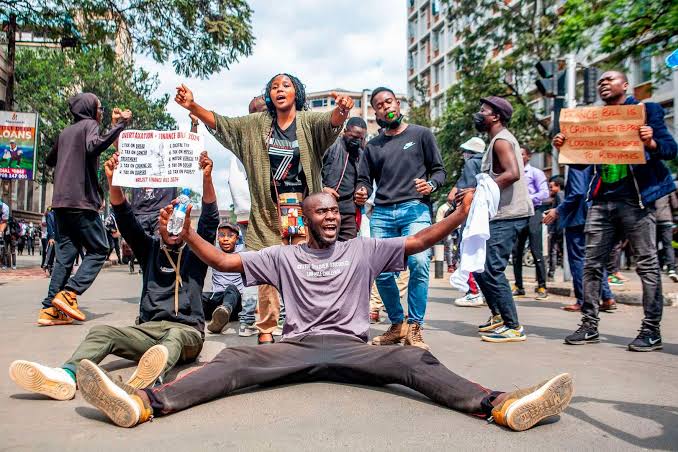
Scenes from the streets during the Gen Z Riots of 2024 in Nairobi CBD (Image: Files)

The Wins: When The System Flinched

Let’s start with what went right – because some things did.

The Finance Bill 2024/25? Rejected on Arrival.

The youth pushed, the system folded. A rare, almost cinematic moment of public pressure working. The streets spoke louder than the suits.

Opening Dialogue

From presidential listening tours to hurried press briefings, the noise turned into a reluctant conversation. Leaders were forced to show up, not just speak up.

Civic Awakening

Dormant civil society? Re-activated. Apolitical youth? Now political. It wasn’t just Gen Z. Churches, unions, even mama mbogas found their voice again.

A Shifted National Focus

Cost of living. Tax justice. Police brutality. Unemployment. Suddenly, these weren’t just hashtags – they were headlines.

The Losses: When Fire Burns 

But for every chant that echoed, a silence followed – the kind that comes from loss, confusion, and fear.

Lives Lost. Dreams Interrupted.

69 dead. 32 disappeared. 627 arrested. Names, not just numbers – youth who never made it home, and families still waiting.

Chaos Hijacked the Cause

Looters disguised as protesters. Property damaged. Innocents caught in crossfire. Rage opened the door, but anarchy walked in.

Investor Panic. Economic Bruises.

Nairobi and Kisumu turned red zones on risk maps. Trade slowed, tourism dipped, the World Bank issued warnings. Growth projections trembled.

Polarization Deepened.

Not everyone clapped for Gen Z. Some tuned out. Some retreated into fear and fatigue. Rage alienated as much as it rallied.

PNo Structural Shifts.

The Finance Bill was pulled. But what replaced it? Few legal reforms, little institutional change. Momentum flickered out.

The Lesson: Rage Alone Isn’t Enough 

This was a beautiful mess – raw emotion, real pain, digital strategy, physical bravery. But as the dust settles, we must admit: it wasn’t enough.

Why?

Because leaderless movements burn fast and fade faster.

Because rage without a roadmap leads to reaction, not reform. Because Kenya deserves more than momentary anger – it deserves vision.

The Challenge: From Protest To Power

So now, we ask:

Can Gen Z convert street fire into political infrastructure?

Can the government codify change, not just concede?

Can we protest without losing lives?

Because if 2024 was about raising fists, 2025 must be about raising standards.

This isn’t the end of the story – it’s a call to write a better next chapter.

Rage cracked the door open. But only strategy will walk through it.

Police Ready Themselves For June 25 Gen Z Anniversary Protests, Urge Peace

Nairobi Regional Police Commander George Seda has confirmed that security forces are fully prepared for the planned demonstrations on Wednesday, June 25, 2025. These protests will commemorate the momentous Gen Z protests that occurred last year.

Speaking at a press briefing on Wednesday evening, Seda acknowledged that police had received official communication from the organizers. He reassured the public that security organs are ready to ensure everyone’s safety.

“We have the plan and we shall be there to provide enough and good security to ensure every person who is going to participate and those not going to participate will be safe, for that matter,” Seda stated. “As for June 25th, we have enhanced plans. We equally have a copy of the letter which was delivered to Central (Police Station).”

Commander Seda appealed to demonstrators to remain peaceful and avoid provoking law enforcement, citing previous instances where such actions led to violence.

“Let’s restrict ourselves to what we call peaceful demonstrations. Let’s not have demonstrations which are going to interfere with other people who may not be part of the demonstrators,” he urged. “Remember, it will be a working day and we shall be having people operating hotels, shops and other businesses. We are looking uncivilized when we start converging, and then as we continue, it turns violent and beats the logic of conducting it, which makes the situation worse.”

He also cautioned against confrontational behavior during the protests, referencing recent incidents in Nairobi CBD where civilians violently confronted officers while protesting the murder of teacher Albert Ojwang.

“When we become reactive, and you even saw last Thursday when people were provoking armed officers — we are not there to be at war with you, the public, but to provide security,” he emphasized.

The police have pledged to protect both demonstrators and non-demonstrators during the upcoming protests, which mark the one-year anniversary of the Gen Z protests on June 25, 2024.

Ghafla!
Privacy Overview

This website uses cookies so that we can provide you with the best user experience possible. Cookie information is stored in your browser and performs functions such as recognising you when you return to our website and helping our team to understand which sections of the website you find most interesting and useful.