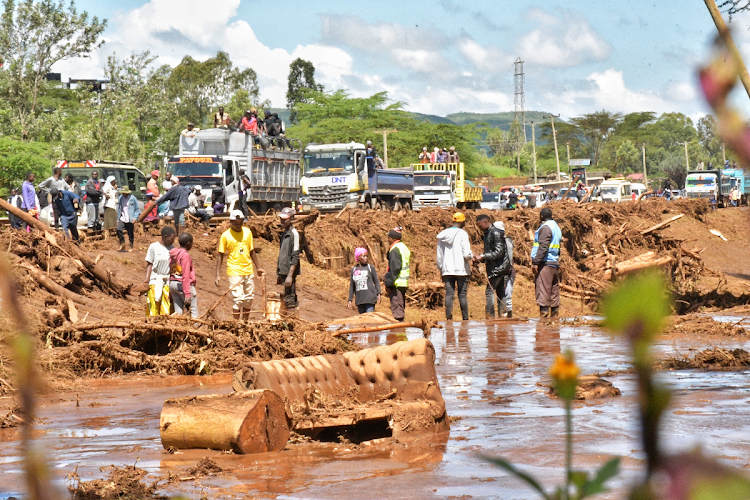
With sixty people dead from the Mai Mahiu disaster, searches for the missing are still ongoing

The death toll from the Mai Mahiu floods reached 60 on Sunday as search teams recovered the bodies of a man and a juvenile. Dozens more individuals remain missing, and search operations are ongoing.

Among the victims are 11 adult males, 16 adult females, 17 male juveniles, 15 female juveniles, and one unidentified human skull. Seven bodies await autopsy as the search continues.

CHECK OUT:

https://www.ghafla.co.ke/ke/due-to-floods-kura-closed-a-portion-of-un-avenue-in-runda/

Multi-agency teams are actively involved in locating approximately 50 missing individuals after floods inundated their villages. So far, heavy rains and floods across the country have claimed the lives of at least 230 people.

Interior Cabinet Secretary Kithure Kindiki reported that 164 people have been injured, and 72 others remain missing as a result of the floods. The displaced population stands at approximately 212,630, with 41,526 households affected. Relief efforts have seen the establishment of 138 camps across the country hosting 62,061 people.

The floods have also affected 1,967 schools, prompting a coordinated response from government agencies, including the Kenya Defence Forces (KDF), National Youth Service (NYS), and humanitarian organizations.

ALSO CHECK OUT:

https://www.ghafla.co.ke/ke/uk-provides-ksh-140-million-to-aid-kenyan-flood-relief-efforts/

General Charles Kahariri, the new Chief of Defence Forces (CDF), visited the Mai Mahiu flood victims to assess the recovery process and coordinate rescue efforts. The KDF, alongside other agencies, is providing essential assistance to affected families and raising awareness in flood-prone areas to mitigate risks.

Governor Susan Kihika of Nakuru commended the KDF’s support in enhancing search and recovery operations. The tragedy, which occurred on April 29, 2024, resulted from flooding in a tunnel along the old Kijabe Road in Kiambu County.

Despite ongoing efforts, the Meteorological Department warns that the rains are expected to persist, emphasizing the importance of continued vigilance and preparedness.
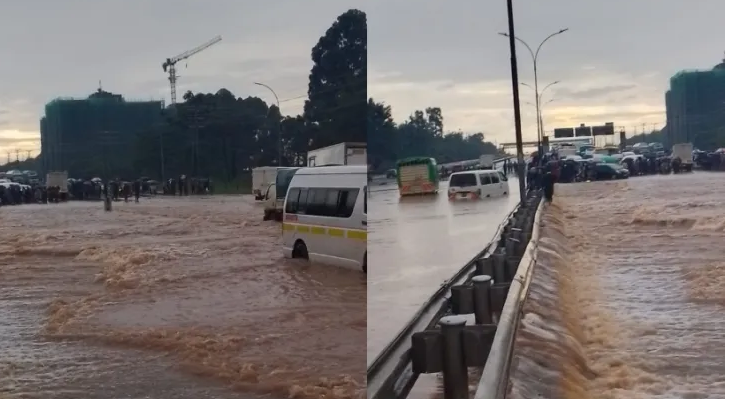
Tropical Storm Hidaya is done, and there will be a lot of rain

Kenya has heightened its vigilance as Cyclone Hidaya threatens to impact the Tanzanian coast and potentially affect the Kenyan coastline.

CHECK OUT:

https://www.ghafla.co.ke/ke/thika-superhighway-re-opens-for-thika-bound-traffic-after-flooding-closure/

Interior Cabinet Secretary Kithure Kindiki implemented a ban on fishing, swimming, beach activities, and non-essential transport in the coastal region on Saturday, May 4, 2024, in anticipation of the cyclone’s potential effects, such as strong winds and waves.

However, by midnight on the same day, the Tanzania Meteorological Authority (TMA) provided an update, indicating that Cyclone Hidaya had weakened significantly over Mafia Island.

ALSO CHECK OUT:

https://www.ghafla.co.ke/ke/meteorological-department-reports-continued-rainfall-flooding/

According to the TMA, the cyclone had lost its strength after making landfall on Mafia Island, with the remnants of associated clouds dissipating over various southern regions of Tanzania. Consequently, the TMA declared no further threat from Cyclone Hidaya within the country and predicted continued normal rainfall in some areas.

In Kenya, 37 counties, including those along the coast such as Kwale, Mombasa, Kilifi, and Lamu, were expected to experience moderate to heavy rains and thunderstorms on May 5, 2024, as a result of the cyclone’s aftermath.

The Kenyan Ministry of Interior and National Administration emphasized that while Cyclone Hidaya had weakened, heavy rainfall, strong winds, and high waves were still anticipated along the coast, with reports of such conditions already observed in Kwale.

Preceding the cyclone warnings, the Kenyan government had taken preemptive measures, including assessing dams in the Coast region and issuing evacuation notices to residents near high-risk dams and water reservoirs. Additionally, the Kenya Coast Guard had been deployed to territorial and inland waters, particularly in Kilifi, Kisumu, Tana River, Garissa, and Nairobi counties.

The government also enforced a ban on beach, swimming, and fishing activities, as well as non-essential transport along the coast from May 4 to 6. This decision aimed to address water currents, stagnation, and flooding along coastal and border roads, which had led to partial inundation and damage to key road infrastructure, impeding travel and transportation.

Ghafla!
Privacy Overview

This website uses cookies so that we can provide you with the best user experience possible. Cookie information is stored in your browser and performs functions such as recognising you when you return to our website and helping our team to understand which sections of the website you find most interesting and useful.