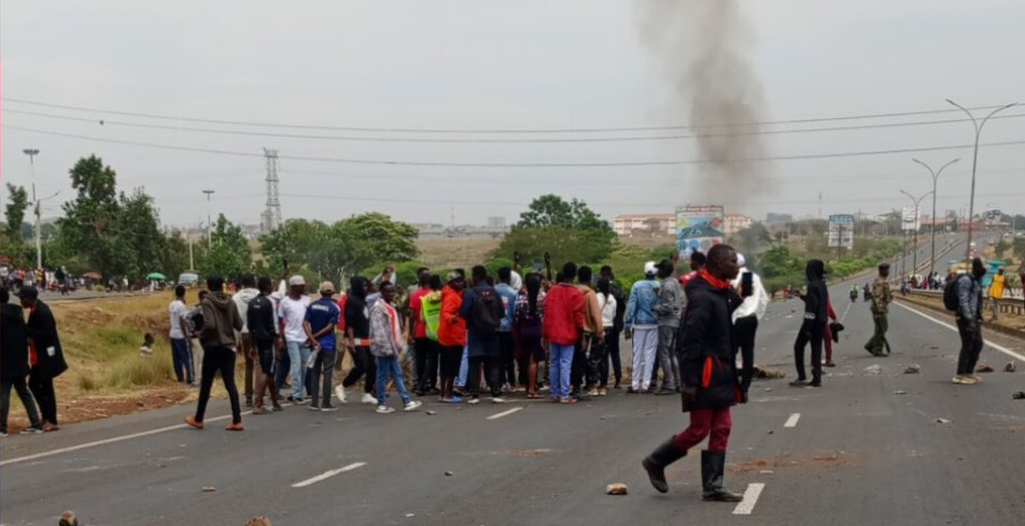
On January 27, 2025, Kenyatta University in Nairobi, Kenya, saw significant unrest as students took to the streets, disrupting major transport routes, in response to a series of grievances centered around a prolonged power outage and dissatisfaction with the Higher Education Loans Board (HELB) funding delays.
Trigger for the Protests
The immediate catalyst for today’s protests was the lack of electricity at the university for over a week, particularly affecting the hostels where many students reside. Reports indicate that Kenya Power, the national electricity supplier, attempted to relocate a transformer, leading to a stand-off with students who managed to secure the transformer, resulting in an immediate disconnection of power supply since Friday night. This situation escalated with students blocking Thika Road, a key artery into Nairobi, with boulders and fires, causing significant traffic disruptions.
Wider Grievances and National Context
The protests at Kenyatta University are not isolated but part of a broader wave of discontent among Kenyan students. The grievances extend beyond the immediate issue of electricity to encompass delays in HELB funds, which are crucial for many students’ educational and living expenses. The situation is further inflamed by the national strike involving students from various institutions, highlighting systemic issues in higher education funding and infrastructure.
Impact on University Operations
The ongoing demonstrations have led to significant operational disruptions at Kenyatta University. Following heightened agitation and a lecturers’ strike, the university’s senate decided to close the institution until further notice. This closure comes amidst complaints over the ongoing lecturers’ strike affecting teaching across all public universities. The closure was also influenced by concerns about student agitation and the potential for further escalation, with the university rescheduling exams and urging students to adhere to the student code of conduct.
Public and Political Reaction
The protests have captured national attention, with posts on social media platforms like X reflecting both support and frustration from the public. The disruption of one of Nairobi’s main highways has prompted calls for swift action from both the university administration and governmental bodies to address the students’ concerns. There’s a palpable tension around the adequacy of current educational policies and funding models, especially with the recent changes in university funding structures that have left many worried about their educational futures.
Moving Forward
As the day progresses, there’s an urgent call for dialogue between the university administration, student representatives, and government officials to resolve the immediate crisis of power restoration and to tackle the underlying issues of funding and educational infrastructure. The situation at Kenyatta University serves as a stark reminder of the broader challenges facing Kenya’s education sector, where student voices are becoming increasingly vocal in demanding change.
The protests today underscore a critical moment for Kenyan higher education, highlighting the necessity for sustainable solutions to ensure that students’ rights to education are not compromised by administrative or infrastructural failures. As the nation watches, the resolution of these protests will set a precedent for how educational crises are managed in the future.