President Ruto Defends Kenya’s Higher Fuel Prices
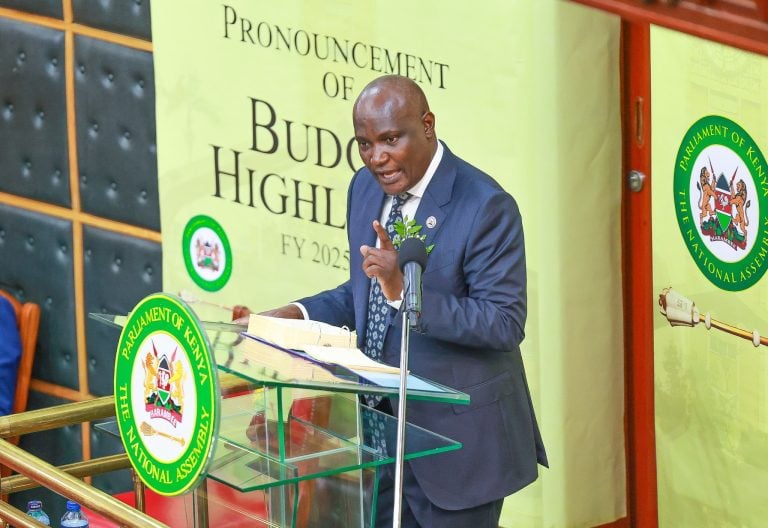
President William Ruto has broken his silence on the growing disparity between fuel prices in Kenya and its East African neighbors. Speaking during a church service in Karen on Sunday, April 19, 2026, the President argued that Kenya’s status as a middle-income economy and its superior road network necessitate a different pricing structure compared to Tanzania and Uganda.
The Head of State sought to justify the higher costs by highlighting the financial demands of maintaining a modern infrastructure that outpaces the rest of the region.
Middle-Income vs. Least Developed Status
President Ruto dismissed direct price comparisons with neighboring countries, asserting that such comparisons are fundamentally flawed due to varying economic classifications.
“Many people keep asking why prices in Kenya differ from those in our neighboring countries,” the President stated. “It is important to clarify that Kenya is a middle-income country, while many of our neighbors are classified as least-developed countries, and that creates a significant difference.”
He urged critics to benchmark Kenya against other middle-income nations to get a more “accurate” picture of global energy costs.
The Price of World-Class Infrastructure
A major driver of the high pump prices, according to the President, is the Road Maintenance Levy. He noted that the taxes embedded in every liter of fuel are directly channeled into the country’s massive road network, which he claims is unrivaled in the East African Community (EAC).
By the Numbers:
-
20,000 km: The current network of tarmac roads Kenya maintains.
-
6,000 km: The length of tarmac roads currently under construction.
-
28,000 km: The government’s ambitious goal for additional tarmac roads over the next seven years.
Ruto pointed out that Kenya’s 20,000 kilometers of paved roads exceed the combined tarmac networks of all other EAC member states. “Kenyans need to understand that the taxes are designed to support transport infrastructure that benefits the economy through improved connectivity,” he added.
The Price Gap: Kenya vs. Neighbors
The President’s explanation arrives at a time of intense public scrutiny following the latest Energy and Petroleum Regulatory Authority (EPRA) review. While local prices have seen a slight downward revision from their mid-April peak of over Ksh 206, the gap between Kenya and its neighbors remains stark.