

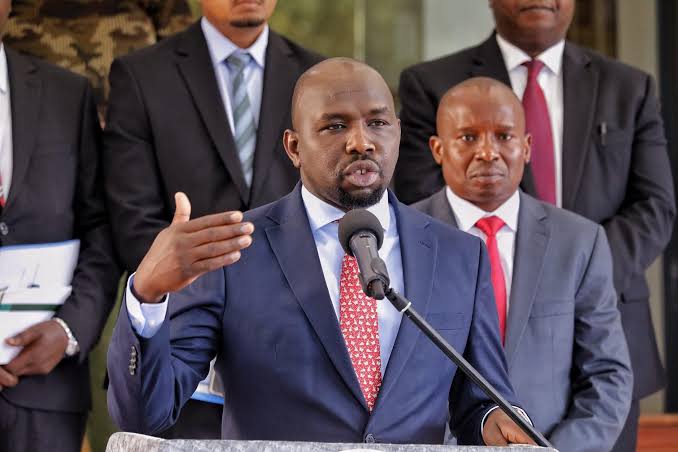
The Ministry of Interior and National Administration has clarified recent remarks made by Cabinet Secretary Kipchumba Murkomen regarding the conduct of police officers during recent public demonstrations.
In a statement released to the media, the government emphasized that no shoot-to-kill directive was issued by the Cabinet Secretary.
Instead, CS Murkomen underscored the legal provisions that guide law enforcement officers when responding to situations involving criminal activity and threats to public safety.
Right to Protest vs. Criminal Acts
The statement reaffirmed that peaceful protest is a constitutional right under Article 37 of the Constitution.
However, it added that this right does not extend to acts of violence, looting, or destruction of property.
“Once protests turn into riots and lawlessness, where lives are threatened and property is vandalized, they are no longer protected demonstrations in line with the law. They become criminal activities,” the statement read.
Police Response Guided by Law
According to the Ministry, officers are guided by the National Police Service Act (2011) and the Penal Code, which permit the use of proportional force – including firearms – only under specific circumstances.
These include:
- When an officer’s life or a citizen’s life is in immediate danger.
- During incidents involving serious harm or violent crimes.
- When preventing escape or rescue of dangerous criminals from custody.
The law requires officers to first use peaceful and non-violent means, such as warnings or verbal commands, before resorting to any form of force.
Context of CS Murkomen’s Remarks
The Cabinet Secretary’s remarks, the statement clarified, were a response to reports of attacks on police stations and officers during recent protests.
“His comments were a reminder that while police officers must respect human rights, they are also empowered under the law to respond when their lives or those of citizens are endangered,” the statement noted.
The government reiterated its commitment to the rule of law, public safety, and constitutional rights.
It also called on citizens to exercise their right to protest responsibly and within the confines of the law.