Simp police officer kills rival in fight over woman before turning gun on himself

A tragic incident unfolded at a police post in Ndurumo, Rumuruti, Laikipia County, after a police officer shot and killed a 29-year-old man during an alleged fight over a woman before turning the gun on himself.

According to preliminary reports, the officer left his patrol base while armed and went to a nearby shop, where he confronted the victim. The confrontation reportedly escalated, and the officer shot the man at close range, killing him instantly.

After the shooting, the officer is said to have returned to the police post, where he shot himself in the chest. He died on the spot.

Police officers responding to the incident found the two bodies approximately 150 metres apart. Spent cartridges were recovered from both scenes, indicating gunfire at each location.

The bodies were later moved to the mortuary as investigations began to establish the full circumstances surrounding the incident. Authorities are treating the matter as a double fatal shooting linked to a personal dispute.

The incident has shocked local residents and raised fresh concerns over firearm handling and mental well-being among officers on duty. Investigations are ongoing.

Government Clarifies: No Shoot-to-Kill Order Issued

The Ministry of Interior and National Administration has clarified recent remarks made by Cabinet Secretary Kipchumba Murkomen regarding the conduct of police officers during recent public demonstrations.

In a statement released to the media, the government emphasized that no shoot-to-kill directive was issued by the Cabinet Secretary.

Instead, CS Murkomen underscored the legal provisions that guide law enforcement officers when responding to situations involving criminal activity and threats to public safety.

Right to Protest vs. Criminal Acts

The statement reaffirmed that peaceful protest is a constitutional right under Article 37 of the Constitution.

However, it added that this right does not extend to acts of violence, looting, or destruction of property.

“Once protests turn into riots and lawlessness, where lives are threatened and property is vandalized, they are no longer protected demonstrations in line with the law. They become criminal activities,” the statement read.

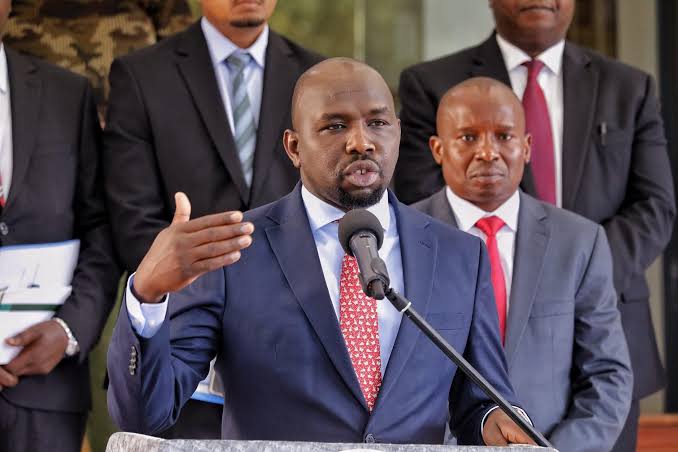
CS Interior Kipchumba Murkomen is flanked by Deputy President Kithure Kindiki during a recent media briefing (Image: Files)

Police Response Guided by Law

According to the Ministry, officers are guided by the National Police Service Act (2011) and the Penal Code, which permit the use of proportional force – including firearms – only under specific circumstances.

These include:

  • When an officer’s life or a citizen’s life is in immediate danger.
  • During incidents involving serious harm or violent crimes.
  • When preventing escape or rescue of dangerous criminals from custody.

The law requires officers to first use peaceful and non-violent means, such as warnings or verbal commands, before resorting to any form of force.

Context of CS Murkomen’s Remarks

The Cabinet Secretary’s remarks, the statement clarified, were a response to reports of attacks on police stations and officers during recent protests.

His comments were a reminder that while police officers must respect human rights, they are also empowered under the law to respond when their lives or those of citizens are endangered,” the statement noted.

The government reiterated its commitment to the rule of law, public safety, and constitutional rights.

It also called on citizens to exercise their right to protest responsibly and within the confines of the law.

Rewriting the Rules with The New Police Reforms

If Kenya’s streets could talk, they’d probably ask for a little peace, a little justice – and, a lot more accountability.

For decades, the country’s police force has stood at a difficult crossroads: damned if they do, and damned if they don’t.

But now, a bold reform agenda is daring to redraw the line between protection and power.

In a rare display of resolve, the Ministry of Interior and National Administration has unveiled a sweeping framework aimed at transforming not just the image, but the very soul of policing in Kenya.

Led by CS Kipchumba Murkomen, the reforms are not about patching cracks – they aim to reconstruct the architecture of law enforcement, from station floors to surveillance ceilings.

Some call it long overdue. Others call it political theatre.

What’s undeniable is that Kenya’s police reform script just got a radical rewrite.
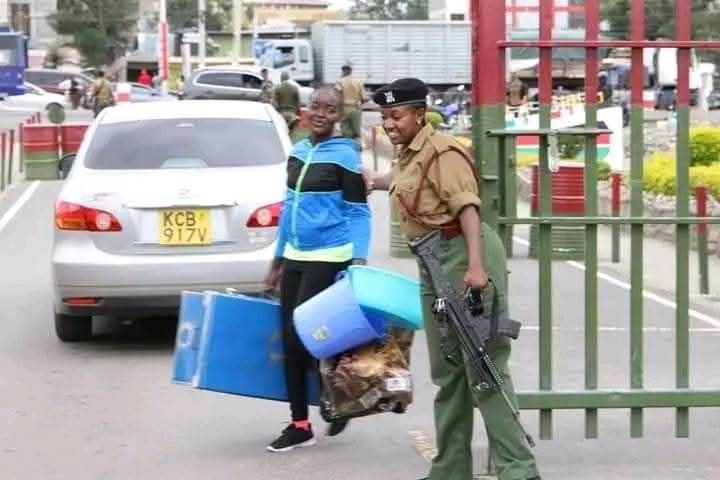
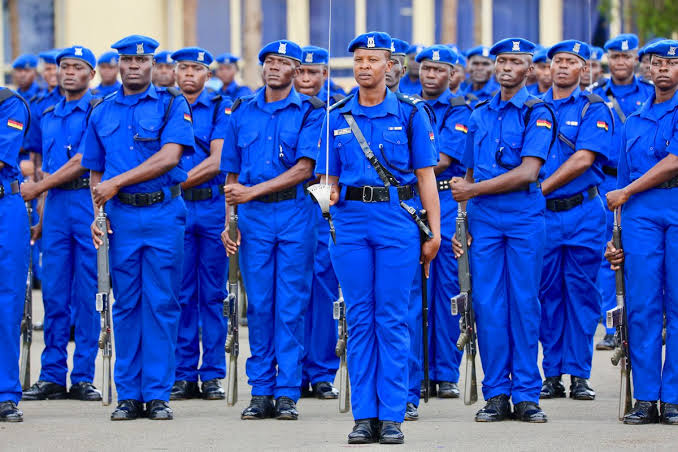
    An administration police constable welcomes a new recruit at APTU for commencement of training in an undated photo (Image: Kenya Police Facebook)

From Krigler to ‘Jukwaa la Usalama’ 

The reform dream isn’t new.

The Krigler Report set the tone post-2007. Then came the 2010 Constitution, raising the bar on human rights, discipline, and service.

But a decade later, much of that promise remained stuck in bureaucracy and budget constraints.

That’s changing.

Today, Kenya stands at a pivot point – with a president who’s inked a pact to defend youth protest rights, and a Cabinet Secretary now rallying behind a citizens-first policing model.

The approach is surprisingly surgical.

From digital Occurrence Books that can’t be erased, to CCTV-backed stations that promise to finally end the “he said, she vanished” era, the shift is as symbolic as it is structural.

The reforms are unapologetically people-facing – and uncomfortably demanding for a system long shielded from scrutiny.

The Bravest can also be the Broken …

Over 600 officers have lost their lives in the line of duty in the last decade.

Their sacrifice is real, their names remembered – but so too are those on the other side of the badge: Baby Pendo, Willie Kimani, Martin Koome.

Their deaths weren’t accidents. They were reminders of a system in need of urgent surgery.

The Ministry doesn’t shy away from this uncomfortable truth. That’s new. And it’s welcome.

Through proposed bills targeting welfare, training, oversight and accountability – as well as the modernization of forensic services – the government is betting on the long game: a secure Kenya, policed not by fear, but by service.

The All-powerful but Autonomous OCS 

At the heart of the reforms is a curious idea: decentralizing accountability to each police station, with the Officer Commanding Station (OCS) being the frontline reform steward.

It’s a bold move – one that could either revolutionize grassroots policing or collapse under the weight of unchecked discretion.

To keep the dream alive, the ministry is tying performance evaluations to public trust indicators, promising rewards for officers who build bridges, not burn them.

Community policing isn’t just a buzzword anymore – it’s becoming policy.

Reform Is a Two-Way Street

The CS is clear: accountability doesn’t stop with the badge. Citizens, too, must reject mob justice, illegal arms, and the creeping normalization of anarchy during protests.

This isn’t a veiled threat – it’s a reminder that trust, once broken, must be rebuilt from both sides.

In a Nutshell …..

For Kenya, the road to a reformed police service won’t be paved in speeches.

It will be built in silence: in the quiet discipline of an officer who turns down a bribe, in the hum of a functioning CCTV camera, in a community that calls in peace, not revenge.

In the weeks ahead, Parliament will debate the proposed bills. Budget lines will be redrawn. Stations will be rewired.

And somewhere, if this works, a generation of officers might begin to wear the badge not just with pride – but with purpose.

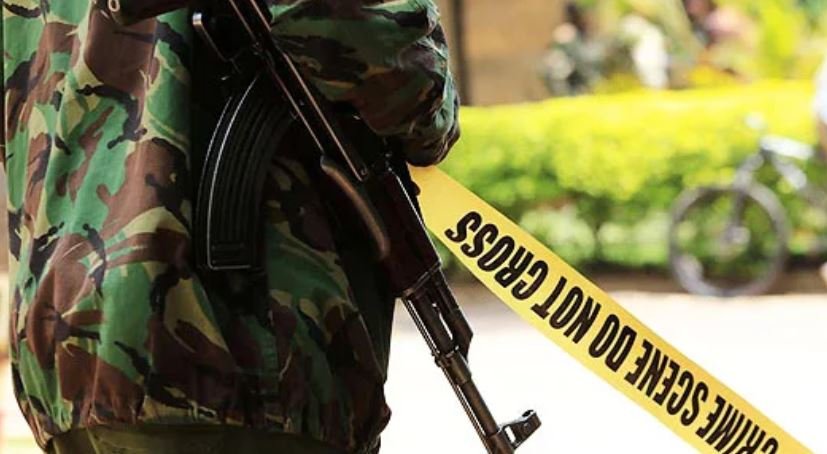
Kenya to deploy an additional 600 police officers to Haiti

Kenya has committed to deploying an additional 600 police officers to Haiti in the coming weeks to assist in combating the gangs that have taken control of much of Port-au-Prince and surrounding areas. This new contingent will raise the total number of Kenyan officers sent to Haiti since June to 1,000.

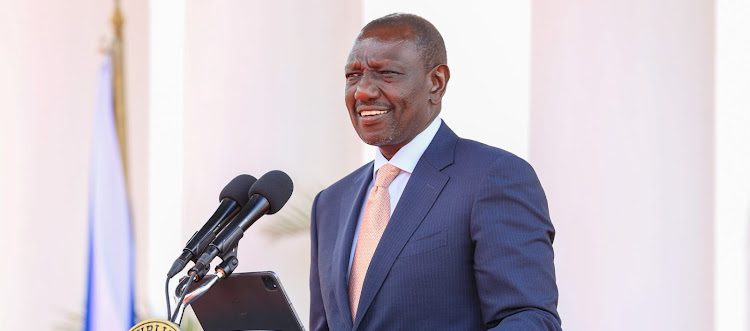
During a recent visit to Haiti, President William Ruto expressed support for converting the current Kenya-led security mission into a comprehensive United Nations peacekeeping operation. Several other nations have also pledged to send at least 1,900 additional troops.

Despite ongoing violence in Haiti, a UN human rights expert has reported that gangs are expanding their influence into new regions, resulting in increased displacement. The UN Security Council is expected to convene by the end of the month to discuss whether to extend Kenya’s current mandate for another 12 months, which would set the stage for a full UN mission in 2025, potentially increasing funding and resources for the operation, which has faced challenges due to inadequate equipment.

While addressing Kenyan officers stationed in Port-au-Prince, President Ruto praised their accomplishments over the past few months. “Many believed Haiti was a mission impossible, but today their views have changed because of your progress,” he stated. He expressed confidence in their success against the gangs and committed to securing better equipment for them.

The nearly 400 Kenyan officers currently on the ground are actively patrolling and collaborating with Haitian forces to safeguard the community and restore order. Ruto noted that the upcoming batch of 600 officers is undergoing redeployment training and will be ready for mission in a few weeks.

However, there has been criticism in Haiti regarding the lack of decisive action against the gangs. The UN human rights expert emphasized that the mission is under-equipped, lacking essential resources such as helicopters, night vision goggles, and drones.

“The Multinational Security Support Mission (MSS), authorized by the UN Security Council in October 2023, has deployed less than a quarter of its planned forces,” stated William O’Neil. He highlighted that despite an international arms embargo, illegal arms and ammunition continue to flow into Haiti, allowing gangs to expand their control.

The UN expert reported significant logistical and technical limitations faced by the police in countering the gangs, quoting a police officer in Jérémie as saying, “The situation borders on the impossible. We have to learn to walk on water.” The rise in sexual violence has led to the displacement of over 700,000 people.

“This enduring agony must stop. It is a race against time,” O’Neil asserted, emphasizing the need to enhance support for the MSS mission to effectively assist the Haitian National Police and implement other measures mandated by the UN Security Council, including sanctions and a targeted arms embargo.