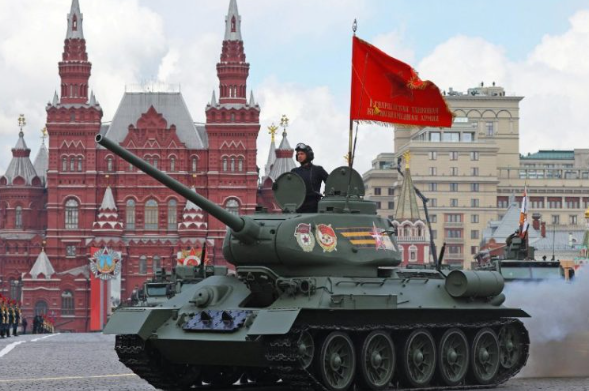
A large-scale recruitment ring has reportedly facilitated the movement of hundreds of Kenyans to join the Russian military in its ongoing war with Ukraine.
An investigation by Citizen TV has detailed how a local intermediary allegedly collaborated with senior government officials to enable the departure of the recruits.
According to the exposé, the scheme involved personnel drawn from the Department of Defence (DoD), the Directorate of Criminal Investigations (DCI), the Immigration Department, and the Ministry of Labour. These officials are said to have accepted bribes in exchange for allowing young men to travel to Russia without interference.
A Network Built on Bribery
The alleged coordinator of the operation, identified only as “Red” to protect his identity, claims he was contacted in December 2024 by a Russian national named Mikhael Lyapin.
Lyapin reportedly sought individuals with prior security training, including former members of the military, police service, or paramilitary units such as the National Youth Service (NYS), to serve in the Russian army.
To operationalise the arrangement, Red is said to have reached out to contacts within Kenya’s security agencies. He allegedly secured backing from a brigadier within the DoD and a senior officer based at DCI headquarters.
“I approached a few friends in the department of defence and they told me it was something possible… one of the friends told me that’s a deal,” Red stated in the investigation.
The probe outlines a structured bribery system that allegedly underpinned the operation:
-
Ministry of Labour officials: KSh 5,000 per recruit
-
DCI officers stationed at the airport: KSh 20,000 per recruit
-
Immigration officers: KSh 50,000 per recruit
Promises of Wealth
The recruitment drive primarily targeted unemployed and financially vulnerable individuals. Prospective fighters were reportedly promised a one-time signing bonus of KSh 1.6 million and a monthly salary of KSh 280,000.
Before departure, recruits were accommodated in private residential estates, including Great Wall Gardens in Mavoko. There, they were shown combat footage and given basic lessons in Russian.
While some applicants claimed prior military experience, the investigation found that others allegedly fabricated their credentials to secure placement.
“I know very well that war is dangerous… I even asked them what happens if you guys die? They were saying that’s our job. We either kill or get killed,” one recruit recounted.
Official Awareness?
Documents reviewed during the investigation suggest that Kenyan authorities may have been aware of the travel arrangements.
More than 100 electronic visas were reportedly issued through the Russian Ministry of Foreign Affairs — a process that typically requires clearance from domestic authorities.
The Human Toll
The consequences have been severe for families back home. Intelligence estimates cited in the report indicate that close to 1,000 Kenyans are currently in Russia.
Although the Russian government has denied that Mikhael Lyapin is affiliated with its embassy, documentation uncovered during the probe points to what appears to be a well-organised recruitment pipeline.
With limited public communication from authorities, many families remain in uncertainty, awaiting updates about relatives who travelled thousands of miles to a conflict zone far from home.