NACADA nets Nyeri illicit alcohol ring political aspirant being sought by officers

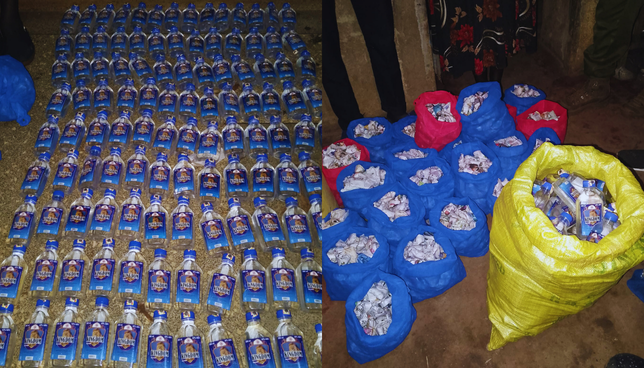
A major crackdown led by the National Authority for the Campaign Against Alcohol and Drug Abuse (NACADA) has uncovered a large-scale illicit alcohol operation in Nyeri, resulting in the seizure of thousands of counterfeit vodka bottles and hundreds of litres of suspected ethanol.

The raid, carried out on Monday in the upscale Klassique area, exposed what officials described as a fully equipped bottling plant hidden inside a residential home. Authorities have since identified a key suspect — an aspiring MCA for Othaya — who is currently on the run.

Multi-agency operation

The enforcement action was conducted by a NACADA-led multi-agency team following intelligence from members of the public. Officials termed the bust a major disruption of an organised network involved in producing and distributing counterfeit alcohol across the Mt. Kenya region.

NACADA CEO Anthony Omerikwa praised citizens for their role in the operation, highlighting the importance of community cooperation.

“We are deeply grateful to members of the public who continue to volunteer critical information. Their courage and cooperation are instrumental in protecting communities,” he said.

Inside the illicit operation

Upon accessing the premises, officers discovered what investigators described as a sophisticated production hub operating discreetly within a single housing unit.

Items recovered included crates of suspected counterfeit vodka, 275 litres of raw ethanol stored in jerricans, a bottle-capping machine, and packaging materials such as fake stamps, bottle tops, and branded labels. Authorities also seized a Nissan NV200 believed to have been used to distribute the products.

Officials noted that the presence of industrial equipment and additives like citric acid and food colouring pointed to a well-organised operation involved in both manufacturing and packaging fake alcoholic drinks.

Suspect on the run

Despite the scale of the discovery, no arrests were made at the scene. However, investigators have identified the primary suspect as the tenant of the property and a political aspirant in Othaya.

Law enforcement agencies have launched a manhunt and are urging the suspect to surrender.

“We know who he is, and his political ambitions do not place him above the law. We are pursuing him and expect him to present himself,” Dr. Omerikwa stated.

Growing concern

Authorities say the case highlights a worrying trend of illicit alcohol operations being concealed within residential neighbourhoods, often disguised as ordinary homes.

Officials have reiterated that tackling the illegal alcohol trade requires continued public vigilance and inter-agency collaboration, warning that enforcement efforts will remain firm.

The Nyeri raid, they said, sends a clear message that no individual — regardless of status — is beyond the reach of the law.
NACADA Operation in Embakasi South Leads to Arrest of Two Suspects, Seizure of 680 Rolls of Cannabis

A joint operation by the National Authority for the Campaign Against Alcohol and Drug Abuse (NACADA), supported by officers from the National Police Service (NPS), has resulted in the arrest of two suspects and the recovery of more than 600 rolls of suspected cannabis in the Kware area.

The intelligence-led raid, conducted on Tuesday afternoon, followed complaints from local residents about a suspected drug distributor operating near Tuimani Kindergarten School, which is located next to a Kenya Assemblies of God (KAG) church.

Residents had expressed concern about increased drug-related activities in the neighbourhood, warning that the alleged dealer’s proximity to the school posed a significant risk to children and young people.

Intelligence-Led Raid

Acting on the information, a multi-agency team led by NACADA conducted a raid on a shop and a nearby residence believed to be used as a base for drug distribution.

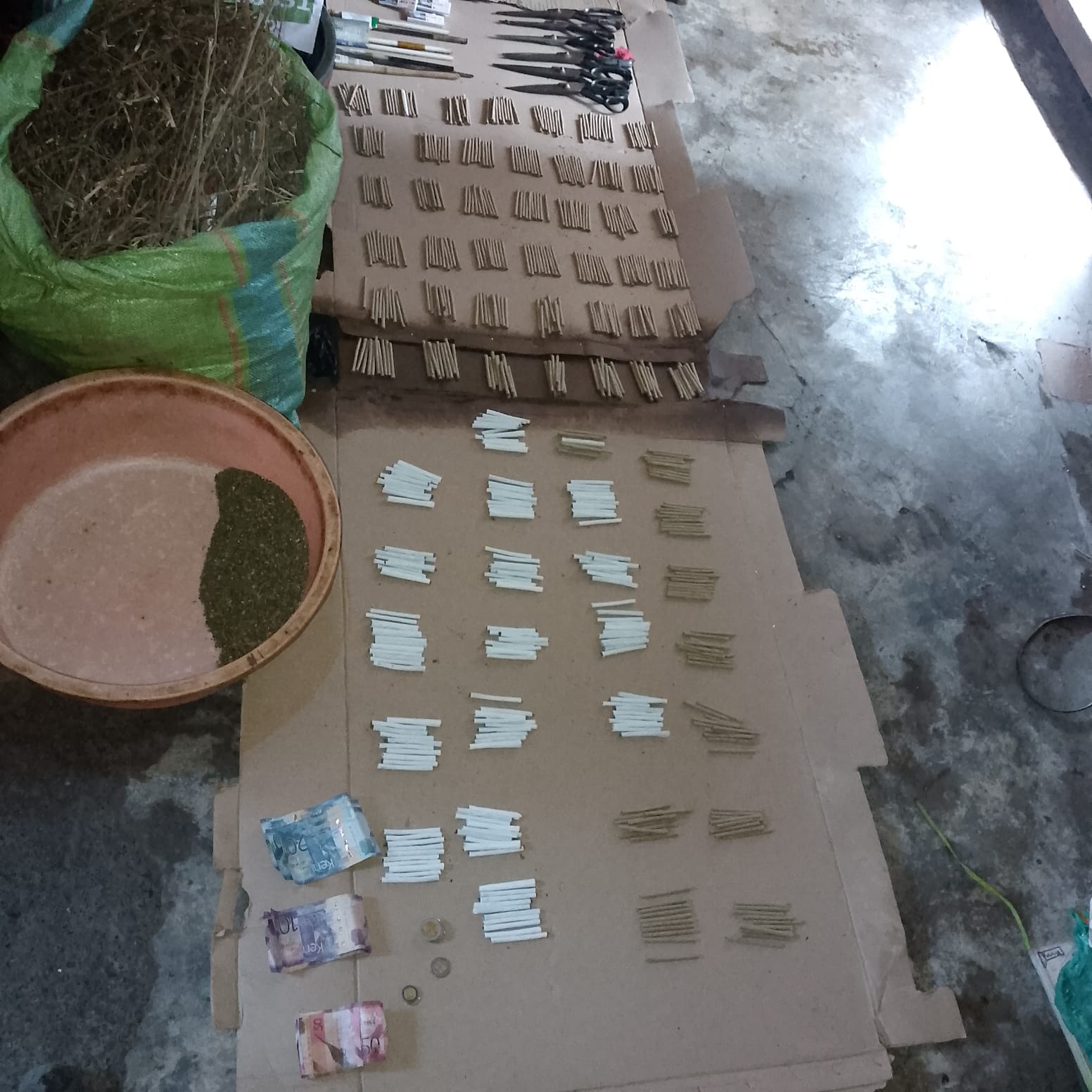
During the operation, officers reportedly found two suspects inside the premises preparing and rolling plant material suspected to be cannabis—commonly referred to as bhang—for consumption and sale.

A search of the location led to the recovery of 680 rolls of bhang along with additional plant materials believed to be narcotics awaiting further processing.

Suspects in Police Custody

The two suspects were immediately arrested and taken to Kware Police Station, where they remain in custody as investigations continue.

NACADA confirmed that the seized items have been secured and will be presented in court as evidence once the suspects are formally charged.

NACADA Praises Community Cooperation

Following the operation, NACADA Chief Executive Officer Anthony Omerikwa commended members of the public for providing the intelligence that led to the successful crackdown.

He reaffirmed the agency’s commitment to dismantling drug networks that threaten the safety of communities.

“Our determination to ensure that communities remain safe from drug lords and their associates continues in earnest,” Dr. Omerikwa said.

“NACADA will do whatever it takes to bring them down and protect our communities. We are particularly concerned when such activities occur near learning institutions because our goal is to promote a society where children and young people can grow and thrive in a drug-free environment.”

Continued Crackdown on Drug Networks

Dr. Omerikwa emphasized that cooperation between authorities and the public remains crucial in the fight against drug trafficking and substance abuse.

He urged residents to continue reporting suspicious activities to relevant authorities.

Meanwhile, NACADA confirmed that operations targeting drug networks in Kware and other parts of the country will continue as part of broader efforts to protect families and safeguard communities from the dangers of illegal drugs.

NACADA seizes a whopping Kshs 5 mill worth of fake alcohol

In a significant crackdown on the illicit alcohol trade in the Lower Eastern region, the National Authority for the Campaign Against Alcohol and Drug Abuse (NACADA) has seized counterfeit alcohol worth approximately Sh5 million and arrested a prominent businessman alleged to have been behind the operation, which was located just metres from a school.

The Tuesday operation targeted a bar and wines and spirits outlet owned by a businessman who also serves as Chairman of the Kabati business community. He was arrested alongside three employees, a development that has unsettled local networks and underscored the extent to which the illegal trade is embedded within the area.

Addressing the press after the raid, NACADA Chief Executive Officer Anthony Omerikwa said the premises were operating in blatant violation of the law, situated less than 100 metres from Kauwi Senior School. This contravenes the 300-metre rule that prohibits alcohol outlets from operating near learning institutions.

“It is immoral and unacceptable for alcohol dispensing outlets and storage facilities to operate this close to learning institutions because of the grave risk posed to our children,” Dr Omerikwa said.

He further cited alarming statistics indicating that the prevalence age for drug use initiation in the country stands at seven years. “When children as young as seven are being introduced to substance abuse, and such outlets are positioned near their schools, it amounts to a direct assault on the future of this nation,” he added.

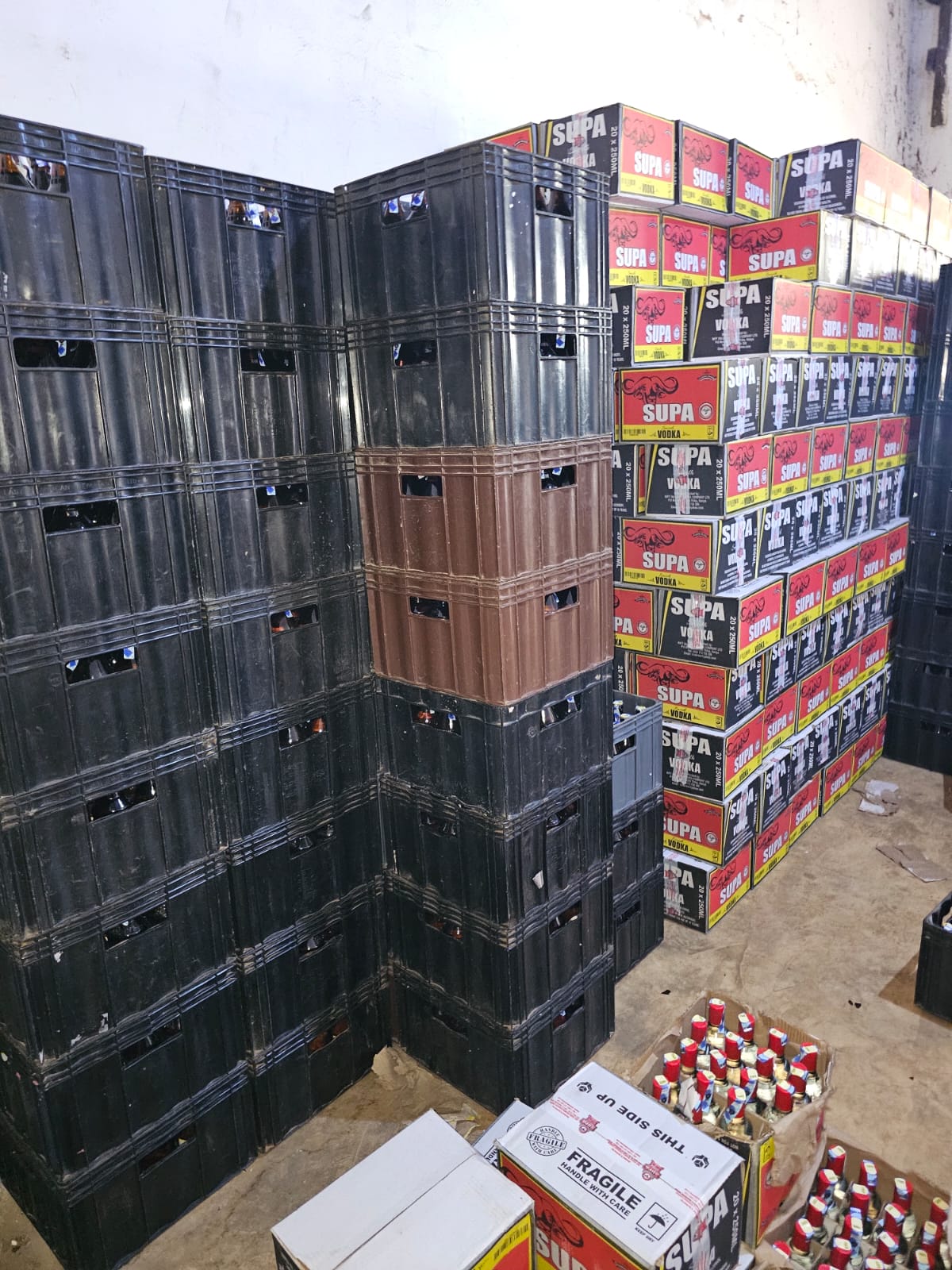
During the raid, officers recovered more than 900 cartons of assorted counterfeit spirit brands and over 250 crates of suspected fake alcohol packaged in 500ml beer bottles. Preliminary investigations established that the seized products bore counterfeit Kenya Revenue Authority (KRA) stamps — a common indicator of tax evasion and a potential threat to public health.

Dr Omerikwa praised the intelligence-led operation but noted that the suspect’s role as chairman of the local business community reflects the complexity of dismantling such networks.

“The fact that this individual holds a leadership position within the business community illustrates the magnitude of the challenge. These are not small-scale traders; they are influential figures who exploit their positions to shield unlawful enterprises,” he said.

Residents who gathered at the scene welcomed the enforcement action, pointing to the severe social and health consequences linked to illicit alcohol in the county, including rising medical complications and family breakdowns.

“We are losing our young men to this poison. These operators have acted with impunity for too long. We appreciate NACADA for taking decisive action,” one resident remarked.

The multi-agency team, comprising officers from the National Police Service, transported the seized goods to a secure facility for further examination. The four suspects remain in custody pending arraignment, with authorities indicating that asset recovery proceedings will be initiated to ensure the crime does not yield financial benefit.

NACADA raids Nandi, nets 2400 bhangi stones

An intelligence-led multi-agency operation in Kapsabet Town, Nandi County, has dealt a major setback to narcotics and illicit alcohol networks operating within residential neighbourhoods.

The late-night raid, conducted near the Kapsabet Showground area in Bondeni between 9:00 p.m. and 12:30 a.m., targeted the distribution of cannabis and second-generation liquor. Despite heavy rainfall and muddy conditions, officers from the National Authority for the Campaign Against Alcohol and Drug Abuse (NACADA) recovered 2,400 stones of cannabis wrapped in used newspaper, a 20-litre jerrican containing processed green plant material suspected to be cannabis seeds, and 116 bottles (200 ml each) of suspected contraband vodka believed to have originated from Uganda.

One suspect was arrested during the operation and is expected to be arraigned in court, while all seized items have been secured as exhibits pending legal proceedings.

Drugs Found Near Residential Areas

Authorities expressed concern that the illegal activities were taking place in an environment easily accessible to school-going children, exposing minors to narcotics at close range. Investigators noted that the alleged involvement of an adult — expected to protect and guide young people — highlights the growing threat posed by criminal networks infiltrating communities.

Speaking after the operation, NACADA Chief Executive Officer Anthony Omerikwa reiterated that safeguarding communities remains central to the agency’s intensified national campaign against drug and substance abuse.

“Protection of our communities is paramount. We are executing intelligence-led crackdowns to dismantle supply chains while strengthening prevention programmes to reduce demand,” he said, adding that the efforts align with presidential directives and the Authority’s mandate to protect the public.

Dr. Omerikwa explained that NACADA’s strategy focuses on two key pillars:

  • Supply suppression through targeted enforcement operations

  • Demand reduction through sustained prevention programmes in schools, families and communities

He emphasised that enforcement limits availability, while prevention addresses vulnerability, noting that both approaches are necessary for long-term impact.

Related Operations in Trans Nzoia

The Nandi crackdown follows a series of coordinated enforcement actions in Trans Nzoia County demonstrating the Authority’s intensified operations.

In one raid, officers searched the home of a suspected ethanol distributor and alcohol counterfeiter, recovering more than 400 litres of unlicensed ethanol and arresting three suspects.

In a separate operation at Kitale Bus Park, authorities dismantled a cannabis distribution ring and seized over 180 rolls of the drug, leading to three additional arrests.

According to NACADA, the back-to-back operations send a strong warning to individuals involved in narcotics trafficking and illegal alcohol distribution.

“We will continue intelligence-driven enforcement actions nationwide. Those profiting from poisoning our communities, especially where children are concerned, should expect decisive action,” Dr. Omerikwa stated.

Call for Public Cooperation

NACADA has urged members of the public to remain vigilant and report suspicious activities to authorities. The agency maintains that collaboration between communities and law enforcement — alongside strengthened enforcement and expanded prevention programmes — is essential in combating drug and alcohol abuse and ensuring safer environments for Kenyan families and children.

NACADA moves to ban 15 rehab centres

The National Authority for the Campaign Against Alcohol and Drug Abuse (NACADA) has published the results of a wide-ranging national inspection of treatment and rehabilitation centres, outlining notable progress alongside serious shortcomings in Kenya’s addiction recovery system.

The inspection was carried out in November 2025 under a Rapid Results Initiative (RRI) and involved a multi-agency team drawn from various government institutions. In total, 236 rehabilitation facilities across 36 counties were assessed, making it the most comprehensive review of the country’s addiction treatment and rehabilitation capacity to date.

NACADA reported that 135 facilities met the required standards and were fully accredited, providing close to 3,800 residential beds. These centres—many offering Level 3 residential rehabilitation services—currently form the core of Kenya’s formal treatment and recovery framework.

However, the exercise also revealed widespread compliance concerns. Thirty facilities failed to meet accreditation standards, while 15 centres were issued with immediate closure orders due to serious violations that posed direct risks to clients. Among the issues cited were the use of expired medication, poor hygiene, unsafe infrastructure, and a lack of qualified medical personnel.

Another 56 facilities were found to have major gaps in compliance and have been placed under close monitoring as they work towards meeting regulatory requirements.

Beyond individual facilities, NACADA’s findings pointed to broader systemic challenges. Most accredited rehabilitation centres are privately owned, making quality inpatient care unaffordable for many families. At the same time, there is a significant shortage of public outpatient and community-based treatment services, limiting access to early intervention and sustained recovery support.

The situation is particularly dire for vulnerable populations. The inspection highlighted a severe lack of specialised rehabilitation services for women and adolescents, despite their distinct treatment and psychosocial needs.

These gaps are compounded by the scale of substance use disorders in the country. NACADA’s latest national survey estimates that more than 1.3 million Kenyans require treatment and rehabilitation services for alcohol and drug use disorders—far exceeding the current capacity of available facilities.

According to NACADA, the findings underscore the urgency of implementing the Presidential directive to establish at least one rehabilitation centre in every county. The Authority has called on county governments to prioritise the development of affordable, publicly funded treatment centres, while urging development partners, civil society organisations, and the private sector to invest in community-based and specialised rehabilitation services.

“A strong and inclusive continuum of care—from prevention and treatment to recovery and reintegration—is essential to ensure that every Kenyan has a fair chance at recovery, restoration, and dignity,” said NACADA Chief Executive Officer Dr. Anthony Omerikwa, MBS.

NACADA reaffirmed its commitment to strengthening regulation, improving quality standards, and working with stakeholders nationwide to build a safer and more equitable rehabilitation system across the country.

Fake booze seized in Mai Mahiu

The National Authority for the Campaign Against Alcohol and Drug Abuse (NACADA) on Tuesday spearheaded a multi-agency crackdown that led to the arrest of suspects and the seizure of thousands of bottles of illicit alcohol in Mai Mahiu and Kijabe towns, as authorities intensified festive season enforcement efforts.

The operation, carried out on 17 December 2025 at midday in collaboration with officers from the National Police Service (NPS), followed public complaints over the sale of illegal alcoholic drinks in Kijabe.

Acting on the tip-offs, NACADA enforcement officers arrested a woman who was selling Ugandan coffee-flavoured vodka from her home. The investigation then led officers to Mai Mahiu, where a raid on the residence of a male suspect believed to be the supplier uncovered 2,526 plastic bottles, each containing 200 millilitres of alcohol. All the products were traced back to Uganda.

Speaking during the operation, NACADA Chief Executive Officer Dr Anthony Omerikwa said the raid was part of intensified festive season interventions aimed at shielding communities from the health, safety and social risks linked to illicit alcohol.

“This operation is part of our enhanced festive season efforts to protect communities, families and especially young people from the dangers of illicit, counterfeit and irresponsibly packaged alcohol,” Dr Omerikwa said.

He added that the crackdown supports wider government measures to curb the production, distribution and consumption of illegal alcohol and drugs during the holiday period and beyond.

Dr Omerikwa further noted that cross-border surveillance has been stepped up to disrupt smuggling networks and prevent illegal alcohol from entering the Kenyan market.

“We are working closely with security agencies to seal border loopholes. Anyone seeking to profit at the expense of public safety will be dealt with decisively,” he warned.

Issuing a firm caution to offenders, the NACADA boss reiterated that licences of manufacturers and distributors found violating the law would be revoked immediately, with suspects facing prosecution.

Additional multi-agency teams have since been deployed to continue verification, analysis and enforcement as NACADA sustains its nationwide campaign to keep communities safe through the festive season and into the new year.

Kenyan TikTokers destigmatising living with HIV

For decades, an HIV diagnosis was accompanied by fear, stigma, and silence. Many people kept their status hidden — even from close friends or partners — terrified of judgment, rejection, or discrimination. To disclose was to risk relationships, livelihoods, and one’s own dignity.

But a quiet cultural shift is unfolding. With the rise of social media — especially platforms like TikTok — people living with HIV are reclaiming their stories and choosing visibility over shame.

Short, candid videos now feature individuals sharing their diagnoses, describing the moment they learned their status, showing how they manage treatment, and demonstrating that life not only continues — it can thrive. What was once whispered in secrecy is increasingly being told out loud.

In Kenya and beyond, young people are at the forefront of this transformation. Reports show many Gen-Z Kenyans speak openly about HIV as part of their identity — not seeking sympathy, but solidarity. They want others walking the same path to know they are not alone.


Lydia Vera: Turning Pain Into Purpose

Among the most influential voices in this movement is TikToker Lydia Vera, whose raw vulnerability has earned her widespread respect. In one of her viral videos, she recounts the moment she tested positive for HIV — a moment that shattered her world.

Lydia reveals she contracted the virus from a man she was dating at the time, a discovery that left her devastated. She recalls staring at the results, feeling as though her entire life had unraveled in seconds.

But instead of retreating into silence, Lydia chose courage.

She now speaks openly about living with HIV and even discusses her dating life, noting that the men she has dated since her diagnosis have accepted her fully.

Her comment section has become a space of empathy and encouragement:

  • “I appreciate this lady for sharing this story, we all need to be careful.”

  • @Brenda Muriuki: “…and you thought I would hate you? Bado nakupenda. The way you stay real and raw.”

  • @Inzera: “You’re so authentic and raw (pun intended

NACADA Issues New Directives On Alcohol Imports And Exports

Starting Wednesday, October 1, all alcohol importers and exporters in Kenya are mandated to process their licenses and permits exclusively through the National Electronic Single Window System (NESWS).

The National Authority for the Campaign Against Alcohol and Drug Abuse (NACADA) announced the shift, stating that the move is part of a national initiative to streamline trade processes, boost efficiency, and combat corruption.

NACADA CEO Anthony Omerikwa confirmed the integration, noting that the system—managed by the Kenya Trade Network Agency (KenTrade)—will make the licensing process “more efficient, transparent, and less prone to delays.”

New Digital Process for Licenses and Clearance

Under the new procedure, stakeholders involved in the trade of alcoholic commodities must now follow a strict digital pathway:

  1. License Application: Importers and exporters must log in to the NESWS system to apply for their licenses and pay the necessary applicable fees before submitting for approval.
  2. Consignment Clearance: Once the alcoholic products arrive in the country, the importer, exporter, or customs agent must also apply for a consignment document through the same digital platform to facilitate seamless goods clearance.

NACADA encourages all stakeholders to visit its official website for a detailed, step-by-step guide on navigating the new licensing process, which aims to strengthen regulatory oversight in the sector.

NACADA Clarifies: No Ban on Alcohol Ads, Online Sales or Celebrity Endorsements—Yet

The National Authority for the Campaign Against Alcohol and Drug Abuse (NACADA) has moved to clarify recent media reports suggesting a sweeping ban on alcohol advertising, online sales, home deliveries, and celebrity endorsements.

In an official statement, NACADA refuted claims of any immediate bans, emphasizing that the measures being reported are policy proposals—not enforceable laws.


Policy, Not Law: Setting the Record Straight

Following the launch of the National Policy for the Prevention, Management and Control of Alcohol, Drugs, and Substance Abuse (2025), confusion erupted over the status of certain recommendations.

Dr. Anthony Omerikwa, NACADA’s Chief Executive Officer, addressed the concerns:

“Contrary to reports suggesting that NACADA has banned certain practices such as alcohol advertising, online sales, home deliveries, and celebrity endorsements, we wish to emphasize that no bans have been introduced.”

The misunderstanding arose after the policy’s unveiling by Interior Cabinet Secretary Kipchumba Murkomen in Nairobi, where some outlets reported the proposals as active regulations.


What the Policy Actually Means

NACADA clarified that the new policy is meant to guide future legislative and regulatory efforts in the fight against alcohol and substance abuse—especially among the youth.

“These measures are currently policy recommendations. Their inclusion aims to initiate legal and regulatory reviews, subject to proper procedures,” the Authority stated.

The next step involves crafting a multi-sectoral implementation framework, bringing together government agencies, the private sector, civil society, and the public. Any proposal that requires legal enforcement will follow the standard legislative process, including public participation.


A Call for Accurate Information

NACADA urged both the public and media to view the policy as a roadmap—not as immediate enforcement.

“We urge the media and the public to treat this policy as what it is—a roadmap, not an enforcement measure,” Dr. Omerikwa said. “NACADA’s goal is to protect our youth, reduce alcohol-related harm, and foster a healthier, more productive society.”

The agency encouraged Kenyans to seek verified updates through NACADA’s official channels or via their website at www.nacada.go.ke.


Bottom Line

While sweeping changes to alcohol regulation may be on the horizon, no current bans are in place regarding advertising, online sales, home delivery, or celebrity endorsements. NACADA’s policy marks the start of a consultative process, not an abrupt shift in law.

NACADA Clarifies Ban On Alcohol Advertising & Endorsements

The National Authority for the Campaign Against Alcohol and Drug Abuse (NACADA) has moved swiftly to quell widespread confusion, issuing a clarification regarding recent media reports of an immediate and sweeping ban on alcohol advertising, online sales, home deliveries, and celebrity endorsements.

Following the launch of the National Policy for the Prevention, Management and Control of Alcohol, Drugs, and Substance Abuse (2025), NACADA categorically refuted claims of any instant prohibitions. The Authority stressed that the measures widely reported as “bans” are, in fact, merely policy proposals and not yet legally binding restrictions.

“Contrary to reports suggesting that NACADA has banned certain practices such as alcohol advertising, online sales, home deliveries, and celebrity endorsements, we wish to emphasize that no bans have been introduced,” stated Dr. Anthony Omerikwa, NACADA’s Chief Executive Officer.

The clarification comes just days after the new policy was formally unveiled by Interior Cabinet Secretary Hon. Kipchumba Murkomen in Nairobi, an event that inadvertently triggered the public misunderstanding regarding the enforceability of its recommendations.

NACADA highlighted that the policy’s true purpose is to serve as a roadmap for future legislative and regulatory actions. These actions are designed to combat alcohol and substance abuse, with a particular focus on safeguarding young people.

“These measures are currently policy recommendations. Their inclusion aims to initiate legal and regulatory reviews, subject to proper procedures,” the statement read, underscoring that any recommendation requiring legal force will undergo a transparent legislative process, with public participation at its core.

Dr. Omerikwa urged both the media and the public to perceive the new policy as a guiding framework rather than an immediate enforcement tool. “NACADA’s goal is to protect our youth, reduce alcohol-related harm, and foster a healthier, more productive society,” he added.

Kenyans are advised to consult NACADA’s official communication channels or visit their website, www.nacada.go.ke, for accurate and verified updates on the policy’s progression.

NACADA To Raise Age Of Alcohol Users To 21 Under New Policy

The National Authority for the Campaign Against Alcohol and Drug Abuse (NACADA) is poised to implement a new wave of stringent regulations governing the sale and consumption of alcohol and other substances across Kenya. These measures are outlined in the recently approved National Policy on the Prevention of Alcohol, Drugs and Substance Use (2025), which the Authority believes will be crucial in tackling the nation’s escalating alcohol consumption crisis, particularly among its youth.

The comprehensive policy proposes several strict rules, including:

  • Banning the sale of alcohol near schools and places of worship.
  • Instilling a zero-tolerance approach to irresponsible alcohol and drug promotion.
  • Restricting the sale of alcohol to individuals under the age of 21.
  • Enhancing protection for those who choose to abstain from alcohol and drugs.
  • Creating special safeguards for Persons With Disabilities (PWDs) and other vulnerable populations.

The Cabinet officially approved this pivotal policy on June 24, granting NACADA the necessary authority to enforce these new regulations across the country.

This renewed focus on stricter controls comes in the wake of concerning data revealed by NACADA’s “Status of Drugs and Substance Use Among University Students in Kenya” report, launched in February 2025. The study, which surveyed 15,678 undergraduate students from both public and private universities, highlighted that alcohol remains the most commonly used substance among university students, with a staggering 87.3% reporting consumption. Cigarettes followed at 64.4%, and shisha at 41.2%.

The research also shed light on the accessibility of these substances, indicating that 66.4% of respondents acquired drugs or substances from their friends, while 59.3% sourced them from neighborhood canteens and bars. These findings underscore the urgent need for the stricter measures now proposed by NACADA to curb substance abuse at its various entry points.

Alarming Rise in Drug Abuse Among Kenyan University Students: NACADA Report

A recent report from the National Authority for the Campaign Against Alcohol and Drug Abuse (NACADA) has revealed a concerning increase in drug and substance abuse among university students in Kenya. The 2024 Status of Drug and Substance Use in Kenyan Universities report highlights that nearly half (45.6%) of students have experimented with at least one drug or substance in their lifetime.

Currently, 26.6% of university students actively use substances, including alcohol, tobacco, cannabis, and khat. Alarmingly, there has been a rise in the consumption of newer drugs such as methamphetamine and codeine syrup. Alcohol remains the most widely consumed substance, with 87.3% of students reporting easy access, while 18.6% admitted to drinking within the past month.

Other commonly used substances include cigarettes (64.4%), shisha (41.2%), and vape or e-cigarettes (31.0%). The report further identifies friends as the primary source of drugs for 66.4% of students, followed by canteens and bars (59.3%) and fellow students (56.0%). Additionally, online drug purchases have become a significant concern, with 39.4% of students acquiring substances through websites or social media platforms.

NACADA warns that this trend poses serious health risks, including addiction and deteriorating mental health among students. The agency calls for immediate intervention, urging universities, parents, and policymakers to strengthen awareness campaigns and implement stricter regulations to curb drug abuse on campuses.

NACADA Criticizes Influencers for Promoting Drug Abuse Content on Social Media

The National Authority for the Campaign Against Alcohol and Drug Abuse (NACADA) has expressed concern over the rising trend of influencers and content creators promoting drug use on social media. NACADA’s CEO, Dr. Anthony Omerikwa, emphasized the alarming normalization of drug and substance abuse by these influencers, warning that it poses a significant threat to efforts aimed at combating alcohol and drug abuse, particularly among vulnerable populations such as children.

CHECK OUT:

NACADA Destroys 1.5 Tonnes of Bangi

In a public statement, Dr. Omerikwa pointed out that the glorification of drug use in content aimed at young audiences undermines national efforts to address substance abuse. He stressed that portraying harmful behaviors as normal or desirable can have a detrimental impact on impressionable viewers.

“The content aimed at young people glorifies harmful behavior and jeopardizes the progress made in shielding vulnerable groups from the adverse effects of drug and substance abuse,” Omerikwa remarked.

He urged influencers and digital creators to acknowledge their impact on public behavior and to cease promoting substance abuse. “Promoting drug use is not only irresponsible; it is a violation of the law,” the NACADA CEO underscored.

Dr. Omerikwa reminded the public that under the Alcoholic Drinks Control Act of 2010 and the Narcotic Drugs and Psychotropic Substances Control Act of 1994, promoting or advertising drug use is illegal, with serious legal consequences for violators.

These laws prohibit any form of promotion or glamorization of drug use, and NACADA has committed to collaborating with law enforcement to ensure compliance.

ALSO CHECK OUT:

What next for Chipukeezy after his stint as NACADA board member?

Additionally, Dr. Omerikwa highlighted the essential role of parents and guardians in protecting children from harmful online content. He encouraged parents to supervise their children’s social media activities and activate parental control settings to filter out inappropriate material. “Many platforms lack adequate safeguards, so it is crucial for parents to educate their children about the dangers of drug use and to report harmful content,” Omerikwa advised.