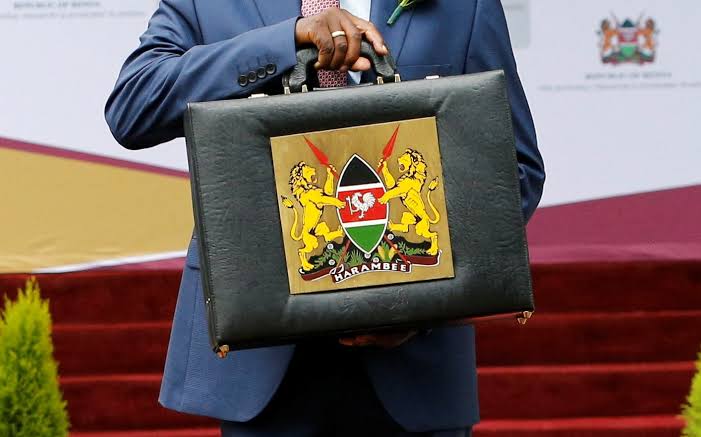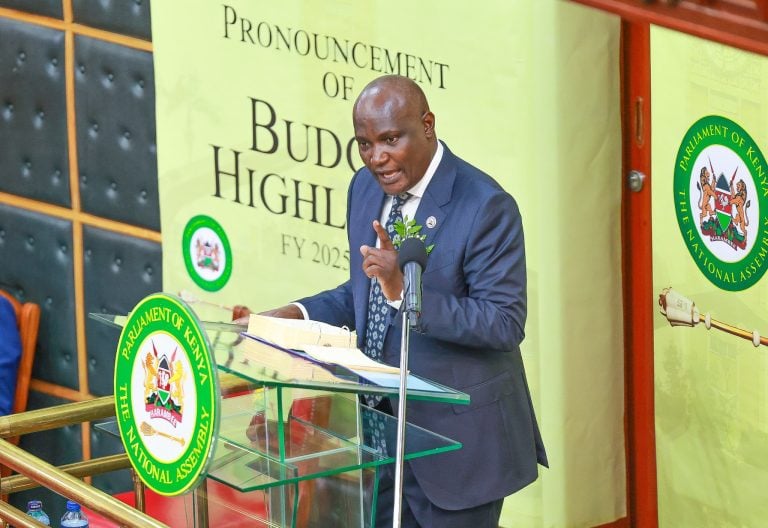
Kenya’s 2026/27 budget has received a cautious endorsement from economic analysts at Deloitte East Africa, who say the government’s spending plans strike a delicate balance between supporting growth and managing fiscal pressures.
While the budget avoids major new tax measures that could burden households and businesses, Deloitte warns that rising public debt, inflationary pressures and global economic uncertainties remain key risks that could affect its success.
Speaking during a post-budget analysis, Deloitte noted that Kenya’s economy continues to show resilience despite a challenging global environment.
The firm projects GDP growth to rise from 4.6 per cent this year to 5 per cent in 2026, supported by expansion in agriculture, manufacturing and services.
According to Deloitte East Africa Chief Executive Officer Anne Muraya, Kenya continues to benefit from strong economic fundamentals, including a vibrant private sector, growing digital economy, regional trade links and a youthful workforce.
Growth-Focused Spending
The analysts pointed to increased government investment in sectors expected to drive long-term economic growth.
Education received the largest allocation in the budget at KSh 784.5 billion, while energy, infrastructure and ICT programmes were allocated more than KSh 531 billion.
Deloitte says such investments have the potential to strengthen productivity, improve connectivity and support future economic expansion.
The firm also observed that the government largely avoided introducing controversial tax measures, a move likely to be welcomed by businesses and taxpayers.
However, Deloitte expects tax authorities to intensify compliance and enforcement efforts as the government seeks to meet its revenue targets.
Inflation
Despite the positive outlook, the analysts cautioned that external factors could still place pressure on the economy.
Ongoing geopolitical tensions, particularly in the Middle East, could push up global fuel and fertilizer prices, leading to higher transport and production costs locally. Deloitte projects inflation to rise to 5.7 per cent next year.
The firm notes that increased transport costs often ripple through the economy, eventually affecting the prices consumers pay for goods and services.
Public debt also remains a concern. Kenya’s debt stock is projected to reach 68.8 per cent of GDP, while the fiscal deficit is expected to stand at KSh 1.146 trillion.
According to Deloitte, failure to achieve revenue targets could force additional borrowing, increasing pressure on public finances and complicating debt management efforts.
Implementation
Beyond the numbers, Deloitte argues that the success of the budget will largely depend on implementation.
The firm is calling for stronger fiscal discipline, predictable policies and consistent execution of reforms to sustain investor confidence and support economic growth.
Analysts also emphasised the importance of demonstrating value for money through improved service delivery and visible economic opportunities, noting that taxpayers are more likely to support government programmes when they can see tangible results.
In a Nutshell ….
Deloitte’s assessment paints a picture of an economy with room to grow but little room for error.
The budget provides a roadmap for continued growth, supported by investments in education, infrastructure and digital transformation.
However, its success will depend on the government’s ability to manage debt, contain inflation and deliver on promised reforms.
For Kenya, the challenge is no longer just designing ambitious budgets.
It is ensuring that those plans translate into measurable economic outcomes for businesses, investors and ordinary citizens.