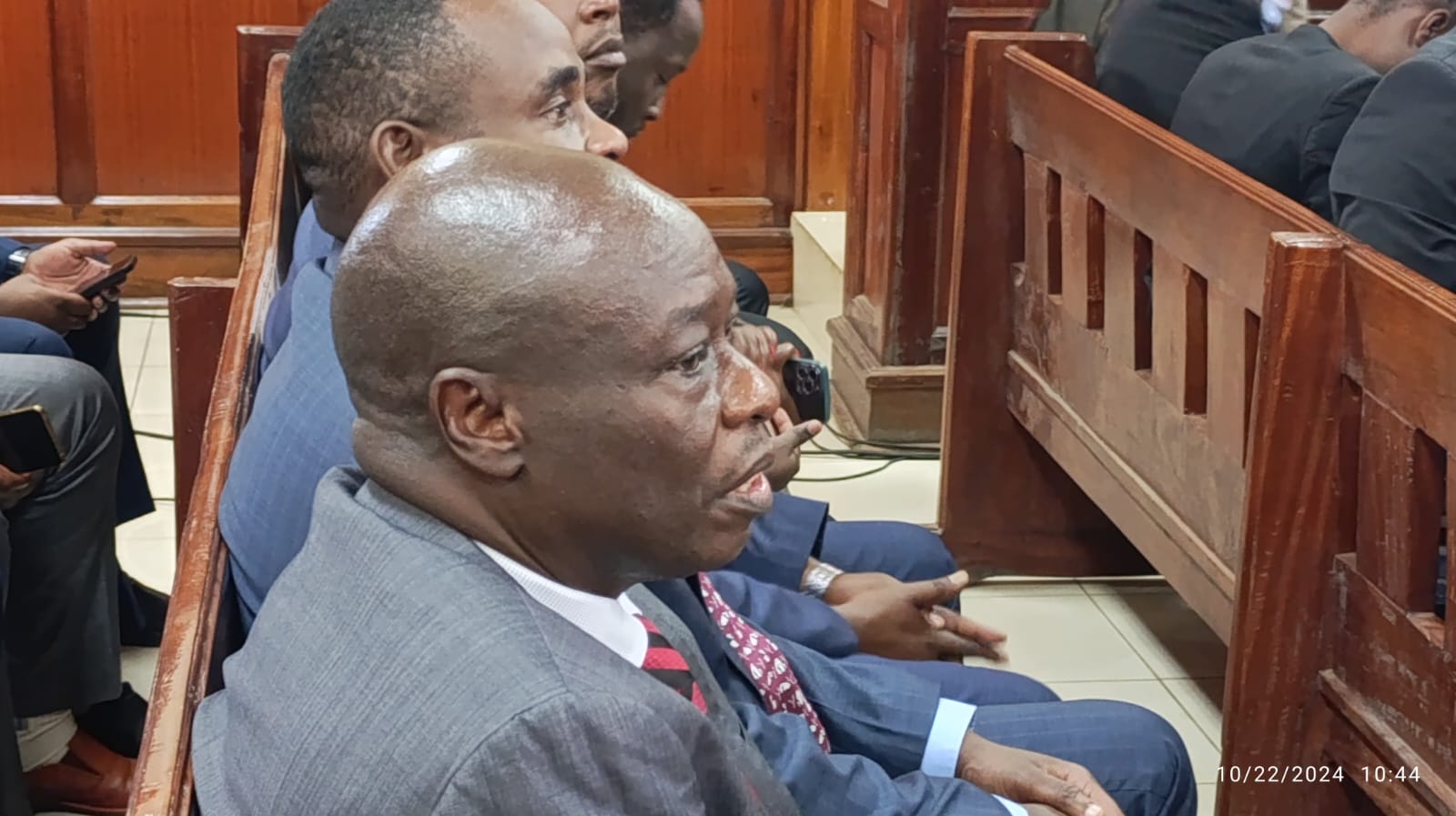
A severe legal standoff has erupted at the Milimani High Court Registry after the defense team of former Deputy President Rigathi Gachagua uncovered a major structural discrepancy in the certified copy of his landmark constitutional impeachment judgment.
Gachagua’s advocates have formally raised red flags with the judiciary, pointing to 64 missing pages from the final written verdict issued to the parties following a marathon ten-hour session.
The high-stakes consolidated petition was heard and determined by a specially empaneled three-judge bench comprising High Court Justices Eric Ogola, Anthony Mrima, and Lady Justice Freda Mugambi.
The 350 vs. 286 Page Conundrum
According to a protest letter dispatched by Gachagua’s legal counsel, the controversy centers on explicit declarations made by the bench during the live, open-court delivery of the ruling on June 8, 2026.
The defense notes that presiding Judge Eric Ogola explicitly informed the courtroom and the public that the bench was rendering a comprehensive 350-page verdict. However, upon applying for and receiving the official certified copy from the registry, the advocates were stunned to find a document totaling only 286 pages.
This creates an unmapped 64-page deficit, with the defense noting that no formal explanation, corrigendum, or addendum has been provided by the judges to account for the sudden shrinkage of the historic ruling.
Undermining the Authenticity of the Judicial Record
Gachagua’s legal team has warned that the structural anomaly severely compromises the “completeness, reliability, and authenticity of the official judicial record,” particularly given that the missing sections could contain vital ratio decidendi (legal reasoning) or obiter dicta necessary for filing their immediate appeal.
“Any deviation between what a court reads aloud in the exercise of judicial power and what it puts down on paper heavily undermines public confidence in the administration of justice,” the defense team asserted, noting the immense national security and political implications of the case, which pits the former DP against the National Assembly and the Senate.
The administrative crisis puts immense pressure on the High Court’s Constitutional and Human Rights Division Registry to clarify whether the missing text is the result of a clerical binding error, an ongoing late-stage editorial revision, or a substantive procedural omission.
Karua Wades into “Inconsistent Judgments” in State Cases
The unfolding drama coincides with sharp remarks from Narc-Kenya and People’s Liberation Party (PLP) leader Martha Karua, who used a recent media appearance to call out what she termed as deeply worrying, erratic, and legally inconsistent rulings emerging from the courts in politically sensitive state litigation.
Drawing from her own extensive history as a Senior Counsel and a politician, Karua cited her bruised 2017 Nyeri Gubernatorial petition as an example of systemic institutional anomalies. She recounted how both the Court of Appeal and the Supreme Court acknowledged clear procedural gaps and missing evidence in her file, yet paradoxically dismissed her suit on rigid, hyper-technical grounds.
As the judiciary fights off claims of external interference, Gachagua’s defense team has issued an ultimatum to the registrar, demanding immediate, unrestricted access to the complete, unedited 350-page manuscript as originally read from the bench to ensure their client’s appellate rights are not permanently prejudiced.