
High Court Rules Separated Parents Must Mutually Agree On Major Costs, Slashes Father’s Fees

In a landmark judgment set to fundamentally reshape family law and co-parenting dynamics in Kenya, the High Court has ruled that separated or divorced parents must act fairly and consult each other before making major financial decisions for their children. The court established that one parent cannot unilaterally alter a child’s lifestyle or educational path if it substantially increases the other’s financial burden without their explicit consent.

The precedent-setting ruling offers much-needed judicial clarity on an issue that has increasingly clogged Kenyan family courts, as estranged couples frequently clash over responsibility for major expenditures such as tertiary education, specialized medical care, and associated upkeep.

The protracted legal battle emerged from a divorce dispute where the parents disagreed on funding their daughter’s university education upon her turning 18. Without consulting the father, the mother unilaterally withdrew the teenager from a government-sponsored track at a public university and enrolled her in a significantly more expensive private institution.

A lower children’s court had initially ordered the father to foot the premium private tuition fees, auxiliary university expenses, and a comprehensive medical cover. Aggrieved by the financial ambush, the father moved to the appellate court, arguing that the law should not compel him to shoulder exorbitant costs arising from an administrative decision he was entirely locked out of.

In many Kenyan setups, separated couples informally divide parental responsibilities—with one handling structured bills like school fees while the other manages fluid overheads like housing, clothing, and daily subsistence. However, friction inevitably peaks when one party makes a major executive decision that inflates the child’s budget, leaving judges to untangle the legal definition of “fair and equal” parental responsibility.

On appeal, the bench upheld the statutory principle that parental responsibility does not automatically expire at the age of majority ($18$) if the child is still dependent and actively pursuing higher education. However, the judges emphasized that this ongoing obligation must be exercised within the parameters of reasonableness, fairness, and mutual consultation.

The court held that while both parents remained structurally responsible for supporting their daughter’s higher education, the mother had no legal right to upgrade the student to a high-cost private university and expect the father to automatically absorb the financial shock.

Consequently, the court varied the initial order, limiting the father’s financial contribution strictly to the equivalent rate he would have reasonably paid had the daughter remained at the public university. The judges ruled that the financial deficit created by the private institutional transfer would be borne exclusively by the mother as the sole decision-maker.

“The principle of parental responsibility requires consensus on major life milestones. A parent cannot unilaterally elevate the cost of education or care and then legally compel the other to fund a lifestyle they did not approve or cannot afford,” the bench noted.

Furthermore, the judgment introduced a vital clause addressing the contemporary economic realities facing families navigating the high cost of higher education. The judges ruled that adult students must first exhaust available government capitation frameworks—including funding from the Higher Education Loans Board (HELB), national bursaries, and academic scholarships—before turning to their parents to cover the remaining financial deficit. This specific directive is expected to heavily impact future child maintenance suits, forcing a structural shift toward utilizing state-sponsored educational subsidies before demanding parental intervention.

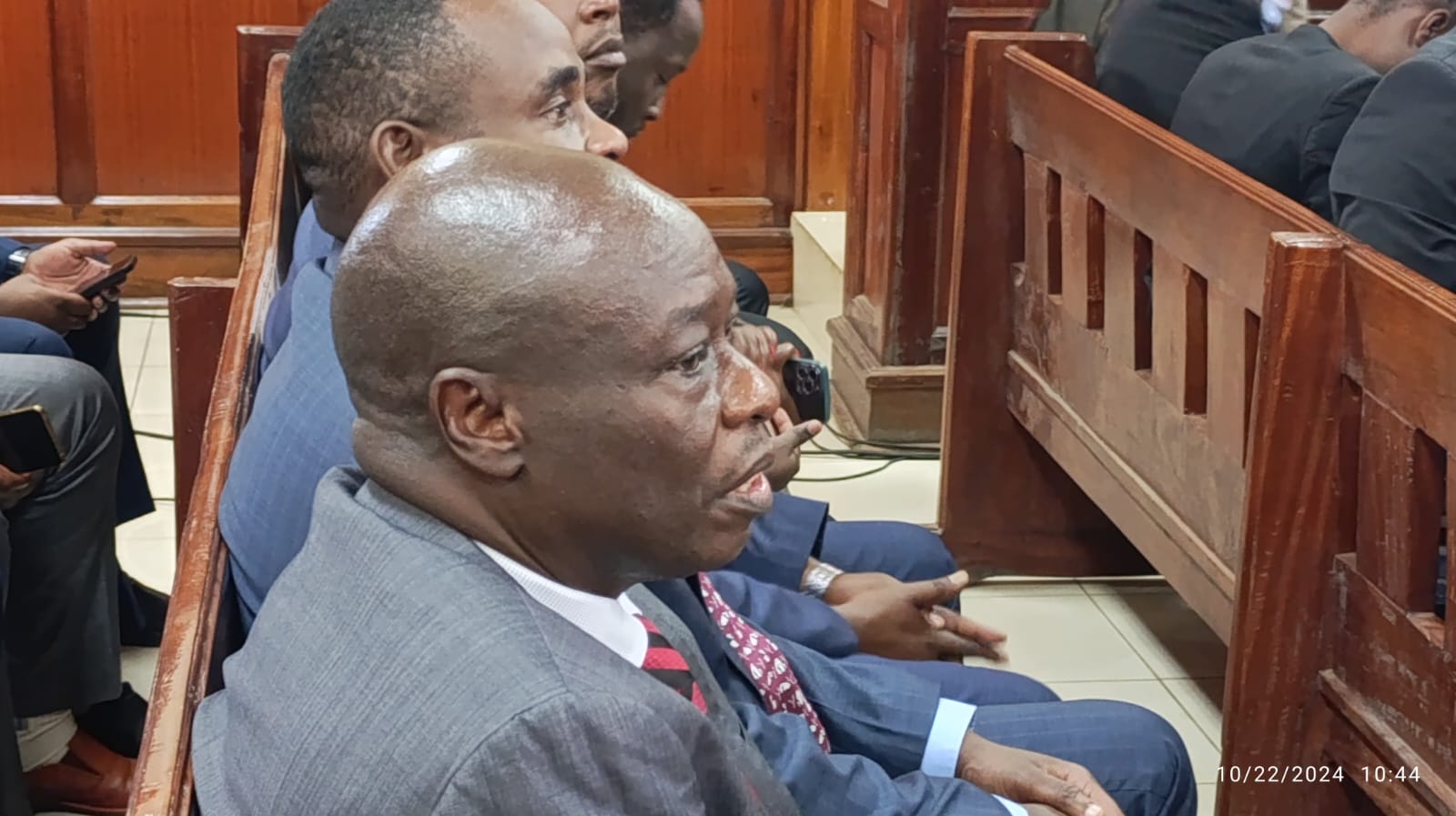
High Court Rules Title Deeds Don’t Guarantee Inheritance In Landmark Succession Case

The High Court in Kiambu has dropped a massive ruling that is bound to shake up inheritance battles across Kenya. In a decision that redefines how family property is split after death, the court ruled that just because a piece of land is registered in a deceased person’s name, it doesn’t automatically mean it’s up for grabs by all beneficiaries.

Instead, judges can now look way past registration documents. Moving forward, courts will examine family history, who actually occupied the land, lifetime gifts, customary arrangements, and what the deceased genuinely intended before deciding who gets the property.

The Dispute: Title Deeds vs. Reality

The groundbreaking ruling comes from a bitter feud where siblings clashed over a piece of land that had stayed in their late mother’s name long after she passed away.

The administrators of the mother’s estate pushed hard for an equal split among all her children, using a straightforward argument: since the title deed was never officially transferred, the land legally belonged to her estate.

However, the High Court refused to just look at the title deed. Instead, the judges dug into the family’s past and how the mother acted when she was still alive.

The Verdict: Customary Trust Wins

The court found out that the mother had already dished out most of her property during her lifetime and explicitly intended this specific plot for her last-born son. In fact, she had even started the official transfer paperwork before she died, proving her intentions.

Based on those facts, the court ruled that the mother was simply holding the land in a customary trust for her youngest son.

Because of this:

  • The land was completely removed from the mother’s general estate.

  • It was handed over entirely to the estate of the late son, meaning it goes directly to his widow and child.

A Big Shift for Kenyan Land Disputes

This judgment locks in a major legal shift in Kenyan succession law. It proves that beneficial ownership doesn’t always match the name on a title deed. If a relative is holding a piece of land in trust for someone else in the family, that property cannot be divided up among greedy relatives when they die.

‘Where Are The 64 Pages?’-Gachagua’s Defense Demands Answers On High Court Impeachment Judgment

A severe legal standoff has erupted at the Milimani High Court Registry after the defense team of former Deputy President Rigathi Gachagua uncovered a major structural discrepancy in the certified copy of his landmark constitutional impeachment judgment.

Gachagua’s advocates have formally raised red flags with the judiciary, pointing to 64 missing pages from the final written verdict issued to the parties following a marathon ten-hour session.

The high-stakes consolidated petition was heard and determined by a specially empaneled three-judge bench comprising High Court Justices Eric Ogola, Anthony Mrima, and Lady Justice Freda Mugambi.

The 350 vs. 286 Page Conundrum

According to a protest letter dispatched by Gachagua’s legal counsel, the controversy centers on explicit declarations made by the bench during the live, open-court delivery of the ruling on June 8, 2026.

The defense notes that presiding Judge Eric Ogola explicitly informed the courtroom and the public that the bench was rendering a comprehensive 350-page verdict. However, upon applying for and receiving the official certified copy from the registry, the advocates were stunned to find a document totaling only 286 pages.

This creates an unmapped 64-page deficit, with the defense noting that no formal explanation, corrigendum, or addendum has been provided by the judges to account for the sudden shrinkage of the historic ruling.

Undermining the Authenticity of the Judicial Record

Gachagua’s legal team has warned that the structural anomaly severely compromises the “completeness, reliability, and authenticity of the official judicial record,” particularly given that the missing sections could contain vital ratio decidendi (legal reasoning) or obiter dicta necessary for filing their immediate appeal.

“Any deviation between what a court reads aloud in the exercise of judicial power and what it puts down on paper heavily undermines public confidence in the administration of justice,” the defense team asserted, noting the immense national security and political implications of the case, which pits the former DP against the National Assembly and the Senate.

The administrative crisis puts immense pressure on the High Court’s Constitutional and Human Rights Division Registry to clarify whether the missing text is the result of a clerical binding error, an ongoing late-stage editorial revision, or a substantive procedural omission.

Karua Wades into “Inconsistent Judgments” in State Cases

The unfolding drama coincides with sharp remarks from Narc-Kenya and People’s Liberation Party (PLP) leader Martha Karua, who used a recent media appearance to call out what she termed as deeply worrying, erratic, and legally inconsistent rulings emerging from the courts in politically sensitive state litigation.

Drawing from her own extensive history as a Senior Counsel and a politician, Karua cited her bruised 2017 Nyeri Gubernatorial petition as an example of systemic institutional anomalies. She recounted how both the Court of Appeal and the Supreme Court acknowledged clear procedural gaps and missing evidence in her file, yet paradoxically dismissed her suit on rigid, hyper-technical grounds.

As the judiciary fights off claims of external interference, Gachagua’s defense team has issued an ultimatum to the registrar, demanding immediate, unrestricted access to the complete, unedited 350-page manuscript as originally read from the bench to ensure their client’s appellate rights are not permanently prejudiced.

Kenyan High Court Suspends Mandatory eCitizen Payments For School Fees

The Kenyan High Court has temporarily halted a government initiative requiring parents to pay school fees and other school-related charges through the eCitizen platform.

Justice Chacha Mwita of the Milimani High Court issued an interim order suspending the circular issued by the Education Principal Secretary.

Reason for Suspension

The order comes in response to a case filed by Nakuru doctor Magare Gikenyi, who challenged the mandatory use of eCitizen for payments.

“An interim conservatory order is herby issued suspending the circular or letter by the Principal Secretary (Belio R Kipsang), Ministry of Education dated January 31, 2024, requiring parents/Guardians and or students to pay fees and or any other levies for all government learning institutions through eCitizen platform or any other digital platform(s) until February 13, 2024, when the court will issue further directions in this petition,” Justice Mwita ordered.

The suspension will remain in effect until February 13, 2024, when the court will issue further directions.

High Court Suspends New Fees For ID’s & Passports After Public Outcry

The Kenyan government has suspended new immigration fees after a public outcry. The fees, which were announced by the Cabinet Secretary for Interior and National Administration, covered essential services such as ID application, replacement, passport application, visa processing, and other registration and immigration services.

The new fees were met with widespread discontent among citizens, with many taking to social media platforms to voice their concerns and frustrations. Some of the revised fees included:

  • Replacement of ID cards: Sh2,000, up from Sh100
  • Registration of birth and death certificates: Sh200, up from Sh50
  • Ordinary passport (34 pages): Sh7,500, up from Sh4,500
  • 50-page passport: Sh9,500, up from Sh6,000
  • 66-page passport: Sh12,500, up from Sh7,500
  • Lost passport: Sh20,000, up from Sh12,000
  • Replacement of mutilated passport: Sh20,000, up from Sh10,000

Kenyans argued that the increased charges were too high and would make it difficult for them to access essential services. The move to suspend the new fees was welcomed by many Kenyans who felt that the increased charges were unfair and would disproportionately affect the poor and vulnerable.

The government has not yet announced a new date for the implementation of the revised fees. However, it has said that it will continue to engage with the public to get their feedback on the proposed changes.

High Court Rejects 2nd Attempt To Suspend Finance Bill.

The High Court has for the second time declined to suspend the Finance Bill, which was signed into law by President William Ruto on Monday morning.

Justice Mugure Thande of the Milimani Constitutional and Human Rights Division on Monday, June 26, declined a request by Busia Senator Okiya Omtatah to issue interim orders against the implementation of the law.

Omtatah had filed a petition challenging the process of how the law was enacted, and he wanted the court to suspend its implementation pending the hearing and determination of the case.

However, Justice Thande ruled that there was no evidence that the implementation of the law would cause irreparable harm to Omtatah or his co-petitioners. She also noted that the court had not yet had the opportunity to hear the case, and that it would be premature to issue interim orders at this stage.

Omtatah expressed disappointment with the court’s decision, but he said that he would continue to pursue his legal challenge to the Finance Bill.

Background

The Finance Bill was passed by the National Assembly on May 25, 2023. It was then sent to the Senate, where it was passed on May 31, 2023. President Ruto signed the bill into law on June 26, 2023.

The bill has been met with criticism from some quarters, who argue that it is unfair to taxpayers and that it will increase the cost of living. Omtatah’s petition is one of several legal challenges that have been filed against the bill.

Next Steps

Omtatah and his co-petitioners will now have to wait for the High Court to hear their case. The case is likely to be heard in the coming weeks or months.

In the meantime, the Finance Bill will remain in effect. This means that the new taxes and other provisions of the bill will be implemented.

Ghafla!
Privacy Overview

This website uses cookies so that we can provide you with the best user experience possible. Cookie information is stored in your browser and performs functions such as recognising you when you return to our website and helping our team to understand which sections of the website you find most interesting and useful.