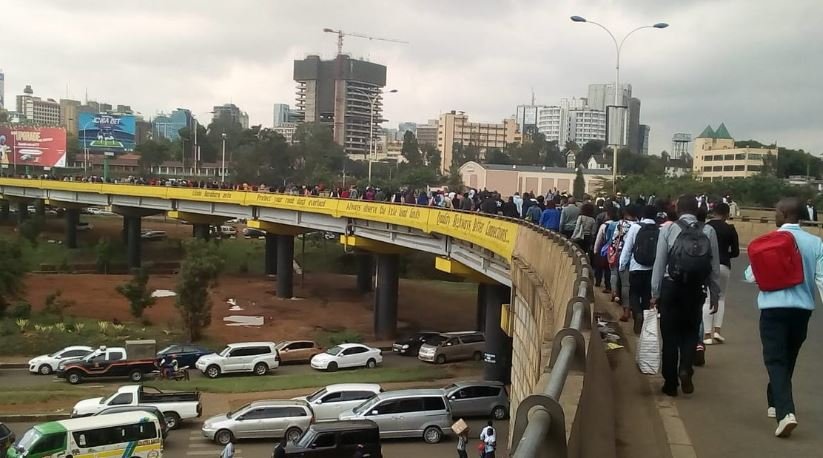
Nationwide Transport Strike Looms As Operators Announce 50% Fare Hike

The public transport sector is headed for a major showdown with the government following the announcement of a nationwide strike set to begin this Monday. The move comes as a direct protest against the sharp increase in fuel prices, with industry leaders warning of a total paralysis of transport services across the country.

In addition to the planned strike, representatives from matatu owners, tour vehicle operators, and boda boda associations have declared an immediate 50% increase in commuter fares, citing the unsustainable cost of operations under the new fuel rates.

Total Paralysis Expected Monday

Speaking on Friday, Matatu Owners Association President Albert Karakacha confirmed that operators have resolved to withdraw all vehicles from the road. The strike is intended to force a government response to the escalating energy costs that have hit the sector particularly hard.

“On Monday, there will be strictly no movement of any vehicles; all the roads will be blocked until the government listens to our cry because we have been promised, but everything we are promised has not come to fulfilment,” Karakacha stated.

The association head urged all investors in the public transport sector to implement the 50% fare adjustment immediately to keep their businesses afloat during this period of economic volatility.

Impact on the Broader Transport Network

The operators warned that the disruption would extend far beyond traditional matatus. The planned demonstrations and fare hikes are expected to impact:

  • Ride-Hailing Apps: Digital transport network companies will likely see significant service interruptions and price surges.

  • Boda Boda Services: Short-distance transit is expected to become significantly more expensive or unavailable.

  • Logistics and Tourism: Tour vehicle operators have signaled that their services will also be affected by the withdrawal of labor.

The industry leaders maintained that the “brutal” fuel price adjustments—which saw diesel costs rise by over Ksh 46—have left them with no choice but to take drastic action. As Monday approaches, millions of commuters across the country are bracing for a week of severe travel disruptions.
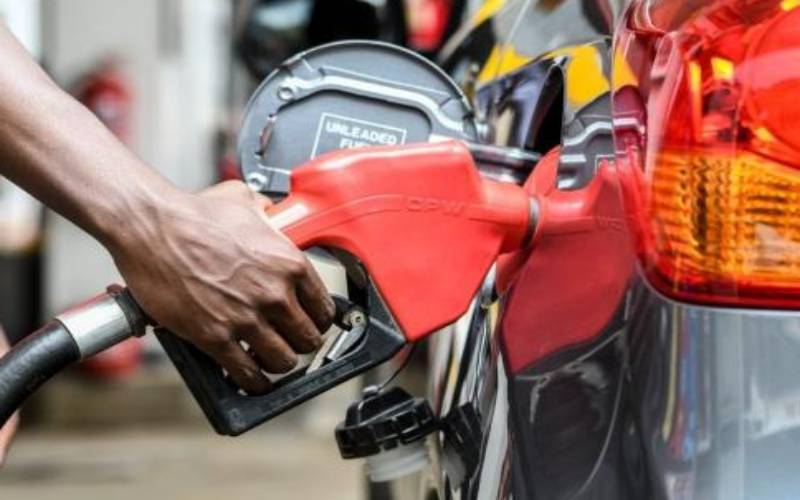
Oil Prices Surge As U.S.-Iran Diplomatic Efforts Stall

Global energy markets are feeling the heat as oil prices climbed following a setback in diplomatic relations between the United States and Iran. Brent crude, the international benchmark, surged nearly 2% to reach $107.26 per barrel, while U.S. West Texas Intermediate rose 1% to settle at $95.40.

The price hike follows an announcement by U.S. President Donald Trump on Saturday, in which he confirmed that Washington had scrapped plans to send a negotiating team to Pakistan for a second round of peace talks. This breakdown in communication has heightened fears regarding global energy security, which has been under severe strain since the onset of the conflict.

The Strait of Hormuz Crisis

A primary driver of market volatility remains the effective closure of the Strait of Hormuz due to the ongoing war. This narrow waterway is the world’s most vital oil artery, with approximately 20% of global crude and liquefied natural gas (LNG) passing through it. While direct talks with the U.S. have stalled, Iranian Foreign Minister Seyed Abbas Araghchi indicated that Iran is maintaining “important discussions” with Oman regarding regional developments and maritime safety.

Araghchi emphasized on social media that Tehran’s priority remains its neighbors and ensuring safe transit that benefits the global economy. Seeking further international support, the Foreign Minister arrived in St. Petersburg on Monday for high-stakes talks with Russian President Vladimir Putin.

Economic Impact and Supply Chain Fears

Market analysts warn that the prolonged closure of the Strait of Hormuz could have a “domino effect” on the global economy. Brent crude has already appreciated by more than 10% since last week, despite a fragile ceasefire extension intended to allow Iran to present a unified proposal.

Sophie Huynh, a strategist at BNP Paribas, cautioned that the shortage doesn’t just affect fuel at the pump. She noted that the rising cost of crude impacts the production of everything from medical supplies to household plastics. If the maritime blockade persists for more than a few weeks, the disruption to global supply chains could be far-reaching and profound.

Trump’s Stance and Market Skepticism

President Trump defended his decision to cancel the Islamabad talks in a post on Truth Social, citing “tremendous infighting and confusion” within the Iranian leadership. He argued that sending representatives was a waste of time while Tehran remains divided on who is in charge. Trump maintained that the U.S. holds the upper hand in negotiations, stating that if Iran wishes to talk, they simply need to reach out directly.

Despite the geopolitical tension, Asian stock markets showed unexpected resilience. Japan’s Nikkei 225 rose 1.7% on Monday, continuing a month-long rally. While Japanese and South Korean markets were initially rattled due to their heavy dependence on Gulf energy, they appear to be recovering as traders look for concrete evidence of a long-term resolution. Economics experts suggest that oil traders are now ignoring headlines and waiting for “credible” proof that the conflict is actually easing before adjusting their positions.

Ghafla!
Privacy Overview

This website uses cookies so that we can provide you with the best user experience possible. Cookie information is stored in your browser and performs functions such as recognising you when you return to our website and helping our team to understand which sections of the website you find most interesting and useful.