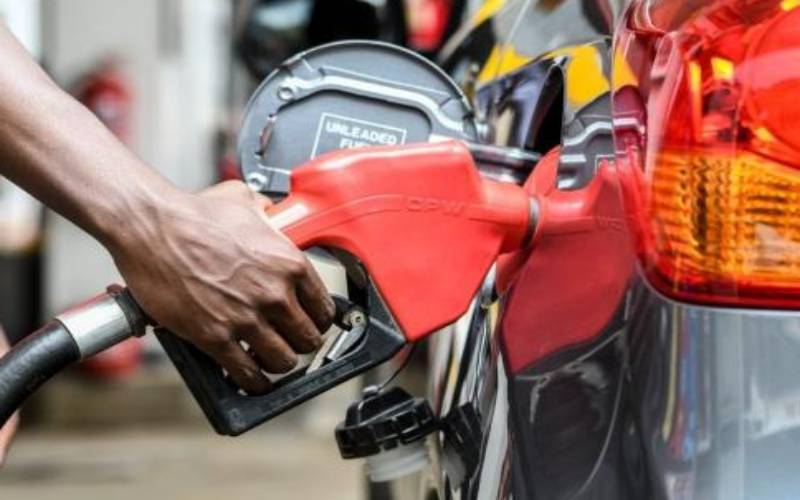
Fuel Dealers Warn Of Exponential Price Hikes Despite Government Tax Cuts

The Petroleum Outlets Association of Kenya (PAOK) has dismissed the government’s recent reduction of Value Added Tax (VAT) on petroleum products as a superficial “band-aid” that fails to address the deep structural rot in Kenya’s energy sector.

Speaking on NTV on Tuesday, April 21, 2026, PAOK Chairperson Martin Chomba warned that while consumers might see a slight, temporary dip at the pump, the country is staring at “exponentially higher” prices within the next three months.

The “Value Added” Contradiction

Chomba took a swipe at the very concept of VAT on fuel, arguing that the government is taxing a value that it does not create.

“The government of Kenya doesn’t own even one litre of oil. All they do is regulate and control logistics,” Chomba stated. “The VAT on fuel is pointless because the government doesn’t add any value to fuel. We are so used to VAT that we have forgotten the meaning.”

The Stabilisation Fund Controversy

A major point of contention for the petrol station owners is the government’s handling of the Petroleum Development Levy (PDL). Of the Ksh 17 billion currently in the stabilization fund, the government only released Ksh 6.2 billion to cushion Kenyans.

PAOK argues that by withholding nearly Ksh 11 billion, the state has left the country defenseless against global shocks, especially given the ongoing volatility in the Middle East.

  • The 3-Month Warning: Chomba noted that because Kenya prices fuel based on the weighted average of ships arriving between the 9th and 10th of every month, the lack of a robust stabilization buffer now will lead to a massive price surge by July.

The Ghost of National Oil (NOC)

Chomba traced the current crisis back to historical policy failures, specifically blaming the Kibaki-era reforms for “killing” the National Oil Corporation (NOC). He argued that by reducing state involvement, Kenya handed over total control to private marketers, leaving the market at the mercy of purely commercial interests.

“We are here because Kibaki’s regime slept on the job,” he remarked. “We got here when we killed the National Oil Corporation. Countries with strong national oil companies have better control over pricing.”

A Breakdown of the “Price Yo-Yo”

The latest EPRA pricing cycle (April 16 – May 14, 2026) reflects a chaotic month of policy shifts:

  • Initial Hike: Super Petrol was set to jump by Ksh 28.69 and Diesel by Ksh 40.30.

  • The Revision: Following the VAT reduction from 16% down to 8%, Petrol dropped by Ksh 9.37 and Diesel by Ksh 10.21.

  • Current Nairobi Prices: Super Petrol stands at Ksh 197.60, Diesel at Ksh 196.63, and Kerosene at Ksh 152.78.

The Way Forward

Industry players are now urging the government to move beyond tax adjustments and focus on diversifying oil import sources. PAOK insists that unless the government regains control over the supply chain and fully utilizes the stabilization levy, the “relief” announced by President Ruto will be swallowed up by market volatility before the end of the quarter.
Government States That The Price Of Bread Will Increase To Help Reduce Diabetes

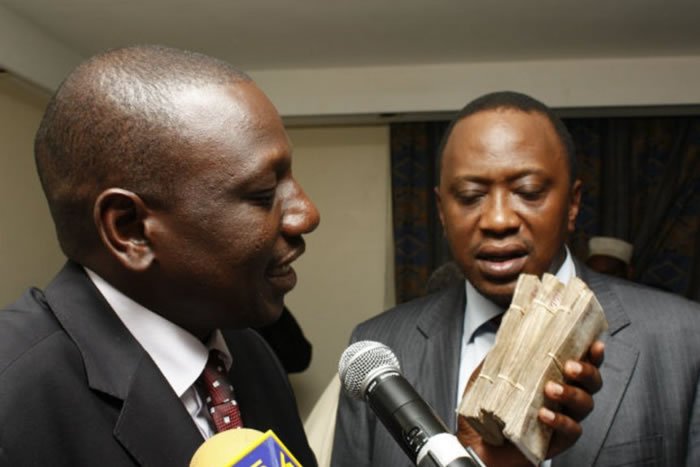
The Kenyan government’s plan to include a 16% Value Added Tax (VAT) on bread in the Finance Bill 2024 has faced strong criticism from the public. While the National Treasury claims the tax is a health measure to address rising diabetes, many Kenyans question its logic and potential negative impacts.

Public outcry and lack of evidence

Molo MP Kuria Kimani, Chair of the National Assembly’s Finance Committee, acknowledged the public’s concerns. Kenyans argue that bread is a staple food, not a luxury, and taxing it would create a burden on their daily lives. Additionally, Kimani revealed the National Treasury offered no specific study linking bread consumption to diabetes, raising doubts about the tax’s justification.

Read also;

https://www.ghafla.co.ke/ke/esther-passaris-responds-to-threats-of-losing-seat-after-stating-she-admires-ruto/

Importance of Public Participation

Kimani emphasized the importance of public feedback on the Finance Bill. The committee will weigh the Treasury’s proposal against public opinion before making a final decision. A key concern is that taxing supermarket bread could push people towards untaxed bread from small bakeries and vendors, potentially leading to even greater health risks.

Three Possible Outcomes

Currently, bread is exempt from VAT. After public consultations, the committee proposes three possible scenarios:

  • The 16% VAT remains on bread.
  • Bread becomes completely tax-exempt.
  • Bread returns to its zero-rated status (no VAT applicable).

Read also;

https://www.ghafla.co.ke/ke/kate-actress-refutes-claims-of-leaving-husband-after-getting-rich/

Kimani assured the public that all feedback will be carefully considered when drafting the committee’s final report

Kenyans Protest Against Increase in VAT On Petroleum Products

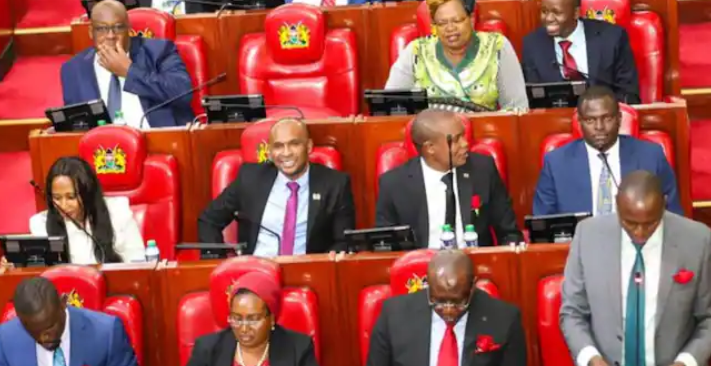
On Wednesday, June 21, 184 members of parliament (MPs) voted in favor of increasing Value Added Tax (VAT) on petroleum products by 100%. This means that the VAT on petroleum products will increase from 8% to 16%.

The increase in VAT on petroleum products is expected to lead to a surge in the price of fuel by more than KSh 10. This has sparked outrage among Kenyans, who are already struggling with the high cost of living.

On social media, Kenyans have been protesting against the MPs’ decision to increase VAT on petroleum products. They have argued that the increase will further strain the already stretched budgets of Kenyans.

Some Kenyans have also argued that the increase in VAT on petroleum products is a regressive tax, meaning that it will disproportionately affect the poor and the middle class.

The government has defended the increase in VAT on petroleum products, arguing that it is necessary to raise revenue to fund essential services. However, Kenyans are not convinced, and they are demanding that the government reverse the decision.

It remains to be seen whether the government will heed the calls of Kenyans and reverse the decision to increase VAT on petroleum products. However, the protests against the increase have highlighted the deep anger that Kenyans feel about the high cost of living.

The increase in VAT on petroleum products is a regressive tax, meaning that it will disproportionately affect the poor and the middle class. This is because these groups spend a larger proportion of their income on fuel.

The increase in VAT on petroleum products is also likely to have a negative impact on the economy. This is because it will make it more expensive to transport goods and services, which will lead to higher prices for consumers.

The government has defended the increase in VAT on petroleum products, arguing that it is necessary to raise revenue to fund essential services. However, there are other ways to raise revenue, such as increasing taxes on the wealthy or cutting government spending.

The protests against the increase in VAT on petroleum products have highlighted the deep anger that Kenyans feel about the high cost of living. The government should listen to the concerns of Kenyans and reverse the decision to increase VAT on petroleum products.

Kenyan Parliament Approves 16% VAT On Petrol

The Kenyan Parliament on Wednesday approved a proposal to impose a 16% value-added tax (VAT) on petrol. The vote was largely along party lines, with Kenya Kwanza MPs supporting the measure and Azimio MPs opposing it.

The VAT hike is expected to increase the price of petrol by Sh13.20 per liter, bringing the cost to Sh196 per liter. This is a significant increase from the current price of Sh182.80 per liter.

The VAT hike has been met with criticism from both the public and opposition politicians. Some critics have argued that the hike will disproportionately impact the poor and vulnerable, while others have accused the government of breaking its campaign promises.

However, the government has defended the VAT hike, arguing that it is necessary to raise revenue to fund essential services. The government has also said that the VAT hike will be offset by a reduction in other taxes, such as the excise duty on petrol.

The VAT hike is set to take effect on July 1, 2023.

Analysis

The VAT hike is a significant policy change that is likely to have a major impact on Kenyans. The hike is likely to increase the cost of living for many people, and it could also lead to inflation. The hike is also likely to be unpopular with voters, and it could damage the government’s popularity.

The government has defended the VAT hike, arguing that it is necessary to raise revenue to fund essential services. However, the government has not provided any details about how the revenue from the VAT hike will be used.

The VAT hike is a controversial policy change, and it is likely to be debated for some time. It remains to be seen whether the government will be able to implement the VAT hike without facing significant opposition.

Ghafla!
Privacy Overview

This website uses cookies so that we can provide you with the best user experience possible. Cookie information is stored in your browser and performs functions such as recognising you when you return to our website and helping our team to understand which sections of the website you find most interesting and useful.