When Kenya won self-rule, freedom meant choice, voice, and hope.
Six decades later, that promise is glowing again – this time through the quiet light of electricity spreading across the country.
In rural towns and trading centres, nights no longer fall into silence.
A welder’s torch cuts through the evening air, children bend over their notebooks under clean bulbs, and clinics hum softly through the night with their vaccine fridges alive and steady.
This is what progress looks like – the power of independence translated into the power of connection.
The Last Mile
This Mashujaa Day, as Kenya honours the heroes who fought for liberation, she also celebrates a new generation.
The men and women stringing power lines across valleys, raising transformers, and wiring homes in places that had known darkness for generations.
Each transformer is more than steel and wire – it’s a symbol of freedom renewed.
A bridge between isolation and opportunity, between potential and progress.
Through the Last Mile Electricity Connectivity Project, the government has turned a campaign pledge into a nationwide network of light.
Since 2022, over 1.18 million new households have been connected to the grid, bringing power to more than 10 million Kenyans.
Of these, 360,909 connections have come directly through the Last Mile Project – proof that the promise to deliver power to every Kenyan is being kept, one pole at a time.
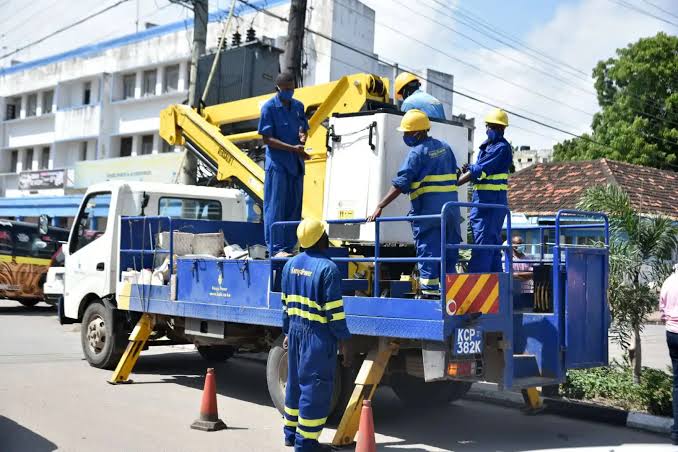
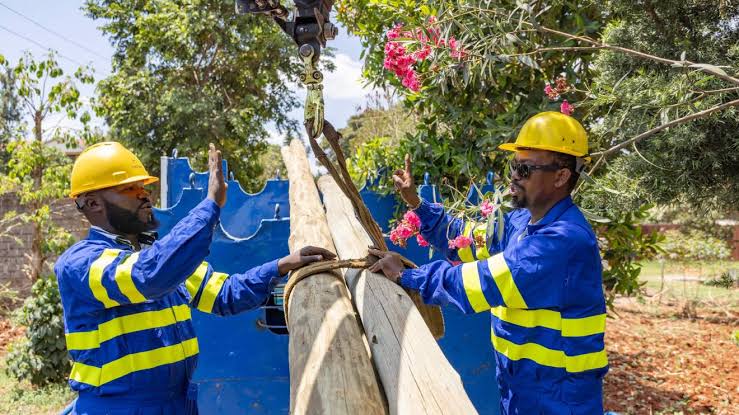
Kenya Power technicians off-road electric poles during The Last Mile Connectivity program in Kitui County (File: Images)
Power Means Opportunities
Electricity has become Kenya’s quiet equaliser.
Once, the map of development followed privilege – towns gleamed while villages waited.
Some counties had electricity coverage above 50 percent; others barely reached 10.
Today, that gap is closing. From Turkana’s open plains to Nyeri’s highlands, light is spreading evenly, and with it, dignity.
For small traders, it means their shops stay open past dusk. For students, it means one more hour of study.
For mothers walking home, it means safety along well-lit paths. For farmers, it means irrigating one more row before calling it a day.
When the lights come on, so does possibility.
Promises Kept
Kenya’s expanding power grid is now one of the most stable in Sub-Saharan Africa – a quiet revolution built on deliberate reform and heavy investment.
Kengen has boosted generation, KETRACO has modernised transmission, and targeted projects like the Gogo Generation Plant and the Odino–Muhoroni line have brought lasting reliability to regions once plagued by outages.
Fewer blackouts, faster restorations, and longer hours of consistent power now define daily life.
For industries, that means stability; for families, confidence. Power no longer flickers under strain – it sustains the rhythm of growth.
B. E. T. A
The Bottom-Up Economic Transformation Agenda (BETA) is visible here – not in speeches or charts, but in the steady light shining from rural homes and busy markets.
Electricity has restored dignity.
It has given farmers freedom to work longer, mothers peace of mind to move safely at night, and children the simple, powerful gift of learning after sunset.
This Mashujaa Day, Kenya celebrates not only the heroes who delivered freedom, but also those who bring its promise to life – the planners, engineers, artisans, and citizens turning electricity into opportunity.
The Government has launched the National Youth Opportunities Towards Advancement (NYOTA) Project.
This is a multi-agency, World Bank–financed initiative that targets to uplift 820,000 vulnerable youth across the country.
The project, unveiled by the State Department for Labour and Skills Development under the Ministry of Labour and Social Protection, represents an upscale from the Kenya Youth Employment Opportunities Project (KYEOP).
NYOTA is anchored on the government’s resolve to tackle unemployment by equipping the youth with practical skills, entrepreneurship training, and savings incentives.
A Model for Economic Empowerment
The NYOTA Project is structured around four core pillars:
1. Improving youth employability through socio-emotional, technical, and on-the-job training.
2. Expanding employment opportunities via entrepreneurship support and micro-franchise creation.
3. Encouraging savings by integrating beneficiaries into formal social protection systems.
4. Strengthening youth employment systems through capacity building and digital skilling across counties.
Together, these interventions embody NYOTA’s vision of empowering young people to “Earn, Save, and Grow” – the program’s three defining outcomes.
The Scope and Target on Nyota Program
NYOTA targets unemployed Kenyan youth aged 18-29 years, and up to 35 years for persons with disabilities (PWDs), from every ward in the country, including refugees in Turkana and Garissa camps.
Eligible applicants must possess a Form Four level of education or below, ensuring that the program directly benefits those who need it most.
To guarantee inclusivity, the project adopts a 50:50 gender balance and reserves 5% of all slots for PWDs, with geographical balancing to ensure that no county is left behind.
Recognition of Prior Learning (RPL)
A key innovation under NYOTA is the Recognition of Prior Learning (RPL) framework – a process that identifies, assesses, and certifies informal skills acquired outside conventional education.
Whether through apprenticeships, family trades, or community work, youth with proven experience in sectors such as carpentry, tailoring, electrical works, or auto mechanics can now earn nationally recognized certificates through the National Industrial Training Authority (NITA).
So far, over 40,000 applications have been received from 20 counties, with screening, sensitization, and portfolio reviews already underway.
RPL ensures that young people’s real-world skills are acknowledged, boosting their employability and access to both local and international job markets.
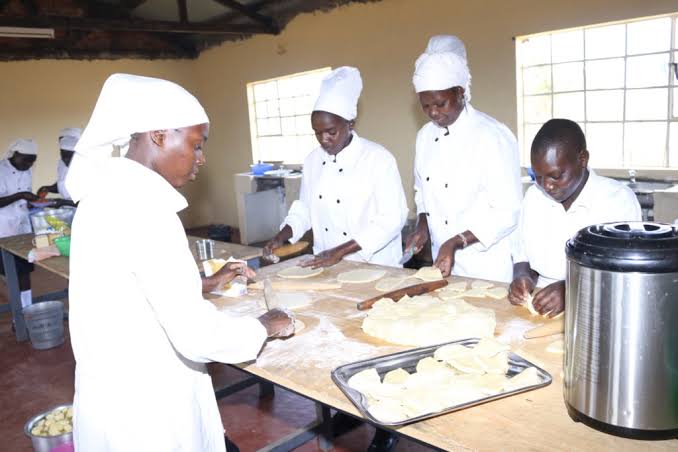
A youth-led bakery project in Nakuru County (Image: Files)
How to Apply for the Funds
The application process for the NYOTA Project is entirely digital – simple, transparent, and accessible.
Interested youth can apply by:
1. Dialing *254# on any mobile phone
2. Select the NYOTA Project option.
3. Choose from the available interventions:
– Business Support
– On-the-Job Experience
– Recognition of Prior Learning.
The platform walks applicants through eligibility requirements and terms before submission.
Once the application is complete, the system automatically validates the details, schedules shortlisted applicants for the Entrepreneurship Aptitude Test (EAT), and communicates updates via SMS.
No payments are required at any stage of the process.
The NYOTA Customer Journey
The NYOTA Customer Journey has been designed to be seamless and interactive from start to finish.
Upon successful application, each participant receives confirmation and follow-up messages at key stages – from validation forums and aptitude testing to business training and funding.
Shortlisted applicants attend constituency-level validation forums to confirm eligibility before proceeding to the EAT.
Those who pass are then enrolled in a four-day business skills training program, after which their Ksh50,000 start-up capital is disbursed directly to their bank or mobile accounts.
Additionally, every participant is automatically on-boarded into the National Social Security Fund’s (NSSF) Haba Haba scheme, where monthly auto-debits promote a savings culture.
The government matches their savings 2:1 up to Ksh6,000, while young mothers receive a maternity benefit of up to KSh 16,000 to support income continuity.
This end-to-end structure ensures that beneficiaries not only receive funding but also gain financial discipline, mentorship, and access to growth opportunities.
Expanding Opportunities Through Training and Entrepreneurship
Under the Business Support component, youth receive mentorship and Business Development Services (BDS) for four months, followed by linkages to marketing and financing networks.
The start-up capital – Ksh50,000 per person – is designed to help beneficiaries launch viable micro-enterprises while nurturing savings habits.
In parallel, the On-the-Job Experience (OJE) pathway offers youth structured apprenticeships under certified Master Craftsmen.
These placements help participants gain hands-on experience in trades aligned with market demand, enhancing employability and supporting the transition from informal to formal work.
Linking Youth to the National Development Agenda
NYOTA’s design aligns seamlessly with the Bottom-Up Economic Transformation Agenda (BETA), which emphasizes inclusion, innovation, and job creation.
The project ties directly into key national pillars:
Affordable Housing: Apprenticeships in construction and settlement upgrading.
Digital Superhighway and Creative Economy: Digital skilling for 600,000 youth and support for content creators, online workers, and innovators.
Agriculture and MSMEs: Integration into value chains through County Industrial Development Centres.
Healthcare: Maternity benefits and childcare subsidies for young mothers.
Green and Blue Economies: Opportunities in renewable energy, aquaculture, climate adaptation, and conservation.
Challenges and Ground Mobilization
While enthusiasm for NYOTA has been high – with 1.4 million youth applications already received – the rollout has faced hurdles, including low digital access in remote counties and low turnout in pilot training sessions.
To bridge these gaps, the government is combining digital and physical mobilization, involving local administrators (NGAOs) and county officials in verification and awareness drives.
Constituency-level validation forums will ensure inclusivity, transparency, and compliance with the principles of public participation under Article 10 of the Constitution.
What’s the Eventual Target with Nyota?
With national rollout activities now underway, the official launch of the NYOTA Project is set for October 29, 2025, in Kakamega County, followed by staggered disbursements across other regions through November.
By the end of the program, the government expects to have created 100,000 youth entrepreneurs, established 10,000 micro-franchises, and enrolled 190,000 youth into active saving schemes.
More than a program, NYOTA is a promise – a nationwide awakening that places Kenya’s youth at the center of economic transformation.
It is a future built not on chance, but on opportunity, skill, and sustainable growth.
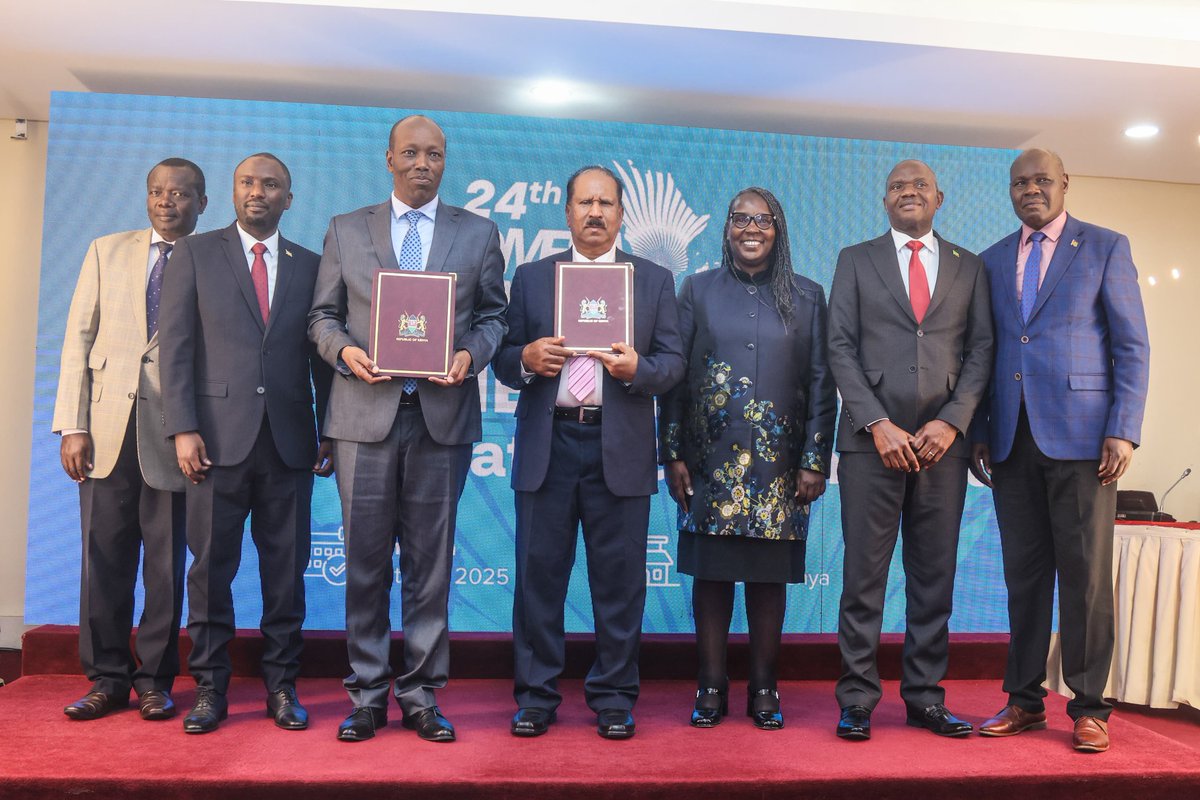
As Kenya prepares to host the 24th Common Market for Eastern and Southern Africa (COMESA) Summit in 2025, the country is presenting itself not only as a regional hub but as a continental anchor for Africa’s economic integration and prosperity.
COMESA is a 21-member regional economic community that embodies the Pan-African philosophy that Africa’s destiny must be built by Africans.
With a population of more than 600M, the bloc’s agenda is to end the historical pattern of exporting raw materials and importing expensive finished goods.
For Kenya, this moment provides an opportunity to showcase how its economic reforms are aligning with COMESA’s vision of shared prosperity.
An Integrated African Market
Kenya’s approach is built on the conviction that borders should connect, not divide.
Through digitized trade systems, One-Stop Border Posts, and harmonized customs protocols, COMESA is easing the movement of goods, services, and people.
Kenya has been at the forefront of these efforts, investing in smart infrastructure and digital platforms that allow producers, traders, and investors to operate seamlessly across borders.
At the same time, discussions around regional currencies and simplified cross-border payments are gaining traction, aiming to reduce reliance on the US dollar and cut transaction costs for African businesses.
Formal Vs Informal Trade
Informal trade remains one of Africa’s most dynamic but under-recognized forces.
Thousands of traders, especially women, move goods across border points daily.
Kenya and COMESA are working to bring them into the formal economy through initiatives like Jukwaa markets, providing structured and transparent spaces that secure livelihoods and increase bargaining power.
This reflects Kenya’s Bottom-Up Economic Transformation Agenda (BETA) – turning borderlines into business lines.
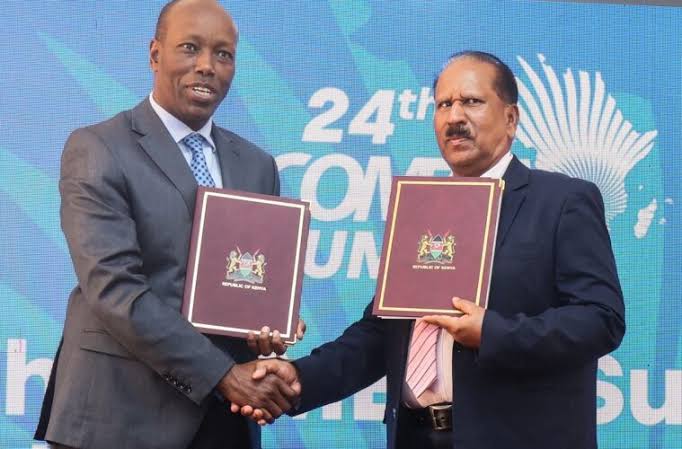
Hon. Lee Kinyanjui, Cabinet Secretary for Investments, Trade, and Industry during the signing of the Host Agreement (Image: Files)
The Five Keys for Economic Transformation
Kenya has identified five golden keys that underpin its bottom-up vision, each tied closely to COMESA’s integration goals:
1. Macroeconomic Stability
Kenya has moved from the 8th to the 6th largest economy in Africa by managing inflation, forex, and debt prudently, restoring investor confidence.
2. Revitalisation of Key Value Chains
From agriculture and livestock to fisheries, mining, and the blue economy, Kenya is adding value through County Aggregation and Industrial Parks (CAIPs) while protecting industries like sugar and fisheries with trade safeguards.
3. Infrastructure Development
Roads, ports, energy, water, ICT, and Special Economic Zones (SEZs) are driving growth. Major projects like the Standard Gauge Railway, Konza Technopolis, Naivasha SEZ, and cross-border road corridors are linking Kenya to regional markets.
4. Jobs and Income Opportunities
Programmes like Kazi Kwa Ground (public sector jobs), Kazi Mtandaoni (digital and creative economy), and Kazi Majuu (diaspora labour mobility) connect youth to local and global work.
MSME development strengthens small enterprises as engines of growth.
5. Social Sector Reforms
Universal health coverage (Taifa Care) and education reforms (CBE, TVET, higher education financing) are creating a healthier, skilled workforce to power regional competitiveness.
Trade, Industry and Agriculture
Through COMESA, Kenya enjoys access to larger markets for exports such as tea, coffee, flowers, apparel, and processed foods.
Trade safeguards have revived the struggling sugar sector, especially in Western Kenya, while farmers benefit from mechanisation, certification, and climate-smart practices that meet global standards.
Industrialisation is the next frontier.
SEZs in Naivasha, Dongo Kundu, and Konza, along with EPZs in Athi River, Tatu City, and Sagana, are attracting global and local manufacturers who produce for export and invest in skills transfer.
Each trained worker becomes part of a knowledge economy, able to spread innovation across industries.
Skills, Labour and Mobility
Kenya is also investing in making its workforce regionally and globally competitive.
Over 700 youth recently completed German language and technical training, preparing them for jobs in Europe.
This reflects a broader strategy of equipping Kenyans with skills that serve both domestic industries and COMESA’s labour market, aligning with the African Union’s Agenda 2063 Aspiration 6: People-Driven Development.
In a Nutshell ….
As host of the 24th COMESA Summit in 2025, Kenya is positioning itself not just as a participant but as a leader shaping Africa’s economic future.
By embedding stability, value addition, infrastructure, jobs, and social reform into its policies, Kenya has emerged as an economic anchor for the region.
The choices being made today – to train youth, digitise trade, empower MSMEs, and integrate markets – will define Kenya’s place in a self-reliant, prosperous Africa.