The Nyota Program has outlived the application, verification and aptitude test levels.
In the past week, the program finally crossed into the moment the youth have been waiting for – actual business funding hitting real pockets.
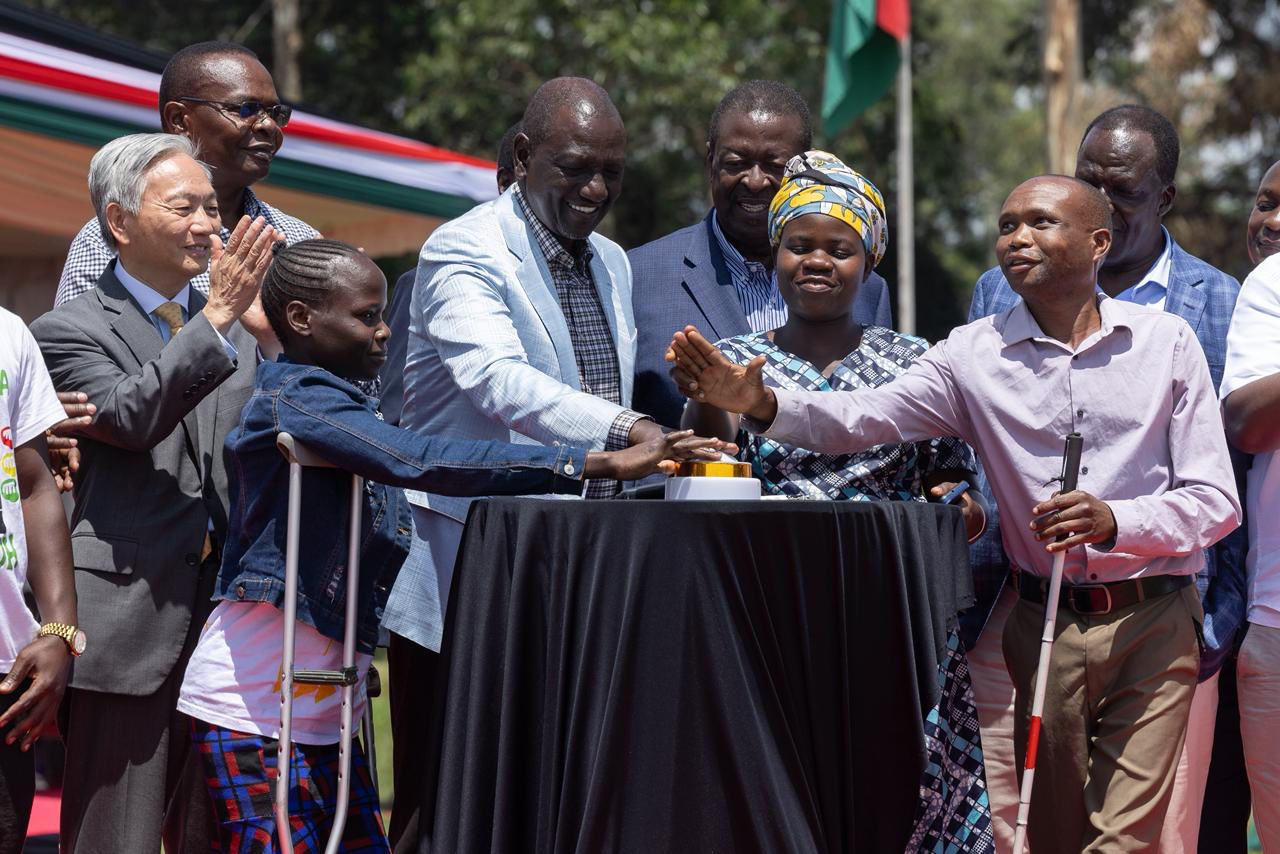
On Friday, 7th November 2025, the Government officially launched the Nyota Project in Mumias Sports Complex, Kakamega.
This marks the beginning of nationwide disbursements under the Business Support Component.
Western region are the first major beneficiaries.
Western Region Youths Receive Ksh303M in Start-Up Capital
In Kakamega, Vihiga, Bungoma and Busia, 12,155 beneficiaries successfully completed their classroom business training – and immediately received their first tranche of funding.
A total of Ksh303,875,000 was disbursed through Nyota Pochi la Biashara – with each beneficiary getting Ksh22,000 (after deducting Ksh3,000 savings, as required by the program).
This isn’t token money.
It’s the capital meant to kickstart thousands of small hustles:
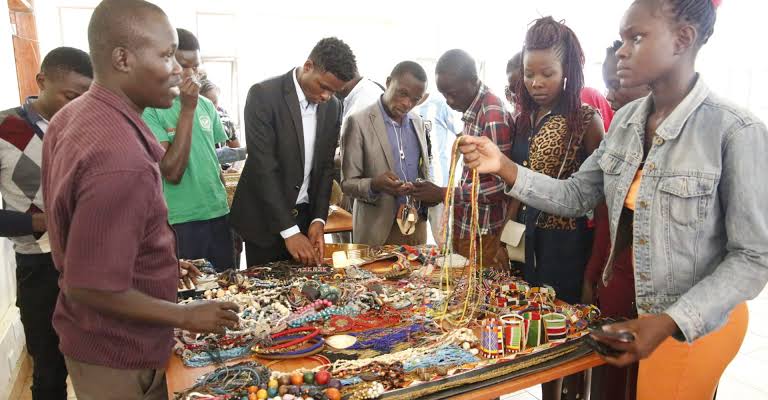
Agri-trading, salons and barber shops, cyber services, tailoring, welding, mitumba stalls, motorbike repair, food vending and other start ups.
For many, it’s the first real chance to turn an idea into income.
The Need for Savings in the Nyota Model
Each beneficiary automatically saves Ksh3,000 split into short-term and long-term savings.
The savings act as:
A shock absorber when business slows,
A security buffer for future financing, and
The beginning of a culture of financial discipline.
Positions beneficiaries for additional funding from mainstream financial institutions.
After the first trance of capital, a two-month mentorship marathon begins.
After the mentorship, applicants return for a three-day BDS (Business Development Services) classroom training, then receive their final tranche.
President William Ruto launches the first phase of the Nyota Program (Image: Files)
More Youth Begin Training Across 25 Counties
Starting Thursday, 14th November 2025, Nyota rolls out training simultaneously in 25 counties, covering 151 constituencies and 754 wards.
A total of 63,231 youth have already received SMS notifications confirming their selection and training venues.
Training will run for four days, and attendance of at least three days is mandatory to qualify for start-up capital.
Training for the remaining 18 counties – including Nairobi, Kiambu, Nyeri, Murang’a, Mombasa, Garissa, Samburu, and others – will start towards the end of next week.
Where are the Training Centres?
To make training accessible:
222 centres have been set up across the 151 constituencies.
Larger constituencies have multiple centres.
Beneficiaries must attend within their constituency but can choose the nearest centre.
Immediately after training, disbursements for this cluster will begin.
The Nyota Program is also targeting:
5,000 refugees in Kakuma and Dadaab
5,000 members of host communities
Their intake process is in the final stages, with training set to begin once lists are confirmed.
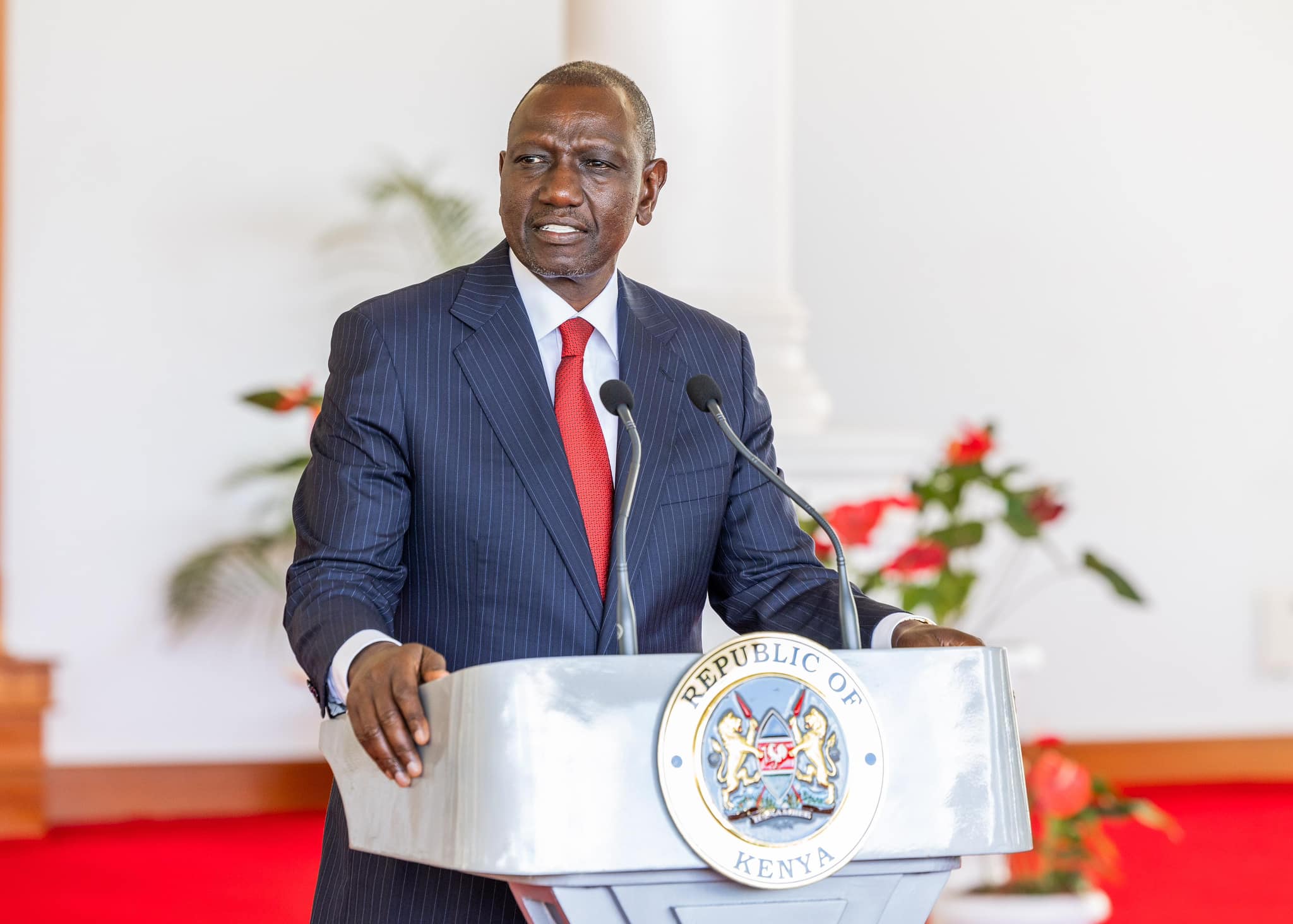
The Government has launched the National Youth Opportunities Towards Advancement (NYOTA) Project.
This is a multi-agency, World Bank–financed initiative that targets to uplift 820,000 vulnerable youth across the country.
The project, unveiled by the State Department for Labour and Skills Development under the Ministry of Labour and Social Protection, represents an upscale from the Kenya Youth Employment Opportunities Project (KYEOP).
NYOTA is anchored on the government’s resolve to tackle unemployment by equipping the youth with practical skills, entrepreneurship training, and savings incentives.
A Model for Economic Empowerment
The NYOTA Project is structured around four core pillars:
1. Improving youth employability through socio-emotional, technical, and on-the-job training.
2. Expanding employment opportunities via entrepreneurship support and micro-franchise creation.
3. Encouraging savings by integrating beneficiaries into formal social protection systems.
4. Strengthening youth employment systems through capacity building and digital skilling across counties.
Together, these interventions embody NYOTA’s vision of empowering young people to “Earn, Save, and Grow” – the program’s three defining outcomes.
The Scope and Target on Nyota Program
NYOTA targets unemployed Kenyan youth aged 18-29 years, and up to 35 years for persons with disabilities (PWDs), from every ward in the country, including refugees in Turkana and Garissa camps.
Eligible applicants must possess a Form Four level of education or below, ensuring that the program directly benefits those who need it most.
To guarantee inclusivity, the project adopts a 50:50 gender balance and reserves 5% of all slots for PWDs, with geographical balancing to ensure that no county is left behind.
Recognition of Prior Learning (RPL)
A key innovation under NYOTA is the Recognition of Prior Learning (RPL) framework – a process that identifies, assesses, and certifies informal skills acquired outside conventional education.
Whether through apprenticeships, family trades, or community work, youth with proven experience in sectors such as carpentry, tailoring, electrical works, or auto mechanics can now earn nationally recognized certificates through the National Industrial Training Authority (NITA).
So far, over 40,000 applications have been received from 20 counties, with screening, sensitization, and portfolio reviews already underway.
RPL ensures that young people’s real-world skills are acknowledged, boosting their employability and access to both local and international job markets.
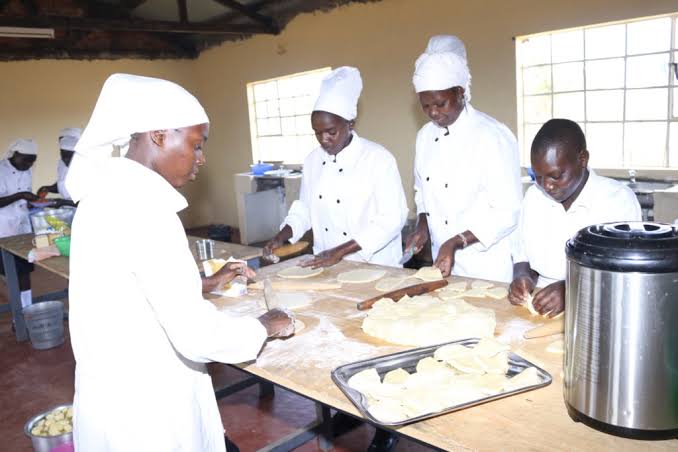
A youth-led bakery project in Nakuru County (Image: Files)
How to Apply for the Funds
The application process for the NYOTA Project is entirely digital – simple, transparent, and accessible.
Interested youth can apply by:
1. Dialing *254# on any mobile phone
2. Select the NYOTA Project option.
3. Choose from the available interventions:
– Business Support
– On-the-Job Experience
– Recognition of Prior Learning.
The platform walks applicants through eligibility requirements and terms before submission.
Once the application is complete, the system automatically validates the details, schedules shortlisted applicants for the Entrepreneurship Aptitude Test (EAT), and communicates updates via SMS.
No payments are required at any stage of the process.
The NYOTA Customer Journey
The NYOTA Customer Journey has been designed to be seamless and interactive from start to finish.
Upon successful application, each participant receives confirmation and follow-up messages at key stages – from validation forums and aptitude testing to business training and funding.
Shortlisted applicants attend constituency-level validation forums to confirm eligibility before proceeding to the EAT.
Those who pass are then enrolled in a four-day business skills training program, after which their Ksh50,000 start-up capital is disbursed directly to their bank or mobile accounts.
Additionally, every participant is automatically on-boarded into the National Social Security Fund’s (NSSF) Haba Haba scheme, where monthly auto-debits promote a savings culture.
The government matches their savings 2:1 up to Ksh6,000, while young mothers receive a maternity benefit of up to KSh 16,000 to support income continuity.
This end-to-end structure ensures that beneficiaries not only receive funding but also gain financial discipline, mentorship, and access to growth opportunities.
Expanding Opportunities Through Training and Entrepreneurship
Under the Business Support component, youth receive mentorship and Business Development Services (BDS) for four months, followed by linkages to marketing and financing networks.
The start-up capital – Ksh50,000 per person – is designed to help beneficiaries launch viable micro-enterprises while nurturing savings habits.
In parallel, the On-the-Job Experience (OJE) pathway offers youth structured apprenticeships under certified Master Craftsmen.
These placements help participants gain hands-on experience in trades aligned with market demand, enhancing employability and supporting the transition from informal to formal work.
Linking Youth to the National Development Agenda
NYOTA’s design aligns seamlessly with the Bottom-Up Economic Transformation Agenda (BETA), which emphasizes inclusion, innovation, and job creation.
The project ties directly into key national pillars:
Affordable Housing: Apprenticeships in construction and settlement upgrading.
Digital Superhighway and Creative Economy: Digital skilling for 600,000 youth and support for content creators, online workers, and innovators.
Agriculture and MSMEs: Integration into value chains through County Industrial Development Centres.
Healthcare: Maternity benefits and childcare subsidies for young mothers.
Green and Blue Economies: Opportunities in renewable energy, aquaculture, climate adaptation, and conservation.
Challenges and Ground Mobilization
While enthusiasm for NYOTA has been high – with 1.4 million youth applications already received – the rollout has faced hurdles, including low digital access in remote counties and low turnout in pilot training sessions.
To bridge these gaps, the government is combining digital and physical mobilization, involving local administrators (NGAOs) and county officials in verification and awareness drives.
Constituency-level validation forums will ensure inclusivity, transparency, and compliance with the principles of public participation under Article 10 of the Constitution.
What’s the Eventual Target with Nyota?
With national rollout activities now underway, the official launch of the NYOTA Project is set for October 29, 2025, in Kakamega County, followed by staggered disbursements across other regions through November.
By the end of the program, the government expects to have created 100,000 youth entrepreneurs, established 10,000 micro-franchises, and enrolled 190,000 youth into active saving schemes.
More than a program, NYOTA is a promise – a nationwide awakening that places Kenya’s youth at the center of economic transformation.
It is a future built not on chance, but on opportunity, skill, and sustainable growth.