
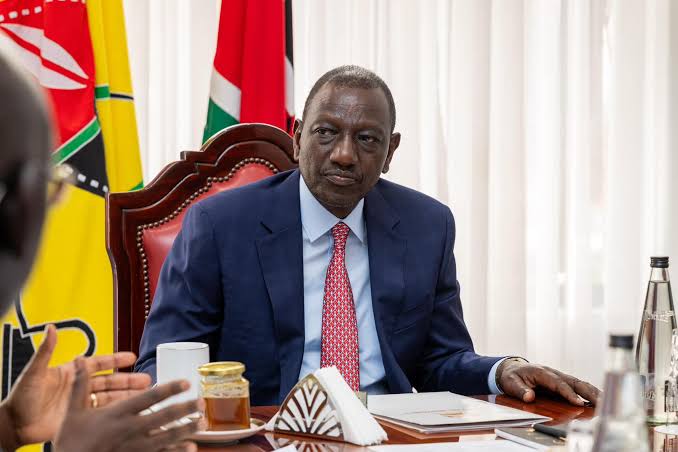
President Ruto Calls for Deeper Regional Integration as Kenya Hosts 24th COMESA Summit

President William Samoei Ruto has officially opened the 24th COMESA Summit of Heads of State and Government at the Kenyatta International Convention Centre (KICC) in Nairobi.

As the incoming Chairperson of the COMESA Authority of Heads of State and Government, President Ruto underscored Kenya’s deep commitment to regional cooperation as a driver of economic transformation.

“The nature of 21st-century globalisation has strengthened the case for regional integration as a pathway to sustainable growth.

Africa’s relevance in the global marketplace will be determined by the depth and speed of its integration,” he said.

Regional Integration

The President noted that the current wave of global challenges – from supply chain disruptions and debt distress to the rise of digital economies – makes it urgent for African nations to work together.

He emphasised that regional blocs like COMESA remain central to Africa’s economic resilience, as they create larger markets, spur industrial linkages, and promote peace and stability.

“By merging our economies and pooling our capacities, endowments, and energies, we can overcome the daunting challenges that hinder our continent’s transformation,” President Ruto stated.
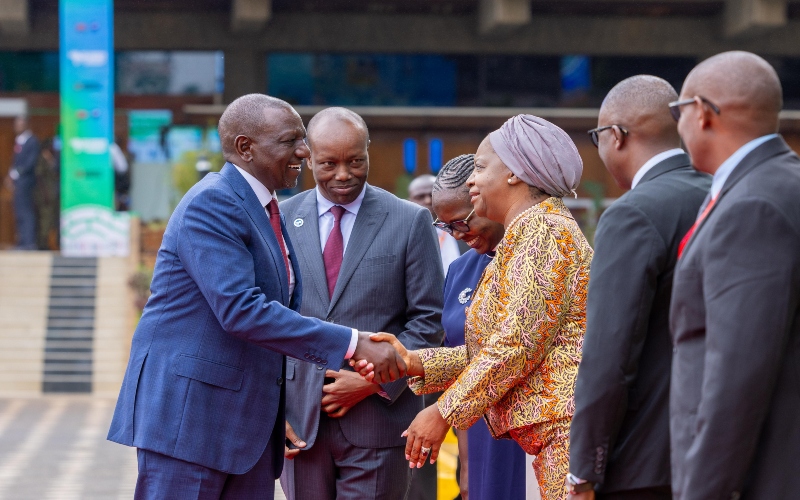
President Ruto welcomes other African Heads of State at the COMESA 2025 opening ceremony in Nairobi (Image: Files)

Digitalisation for Growth

The 2025 COMESA Summit is being held under the theme: “Leveraging Digitalisation to Deepen Regional Value Chains for Sustainable and Inclusive Growth.”

The theme captures the defining shift in global economics – that technology and innovation are now key levers for sustainable development.

“Digitalisation offers immense potential to drive sustainability by optimising resource use, improving energy efficiency, enabling smart grids, and fostering circular economies,” The president added.

COMESA must invest deliberately in digital infrastructure, data governance, and human capacity building to ensure African citizens are empowered to thrive in the digital era.

People-driven Integration

President Ruto reiterated that COMESA’s greatest strength lies not only in trade but also in social and human integration.

He highlighted the importance of bridging economic and social gaps within the region, ensuring no member state is left behind.

“COMESA’s integration journey has not only facilitated trade but also fostered peace, stability, and resilience across borders,” he said.

He urged member states to make concrete commitments to scale up intra-COMESA trade, foster industrial linkages, support innovation, and strengthen resilience against external shocks.

Vision 2030 and Africa’s Agenda 2063

Hosting the 24th COMESA Summit, President Ruto said, aligns seamlessly with Kenya’s Vision 2030 and the African Union’s Agenda 2063.

Both agendas seek to transform economies through regional integration and cross-border cooperation.

He positioned Kenya as a model for regional collaboration, pointing to its investments in infrastructure, innovation, and human capital.

The COMESA Clarion Call

In closing, the President called for bold action to make COMESA a globally competitive region that focuses on value addition, inclusive growth, and sustainable development.

“Together, we can transform COMESA into a region that promotes prosperity for all and pursues growth that is sustainable, inclusive, and transformative,”

He said, before officially welcoming fellow Heads of State and dignitaries to Nairobi.

The summit, bringing together leaders, ministers, and business representatives from 21 member states, is expected to chart new strategies for accelerating Africa’s integration through digitalisation and value chain development.
Kenya Positions Itself as Africa’s Economic Anchor Ahead of COMESA Summit

As Kenya prepares to host the 24th Common Market for Eastern and Southern Africa (COMESA) Summit in 2025, the country is presenting itself not only as a regional hub but as a continental anchor for Africa’s economic integration and prosperity.

COMESA is a 21-member regional economic community that embodies the Pan-African philosophy that Africa’s destiny must be built by Africans.

With a population of more than 600M, the bloc’s agenda is to end the historical pattern of exporting raw materials and importing expensive finished goods.

For Kenya, this moment provides an opportunity to showcase how its economic reforms are aligning with COMESA’s vision of shared prosperity.

An Integrated African Market

Kenya’s approach is built on the conviction that borders should connect, not divide.

Through digitized trade systems, One-Stop Border Posts, and harmonized customs protocols, COMESA is easing the movement of goods, services, and people.

Kenya has been at the forefront of these efforts, investing in smart infrastructure and digital platforms that allow producers, traders, and investors to operate seamlessly across borders.

At the same time, discussions around regional currencies and simplified cross-border payments are gaining traction, aiming to reduce reliance on the US dollar and cut transaction costs for African businesses.

Formal Vs Informal Trade

Informal trade remains one of Africa’s most dynamic but under-recognized forces.

Thousands of traders, especially women, move goods across border points daily.

Kenya and COMESA are working to bring them into the formal economy through initiatives like Jukwaa markets, providing structured and transparent spaces that secure livelihoods and increase bargaining power.

This reflects Kenya’s Bottom-Up Economic Transformation Agenda (BETA) – turning borderlines into business lines.

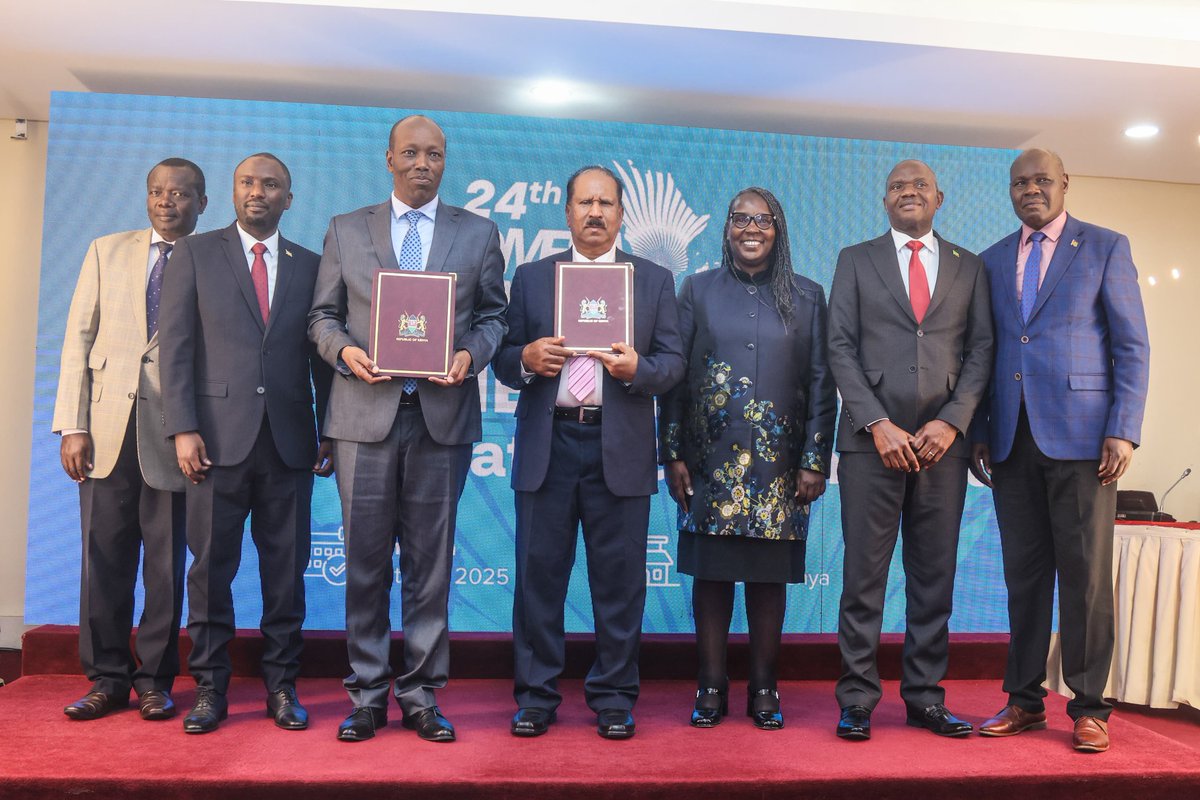
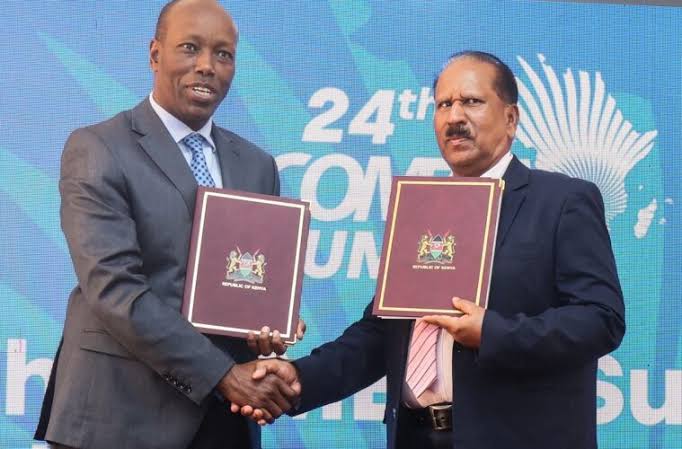
Hon. Lee Kinyanjui, Cabinet Secretary for Investments, Trade, and Industry during the signing of the Host Agreement (Image: Files)

The Five Keys for Economic Transformation

Kenya has identified five golden keys that underpin its bottom-up vision, each tied closely to COMESA’s integration goals:

1. Macroeconomic Stability

Kenya has moved from the 8th to the 6th largest economy in Africa by managing inflation, forex, and debt prudently, restoring investor confidence.

2. Revitalisation of Key Value Chains

From agriculture and livestock to fisheries, mining, and the blue economy, Kenya is adding value through County Aggregation and Industrial Parks (CAIPs) while protecting industries like sugar and fisheries with trade safeguards.

3. Infrastructure Development

Roads, ports, energy, water, ICT, and Special Economic Zones (SEZs) are driving growth. Major projects like the Standard Gauge Railway, Konza Technopolis, Naivasha SEZ, and cross-border road corridors are linking Kenya to regional markets.

4. Jobs and Income Opportunities

Programmes like Kazi Kwa Ground (public sector jobs), Kazi Mtandaoni (digital and creative economy), and Kazi Majuu (diaspora labour mobility) connect youth to local and global work.

MSME development strengthens small enterprises as engines of growth.

5. Social Sector Reforms

Universal health coverage (Taifa Care) and education reforms (CBE, TVET, higher education financing) are creating a healthier, skilled workforce to power regional competitiveness.

Trade, Industry and Agriculture

Through COMESA, Kenya enjoys access to larger markets for exports such as tea, coffee, flowers, apparel, and processed foods.

Trade safeguards have revived the struggling sugar sector, especially in Western Kenya, while farmers benefit from mechanisation, certification, and climate-smart practices that meet global standards.

Industrialisation is the next frontier.

SEZs in Naivasha, Dongo Kundu, and Konza, along with EPZs in Athi River, Tatu City, and Sagana, are attracting global and local manufacturers who produce for export and invest in skills transfer.

Each trained worker becomes part of a knowledge economy, able to spread innovation across industries.

Skills, Labour and Mobility

Kenya is also investing in making its workforce regionally and globally competitive.

Over 700 youth recently completed German language and technical training, preparing them for jobs in Europe.

This reflects a broader strategy of equipping Kenyans with skills that serve both domestic industries and COMESA’s labour market, aligning with the African Union’s Agenda 2063 Aspiration 6: People-Driven Development.

In a Nutshell ….

As host of the 24th COMESA Summit in 2025, Kenya is positioning itself not just as a participant but as a leader shaping Africa’s economic future.

By embedding stability, value addition, infrastructure, jobs, and social reform into its policies, Kenya has emerged as an economic anchor for the region.

The choices being made today – to train youth, digitise trade, empower MSMEs, and integrate markets – will define Kenya’s place in a self-reliant, prosperous Africa.