Co-op Bank Rides Digital Banking and MSMEs to Record Ksh11.4B Q1 Profit

Co-op Bank has reported its strongest-ever quarterly performance, posting a Profit Before Tax of Ksh11.37B for the first quarter of 2026.

The figure represents an 18.1% jump from the Ksh9.63B recorded during the same period last year, while Profit After Tax rose by 21.3% to Ksh8.41B.

Assets

Co-op Bank’s total assets grew to Ksh884.6B, up from Ksh774.1B a year earlier. Customer deposits also increased sharply to Ksh612.2B, while the bank’s loan book expanded to Ksh436.8B.

Government securities rose to Ksh272.9B, helping strengthen liquidity and diversify earnings.

The bank maintained a strong liquidity position, with a liquidity ratio of 63.4%, alongside improved asset quality. Its Non-Performing Loan ratio dropped to 14.5% from 17% in Q1 2025.

Digital Banking

More than 90% of customer transactions are now happening through digital and alternative channels, underlining how quickly banking habits are shifting in Kenya.

The bank’s infrastructure now includes:

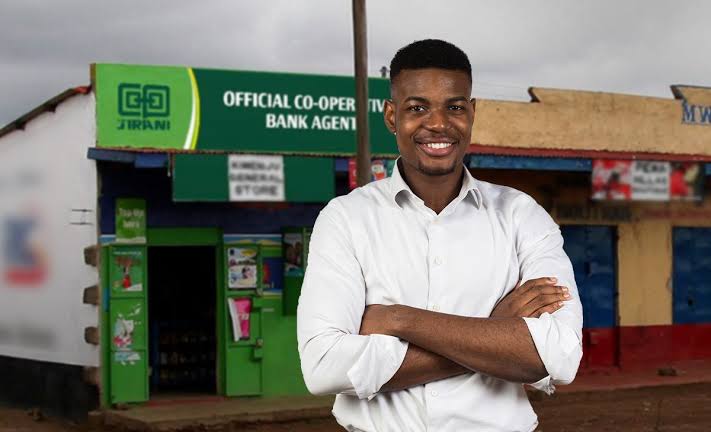
Over 16,200 Co-op Kwa Jirani agents

  • 615 ATMs and cash deposit machines
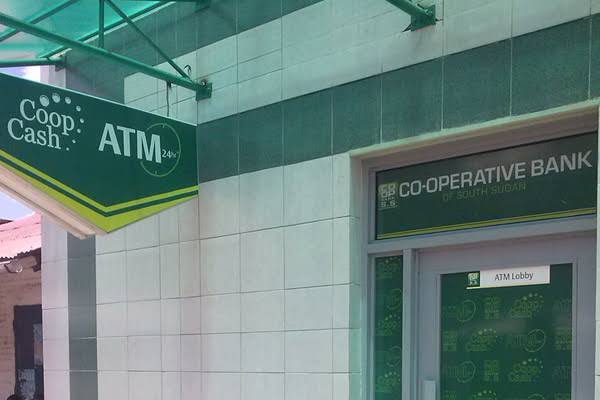
  • 222 branches across Kenya and South Sudan
  • 619 SACCO front offices

Its customer base has also continued expanding, with account holders now standing at over 9.8M.

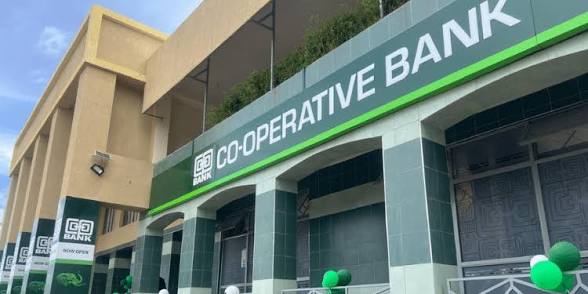
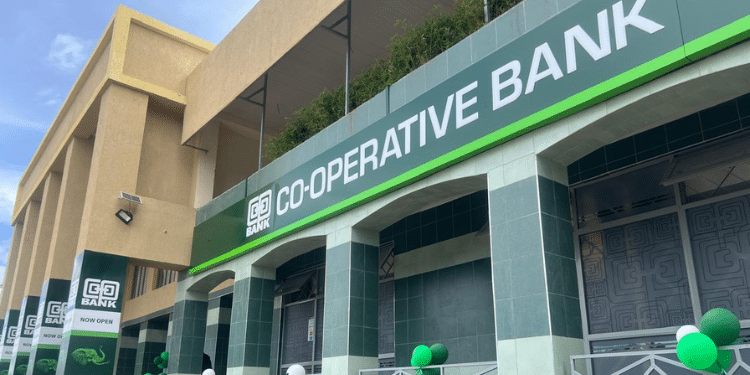
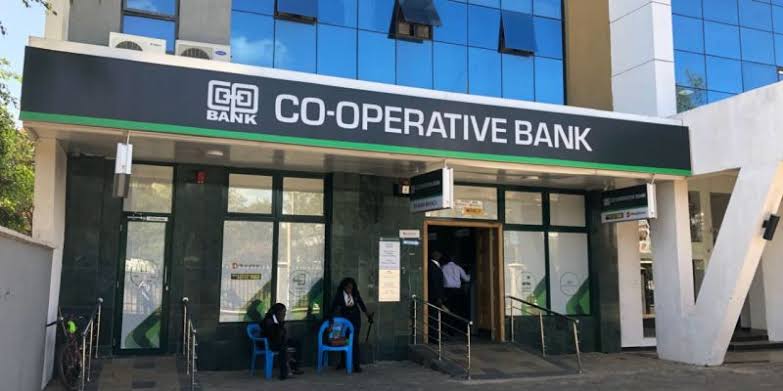
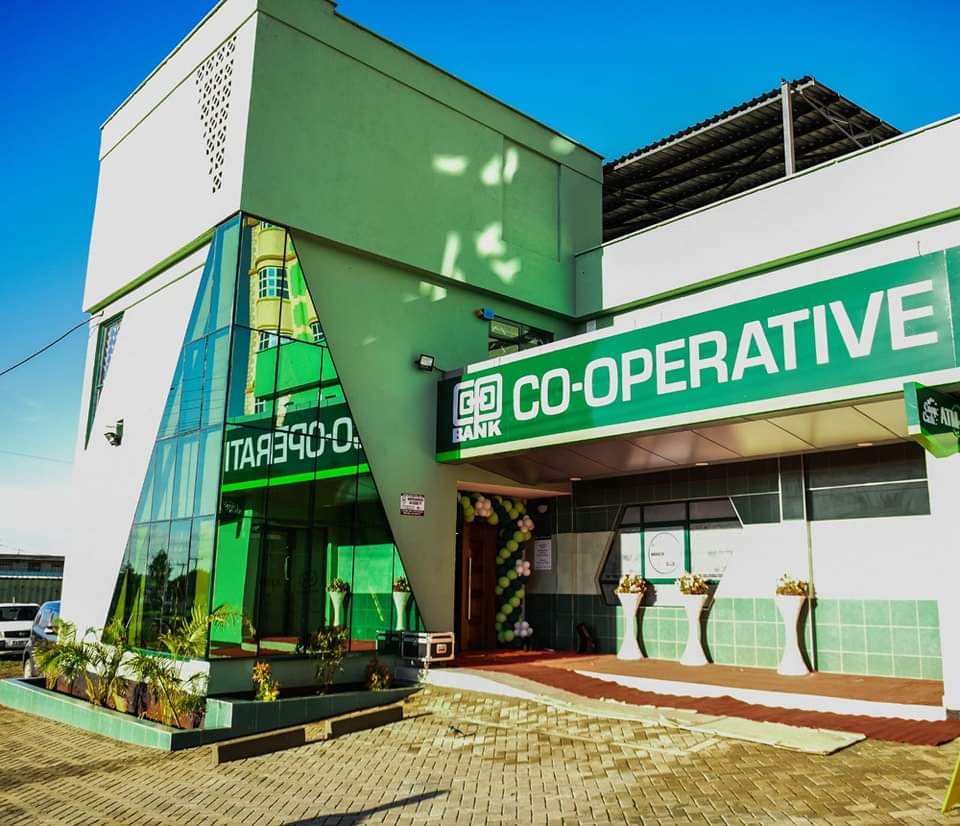
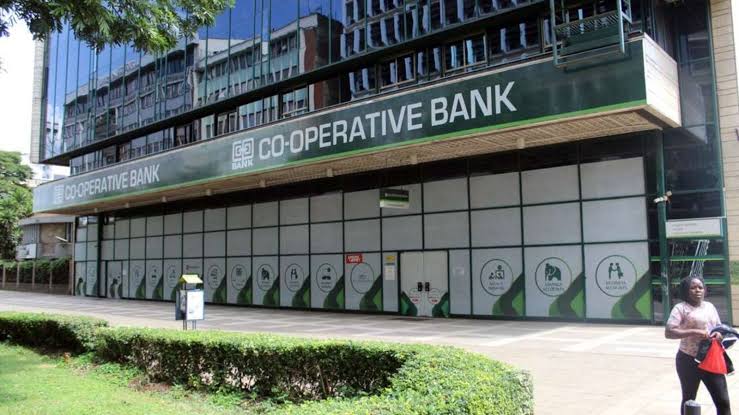
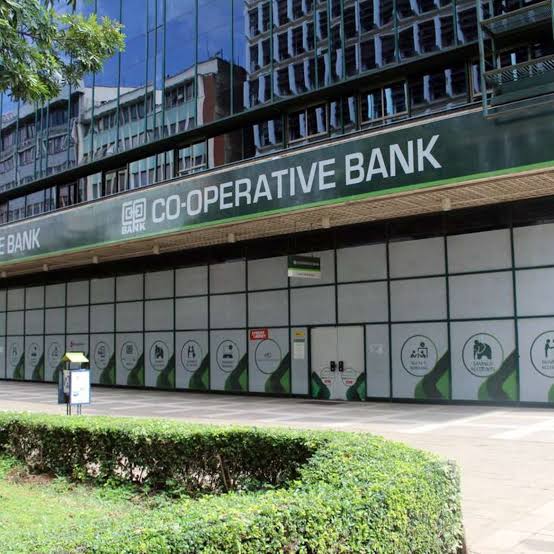
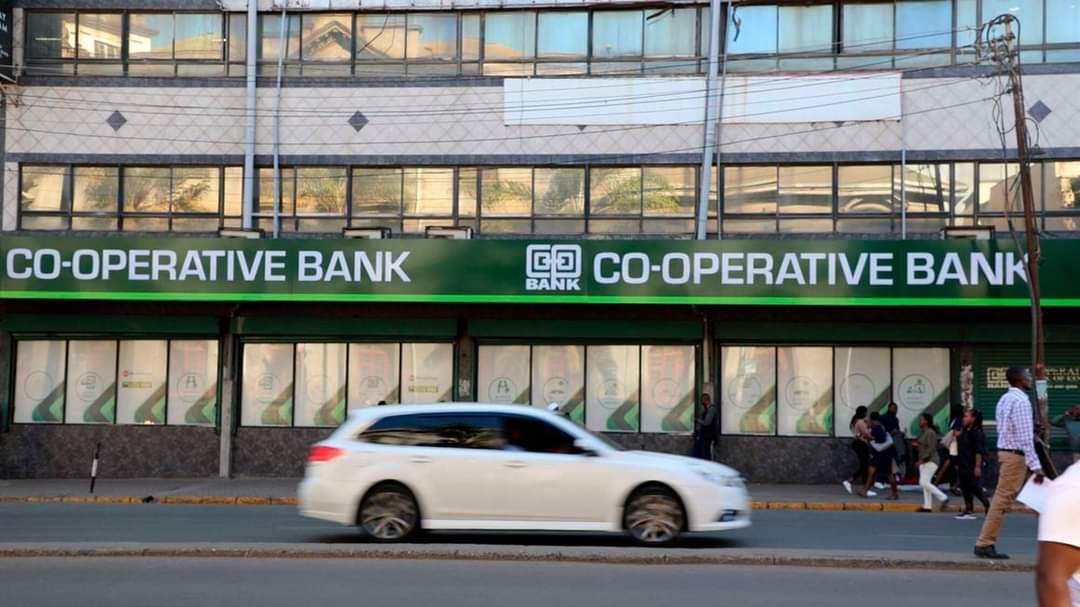
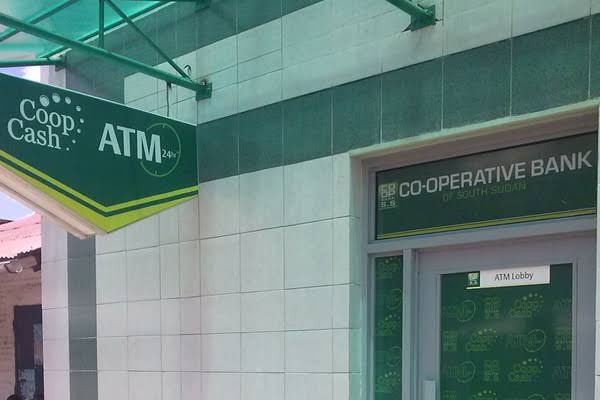
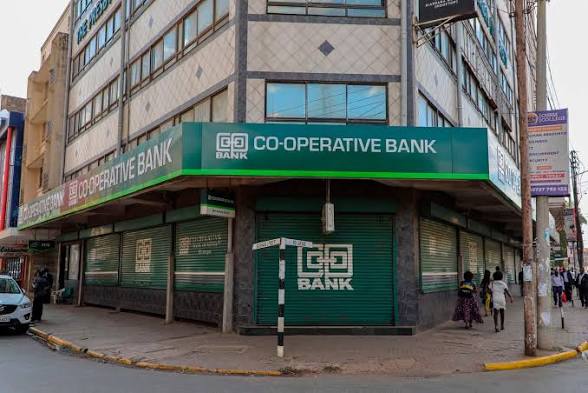
Co-op Bank branch in downtown Nairobi (Image: Files)

MSMEs and Digital Credit

The bank disbursed Ksh19.11B in digital loans during the quarter through its E-Credit platform. Since launch, the platform has processed more than Ksh520B in cumulative disbursements.

Co-op Bank says it currently serves over 264,000 MSMEs through tailored business banking packages, while more than 71,000 businesses received training and capacity-building support during the quarter.

MSMEs now account for:

  • 16.8% of the bank’s loan book
  • 22.6% of customer deposits

Youth Banking

The lender is also aggressively targeting younger customers.

During the quarter, it established a dedicated Youth Financial Services division as part of plans to build a youth customer base exceeding 10 million in the medium term.

The bank says over 100,000 young people accessed financial literacy programmes in Q1 alone, while its mobile banking app now supports fully digital access to money market funds and bond investments.

Subsidiaries

Several Co-op Bank subsidiaries also posted strong performances:

  • Kingdom Bank nearly doubled profits to Ksh446.2M
  • Co-op Bancassurance Intermediary grew profits by 39.5%
  • Co-optrust Investment Services recorded 107.6% profit growth
  • Co-operative Bank of South Sudan returned to profitability after recording losses last year

In a Nutshell ….

The Q1 results reflect how Kenya’s banking sector is increasingly being shaped by digital transactions, agency banking, SME financing and youth-focused financial products.

For Co-op Bank, the latest numbers suggest a strategy focused less on flashy expansion and more on scale, ecosystem banking and deep penetration into everyday financial activity – from SACCOs and biashara traders to diaspora customers and young mobile-first users.

Detectives Probe Alleged Extortion Scheme Targeting Co-op Bank Dividend Payout

What started as a routine restructuring process at Co-op Bank has now pulled detectives, courtrooms and alleged backroom pressure tactics into the picture.

Authorities are investigating what insiders describe as a suspected extortion scheme targeting the bank’s planned restructuring and a shareholder payout estimated at nearly Sh14 billion.

At the centre of the allegations is a former Nyamira senator, who investigators believe stepped into the matter shortly after Co-op Bank announced plans to introduce a holding company structure.

According to sources familiar with the investigations, the former politician allegedly positioned himself as a defender of Sacco interests from Kisii and Nyamira – before a wave of legal threats and court filings suddenly followed.

The pattern, insiders claim, raised eyebrows almost immediately.

First came demand letters. Then draft court papers. Then messages suggesting the bank should “talk.”

People close to the matter now believe the strategy may have been designed to pressure the lender into private negotiations outside the normal shareholder and legal channels.

But things reportedly became messy when actual cooperative leaders from Kisii and Nyamira started noticing their names – and in some cases, the names of their institutions – appearing around suits they allegedly knew little about.

That is when the story reportedly changed shape.

According to investigators, some of the individuals behind the cases allegedly switched lawyers, reshuffled the filings, and repackaged parts of the dispute as a shareholder rights matter.

Police are also examining claims that signatures linked to Sacco officials may have been forged or irregularly used to create the impression that cooperative societies were fully behind the court actions.

The alleged endgame?

Investigators suspect the cases were being used as leverage – with claims that money was being demanded from the bank in exchange for withdrawing or slowing down the suits.

One of the cases now drawing attention is Court Case No. E010 of 2026, filed at the High Court in Nyamira, where parties are expected before Lady Justice T. Cherere on May 14, 2026 for directions.

Behind the legal drama sits a much larger concern: ordinary shareholders.

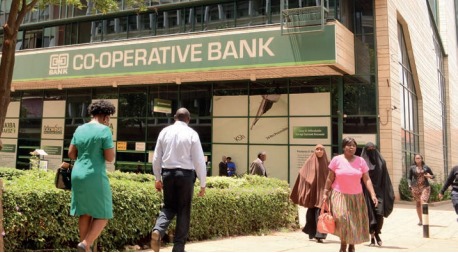
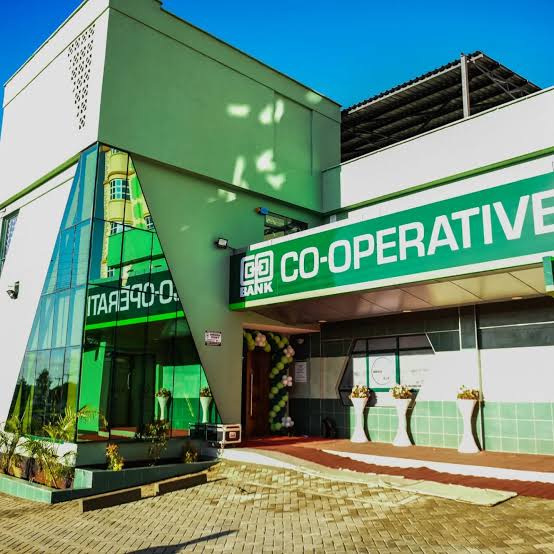
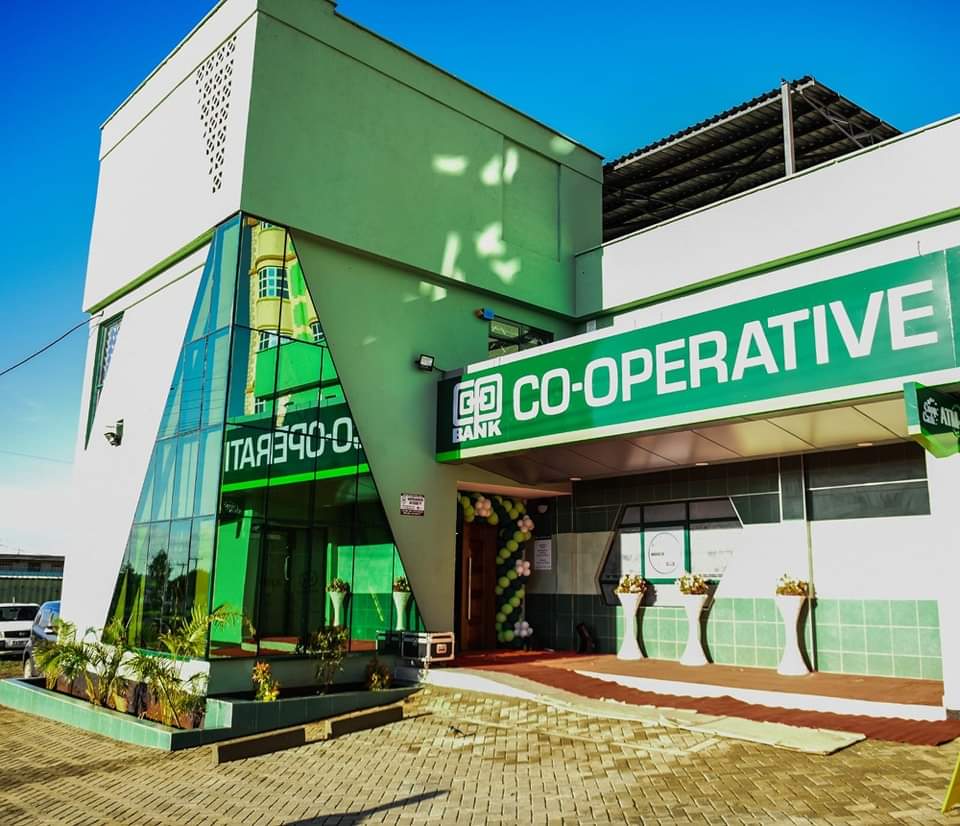
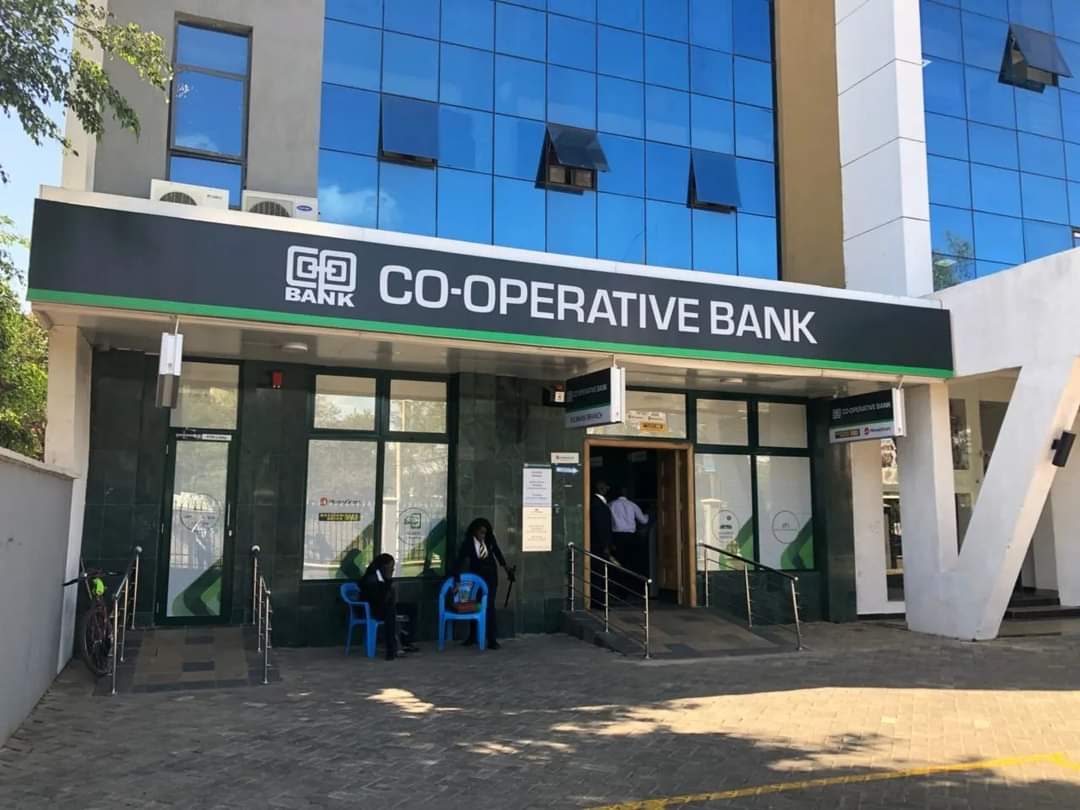
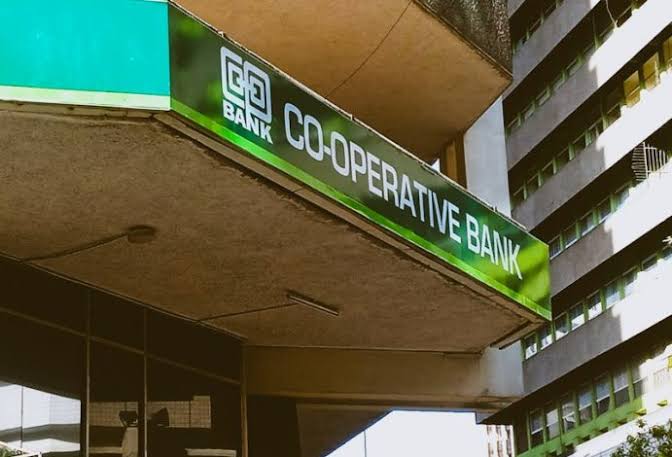
Co-op Bank branch in Nairobi County (Image: Files)

Co-op Bank’s ownership structure is deeply tied to Kenya’s cooperative movement, meaning millions of farmers, Sacco members and small investors depend on the bank’s dividend cycle.

And this is where the issue stops looking like ordinary corporate litigation.

For many shareholders, dividend season is not boardroom theory. It is school fees. Farm inputs. Rent. Stock for biashara. Household survival.

Any successful attempt to delay the restructuring process could potentially interfere with the expected Sh14 billion shareholder payout – leaving ordinary investors trapped inside a fight they neither started nor fully understand.

Investigators are now expected to establish who authorised the court actions, whether the listed Sacco officials genuinely approved the filings, and whether court processes were being weaponised as bargaining chips in a pressure campaign against the bank.

Co-op Bank Reports 15.8% Profit Growth to Ksh40.3 Billion in FY2025

Co-op Bank has reported a 15.8% growth in profit before tax to Ksh40.3 billion for the year ended December 2025, up from Ksh34.8 billion recorded in 2024.

Profit after tax rose by 16.9% to Ksh29.75 billion, marking the bank’s strongest financial performance to date.

The lender has proposed a total dividend of Ksh2.50 per share for FY2025, up from Ksh1.50 paid in the previous year, translating to a total payout of Ksh14.67 billion, subject to shareholder approval.

Balance Sheet Growth and Efficiency

Total assets grew by 11.3% to Kah827.4 billion, while customer deposits increased by 13.3% to Ksh576.5 billion. Loans and advances rose by 12.7% to Ksh421 billion.

Net interest income increased by 22% to Ksh62.85 billion, supporting a 13.9% rise in operating income to Ksh91.89 billion.

The bank maintained a cost-to-income ratio of 46.3%, reflecting improved operational efficiency.

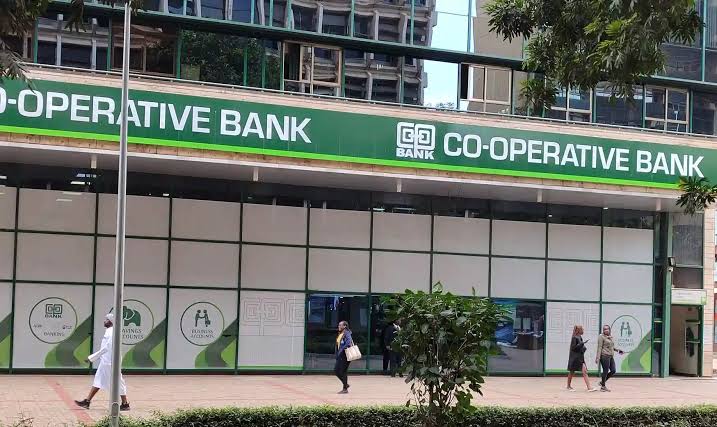
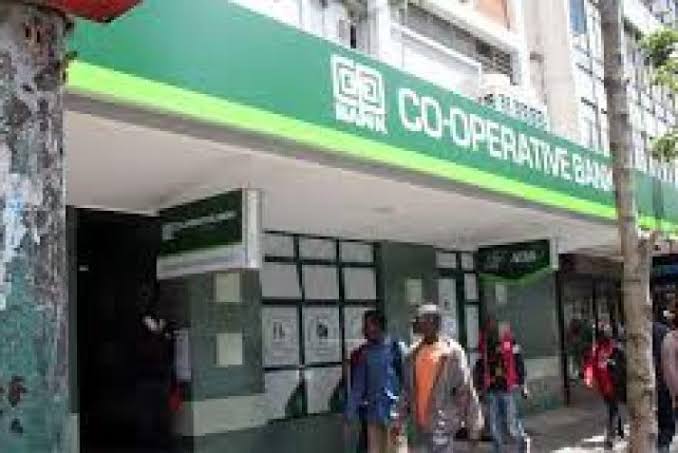
A Co-op Bank branch in downtown Nairobi (Image: Files)

Digital Transactions and Network Expansion

Over 90% of customer transactions were processed through alternative channels, including mobile, internet, and USSD platforms.

The bank’s distribution network includes over 16,000 agents, 620 ATMs and cash deposit machines, and 222 branches across Kenya and the region.

The lender also expanded its digital offering through the Co-op Bank App, now integrated with investment and bancassurance services.

MSME Lending and Financial Inclusion

E-credit disbursements reached Ksh72.96 billion in 2025, with Ksh10.43 billion directed to micro, small, and medium enterprises (MSMEs).

Since inception, the E-credit platform has disbursed over Ksh500 billion.

The bank has on boarded over 259,000 MSMEs and supported more than 71,000 businesses through capacity-building programmes.

Subsidiary and Investment Performance

Co-op Trust Investment Services reported funds under management of Ksh507.1 billion, with profit before tax rising to KSh 936.2 million.

Other subsidiaries, including bancassurance and regional banking units, also recorded growth during the year.

Sustainability and Customer Base

The bank continued to expand its sustainability agenda, aligning with global and local frameworks on climate risk and ESG reporting.

Customer numbers rose to over 9.4 million account holders, supported by a nationwide network and integration within the co-operative movement.

Awards and Recognition

During the year, the bank received multiple awards, including Product Innovation of the Year at the IFC Global SME Finance Awards and recognition for digital transformation and ESG reporting.

Outlook

Co-op Bank said its performance reflects continued growth under its “Good to Great” strategy, supported by digital expansion, MSME financing, and a strong co-operative ecosystem.

How a Whole Generation Educated Children Without Formal Jobs

As a millennial, I feel that we don’t clap hard enough for our father’s generation.

It’s a proud generation, and it’s not for nothing.

Ignore the group that landed civil service jobs or set up businesses in town. Their story is easy to follow.

They had salaries coming, and would quite easily tackle family expectations – like, school fees, for instance.

I’m talking about the other men.

There’s a few in my village who never worked a day in formal or informal employment – yet, aced parenting and education just as well.

Remember, this generation also begot multiple children – unlike us millennials stuck at one or two kids, maximum.

Even without a fixed monthly income, they still achieved it all. They built homes, paid bride price, got kids and managed to school them all from elementary straight to college.

Commitment was a really strong virtue.

They primarily farmed the land – coffee, tea, bananas – the usual crops. The bonus factor was that the farmers’ Saccos were pretty solid in their days.

When I was young, school opening days usually meant kids queuing at the local factory office. All we needed was a stamped slip indicating the previous year’s harvest.

The slip would be accepted at school without any fuss.

As a millennial, I don’t take it for granted that it’s so much easier handling schooling matters for our kids.

Largely because banking has come full circle.

Co-op Bank has easy, fast and convenient Back-To-School products that solve the issues even before the date.

If you are short on funds you can cover school fees and bills in seconds, with a mobile loan easily accessed on the Co-op Bank App.

You can also access the mobile loan via the YEA App, or by dialling USSD *667#.

How to apply for mobile loan on Co-op Bank:

  • Dial *667# or open the Co-op Bank App or YEA App.
  • Login with your details.
  • Select E-loans.
  • Select Check Limit.
  • Click on Apply Loan and follow the steps.

The money will be deposited in your Co-op Bank App or YEA App wallet within minutes.

There’s no queues at the bank, paperwork to fill or endless interviews – and enjoy a very flexible payment plan. As easy as ABC.

You can check out the details by clicking here, or visit the nearest Co-op Bank branch to talk to a representative

The Quiet Irony of Parenting: Buying Snacks You’ll Never Taste

One inevitable aspect with adulting is the endless shopping for snacks.

Each time you leave the house, the minions slap you with their demands: Snacks, on return.

You’ll find yourself in the snack aisle at the supermarket, with a trolley.

There’s crisps here, ice cream there and a rich offering of biscuits and cakes. Almost on autopilot, you’ll start picking stuff and flavours you’ve seen the kids enjoy.

But, randomly pick an adult – and field a simple question:

Ushawahi onja hizi crisps?”

Most guys will go silent, or stammer something like:

Mimi sikulagi hizi vitu!”

Truth is, many buy snacks for the kids religiously… yet they’ve never tasted any of them.

Most fathers don’t even remember the last time they had ice cream – or, even something more grounded – like yoghurt. Vanilla yoghurt.

Somewhere along adulthood, we decided that snacks are for kids – and grown people should eat responsibility.

Budgets are set aside, but we never join the party – mostly because the snacks we pick are hardly healthy.

Millennials, especially – grew up on home made, improvised snacks like mandazi, roasted maize, groundnuts and whatever was seasonal.

You ate what was there, and life moved on.

Nowadays, everything is commercial – shelves are full with endless options – and suddenly, picking a snack feels like a moral decision.

In December, snacking is usually twice the norm.

Kids are home. Energy levels are high. Visitors are coming. There’s music, laughter, random outings and “ongeza soda moja” moments.

This is hardly the season for extreme food rules, but it can be a season for balance.

Instead of feeling guilty, you can shift the mindset to better, healthier snacks you can indulge and have the kids say:

“Wueh, kumbe hata wewe unakula!”

However, budgets are tight – and the new year is beckoning. That’s why Co-op Bank is the best plug for a quick Christmas loan.

If you have a salary or business account at Co-op Bank, you can access an instant mobile loan of upto Ksh1M through the Co-op Bank App, or YEA app.

It’s easy and fast – there are no forms to fill, no calls or security needed.

How to Check Your Mobile Loan Limit

This is how to easily check how much you qualify for:

  • Dial *667# or open the Co-op Bank App or YEA App, and login with your details.
  • Select E-loans
  • Select Check Limit
  • Click on APPLY LOAN and follow the steps.
  • The money will be deposited into your Co-op Bank App or YEA App wallet.

If you are a new Co-op Bank customer, you can easily register on the phone to get a Christmas loan – by dialing *667# or downloading the Co-op Bank App or YEA App.

Co-op Bank’s Digital Strategy Delivers KSh 30Bn Profit Before Tax in Strong Q3 Results

Co-op Bank has announced a robust set of results for the nine months to September 2025, posting a Profit Before Tax of Ksh30Bn.

This is a solid 12.1% rise from Ksh26.8Bn reported over a similar period in 2024.

After-tax profit rose by 12.3% to Ksh21.6Bn, underscoring the Bank’s steady growth trajectory under the ongoing “Soaring Eagle” Transformation Agenda.

Alongside the strong earnings, the Board declared an interim dividend of Ksh1.00 per share, a significant vote of confidence in the institution’s financial strength and outlook.

Balance Sheet Gains Reflect Solid Customer Confidence

Co-op Bank’s balance sheet continued to expand, supported by sustained customer activity and enhanced operational efficiency.

Key highlights include:

  • Total Assets jumped 8.6% to KSh 815.3 billion, reflecting ongoing investments in digital infrastructure and customer-facing services.
  • Customer Deposits grew 6.7% to KSh 548.6 billion, showing deepening customer trust and steady onboarding.
  • Net Loans & Advances rose 6.6% to KSh 406.5 billion, driven by increased uptake across retail and MSME segments.
  • Shareholders’ Funds surged 24.5% to KSh 164.2 billion, boosted by KSh 12.5 billion in retained earnings.

The Bank maintained a competitive Return on Equity of 19.4%, placing it among the top-performing financial institutions in the region.

Cost Efficiency Gains From a Decade of Transformation

Operating income rose 13.9% to Ksh67.4Bn, buoyed by a 22.8% growth in net interest income.

Operating expenses increased moderately by 15.4%, as the Bank continued investing in digital channels and branch optimization.

Notably, Co-op Bank’s Cost-to-Income Ratio stands at an improved 45.1%, a remarkable shift from 59% in 2014 – a direct outcome of its long-term Growth and Efficiency journey.

Digital Momentum Powers 90% of All Transactions

A key pillar of Co-op Bank’s performance is its accelerating digital adoption.

The Bank reported that over 90% of transactions now take place through digital and alternative channels, supported by:

A revamped and re-engineered Co-op Bank App (formerly Mco-opCash), enabling seamless digital onboarding.

A robust omni-channel ecosystem spanning web, mobile, USSD, 616 ATMs and CDMs, and a vast network of 16,000+ Co-op kwa Jirani agents.

Co-op Bank also consolidated its leadership in payments, retaining its position as Kenya’s largest issuer of Visa cards.

To strengthen its relevance to global travellers and traders, the Bank launched a multi-currency prepaid card, enhancing value for both retail and business clients.

Modernising Systems: Kingdom Bank Migration

A major milestone in 2025 was the successful migration of Kingdom Bank to the Finacle Core Banking System.

The upgrade provides a scalable backbone to drive innovation, agility, and group-wide synergies across Kenya and South Sudan.

Additionally, the Group rolled out a new Trade and Treasury System – a platform designed to speed up cross-border and domestic trade flows, optimise treasury operations, and strengthen risk management.

Empowering MSMEs: Digital Credit and Training

Co-op Bank continued to support small businesses, disbursing Ksh54.2Bn in e-Credit mobile loans year-to-date.

Out of this, Ksh8.2Bn was channelled directly to MSMEs.

The MSME loan book now represents 16.7% of the Bank’s portfolio, serving 254,707 MSME customers, with 70,010 entrepreneurs trained in credit management, business skills, and financial literacy.

Extending Reach Through a Strong Physical Network

Despite its digital momentum, Co-op Bank continues to invest in physical expansion to ensure inclusive access.

Branch network has grown to 217 outlets, including new locations in Laare, Kibwezi, Rumuruti, Eastleigh BBS Mall, Eldama Ravine, Eldoret, and others opened since June 2024.

The Bank maintains a nationwide network of 619 FOSA outlets, critical for reaching underserved and rural communities.

The Group benefits from the strength of the 15-million-member co-operative movement, with a deep and growing customer base of over 9.4 million account-holders.

This extensive presence – spanning branches, ATMs, agents, and FOSA units – continues to anchor the Bank’s leadership in community banking and co-operative finance.

Outlook: Sustained Growth Anchored on Resilience and Innovation

Co-op Bank’s Q3 performance reinforces the Bank’s disciplined strategy of balancing growth with operational resilience.

The combination of a large physical footprint, an expansive digital ecosystem, and unmatched ties to the co-operative movement positions the Group for sustainable growth through 2025 and beyond.

As the Bank continues executing the Soaring Eagle Transformation Agenda, its focus remains clear: customer-centric innovation, prudent risk management, and inclusive economic empowerment.

Co-op Bank Launches Kamilisha, a New Digital Overdraft Facility

Co-operative Bank of Kenya has stepped into the fast-growing digital credit space with the launch of Kamilisha, a new short-term overdraft facility.

This facility lets customers top up their accounts instantly – up to Ksh100,000 – whenever they fall short during payments.

The new product allows users to complete transactions such as bill payments, stock purchases, and money transfers even when their balances can’t cover the full amount.

It’s Co-op Bank’s latest move in the battle for Kenya’s digital lending market, going head-to-head with Equity Bank’s Eazzy Overdraft and Safaricom’s Fuliza service.

In a notice to their customers, the bank says:

“Kamilisha bridges the gap between what you have and what you need to finalize your payment, helping you stay on track financially,”

A Co-op Bank branch in uptown Nairobi, Kenya (Image: Files)

Kamilisha: Flexible, Affordable and Instant

Customers using Kamilisha will pay a 2% one-off access fee on the borrowed amount.

The access fee comes alongside a daily maintenance fee of 0.2% on the outstanding balance and a credit life insurance charge of 0.034% per month.

An excise duty of 20% applies to the access fees.

Altogether, that translates to roughly Sh84.34 per month, or an effective cost of about 8.4% per month, assuming the loan is fully used over that period.

In comparison, Fuliza charges around Ksh6 daily on a Sh1,000 overdraft – about Ksh180 a month – making Co-op’s new product notably cheaper.

Repayment and Access

Once activated, the access fee, excise duty, and insurance are deducted immediately.

Interest accrues daily and is recovered as soon as new funds are deposited into the customer’s account.

Borrowed amounts are due within 30 days from the first disbursement, and repayments are automatically deducted from subsequent deposits.

According to Co-op Bank, the overdraft limit will depend on each customer’s credit score, account usage and transaction patterns.

“We review salary deposits, business turnover, and account behavior to determine what you qualify for.

To grow your limit, just keep using Kamilisha actively and clear your balances promptly,” the bank explained.

Raising the Stakes in Digital Lending

With Kamilisha, Co-op Bank joins the digital credit race that has long been dominated by telcos and fintechs.

The lender already offers a suite of digital products – including salary advances and the popular Co-op kwa Maji loan – as it continues strengthening its position in the mobile lending ecosystem.

As competition tightens, Co-op’s Kamilisha is likely to appeal to customers seeking a reliable, regulated, and fairly priced overdraft service – especially those who’ve grown weary of the steep daily rates associated with existing lenders.

Co-op Bank Rides on Digital Growth and Customer-Centric Strategy to Post Strong Half-Year 2025 Results

The Co-operative Bank of Kenya has announced a robust half-year performance for the period ending June 30, 2025, underscoring its resilience and adaptability in a challenging economic climate.

The Group reported a profit before tax of Ksh17.5 billion, representing an impressive 11% growth compared to Ksh15.8 billion recorded in the same period last year.

Profit after tax stood at Ksh12.4 billion, reflecting sustained profitability driven by strategic investments in digital banking, diversified revenue streams, and a strong focus on customer experience.

Total assets surged to Ksh730.8 billion, up from Ksh671.1 billion in June 2024, signaling steady balance sheet growth.

Customer deposits also rose significantly to Ksh543.7 billion, from Ksh497.4 billion the previous year, supported by the bank’s extensive branch network, digital channels, and agency banking model.

The bank’s digital banking platforms continued to deliver stellar performance, with over 85% of all transactions now happening outside physical branches.

Mobile and internet banking uptake has grown rapidly, offering customers seamless and secure services.

Co-op Bank’s non-interest income registered notable growth, reaching Ksh14.2 billion from Ksh12.6 billion, boosted by increased transaction volumes across digital channels and trade finance.

Meanwhile, net interest income rose to Ksh25.6 billion, up from Ksh23.8 billion, reflecting prudent asset-liability management.

The Group maintained a strong capital position, with total capital adequacy at 18.5%, well above the regulatory minimum.

Liquidity levels remained healthy at 42.3%, positioning the bank to meet customer needs and pursue growth opportunities.

Group Managing Director & CEO Gideon Muriuki credited the performance to the bank’s cooperative model, strong partnerships, and relentless innovation in delivering value to members and customers alike.

“Our focus remains on deepening financial inclusion, growing our digital footprint, and supporting key sectors of the economy, particularly SMEs and the cooperative movement,” Muriuki said.

Looking ahead, Co-op Bank aims to further leverage its technological investments, diversify its offerings, and strengthen customer relationships as part of its long-term growth strategy.

Co-op Bank Reports Ksh34.8 Billion Profit Before Tax in the Last Year

Co-op Bank is pleased to report a Profit Before Tax of Kshs.34.8 Billion for FY2024, a commendable 7.5 per cent growth compared to Kshs.32.4 Billion recorded in FY2023.

This represents a Profit after Tax of Kshs. 25.5 Billion compared to Kshs. 23.2 Billion reported in 2023, a growth of 9.8 per cent.

Thestrong performance by the Bank is in line with the Group’s strategic focus on sustainable growth, resilience, and agility, riding on the ‘Soaring Eagle’ Transformation Agenda.
Dividend

The strong performance has led to a sustained increase in shareholder value as reflected in the competitive Return on Equity of 19.7%.

The Board of Directors has recommended a dividend of Kshs 1.50 per share, subject to approval by the regulators and shareholders.
The Annual General Meeting (virtual) will be held on Friday, 16th May 2025.

Key Performance highlights:

Financial Position: The Group has registered strong growth as follows.

  • Total Assets grew to Kshs.743.2 Billion, a 10.7% growth from Kshs 671.1 Billion in the same period last year.
  • Net loans and advances remained stable at Kshs.373.7 Billion compared to Kshs.374.2 Billion in 2023.
  • Customer deposits grew to Kshs. 506.1 Billion, a 12.1% increase from Kshs. 451.6 Billion.
  • External funds from development partners were Kshs. 55.4 Billion compared to Kshs.67.3 Billion in 2023.
  • Shareholders’ funds have grown to Kshs. 145.4 Billion, a 28% increase from Kshs. 113.6 Billion in 2023 driven by the strong growth in retained earnings of Kshs. 16.7 Billion.

Comprehensive Income

  • Total operating income grew by 12.5% from Kshs. 71.7 Billion to Kshs. 80.6 Billion.
  • Total non-interest income grew by 10.1% from Kshs. 26.5 Billion to Kshs. 29.1 Billion.
  • Net interest income grew by 13.9% from Kshs 45.2 Billion to Kshs 51.5 Billion.
  • Total operating expenses grew by 17.7% from Kshs 39.7 Billion to Kshs. 46.7 Billion.

Cost Management

The Group reports excellent efficiency gains from the various initiatives to record a Cost-to-Income Ratio of 47.2% in FY2024, from 59% in FY2014 when we began our Growth & Efficiency journey.

A Strong Digital Footprint

The Bank continues to leverage its core banking system (Latest version of Finale from Infosys – one of the best rated globally) to support the Group’s digital synergy.

The system continues to enhance service excellence and support innovative and advanced banking solutions.

Through our digital channel strategy, the Bank has successfully moved over 92% of all customer transactions to alternative delivery channels, a 24-hour contact centre, 617 ATMs & Cash Deposit Machines (CDMs), mobile & internet banking and over 16,000 network of Co-op kwa Jirani agents.

Our Omni-channel platform continues to offer users accessibility and enhanced experience.

The platform interfaces online banking through personal computers, mobile phones and USSD availing our services to all customers through their preferred channel yet retain the same user experience from wherever they are.

Mco-op Cash Mobile wallet continues to drive substantial non-funded income streams with Kshs 76.7 Billion in loans disbursed in FY2024, averaging Kshs. 6.39 Billion per month.

Over 235,617 customers have taken up the MSME packages we rolled out in 2018, and 66,100​ have been trained on business management skills.

Year to date, we have disbursed Kshs. 14.2 Billion to MSMEs through our Mobile E-Credit solution. MSMEs make up 16.6% of our total Loan Book.

Our unique model of retail banking services avails access to cash for FOSA operations, enabling 619 FOSA outlets to support over 15 million Sacco members access banking services even in rural/remote areas.

Wide and Expanding Branch Network

The Branch network has expanded to a total of 211 outlets (5 in South Sudan).

We have planned 15 additional outlets this year, with 14 already opened at these locations: Imaara Mall-Mombasa Road-Nairobi, Ugunja in Siaya, Luanda, Isibania, Maai Mahiu, Dagoretti Market, Marimanti, Ruiru Nord Mall, Naromoru, Eldoret Airport Road, Eldama Ravine, Westlands Square Executive Centre, Eastleigh BBS Mall and Rumuruti.

Kingdom Bank opened its 23rd branch in Machakos County along Mbolu Malu Road, being the fourth branch opened recently.

Co-operative Bank of South Sudan opened its fifth branch in Wau, supporting business growth and financial inclusion in South Sudan.

A Growing Team

The Bank continues to invest in a competitive team set to serve at existing functions at the same time tap new growth opportunities across all areas of the business.

Staff Numbers have grown from 4,864 as at the close of 2022 to 5,863, creating job opportunities for over 999 young people.

Subsidiaries

Co-op Bancassurance Intermediary Ltd posted a Profit Before Tax of Kshs. 1.2 Billion in FY2024, riding on strong penetration of Bancassurance business.

Co-operative Bank of South Sudan that is a unique joint venture (JV) partnership with Government of South Sudan (Co-op Bank 51% and GOSS 49%) made a Profit Before Tax of Kshs 453.8 Million in FY2024.

This performance was however restated to reflect the changes in general purchasing power of the South Sudanese Pound resulting in a profit of Kshs. 11.1 Million.

Co-op Trust Investment Services Ltd contributed Kshs. 386.4 Million Profit Before Tax in FY2024 compared to Kshs. 226.0 Million in FY2023, a commendable 71% growth.

The Subsidiary has Funds Under Management currently at Kshs. 381 Billion.

Kingdom Bank Limited (A niche MSME Bank) contributed a Profit Before Tax of Kshs. 1.07 Billion in FY2024.

Commitment to Sustainability

In 2022, the Bank embarked on an enhanced Environmental, Social and Governance (ESG) roadmap to integrate ESG considerations into its operations with several key milestones achieved.

Most Sustainable Bank in Kenya

The Bank’s commitment to ESG excellence was celebrated at the 2024 Kenya Bankers’ Sustainable Finance Catalyst Awards, with the Bank emerging as the Overall Award Winner.

This was the Fifth win by the Bank since the inception of the Award seven years ago.

Supporting Industry effort on climate risk management

The Bank is playing an active role in supporting climate change initiatives (IFRS S1 & S2, Green Finance Taxonomy) that are being led by our regulator Central Bank of Kenya and the industry lobby group Kenya Bankers Association.

Co-op Bank has the highest capacity-building rate in Kenya Bankers Association Sustainable Finance Module XII on Climate Risk.

Climate Risk Project

We have, in line with Sustainable Development Goals (SDG) number 13 ‘Take urgent action to combat climate change and its impacts’ embarked on a Climate Risk Project with the aim of formulating an effective Climate Strategy Roadmap and Implementation Plan to chart a clear path towards our climate goals.
Co-op-a-Maji Loan

The Bank, in partnership with Water.org has launched a new Co-op-a-maji loan to support businesses in the Water, Sanitation & Hygiene (WASH) sector.

This is in line with our ESG focus, enabling communities access safe water and sanitation.

The facility targets individuals, water bottlers & distillers, licensed borehole drilling companies, water service providers, manufacturers and distributors of water harvesting equipment.

Co-op Bank Foundation

The Group’s social investment vehicle, continues to provide Scholarships to gifted but needy students from all regions of Kenya.

The sponsorship includes fully paid secondary education, full fees for University education, Internships, and career openings for beneficiaries.

The foundation is fully funded by the bank and has supported 11,639 students since the inception of the program.

Accolades

The Bank was recognized as Bank of the year (Kenya) at the 2024 The Banker, Bank of the year Awards (by Financial Times of London).

Additionally, at the 2024 CIO Africa Awards the Bank was named Winner – Banking Sector.

Conclusion

The Co-operative Bank Group continues to pursue strategic initiatives that focus on resilience and growth in the various economic sectors.

This is anchored on a successful universal banking model supported by an innovative digital presence, a wide physical footprint, and the unique synergies in the over 15-million-member co-operative movement that is the largest in Africa.


Co-op Bank Cuts Lending Rates by 2%

In a bold move that puts customers first, Co-op Bank Group has announced a game-changing reduction in its Base Lending Rate – from 16.5% p.a. to 14.5% p.a.

This isn’t just another adjustment; it’s a significant 2% drop that takes effect immediately.

What Does It Mean?

Whether you’re an ambitious entrepreneur, an MSME owner, or someone planning your next big move, this reduction is designed with you in mind.

The new effective lending rate will be the Base Rate of 14.5% p.a. plus a margin of 0% to 4% p.a., depending on your credit profile.

In simple terms?

A lower interest rates brings more affordable loans. In turn, this translates to bigger growth opportunities.

Why This Matters

At Co-op Bank, we understand that Micro, Small, and Medium Enterprises (MSMEs) are the backbone of our economy.

This strategic reduction isn’t just about numbers; it’s about fueling growth where it matters most – your business, your dreams, your future.

By easing access to credit, we aim to stimulate economic activity across key sectors, create jobs, and support sustainable development.

The Time to Invest Is Now

If you’ve been holding back on expanding your business, investing in new projects, or taking that bold financial step, this is the sign you’ve been waiting for.

Lower lending rates mean lower costs of borrowing, and that’s an opportunity you don’t want to miss.

Ready to Grow?

Talk to us today at Co-op Bank. Let’s turn the new lower rates into higher possibilities for you

Co-op Bank: You Just Need a Payslip For a Loan to Kickstart your Projects!

Sometimes, all it takes to make your dreams a reality is one simple document – your payslip!

With Co-op Bank’s Ni Ka Slip Tu campaign, salaried customers can easily access tailored loan solutions that meet both short-term and long-term financial needs.

Whether you’re building a home, starting a business, or simply need quick cash to get you to your next payday, Co-op Bank has the perfect solution for you.

Personal Loan: For Life’s Big Goals

Dreaming of buying land, building a house, or paying for your child’s education?

Co-op Bank’s Personal Loan is designed to support your larger financial goals with ease and flexibility.

Here’s what you get:

Generous Loan Limits: Borrow between Ksh 50,000 and Ksh 9 million, depending on your needs.

Extended Repayment Periods: Choose repayment terms of up to 120 months, giving you plenty of time to repay comfortably.

Diverse Uses: From education and medical expenses to purchasing a car, furniture, or even a plot of land, this loan covers it all. You can also use it for holidays or to invest in shares.

Fast Processing: Applications are appraised within 48 hours, ensuring you don’t have to wait long to access your funds.

Eligibility Requirements

The application process is simple and accessible to most salaried individuals:

  • Be employed or have a regular income.
    Provide your National ID (original and copy) and a KRA PIN.
  • Submit salary pay slips for the last three months and a filled-in loan application form.
  • No minimum net salary is required—just your payslip!

Pesa Iko MCo-opCash: For Quick Cash Needs

Sometimes, life throws unexpected expenses your way.

Whether it’s a medical emergency, a pending bill, or just a little extra cash to see you through to your next paycheck, Co-op Bank’s Pesa Iko MCo-opCash is here to help.

This mobile loan product is designed for convenience and speed:

Loan Amounts: Borrow as little as Ksh 1,000 or as much as Ksh 500,000.

Short Repayment Terms: Repay within 1 to 3 months, keeping your borrowing manageable.

Instant Access: Apply by dialing *667# and get funds deposited directly into your Co-op Bank account.

Eligibility Requirements

  • Open a salary account with Co-op Bank.
  • Register for MCo-opCash mobile banking.
    Ensure your salary is processed through Co-op Bank.
  • Your Salary Account: The Gateway to Convenience

To access these loan products, you’ll need a Co-op Bank salary account, which is packed with benefits:

  • Zero Opening and Operating Balance: Start and maintain the account without worrying about balances.
  • No Monthly Maintenance Fees: Keep more of your money for yourself.
  • Access to Credit Products: Enjoy benefits like asset financing, mortgages, unsecured personal loans, and credit cards.
  • Debit Card: Only pay Ksh 600 (inclusive of excise duty) for your debit card.

Setting up the account is straightforward. Just bring your National ID or passport, a KRA PIN, and have your photo taken at the branch.

FYI, there’s no letter of introduction from your employer required.

Why is Co-op Bank the best option?

Co-op Bank stands out because of its commitment to making financial services accessible to all.

Whether you’re looking for a substantial loan to fund a major project or a quick cash boost for emergencies, their products are tailored to suit every need.

With Ni Ka Slip Tu, the process is simple, the terms are flexible, and the benefits are unmatched.

How to Get Started

Ready to take the next step? Here’s how:

  • Visit your nearest Co-op Bank branch to apply for a Personal Loan or open a salary account.
  • For quick cash needs, register for MCo-opCash and dial *667# to apply for a loan instantly.

With Co-op Bank, financing your dreams has never been easier. Because sometimes, all you need is Ka Slip Tu!

To get details and get started, click here right now or visit your nearest Co-op Bank branch and talk to a representative.

You’ll be in good hands!

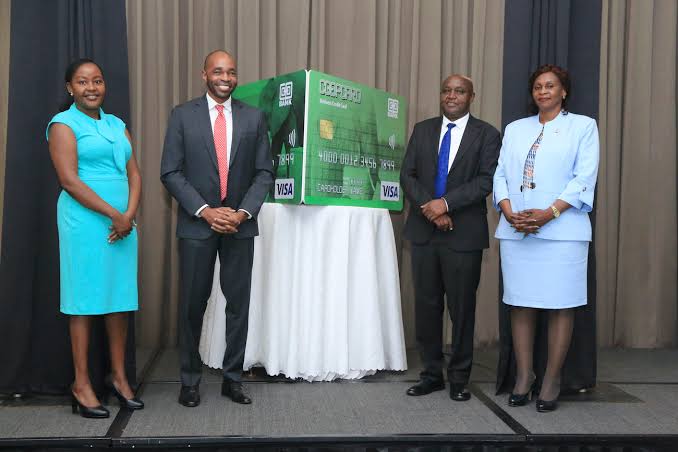
Co-op Bank launches Innovative Business Cards with VISA, revolutionizing Business Payments in Kenya

Co-operative Bank of Kenya, in partnership with Visa, have launched a Debit Card, a Credit Card and a Pre-paid Business Card.

This is designed to transform how Medium and Small Business Enterprises, Cooperative Societies and Corporate Institutions in Kenya manage their expenses, empower employees and optimize financial control.

The cards, which can be used both locally and internationally, enable customers to separate business expenses from personal expenses. This means customers can:

– Make payments directly from their business account

– Access interest-free credit to manage cash flow

– Digitize and track office and travel expenses

In all these transactions, customers will be enjoying business-centric discounts from selected Visa merchants globally.

The cards are available to existing Co-op Bank customers and non-customers, and can be obtained from any Co-op Bank branch countrywide.

Co-op Banks Ag. Director of Retail Banking Mr. Moses Gitau during the event in Nairobi.

In delivering his keynote speech at the event, Co-op Bank’s Ag. Director of Retail Banking Mr. Moses Gitau noted:

“This event marks a major milestone in Co-op bank’s digital transformation journey in which the bank has invested heavily including the successful upgrade of its core banking system in 2023 at a cost of over Kes 5Billion, to drive innovation and support businesses in their digitization efforts by bringing together the best in banking and technology…

Visa East Africa Vice President and General Manager added a few remarks:

“This launch marks a significant milestone in our partnership with Co-op bank and our ongoing efforts to support small and medium-sized enterprises (SMEs) and commercial enterprises in their journey towards digital transformation.

Digital payments are not just convenient; they are a catalyst for business growth and economic development. In today’s fast-paced digital world, businesses need to adapt to stay competitive, and digital payments play a crucial role in this transformation” He added.

Recently, the Bank has received several awards including the highest IT accolade in the banking sector at this year’s CIO100 Awards.

The IT award celebrates innovation, leadership and excellence of organizations that have made a tangible impact on business operations, community development, and digital transformation across the African continent.

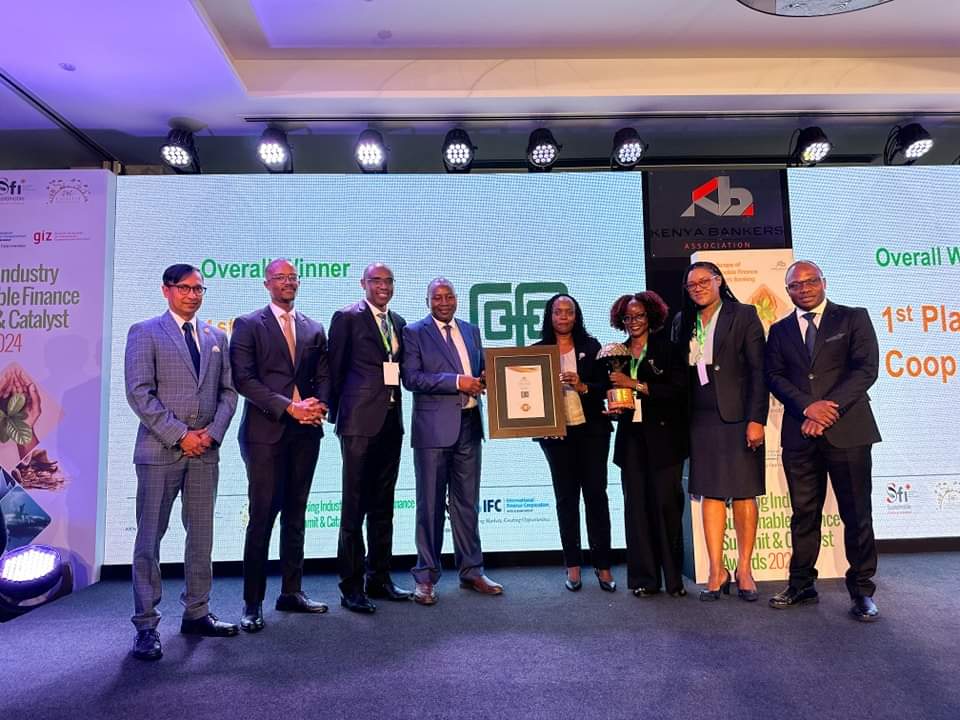
Co-op Bank Crowned Overall Winner at 2024 Sustainable Finance Catalyst Awards

In a resounding testament to its leadership in sustainable banking, Co-op Bank Kenya has once again been named the Overall Winner at the 2024 Sustainable Finance Catalyst Awards, hosted by the Kenya Bankers Association (KBA).

This marks the fifth time in seven years that the bank has secured this prestigious accolade, following previous wins in 2017, 2019, 2022, and 2023.

A Legacy of Sustainability

The Sustainable Finance Catalyst Awards celebrate financial institutions that embed sustainable practices into their core operations.

These principles challenge banks to balance financial profitability with broader economic, environmental, and societal priorities.

Co-op Bank’s consistent triumph highlights its unwavering commitment to these ideals, positioning it as a trailblazer in the Kenyan banking industry.

Through initiatives like green financing, financial inclusion, and community empowerment, Co-op Bank ensures its business practices positively impact both people and the planet.

The bank has also embraced cutting-edge technology, offering seamless services like M-Pesa integration, mobile banking, and a comprehensive USSD platform, making financial services accessible across Kenya.

Beyond Banking

The 2024 win comes as no surprise, given Co-op Bank’s recent accolades on the global stage.

In September 2023, it was honored as the Best SME Financier in Africa at the Global SME Finance Awards in Mumbai, India.

This recognition was a nod to its tailored financing solutions for small and medium enterprises, reflecting a robust strategy to empower local businesses.

Additionally, Co-op Bank’s vast network of branches and ATMs ensures accessibility, even in remote areas, while its customer-centric approach solidifies its reputation as a bank that genuinely serves its community.

Driving a Sustainable Future

Co-op Bank’s successes are not just a celebration of past achievements but a clear signal of its vision for the future.

By integrating sustainable finance principles into its strategy, the bank sets a high standard for the Kenyan financial sector.

As the world increasingly prioritizes sustainability, Co-op Bank’s leadership is a beacon of what responsible banking can achieve.

The 2024 award is a well-earned recognition of Co-op Bank’s ability to innovate, empower, and inspire.

Here’s to a future where sustainable finance continues to shape the lives of individuals and communities across Kenya and beyond.

Co-op Bank: We achieved Ksh26.8 Billion Profit before Tax in Q3 2024

The Co-operative Bank Group is pleased to announce its financial results for Q3 2024, highlighting a resilient and upward growth trajectory.

Driven by the “Soaring Eagle” Transformation Agenda, the Group reported a Profit Before Tax of Ksh 26.8 billion, an 8.5% increase from Ksh 24.7 billion in Q3 2023.

This reflects a Profit After Tax of Ksh 19.2 billion compared to Ksh 18.4 billion in the same period last year and a competitive Return on Equity of 21.3%.

Mr. Geoffrey Omondi, County Commissioner Isiolo County, joins Co-op Bank customers and staff to open the new Narumoru branch.

Key Performance Highlights

1. Financial Position

The Group achieved substantial growth in its financial position, reflecting the positive impact of its strategic approach:

Total Assets grew by 13.5%, reaching Ksh 750.8 billion, compared to Ksh 661.3 billion in Q3 2023.

Net Loans and Advances increased to Ksh 381.3 billion from Ksh 378.1 billion last year.

Customer Deposits saw an 18.7% rise to Ksh 514.0 billion, up from Ksh 432.8 billion.

External Funding from development partners was reported at Ksh 58.0 billion, compared to Ksh 65.6 billion in 2023.

Shareholders’ Funds rose significantly by 22% to Ksh 131.8 billion, driven by strong retained earnings of Ksh 16.3 billion.

2. Comprehensive Income

The Group’s income portfolio also showed commendable growth:

  • Total Operating Income expanded by 10.8%, moving from Ksh 53.4 billion to Ksh 59.2 billion.
  • Non-Interest Income grew by 8.2%, reaching Ksh 22.3 billion from Ksh 20.6 billion.
  • Net Interest Income increased by 12.3%, rising from Ksh 32.8 billion to Ksh 36.9 billion.
  • Total Operating Expenses recorded a controlled growth of 12.7%, totaling Ksh 32.7 billion.

3. Cost Management

Co-op Bank continued to achieve efficiency gains, reporting a Cost-to-Income Ratio of 45.8% in Q3 2024, significantly improved from the 59% recorded in FY 2014 when the Growth & Efficiency journey began.

4. Digital Transformation and Customer Engagement

The Group leveraged its digital transformation strategy to achieve a high rate of digital transactions:

  • A new core banking system, based on the latest version of Finacle, enhances service delivery and operational efficiency.
  • Over 93% of customer transactions are now processed through digital channels, including a robust 24-hour contact center, 603 ATMs & CDMs, mobile and internet banking, and a network of over 16,000 Co-op kwa Jirani agents.
  • The Omni-channel platform ensures a seamless customer experience across personal computers, mobile devices, and USSD channels.
  • MCo-op Cash Mobile wallet continues to drive substantial non-funded income, disbursing Ksh 55.7 billion in loans in Q3 2024, averaging Ksh 6.2 billion per month.
  • The Bank has empowered MSMEs, with over 231,200 clients enrolled in its MSME packages since 2018 and Ksh 11 billion disbursed through the Mobile E-Credit solution in 2024.

5. Branch Network Expansion

The Group maintains a strong and growing presence across Kenya and South Sudan, with a total of 204 branches, including five in South Sudan.

This year, eight new branches have opened domestically, including locations in Nairobi’s Imaara Mall, Ugunja, Luanda, Isibania, Maai Mahiu, Dagoretti Market, Marimanti, and Ruiru Nord Mall.

Kingdom Bank also inaugurated its 22nd branch in Meru County, while Co-operative Bank of South Sudan added a fifth branch in Wau.

6. Growing Team

Co-op Bank’s commitment to growth extends to its staffing levels, with personnel increasing from 4,864 in 2022 to 5,617 by Q3 2024, creating over 753 new job opportunities, particularly for young professionals.

7. Subsidiary Performance

The Group’s subsidiaries also performed exceptionally well:

  • Co-op Bancassurance Intermediary Ltd achieved a Profit Before Tax of Ksh 824.3 million, driven by strong Bancassurance penetration.
  • Co-operative Bank of South Sudan, a joint venture with the Government of South Sudan, recorded Ksh 434.7 million in Profit Before Tax. Adjusted for hyperinflation, this amounted to Ksh 33.8 million.
  • Co-op Trust Investment Services Ltd showed a 65% growth in Profit Before Tax to Ksh 254.9 million, with funds under management totaling Ksh 299.6 billion.
  • Kingdom Bank Ltd, a niche MSME bank, reported an 18.1% growth in Profit Before Tax, reaching Ksh 929.2 million in Q3 2024.

8. Commitment to Sustainability and Social Impact

In line with its Environmental, Social, and Governance (ESG) framework, Co-op Bank has taken active steps toward climate resilience:

Co-op Bank supports industry climate initiatives, including IFRS S1 & S2 and Green Finance Taxonomy, through capacity building.

Through a Climate Risk Project aligned with SDG 13, the Bank is formulating a Climate Strategy Roadmap and Implementation Plan.

The new Co-op-a-Maji Loan, in partnership with Water.org, provides funding to the Water, Sanitation, and Hygiene (WASH) sector, fostering access to safe water and sanitation.

Co-op Bank Foundation has provided scholarships to 11,703 talented students from disadvantaged backgrounds since its inception, covering both secondary and university education, internships, and career support.

Conclusion

Co-op Bank Group’s performance in Q3 2024 reaffirms its position as a resilient and forward-looking financial institution.

Leveraging a diversified universal banking model, a robust digital strategy, and its unique co-operative network, Co-op Bank remains committed to creating value for shareholders and stakeholders alike.

Co-op Bank Leads the Pack with Ksh18.2 Billion in Profits (Before Tax) in 1st Half of 2024

Co-op Bank is pleased to report a Profit Before Tax of Kshs.18.2 Billion for first half 2024, a commendable 10.7% growth compared to Kshs. 16.4 Billion recorded in Half 1 2023.

This represents a Profit after Tax of Kshs. 13.0 Billion compared to Kshs. 12.1 Billion reported in 2023.

The strong performance by the Bank is in line with the Group’s strategic focus on sustainable growth, resilience, and agility delivering a Return on Equity of 22.1%

Inclusion to the MSCI Index

The Bank has been added to the MSCI Index. The MSCI Kenya Index, created by Morgan Stanley Capital International (MSCI), tracks the performance of large and mid-cap listed companies in Kenya, providing foreign investors with an up-to-date picture of the state of the Nairobi Securities Exchange (NSE), allowing them to make informed investment decisions.

Key Performance highlights:

  1. Financial Position: The Group has registered strong growth as follows.
  • Total Assets grew to Kshs.716.9 Billion, a 7.8% growth from Kshs 664.9 Billion in the same period last year.
  • Net loans and advances grew to Kshs. 375.6 Billion, a 2.8% growth from Kshs.365.4 Billion in 2023.
  • Customer deposits grew to Kshs. 507.4 Billion, a 9.4% increase from Kshs. 463.9 Billion.
  • External funds from development partners were Kshs. 50.2 Billion compared to Kshs.59.4 Billion in 2023.
  • Shareholders’ funds have grown to Kshs. 126.7 Billion, a 17% increase from Kshs. 108.3 Billion in 2023 driven by the strong growth in retained earnings of Kshs. 15.1Billion.
  1. Comprehensive Income
  • Total operating income grew by 10.9% from Kshs. 35.4 Billion to Kshs. 39.2 Billion.
  • Total non-interest income grew by 11.2% from Kshs. 13.8 Billion to Kshs. 15.4 Billion.
  • Net interest income grew by 10.7% from Kshs 21.5 Billion to Kshs 23.9 Billion.
  • Total operating expenses grew by 11.1% from Kshs 19.1 Billion to Kshs. 21.3 Billion.
  1. Cost Management 

The Group reports excellent efficiency gains from the various initiatives to record a Cost-to-Income Ratio of 46.6% in 1H2024 from 59% in FY2014 when we began our Growth & Efficiency journey.

  1. A Strong Digital Footprint

A New Core Banking System, offering opportunity for growth and enhanced efficiency

The Bank continues to leverage the new core banking system (latest version of Finacle from Infosys, one of the best-rated platforms globally), to support the Group’s digital synergy.

The system will further enhance service excellence and provide innovative and advanced banking solutions.

  • Through our digital channel strategy, the Bank has successfully moved over 93% of all customer transactions to alternative delivery channels, a 24-hour contact centre, 604 ATMs & Cash Deposit Machines (CDMs), mobile & internet banking and over 17,000 network of Co-op kwa Jirani agents.
  • Our Omni-channel platform continues to offer users accessibility and enhanced experience. The platform interfaces online banking through personal computers, mobile phones and USSD availing our services to all customers through their preferred channel yet retain the same user experience from wherever they are.
  • Mco-op Cash Mobile wallet continues to drive substantial non-funded income streams with Kshs 36.4 Billion in loans disbursed in 1H2024, averaging 6.1 Billion per month.
  • Over 223,000 customers have taken up the MSME packages rolled out in 2018, with 63,500​ trained on business management skills. In H12024, we disbursed 7.5 Billion to MSMEs through our Mobile E-Credit solution. MSMEs make up 15.9% of total Loan Book.
  • Our unique model of retail banking services avails access to cash for FOSA operations, enabling 484 FOSA outlets to support over 15 million Sacco members access banking services even in rural/remote areas.
  1. Wide and Expanding Branch Network

The Branch network has expanded to a total of 199 outlets (4 in South Sudan).

15 additional outlets are planned to open this year, with 2 at Imaara Mall on Mombasa Road-Nairobi and Ugunja in Siaya already opened.

  • Kingdom Bank, a subsidiary of the Bank, opened its 22nd branch in Meru County, being the third branch opened this year. The new branch has a key focus in supporting the dynamic agricultural community in Meru and its surrounding areas, in addition to becoming a catalyst for local business growth and development.
  • Co-operative Bank of South Sudan opened its fifth branch in Wau, supporting business growth and financial inclusion in South Sudan.
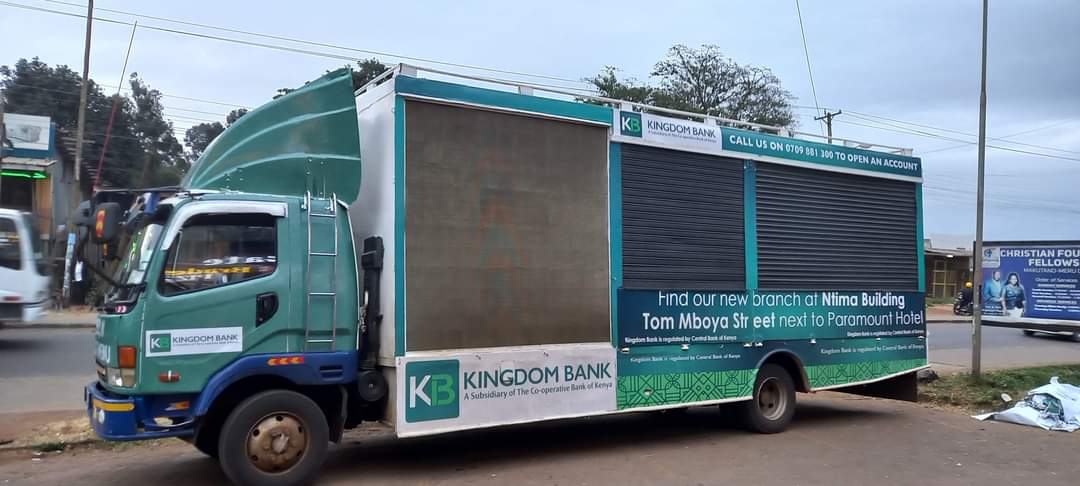
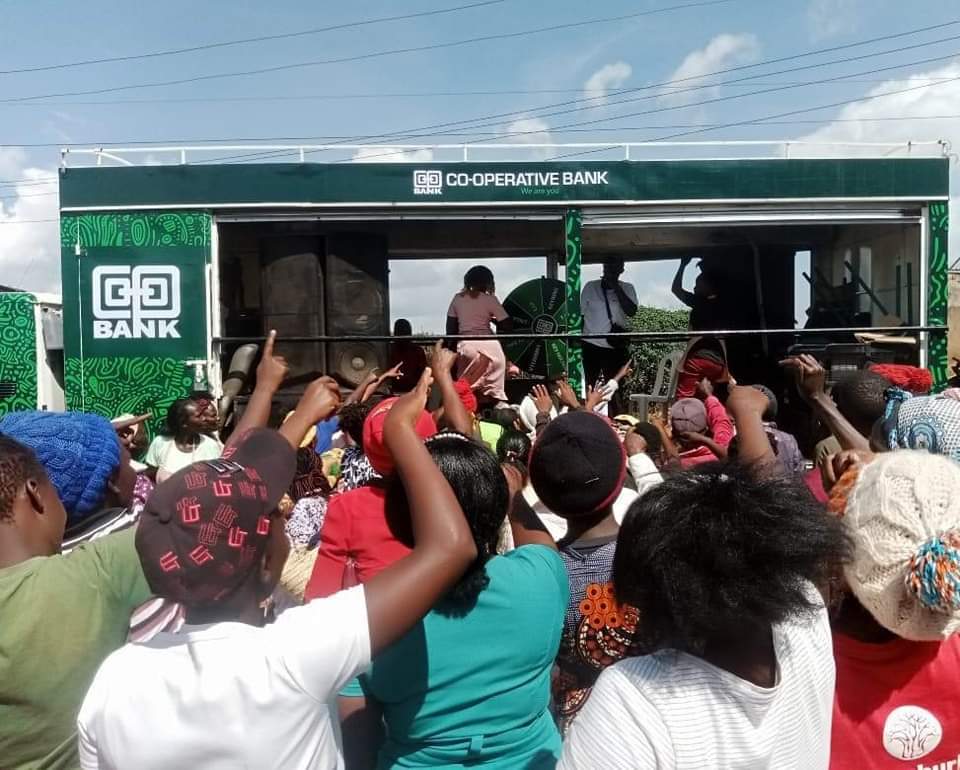
A roadshow in the streets of Meru Town on the opening of a branch of Kingdom Bank (Image: Facebook)
  1. A Growing Team

The Bank continues to invest in a competitive team set to serve at existing functions at the same time tap new growth opportunities across all areas of the business.

Staff Numbers have grown from 4,864 as at the close of 2022 to 5,426, creating job opportunities for over 562 young people.

  1. Subsidiaries
  • Co-op Bancassurance Intermediary Ltd posted a Profit Before Tax of Kshs 682.7 Million in 1H2024, riding on strong penetration of Bancassurance
  • Co-operative Bank of South Sudan that is a unique joint venture (JV) partnership with Government of South Sudan (Co-op Bank 51% and GOSS 49%) made a Profit Before Tax of Kshs 264.3 Million in 1H2024.
  • This performance however translated to a monetary loss of Kshs. 252.4 Million attributable to hyperinflation accounting occasioned by currency devaluation of the South Sudan Pound.
  • Co-op Trust Investment Services Ltd contributed Kshs. 142.7 Million Profit Before Tax in 1H2024 compared to Kshs. 106.8 Million in 1H2023, a commendable 33.7% growth. The Subsidiary has Funds Under Management of 231.3 Billion.
  • Kingdom Bank Limited (A niche MSME Bank) contributed a Profit Before Tax of 635.5 Million in 1H2024, a remarkable growth of 21.8% from Kshs. 521.9 Million reported in 1H2023.
  1. Accolades 

The Bank was named Best Bank in Kenya by Global Finance in their World’s Best Banks 2024—Africa Awards.

The Bank was recognized for recording phenomenal growth riding on a network of over 17,000 agents and a solid digital footprint, facilitating 93% of transactions via digital channels.

  1. Commitment to Sustainability 

In 2022, the Bank embarked on an enhanced Environmental, Social and Governance (ESG) roadmap to integrate ESG considerations into its operations with several key milestones achieved.

We have, in line with Sustainable Development Goals (SDG) number 13 ‘Take urgent action to combat climate change and its impacts’ embarked on a Climate Risk Project with the aim of formulating an effective Climate Strategy Roadmap and Implementation Plan to chart a clear path towards our climate goals.

Co-op Bank Foundation, the Group’s social investment vehicle, continues to provide Scholarships to gifted but needy students from all regions of Kenya.

The sponsorship includes fully paid secondary education, full fees for University education, Internships, and career openings for beneficiaries. The foundation is fully funded by the bank and has supported 11,043 students since inception.

Conclusion 

The Co-operative Bank Group continues to pursue strategic initiatives that focus on resilience and growth in the various economic sectors.

This is anchored on a successful universal banking model supported by an innovative digital presence, a wide physical footprint, and the unique synergies in the over 15-million-member co-operative movement that is the largest in Africa.

Co-op Bank achieves Nine billion Profit (Before Tax) between January and April 2024

Co-op Bank is pleased to report a Profit Before Tax of Kshs.9.01B for Q1 2024, a commendable 10.6% growth compared to Kshs. 8.15B recorded in Quarter 12023.

This represents a Profit after Tax of Kshs.6.5B compared to Kshs.6.11B reported in 2023.

The strong performance by the Bank is in line with the Group’s strategic focus on sustainable growth, resilience and agility.

Key Performance highlights:

Financial Position

The Group has registered strong growth as follows:

  • Total Assets grew to Kshs.714.7B, a 13.2% growth from Kshs631.1B in the same period last year.
  • Net loans and advances grew to Kshs.378.1B, a 5% growth from Kshs.360.1B in 2023.
  • Customer deposits grew to Kshs.481.8B, a 14.8% increase from Kshs. 419.8B.
  • External funds from development partners grew to Kshs.60.1B from Kshs.48.4B in 2023.
  • Shareholders’ funds have grown to Kshs.127.1B, a 12.9% increase from Kshs.112.6B in 2023.

Comprehensive Income

  • Total operating income grew by 5.1% from Kshs.17.9B to Kshs.18.8 B.
  • Total non-interest income remained stable to stand at Kshs.7.1B similar to performance recorded a year ago.
  • Net interest income grew by 8.6% from Kshs 10.8B to Kshs 11.7B in 2023.
  • Total operating expenses increased marginally by 0.5% from Kshs 9.8B to Kshs.9.9B.

Cost Management

The Group reports excellent efficiency gains from the various intiatives to record a Cost-to-Income Ratio of 44.1% in Q12024 from 59% in FY2014 when we began our Growth & Efficiency journey.

A Strong Digital Footprint

A New Core Banking System, presenting opportunity for growth and enhanced efficiency.

  • The Bank continues to leverage the new core banking system (latest version of Finacle from Infosys, one of the best-rated platforms globally), to support the Group’s digital synergy.
  • The system will further enhance service excellence and provide innovative and advanced banking solutions.
  • Through our digital channel strategy, the Bank has successfully moved over 93% of all customer transactions to alternative delivery channels, a 24-hour contact centre, 605 ATMs & Cash Deposit Machines (CDMs), mobile & internet banking and over 16,000 network of Co-op kwa Jirani agents.
  • Our Omni-channel platform continues to offer users accessibility and enhanced experience. The platform interfaces online banking through personal computers, mobile phones and USSD availing our services to all customers through their preferred channel yet retain the same user experience from wherever they are.
  • MCo-op Cash Mobile wallet continues to drive substantial non-funded income streams with Kshs18.1B in loans disbursed in Q12024, averaging Kshs.6.0B per month.
  • Over 214,000 customers have taken up the MSME packages we rolled out in 2018, and 60,850 have been trained on business management skills. In Q12024, we disbursed Kshs.3.9B to MSMEs through our Mobile E-Credit solution.
  • MSMEs make up 15.6% of our total Loan Book.

Our unique model of retail banking services avails access to cash for FOSA operations, enabling 484 FOSA outlets to support over 15M Sacco members access banking services even in rural/remote areas.

Wide and Expanding Branch Network

The Branch network has expanded to a total of 195 outlets (4 in South Sudan). We have planned 15 additional outlets in 2024 – with 2 at lmaara Mall on Mombasa Road-Nairobi and Ugunja in Siaya already opened.

Our Subsidiary, Kingdom Bank, opened a new Branch in Gikomba, aligning perfectly with the Bank’s strategic vision to serve markets where Kingdom Bank has niche expertise notably MSMEs.

A Growing Team

The Bank continues to invest in a competitive team set to serve existing functions at the same time tap new growth opportunities across all areas of the business.

Staff numbers have grown from 4,864 as at the close of 2022 to 5,361 – creating job opportunities for over 497young people.

Subsidiaries

  • Co-op Bancassurance Intermediary Ltd posted a Profit Before Tax of Kshs.305M in Q12024, riding on strong penetration of Bancassurance business.
  • Co-operative Bank of South Sudan that is a unique joint venture (JV) partnership with Government of South Sudan (Co-op Bank 51% and GOSS 49%) made a Profit BeforeTax of Kshs.128.5M in Q12024 compared to a loss of Kshs.71.4M in Q12023.
  • Co-op Trust Investment Services Ltd contributed Kshs.75.5M Profit Before Tax in Q12024 compared to Kshs.51.2M in Q12023, a 47.6% growth. The Subsidiary has Funds Under Management of Kshs.227.2B.
  • Kingdom Bank Limited (AnicheMSME Bank) contributed a Profit Before Tax of Kshs.350.3M in Q12024, a remarkable growth of 33.9% fromKshs.261.5M reported in Q12023.

Long Term Financing: Women-owned/managed MSMEs

The Bank has secured a long-term loan of $25M from DEG – a subsidiary of KfW Group, for micro, small and medium-sized enterprises (MSMEs) that are managed or owned by women.

This is aligned to the Bank’s contribution to the achievementof the global Sustainable DevelopmentGoals (SDGs).

Commitment to Sustainability

In 2022, the Bank embarked on an enhanced Environmental, Social and Governance(ESG) road map to integrate ESG considerations into its operations with several key milestones achieved.

The Bank’s commitment to ESG excellence was celebrated at the 2023 Kenya Bankers’ Sustainable Finance Catalyst Awards, with the bank emerging as the Overall Award Winner.

This was the fourth win by the Bank since the inception of the award six years ago.

Co-op Bank Foundation, the Group’s social investment vehicle, continues to provide Scholarships to gifted but needy students from all regions of Kenya.

The sponsorship includes fully paid secondary education, full fees for University education,Internships,and career openingsfor beneficiaries.

The foundation is fully funded by the bank and has supported 10,264 students since the inception of the program.

Conclusion

The Co-operative Bank Group continues to pursue strategic initiatives that focus on resilience and growth in the various economic sectors.

This is anchored on a successful universal banking model supported by an innovative digital presence, a wide physical footprint, and the unique synergies in the over15-million-member co-operative movement that is the largest in Africa.

We are you.

Milestone: How Does it Feel to Buy and Drive your First Car?

A man buying their first car is a milestone that feels straight out of this world. Do not for a moment equate that to bourgeois issues like a man’s first love or kiss.

The first time you get in your car. How does it smell? You run your fingers through the textures. Leather? Fabric?

You start it – let it idle for a few minutes as you bask in pure awe that you finally got to own one.

Then, you drive it. You go fast. You go over the speed limit the very first time. You make the engine roar with unnecessary raves – and think “Wow! I can’t believe this is happening!”

Content Creators Njugush and wife Celestine pose with a newly acquired Matatu van. (Photo: Njugush)

You spend hours sitting in that car, chatting up friends.

Any chance you get to reverse, you subconsciously become your father: Ignore the mirrors, drape your hand over the front passenger seat as you reverse…. It is an awesome feeling!

At home, while in parking – you cannot sit still. You go to the window to check it out every five minutes, like: Is it actually there or is this just a dream? Is THAT really my car?

It is there, and yes – that’s your car! It is an overwhelming feeling. Finally, you get the feeling of the gods having smiled upon you.

Biko Zulu writes:

It’s a big thing, your first car. My first car was a Toyota E100, 1300 CC, or something like that.
I was 27. It was a basic car with a basic shape designed by a Japanese fellow called Akihiko Saito with a Ph.D. in Engineering.

I thought I would never fall in love with another car again. It was white and faster than light. I don’t recall if the AC worked or not. I know the brakes did, and that’s all the expectation you had of your car; could you stop when you needed to stop? The back left door had a problem, couldn’t open from the outside.

I had to lean all the way, between the front seats, to open it. It felt grown up to do that. It felt grown up to do something I saw my dad do when I was a child; hold the passenger seat as I reversed looking back.

It was just me and my old Toyota E100 with about 200 million kilometers on it. But what a beauty that carried beauties. Man, the memories!

In nine out of ten times, it is an uphill task achieving that first milestone.

It often calls for months of saving, living hand-to-mouth to even get enough to lay down as the deposit – or to build enough credit score with the banks to qualify for car financing.

Luckily, Co-op Bank has risen to the occasion, making your car dream come true.

Co-op Bank is now offering financing on Pre-Owned Cars. You can now secure funding for up to 100% to buy a pre-owned motor vehicle of your choice.

You do not have to be a lifetime client of the bank – as anyone with an income can walk into a second-hand car dealership.

Select the vehicle that best suits them, and walk into a Co-op Bank branch to get the financing they need for the car.

It’s that simple.

Features of the Co-op Bank Pre-Owned Car Financing?

  • The loan will enable you to purchase a private vehicle that is pre-owned
  • The car has to be a maximum of 8 years old
  • Fees applicable include: Appraisal/Negotiation fees, Insurance fees, Motor Vehicle Valuation and Tracking fees
  • Repayment period of between 60 months to 96 months.The vehicle being purchased acts as the Security.

What are the requirements needed

  • Applicant’s ID and KRA PIN Certificate
    Latest 3 months’ certified Pay slips
  • Latest 6 months’ bank statements (if you’re not banking with us)
  • Copies of employment contract, or letter of appointment / Letter of Introduction from the employer
  • Motor Vehicle Sales Agreement/Proforma Invoice
  • Copy of Logbook/Import Documents/NTSA search records
  • Original valuation report from approved valuer in the Bank’s panel

It is about time you made it happen.

Apply now for Co-op Bank Pre-owned Car Financing. Just fill in this application form, attach the requirements and hit ‘Submit’.

Easier still, walk into your nearest Co-op Bank branch.

Call our contact center on 0703027000 or WhatsApp 0736690101 or email us at customerservice@co-opbank.co.ke

Co-op Bank leads the market with Ksh32.4 Billion Profit for Year 2023

Co-op Bank is pleased to report a Profit Before Tax of Kshs32.4B on for Full Year 2023, a commendable 10% growth compared to Kshs29.4B recorded in Full Year 2022.

This represents a Profit after Tax of Kshs23.2B compared to Kshs22.0B reported in 2022. The strong performance by is in line with the Group’s strategic focus on sustainable growth, resilience, and agility.

Dividends

The strong performance has led to a sustained increase in shareholder value as reflected in the competitive Return on Equity of 21.0%. The Board of Directors has recommended a dividend payment of Kshs8.8B, being a payout of Kshs1.50 per share, subject to approval by the regulators and shareholders.

The Annual General Meeting (virtual) will be held on Friday, 17th May 2024.

Key Performance highlights

Financial Position

The Group has registered strong growth as follows:

  • Total Assets grew to Kshs671.1 Billion, a 10.5% growth from Kshs607.2B in the same period last year.
  • Net loans and advances grew to Kshs374.2B ion, a 10.3% growth from Kshs.339.4 Bill ion in 2022.
  • Customer deposits grew to Kshs451.6 Billion, a 6.6% increase from Kshs423.8B.
  • External funds from development partners stands at Kshs67.3B from Kshs.48.1B in 2022.
  • Shareholders’ funds have grown to Kshs113.6B, a 5.5% increase from Kshs107.7 Billion in 2022.

Comprehensive Income

  • Total operating income grew by 0.6% from Kshs71.3B to Kshs71.7B.
  • Total non- interest income grew by 2.8% from Kshs25.7B to Kshs26.5B.
  • Net interest income remained stable to stand at Kshs45.2B compared to Kshs45.5B in 2022.
  • Total operating expenses decreased by 6.1% from Kshs42.2 Billion to Kshs39.7B, with a critical focus on Cost Management.

Cost Management

The Group reports excellent efficiency gains from the various initiatives to record a Cost-to-Income Ratio of 47. 0% in FY2023 from 59% in FY2014 when we began our Growth & Efficiency journey.

A Strong Digital Footprint

New Core Banking System goes Live

The Bank in June 2023 successfully upgraded the core banking system to the latest version of Finacle from Infosys, one of the best-rated platforms globally, marking a critical milestone in the bank’s digitization journey to enhance service excellence and provide the most innovative and advanced banking solutions.

In addition, the Co-operative Bank of South Sudan successfully went Live on the new Finacle system on 17th March 2024, concluding the full migration of the Group to the new system thereby enabling the Group’s digital synergy.

Through our digital channel strategy, the Bank has successfully moved over 91% of all customer transactions to alternative delivery channels, a 24-hour contact center, 599 ATMs & Cash Deposit Machines (CDMs), mobile & internet banking and over 17,000 network of Co-op kwa Jirani agents.

Our Omni-channel platform continues to offer users accessibility and enhanced experience.

The platform interfaces online banking through personal computers, mobile phones and USSD availing our services to all customers through their preferred channel yet retain the same experience from wherever they are.

Meo-op Cash Mobile wallet continues to drive substantial non-funded income streams with 5 Million customers registered and Kshs75.B in loans disbursed in 2023, averaging Kshs6.3B per month.

Over 208,000 customers have taken up the MSME packages we rolled out in 2018, and 58,850 have been trained on business management skills. In 2023, we disbursed Kshs18.6B to MSMEs through our Mobile E-Credit solution. MSMEs make up 15.8% of our total Loan Book.

Our unique model of retail banking services avails access to cash for FOSA operations, enabling 484 FOSA outlets to support over 15M Sacco members access banking services even in rural/ remote areas.

Wide and Expanding Branch Network

The Branch network has expanded to a total of 194 outlets (4 in South Sudan). We have planned 15 additional outlets this year, with 2 at lmaara Mall on Mombasa Road, Nairobi and Ugunja in Siaya already opened.

Eight new branches namely Nakuru Bahati Road, Kimana – Kajiado, Matuu, Thika Kwame Nkrumah, Greenwood Mall – Meru, Kenol – Makuyu, Hindi – Lamu and Bamburi – Mombasa were opened in 2023.

A Growing Team

The Bank continues to invest in a competitive team set to serve at existing functions at the same time tap new growth opportunities across all areas of the business.

Staff Numbers have grown from 4,864 as at the close of 2022 to 5,400 as at year 2023 close, creating job opportunities for over 530 young people.

Subsidiaries

Co-op Consultancy & Bancassurance Intermediary Ltd posted a Profit Before Tax of Kshs877.1 Million in FY2023, riding on strong penetration of Bancassurance business.

Co-operative Bank of South Sudan that is a unique joint venture (JV) partnership with Government of South Sudan (Co-op Bank 51% and GOSS 49%) made a Profit Before Tax of Kshs291.3M in FY2023 compared to Kshs132.7M in 2022, a 119.5% growth

Co-op Trust Investment Services Ltd contributed Kshs226.0M Profit Before Tax in FY2023, an 8.6% growth. The Subsidiary has Funds Under Management of Kshs218.4B.

Kingdom Bank Limited (A niche MSME Bank) contributed a Profit Before Tax of Kshs1.08B in FY2023, a remarkable growth of 36.4% from Kshs792.6M reported in FY2022.

Commitment to Sustainability

In 2022, the Bank embarked on an enhanced Environmental, Social and Governance (ESG) roadmap to integrate ESG considerations into its operations with several key milestones achieved.

The Bank’s commitment to ESG excellence was celebrated at the 2023 Kenya Bankers’ Sustainable Finance Catalyst Awards, with the bank emerging as the Overall Award Winner.

Co-op Bank Foundation, the Group’s social investment vehicle, continues to provide Scholarships to gifted but needy students from all regions of Kenya.

The foundation is fully funded by the bank and has supported 10,264 students since the inception of the program.

Accolades

The Bank was named the Overall Winner of the just concluded Banking Industry Customer Satisfaction Survey conducted by the Kenya Bankers’ Association (KBA). Co-op Bank was also named the winner in the Tier One Bank Category.

This is the second consecutive win, having also won the overall title for year 2022. The survey was conducted by interviewing over 30,000 banking customers across the country.

Other key awards in year 2023;

At the CIO 100 Awards, the Bank’s Chief Information Officer Charles Washika was named the C/O of the Year in Africa, Banking Sector Award.

At the IFC Global SME Awards held in Mumbai India, the Bank won the SME Financier of The Year in Africa – Gold Award.

Conclusion

The Co-operative Bank Group continues to pursue strategic initiatives that focus on resilience and growth in the various economic sectors.

This is anchored on a successful universal banking model supported by an innovative digital presence, a wide physical footprint, and the unique synergies in the over 15-million-member co-operative movement that is the largest in Africa.
Co-op Bank’s Expansion Plan Targets 15 New Branches in 2024

Co-op Bank’s Director of Retail and Business Banking William Ndumia, has revealed the lender’s ambitious plans to open 15 new physical branches across the country.

Despite clients significantly making inroads with digital services, the bank is still devoted to bring services closer to the people.

“When we look at our mission and vision, we want to be dominant in this market and there are some areas where we have not gone into. There are even counties where we do not have a presence,” said Mr Ndumia.

“We want to seal that gap. Also, because of the infrastructure development that has happened across the country, there are some key towns that have come up and there is a lot of business and some of our customers are spreading out.”

Co-op Bank, which has an operation in South Sudan, has intensified its expansion locally where it sees untapped growth opportunities.

The new 15 branches seeka to add to the eight opened in 2023, and the five opened in 2022.

The latest industry survey by the Kenya Bankers Association (KBA) shows that 45.7% of customers have aligned to fully-automated or self-service platforms, in contrast to 16.5% that opts for human-assisted services. The former includes mobile, internet and chatbots.

Mr Ndumia, however, said the market continues to face the pressure of “we want something close” given the changing demographics in satellite towns or rural towns coming to life as devolution initiatives spur growth.

He noted that Co-op Bank has already opened one branch in Ugunja town in Siaya County and will this month be opening another one in Imaara Shopping Mall, the new retail complex on Mombasa road at the entrance to Nairobi’s Imara Daima estate.

Co-op Bank will then follow up with another branch in Luanda town in Vihiga County, bringing competition to the doorsteps of Equity and KCB.

Mr Ndumia was speaking after the signing of a new asset financing deal with motor vehicle dealer Isuzu East Africa through which Co-op will support schools and businesses in acquiring buses and commercial vehicles.

The asset finance scheme will see schools enjoy a 100 percent financing while businesses will access 95 percent financing from Co-op Bank.

Customers buying commercial vehicles will enjoy a 60-day grace period.

Schools will have a one-term moratorium when they purchase the buses with repayment extended to 72 months on a termly basis, which adds up to 18 terms at zero processing fee.

Isuzu East Africa and Co-op Bank Partner to Empower Schools and Businesses through Flexible Vehicle Financing

Isuzu East Africa and the Cooperative Bank have announced an Asset Finance Scheme designed for schools and businesses that desire easier financing terms to cope with the current operating environment.

A good number of educational institutions and business continue to record reduced cashflows, which therefore calls for easier financing terms.

At an event held at Isuzu East Africa, the motor vehicle assembler’s Managing Director, Rita Kavashe said that:

“Today, Isuzu East Africa, has partnered with the Cooperative Bank to provide solutions that will address the needs of our customers during these challenging economic times. We are thrilled to launch a Financing scheme that provides a ninety five percent Financing option for Isuzu N-series, Isuzu F-series and Isuzu Pickups TFS and TFR Series.”

During the signing of the partnership between Co-op Bank and Isuzu EA for school bus financing. (Image: Twitter).

The current operating environment has affected the ability of many schools and businesses to secure necessary cash deposits for asset purchases.

This financial constraint limits their ability to initiate or expand investments in critical assets.

The Isuzu/Cooperative Bank Asset Finance Scheme provides the financial boost to enable customers raise enough cash deposits for purchasing new vehicles.

“The partnership aims to make vehicle acquisition easier for Kenyan schools and businesses with 100% and 95% asset financing respectively. The financing options cover all Isuzu vehicle models,” Rita explained.

On his part, Cooperative Bank Managing Director and Group CEO Dr Gideon Muriuki, observed that the Bank partnership with Isuzu East Africa is designed to assist educational institutions and business acquire the critical assets they require within their current financing abilities.

“We have observed that a good number of our business customers are giving priority to financing their stocks and operations.

We have therefore made available an additional digital credit of upto Ksh.1 million for MSME customers and Ksh.2 million to schools over and above the 95% and 100% asset Financing.” said Dr. Muriuki.

In addition, Co-op Bank announced that customers will also enjoy an extended loan repayment period of upto 72 months.

Educational institutions will have a one-term moratorium when they purchase the buses, with Repayment extended to 72 months on termly basis, which adds up to 18 terms at 0% processing fee, in addition to a working capital loan of up to Ksh 2 million.

Co-op Bank reviews Daily Cash ATM Limit to Ksh60,000

Co-operative Bank of Kenya has raised its daily ATM [automated teller machine] withdrawal limit by 50 percent to Sh60,000, as banks start reviewing their daily transaction ceilings to reflect the reduced spending power among customers.

Co-op Bank has informed the customers of the review, the first in nearly a decade, that will enable those who need to withdraw amounts above Sh40,000 to use the over 600 ATMs across the country, instead of lining up at branches.

“Dear client, for your convenience, we have increased the total amount of money you can withdraw on our ATMs from Sh40,000 to Sh60,000 per day,” said the bank in a message to customers.

Co-op Bank in February 2015 doubled the limit to Sh40,000, citing the need to relieve pressure from branches.

The limit per transaction will, however, be at Sh40,000 as the ATM limit, meaning that a customer requiring Sh60,000 will have to carry out two transactions.

Co-op Bank’s limit per transaction on its digital platform, M-Co-op Cash, is at Sh70,000.

Related: https://www.ghafla.co.ke/sponsored/co-op-bank-amongst-winners-of-lucrative-ksh100-billion-pension-contribution-fund/

The bank’s move mirrors that of Standard Chartered Bank Kenya which in February 2019 raised its daily ATM withdrawal limit from Sh40,000 to Sh60,000 with a maximum withdrawal per transaction set at Sh40,000.

KCB Bank Kenya and Equity Bank Kenya currently have a daily withdrawal limit of Sh50,000, with a Sh40,000 limit per maximum transaction.

Stanbic Bank Kenya’s daily limit is at Sh40,000, with the same figure being the maximum per transaction.

Smaller withdrawals mean the customers have to go to the ATMs more frequently, besides increasing the cash handling costs.

Customers withdrawing money via ATMs incur a cost of Sh36 per transaction, made up of banks’ commission and excise duty.

Many banks allow customers to withdraw at the ATM above the general cash value limits but this requires that they apply and get approval first.

Such arrangements are however still subject to the Sh40,000 limit per transaction, meaning that one will make multiple withdrawals to get their desired cash.

The ATM limit helps in the efficient operation of the machines so that they do not get emptied too quickly while the card limit is usually necessary to limit the damage on one’s account in case of fraud.

Higher daily limits at ATMs help banks to decongest branches, which many are increasingly using as advisory centres for small and large businesses, instead of for depositing and withdrawing money.

The raised limits also accommodate customers who may have reservations about transacting such sums of money from bank agents, especially those located in areas where security may be a challenge or agents running out of float.

This comes weeks after telcos were allowed by the Central Bank of Kenya to increase their limits as they sought to allow mobile banking customers more headroom to do more transactions.

This saw Safaricom triple the daily transaction limits on its mobile money platform to Sh500,000, strengthening its capacity to compete with commercial banks in the lucrative digital payments market.

The telco has also allowed individuals and businesses to hold Sh500,000 in their M-Pesa wallets as mobile money evolves from person-to-person payments to an e-commerce tool.

Source: BD

Co-op Bank amongst Winners of Lucrative Ksh100 Billion Pension Contribution Fund

NCBA, Co-operative Bank and Stanbic banks have won the lucrative deal to keep the more than Sh100 billion in pension contributions held by the Public Service Superannuation Scheme (PSSS).

The PSSS disclosed the three banks pipped eight other rival registered custodians of pension funds to the deal and will now handle billions collected from more than 350,000 civil servants.

This includes police officers and teachers who started contributing to their own pension savings scheme in 2021.

For now, we have a clear roadmap and have already done contracts with a fund manager, three custodians, and a fund administrator. This has been done through a competitive process with the contracts being awarded through the scheme trustees.

All we are doing on our part is to monitor that each party is playing its role,” said PSSS chief executive Jonah Aiyabei.

The three banks beat Bank of Africa, Equity, I&M, KCB, the National Bank of Kenya, Prime Bank, SBM, and Standard Chartered who are registered custodians of pension banks as of 2020.

All the 11 banks had been in a heated race for lucrative contracts to keep the contributions, which began in January 2021.

A work plan by the Treasury showed that the custodian banks will carry out the services for three years renewable on expiry by mutual agreement for a further period of three years depending on performance.

High School Chronicles: My First Nerve-wracking Public Speaking Experience

I was generally a shy kid. Unless I was around close friends and family, speaking was something I had to think about – never mind public speaking.

I dislike being in the spotlight, but I have met introverts who’ve managed to excel in related engagements – teaching, preaching and singing.

It happened during my first week in high school.

Now, oblivious to me – my admission had elicited a lot of interest. I was the poster boy for the classic ‘you-can-achieve-anything’ narrative.

I had attended a rural day-primary school, running a mile to and fro on a daily basis, and, yet – managed to secure entry marks to a prestigious national school.

My grades had also qualified me for a four-year scholarship, thanks to the Co-op Bank Foundation.

The school held an assembly once a week – on Fridays’.

First, I was shocked by the sheer number of students. Rows and rows of neatly starched collars, blue blazers and khaki trousers.

The captains stood in a separate line on the right-hand side, with their emblazoned notebooks. I felt as insignificant as a grain of sand on a long beach.

The principal’s main topic was, of course, us – the new students. I did not pay much attention to the speech. I was busy scanning the students, trying to see if there’s anyone familiar.

At some point, the boy next to me elbowed me in the ribs: “Hey, the principal is calling your name…” I was stunned.

I slowly made my way to the front. I could feel the inquisitive bore of a thousand eyes on the back of my neck. I approached the podium. It was all-glass, much like we had at our local Catholic church.

My exact thought at the moment was that everyone would see if I peed on myself!

The Principal hands over the (mic), and says: “Introduce yourself, master…”

I was lost. First, I didn’t have a clue on the line of conversation before I was summoned. What do I talk about? Will they not laugh at my village accent?

Ha, I remembered that am the Firstborn Son of Nkanata, and Great-great-great grandson of Field Marshal Mwariama – the famed Mau Mau fighter.

“My name is…… “

I couldn’t go on. I was visibly shaking, heart racing a thousand beats to a minute.

Suddenly, I was aware of the silence – pin drop silence. I wasn’t a famous guy in class or anything. In the two days we’d been there, I had hardly made any friends or spoken much to anyone. I had largely kept to myself.

“Just tell them where you come from, why you are here and what you want to be in future…” The Principal says.

I do not remember much, other than racing through the particulars of my locality, an aspiration to be a top performer in class and that other surreal dream to be a software engineer.

The former remained constant throughout my high school stint, but the latter would mutate several times. Goals and ambitions are pretty ambiguous for a teenager, I guess!

Three decades later, I’m escorting my firstborn daughter to school. She’s joining Secondary School. The motions at admission are pretty much the same, except for the financial bit that has turned cashless. No one is lining up at the bursar’s office!

All I have with me are receipts from a Co-op Kwa Jirani agent. I conveniently paid my daughter’s school fees at the local grocery shop!

After handing over the receipt to the school’s accountant, I was preparing to give my daughter some pocket money, a luxury I didn’t have.

Just as I was about to hand her the cash, the accountant said,” You know this generation doesn’t handle money like we used to,”

All parents in the room were confused wondering who he was talking to.”

“Our school uses Co-op prepaid cards. This is a Visa pre-paid card which you can load upfront and give your child to shop at the school canteen which has a machine for swiping.

“You can load the card from anywhere, anytime via Mpesa pay bill 400222 or the nearest Co-op Bank branch.

Students can also withdraw cash while going home, from our school Co-op Agent, “they make the use and tracking of pocket money much better and safer than physical cash.

Incase card is depleted you can to up your child’s pocket money from anywhere you are through the MCo-opcash app or deposit with you nearest Coop Kwa Jirani agent.”

On school closing days, school trips or on occasions that a student needs cash he or she can widthraw cash at any Co-op ATM’s across the republic.

It’s a real game changer. Oh, one does not need to be a Co-op Bank customer to get the card.

All the parents present, me included, were all sold on the idea almost immediately.

Co-op Bank emerges Winner at 2023 Top Sustainable Finance Awards with a Q3 Profit of Ksh24.7 Billion

Co-op Bank Group is pleased to report a Profit Before Tax of Kshs. 24.7 Billion for the third quarter of 2023, representing an 8.6% growth compared to Kshs. 22.7 Billion recorded in the third quarter of 2022.

This represents a Profit after Tax of Kshs. 18.4 Billion compared to Kshs. 17.1 Billion reported in 2022.

The strong performance by the Bank is in line with the Group’s strategic focus on sustainable growth, resilience, and agility.

Sustainable Finance Award

Co-op Bank has been named Overall Winner at the Kenya Bankers Association (KBA) 2023 Sustainable Finance Catalyst Awards.

This is the fourth time in six years that Co-op Bank has been named overall winner, having also won the overall title in 2017, 2019 and last year 2022.

In addition to scooping the overall title, Co-op Bank also won in specific award categories that include being named as the Most Innovative Bank, Best in Financing Commercial Clients, Best in Promoting Gender Inclusivity, and the Best in Promoting Accessibility for People with Disabilities (PWD).

Key Q32023 Performance highlights:

Financial Position: The Group has registered sustained growth as follows;

Total Assets grew to Kshs. 661.3 Billion, a 6.3% growth from Kshs 622.1 Billion in the same period last year.

Net loans and advances grew to Kshs. 378.1 Billion, a 12.8% growth from Kshs.335.2 Billion in 2022.

Customer deposits grew to Kshs 432.8 Billion, a 0.2% increase from Kshs. 432.0 Billion. External funds from development partners have increased by 56.5% to Kshs.65.6 Billion from Kshs. 41.9 Billion in 2022.

Shareholders’ funds have grown to Kshs. 108.1 Billion, a 7.1% increase from Kshs. 100.9 Billion in 2022.

Comprehensive Income

Total operating income grew by 2.3% from Kshs. 52.2 Billion to Kshs. 53.4 Billion.

Net interest income grew by 2.5% from Kshs 32.0 Billion to Kshs 32.8 Billion.

Total non-interest income grew by 2.1% from Kshs. 20.2 Billion to Kshs. 20.6 Billion.

Total operating expenses decreased by 2.1% from Kshs. 29.6 Billion to Kshs. 29.0 Billion.

Cost Management

The Group reports excellent efficiency gains from the various initiatives to record a Cost-to-Income Ratio of 46.4% in Q32023 from 59% in FY2014 when we began our Growth & Efficiency journey.

Credit Management remains a key focus area, with the Group prudentially making provisions of Kshs. 4.2 Billion which has supported the Bank’s Loan Loss Reserve/Coverage level of 69.1%.

A Strong Digital Footprint

The Bank successfully upgraded the core banking system to the latest version of Finacle from Infosys, which was rated globally as the top core banking system in 2022 by Gartner.

Through our digital channel strategy, the Bank has successfully moved 91% of all customer transactions to alternative delivery channels, a 24-hour contact centre, 608 ATMs & Cash Deposit Machines (CDMs), mobile & internet banking and over 18,000 network of Co-op kwa Jirani agents.

We have successfully migrated our customers to the Omni-channel, integrating accessibility and user experience that interfaces online banking through personal computers, mobile phones and USSD.

MCo-op Cash Mobile wallet continues to drive substantial non-funded income streams with 5 Million customers registered and Kshs 59.4 Billion in loans disbursed year to date, averaging Kshs. 6.6 Billion per month.

Over 193,000 customers have taken up the MSME packages we rolled out in 2018, and 42,413 have been trained on business management skills.

Year to date, we have disbursed Kshs. 15.9 Billion to MSMEs through our Mobile E-Credit solution. MSMEs make up 15.5% of our total Loan Book.

Our unique model of retail banking services avails access to cash for FOSA operations, enabling 484 FOSA outlets to support over 15 million Sacco members access banking services even in rural/remote areas.

Expanding Branch Network

The Bank has grown the branch network to 193 (4 in South Sudan). Eight (8) new Branches (Nakuru Bahati Road, Kimana, Matuu, Thika Kwame Nkrumah, Greenwood Mall – Meru, Kenol Makuyu, Hindi – Lamu and Bamburi – Mombasa) opened in 2023, whereas 5 Branches (Kabarnet, Iten, Kasarani, Kamakis and Chwele) opened last year.

Subsidiaries

Co-op Consultancy & Bancassurance Intermediary Ltd posted a Profit Before Tax of Kshs 762.9 Million in Q32023, riding on strong penetration of Bancassurance business.
Co-operative Bank of South Sudan that is a unique joint venture (JV) partnership with Government of South Sudan (Co-op Bank 51% and GOSS 49%) made a Profit before tax of Kshs 246.9 Million in Q32023.

Co-op Trust Investment Services Ltd contributed Kshs. 154.5 Million Profit Before Tax in Q32023, a 9.6% growth. The Subsidiary has Funds Under Management of Kshs. 196 Billion (Q32023).

Kingdom Bank Limited (A niche MSME Bank) has contributed a Profit before Tax of Kshs. 786.6 Million in Q32023, a remarkable growth of 24.8% from Kshs. 630.2 Million reported last year.

Environmental Social & Governance (ESG) Practice

The Bank continues to implement a best-in-class ESG policy framework supported by an ESG implementation roadmap, groupwide ESG champions and ESG Governance.

The Bank has invested in a unique forest rehabilitation project at “Solio Hill, Laikipia”; this is a partnership with the local community under the Community Forest Association and Kenya Forest Service (KFS) that has so far planted over 250,000 purely indigenous trees at the 600-acre government forest.

Co-op Bank Foundation, the Group’s social investment vehicle, continues to provide Scholarships to 10,264 gifted but needy students from all regions of Kenya.

Accolades

2023 Sustainable Finance Catalyst Award

Co-op Bank has emerged Overall Winner at this year’s Kenya Bankers Association (KBA) Sustainable Finance Catalyst Awards.

This is the fourth time in six years that Co-op Bank has been named overall winner, having also won the overall title in 2017, 2019 and last year 2022.

Commenting on the Award, the Group Managing Director & CEO, Dr. Gideon Muriuki said;

“Sustainability is fully integrated in our business model that stands on the three pillars of Economic Sustainability, Social Sustainability and Environmental Stewardship.”

“As a Bank that is predominantly-owned by the 15 million-member Co-operative Movement that is represented in all regions of the country, we are inclusive by design, which has enabled us to not only deliver shared prosperity today, but also helped us build an awareness and prudence to avoid participation in activities that risk putting future generations in jeopardy.”

2023 IFC Global SME Awards

Co-op Bank was awarded the SME Financier of the year in Africa – Gold Award at the Global SME Finance Awards 2023.

The Awards recognize financial institutions and fintech companies for their outstanding achievements in delivering exceptional products and services to their SME clients.

TAB Global – The Middle East and Africa Awards 2023

Co-op Bank and Intellect Global Consumer Banking were awarded Best Omnichannel Technology Implementation by TAB Global (The Middle East and Africa Awards 2023).

The Awards recognize leadership in retail financial services, technology, risk and transaction finance in the Middle East and Africa.

Conclusion

The Group continues to pursue strategic initiatives that focus on resilience and growth in the various economic sectors.
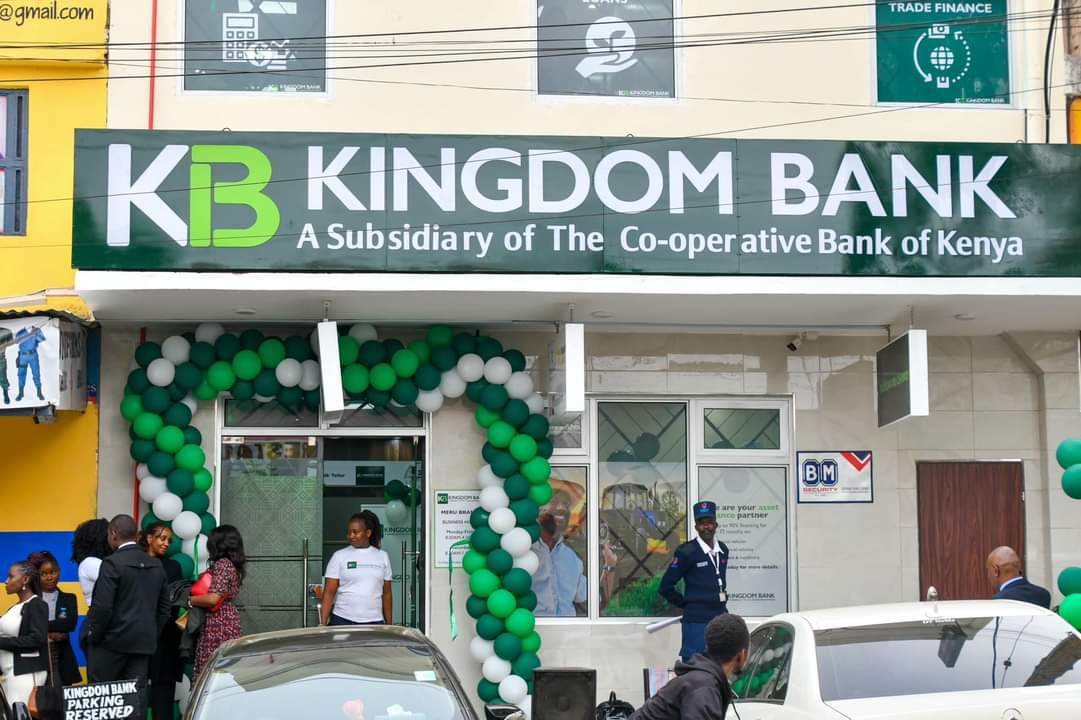
This is anchored on a successful universal banking model supported by an innovative digital presence, a wide physical footprint, and the unique synergies in the over 15-million-member co-operative movement that is the largest in Africa.