Government Expands Administrative Units in Northern Kenya

In much of northern Kenya, the challenge has never simply been development. It has been distance.

In some areas, residents have had to travel for hours – sometimes across difficult terrain – to access basic government services, report security concerns or obtain official documents.

It is against this backdrop that the government has, since 2022, accelerated the creation of new sub-counties, divisions, locations and sub-locations across Wajir, Mandera and Garissa counties.

The objective is straightforward: bring government services closer to people living in some of Kenya’s most remote regions.

The three counties cover roughly 120,000 square kilometres and are home to about 2.5 million people spread across vast borderland areas.

Low population density, poor infrastructure and long travel distances have historically made service delivery difficult.

To address this, the government has expanded administrative units and deployed additional National Government Administration Officers (NGAOs), including Deputy County Commissioners, Assistant County Commissioners, Chiefs and Assistant Chiefs.

In Wajir, the administrative network now includes 15 sub-counties, 35 divisions, 228 locations and 264 sub-locations.

New administrative units have also been established in Mandera and Garissa to serve communities that previously fell far from government centres.

The thinking is that a government office located closer to residents makes it easier to access services such as national identification registration, birth certificates, social protection programmes and other public services.

Security

The expansion is also tied to security.

Northern Kenya shares borders with Somalia, Ethiopia and South Sudan, making the region strategically important in efforts to combat terrorism, cross-border crime, arms trafficking and livestock theft.

NGAO officers often serve as the first point of contact between government and communities.

Because many are embedded within local communities and understand local dynamics, they play a key role in gathering information, resolving disputes and identifying emerging security threats before they escalate.

Areas such as Dadaab, Liboi, Elwak, Takaba and Kotulo remain particularly important because of their proximity to international borders and the security challenges associated with those regions.

Administrative Units

Government officials argue that administrative units are not only governance structures but also catalysts for development.

The establishment of a new sub-county headquarters often attracts investment in roads, communications, water infrastructure and public services.

It can also stimulate local economic activity by creating demand for businesses, housing and support services.

For counties such as Wajir, Mandera and Garissa – which have significant livestock resources, renewable energy potential and strategic trade links with neighbouring countries – improved governance and security are seen as essential foundations for economic growth.

Impact

At its core, the expansion of administrative units in northern Kenya is an attempt to reduce the distance between citizens and government.

Whether through faster access to services, improved security coordination or stronger state presence in remote areas, the policy reflects a broader effort to integrate historically underserved regions into the country’s development agenda.

For communities that have long felt far removed from government services, the measure is intended to ensure that where a Kenyan lives does not determine how easily they can access the state.
PS Omollo Speaks on Protests, Police and 2027 Security

Kenya’s security conversation is slowly changing from dramatic press conferences to harder questions:

Are police reforms actually happening?

Is the country prepared for the politics of 2027?

And after months of protests, public anger and accusations flying from every direction, can the government rebuild trust around security operations?

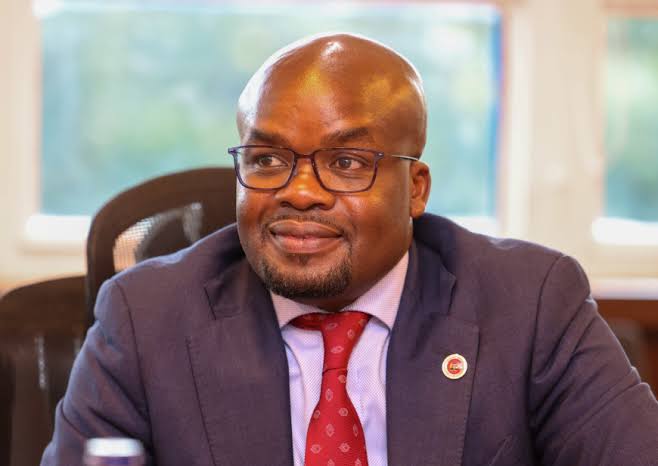
Those are some of the issues Interior PS Raymond Omollo attempted to address during his latest national TV interview.

Appearing on Citizen TV’s The Explainer, Omollo discussed police recruitment, protest management, public order and the government’s broader internal security strategy as political temperatures continue rising ahead of the next General Election.

One of the clearest signals from the interview was the government’s focus on expanding police capacity before 2027.

According to Omollo, the state plans to recruit about 20,000 police officers as part of wider reforms aimed at improving operational readiness and strengthening security coverage across the country.

The recruitment push comes at a time when the National Police Service continues facing scrutiny over crowd control, public trust and handling of demonstrations.

Omollo also defended the government’s response to recent anti-government protests, arguing that criminal groups infiltrated otherwise legitimate demonstrations.

He said security agencies had intelligence showing that some individuals involved in the protests engaged in looting, destruction of property and organised disruption.

The PS dismissed claims that the state sponsored criminal gangs to attack demonstrators and opposition supporters, maintaining that such allegations should be backed by evidence and pursued through the proper legal channels.

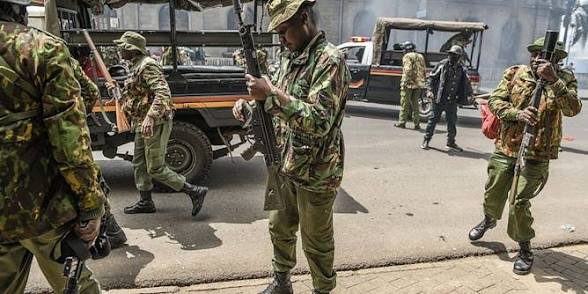
Kenya policemen patrol the streets of Nairobi (Image: Files)

On growing calls for his resignation following criticism directed at the Interior Ministry, Omollo maintained that ongoing reforms and security operations would continue within constitutional and institutional frameworks.

The interview also highlighted the government’s push for increased funding to support reforms within the police service.

Omollo revealed that the state is seeking parliamentary approval for additional resources aimed at modernising operations and strengthening institutional capacity.

The conversation reflects the pressure currently facing the Interior Ministry as it tries to balance public order, political tensions, accountability demands and long-term security reforms at a time when national politics is already beginning to shift toward 2027.

Government Proposes Sh3,000 Monthly Stipend for Village Elders

Village elders across Kenya could soon begin receiving a monthly government stipend under a new proposal aimed at formally recognising their role in local administration and community security.

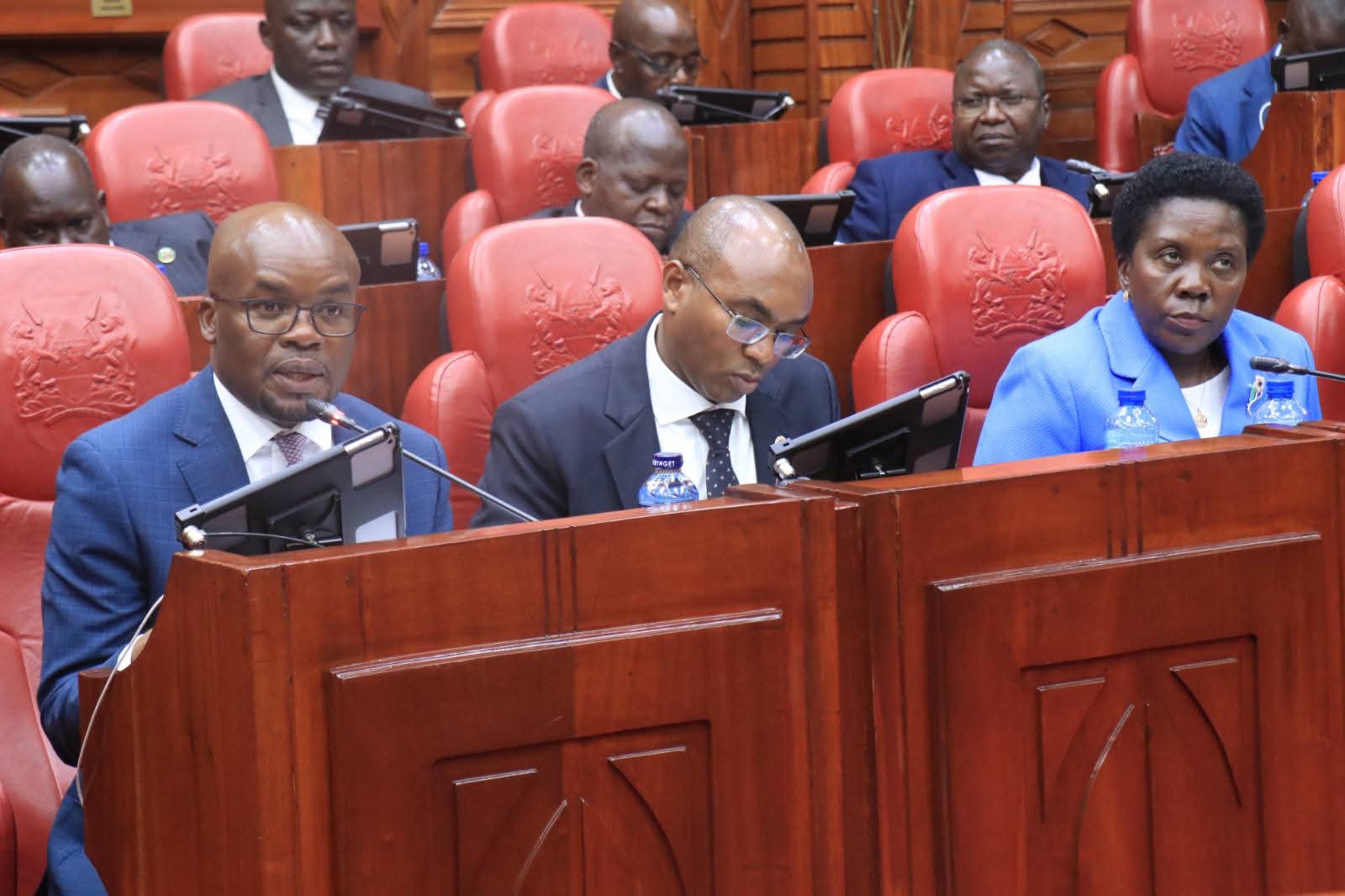
Speaking before the National Assembly Departmental Committee on Administration and Internal Security during scrutiny of the 2026/2027 budget estimates, Interior Principal Secretary Dr. Raymond Omollo said the government plans to allocate a monthly stipend of Sh3,000 to about 110,000 village elders nationwide.

According to the Interior Ministry, the proposal follows years of consultations and development of a policy framework to formally identify and structure village elders within the National Administration system.

The conversation about village elders began in 2016 and the House actually gave directions to the ministry. It has taken almost 10 years to get us here,” Dr. Omollo told the committee.

If approved by Parliament, the stipend programme will begin in the next financial year, with the government indicating that enough funds have been provisioned to sustain the initiative for most of the financial year.

The ministry also clarified that only village elders not already benefiting from other state support programmes – such as the elderly social protection scheme or Community Health Promoter initiatives – would qualify.

Lawmakers largely welcomed the proposal, describing it as the first serious effort to formally recognise village elders, who have historically worked voluntarily alongside chiefs and assistant chiefs in resolving disputes, mobilising communities, and supporting local security operations.

However, some MPs argued the proposed amount should be increased.

National Assembly Departmental Committee on Administration and Internal Security in session. (Image: Files)

Committee chairperson and Narok West MP Gabriel Tongoyo said village elders deserve facilitation comparable to that offered to Community Health Promoters.

In Teso North MP Oku Kaunya proposed raising the stipend to Sh5,000 if elders are formally anchored within the National Administration structure.

According to MPs, increasing the stipend to Sh5,000 would raise the programme’s annual budget requirement to between Sh5.5 billion and Sh6 billion.

The proposal now awaits further parliamentary consideration as part of the broader budget approval process.

Beyond the stipend itself, the move signals a broader attempt to formally integrate grassroots community structures into national governance and security coordination systems.

This is crucial, particularly in rural areas where village elders often serve as the first point of contact in local disputes, social issues, and community administration.