Kenya Welcomes Back Second MSS Contingent from Haiti

Kenya has received the second contingent of its security officers deployed to Haiti under the Multinational Security Support (MSS) Mission, marking a key milestone as the operation begins a phased transition.

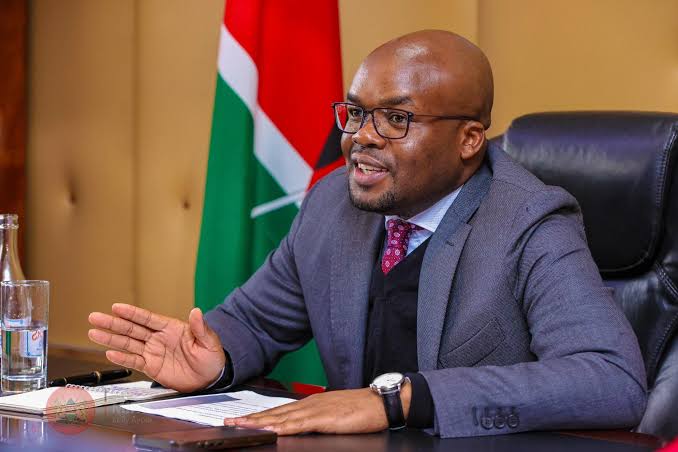
Speaking during the reception of the returning officers, Principal Secretary for Internal Security and National Administration, Dr. Raymond Omollo, described the deployment of approximately 700 officers as historic and commended their service in a complex international security environment.

The officers had been deployed to support efforts to restore peace and stability in Haiti, working alongside international partners and the Haitian National Police.

According to the Ministry, the Kenyan contingent played a central role in stabilizing key areas affected by insecurity.

Their work included supporting law enforcement operations, protecting civilians, and securing critical infrastructure.

The mission also contributed to strengthening local security responses in communities facing sustained threats, in coordination with Haitian authorities.

The Government confirmed that the mission recorded casualties, with three Kenyan officers losing their lives in the line of duty.

During the ceremony, a moment of silence was observed in their honor, with the Government reaffirming its commitment to support the families of the fallen officers.

Returning officers were commended for maintaining discipline, professionalism, and integrity throughout the deployment, despite operating in high-risk conditions.

The return of the contingent comes as the current phase of the MSS Mission begins to wind down.

Officials indicated that while initial deployments are being scaled back, the international community remains engaged in supporting Haiti’s long-term stability and institutional strengthening efforts.

Kenya is expected to continue participating in these efforts alongside global partners to sustain the progress achieved during the mission.
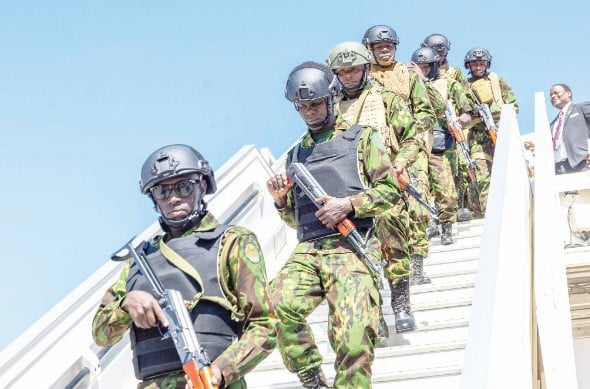
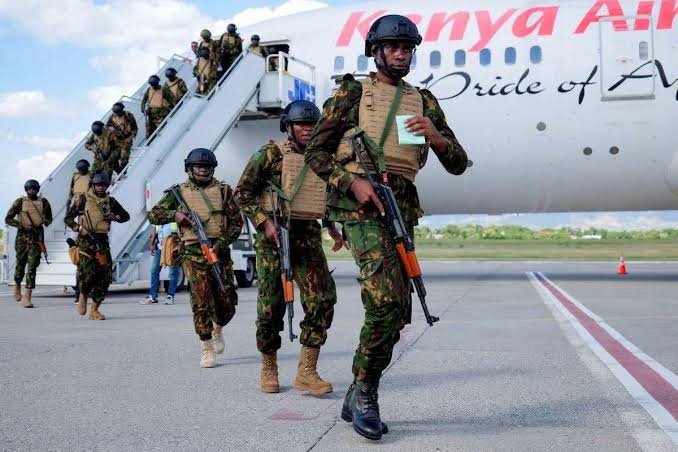
Kenyan Police Officers disembark from the plane on arrival from Haiti (Image: Files)

The deployment to Haiti forms part of Kenya’s broader engagement in international peace and security operations.

Government officials noted that leading the MSS Mission reinforces Kenya’s position as a key partner in global security cooperation and conflict response initiatives.

The returning officers have now been received back into the country following the completion of their deployment.

The Government expressed appreciation for their service and reiterated its recognition of their contribution to international peacekeeping efforts.


PS Omollo Reaffirms Zero Tolerance for Political Violence

The Government has declared a firm zero-tolerance stance on political violence, warning that hooliganism, intimidation and unlawful mobilisation will not be tolerated in Kenya’s political and social spaces.

Speaking in Nyeri County during a visit to Rutune School, the Internal Security PS, Dr. Raymond Omollo – said every Kenyan has the constitutional right to express their views freely – but strictly within the law.

The visit brought together national and local leaders, including Nyeri Senator Wahome Wamatinga, alongside parents, teachers and students, signalling a dual focus on security stability and human capital development.

Dr. Omollo emphasized that while political engagement and public discourse are protected freedoms, any cases involving violence or disorder must be addressed through proper legal and investigative channels.

Security agencies, he said, remain vigilant in maintaining public order and ensuring accountability.

In Nyeri County, security teams have intensified operations against illicit alcohol.

The PS noted that National Government Administration Officers, working under the leadership of County Commissioner Josephat Biwot – are coordinating efforts to strengthen community safety and address emerging social challenges.

He also raised concern over rising cases of Gender-Based Violence (GBV), calling on communities to protect vulnerable persons and uphold dignity and safety at the local level.

Beyond security, the visit focused on education outcomes.

Despite having adequate teaching staff, Rutune School is experiencing low student enrollment.

Dr. Omollo called for stronger parental and community involvement to improve enrollment and academic performance.

A recent political rally in Nyeri County (Image: Files)

He cited ongoing national reforms in the education sector, including:

  • Recruitment of over 100,000 teachers
  • Construction of more than 25,000 classrooms
  • Implementation of Competency-Based Education
  • Reforms in university funding

In Nyeri County, the transition rate from primary school to Junior Secondary School currently stands at 99 percent.

The Government also outlined major development projects underway in Mukurweini Constituency.

These include:

  • Road infrastructure projects valued at Ksh 2.9 billion.
  • Modern markets worth Ksh 162 million
  • Affordable housing projects valued at Ksh 980 million.
  • Student hostels with capacity for 3,000 beds.

According to the Principal Secretary, these investments are part of broader efforts to support economic growth and improve livelihoods.

In summary, the Government’s message from Nyeri was clear:

Political freedoms are protected, but disorder will face legal consequences – even as education reform and infrastructure development continue in parallel.

Chiefs Get A Special Police Unit to Streamline Service Delivery

When trouble knocks in the village, it doesn’t ask for a Cabinet Secretary – it asks for the chief.

And when the chief walks into tension, dispute, or danger, they’ll no longer walk alone – thanks to the newly-formed police unit.

The government has officially gazetted the operational framework of the National Government Administration Police Unit (NGAPU) – locking it into law as a specialised unit within the National Police Service.

What exactly is NGAPU? 

This is a dedicated police unit created to work alongside National Government Administrative Officers (NGAOs) – the same people who represent government authority at the most local level: locations, wards, sub-counties, and counties.

NGAPU exists to support chiefs, assistant chiefs, and other national government administrators to do their jobs – safely, lawfully and effectively.

What are The Units Standing Orders?

According to the gazetted Standing Orders, NGAPU officers are mandated to:

  • Support chiefs and assistant chiefs as they carry out lawful duties.
  • Provide protective security to government officers in administrative units.
  • Enforce national laws, policies, and regulations during lawful operations.
  • Offer security during public meetings, barazas, and community gatherings.
  • Act as first responders – including apprehending offenders and preserving evidence.
  • Support conflict management and peacebuilding efforts.
  • Coordinate with other police and security agencies during joint operations.

It means that a chief is no longer exposed or vulnerable when dealing with land disputes, insecurity, enforcement of government directives, or high-risk community situations.

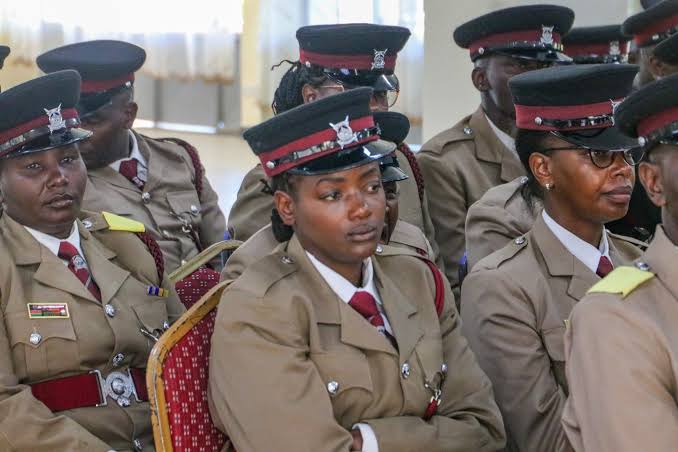
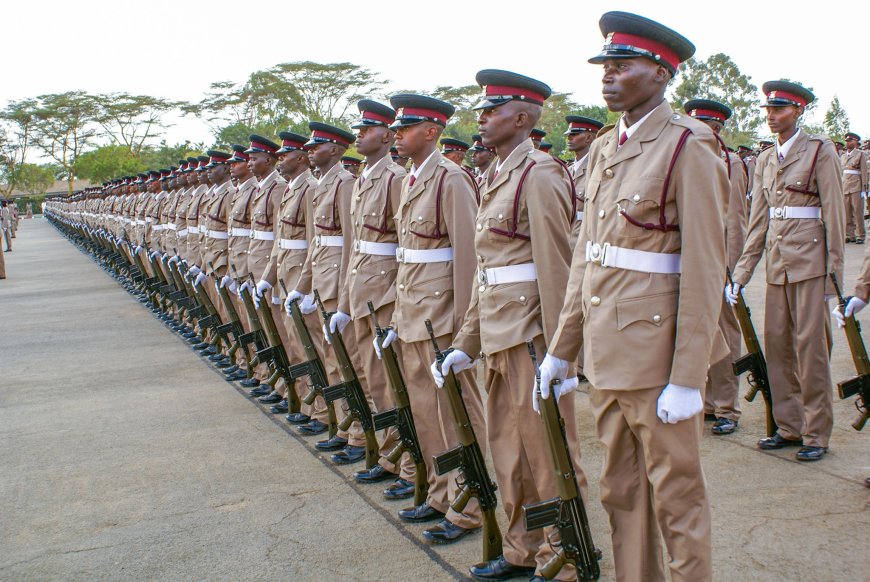
Administration Police officers on parade at a pass out ceremony (Image: Files)

What’s the Command Structure with NGAPU? 

An important aspect of this framework is the command and accountability.

NGAPU officers:

  • Report through a defined structure – from ward level to national command.
  • Must record operations in official police occurrence books.
  • Are subject to disciplinary procedures under the law and Constitution.
  • Operate under approved standard operating procedures sanctioned by the Inspector-General.

Authority with Accountability

As the government strives to achieve social, economic and development, it starts with professionalising governance.

This framework seeks to align authority with responsibility, and ensuring that those enforcing the law are themselves protected by it.

In high-risk regions  – from parts of North Eastern to pockets of the Rift Valley – the reality is simple:

You can’t send civilian administrators into security hotspots without proper support.

In a Nutshell …. 

By gazetting NGAPU, the government has moved administrative security from grey area to clear law – defining roles, limits, and accountability.

Because, security is about preventing disorder by strengthening the institutions closest to the people.

Dr. Raymond Omollo Speaks for a Wounded Nation

It’s not often that government officials speak in tones so nakedly human.

Yet Dr. Raymond Omollo, CBS – Kenya’s Principal Secretary for Internal Security – did just that when he wrote on X:

“For the people of Kenya and the State Department for Internal Security, there is only one position on the tragic death of Mr. Albert Ojwang’, a young, hopeful father, husband, teacher and son; it should never have happened.”

There was no bureaucratic buffering. No sidestepping. Just a solemn sentence – one that acknowledged not just a tragedy, but the pain it stirred across a nation.

The deceased teacher cum blogger Albert Ojwang who reportedly died in police custody (Image: Files)

Dr. Omollo is no stranger to the fine line between public safety and personal rights.

As PS overseeing Kenya’s delicate internal security apparatus, he carries the burden of steering reforms in a space where public trust often wears thin.

But what makes his statement significant is its unvarnished clarity – a tone that contrasts sharply with a past where such deaths were often explained away, softened, or outright denied.

His words are not just about Albert Ojwang’.

They are a reflection of the growing imperative within the State Department for Internal Security to respond to public emotion with institutional humility – and to ensure that systems built to protect do not become instruments of fear.

Under Dr. Omollo’s stewardship, the department has made notable policy strides: body-worn cameras for officers, improved oversight through IPOA, and the push for data-driven policing.

He’s advocated for inclusive security, political tolerance, and technology-backed transparency – ideas that are now being stress-tested in the most painful way possible.

Ojwang’s death, already acknowledged by the President as a case of police brutality, has reignited public anger and calls for real accountability.

But in that fire, Dr. Omollo has not flinched.

Instead, he has offered the one thing many Kenyans have long yearned for from within government: a recognition that this – all of this – should never have happened.

His statement is not the end of the road.

It is the opening note of a deeper reckoning. Because words, no matter how well-intentioned, must be followed by truth, transparency, and consequences.

In the days to come, IPOA will investigate. Officers will face suspension and inquiry. The public will wait, watch, and speak louder than ever.

And, Dr. Raymond Omollo – who has so far walked the tightrope between reformist and bureaucrat – will be expected to show that the state still has a soul.

Albert Ojwang’ is gone.

But, in his name, perhaps the system can be pushed, one more time, to mean something better.