Albert Ojwang’s father cries over false promises from Government of Kenya

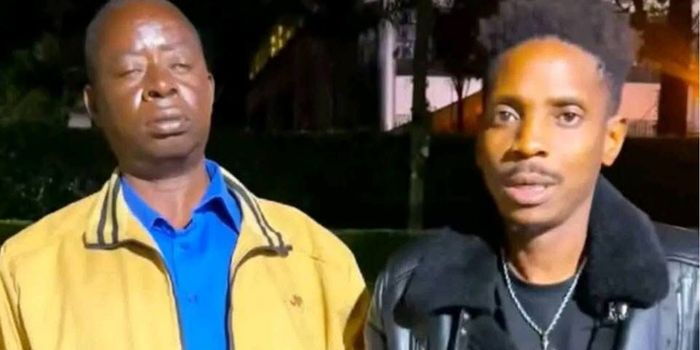
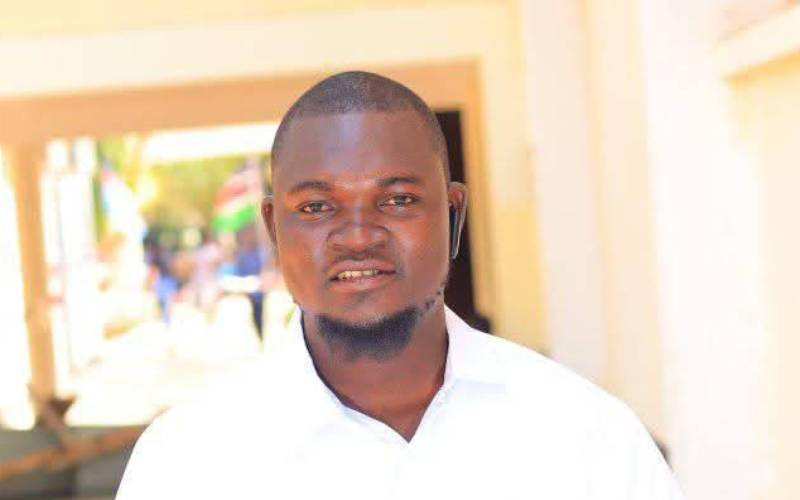
The father of slain teacher and blogger Albert Ojwang has spoken emotionally about the challenges his family continues to face, claiming public support faded after he publicly thanked William Ruto.

His remarks come months after Albert Ojwang’s death in police custody in June 2025, a case that sparked nationwide outrage and demands for justice.

A family still struggling

Following Ojwang’s death in Nairobi detention, Kenyans rallied around the grieving family, contributing financially and offering emotional support. However, according to his father, that solidarity gradually diminished after he acknowledged the President’s condolences and assistance.

“They left me and stopped walking with me because I thanked the President,” he said.

He explained that the financial aid the family initially received has since been depleted, forcing them to rely on small-scale farming and poultry keeping to survive.

“Right now, even when I travel to Nairobi, I have to look for my own means,” he added.

Public reactions divided

His comments have reignited debate online, with reactions reflecting sharply divided opinions.

Some social media users criticised his decision to publicly thank the President, arguing it undermined calls for accountability.

“He exchanged his son’s justice with money… why thank a regime that killed your son,” one user commented.

Others suggested he could have acknowledged support differently while continuing to demand justice.

“You should have thanked everyone generally and still insisted on justice for your child,” another wrote.

Some commenters framed the situation as a lesson about trying to “play both sides,” while others responded mockingly.

Controversy over gratitude

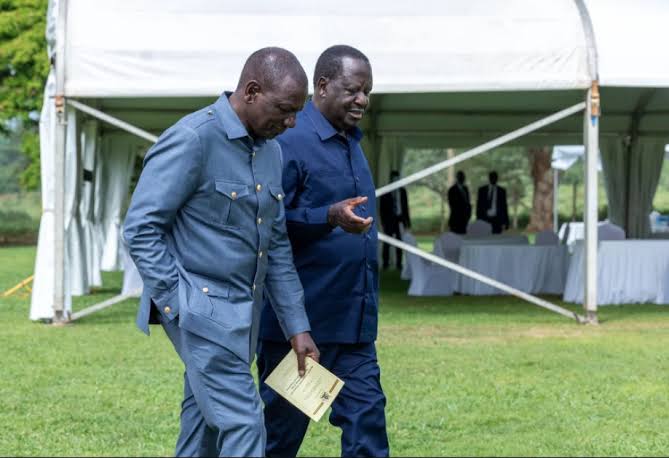
The father pointed to the moment he publicly appreciated President Ruto’s support as the turning point. Reports at the time indicated that the President reached out to the family and contributed KSh2 million during their mourning period.

According to him, some Kenyans interpreted the gesture negatively because of wider criticism directed at the government following Ojwang’s death.

“When someone offers help when you are grieving, the best thing is to say thank you,” he explained.

Living with grief

Despite the intense public attention the case attracted, Ojwang’s father says the family’s current reality is one of quiet hardship and continued mourning.

“The money we received has all been used,” he said, describing a life now marked by financial strain, loss, and what he sees as growing isolation.
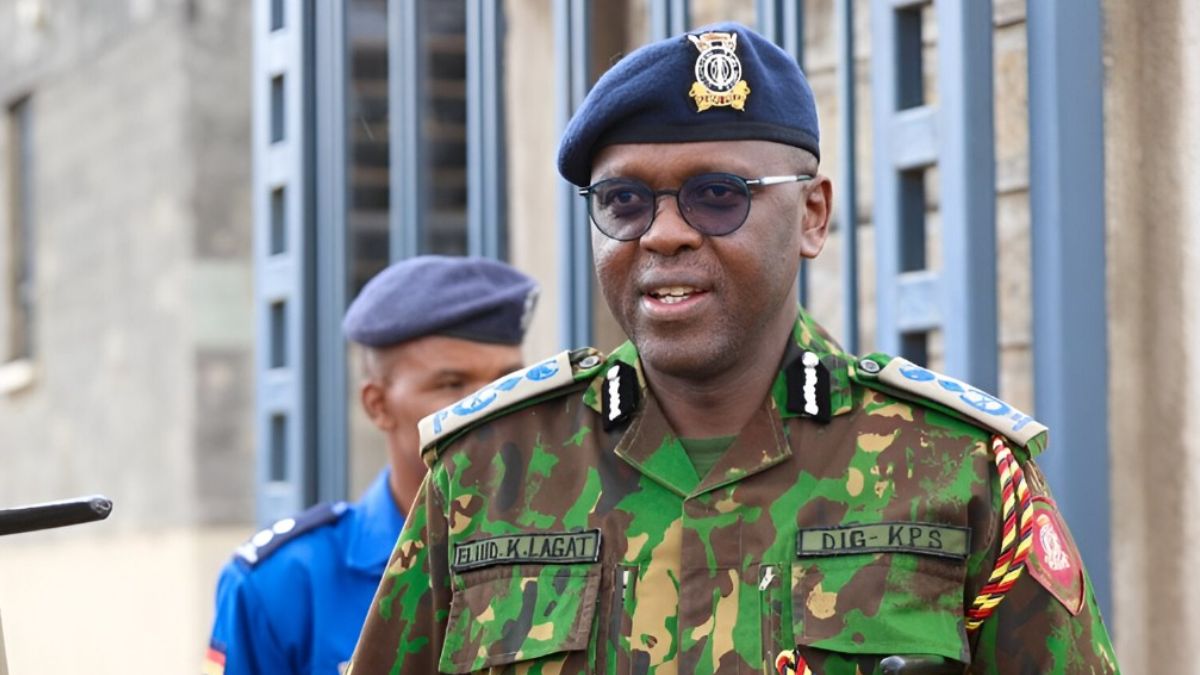
Deputy Inspector General Eliud Lagat Cleared In Albert Ojwang Death

Deputy Inspector General of Police (DIG) Eliud Lagat is expected to return to office today after being officially cleared of any involvement in the controversial death of teacher and blogger Albert Ojwang, who died in police custody last month.

Lagat had voluntarily stepped aside from his duties on June 16 amidst mounting public pressure, delegating his responsibilities to his principal deputy, Patrick Tito. This move allowed the Independent Policing Oversight Authority (IPOA) to launch an independent investigation into the incident without perceived interference.

Confirming Lagat’s imminent return, a source within the police service told the Nation on Sunday, “I hope to see him back at the office today because he has been cleared by all the investigations.”

READ ALSO; IEBC Releases Statement After Wajir Women Rep Vowed To Steal Votes For Ruto In 2027 (Video)

Lagat’s return follows more than two weeks of intense public scrutiny and legal uncertainty surrounding the death of Albert Ojwang. Ojwang was arrested by officers from the Directorate of Criminal Investigations (DCI) and subsequently died at the Nairobi Central Police Station on June 8, 2025.

The circumstances of his death while in police custody had drawn significant public outcry and calls for transparency and accountability, leading to IPOA’s intervention and the DIG’s temporary stepping aside. His clearance by the investigative bodies paves the way for his reinstatement to his senior position

Homa Bay Governor Gladys Wanga Builds New Home For Albert Ojwang’s Family

Homa Bay Governor Gladys Wanga is fulfilling her promise to construct a new home for the family of the late Albert Ojwang’. Weeks after announcing her commitment to the project, photos and videos have emerged showcasing the progress of the modern two-bedroom house in Kokwanyo, Kabondo Kasipul.

Governor Wanga had previously overseen the initial groundbreaking, where construction workers began laying the foundation. The single-story house, built with stone or concrete blocks, is steadily taking shape.

Its thick, sturdy walls and black metal window grills indicate a strong and durable structure. While recent videos show roofing still in progress, photos shared by former Chief Justice Maraga reveal a maroon roof already in place, covering the partially completed home.

Read also; Matiang’i Reflects on Gen Z Protests: “It Would Not Have Happened Under My Watch”

Kenyans have largely praised Governor Wanga’s initiative, commending her for providing a home to Ojwang’s grieving family. Wanga stated that her decision was driven by the desire to support the family, acknowledging that Ojwang’ was a hardworking man who, if alive, would have built a house for his parents himself. The governor estimates the construction will be completed within a fortnight.

Murder Charges Approved For Six, Including OCS, In Albert Ojwang’ Death Case

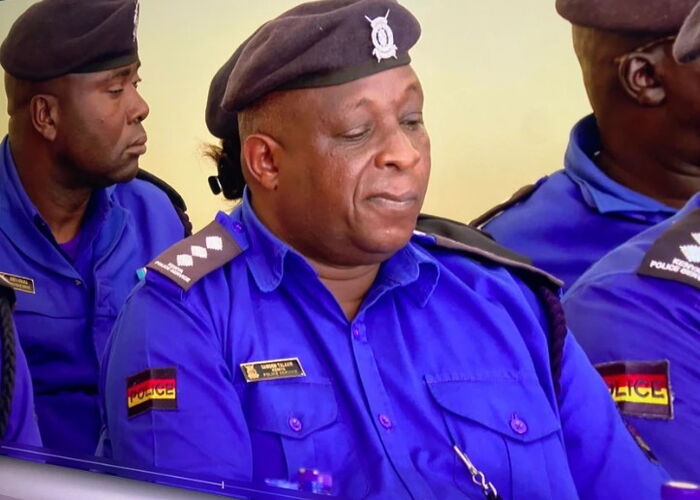
The Director of Public Prosecutions (DPP), Renson Ingonga, has approved murder charges against six individuals, including Central Police Station OCS Samson Talaam and police constables James Mukhwana and Peter Kimani, in connection with the death of blogger Albert Ojwang’ while in police custody.

In a statement issued on Monday, the DPP confirmed that this decision followed the conclusion of investigations and the submission of case files by the Independent Policing Oversight Authority (IPOA).

“Following the directive, IPOA submitted the inquiry file to my office on June 22, 2025, for perusal and legal guidance. Upon receipt, I immediately constituted a team of senior prosecutors to conduct a comprehensive review,” the statement read. “After careful examination of the evidence, I have approved murder charges against six individuals, including police officers Samson Kiprotich Talaam, James Mukhwana, and Peter Kimani.”

The six suspects are currently appearing before the Kibera High Court to face murder charges, contrary to Section 204 of the Penal Code, Cap. 63 of the Laws of Kenya, following the DPP’s approval of their prosecution. It’s alleged that the suspects assaulted Ojwang’ while he was in custody at the Central Police Station, Nairobi, leading to his death on June 8.

Talaam’s Prior Detention and Allegations of Evidence Tampering

These developments come after the High Court last Wednesday ruled that OCS Talaam be detained for 15 days to allow police to complete their investigations into Ojwang’s case. Talaam was arrested on June 13 in Eldoret. Magistrate Benmark Ekhubi, during that trial ruling, stated that the prosecution had presented compelling reasons to deny bail.

Two days prior to that ruling, the DPP had accused the embattled Talaam of paying a technician to delete CCTV footage linked to the blogger’s death. Appearing before the Milimani Law Courts, the DPP, through legal counsel, accused the OCS of interfering with crucial evidence in the ongoing investigation. It emerged that a technician was allegedly paid KSh 3,000 to delete the vital footage believed to be important in piecing together what happened to the blogger in police custody. It was not immediately made public who paid for the deletion.

However, the prosecution on Monday last week claimed that Talaam, as the custodian of station records and surveillance systems, allegedly contracted the technician to tamper with the CCTV footage at the station in what is believed to be a deliberate attempt to obstruct justice.

The OCS has consistently maintained in different court sessions that he was not involved in the circumstances surrounding the blogger’s death.

Albert Ojwang’s Family Denies Eric Omondi’s Claims That Kenyans Donated Ksh 10 Million

The family of the late blogger Albert Ojwang’ has provided an update on the public contributions raised so far. Speaking on the Obinna show, family spokesperson Kenneth Ouma revealed the total amount currently held in their joint account.

Ouma stated that the official M-Pesa Paybill account for public contributions was established on the same day Albert’s autopsy report was released.

“We did a paybill, which we shared with the public. It is the same paybill that Hanifa shared,” Ouma explained.

He also acknowledged that comedian Eric Omondi had set up another Paybill, which the family confirmed channeled funds to their official account. Ouma warned the public about a fake Paybill account impersonating Eric Omondi that has been circulating.

Discrepancy in Donation Figures

Ouma also addressed Eric Omondi’s earlier estimation that public donations had reached KSh 10 million. According to Ouma, the actual amount raised by the general public stands at KSh 2.06 million.

He confirmed that both President William Ruto and former Prime Minister Raila Odinga have sent their donations of KSh 2 million and KSh 1 million, respectively.

As of Monday, June 23, the total amount raised in the family’s central account, including contributions from the public, President Ruto, and Raila Odinga, is KSh 5.06 million.

“Eric did not say that there’s 10 million unless I saw a different video. He made an assumption that we could have KSh 10 million. So as we speak, I can confirm to you that we don’t have KSh 10 million. We have about 2.06 million in this account that is official,” Ouma clarified. He added, “We have a central account where all donations are channelled. As of yesterday (Monday, June 23), we were at KSh 2.06. That’s from the general public. So, the one for the president and the one from Raila are also in the same account. The account is about KSh 5.06 million. President Ruto and Raila had sent their contributions.

The funds donated and stolen are yet to be recovered.

Six Suspects In Albert Ojwang’ Murder Case Fail To Take Plea

Six suspects accused of the murder of blogger Albert Ojwang’ failed to enter a plea yesterday, June 23, 2025, during their arraignment at the Kibera Law Court. The proceedings were halted after Lady Justice Diana Kavedza was informed that two of the accused lacked legal representation.

The court subsequently directed the Deputy Registrar to appoint lawyers for the two unrepresented suspects.

The accused include Officer Commanding Station (OCS) Samson Kiprotich Talaam, police constables James Mukhwana and Peter Kimani Alias Kim, along with civilians John Ngige Gitau alias Kinara, Gin Ammitou Abwaovalias Gilbeys, and Brian Mwaniki Njue.

“The third and fourth accused persons are unrepresented, this matter shall be stood over to tomorrow the 24th for plea, as directed the DR to appoint two advocates to be on standby,” the court ruled.

OCS Talaam, through his lawyers Danstan Omari and Cliff Ombeta, accused the Director of Public Prosecutions (DPP) of ambushing him. The accused had previously appeared before the magistrate’s court under a miscellaneous application, where, according to Omari, advocates had been properly placed on record.

However, Omari alleged that the accused were “picked up from the police station just 15 minutes prior to their unexpected court appearance, without any communication to their legal counsel.” Cliff Ombeta added, “If the state is being honest and follow the law they would be able to avoid this problems.”

According to the charge sheet, the six are accused of killing blogger Albert Ojwang’ between 9:30 PM and 2:00 AM at the Central Police Station on the night of June 7, 2025.

Six to Face Murder Charges Over Albert Ojwang’s Death, ODPP Confirms

The Office of the Director of Public Prosecutions (ODPP) has approved murder charges against six individuals—including three senior police officers—in connection with the death of university student Albert Omondi Ojwang, who died in police custody under controversial circumstances.

The suspects appeared before the High Court in Kibera today, marking a significant development in a case that has ignited nationwide outrage and renewed calls for accountability within Kenya’s law enforcement agencies.

In a statement released Monday, the ODPP confirmed it had reviewed an investigation file submitted by the Independent Policing Oversight Authority (IPOA) and determined that there is sufficient evidence to prosecute the six suspects for murder, contrary to Section 204 of the Penal Code, Cap. 63 of the Laws of Kenya.

Senior Officers Among the Accused

The key suspects include Samson Kiprotich Talaam, the Officer Commanding Station (OCS), and fellow police officers James Mukhwana and Peter Kimani. Also charged are civilians John Ngige Gitau, Gin Ammitou Abwao, and Brian Mwaniki Njue.

All six were scheduled to take plea at 2:00 PM today at the Kibera High Court.

Investigation Triggered by DPP Directive

The decision to prosecute follows a directive issued by the DPP on June 10, 2025, invoking Article 157(4) of the Constitution and Section 5(2) of the ODPP Act. This directive empowered IPOA to conduct an independent investigation into the circumstances surrounding Ojwang’s death.

IPOA submitted its findings on June 22, after which a team of senior prosecutors conducted a thorough review. The ODPP ultimately determined that the evidence met the threshold for criminal charges against all six individuals.

A Stand for Justice

“The Office of the Director of Public Prosecutions remains committed to executing its constitutional mandate in accordance with the rule of law, public interest, and administration of justice,” the ODPP said in its statement.

The death of Albert Omondi Ojwang, which occurred while he was in police custody, has become a national flashpoint, with human rights groups and the public demanding justice. His case joins a growing list of alleged extrajudicial killings that have heightened scrutiny of Kenya’s police force.

The arraignment signals a critical step toward accountability in a justice system frequently accused of shielding state actors from prosecution. As the trial begins, public attention will remain firmly fixed on the courtroom, with many hoping this case will mark a turning point in the fight against police abuse and impunity.

Grieving Family of Albert Ojwang Claims Over KSh 500K Vanished from Father’s Account

The family of the late Albert Ojwang, a university student whose death in police custody sparked national outrage, has raised alarm over the mysterious disappearance of funds meant for his burial.

According to relatives, the money—raised through comedian Eric Omondi’s Sisi kwa Sisi fundraising initiative—was withdrawn from the M-Pesa account of Albert’s father, Meshack Ojwang, without his knowledge or consent.

In a video shared by YouTuber Clinton Chirangah Shim, Albert’s uncle, Polycarp Odhiambo, said the family’s grief has only deepened after discovering the missing funds.

“A few days ago, my brother tried to withdraw the money but faced a challenge because he didn’t have his ID. When he visited Safaricom for help, he found out not only was the money from Sisi kwa Sisi gone, but even his own KSh 17,000 had vanished. The statement revealed the names of those who made the withdrawals—more than KSh 500,000 was missing,” Odhiambo revealed.

In the same video, Albert’s father is seen overwhelmed with emotion, slumped in a chair and silently weeping as he processes the devastating loss.

The incident has drawn comparisons to a similar claim made by the family of Boniface Kariuki, a hawker who was fatally shot during protests while demonstrating for justice in Albert’s name. Kariuki’s father also alleged that he was defrauded of more than KSh 200,000 by scammers pretending to assist him with registration for the new Social Health Authority program.

Albert Ojwang’s death triggered widespread protests and calls for police accountability. In response, Kenyans came out in large numbers to support his family, contributing generously through Sisi kwa Sisi. The revelation that these funds may have been misappropriated has left many feeling betrayed and demanding answers.

As investigations into both the death and the alleged financial misconduct unfold, pressure is mounting on authorities and the Sisi kwa Sisi organizers to ensure transparency and justice—not just for Albert, but for the families left reeling in the aftermath.

“This Father’s Day Was Meant to Be Yours”: Widow of Albert Ojwang Shares Heartbreaking Tribute

On a day meant to honour fatherhood, Nevnina Onyango, widow of the late Albert Ojwang, delivered a powerful and emotional tribute to the man she loved—and lost—following his tragic death in police custody.

Marking her first Father’s Day without him, Nevnina took to social media with a touching post that captured both the depth of her grief and the enduring love they shared. She posted a screenshot of a past WhatsApp conversation with Albert, revealing a glimpse of a man grounded in family and joy.

“To be honest, I’m just happy that I have all my family around,” Albert had written. “Nakuona na G weekend. I have Dad, Mum, and Granny. It makes me happy.”

Nevnina had responded: “It’s beautiful. I love it this way, baby. Having my husband around, seeing my in-laws, and the fact that I have a good relationship with your mum makes everything even better.”

Albert replied simply: “Thank you for being there for her.”

Alongside the screenshot, Nevnina shared a heart-wrenching caption:
“This Father’s Day was supposed to be yours. You had plans with our son—plans for laughter, for love, for simply being together. Instead, we’re left with silence, questions, and a world that feels so wrong. We miss you beyond words—not just today, but every day. Your love lives on in him, and I’ll make sure he never forgets the father you were, and the future they stole from you.

New CCTV Footage Raises Questions About Police Indulgement In Albert Ojwang’s Death

Newly analyzed CCTV footage from Mbagathi Hospital is raising serious questions about the actions of police officers transporting activist Albert Ojwang on the night he died in custody. While the exact subject of a crucial phone call remains unclear, its timing and the officers’ subsequent behavior suggest it could be a key piece in understanding Ojwang’s death.

The footage reveals that shortly after the police vehicle arrived at Mbagathi Hospital, one of the officers received a phone call. Immediately, all officers present hurried out of the building and remained on the call for approximately three minutes.

Unexplained Delays at the Hospital

Despite the urgent nature of transporting someone in critical condition, the officers displayed a puzzling lack of urgency. They finally emerged with a stretcher at 1:46 AM but took a full 12 minutes before loading Ojwang onto it and wheeling him into the hospital. This leisurely pace stands in stark contrast to protocols for emergency situations, where patients are typically handed over to medics with extreme speed.

The footage clearly shows that the three police officers who transported the deceased were in no hurry to transfer him to medical staff. It remains unclear if they already knew or suspected that Ojwang was dead, given that his body was only wheeled into the hospital a full 24 minutes after the police vehicle’s arrival. This significantly undermines the initial narrative that Ojwang was “rushed to hospital for medical attention.”

Just ten minutes after being wheeled into the hospital, Ojwang’s body is seen being taken back to the police vehicle, presumably after medics confirmed his death.

Albert Ojwang’s Father Thanks the President

Meanwhile, at an event held at his home in Homa Bay County, Albert Ojwang’s father, Meshack Ojwang, publicly thanked those who have supported his family during this period of profound grief.

Albert Ojwang', Meshack Ojwang's father

“I would like to thank God for the strength, without which I would not manage. I also thank the president for taking the burden of my son’s death. Many have lost their lives, but he has taken this matter personally and called me to condole with me,” Meshack Ojwang stated, expressing gratitude for the personal intervention from the Head of State.

Albert ojwang’s wife reveals the last words he ever said to her

The family of Albert Ojwang, a 31-year-old teacher and blogger who died under suspicious circumstances while in police custody, is demanding justice as painful new details about his final hours come to light.

Ojwang died on June 8, reportedly from blunt force trauma to the head and multiple injuries consistent with a brutal assault. His death has triggered public outrage, with growing calls for accountability from human rights organizations and concerned citizens alike.

Leading the charge for justice is his widow, Nevnina Onyango—a nursing student and mother of their young son. Speaking to Citizen TV, she shared the chilling final conversation she had with her husband after his arrest, in which he voiced deep concern for his safety.

“He kept asking if he was going to be safe,” she said through tears. “He didn’t feel secure in custody. I want everyone to feel protected when detained. The police should safeguard lives, not end them.”

Nevnina, who has been in Nairobi since the tragedy unfolded, met with Nairobi Governor Johnson Sakaja and has continued to rally public support for accountability.

“This pain is unimaginable. No one should have to lose a loved one like this,” she said. “We can’t bring Albert back, but holding those responsible to account would give us some peace. I’m asking Kenyans to stand with us in this fight for justice.”

Amid her grief, Nevnina is now confronted with an even more heartbreaking task—how to explain Albert’s death to their young son, George Myles Ojwang.

In a recent interview, she revealed how the child has begun sensing the sorrow around him. “He’s heard people crying and mentioning ‘Omondi’—his dad. One day, he asked me, ‘Is it true Daddy is dead?’ I told him, ‘No, he’s not,’” she said, her voice trembling.

Ojwang’s death remains under investigation, as pressure mounts on authorities to provide answers and ensure accountability.

Detectives Hunt for Officers Linked to Custodial Death of Teacher Albert Ojwang

Authorities are actively pursuing at least two police officers suspected of involvement in the murder of 31-year-old teacher Albert Ojwang, whose death while in police custody has sparked national outrage.

The officers, along with several civilians, had been summoned by the Independent Policing Oversight Authority (IPOA) for questioning but have since disappeared.

“We haven’t been able to locate them. Their phones are off, and they’ve gone completely off the radar,” said a source familiar with the investigation.

Despite their disappearance, investigators remain confident the suspects will be found and held accountable.

Ojwang was initially arrested in Homa Bay by officers from the Directorate of Criminal Investigations (DCI) over a contentious social media post. He was later transferred to Nairobi’s Central Police Station. Hours later, he was taken to Mbagathi Hospital, where he was declared dead on arrival.

According to hospital staff, Ojwang arrived at around 2:00 a.m. on June 8. His body was cold, his face severely swollen, and he bore multiple bruises. Blood was reportedly oozing from his head, mouth, and eyes. An autopsy confirmed he had been strangled and brutally beaten.

Initially, officers gave conflicting accounts to IPOA. But in a recent turn of events, some have returned to amend their statements, now acknowledging that Ojwang was assaulted inside the police cells. A riot baton is believed to have been the weapon used, and efforts to recover it are ongoing.

To date, 23 people have been questioned—17 of them police officers. Among those arrested is a police constable who initially claimed he was off duty during the incident. He has since been detained by the Internal Affairs Unit (IAU), which joined the IPOA-led investigation on Thursday. Senior officers from Central Police Station have also been summoned.

A CCTV technician has also been arrested in connection with a suspected cover-up. He admitted to being paid KSh 3,000 to delete surveillance footage from the police station following Ojwang’s death. IPOA Chairperson Isaac Hassan confirmed to Parliament that the station’s digital recorder logs showed the hard drives were replaced and formatted on the morning of June 8—just hours after the teacher died.

“These were deliberate actions clearly intended to conceal the truth,” Hassan told the National Assembly’s Security and Administration Committee. He added that the technician was asked to disable a specific camera, but said the entire system had to be shut down to complete the job.

Committee Chair Gabriel Tongoyo confirmed that IPOA had identified at least three individuals directly linked to Ojwang’s death and had requested the Inspector General’s assistance in arresting them.

Police records show Ojwang was booked at Central Police Station at 9:35 p.m. on June 7 under Occurrence Book number 136/7/6/2025. Within a few hours, he was dead.

Investigations are ongoing, with the public closely watching for justice in the case of the young teacher whose death has come to symbolize the dangers of unchecked police brutality.

14 Officers Grilled By IPOA In Albert Ojwang Murder Probe As Missing CCTV Footage Raises Alarm

At least 14 police officers have been questioned by detectives from the Independent Policing Oversight Authority (IPOA) concerning the death of Albert Ojwang while in police custody. The officers, drawn from Nairobi’s Central Police Station and the Directorate of Criminal Investigations (DCI), are among 18 individuals identified and summoned by IPOA as part of its intensifying investigation into Ojwang’s death.

Ojwang, a prominent activist, died on June 7, 2025, just hours after his arrest in Homa Bay County on claims of “false publication.” His death has triggered widespread public uproar and fervent calls for accountability from all concerned parties.

The summoned officers spent a significant part of Wednesday at IPOA’s offices in Nairobi, providing their statements on the circumstances surrounding Ojwang’s death. Some attended with legal counsel, while others appeared without representation.

According to internal sources, some police officers claimed that Ojwang was already in a critical condition when he was brought into Central Police Station and alleged they made efforts to save his life upon realizing his deteriorating state. Conversely, DCI officers present stated that Ojwang was in a good condition when he was handed over at the station around 9:35 PM on Saturday.

Central Police Station OCS Under Scrutiny

Samson Taalam, the Officer Commanding Central Police Station (OCS), who is at the epicenter of the probe, has denied any involvement in Ojwang’s alleged torture and subsequent death. Taalam claimed he was only summoned after Ojwang had already been booked into custody and that upon his arrival, he found the suspect in poor health, taking the initiative to rush him to the hospital.

However, DCI boss Amin Mohammed made a bold statement on Wednesday during a Senate grilling session regarding Ojwang’s killing, declaring that Taalam should be treated as the prime suspect in the saga. Amin revealed that investigations have established that Taalam declined to book Ojwang when he was initially presented at the station, raising serious questions about his conduct and potential culpability.

“It has further been confirmed that before the booking, the report office personnel called the OCS, and unfortunately, it is being said that he (Taalam) declined to book the suspect,” Amin told the Senate. “Taalam is the Officer Commanding Central Police Station, and from the totality of things, he should be treated as the prime suspect in the matter.”

Amin clarified that Ojwang was transferred from Homa Bay to Central Police Station because the alleged offense was committed in Nairobi. IPOA has taken over the probe, with the Director of Public Prosecutions (DPP) giving the authority seven days to submit the investigation file for action.

Crucial CCTV Footage Missing

In a significant development, IPOA Vice Chair Anne Wanjiku revealed before the Senate on Wednesday that the probe into Ojwang’s unexplained death has hit a snag due to missing key CCTV footage from the OCS’s office at Central Police Station. Wanjiku noted that preliminary investigations showed footage that would have been vital in piecing together the events at the police station is missing, raising further questions about the circumstances of the death. Senators are now demanding answers regarding the disappearance of the footage.

Wanjiku added that the autopsy report on Ojwang’s body, coupled with the missing footage, rules out the possibility of suicide as initially reported by the police. “CCTV systems at the OCS office had been interfered with, the postmortem conducted on June 10 revealed the cause of death as head injury due to blunt force trauma, neck compression and multiple subcutaneous bruises all over the body. They rule out the theory of suicide,” she confirmed.

IPOA’s pending tasks include forwarding collected samples from the crime scene and the deceased’s body for further analysis. The investigation continues amidst mounting public pressure for justice and accountability.

IPOA Summons 14 Officers as Probe Into Albert Ojwang’s Death in Police Custody Intensifies

The Independent Policing Oversight Authority (IPOA) has escalated its investigation into the death of Albert Ojwang, a 35-year-old teacher and social media influencer who died while in police custody on June 7, 2025.

So far, 14 officers—including personnel from Nairobi’s Central Police Station and the Directorate of Criminal Investigations (DCI)—have been summoned for questioning, with IPOA confirming the wider probe involves 18 identified individuals.

Ojwang’s arrest in Homa Bay County over allegations of false publication and his subsequent transfer to Nairobi have sparked national outrage, triggering calls for justice and police accountability.

On Wednesday, the officers appeared at IPOA’s Nairobi offices to record statements. While some were accompanied by legal counsel, others came alone. Sources say several officers claimed Ojwang was already in poor health when he arrived at the station and that efforts were made to assist him. In contrast, DCI officers insisted he was in stable condition when handed over around 9:35 PM on the night of his death.

The Officer Commanding Central Police Station (OCS), Samson Taalam, a central figure in the investigation, denied any involvement in Ojwang’s alleged torture or death. According to Taalam, he was only notified after Ojwang had been booked and said he personally arranged for his hospital transfer upon finding him in deteriorating condition.

However, a key obstacle has emerged in the form of missing CCTV footage from the OCS’s office—footage that IPOA says could have shed light on the events surrounding Ojwang’s final hours. During a Senate session on Wednesday, IPOA Vice Chair Anne Wanjiku revealed that early findings suggest the footage had been tampered with.

A postmortem conducted on June 10 revealed Ojwang died from blunt force trauma to the head, neck compression, and multiple bruises, directly contradicting earlier police claims of suicide.

Wanjiku outlined IPOA’s next steps, including forensic analysis of the crime scene, examination of medical records from Mbagathi Hospital (where Ojwang was declared dead), and further interviews with witnesses and family members.

Despite the gravity of the allegations, OCS Taalam’s lawyer, Felix Keaton, said his client is cooperating fully with IPOA and is committed to ensuring justice is served.

Yet during the same Senate hearing, DCI Director Amin Mohammed named Taalam as the prime suspect in the case. He told senators that Taalam initially refused to book Ojwang, despite being contacted by the report desk officers—a decision now under serious scrutiny.

“It has been confirmed that the report office called the OCS, but he declined to proceed with the booking,” Mohammed told the Senate. “Given his position as station commander, Taalam remains a key suspect in the case.”

Ojwang’s transfer from Homa Bay to Nairobi was reportedly due to the alleged offence being linked to a post made while in the capital.

IPOA is expected to submit its findings and recommendations to the Director of Public Prosecutions (DPP) within seven days, potentially paving the way for criminal charges.

Meanwhile, a complaint lodged on June 4 by Deputy Inspector General Eliud Lagat—regarding a malicious X account named “Pixel Pioneer”—is now emerging as a significant thread in the broader investigation, further complicating the unfolding saga.

Kenyans refuse to accept Ruto’s statement on Albert Ojwang’s death

The country remains in mourning following the tragic death of Albert Omondi Ojwang, a 31-year-old teacher and social media influencer who died in police custody on June 7, 2025. As shock and anger continue to spread, President William Ruto has spoken publicly for the first time, calling for accountability and a thorough investigation into the circumstances surrounding Ojwang’s death.

In a statement delivered by State House Spokesperson Hussein Mohamed, the President conveyed his deep condolences to Ojwang’s family and condemned any abuse of power by the police.

“I extend my heartfelt condolences to Meshack Ojwang and his family for the cruel loss of their beloved son. This tragic occurrence at the hands of the police is both heartbreaking and unacceptable,” Ruto said.

He emphasized the critical duty of care that police officers must uphold when someone is taken into custody.

“Every member of the National Police Service must remember that once they detain a person, they assume full responsibility for their safety and well-being. This duty must be carried out with absolute diligence.”

President Ruto called on the National Police Service to fully cooperate with the Independent Policing Oversight Authority (IPOA) to ensure a transparent, credible, and swift investigation. He also stressed the importance of rooting out misconduct and unprofessional behavior within police ranks while maintaining law and order.

“We must address crime decisively, but we must also confront and eliminate wrongdoing from within the security forces.”

Ruto appealed for public patience and vigilance, urging Kenyans not to jump to conclusions before the investigation is complete.

“Let us follow this process closely, without premature judgments that may compromise the search for truth and justice.”

He concluded with a commitment to accountability:

“I fully expect that the truth about what happened to Ojwang will come to light, and justice will be done.”


Public Reaction: Distrust, Skepticism, and Demands for Action

Despite the President’s assurances, reactions on social media platform X reflected a deeply skeptical public, with many expressing doubt that justice would be served.

  • @KevOhanda: “Ruto’s words sound nice, but actions speak louder. We’ve heard this before—where’s the justice?”

  • @Wanjiru254: “Finally, Ruto speaks! But can we trust police to investigate themselves? IPOA must take the lead.”

  • @OtienoJnr: “Heartfelt condolences? Spare us! This smells like a cover-up unless proven otherwise.”

  • @GraceMuthoni: “A step forward—if IPOA truly acts. Hoping for justice for Albert’s family.”

  • @Maina254: “Ruto’s playing politics. The police killed Ojwang. We all know it—investigation or not.”

  • @ShirohKE: “Condolences mean nothing without accountability. Ruto, show us change.”

  • @DennisOchieng_: “IPOA better act independently. Ojwang’s death must not be swept under the rug.”

  • @AumaJoyce: “Ruto’s words are right—but why the delay? Families are suffering in silence.”

  • @Kamau254: “This is just PR. The system protects its own. Ojwang’s family deserves more.”

  • @EstherNabwire: “Let justice be served. Albert’s father’s pain is all of ours.”

  • @JumaAliKE: “Good start, but trust is broken. Justice needs arrests, not statements.”


Autopsy Report Raises Further Questions

The demand for answers has intensified following the autopsy findings released on June 10, which revealed significant trauma inconsistent with claims that Ojwang sustained self-inflicted injuries.

Ojwang was initially arrested in Homa Bay over an alleged offensive post on X, transferred to Nairobi, and later died in custody — a sequence of events now under intense scrutiny. His death comes amid reports of over 80 abductions linked to last year’s anti-tax protests, fueling fears of state-sanctioned intimidation.

As investigations continue, pressure mounts on authorities to deliver justice not just for Albert Ojwang, but for a nation grappling with concerns over police brutality, freedom of expression, and government accountability.

Dr. Raymond Omollo Speaks for a Wounded Nation

It’s not often that government officials speak in tones so nakedly human.

Yet Dr. Raymond Omollo, CBS – Kenya’s Principal Secretary for Internal Security – did just that when he wrote on X:

“For the people of Kenya and the State Department for Internal Security, there is only one position on the tragic death of Mr. Albert Ojwang’, a young, hopeful father, husband, teacher and son; it should never have happened.”

There was no bureaucratic buffering. No sidestepping. Just a solemn sentence – one that acknowledged not just a tragedy, but the pain it stirred across a nation.

The deceased teacher cum blogger Albert Ojwang who reportedly died in police custody (Image: Files)

Dr. Omollo is no stranger to the fine line between public safety and personal rights.

As PS overseeing Kenya’s delicate internal security apparatus, he carries the burden of steering reforms in a space where public trust often wears thin.

But what makes his statement significant is its unvarnished clarity – a tone that contrasts sharply with a past where such deaths were often explained away, softened, or outright denied.

His words are not just about Albert Ojwang’.

They are a reflection of the growing imperative within the State Department for Internal Security to respond to public emotion with institutional humility – and to ensure that systems built to protect do not become instruments of fear.

Under Dr. Omollo’s stewardship, the department has made notable policy strides: body-worn cameras for officers, improved oversight through IPOA, and the push for data-driven policing.

He’s advocated for inclusive security, political tolerance, and technology-backed transparency – ideas that are now being stress-tested in the most painful way possible.

Ojwang’s death, already acknowledged by the President as a case of police brutality, has reignited public anger and calls for real accountability.

But in that fire, Dr. Omollo has not flinched.

Instead, he has offered the one thing many Kenyans have long yearned for from within government: a recognition that this – all of this – should never have happened.

His statement is not the end of the road.

It is the opening note of a deeper reckoning. Because words, no matter how well-intentioned, must be followed by truth, transparency, and consequences.

In the days to come, IPOA will investigate. Officers will face suspension and inquiry. The public will wait, watch, and speak louder than ever.

And, Dr. Raymond Omollo – who has so far walked the tightrope between reformist and bureaucrat – will be expected to show that the state still has a soul.

Albert Ojwang’ is gone.

But, in his name, perhaps the system can be pushed, one more time, to mean something better.

Safaricom Responds to Senate Inquiry Over Alleged Link to Death in Police Custody

Safaricom has responded firmly to claims linking it to the controversial death of Albert Omondi Ojwang, a young man who died while in police custody in Homa Bay, following his arrest. The matter, now under Senate investigation, has sparked nationwide outrage and drawn intense scrutiny over alleged misconduct by security agencies.

During a Senate session probing Ojwang’s death, several lawmakers questioned whether Safaricom may have played a role by sharing the deceased’s personal data with the Directorate of Criminal Investigations (DCI). Some proposed summoning the telecommunications provider for further clarification.

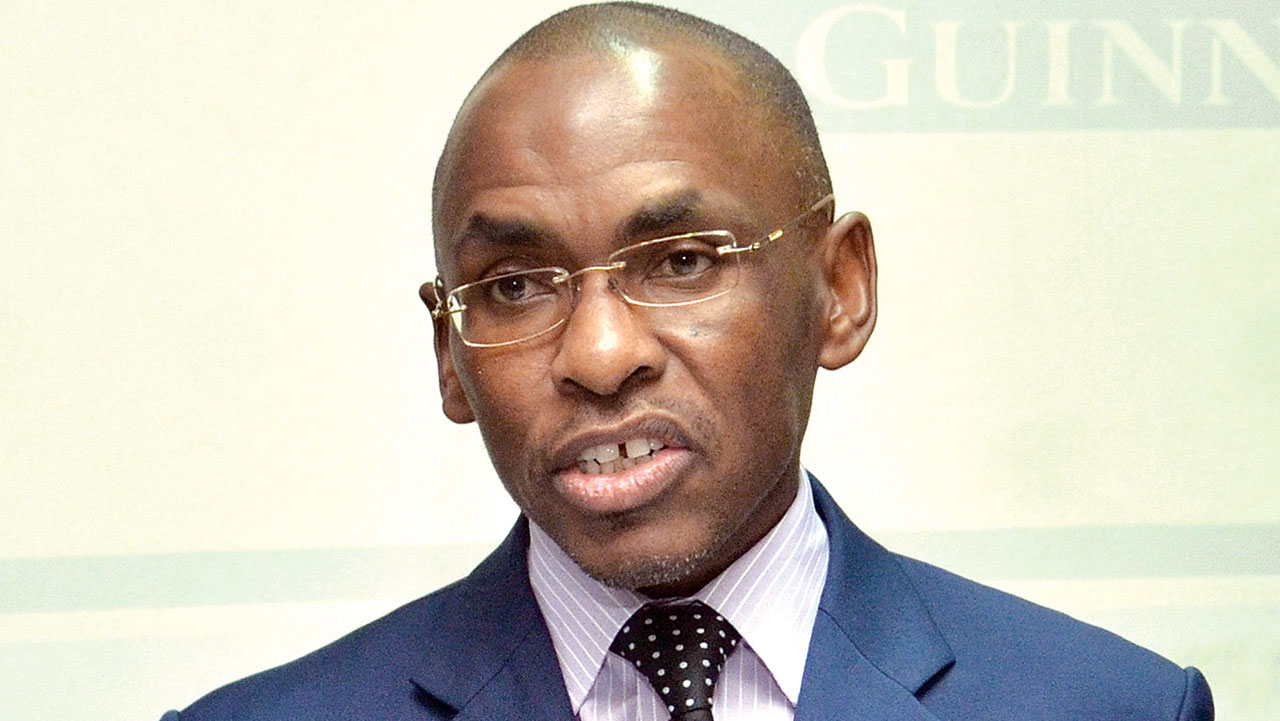
In a swift and unequivocal statement, Safaricom CEO Dr. Peter Ndegwa denied any involvement in the arrest or the circumstances surrounding Ojwang’s death.

“At no point was there any contact between Safaricom and any security agency in investigating or arresting the late Albert,” the statement said. “We became aware of his arrest through media reports.”

Safaricom also addressed remarks made by Public Service Cabinet Secretary Justin Muturi, who reportedly linked the company to the incident. Dr. Ndegwa described the allegations as “disturbing and unfounded.”

“We are concerned and disturbed by the remarks by Hon. Justin Muturi linking us to the unfortunate incident,” said Dr. Ndegwa, reaffirming the company’s commitment to customer privacy and data protection.

The telco urged Kenyans not to be drawn into politicizing the tragedy and instead called for focus on the need for a credible, transparent, and timely investigation into Ojwang’s death.

“Our ask to all Kenyans is to ignore any attempts to incite them and remain firm in demanding accountability through transparent investigations,” Safaricom stated.

The death of Ojwang has ignited public anger over police conduct and raised questions about the potential misuse of personal data. While investigations into the incident are ongoing, the Senate’s involvement has broadened the scope to include possible third-party roles in law enforcement operations.

Safaricom concluded its statement by reiterating its condolences to Ojwang’s family and assuring the public of its longstanding commitment to data integrity.

“We once again send our sincere condolences to the family and friends of the late Albert and wish to reassure all Kenyans that we have always been safe and secure in how we handle their data, and we will continue to do so now and in the future,” said Dr. Ndegwa.

As calls for justice grow louder, attention now turns to the Senate and security agencies to uncover the truth and ensure accountability in what many are calling a grave case of alleged custodial abuse.

Government Pathologist Dr. Johansen Oduor Withdraws From Albert Ojwang’s Autopsy Amid Family Ties

Chief Government Pathologist Dr. Johansen Oduor has withdrawn from directly conducting the highly anticipated autopsy of popular influencer Albert Ojwang, which was scheduled for Monday afternoon. The post-mortem, initially set for 10 AM, was delayed until 2 PM to facilitate Dr. Oduor’s arrival.

Reports indicate that Dr. Oduor recused himself due to a conflict of interest, citing that Albert Ojwang is from his extended family. However, despite his withdrawal from the direct procedure, the renowned pathologist will remain part of the medical team overseeing the post-mortem, ensuring his expertise still contributes to the process.

Earlier on Monday, Dr. Oduor was seen with Ojwang’s family, reportedly engaged in a private meeting with immediate family members at the City Mortuary. The details of their discussion have not been made public.

Julius Juma, the family’s lawyer, emphasized the urgent need for the pathologist’s report, stating that the family was currently unable to definitively determine the cause of Ojwang’s death. Juma, who had viewed the body earlier, noted that the late teacher’s body reportedly bore fatal wounds to the head, with secondary injuries observed on his hands and shoulders.

Despite Dr. Oduor’s recusal from the direct autopsy, several other pathologists were on site to proceed with the examination. These included representatives from the police reforms working group and the Independent Medico-Legal Unit (IMLU).

As of the time of this article’s publication, the exact cause of Albert Ojwang’s death has not yet been publicly released.

Various lobby groups, including Amnesty, the Law Society of Kenya, Defenders’ Coalition, and VOCAL Africa, were also present at the City Mortuary, underscoring the significant public interest in the case. These groups have vowed to pursue clarity on all circumstances surrounding Ojwang’s death, demanding accountability. “We want serious action taken against the officers involved. We are following up on the post-mortem to make sure we know the reason behind his death,” activist Hussein Khalid stated on Monday.

Dr. Johansen Oduor is a highly respected figure in Kenya’s forensic pathology, with a career spanning decades and involvement in numerous high-profile cases. His recent work includes determining that Kasipul Member of Parliament Charles Ong’ondo Were died from excessive bleeding and organ collapse, and his participation in the investigation into the death of slain Human Resources Manager Willis Ayieko.