Nithi Bridge: It Was Never Just Driver Error

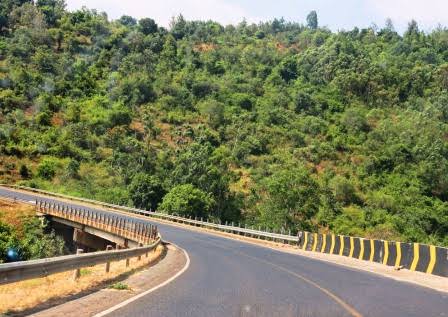
If you’ve ever driven down toward Nithi Bridge, you know that feeling. It’s a long descent, with an hairpin bend you don’t quite see until you’re already in it.

Quiet tension builds up inside the car, and the prayerful types always murmur a prayer. A lot of people subconsciously start thinking of their kids and unfinished plans.

Almost always, there’s an almost audible sigh of relief when a vehicle clears the infamous black spot.

For years, every time there’s an accident there, explanations are usually similar:

“The driver lost control.”

“We got a brake failure.”

“Was the driver over speeding?”

Unfortunately, the driver usually carries all of the blame. But maybe it was never just about the driver.

That stretch of the Makutano – Embu – Meru (A9) road has restrictive geometry – steep gradient, tight curves, limited sight distance.

Experts and engineers call it challenging terrain. The locals, meanwhile – just think it’s jinxed and dangerous.

Honestly, though – there’s a part we don’t talk about enough – the road design.

In countries where safety is taken seriously, blackspots are not managed with warning signs alone. Or, prayers.

If a part of the road gets multiple accidents, it is redesigned, re-aligned and re-engineered.

Now there’s a plan to realign and reconstruct Nithi Bridge – not just patch it – but correct the geometry itself.

Through KeNHA, the project is moving under an EPC (Engineering, Procurement and Construction) model – meaning the contractor handles the full design and build package.

In plain language: the objective is to fix the root cause, not just the symptoms. Because good infrastructure is supposed to protect you even when a driver makes small mistakes.

If there’s a safer gradient, it means fewer runaway vehicles after brakes fail. A better sight distance affords the driver earlier reaction time.

In addition, heavier trucks and buses endure lesser strains of the road has a smoother curvature.

It’s basically tapping into basic physics to protect the people using the bridge.
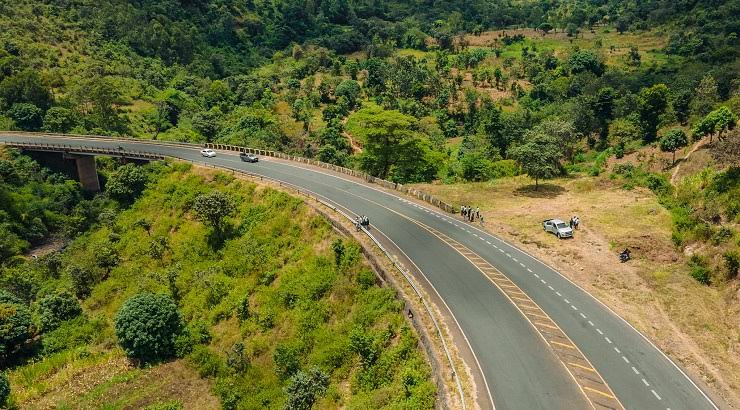
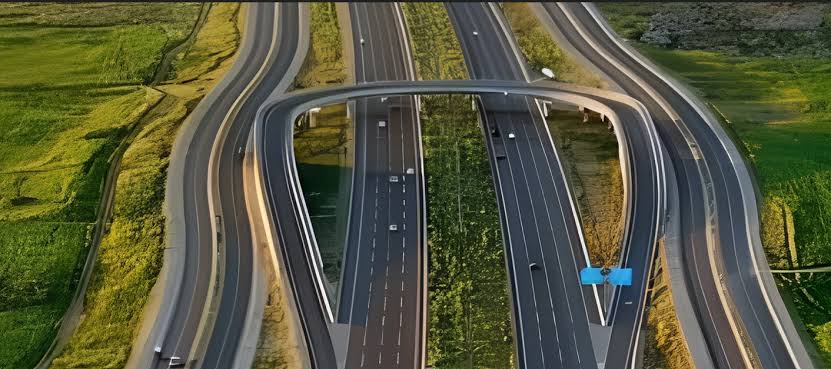
A drone capture of the infamous Nithi Bridge, termed as a black spot in Tharaka Nithi County (Image: Files)

Beyond the human tragedy, there’s an economic angle too. Every serious crash disrupts transport between Nairobi, Embu, Meru and further north.

It affects PSVs, freight movement, insurance costs, emergency services – slows things down and cripples the economy.

Rebuilding Nithi Bridge isn’t about development slogans – it’s about admitting that design has consequences.

Road safety isn’t a luxury feature – it’s basic infrastructure maturity.

If this realignment works – if that stretch becomes predictable instead of feared – then something bigger has shifted.

In a Nutshell ….

The Nithi Bridge realignment reflects what the First World campaign is really about – not slogans, but systems.

It’s the shift from reacting to tragedy to preventing it – from blaming behaviour to correcting design.

When a country fixes a known blackspot properly and permanently, it signals something deeper: a commitment to safety, predictability and long-term thinking.

It’s that kind of structural discipline that’s quietly building a First World Kenya.
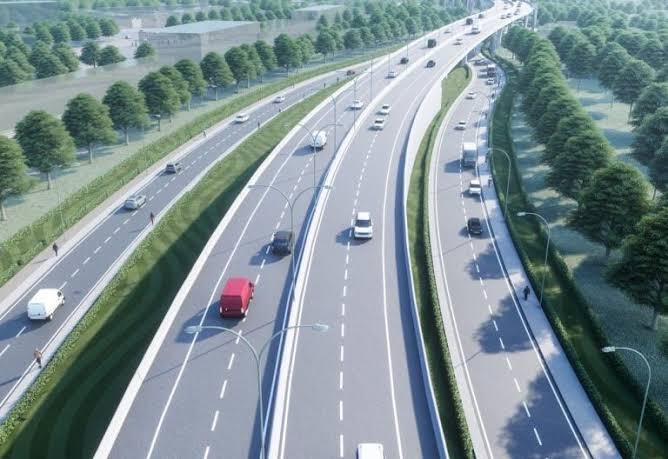
Rironi – Mau Summit: The Rebuild of One of Kenya’s Most Frustrating Road

This year, Kenya has been on a journey a journey of building, improving, and refusing to settle for the frustrations we have lived with for years.

And, nothing captures that journey better than the transformation happening on the Rironi – Mau Summit Highway.

For a long time, the Nairobi – Nakuru stretch has been one of the toughest roads to use:

Endless traffic from Rironi, slow movement up the escarpment, bottlenecks in Nakuru, and long delays for anyone trying to reach Western Kenya.

But now, that story is changing – because Kenya is finally rebuilding one of its most important highways from the ground up.

Now, for the first time in decades, that road is being rebuilt for us; the real people who use it every single day.

Construction has begun on the 233-kilometre Rironi – Mau Summit Highway, and the work is moving fast.

The machines are already rolling in, contractors are assembling teams and groups of workers will soon be spread out along the entire stretch, working simultaneously.

And, even though the full build will take two years, the change will start to show much sooner.

This is not distant development – it is happening now.

For families heading home upcountry, this upgrade means less time on the road and more time together.

For parents travelling with restless kids in the back seat, it means smoother, safer, calmer journeys.

For travellers who have spent years budgeting “traffic time” before they budget fuel, this road is a relief long overdue.

By Christmas 2027, the slow-moving jam at Rironi will be a memory, not a routine.

The new highway is being designed for how we actually live and operate.

From Rironi to Naivasha, it will be a four-lane dual road – wide enough for comfort and speed. From Naivasha to Nakuru, where the trucks and buses pack the road from morning to night, it expands to six lanes to keep everyone moving.

And, Nakuru town – a place where traffic can swallow a whole afternoon – will get an elevated road that lifts congestion away from the city streets and gives people back their time.

Beyond Nakuru, the road becomes a spacious four-lane highway all the way to Mau Summit, opening up travel to Western Kenya like never before.

It means shorter trips for traders, faster access to hospitals, more reliable supply chains for farmers, and smoother trips for students travelling to and from school.

It means that the journey to Western Kenya will feel less like an obstacle and more like a connection -quick, safe, predictable.

The project is large and thus will have two major contractors – China Town and Bridge Corporation and Shandong Hi-Speed Road and Bridge International – handling different phases.

At the heart of their task will be the image of the driver who leaves Nairobi at dawn and hopes to arrive in Eldoret before dark, the market women carrying fresh produce that needs to reach buyers on time and the long-distance trucker whose life is lived on this corridor and deserves a safer, smoother route to earn a living.

When the road is complete, it will be tolled – Ksh8/KM, about Ksh1,400 for the full journey.

But, Kenyans will also have improved alternative routes, because choice matters.

Safety matters. Fairness matters.

Most importantly, this road is not just about today’s convenience.

An artist’s impression of the proposed Rironi – Mau Summit Highway launched for construction in December 2025 (Image: Files)

It strengthens everything around us: the flow of goods from Mombasa to Western Kenya, the trade routes into Uganda, Rwanda, and the DRC, and the lifeline of agriculture that feeds cities and economies.

A better road doesn’t just move cars – it moves possibility.

And to make the experience even better, the government is also widening the Westlands -Rironi road to six lanes. Anyone who has ever been stuck there knows how badly this was needed.

With the work now 82% complete, we are close to unlocking smoother movement right from the heart of Nairobi.

Ultimately, this road is far more than construction – it is an investment in dignity, in quality of life, and in giving people back the time they lose every day.

It is built for the travellers, workers, families, farmers, truckers, students, and dreamers who depend on this corridor and deserve a better experience.

By the end of 2027, the Nairobi – Nakuru journey will no longer feel like a test of patience, but a sign of real progress – a Kenya moving forward for its people.

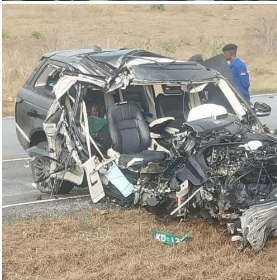
Brand New Range Rover Totaled in Fatal Accident During Delivery to Customer

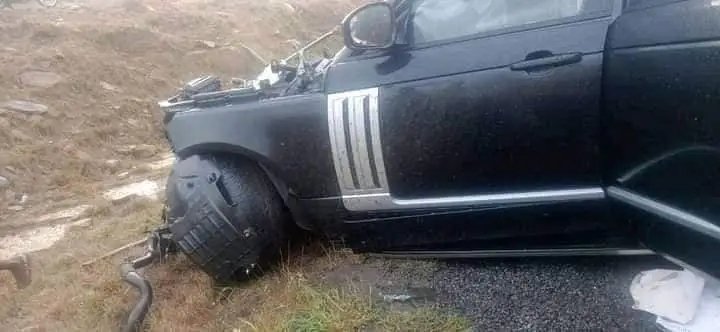
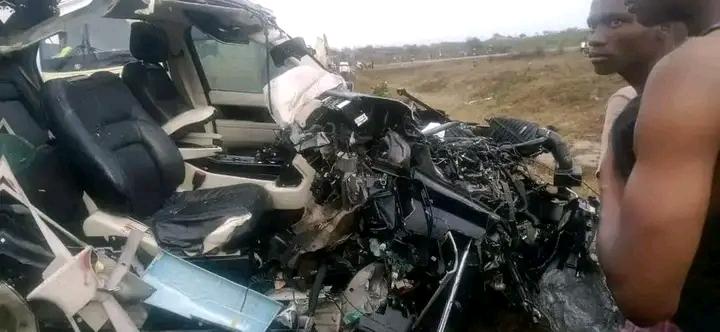
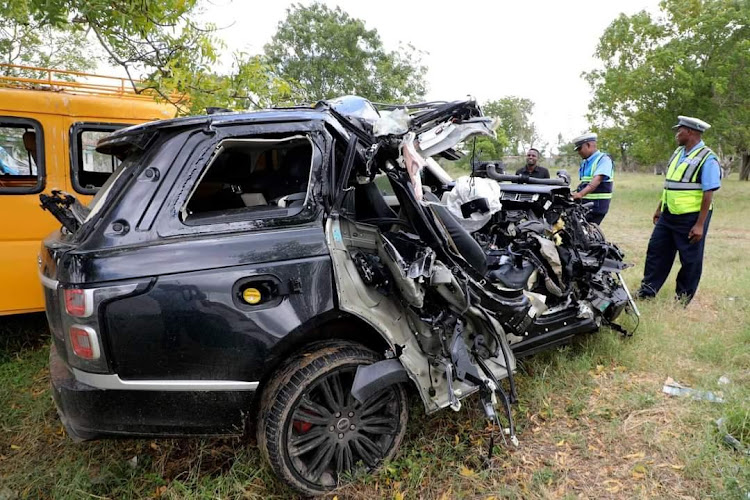
A new Range Rover being delivered to a customer in Nairobi was completely totaled after the delivery driver was involved in a fatal accident.

The luxury vehicle, still bearing temporary plates, was yet to be officially registered by its new owner.

The accident occurred on Tuesday at 7:00 AM at Maji Ya Chumvi on the Mombasa-Nairobi Highway, a known accident-prone area.

Both the driver and an unidentified female passenger were pronounced dead at the scene. Three other individuals were hospitalized with serious injuries.

The identity of the Range Rover’s owner remains undisclosed.

According to a police report, the accident was a head-on collision with a Canter truck transporting grains.

Below are photos from the accident scene.

Mombasa Road traffic interruption announced by KeNHA

The Kenya National Highways Authority (KeNHA) has informed the public about upcoming traffic disruptions on Mombasa Road.

According to a statement from the Authority, the traffic disruption will affect both carriageways of Mombasa Road (A8), specifically between Ole-Sereni and Athi River Interchange. This disruption is a result of ongoing road maintenance works.

During the maintenance period, traffic movement will be directed by police, with assistance from the contractor’s staff at the site. KeNHA has urged motorists to exercise caution when approaching the affected sections, as some lanes will be closed, and traffic will be managed through shared lanes.

Motorists are advised to adhere to traffic signs and guidance provided by traffic marshals and police present at the site.