Inside Ruto’s Coast Tour: Housing, Power and Urban Growth

For a long time, development conversations at the Coast have mostly revolved around tourism, ports and beaches.

But quietly, another conversation has been growing underneath all that: housing, power and urban pressure.

The question emerges, of whether the region’s infrastructure is keeping pace with its population and economic importance.

That partly explains the focus of President William Ruto’s latest working tour across Mombasa and Kilifi counties.

In Mombasa, the government announced a Ksh31 Billion investment targeting the construction of about 10,000 affordable housing units.

This is part of a broader push to address urban housing demand in one of Kenya’s most densely populated counties.

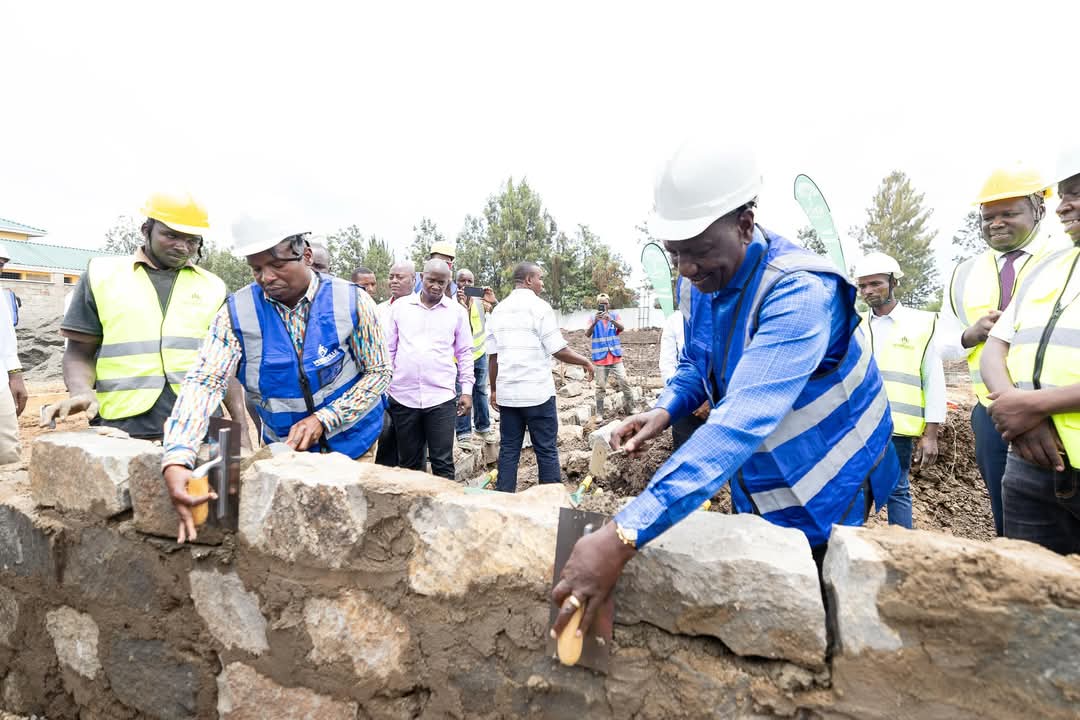
The President also laid the foundation stone for the Makupa Affordable Housing Project alongside the Makupa Modern Market in Mvita Constituency, a project valued at approximately Ksh600 Million.

The housing programme is expected to support not only home ownership, but also jobs within construction, transport, supply chains and small businesses that emerge around new urban settlements.

At the same time, the modern market project signals continued investment in formal trading spaces designed to accommodate growing urban biashara while improving working conditions for traders.

But beyond housing and markets, energy infrastructure formed a major part of the tour.

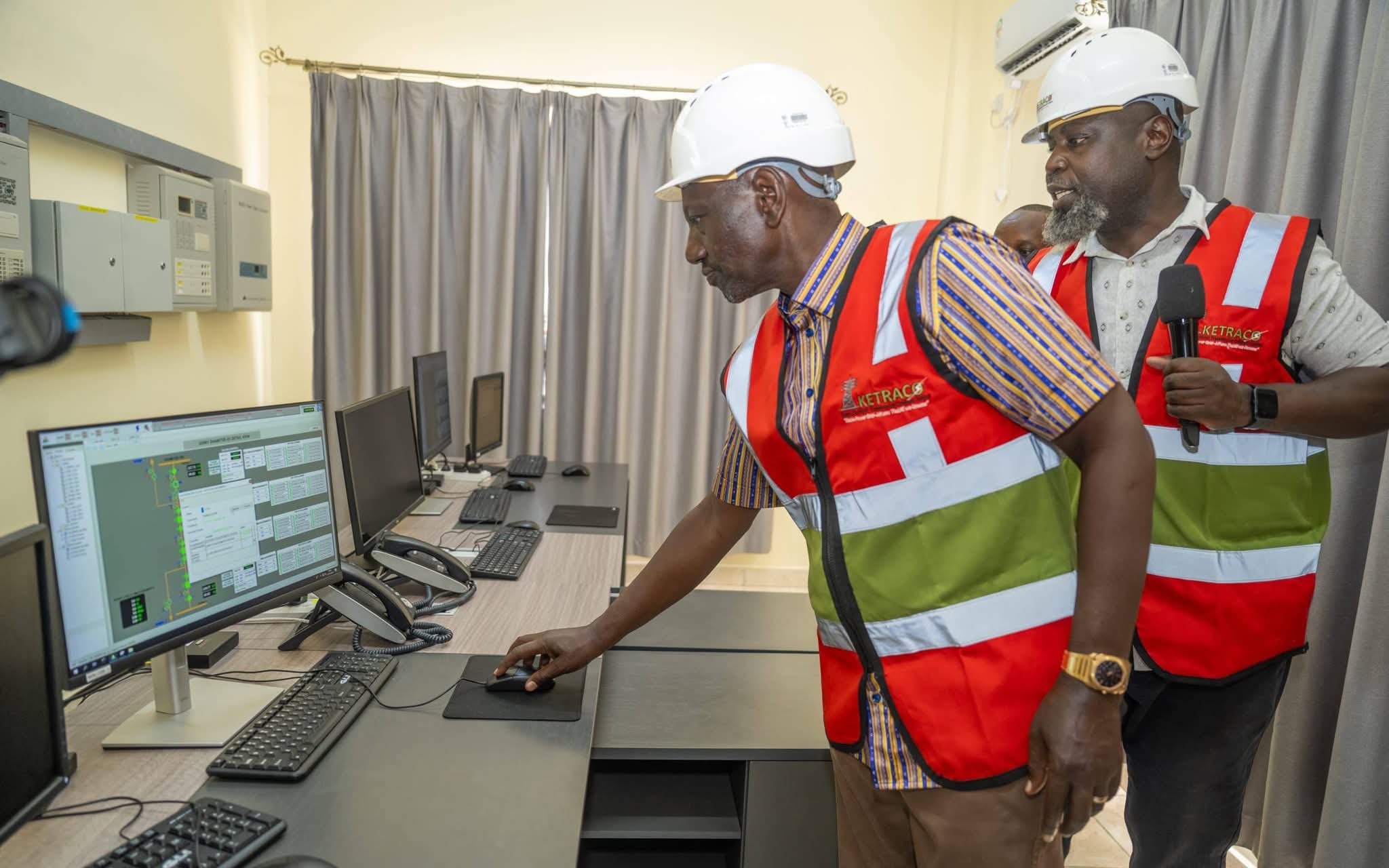
In Kilifi County, President Ruto commissioned the 400/220kV Mariakani Sub-Station, a Ksh3 Billion investment.

This project is expected to improve electricity reliability and grid stability across Kilifi and surrounding areas, including the strategically important Dongo Kundu Special Economic Zone.
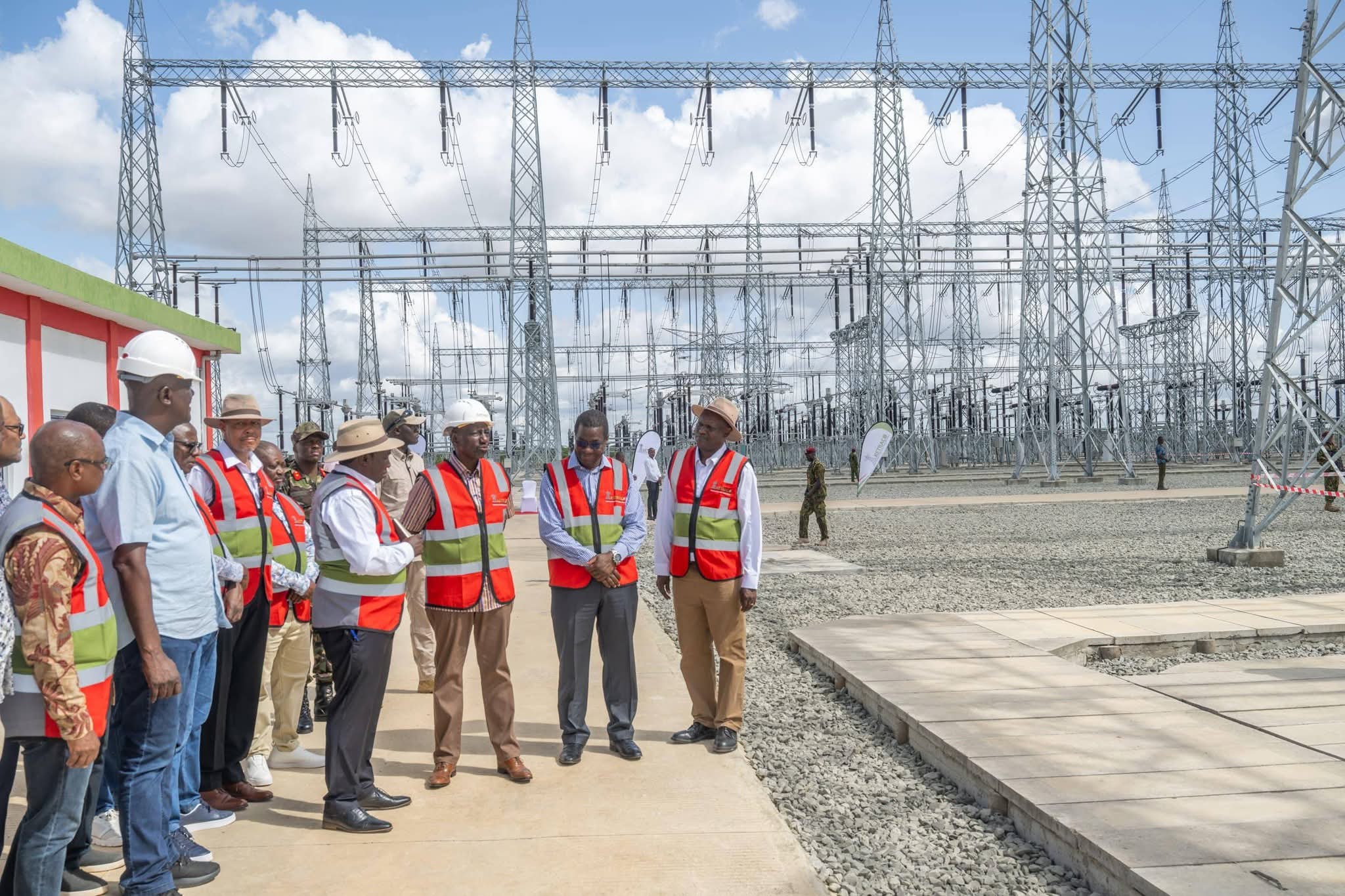
President Ruto and the team during the commissioning of the 400/220kV Mariakani Sub-Station (Image: Files)

The sub-station is particularly significant because power stability remains one of the biggest requirements for industrial growth, manufacturing, logistics, and large-scale investment.

Without reliable electricity, industrial zones struggle to attract serious investors regardless of location advantages.

The government also flagged off the Last Mile Connectivity Project in Mariakani, targeting electricity access for more than 24,000 homes this year at a cost of Ksh2.5 Billion.

That expansion matters beyond lighting alone.

In many growing towns and peri-urban areas, electricity access directly affects small businesses, refrigeration, digital work, security, education and household productivity.

Taken together, the projects launched during the Coast tour reflect a broader infrastructure pattern currently unfolding across several counties: housing expansion, market modernisation and energy investment.

Collectively, these are attempts to prepare regions for larger economic activity in the years ahead.

And increasingly, the bigger story is no longer just about building projects.

It’s about whether counties outside Nairobi are developing the systems needed to support long-term urban and industrial growth.
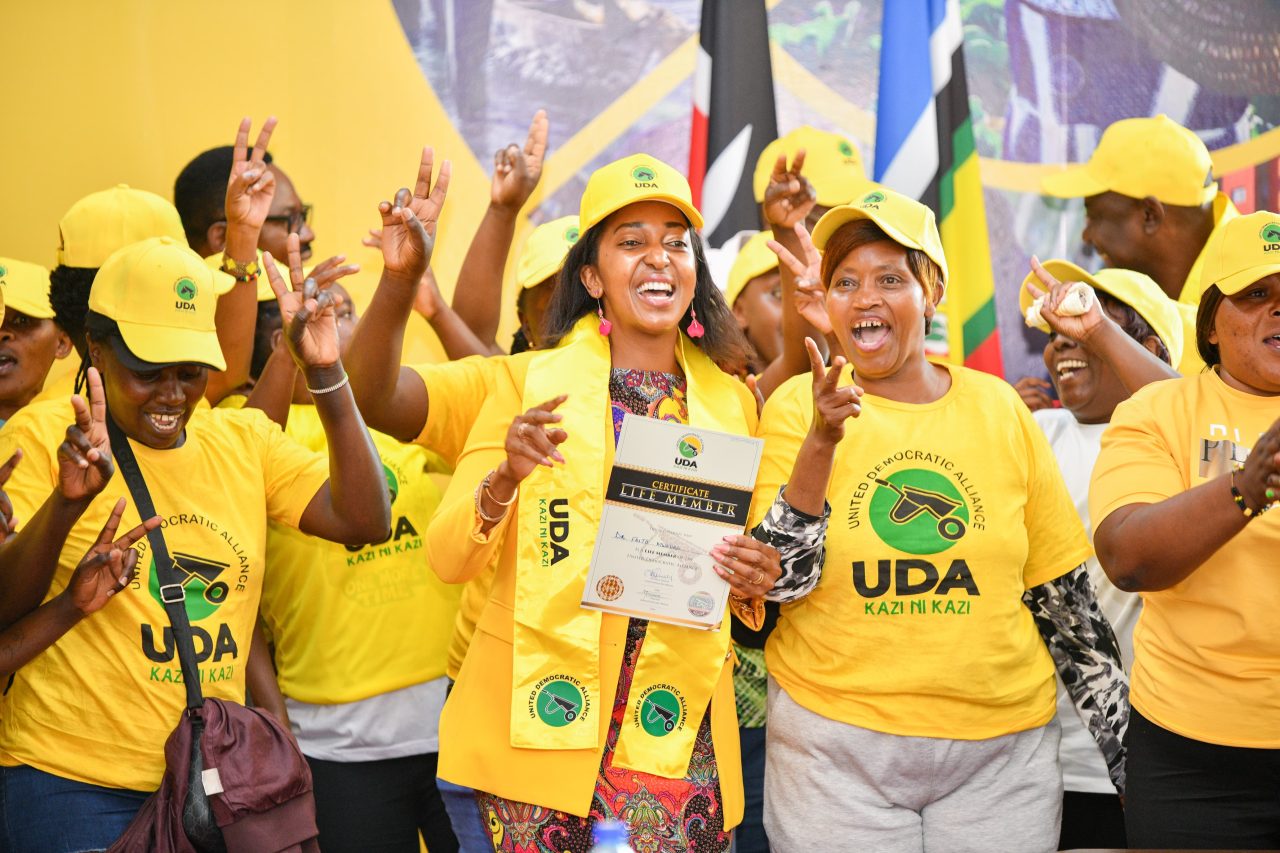
UDA Grassroots Elections in Nyanza Signals a New Political Landscape

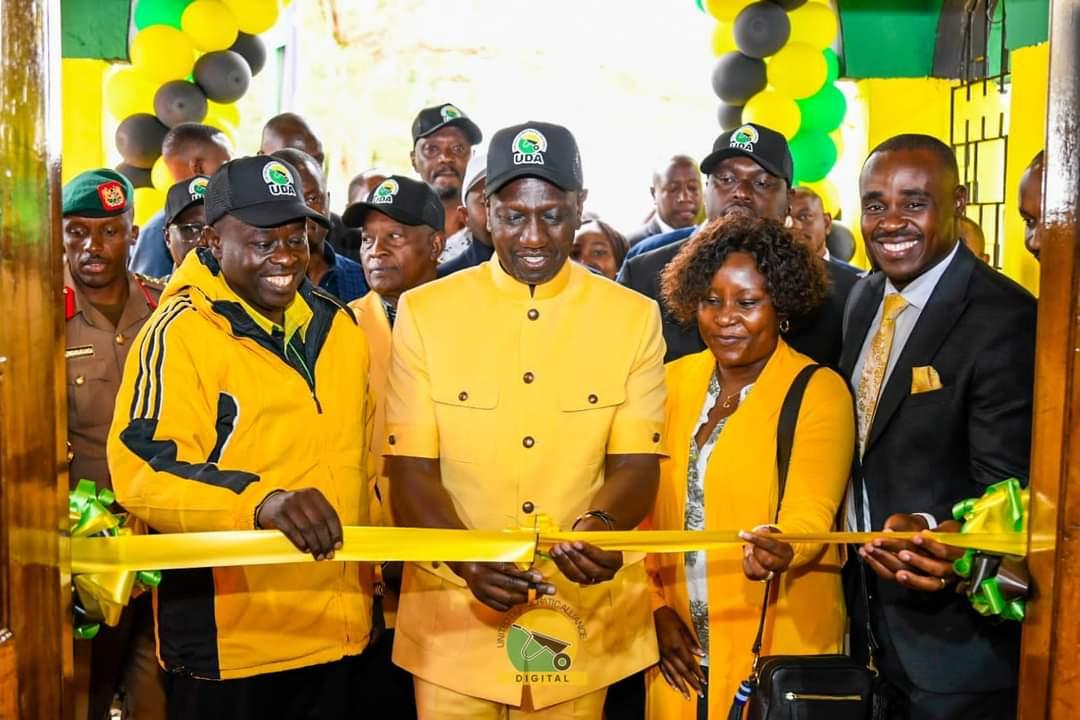
The United Democratic Alliance (UDA) has rolled out grassroots elections in Nyanza counties of Migori County, Kisumu County and Siaya County.

This move reflects a broader shift in Kenya’s political organisation and participation.

According to the brief, the exercise is structured as more than an internal party process.

It is designed to demonstrate organised, credible and scalable electoral systems within party structures, with emphasis on coordination, consistency and adherence to established procedures.

The elections follow a model already applied in other regions, signalling an effort to institutionalise orderly and replicable internal democracy.

The party is positioning the process as evidence of its capacity to manage structured political engagement at scale.

A key feature of the exercise is the absence of zoning or pre-determined outcomes.

Leadership positions are being openly contested, with the party emphasising a non-favouritism approach where candidates compete without regional restrictions.

This model is intended to reinforce the principle that leadership emerges through competitive participation rather than negotiated arrangements.

The rollout in Nyanza carries both symbolic and strategic significance.

The region has historically been associated with strong political alignments, and the elections signal an attempt to expand political competition beyond traditional bases.

The move points to a more fluid political environment where parties are increasingly required to organise and compete across regions.

Delegates dance during a recent UDA Aspirants Registration Drive in Nairobi (Image: Files)

UDA’s activity in the region aligns with its broader objective of positioning itself as a national political platform with presence across the country.

By building grassroots structures in areas previously aligned with other parties, the party is seeking to broaden its reach and reinforce its identity beyond regional strongholds.

The elections are also framed around open participation, allowing individuals to engage regardless of past political affiliation or geographic background.

This approach is presented as part of a wider shift toward a more inclusive political culture, where participation is defined by engagement rather than historical alignment.

The Nyanza grassroots elections highlight evolving dynamics in Kenya’s political space, where internal party processes, competitive participation and cross-regional engagement are becoming central to political organisation.

The outcome of the exercise is expected to shape how parties structure grassroots mobilisation and expand their national footprint ahead of future electoral cycles.

Nyamira County’s Multi-Billion Push on Infrastructure and Services

A series of projects rolled out across Nyamira County during President Ruto’s recent tour point to a broad attempt to strengthen the county’s core systems.

This spans across water and healthcare sectors to roads, education and trade infrastructure.

In the trade sector, the foundation stone was laid for the Ikonge Modern Market, a Ksh70M facility expected to accommodate 200 traders.

The project forms part of a wider Ksh15B investment package targeting affordable housing, markets and student hostels within the county.

Road connectivity is also a central focus.

The 61KM Eronge – Kebuse – Omonyenya road is currently 58% complete, while the Manga–Motemomwamu road stands at 38%.

There are additional roads, as well. They include:

  • Keumbo – Kiendeke Road,
  • Chabera – Nyamusi – Nyamaiya Road,
  • Tombe – Isinta – Gitaru Road.

They are at various stages of launch and procurement, aimed at improving movement across the county.

Water access has seen a notable upgrade with the commissioning of the Nyamira Water Supply Project and the rollout of last-mile connectivity.

The project includes a 40KM pipeline supplying clean water to more than 15,000 households in Kebirigo, Nyaramba, Miruka and surrounding areas.

In healthcare, the government has committed Ksh1B toward the upgrade of Nyamira County Referral Hospital.

This move is expected to expand capacity and improve service delivery within the county.

Education and training infrastructure form a significant part of the investment.

The establishment of Nyamira University College is backed by Ksh500M for construction and an additional Ksh300M for student hostels.

Complementary facilities – including lecture halls, laboratories, a library, administration block and a medical centre – are also under development at North Mugirango.

At the Kenya Medical Training College (KMTC) Nyamira, a 580-capacity student hostel is under construction, alongside 20 new classrooms and five laboratories.

These upgrades are aimed at strengthening medical training and supporting the broader healthcare system.

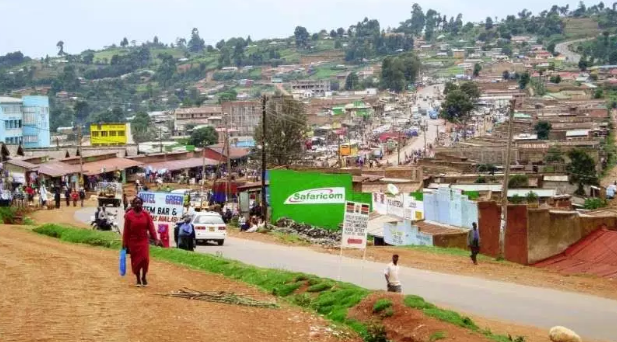
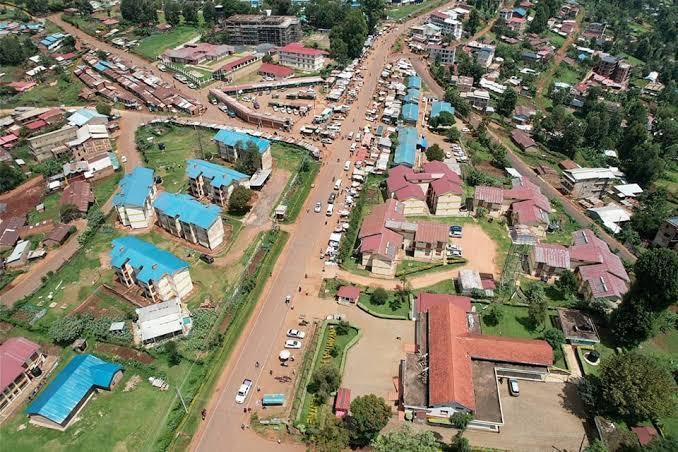
An undated, aerial view of Nyamira Town (Image: Files)

Further investment in student accommodation is being made under the Affordable Housing Programme, with hostels designed to accommodate up to 3,000 students at a cost of Ksh1.3B.

Beyond social infrastructure, longer-term economic connectivity is also being factored in.

The planned extension of the Standard Gauge Railway (SGR) from Narok to Kisumu will include a Ksh300M station at Ikonge, positioning the county within a wider regional logistics network.

Sports development has also been included, with Ksh900M allocated toward the construction of a stadium in the county.

Taken together, these projects span multiple sectors but point in a similar direction – strengthening the systems that support daily life.

From water in households and access to healthcare, to roads that move goods and institutions that train professionals – the focus appears to be on improving how the county functions at a basic level.

In practical terms, the impact of such investments will depend not just on completion, but on how consistently these systems operate once in place.

Because beyond the scale of spending, the real measure will be whether they translate into more predictable access, reduced friction in everyday activity, and wider participation in economic opportunity.

Rironi – Mau Summit: The Rebuild of One of Kenya’s Most Frustrating Road

This year, Kenya has been on a journey a journey of building, improving, and refusing to settle for the frustrations we have lived with for years.

And, nothing captures that journey better than the transformation happening on the Rironi – Mau Summit Highway.

For a long time, the Nairobi – Nakuru stretch has been one of the toughest roads to use:

Endless traffic from Rironi, slow movement up the escarpment, bottlenecks in Nakuru, and long delays for anyone trying to reach Western Kenya.

But now, that story is changing – because Kenya is finally rebuilding one of its most important highways from the ground up.

Now, for the first time in decades, that road is being rebuilt for us; the real people who use it every single day.

Construction has begun on the 233-kilometre Rironi – Mau Summit Highway, and the work is moving fast.

The machines are already rolling in, contractors are assembling teams and groups of workers will soon be spread out along the entire stretch, working simultaneously.

And, even though the full build will take two years, the change will start to show much sooner.

This is not distant development – it is happening now.

For families heading home upcountry, this upgrade means less time on the road and more time together.

For parents travelling with restless kids in the back seat, it means smoother, safer, calmer journeys.

For travellers who have spent years budgeting “traffic time” before they budget fuel, this road is a relief long overdue.

By Christmas 2027, the slow-moving jam at Rironi will be a memory, not a routine.

The new highway is being designed for how we actually live and operate.

From Rironi to Naivasha, it will be a four-lane dual road – wide enough for comfort and speed. From Naivasha to Nakuru, where the trucks and buses pack the road from morning to night, it expands to six lanes to keep everyone moving.

And, Nakuru town – a place where traffic can swallow a whole afternoon – will get an elevated road that lifts congestion away from the city streets and gives people back their time.

Beyond Nakuru, the road becomes a spacious four-lane highway all the way to Mau Summit, opening up travel to Western Kenya like never before.

It means shorter trips for traders, faster access to hospitals, more reliable supply chains for farmers, and smoother trips for students travelling to and from school.

It means that the journey to Western Kenya will feel less like an obstacle and more like a connection -quick, safe, predictable.

The project is large and thus will have two major contractors – China Town and Bridge Corporation and Shandong Hi-Speed Road and Bridge International – handling different phases.

At the heart of their task will be the image of the driver who leaves Nairobi at dawn and hopes to arrive in Eldoret before dark, the market women carrying fresh produce that needs to reach buyers on time and the long-distance trucker whose life is lived on this corridor and deserves a safer, smoother route to earn a living.

When the road is complete, it will be tolled – Ksh8/KM, about Ksh1,400 for the full journey.

But, Kenyans will also have improved alternative routes, because choice matters.

Safety matters. Fairness matters.

Most importantly, this road is not just about today’s convenience.

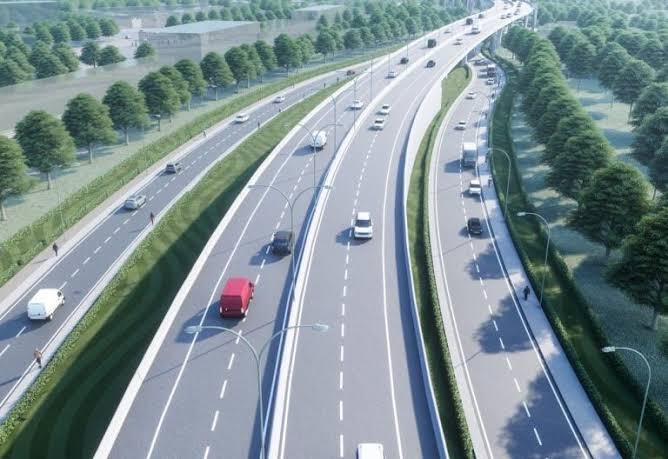
An artist’s impression of the proposed Rironi – Mau Summit Highway launched for construction in December 2025 (Image: Files)

It strengthens everything around us: the flow of goods from Mombasa to Western Kenya, the trade routes into Uganda, Rwanda, and the DRC, and the lifeline of agriculture that feeds cities and economies.

A better road doesn’t just move cars – it moves possibility.

And to make the experience even better, the government is also widening the Westlands -Rironi road to six lanes. Anyone who has ever been stuck there knows how badly this was needed.

With the work now 82% complete, we are close to unlocking smoother movement right from the heart of Nairobi.

Ultimately, this road is far more than construction – it is an investment in dignity, in quality of life, and in giving people back the time they lose every day.

It is built for the travellers, workers, families, farmers, truckers, students, and dreamers who depend on this corridor and deserve a better experience.

By the end of 2027, the Nairobi – Nakuru journey will no longer feel like a test of patience, but a sign of real progress – a Kenya moving forward for its people.

Six Months Later: More Kenyans Are Warming Up to the Broad-Based Government

Six months ago, the idea of a broad-based government felt like a political shock to many Kenyans.

Today, it appears something has shifted.

According to a new survey by TIFA, public support for the broad-based government has doubled – rising from 22 per cent in May to 44 per cent in November.

It’s not overwhelming approval, but it signals a clear change in mood around one of the most controversial political arrangements in recent years.

At the same time, opposition to the arrangement has eased. Those opposed now stand at 48%, down from a high of 64% recorded in August.

That August figure came at a tense moment in the country, when memories of violent crackdowns during the June and July protests were still raw and heavily shaping public opinion.

The broad-based government took shape last year when President William Ruto launched a high-profile continental campaign backing Raila Odinga’s bid for the African Union Commission chairmanship.

What followed was unexpected: a political partnership that effectively neutralised ODM’s role as the official parliamentary Opposition.

When Odinga lost the AU race in February, the partnership deepened.

President Ruto brought several senior ODM leaders into Cabinet, with others appointed as Permanent Secretaries, ambassadors, and members of parastatal boards.

The political symbolism was reinforced by a series of presidential visits to Nyanza, where development projects were commissioned and the message of cooperation made visible.

For many Kenyans, this marked a sharp break from the familiar politics of rivalry and resistance.

TIFA’s data shows that resistance to the broad-based government peaked in August.

That period reflected a country still processing recent unrest, mistrust, and fear of shrinking political space.

But by November, the temperature had cooled. As the arrangement settled into routine governance, fewer Kenyans appeared outright hostile to it.

Instead, many seem to have moved into a space of cautious acceptance – not fully convinced, but no longer alarmed.

The survey was conducted just weeks before the death of Raila Odinga on October 15 while he was receiving medical treatment in India.

Even before his passing, there were growing internal debates within ODM about the party’s future and its position ahead of the 2027 General Election, now less than two years away.

Odinga’s death appears to have sharpened those tensions, particularly within the party and the wider Odinga family, as questions about succession and political direction grow louder.

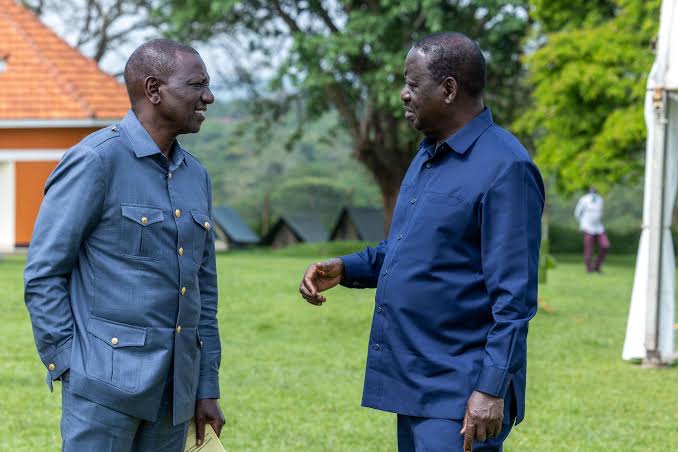
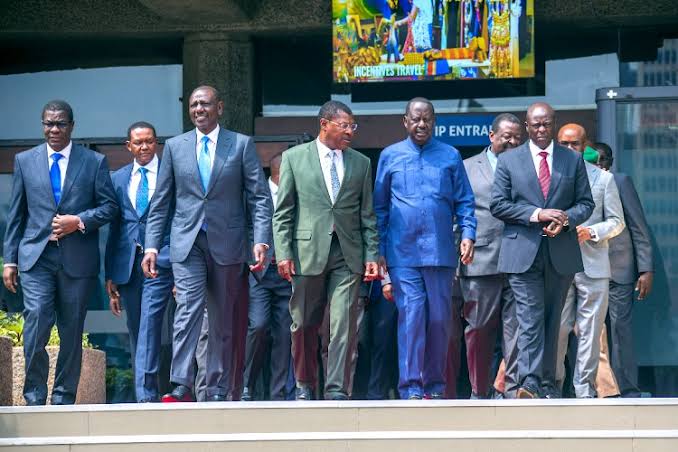
Leaders from the broad-based government during a recent meeting in Nairobi (Image: Files)

TIFA notes that views on the broad-based government were analysed alongside responses to other political questions to measure how divisive the issue remains.

The picture that emerges is nuanced. Nearly half the country still opposes the arrangement.

But, a growing share of Kenyans appear to have accepted it as part of the political reality – whether out of pragmatism, fatigue, or a desire for stability after years of high-octane politics.

This is not a story of widespread enthusiasm. It is a story of adjustment.

As the initial shock fades and governance continues under the new arrangement, more Kenyans seem willing to live with the broad-based government, even if they are not fully sold on it.

In Kenyan politics, that shift alone is significant.

PS Raymond Omollo: Violence Is Not Currency for Politics in Kenya

PS Raymond Omollo insists that planning Kenya’s future cannot be left to the whims of intimidation and violence.

In a meeting earlier today, the PS warned against turning violence into a currency for politics.

In his words, politicians must lead by persuasion, not coercion – a reminder that democracy only thrives where ideas and dialogue carry the day, not threats or force.

Omollo’s remarks land at a delicate moment.

Youth unemployment remains a pressing challenge, leaving many young Kenyans vulnerable to exploitation by opportunistic political actors or even criminal networks.

Yet, he was categorical that crime is not and can never be the alternative.

Instead, the government is widening pathways for opportunity, particularly through the Affordable Housing Programme and digital empowerment initiatives.

These, he argued, are not just projects on paper but practical solutions designed to absorb thousands of young people into meaningful, dignified work.

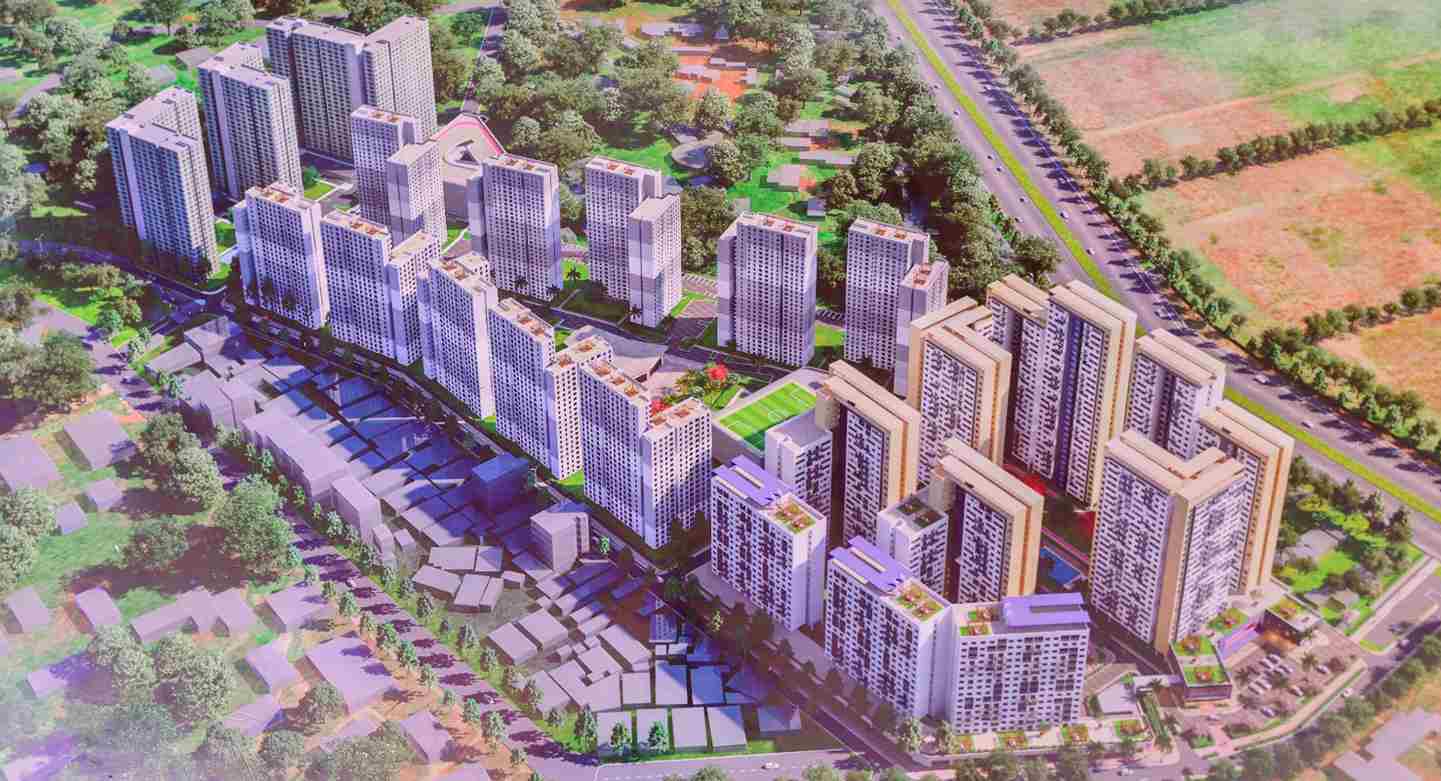
Sample model of the Ksh13B Affordable Housing scheme in Ziwani, Nairobi.

The Affordable Housing Programme

PS Omollo reminded the citizens that this is more than a construction drive.

It has become a powerful job creation engine, providing openings for skilled and unskilled labour, artisans, suppliers, and entrepreneurs across the country.

In parallel, digital skills programmes are equipping young people to compete in an economy that increasingly rewards innovation, coding, and online services.

For PS Omollo, the message is clear:

The youth must position themselves for these opportunities rather than be drawn into crime or become instruments of political intimidation.

This framing matters because political violence has long cast a shadow over Kenya’s democratic journey.

When leaders normalize coercion, institutions weaken and communities fracture.

Omollo’s speech sought to push back against that trend, calling on leaders to win support by ideas and persuasion rather than by fear.

It was also a reminder to citizens – especially young people – that there are alternatives, and that these alternatives are not abstract promises but tangible projects already reshaping neighbourhoods and job markets.

By highlighting housing and digital empowerment, the PS located the fight against violence within a broader vision of national transformation.

These are programmes that align with President Ruto’s three-year push for a more digitized, citizen-focused government.

They are evidence that the state is not merely condemning crime and political intimidation, but actively offering a different future.

Omollo’s words, then, should not be heard as just another government soundbite.

They are a call to redefine the culture of politics in Kenya:

To reject intimidation, to champion persuasion, and to match civic participation with economic opportunity.

For young Kenyans especially, the choice is stark – a path of fear and criminality that leads nowhere, or a path of innovation, work, and contribution to national growth.

Violence may make noise in the short term, but it never builds.

What builds nations are ideas, opportunity, and the courage to lead by persuasion.

Dr. Raymond Omollo: Ruto’s Legacy of Bold Disruption, Reform and Dreams

History remembers leaders not for comfort but for courage.

Transformative figures share three traits: they disrupt the status quo, they execute under extreme constraints, and they envision a future beyond the present horizon.

From America’s founders who broke free from empire to the Asian Tigers who charted their own industrial path, progress has always meant unsettling the present in order to unlock the future. Kenya today stands at such a moment of reckoning.

In his first three years, President William Ruto has chosen disruption not as chaos but as a deliberate catalyst for reform and renewal.

His style blends radical change with pragmatic execution and aspirational vision – a rare mix that has begun reshaping Kenya’s politics and economy at a critical juncture.

This philosophical grounding is not foreign to Kenya. At independence, leaders faced the ideological question of how to grow.

Through Sessional Paper No. 10 of 1965, the nation adopted African Socialism – a uniquely Kenyan philosophy rooted in democracy, dignity, mutual responsibility, and a mixed economy.

Today, the Hustler Nation revives that founding debate with 21st-century urgency: what kind of economy should Kenya build, who should it serve, and how should resources be shared?

By re-centering politics on ordinary Kenyans – farmers, teachers, traders, boda boda riders, and the youth – the President has reopened the nation’s most fundamental questions.

President Ruto shares a moment with PS. Dr. Raymond Omollo during a previous state function in Nairobi (Image: Files)

His restructuring of subsidies, unpopular but necessary, reflects the very essence of radical leadership: rarely comfortable, often contentious, but always defined by courage to make privileged enemies in order to secure a fairer system for the majority.

Yet disruption alone is not enough. Practical governance is what sustains nations.

Confronted with public debt, food insecurity, and joblessness, the President has anchored reforms in agriculture, affordable housing, Universal Health Coverage, and MSME empowerment.

The Hustler Fund, offering micro-credit to citizens excluded from the banking system, directly challenges a decades-old financial order.

Already, thousands of small traders have accessed credit and invested in their livelihoods – a quiet but powerful revolution in grassroots empowerment.

Other nations offer useful mirrors. During the Great Depression, Franklin D. Roosevelt dared to launch the New Deal despite fierce opposition.

He showed that radical courage, even when unpopular, can stabilize a nation and restore hope.

Lee Kuan Yew in Singapore proved that disciplined, practical execution – not rhetoric – can transform a struggling society into an economic powerhouse.

And Mahatma Gandhi envisioned empowerment from the village outward, insisting that prosperity must begin at the grassroots.

These leaders illustrate what President Ruto is attempting: radical enough to disrupt, practical enough to execute, and visionary enough to dream beyond the present.

Unlike populists who promise without delivery, President Ruto has favored execution. His frequent county tours – where he listens, launches projects, and measures progress firsthand – show a leader deeply invested in service, not spectacle.

Practicality for him means choosing sustainability over applause, and patient reforms over quick fixes.

The results are becoming evident with Kenya’s GDP expanding to over Ksh 17 trillion, cementing its position as East and Central Africa’s largest economy and 6th in Africa. Inflation has dropped sharply from 9.6% in October 2022 to 4.1% as of today, easing the cost of living for ordinary households.

The shilling, once battered, has stabilized, while foreign exchange reserves stand at USD 11.8 billion, safeguarding imports and trade.

Farmers productivity is at an all-time high intensively boosted by the fertilizer subsidy program, with maize production in the North Rift and Western Kenya hitting record surpluses.

Incidents of cattle rustling have reduced by over 70% on account of Operation Maliza Uhalifu; a strategic approach incorporating peace dialogues, disarmament, and the deployment of community policing units.

Markets once abandoned in Turkana and West Pokot are thriving again, and schools that had closed due to insecurity are reopening.

The once barely attainable Universal Health Coverage is now in hand as Kenya rolled-out Taifa Care bringing under the Social Health Authority over 25 Million citizens a number triple its preceding NHIF.

Families can access healthcare without catastrophic costs. Over 7,500 new healthcare workers have been recruited and deployed, reducing doctor-to-patient ratios while digital health records are improving efficiency in county hospitals.

Kenya’s voice has also grown abroad.

The Africa Climate Summit and his leadership within the AU have placed the country at the front row of continental diplomacy. From climate action to regional trade and peace mediation, Kenya now plays a bridging role that strengthens both its global standing and its domestic economy.

For a nation long seen as a follower, this renewed assertiveness has repositioned Kenya as a leader.

Recognizing that the challenges remain stark: debt, unemployment, food insecurity, and climate shocks, Kenya’s history will not remember the comfortable or the cautiously populist.

It will remember those radical in courage, practical in action, and visionary in purpose to place the nation firmly in the future.

In this moment, President Ruto stands as all three.

Mid-Term Scorecard: President Ruto’s Progress on the Bottom-Up Economic Agenda

At the halfway mark of President William Ruto’s first term, Kenya stands at a critical juncture, evaluating the successes and challenges of the Bottom-Up Economic Transformation Agenda (BETA) 2022-2027.

Designed to uplift millions at the base of the economic pyramid, BETA focuses on agriculture, MSMEs, affordable housing, healthcare, and digital transformation.

This mid-term review examines the administration’s key achievements, the impact on citizens, and areas requiring further intervention.

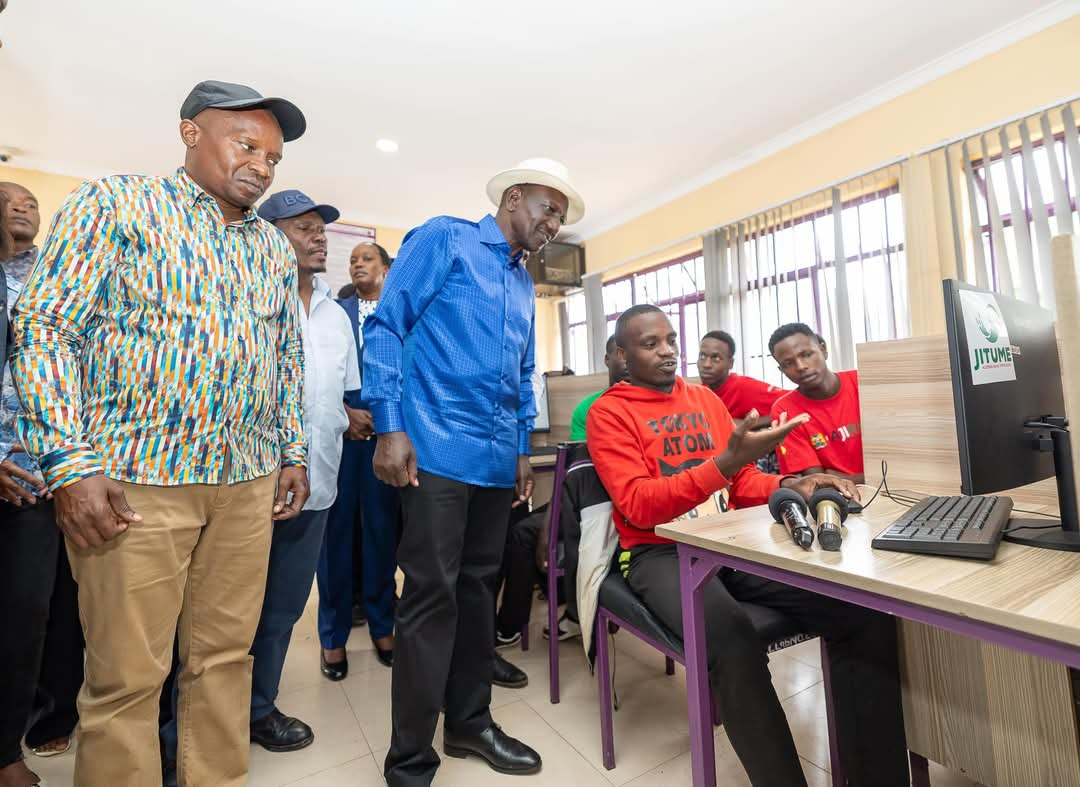
President Ruto, Vice President Kindiki interacts with IT students at an unidentified college (Image: Facebook)

1. Agriculture

Agriculture remains central to Kenya’s economy, and the administration has prioritized reducing production costs, stabilizing farmer incomes, and increasing output.

Key Achievements

Fertilizer Subsidy: The price of fertilizer dropped by 67%, from KES 7,500 in 2022 to KES 2,500 in 2025, boosting affordability for farmers.

Increased Maize Production: Output rose by 39%, from 61.7M 50-kg bags in 2022 to 85.7M in 2025.

Expansion of Livestock Insurance: The number of insured Tropical Livestock Units (TLUs) increased from 78,175 in 2022 to 649,518 in 2025, benefiting 1.6 million pastoralists.

Revival of Key Crops: Guaranteed Minimum Returns (GMR) introduced for dairy, sugarcane, wheat, macadamia, and miraa, stabilizing farmer incomes.

Impact and Challenges

These interventions have increased productivity, reduced dependency on imports, and improved food security. However, challenges persist, including climate-related risks and slow adoption of modern farming techniques.

2. MSME Economy

Micro, Small, and Medium Enterprises (MSMEs) are the backbone of Kenya’s economy, and the government has focused on easing financial access and reducing regulatory bottlenecks.

Key Achievements

Hustler Fund: KES 63.5 billion disbursed to 26.3 million individuals and KES 196.8 million to 58,630 small businesses.

Reduced Bureaucracy: Digital tax and regulatory compliance processes streamlined via eCitizen, reducing business registration time.

Market Access: 2,001 MSMEs facilitated to access local and regional markets, including subcontracting opportunities in the Affordable Housing Program.

Impact and Challenges

While the Hustler Fund has expanded financial inclusion, concerns over loan repayment rates and sustainability remain.

Additionally, informal businesses still struggle with licensing challenges.

President Ruto and other leaders inspecting progress at the Affordable Housing Project in Ruiru, Kiambu County (Image: Facebook)

3. Affordable Housing

Housing is a flagship priority, with the goal of delivering 250,000 affordable units annually.

Key Achievements

Affordable Housing Units: 130,988 units under construction in 2025, a 1,061% rise from 8,872 in 2022.

Job Creation: 206,000 new jobs created in construction, benefiting TVET graduates and Jua Kali artisans.

Expanded Mortgage Access: Low-cost mortgages under KES 10,000 introduced, with a 40% rise in refinanced mortgages since 2022.

Impact and Challenges

The housing sector has stimulated employment and investment, but land acquisition, financing, and public-private partnerships require strengthening to meet the ambitious targets.

4. Universal Health Coverage (UHC)

Healthcare reform has focused on expanding insurance coverage and improving service delivery.

Key Achievements

Social Health Insurance (SHI): Membership grew by 146%, from 8M NHIF members in 2022 to 19.7M under SHA in 2025.

Strengthening Primary Healthcare: 106,542 Community Health Promoters (CHPs) recruited and equipped, covering 8.5M households.

KEMSA Reform: 63% of medical supplies now sourced from local manufacturers, reducing reliance on imports.

Impact and Challenges

While healthcare access has improved, challenges include delays in full implementation of new health laws and initial operational inefficiencies in SHA.

5. Digital and Economic Growth

Kenya is positioning itself as a digital hub by expanding infrastructure and regulatory frameworks.

Key Achievements

E-Government Services: Expansion of digital identity systems and automation of public services.

Digital Jobs: Investment in online work programs and tech hubs to create employment for youth.

Impact and Challenges

The digital shift has improved efficiency, but cybersecurity risks and digital inclusion for marginalized groups need to be addressed.

Conclusion

At the mid-term mark, the Kenya Kwanza administration has made significant progress in key sectors, laying a foundation for economic transformation.

However, challenges such as financing gaps, climate resilience, and public-private sector collaboration require further attention.

The next phase will be critical in ensuring these gains translate into sustainable economic prosperity for all Kenyans.

Verdict

Progress has been made, but sustained effort is needed to fully realize the BETA vision.

Why the Makena Njeri LGBTQ push is dead in the water

We all know Makena Njeri is a lesbian… Or is the currently politically correct term a tranny/ trans man? I don’t know anymore. All I know is that she is a woman who loves women and dresses like a man because she identifies as one regardless of what science says and it is only polite for me to refer to her as one if I subscribe to the currently prevalent socio-political zeitgeist emanating from America -which I don’t.

Makena Njeri Admonishes Ruto To Recognize LGBTQ Community

See how complicated her being a lesbian is these days? She is a tomboy who identifies as a man and would prefer you use the pronouns he/him like we should ignore all the education my parents paid for inorder for me to graduate from the 8-4-4 system so I can preserve her feelings.

Makena Njeri

But this is not about that aspect of Makena Njeri. Instead, it is about the fact that she reached out to President Ruto following his interview with CNN where Christian Amanpour asked him about his stance on the subject.

The Makena Njeri question: Is Kenya ready for homosexual families?

She tried to insert herself into the conversation after the fact for two real reasons; the first being because it directly affects her given her lifestyle and the gender dysphoria she clearly suffers from but also for clout.

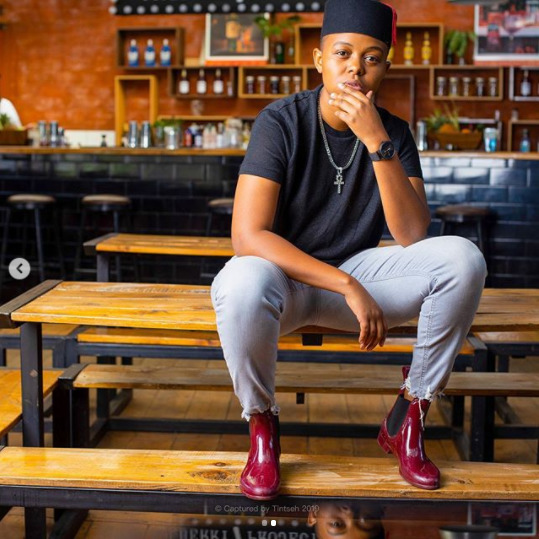
Film and TV presenter, Makena Njeri

But you see, this isn’t nearly the time when this conversation is acceptable in Kenya. Why you ask? Because Kenya is not just a conservative nation but is also a Christian fundamentalist nation and the other large majority of Kenyans are conservative Muslims. None of these groups is inclined to listen favourably to anything Makena Njeri has to say on the topic. It’s dead in the water.

Makena Njeri reveals why she likes it when he lovers call her Dzaddy

Secondly, Ruto is a man whose entire political career has seen him align himself heavily with the church and his Christian faith. He wears it as a badge of honour and he will be damned if he appears to be sympathetic to what the Bible and Quran have proscribed as haram.

Makena Njeri

Hell, I doubt whether he would even entertain the idea on a personal level.

LGBTQ activist Makena Njeri talks pregnancy – reveals she wants a family of her own

So what options are open to Makena Njeri? Well, I would advise her and the other celebrities who have come out of the closet such as Chimano and Maxwell Mwamburi is for them to simply continue to live their lives as they have. Kenyans by and large do not care what you do behind the confines of your home. What they hate is for you to rub it in their faces.

Makena Njeri

But in addition to this, if they truly do want to effect any sort of societal change, then they need to borrow a leaf from gay Hollywood. Makena Njeri needs to wake up to the realisation that money is power. Period. They need to come together and start gathering financial power around themselves. This would allow them to first truly create their own spaces such as the places they live, shops they shop at and restaurants they patronize.

“Stop killings us” Makena Njeri speaks following brutal murder of gay lady, Sheila Lumumba

This power can then be used to push not just political changes but also policies and culture. Do I want to see this? No. But this is how Makena Njeri can achieve her far-fetched goals. Until then, all she is doing is singing an opera for a very uninterested bull.

For more thought-provoking opinion pieces, click here. And be sure to like our Instagram page.


Sources:

GENDER DYSPHORIA REGRET:

https://journals.lww.com/prsgo/fulltext/2021/03000/regret_after_gender_affirmation_surgery__a.22.aspx

https://www.heritage.org/gender/commentary/sex-reassignment-doesnt-work-here-the-evidence

https://embryo.asu.edu/pages/david-reimer-and-john-money-gender-reassignment-controversy-johnjoan-case

Comedians forced to apologize for parking probox in DP Ruto’s Karen Residence

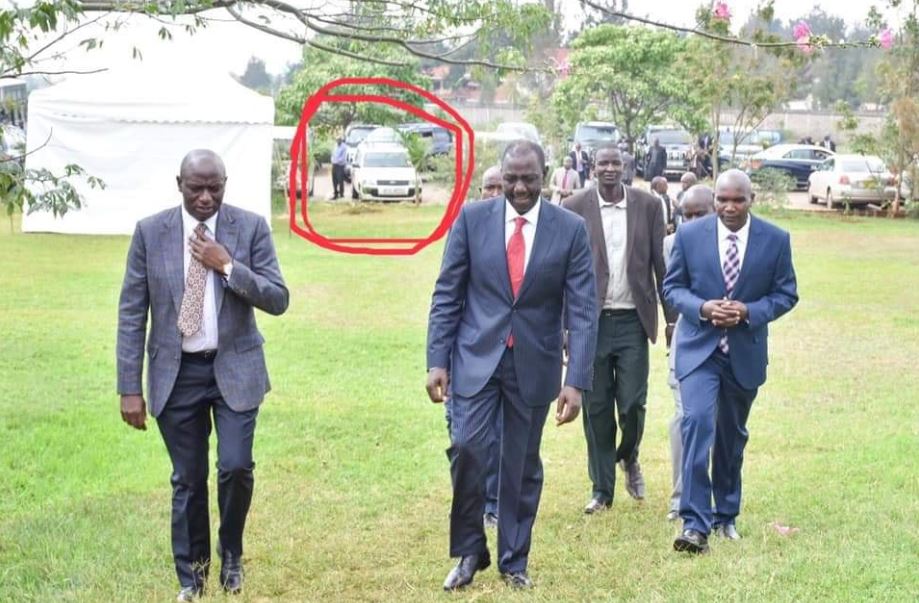
A recent photo showing a Toyota Probox parked outside DP Ruto’s Karen residence has sparked an online debate as Kenyans tried to figure out who came with the car.

Ruto recently invited Kenyan online content creators to discuss how they can cooperate on matters on content. That was a month ago but Kenyans recently spotted a Probox packed there and believe it’s for  comedians Propesa.

The comedians had to share a rather funny statement apologizing for leaving their Probox there.

In a statement, Propesa dismissed the reports saying the Probox belongs to them.

Here’s the letter 

Press Statement:

We wish to rubbish rumours that have been circulating on different media outlets concerning a white Toyota Probox that was spotted earlier today at DP Ruto’s Karen residence alleged to have been ridden by Kericho county MCAs.

We state as follows:- the said Probox belongs to PROPESA team, we had visited our uncle last week and decided to spend a few days catching up with family and familiarizing ourselves with Karen and Nairobi atmosphere in general. Is there a problem enjoying life around our successful uncle? He has not said we should go home, why should media try to antagonize us with our uncle?

We condemn with strong words the source of the unfounded rumours on the honourable MCAs from Kericho. The media should learn to confirm such stories before circulating.

We also apologize to our uncle’s family for causing agony to them by parking the car there. We understand it was burning picture and we apologize.

It was a mistake caused by Kiptangus who disappeared with the car keys and when the said visitors arrived it was supposed to be hidden behind the granary (choge). We are sorry and media should not try to give reasons why we should go back home. We arrived just the other day and we have not even known town well.

Signed…

William Ruto’s wife begs young ladies to stop dating sponsors: These old men who lure you with money will only take you for granted

Kenyan ladies going for older men has become a crisis now and it seems older women from all sides are coming out to plead with ladies to focus on younger men.

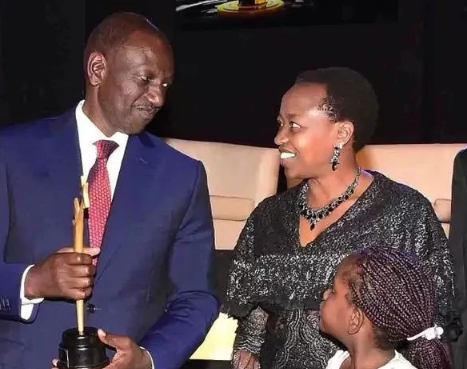
Deputy President William Ruto’s wife Rachel Ruto recently warned young ladies to keep off these men because such relationships don’t amount to anything.

According to Rachel, young women are lured by these men who come carrying money and gifts and end up forgetting their value as women.

“Dignified women would not give themselves to any man. You should remember girls are a priceless gift to the world. Dealing with sponsors as sugar daddies are currently called should never be part of your agenda,” she said while addressing students of Kenyatta University on Thursday, October 11, during the marking of the International Day of the Girl Child. 

Independent

She went on to add that women can also be independent and shouldn’t feel like they need a man to survive.

“There’s no principle which states that women can only survive through facilitation from men. These older men who lure you with money and gifts will only take you for granted. I pray that all girls in higher learning institutions will be firm enough to say no to sponsors,” she added.