The Economic Logic Behind William Ruto’s Kazakhstan Tour

For many Kenyans, Kazakhstan sounds distant.

The kind of country you only hear about during geography lessons, boxing tournaments or as a set on random Netflix flicks.

So when President William Ruto travelled there this week, the immediate question online was predictable:

Why Kazakhstan?

But beneath the politics and social media jokes, the visit was largely about markets, trade routes, investment and positioning Kenya in a part of the world that is becoming increasingly important economically.

And the numbers already explain part of the reason.

According to the Tea Board of Kenya’s 2025 report, Kenya’s tea exports to Kazakhstan grew by nearly 187% in a single year, reaching 24.44 million kilograms.

Kazakhstan is now Kenya’s sixth-largest tea export market, accounting for about 3.7% of total export volumes.

That matters because tea is not just another export.

The sector supports more than 750,000 smallholder farmers and roughly 6.5 million Kenyans directly and indirectly.
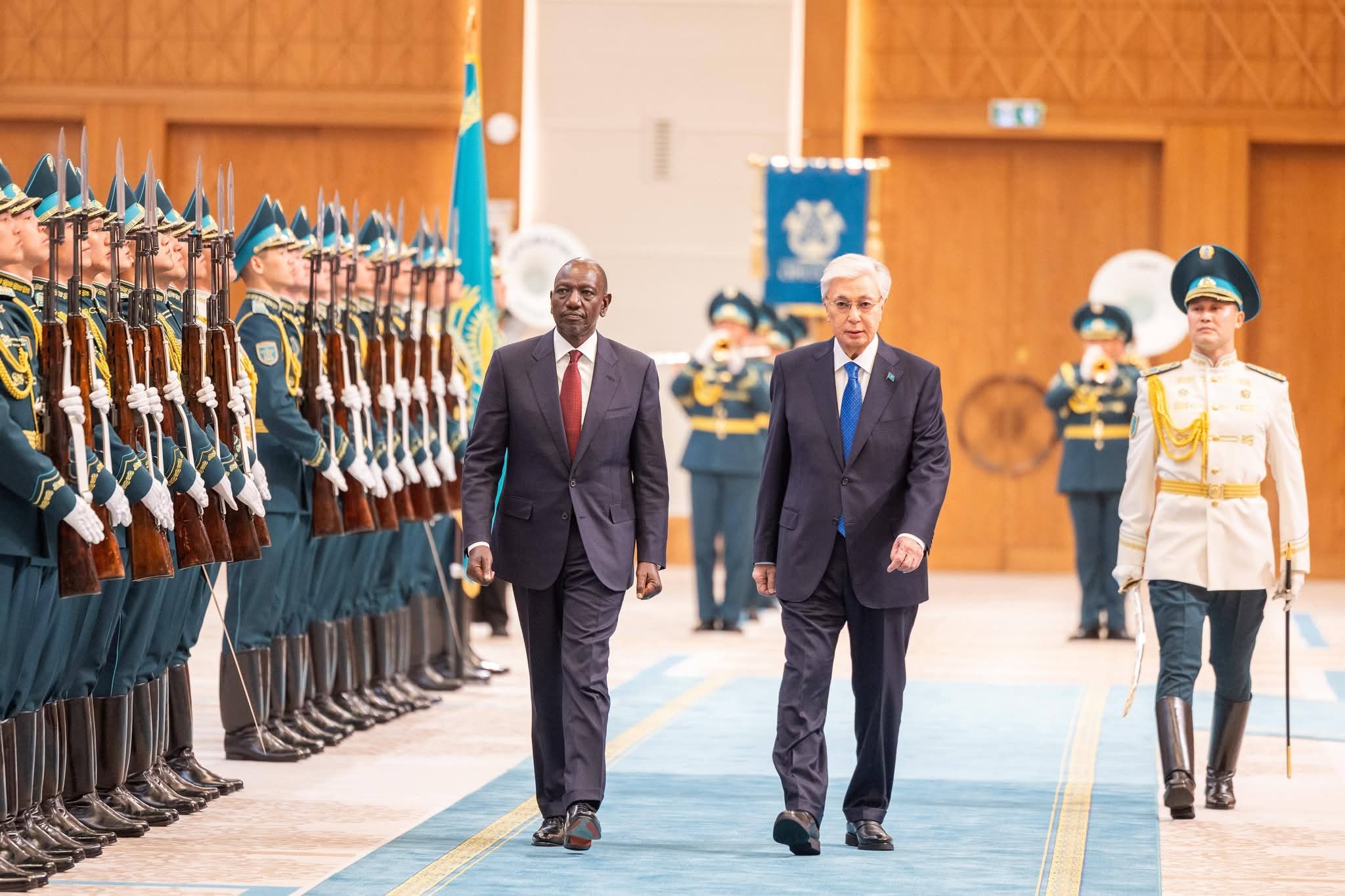
President Ruto inspects a guard of honour on arrival at Kazakhstan (Image: Files)

At the same time, traditional markets like Iran have become harder to rely on because of geopolitical tensions and sanctions-related risks.

Kenya is therefore under pressure to diversify where it sells its products – and Central Asia is increasingly becoming part of that strategy.

More importantly, Kazakhstan is not just a market on its own.

It also acts as a regional gateway into Central Asia, connecting Kenya to a wider consumer base stretching into countries like Uzbekistan, Kyrgyzstan, and parts of Russia – a combined market of more than 70M people.

That partly explains why the visit produced ten separate bilateral agreements covering sectors ranging from ICT and trade to mining, infrastructure, finance, tourism, and space technology.

One of the key agreements focuses on ICT and e-government cooperation, with Kenya looking to learn from Kazakhstan’s heavily digitised public service system – where over 90% of government services are processed online.

For Kenya, that directly links to ongoing expansion of platforms like eCitizen and broader public service digitisation.

Another agreement centered on transport and infrastructure cooperation, particularly around logistics and transit systems.

Kazakhstan currently plays a strategic role in the “Middle Corridor” trade route linking Asia and Europe – something Kenya appears keen to study as it positions itself as a regional trade and logistics hub in East Africa.

Trade and investment featured heavily throughout the visit.

Kenya’s National Mining Corporation signed cooperation agreements tied to mining, oil, gas, and rare earth exploration.

Investment agencies from both countries have established frameworks aimed at reducing barriers for investors and opening direct business links between private sectors.

Export promotion agencies also signed agreements targeting expanded market access for Kenyan tea, coffee, flowers, leather products and processed foods into Central Asia.

There were also deals around tourism, financial cooperation, diplomatic training and even space technology – particularly in satellite data and earth observation that can support agriculture, climate monitoring and disaster response.

Viewed from a distance, the trip may have looked unusual.

But economically, it reflects something Kenya has been trying to do more aggressively in recent years.

Kenya is looking beyond traditional partners, secure new markets, build new trade corridors, and place itself inside emerging global economic networks before competition becomes tighter.

Because in the current global economy, countries are no longer competing only through politics.

Increasingly, they are competing through access – to markets, logistics routes, investment capital, technology, and influence.
Nyamira County’s Multi-Billion Push on Infrastructure and Services

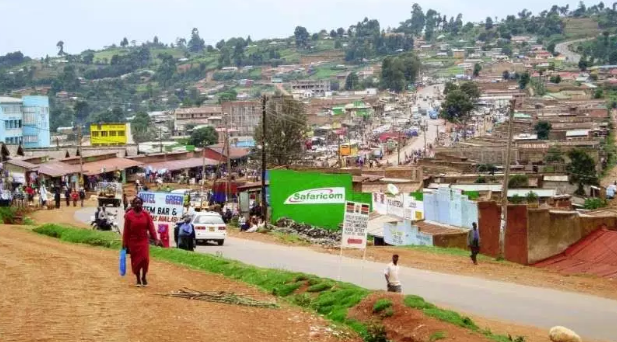
A series of projects rolled out across Nyamira County during President Ruto’s recent tour point to a broad attempt to strengthen the county’s core systems.

This spans across water and healthcare sectors to roads, education and trade infrastructure.

In the trade sector, the foundation stone was laid for the Ikonge Modern Market, a Ksh70M facility expected to accommodate 200 traders.

The project forms part of a wider Ksh15B investment package targeting affordable housing, markets and student hostels within the county.

Road connectivity is also a central focus.

The 61KM Eronge – Kebuse – Omonyenya road is currently 58% complete, while the Manga–Motemomwamu road stands at 38%.

There are additional roads, as well. They include:

  • Keumbo – Kiendeke Road,
  • Chabera – Nyamusi – Nyamaiya Road,
  • Tombe – Isinta – Gitaru Road.

They are at various stages of launch and procurement, aimed at improving movement across the county.

Water access has seen a notable upgrade with the commissioning of the Nyamira Water Supply Project and the rollout of last-mile connectivity.

The project includes a 40KM pipeline supplying clean water to more than 15,000 households in Kebirigo, Nyaramba, Miruka and surrounding areas.

In healthcare, the government has committed Ksh1B toward the upgrade of Nyamira County Referral Hospital.

This move is expected to expand capacity and improve service delivery within the county.

Education and training infrastructure form a significant part of the investment.

The establishment of Nyamira University College is backed by Ksh500M for construction and an additional Ksh300M for student hostels.

Complementary facilities – including lecture halls, laboratories, a library, administration block and a medical centre – are also under development at North Mugirango.

At the Kenya Medical Training College (KMTC) Nyamira, a 580-capacity student hostel is under construction, alongside 20 new classrooms and five laboratories.

These upgrades are aimed at strengthening medical training and supporting the broader healthcare system.

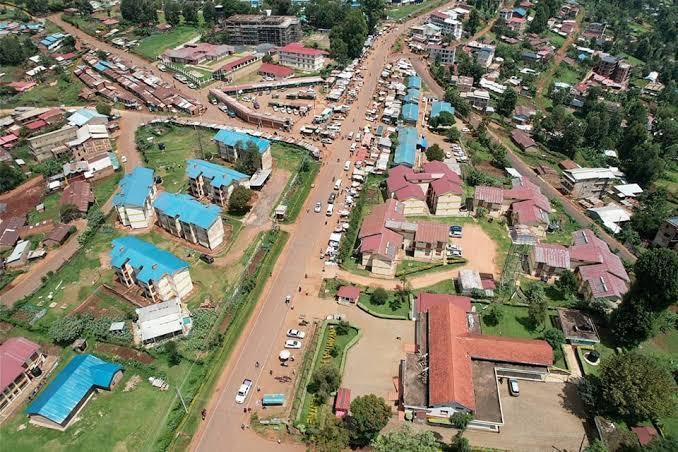
An undated, aerial view of Nyamira Town (Image: Files)

Further investment in student accommodation is being made under the Affordable Housing Programme, with hostels designed to accommodate up to 3,000 students at a cost of Ksh1.3B.

Beyond social infrastructure, longer-term economic connectivity is also being factored in.

The planned extension of the Standard Gauge Railway (SGR) from Narok to Kisumu will include a Ksh300M station at Ikonge, positioning the county within a wider regional logistics network.

Sports development has also been included, with Ksh900M allocated toward the construction of a stadium in the county.

Taken together, these projects span multiple sectors but point in a similar direction – strengthening the systems that support daily life.

From water in households and access to healthcare, to roads that move goods and institutions that train professionals – the focus appears to be on improving how the county functions at a basic level.

In practical terms, the impact of such investments will depend not just on completion, but on how consistently these systems operate once in place.

Because beyond the scale of spending, the real measure will be whether they translate into more predictable access, reduced friction in everyday activity, and wider participation in economic opportunity.

Kenya Launches First MSME Readiness Index at SalesFest Africa

Kenya today marked a major milestone in its entrepreneurship ecosystem with the launch of the country’s first MSME Opportunity Readiness Index (Fursa Index) during the SalesFest Africa.

The Chanuka Jipange Edition was held at the Trinity Auditorium, All Saints Cathedral in Nairobi.

The index, developed through the Chanuka Jipange national engagement across all 47 counties, measures how ready Kenyan micro and small enterprises are to access real economic opportunities and participate in structured markets.

More than 10,000 MSMEs across the country contributed insights that informed the report.

Speaking during the launch, Principal Secretary for Micro, Small and Medium Enterprises Development, Hon. Susan Auma Mang’eni, welcomed the findings and noted that the insights come at a critical moment as the government undertakes a review of the national MSME policy framework.

She raised key questions emerging from the discussion:

How can markets be structured for sectors like boda boda operators?

How can informal businesses such as hawkers be integrated into organized market systems?

The PS expressed interest in ensuring that the Fursa Index findings inform the ongoing MSME policy review, noting that better policy must respond to the real experiences of entrepreneurs.

The Chanuka Jipange Journey

During the opening remarks, Eunice Maina-Mburu, CEO of 20X Entrepreneur and founder of the Chanuka Jipange movement, shared the journey of travelling across all 47 counties engaging entrepreneurs on opportunities for enterprise growth.

She noted that one of the most striking discoveries from the national engagements was that Kenyan entrepreneurs are already working extremely hard, but many remain trapped in what the report describes as a “transitioning hustle economy” where effort is high but structured market access remains limited.

The Role of Structure in Economic Growth

Behavioral scientist and leadership coach Irene Njoroge emphasized that real economic transformation happens when systems remove friction for entrepreneurs.

Quoting a powerful insight shared during the session, she noted:

“The secret of change is not to push harder, it is to remove friction. Structure removes friction that keeps people stuck. When systems are structured people trust.

She also highlighted three mindsets that often hold entrepreneurs back from entering structured markets:

  • Survival mindset
  • Blame mindset
  • Hustle mindset

Moving beyond these mindsets requires building systems that reward consistency, quality, and accountability.

Lessons from Structured Industries

Industry experts on the panel shared practical examples of how structured markets operate in successful sectors.

Clement Tulezi, CEO of the Kenya Flower Council, explained that the flower industry is one of the most structured agricultural sectors in Kenya.

He noted that:

  • Flower farms plant, harvest and export every single day of the year
  • The industry has investors at every stage of the supply chain
  • Smallholder farmers can plug into the system because standards and processes are clear

He summarized the industry philosophy simply:

“A flower is not a product. A flower is a process.”

Eunice Mburu Maina, the CEO 20X Entrepreneurs speaks during an event in Isiolo County (Image: Files)

Opportunities to Structure Livestock Markets.

Livestock expert David Maina contrasted the flower industry with the livestock sector, which he described as largely disorganized despite its huge economic potential.

He emphasized the need to introduce grading systems and feeding hubs similar to the Galana Kulalu model, where livestock can be temporarily brought for feeding, weight improvement and standardized grading before entering markets.

Such structures, he argued, would unlock major opportunities for pastoralists and smallholder livestock farmers.

Housing and Technology as Market Enablers

Other speakers highlighted how policy and technology can create structured markets.

David Muiru, Managing Director of Glimco Limited, explained how the Affordable Housing Program is helping bring greater structure and professionalism to the real estate sector.

Meanwhile Jimmy Bett, Managing Partner at Dibon Co Ltd, emphasized that records, tracking and customer experience systems enabled by technology are essential for businesses seeking to move from hustle to structured markets.

Towards a First-World Opportunity System

The launch of the Fursa Index marks the beginning of what organizers described as a broader national conversation about building structured opportunity systems that allow Kenyan enterprises to scale, attract capital and compete globally.

The findings from the index are expected to inform future policy discussions and help guide efforts to transition Kenyan enterprises from effort-driven hustle to structured participation in real markets.

Nithi Bridge: It Was Never Just Driver Error

If you’ve ever driven down toward Nithi Bridge, you know that feeling. It’s a long descent, with an hairpin bend you don’t quite see until you’re already in it.

Quiet tension builds up inside the car, and the prayerful types always murmur a prayer. A lot of people subconsciously start thinking of their kids and unfinished plans.

Almost always, there’s an almost audible sigh of relief when a vehicle clears the infamous black spot.

For years, every time there’s an accident there, explanations are usually similar:

“The driver lost control.”

“We got a brake failure.”

“Was the driver over speeding?”

Unfortunately, the driver usually carries all of the blame. But maybe it was never just about the driver.

That stretch of the Makutano – Embu – Meru (A9) road has restrictive geometry – steep gradient, tight curves, limited sight distance.

Experts and engineers call it challenging terrain. The locals, meanwhile – just think it’s jinxed and dangerous.

Honestly, though – there’s a part we don’t talk about enough – the road design.

In countries where safety is taken seriously, blackspots are not managed with warning signs alone. Or, prayers.

If a part of the road gets multiple accidents, it is redesigned, re-aligned and re-engineered.

Now there’s a plan to realign and reconstruct Nithi Bridge – not just patch it – but correct the geometry itself.

Through KeNHA, the project is moving under an EPC (Engineering, Procurement and Construction) model – meaning the contractor handles the full design and build package.

In plain language: the objective is to fix the root cause, not just the symptoms. Because good infrastructure is supposed to protect you even when a driver makes small mistakes.

If there’s a safer gradient, it means fewer runaway vehicles after brakes fail. A better sight distance affords the driver earlier reaction time.

In addition, heavier trucks and buses endure lesser strains of the road has a smoother curvature.

It’s basically tapping into basic physics to protect the people using the bridge.

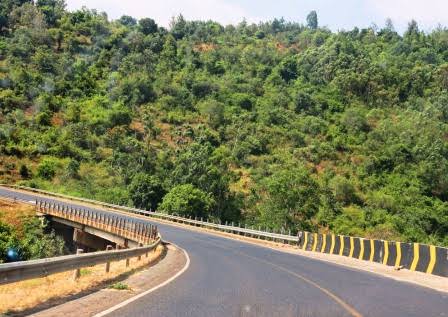
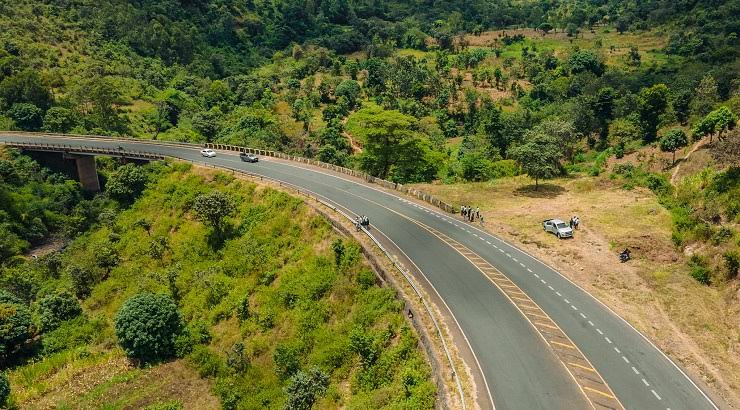
A drone capture of the infamous Nithi Bridge, termed as a black spot in Tharaka Nithi County (Image: Files)

Beyond the human tragedy, there’s an economic angle too. Every serious crash disrupts transport between Nairobi, Embu, Meru and further north.

It affects PSVs, freight movement, insurance costs, emergency services – slows things down and cripples the economy.

Rebuilding Nithi Bridge isn’t about development slogans – it’s about admitting that design has consequences.

Road safety isn’t a luxury feature – it’s basic infrastructure maturity.

If this realignment works – if that stretch becomes predictable instead of feared – then something bigger has shifted.

In a Nutshell ….

The Nithi Bridge realignment reflects what the First World campaign is really about – not slogans, but systems.

It’s the shift from reacting to tragedy to preventing it – from blaming behaviour to correcting design.

When a country fixes a known blackspot properly and permanently, it signals something deeper: a commitment to safety, predictability and long-term thinking.

It’s that kind of structural discipline that’s quietly building a First World Kenya.