After the Unrest: Government Initiates Justice, Reforms and Rebuilding Businesses

In the wake of the July 7 Saba Saba protests, public attention has turned sharply to matters of justice, institutional accountability, and economic recovery.

From Nakuru to Kitengela, the government’s recent actions signal a deliberate shift toward transparency, collaboration, and resilience.

Between July 8-14, verifiable efforts were documented across law enforcement and economic sectors – setting the stage for sustained public engagement.

Crackdown on Protest-Linked Destruction

The Directorate of Criminal Investigations (DCI) launched a coordinated series of arrests and prosecutions following widespread destruction of public and private property.

Over 190 suspects were apprehended in Nakuru alone, with additional charges filed across counties – including supermarket arson in Meru, hospital vandalism in Kitengela, and police station attacks in Oyugis.

These developments, shared via official DCI platforms, form part of a broader justice milestone tracker outlined in the July 14 sentiment report.

While public response remains mixed – with some calling for deeper probes into financiers and organisers – the enforcement drive underscores a strong appetite for due process and institutional accountability.

The pool area of the Nice Digital City in Mwea, which bore losses estimated at over Ksh50M during the 2025 Saba Saba riots (Image: Files)

Trade Ministry Engages Retail Sector Over Losses

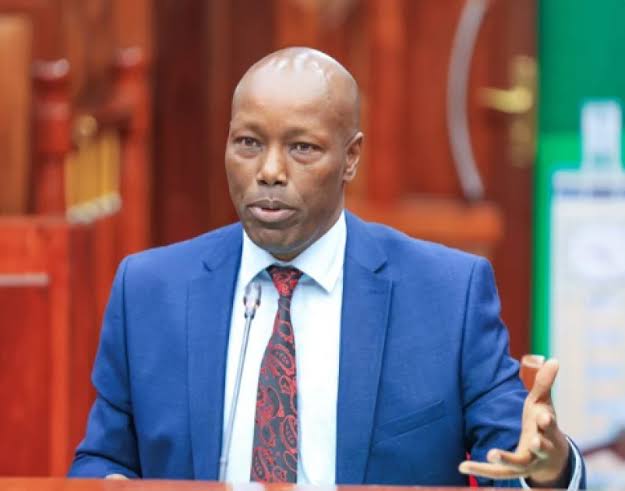
Acknowledging the economic toll of the protests, Cabinet Secretary for Investments, Trade, and Industry, Hon. Lee Kinyanjui, held formal talks with the Retail Trade Association of Kenya (RETRAK).

The consultative meeting addressed urgent concerns including overlapping regulations, duplicative licensing, and rising business costs.

RETRAK described the engagement as “open and constructive,” while the CS pledged regulatory simplification and sustained dialogue.

The move was widely perceived as a necessary signal of leadership, especially in a climate of growing investor unease.

A Community-Led Rebuild

In Mwea, the reopening of Nice Digital City after suffering over KSh 50 million in losses stood out as a beacon of business resilience.

Proprietor Njiru credited the rebound to personal investment, bank loan support, and commendable coordination with General Service Unit (GSU) officers.

Most notably, local residents voluntarily returned stolen goods – a gesture that reinforced the power of collective responsibility.

As more counties recover from the shock, such community-driven efforts offer valuable insight into how security, public goodwill, and strategic financing can work hand-in-hand.

In a Nutshell …..

The government’s response from July 8–14 marks an early but significant step toward restoring public trust.

Through justice milestones, open business dialogue, and real-life recovery narratives, the state continues to build a forward-looking story – one rooted in transparency, partnership, and resilience.
Sabasaba 2025 Update: What Happened on July 7th?

In the wake of the 2025 Saba Saba protests, Kenya finds herself at a familiar crossroads – caught between voices of dissent and the ever-pressing call for law and order.

The National Police Service (NPS) has now issued a comprehensive update, shedding light on what transpired on July 7th, and what lies ahead.

The numbers are sobering:

  • 11 lives lost.
  • 52 police officers injured.
  • 11 civilians wounded.
  • 567 arrests made.
  • Over a dozen vehicles damaged or destroyed.

Among those apprehended is Hon. Gitonga Mukunji, the sitting MP for Manyatta Constituency, highlighting the tense political undercurrents that marked this year’s Saba Saba.

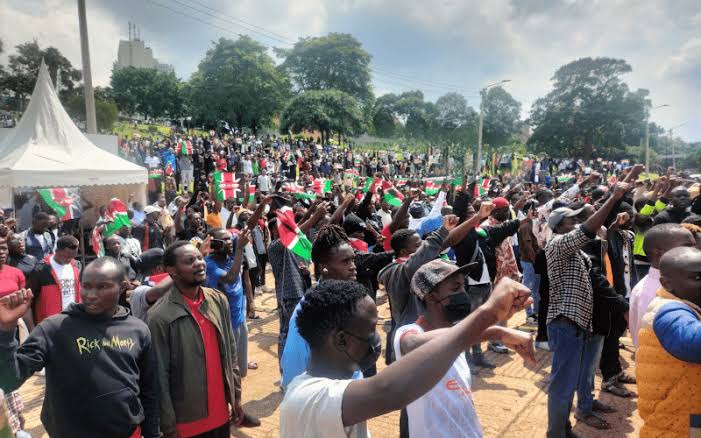
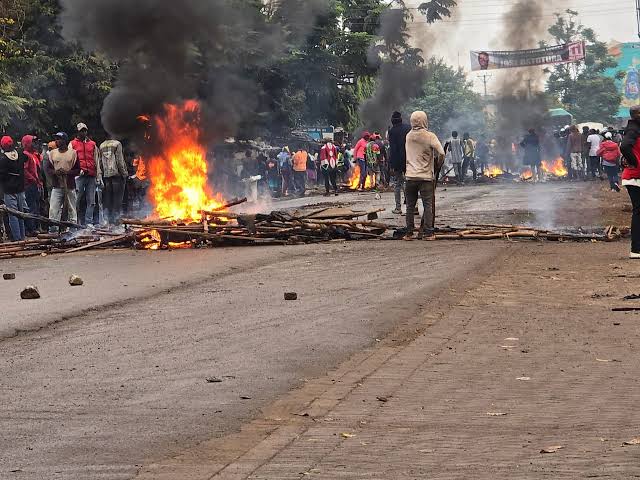
Protesters light tyres to block a major road in Nairobi on July 7th 2025 (Image: Files)

While protests are a democratic right, the NPS was clear in its condemnation of the criminal elements that hijacked peaceful demonstrations – turning streets into scenes of looting, destruction, and violent confrontation.

In a country still healing from past protest-related traumas, this latest episode is a stark reminder of the delicate balance between civil liberties and public safety.

Yet amid the turmoil, there was commendation. The NPS saluted its officers for exercising “exceptional restraint and professionalism” even when provoked.

And perhaps more significantly, they praised the majority of Kenyans who chose peace over chaos – reaffirming the silent strength of a citizenry yearning for unity and stability.

But accountability will not rest with a press release.

Investigations are ongoing, and the NPS has invited the public to step forward with any information that could lead to the arrest of perpetrators still at large.

The toll-free #FichuakwaDCI line remains open – a reminder that security is, above all, a shared national duty.

In the days ahead, questions will be asked – about leadership, justice, and the space for dialogue in our democracy.

For now, Kenya must reckon with the cost of July 7th and chart a way forward – one that honors the lives lost while restoring the values we all hold dear: peace, order and nationhood.

The History and Evolution of Saba Saba (1990–2024)

Saba Saba, observed on July 7th, marks a pivotal chapter in Kenya’s democratic journey.

It originated in 1990 as a mass protest against one-party rule and authoritarian governance.

Over the years, it has evolved into a national symbol of resistance, civil rights advocacy, and social justice movements.

Origins of Saba Saba (1990)

During President Daniel arap Moi’s tenure, Kenya operated under a de facto one-party system dominated by the Kenya African National Union (KANU).

Political opposition was suppressed, media freedoms were curtailed, and widespread dissatisfaction was mounting over economic mismanagement and systemic marginalization.

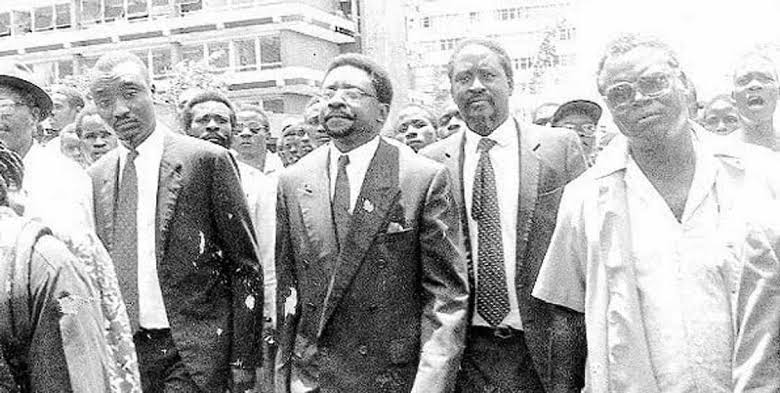
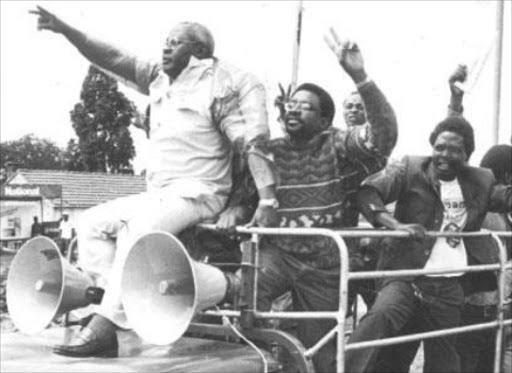
On July 7, 1990, opposition leaders Kenneth Matiba, Charles Rubia, and Jaramogi Oginga Odinga called for a public rally at Kamukunji Grounds in Nairobi to demand multiparty democracy.

Despite a government ban, citizens defied the directive, resulting in mass protests and violent state response – including detentions, police crackdowns, and loss of life.

The events of that day became a turning point in the push for democratic reforms in Kenya.

An archive image of a Saba Saba Rally in the early 90’s (Image: Files)

Significance of the 1990 Uprising

The 1990 Saba Saba protest served as:

A catalyst for the repeal of Section 2A of the Constitution in 1991, which had outlawed opposition parties.

A launchpad for youth and civil society involvement in governance and reform.

A symbol of public resilience and people power.

Key Figures in the Movement

Kenneth Matiba and Charles Rubia: Organizers of the 1990 rally, both detained.

Jaramogi Oginga Odinga: Supported the protest as an elder statesman.

James Orengo and Koigi wa Wamwere: Vocal proponents of civil liberties.

Raila Odinga: Though abroad during the 1990 protest, he had been previously detained for similar causes.

Other notable contributors over the years include Wangari Maathai, Paul Muite, Boniface Mwangi, Maina Kiai, Jerotich Seii, and several youth activists who have shaped the day’s relevance over time.

Thematic Evolution (1990–2024)

Each decade has seen Saba Saba take on new meaning:

1990s: Demand for multiparty democracy and an end to dictatorship.

2000s: Calls for constitutional reforms, land justice, and environmental rights.

2010s: Focus on police accountability, extrajudicial killings, and economic fairness.

2020s: Emergence of Gen Z-led protests, emphasizing digital rights, financial justice, and youth empowerment.

A Persistent Civic Tradition

From banned rallies in Kamukunji to peaceful protest walks and digital campaigns, Saba Saba remains a fixture in Kenya’s political calendar.

It is a reminder of the country’s hard-won freedoms and a continuing platform for citizens to speak against injustice.

In 2024, Kenyans held a concert to honor those who lost their lives in previous protests.

It was a reflection of the day’s evolving forms of expression, yet constant in its purpose: demanding a better, more just society.