The History and Evolution of Saba Saba (1990–2024)

Saba Saba, observed on July 7th, marks a pivotal chapter in Kenya’s democratic journey.

It originated in 1990 as a mass protest against one-party rule and authoritarian governance.

Over the years, it has evolved into a national symbol of resistance, civil rights advocacy, and social justice movements.

Origins of Saba Saba (1990)

During President Daniel arap Moi’s tenure, Kenya operated under a de facto one-party system dominated by the Kenya African National Union (KANU).

Political opposition was suppressed, media freedoms were curtailed, and widespread dissatisfaction was mounting over economic mismanagement and systemic marginalization.

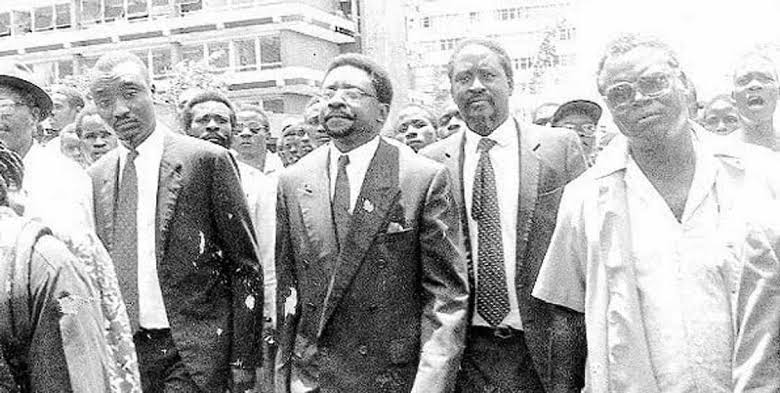
On July 7, 1990, opposition leaders Kenneth Matiba, Charles Rubia, and Jaramogi Oginga Odinga called for a public rally at Kamukunji Grounds in Nairobi to demand multiparty democracy.

Despite a government ban, citizens defied the directive, resulting in mass protests and violent state response – including detentions, police crackdowns, and loss of life.

The events of that day became a turning point in the push for democratic reforms in Kenya.
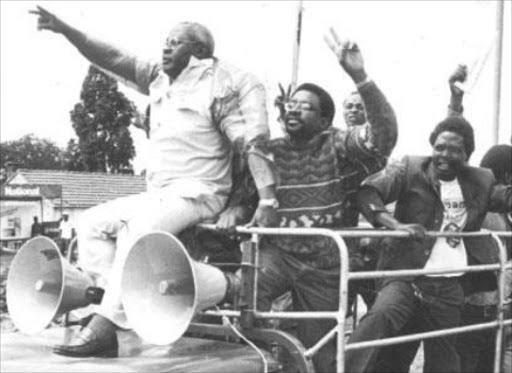
An archive image of a Saba Saba Rally in the early 90’s (Image: Files)

Significance of the 1990 Uprising

The 1990 Saba Saba protest served as:

A catalyst for the repeal of Section 2A of the Constitution in 1991, which had outlawed opposition parties.

A launchpad for youth and civil society involvement in governance and reform.

A symbol of public resilience and people power.

Key Figures in the Movement

Kenneth Matiba and Charles Rubia: Organizers of the 1990 rally, both detained.

Jaramogi Oginga Odinga: Supported the protest as an elder statesman.

James Orengo and Koigi wa Wamwere: Vocal proponents of civil liberties.

Raila Odinga: Though abroad during the 1990 protest, he had been previously detained for similar causes.

Other notable contributors over the years include Wangari Maathai, Paul Muite, Boniface Mwangi, Maina Kiai, Jerotich Seii, and several youth activists who have shaped the day’s relevance over time.

Thematic Evolution (1990–2024)

Each decade has seen Saba Saba take on new meaning:

1990s: Demand for multiparty democracy and an end to dictatorship.

2000s: Calls for constitutional reforms, land justice, and environmental rights.

2010s: Focus on police accountability, extrajudicial killings, and economic fairness.

2020s: Emergence of Gen Z-led protests, emphasizing digital rights, financial justice, and youth empowerment.

A Persistent Civic Tradition

From banned rallies in Kamukunji to peaceful protest walks and digital campaigns, Saba Saba remains a fixture in Kenya’s political calendar.

It is a reminder of the country’s hard-won freedoms and a continuing platform for citizens to speak against injustice.

In 2024, Kenyans held a concert to honor those who lost their lives in previous protests.

It was a reflection of the day’s evolving forms of expression, yet constant in its purpose: demanding a better, more just society.
Beyond Loyalty: Nyanza’s Tug of War Between Legacy and Change

The winds of change are blowing through Nyanza’s political landscape.

What was once a fortress of predictable loyalties is now a theatre of ideological debates, generational shifts, and strategic recalibrations – all playing out within and beyond the Orange Democratic Movement (ODM).

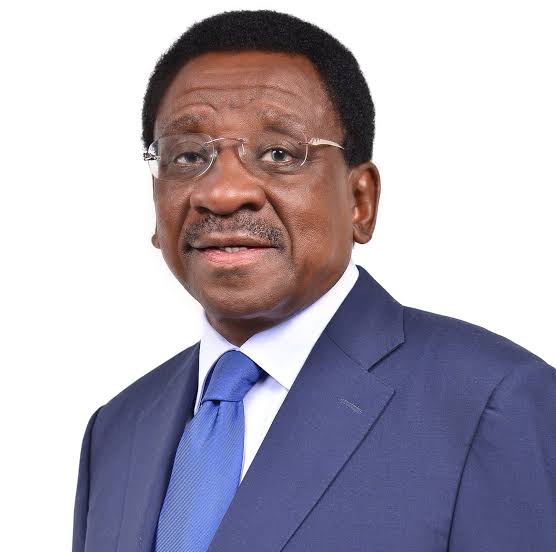
At the centre of the storm is Siaya County Governor James Orengo.

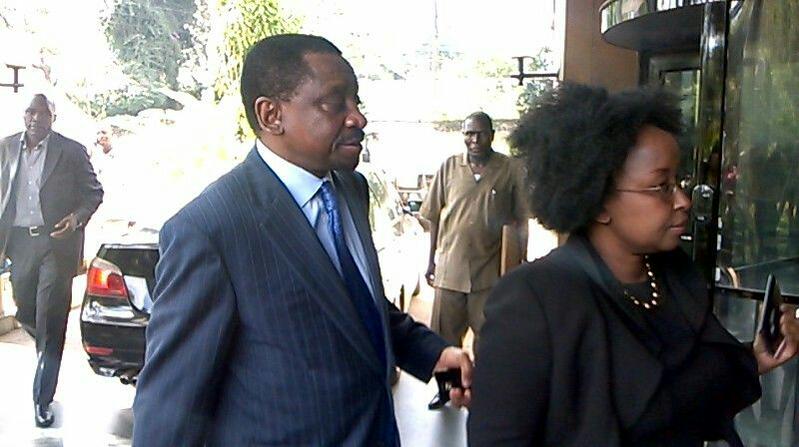
ODM leader and Siaya County Governor James Orengo (Image: Files)

A seasoned statesman and former aspirant for ODM’s top seat, Orengo has stirred the waters by opposing the perceived warming ties between ODM and President Ruto’s United Democratic Alliance (UDA).

His comments have not just triggered succession chatter – they’ve reopened old wounds within the party’s inner circles.

Tensions in the Camp

The Ramogi Professionals Caucus hasn’t minced words, accusing Orengo of threatening a fragile yet pivotal political détente.

For them, the Raila-Ruto understanding is less about alliance and more about unity – a necessary handshake in a divided nation.

But Orengo’s stance signals a different reading: one that questions ODM’s ideological compass and long-term autonomy.

Legacy vs. Renewal

With Raila Odinga’s national trajectory shifting – especially with his AU Commission Chair bid – attention has turned to the next crop of ODM stewards.

Veterans like Orengo and Governor Anyang’ Nyong’o are natural contenders, but age and style are under scrutiny.

Enter the new guard: bold, digital, and unafraid to challenge the status quo.

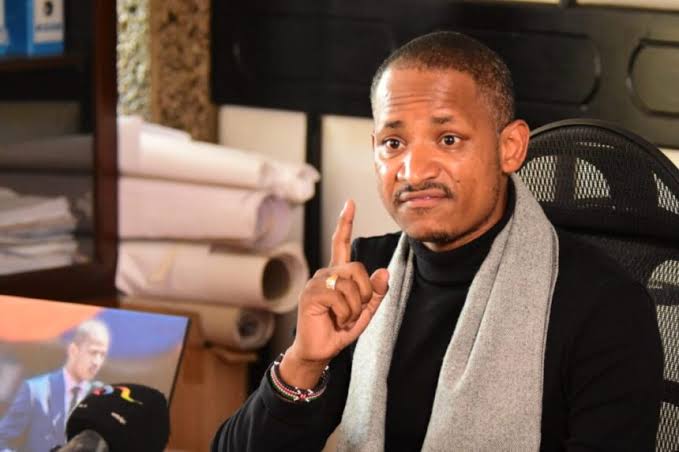
MP Babu Owino is among those leading the charge – speaking the language of the youth, rallying through social platforms, and demanding space in the movement’s future.

The message?

Respect the past, but make room for the present.

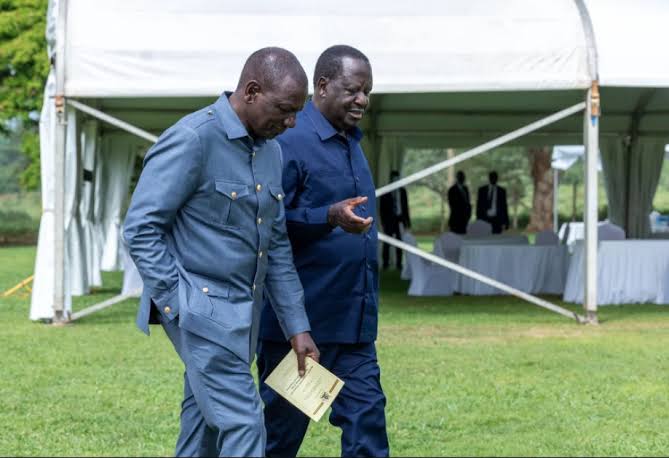
President William Ruto and ODM party leader Raila Odinga in a recent State House meeting. (Image: Files)

The Bigger Picture: Unity Over Rivalry

As political lines are redrawn, the national government’s role must remain clear – serve, not sway.

Nyanza’s political discourse should not distract from the deeper mandate: development, inclusion, and unity.

Still, the growing presence of UDA in Nyanza cannot be ignored.

By strengthening grassroots structures and offering issue-based alternatives, the ruling party is positioning itself as more than a visitor – perhaps even a viable home for a generation craving results over rhetoric.

A New Era Beckons

The politics of Nyanza are evolving – not just in who leads, but in how leadership is defined. The time for politics of personality may be waning. In its place, politics of purpose must rise.

This is the moment for dialogue, not division.

For progress, not preservation of power. Because the future of Nyanza – and indeed Kenya – depends on it.

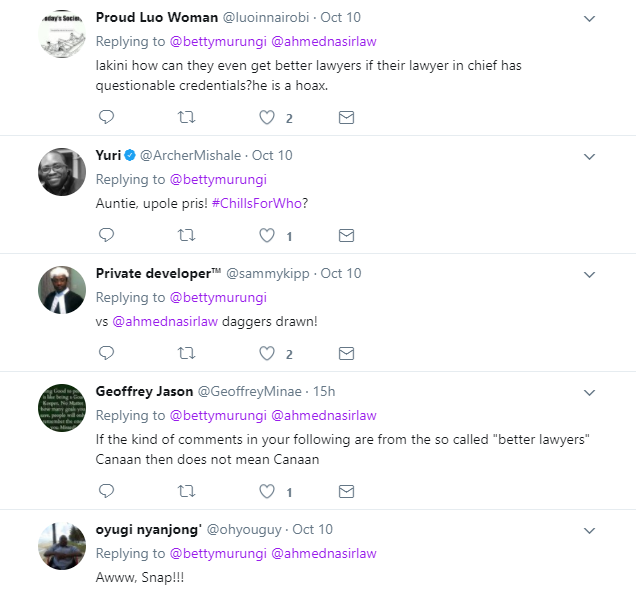
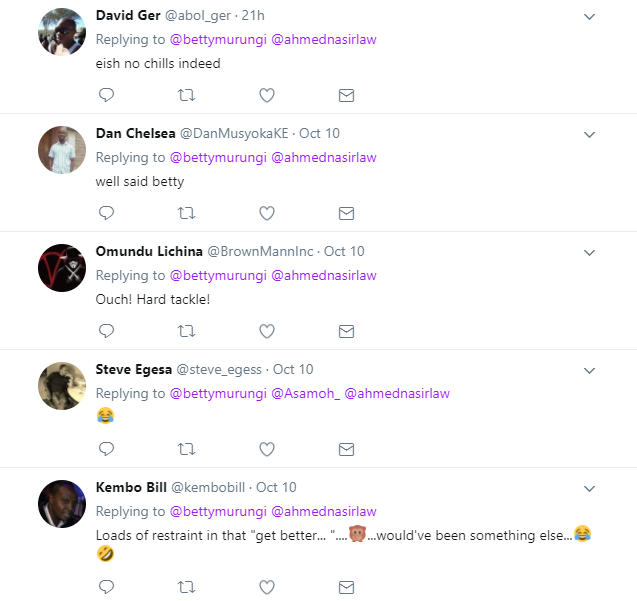
KOT left in stitches as Orengo’s wife Betty Murungi takes a swipe at president Uhuru’s lawyer

Uhuru Kenyatta’s lawyer taunted James Orengo’s wife on Twitter and he regretted it. Betty Kaari Murungi is also a tough lawyer just like her husband who is a senior counsel.

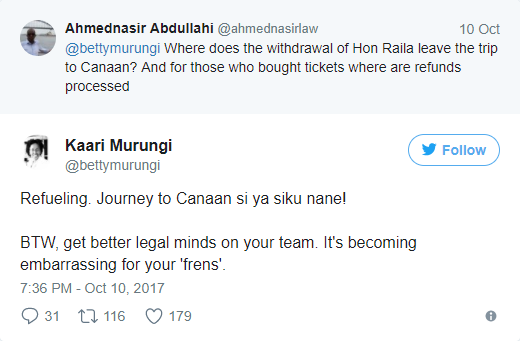
The president’s lawyer Ahmednasir Abdullahi took to Twitter to provoke Murungi. He asked her what would happen to the Canaan trip following Raila’s withdrawal from the presidential race.

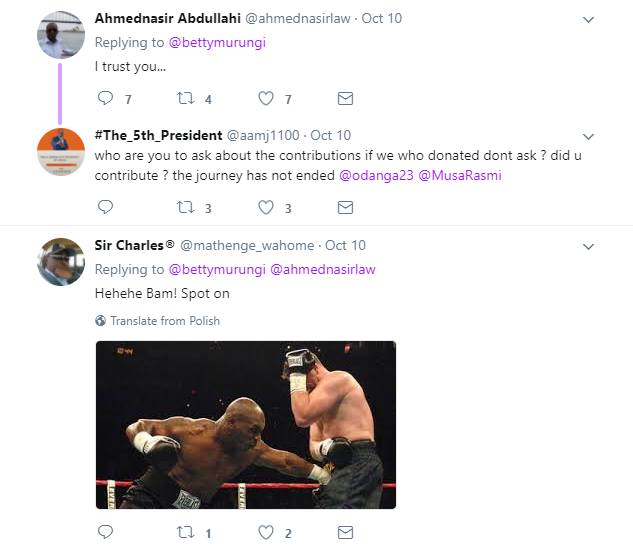
“@bettymurungi Where does the withdrawal of Hon Raila leave the trip to Canaan? And for those who bought tickets where are refunds processed,” Ahmednasir Abdullahi‏ tweeted.

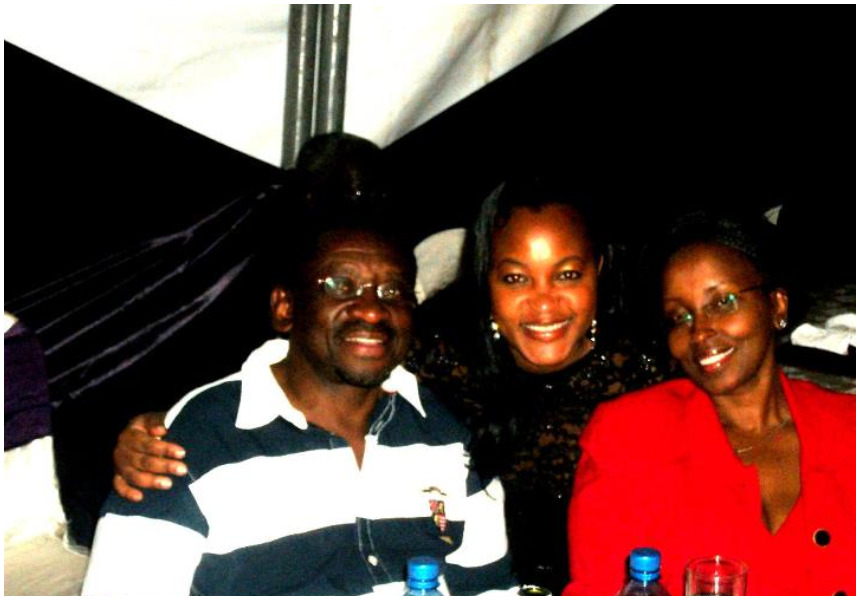
James Orengo and his wife Betty Murungi

Betty hits Ahmednasir below the belt

Betty responded by explaining  that the journey to Canaan wasn’t a one day trip, she said that Raila followers were refueling. Orengo’s wife also advised Ahmednasir to get better legal minds on his team.

“Refueling. Journey to Canaan si ya siku nane! BTW, get better legal minds on your team. It’s becoming embarrassing for your ‘frens’,” Betty Murungi tweeted.

Kenyans on Twitter (KOT) joined the conversation and started trolling  Ahmednasir: