
Migori County sets Pace with SHA as Lipa Pole Pole Strategy gains Momentum

Currently, 40% of Migori residents are registered under SHA – a solid start, but the aim is full coverage.

In a strategic move, 700 digital devices will be distributed today to all health facilities, marking the start of county-wide digital transformation.

Today, Dr. Ouma Oluga (PS, Medical Services), Dr. Mercy Mwangangi (SHA CEO), and Eng. Antony Lenaiyara (Atg. CEO, Digital Health Agency) visited Dr. Ochillo Ayacko, Governor of Migori County.

The mission? To supercharge the county’s Social Health Authority (SHA) activation ahead of its official launch

SHA Progress & Digital Push in Migori

Facility onboarding: 81 of Migori’s 177 health sites are now on the SHA portal – nearly half.

With KES 161 million disbursed of the targeted KES 1.2 billion, the goal is to fully integrate all facilities and circulate the full funds within the local health ecosystem.

Digital rollout: Over 170 health facilities have undergone digital transformation training. The rollout of 700 devices today represents a major acceleration.

Resident registration: With 400,000 residents (40%) already on-boarded, efforts are ramping up to enroll the remaining 60%.

These milestones signal a decisive shift toward inclusivity, transparency, and sustainability in health financing.

Dr. Ouma Oluga, Dr. Mercy Mwangangi and Eng. Antony Lenaiyara during a visit to Dr. Ochillo Ayacko, Governor of Migori County. (Image: Facebook)

The “Lipa SHA Pole Pole” Model

Kenya recently launched the “Lipa SHA Pole Pole” payment framework, championed by H.E. President Ruto on Madaraka Day, June 1, 2025.

It allows informal workers to make flexible SHA premium payments – monthly, weekly, or even daily – via Hustler Fund loans repayable over 12 months .

Why this matters:

  • It lowers economic barriers for low-income earners.
  • Over 1.7 million informal households have already enrolled—marking a historic spike in SHA uptake .
  • It’s fully digital via USSD codes (*147#, *254#) and M-PESA integration .

Migori Health Snapshot

Migori County, home to about 1.1M people with ~43% living below the poverty line, faces healthcare challenges including malaria, HIV/AIDS, and respiratory infections.

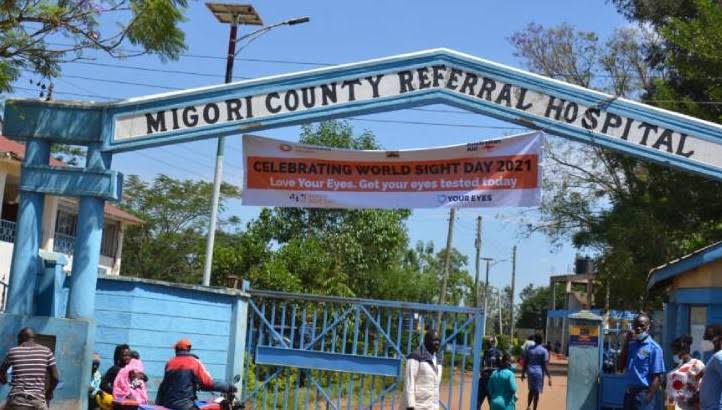
It has four district hospitals and five sub-county facilities. Recent investments include a KES 220 million DNA/PCR molecular diagnostic lab at Migori County Referral Hospital – the first of its kind in western Kenya .

Digital health tools like the eCHIS app have improved community healthcare delivery, boosting immunization by 15% and antenatal visits by 14%.

Why is Migori’s SHA Activation Significant?

Inclusion: Flexible payments unlock access for informal workers.

Efficiency: Digitalization speeds up claims, improves data, and ensures timely reimbursements.

Trust: Disbursement of KES 161M and ongoing rollout show strong commitment.

Health outcomes: Molecular diagnostics and digital tools are revolutionizing care.

So, What’s Ahead? 

To achieve full SHA activation in Migori, the next steps include:

  • Scaling enrolment to reach the remaining 60%.
  • Onboarding all 177 facilities with real-time digital systems.
  • Circulating the remaining KES 1.04 billion to sustain high-quality care.
  • Ensuring communities understand and trust the “Lipa SHA Pole Pole” system -especially its linkages to Hustler Fund and loan repayment.
  • Leveraging diagnostics and eCHIS data to drive preventive health strategies.

In a Nutshell…..

Migori’s health transformation embodies the vision of Universal Health Coverage (UHC). By putting together:

Policy innovations like flexible premium payments,

Digital infrastructure spanning facility-based and community health systems,

Substantive investment in diagnostics and flow of funds,

Migori stands as a model for counties across Kenya.

If successful, the county’s full SHA activation could significantly improve health outcomes and financial protection for its residents.


Taifa Care to Cover 650,000 Tea Farmers to Boost Rural UHC

Kenya’s Universal Health Coverage (UHC) dream is picking up pace, and this time, it’s taking root in the rich, green highlands where tea farmers wake up before sunrise.

In a landmark meeting held earlier today, the Chairman of the Social Health Authority (SHA), Dr. Mohammed Abdi, and the CEO, Dr. Mercy Mwangangi, engaged the Kenya Tea Development Authority (KTDA) to onboard more than 650,000 smallholder tea farmers into the government’s flagship health insurance program – Taifa Care.

This move is more than symbolic. It’s a transformative, strategic push into rural Kenya’s economic heartland.

The Wave: 23 Million and Counting

As of mid-June 2025, SHA reports that over 23.6 million Kenyans have enrolled in Taifa Care – figures that are rising daily.

Just a few days ago, more than 28,000 individuals registered in a single day. These aren’t just numbers; they’re indicators of a silent revolution underway.

But among the many wins, none perhaps matches the scale or symbolism of bringing in Kenya’s most iconic agricultural workforce – tea farmers.

Chairman of the Social Health Authority (SHA), Dr. Mohammed Abdi, and the CEO, Dr. Mercy Mwangangi during the meeting in Nairobi, Kenya. (Image: Facebook)

Tea is a Major Economy Prop

Tea isn’t just a drink in Kenya. It’s a multi-billion-dollar industry, generating over KES 170 billion in export revenue and supporting over 600,000 smallholder farmers.

KTDA’s network of 54 factory companies spans 17 counties, from the slopes of Mt. Kenya to the western hills of Kericho and Nandi.

These farmers have long powered Kenya’s economy, but many operate in unpredictable conditions – dependent on global markets, volatile prices, and shifting climate patterns.

Illness, injury, or lack of medical care often means lost harvests and income.

By targeting this demographic, SHA is not just expanding health insurance – it’s strengthening the economic backbone of the country.

Health Care amidst Climate Stress

The timing couldn’t be more urgent. Tea farmers are battling more than just fluctuating prices.

Rising temperatures and shifting rainfall patterns are affecting crop yield and inviting pests like the aggressive “dodder” plant – parasitic and fast-spreading.

These new environmental threats place an additional health and financial burden on farmers and their families.

The inclusion of tea farmers in Taifa Care is a bold recognition that agriculture and health are deeply intertwined.

A sick farmer is a poor farmer – and poor farmers make for an unstable agricultural economy.

Promises come with Challenges

Of course, bold moves come with big expectations. SHA must now work closely with KTDA to build:

  • Digital onboarding tools accessible in rural settings.
  • Community sensitization programs to explain benefits and processes.
  • Efficient claim and referral systems that prevent delays and misuse.

Sustainable funding – especially for low-income farmers unable to meet contribution minimums.

Fortunately, SHA’s multi-fund model allows for government subsidies to cover vulnerable populations. But this must be matched with service quality and trust.

Health-Empowered Citizens

Kenya’s Vision 2030 and the Bottom-Up Economic Transformation Agenda (BETA) both place people – especially those in rural and informal sectors – at the center of national progress.

Health is not a luxury. It is infrastructure. It is productivity. It is peace of mind.

By bringing 650,000 tea farmers under the Taifa Care umbrella, SHA is not only fulfilling a constitutional promise.

It is reimagining what it means to be a farmer in Kenya today – valued, protected, and cared for.