Migori County sets Pace with SHA as Lipa Pole Pole Strategy gains Momentum

Currently, 40% of Migori residents are registered under SHA – a solid start, but the aim is full coverage.

In a strategic move, 700 digital devices will be distributed today to all health facilities, marking the start of county-wide digital transformation.

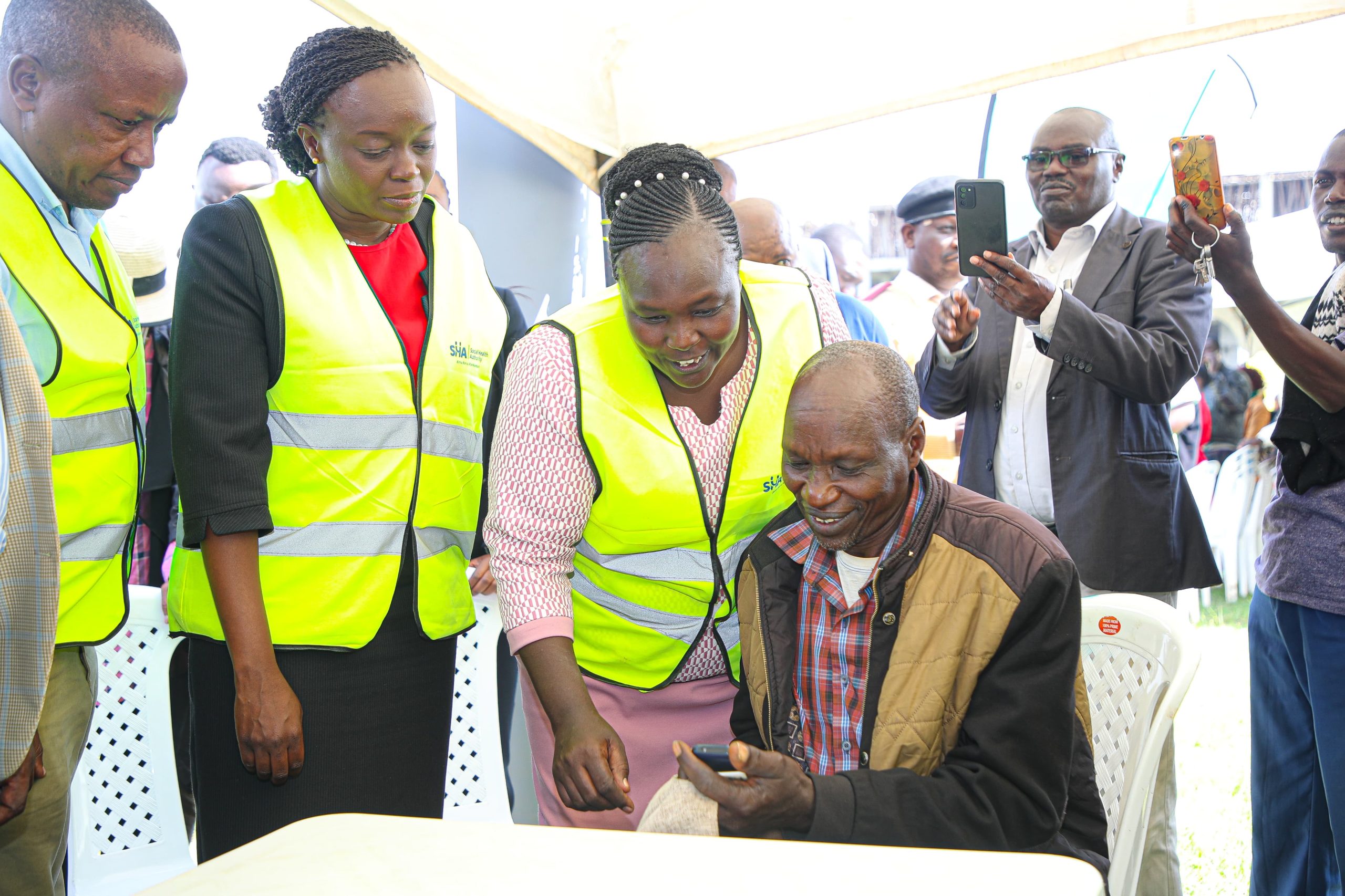
Today, Dr. Ouma Oluga (PS, Medical Services), Dr. Mercy Mwangangi (SHA CEO), and Eng. Antony Lenaiyara (Atg. CEO, Digital Health Agency) visited Dr. Ochillo Ayacko, Governor of Migori County.

The mission? To supercharge the county’s Social Health Authority (SHA) activation ahead of its official launch

SHA Progress & Digital Push in Migori

Facility onboarding: 81 of Migori’s 177 health sites are now on the SHA portal – nearly half.

With KES 161 million disbursed of the targeted KES 1.2 billion, the goal is to fully integrate all facilities and circulate the full funds within the local health ecosystem.

Digital rollout: Over 170 health facilities have undergone digital transformation training. The rollout of 700 devices today represents a major acceleration.

Resident registration: With 400,000 residents (40%) already on-boarded, efforts are ramping up to enroll the remaining 60%.

These milestones signal a decisive shift toward inclusivity, transparency, and sustainability in health financing.

Dr. Ouma Oluga, Dr. Mercy Mwangangi and Eng. Antony Lenaiyara during a visit to Dr. Ochillo Ayacko, Governor of Migori County. (Image: Facebook)

The “Lipa SHA Pole Pole” Model

Kenya recently launched the “Lipa SHA Pole Pole” payment framework, championed by H.E. President Ruto on Madaraka Day, June 1, 2025.

It allows informal workers to make flexible SHA premium payments – monthly, weekly, or even daily – via Hustler Fund loans repayable over 12 months .

Why this matters:

  • It lowers economic barriers for low-income earners.
  • Over 1.7 million informal households have already enrolled—marking a historic spike in SHA uptake .
  • It’s fully digital via USSD codes (*147#, *254#) and M-PESA integration .

Migori Health Snapshot

Migori County, home to about 1.1M people with ~43% living below the poverty line, faces healthcare challenges including malaria, HIV/AIDS, and respiratory infections.

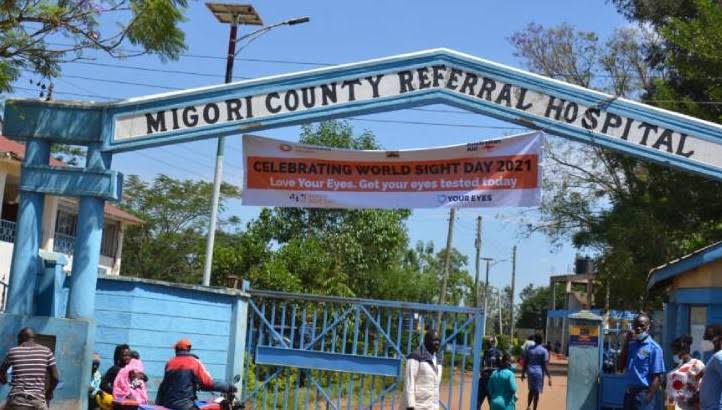
It has four district hospitals and five sub-county facilities. Recent investments include a KES 220 million DNA/PCR molecular diagnostic lab at Migori County Referral Hospital – the first of its kind in western Kenya .

Digital health tools like the eCHIS app have improved community healthcare delivery, boosting immunization by 15% and antenatal visits by 14%.

Why is Migori’s SHA Activation Significant?

Inclusion: Flexible payments unlock access for informal workers.

Efficiency: Digitalization speeds up claims, improves data, and ensures timely reimbursements.

Trust: Disbursement of KES 161M and ongoing rollout show strong commitment.

Health outcomes: Molecular diagnostics and digital tools are revolutionizing care.

So, What’s Ahead? 

To achieve full SHA activation in Migori, the next steps include:

  • Scaling enrolment to reach the remaining 60%.
  • Onboarding all 177 facilities with real-time digital systems.
  • Circulating the remaining KES 1.04 billion to sustain high-quality care.
  • Ensuring communities understand and trust the “Lipa SHA Pole Pole” system -especially its linkages to Hustler Fund and loan repayment.
  • Leveraging diagnostics and eCHIS data to drive preventive health strategies.

In a Nutshell…..

Migori’s health transformation embodies the vision of Universal Health Coverage (UHC). By putting together:

Policy innovations like flexible premium payments,

Digital infrastructure spanning facility-based and community health systems,

Substantive investment in diagnostics and flow of funds,

Migori stands as a model for counties across Kenya.

If successful, the county’s full SHA activation could significantly improve health outcomes and financial protection for its residents.

PS Raymond Omollo: Why Universal Health Coverage Is Non-Negotiable

Speaking in a grassroot meeting between county leaders and local residents in Homabay County, the Interior Principal Secretary Dr. Raymond Omollo delivered a special message.

This message has echoed across Kenya’s health transformation agenda: universal healthcare isn’t a luxury – it’s a right.

At the heart of his speech was a stark reminder that illness doesn’t wait for payday.

You never decide when to get sick,” he stated plainly. “Each of us will fall sick at one point or another.”

And it is from this truth that the government’s ambitious Universal Health Coverage (UHC) program – Taifa Care – was born.

Now eight months in, the PS challenged Kenyans to speak louder, but this time with affirmation: to acknowledge a program that is already changing lives across counties.

Health, he reminded the crowd, is the foundation of all productivity – without it, everything else grinds to a halt.

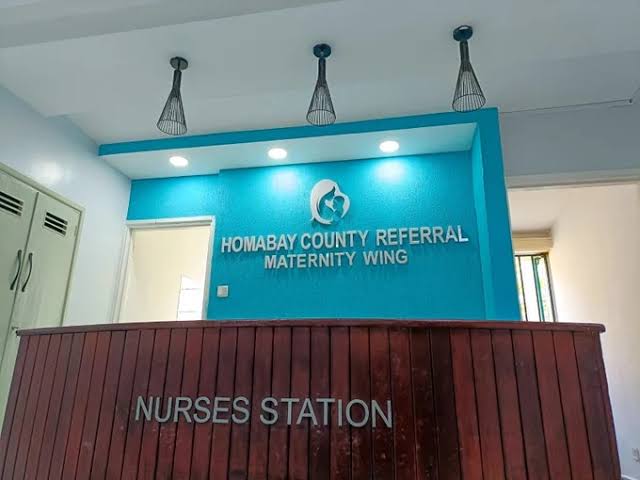
A section of the Homabay County Referral Hospital (Image: Google)

But, the road to full national coverage is far from over.

In Homa Bay, for example, only 44% of the population is registered under the new health scheme, a figure Dr. Omollo finds both encouraging and troubling.

Ranked number 13 nationally isn’t bad,” he admitted, “but, we can do better.”

In that regard, the Ministry of Health, in partnership with the Homabay County government, is mobilizing a massive recruitment drive to bring more residents on board.

And this drive isn’t just about signing up for the Social Health Insurance Fund (SHIF).

It is about safeguarding lives during emergencies, enabling access to free primary care, and strengthening health facilities across the region.

“How can the government pay for your emergency treatment if you’re not registered?” He posed.

Worse still, some local facilities remain unregistered with the Ministry of Health, limiting their ability to access national support like the Facility Improvement Fund.

“It can’t be that other counties are benefiting while ours lags behind because of misinformation,” he cautioned.

Dr. Omollo also made a passionate appeal to community health promoters and local leaders:

“Let’s work together.”

The new system isn’t about politics or personalities – it’s about shielding families from being bankrupted by hospital bills, from selling off land and livestock to save loved ones.

The days of endless medical Harambee drives on WhatsApp should become a thing of the past.

Because true development begins with healthy people. And this time, no Kenyan should be left behind.

Taifa Care to Cover 650,000 Tea Farmers to Boost Rural UHC

Kenya’s Universal Health Coverage (UHC) dream is picking up pace, and this time, it’s taking root in the rich, green highlands where tea farmers wake up before sunrise.

In a landmark meeting held earlier today, the Chairman of the Social Health Authority (SHA), Dr. Mohammed Abdi, and the CEO, Dr. Mercy Mwangangi, engaged the Kenya Tea Development Authority (KTDA) to onboard more than 650,000 smallholder tea farmers into the government’s flagship health insurance program – Taifa Care.

This move is more than symbolic. It’s a transformative, strategic push into rural Kenya’s economic heartland.

The Wave: 23 Million and Counting

As of mid-June 2025, SHA reports that over 23.6 million Kenyans have enrolled in Taifa Care – figures that are rising daily.

Just a few days ago, more than 28,000 individuals registered in a single day. These aren’t just numbers; they’re indicators of a silent revolution underway.

But among the many wins, none perhaps matches the scale or symbolism of bringing in Kenya’s most iconic agricultural workforce – tea farmers.

Chairman of the Social Health Authority (SHA), Dr. Mohammed Abdi, and the CEO, Dr. Mercy Mwangangi during the meeting in Nairobi, Kenya. (Image: Facebook)

Tea is a Major Economy Prop

Tea isn’t just a drink in Kenya. It’s a multi-billion-dollar industry, generating over KES 170 billion in export revenue and supporting over 600,000 smallholder farmers.

KTDA’s network of 54 factory companies spans 17 counties, from the slopes of Mt. Kenya to the western hills of Kericho and Nandi.

These farmers have long powered Kenya’s economy, but many operate in unpredictable conditions – dependent on global markets, volatile prices, and shifting climate patterns.

Illness, injury, or lack of medical care often means lost harvests and income.

By targeting this demographic, SHA is not just expanding health insurance – it’s strengthening the economic backbone of the country.

Health Care amidst Climate Stress

The timing couldn’t be more urgent. Tea farmers are battling more than just fluctuating prices.

Rising temperatures and shifting rainfall patterns are affecting crop yield and inviting pests like the aggressive “dodder” plant – parasitic and fast-spreading.

These new environmental threats place an additional health and financial burden on farmers and their families.

The inclusion of tea farmers in Taifa Care is a bold recognition that agriculture and health are deeply intertwined.

A sick farmer is a poor farmer – and poor farmers make for an unstable agricultural economy.

Promises come with Challenges

Of course, bold moves come with big expectations. SHA must now work closely with KTDA to build:

  • Digital onboarding tools accessible in rural settings.
  • Community sensitization programs to explain benefits and processes.
  • Efficient claim and referral systems that prevent delays and misuse.

Sustainable funding – especially for low-income farmers unable to meet contribution minimums.

Fortunately, SHA’s multi-fund model allows for government subsidies to cover vulnerable populations. But this must be matched with service quality and trust.

Health-Empowered Citizens

Kenya’s Vision 2030 and the Bottom-Up Economic Transformation Agenda (BETA) both place people – especially those in rural and informal sectors – at the center of national progress.

Health is not a luxury. It is infrastructure. It is productivity. It is peace of mind.

By bringing 650,000 tea farmers under the Taifa Care umbrella, SHA is not only fulfilling a constitutional promise.

It is reimagining what it means to be a farmer in Kenya today – valued, protected, and cared for.

Social Health Authority: Register Dependents Afresh During Transition to New Scheme

The Ministry of Health has confirmed that the Social Health Authority (SHA) claims system is now fully operational.

The Social Health Authority (SHA) is encouraging Kenyans to register their dependents during the transition to the new health insurance scheme.

All registered SHA beneficiaries will have free access to primary healthcare services through the Primary Healthcare Fund at Levels 2 (dispensaries), Level 3 (health centers), and certain Level 4 health facilities.

Failure to include dependents, as previously done in NHIF, could impede access to healthcare services for those family members.

Additionally, emergency services will be available at all health facilities.

Since the SHA replaced the National Health Insurance Fund (NHIF), more than 12.6 million Kenyans have registered for the new medical scheme.

Despite some initial challenges in the transition from NHIF to SHA, Medical Services Principal Secretary Harry Kimtai reassured Kenyans that efforts are underway to streamline the system and ensure seamless service delivery.

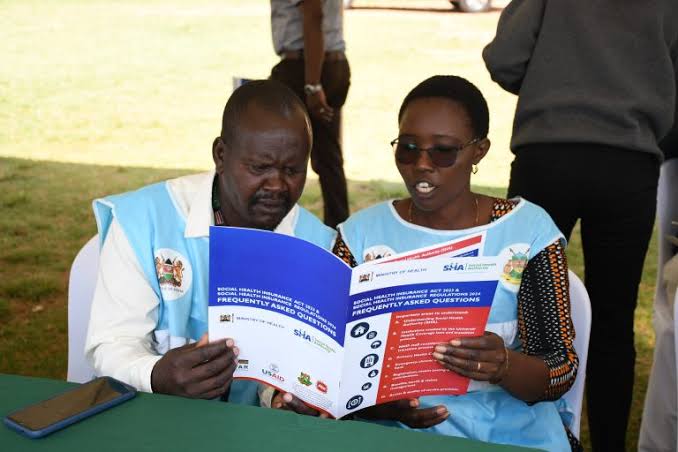
Kenyans learn about SHA after the rollout.

Training Healthcare Providers

To ensure a smooth transition, training for healthcare facilities on the claims portal began recently, with over 232 out of 353 renal and oncology providers already committed to delivering services under SHA.

Kimtai confirmed that this training would continue throughout the week to ensure healthcare providers are fully equipped to use the new system.

He also announced that the list of facilities on-board will be published online for public access.

Patients seeking renal and oncology care, particularly those previously covered by NHIF, will not need pre-authorization to receive services under SHA, further easing the transition process.

SHA Registration Process

While many Kenyans have successfully registered, SHA has urged all applicants to ensure they complete their registration process, particularly by adding dependents – a step that many have overlooked.

These beneficiaries also have access to emergency services across all healthcare facilities.

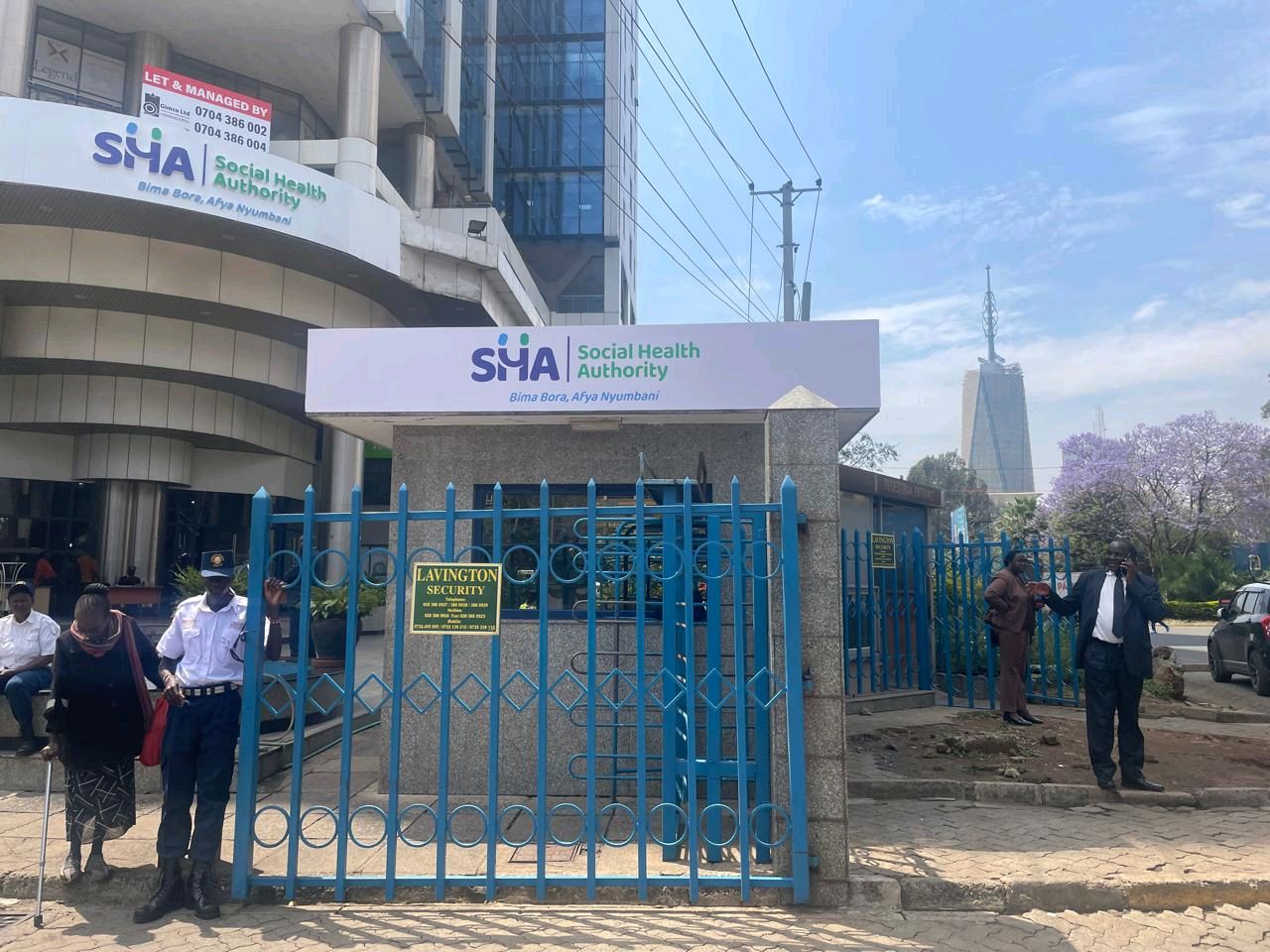
SHA Headquarters, Nairobi.

How to Register on SHA

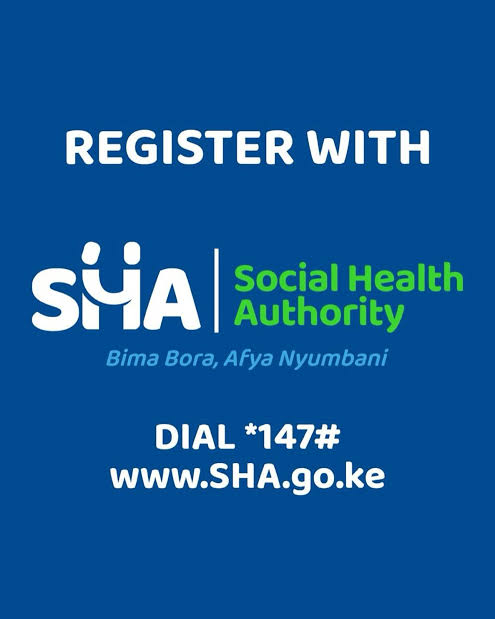
To register, beneficiaries can simply dial *USSD code 147# or access the online portals at www.sha.go.ke or www.afyayangu.go.ke.

SHA Coverage and Service Provision

The SHA has already registered 12,704,548 Kenyans, including those automatically transitioned from NHIF as per Legal Notice No. 147 of 2024.

The system continues to expand, with public hospitals, from level 2 to level 6 facilities, now seamlessly contracted to provide care to SHA beneficiaries.

The transition hasn’t been without challenges, particularly at private and faith-based hospitals, where some facilities initially turned away registered SHA members or asked for cash payments.

However, SHA has now signed contracts with 1,442 private and faith-based institutions, addressing this problem. While this number was previously reported as 1,577, the discrepancy has been attributed to duplicate entries in the system.

SHA has engaged these institutions to finalize all outstanding contracts by October 8, ensuring uninterrupted healthcare services during the interim.

Security of Patient Data

As SHA continues to build momentum, PS Kimtai emphasized that all patient data will be securely handled through the National Health Information Exchange (NHIE), which is managed by the Digital Health Agency and complies with the Data Protection Act No. 24 of 2019.

Additionally, contributions for former NHIF members will be seamlessly transferred to the SHA system, with a means-testing instrument in place to determine contributions for non-salaried members.

The government remains committed to resolving any outstanding challenges that arose during the SHA rollout, including issues with the e-claims portal.

Kimtai assured Kenyans that the Health Insurance Claims System (HICS), formerly under NHIF, will continue to function for member verification and claims management, especially for patients admitted before October 1.

In conclusion, the SHA’s fully operational status marks a crucial step in Kenya’s healthcare reform.

This provides millions of Kenyans with better access to health services, while ensuring a more efficient and secure system for managing healthcare claims and patient data.

Understanding the Social Health Authority (SHA) and its Impact on Kenyans

Starting October 1, 2024, the Social Health Authority (SHA) will take over from the National Health Insurance Fund (NHIF), marking a significant shift in Kenya’s healthcare system.

This move is part of Kenya’s broader Universal Health Coverage (UHC) strategy, designed to ensure all citizens access essential healthcare services without suffering financial hardship.

Health Cabinet Secretary Dr. Deborah Barasa during the launch of SHA in Nairobi, Kenya.

Under the Social Health Insurance Act of 2023, SHA will manage three distinct funds:

  1. Primary Healthcare Fund (PHF)
  2. Social Health Insurance Fund (SHIF)
  3. Emergency, Chronic, and Critical Illness Fund

All Kenyans who register for SHA will automatically be enrolled in these funds, and unlike the NHIF, there will be no need for physical membership cards.

Primary Healthcare Fund (PHF)

The Primary Healthcare Fund focuses on delivering essential health services at local facilities such as dispensaries and health centres.

As the first point of care at Level 2 and 3 facilities, patients will receive treatment free of charge, whether directly or through referrals from community health promoters.

One of the key components of the PHF is that no individual contributions are required for access.

The fund is sustained through government allocations and external grants, making it possible for all Kenyans to benefit from these services without out-of-pocket costs.

Social Health Insurance Fund (SHIF)

The Social Health Insurance Fund (SHIF), which has attracted a lot of attention, is a critical part of the SHA but only one aspect of the broader UHC agenda.

SHIF is designed to cover inpatient services at Level 4, 5, and 6 healthcare facilities or accredited providers, once a patient has been referred.

Kenyans will contribute 2.75% of their monthly or yearly income to SHIF, regardless of whether they are salaried or in the informal sector.

The fund covers comprehensive inpatient services such as pre-admission evaluations, hospital accommodation, meals, nursing care, and general ward bed charges.

It also covers the management of illnesses during admission, with a maximum coverage of 180 days per household.

The Broader UHC Vision

The SHA is a cornerstone of Kenya’s goal to achieve Universal Health Coverage.

By integrating various health funds under one authority, the government aims to streamline healthcare access and make it more equitable for all citizens.

This approach also helps ensure financial sustainability in the long term, reducing the burden on individuals and increasing government responsibility in healthcare financing.