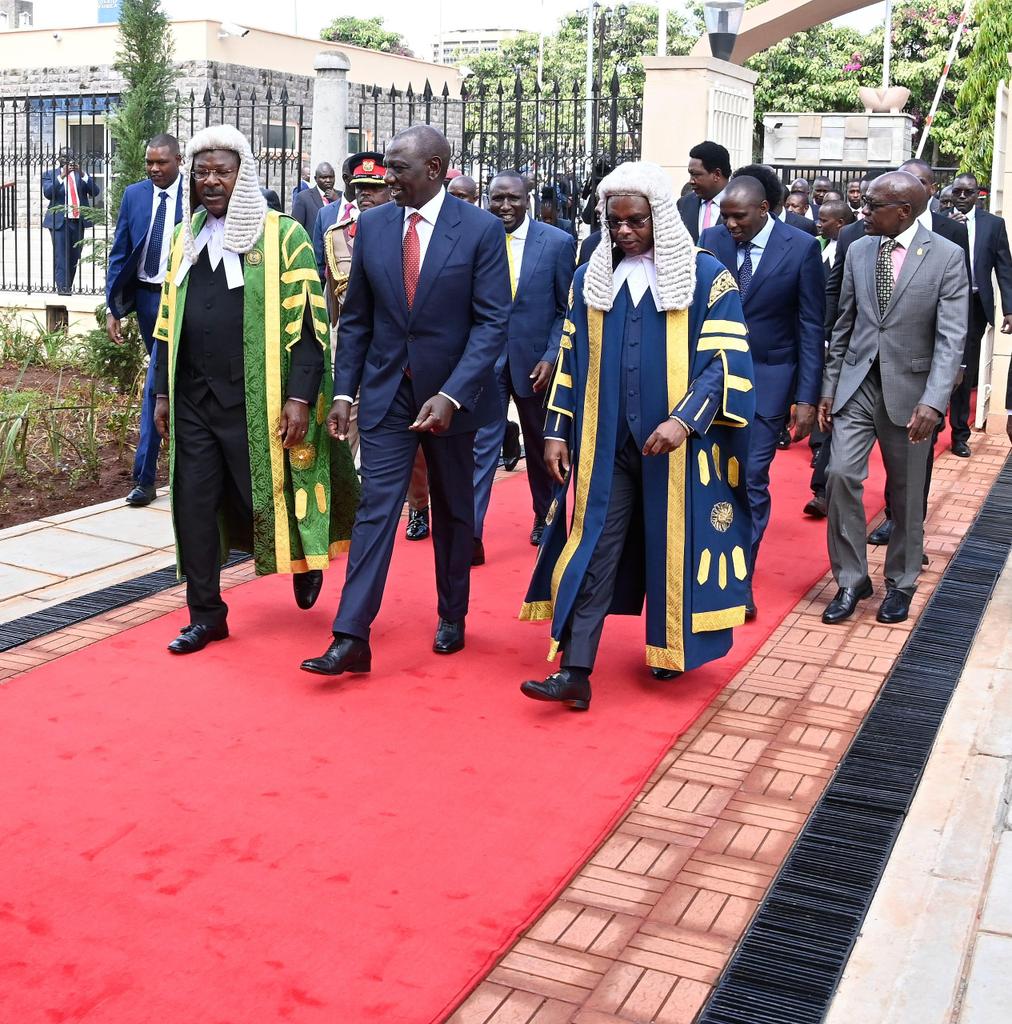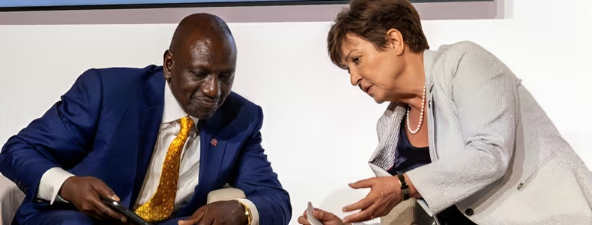
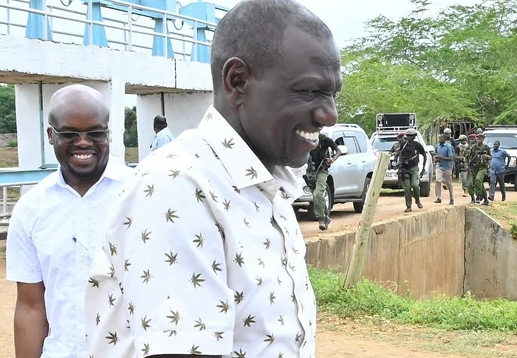
45 Suspects Arraigned In Court For Obstructing President Ruto’s Convoy And Chanting Wantam’

The Ngong Law Courts has granted a Sh100,000 bond each to 45 suspects arrested for unlawfully assembling and blocking President William Ruto’s presidential motorcade in Kajiado West Sub-County.

The suspects appeared before Ngong Chief Magistrate Ariba Kutwa on Monday, June 15, 2026, following a dramatic Sunday standoff that security agencies allege was a politically financed disruption.

A Gendered Split in Pleadings

During the Monday arraignment, the court witnessed a sharp split in how the accused persons answered to the state’s criminal charges:

  • The Admission: Five women among the suspects pleaded guilty to the charges of unlawful assembly and obstruction of a presidential convoy. Chief Magistrate Kutwa ordered that their case be mentioned again on Thursday, June 18, 2026, for formal sentencing or further directions.

  • The Denial: Conversely, 40 men denied all involvement and pleaded not guilty. The court ordered their case to be mentioned in 14 days, granting detectives a two-week window to finalize forensic and field investigations.

All 45 suspects were granted release on a bond of Sh100,000 or an alternative cash bail of an equivalent amount.

Ambush at Nkarusa: The “Wantam” Factor

The state’s case dictates that the suspects were strategically bussed into Nkarusa village on Sunday via a coordinated network of matatus and hired buses. President Ruto was in Kajiado West to preside over a high-profile national fundraiser aimed at constructing the regional headquarters for the Seventh-day Adventist (SDA) Church.

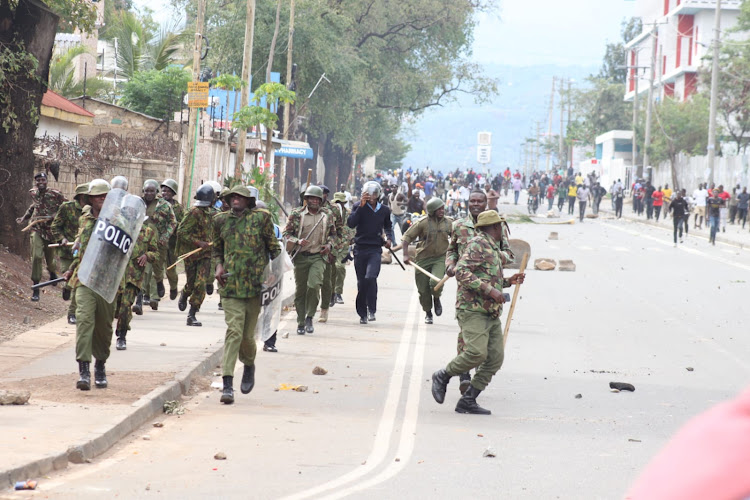
While heavy security deployment successfully blocked the rowdy group from infiltrating the church sanctuary during the service, the suspects allegedly lay in wait outside. As the President’s official convoy attempted to exit the venue, the group swarmed the main thoroughfare, effectively blocking the road.

Before anti-riot police forcefully intervened and dispersed the crowd, the suspects were captured singing anti-government resistance songs featuring the viral “Wantam” (One Term) slogan—a chant widely popular among supporters of impeached former Deputy President Rigathi Gachagua. The suspects were intercepted and rounded up by law enforcement officers just as they were attempting to board their getaway vehicles.

Kajiado North Politician Under Investigation for Funding Riot

Intelligence lines have shifted the focus toward a prominent, unnamed politician hailing from Kajiado North constituency.

According to sub-county police commanders, detectives are actively investigating claims that the politician financed the entire logistical operation, including hiring the public transport vehicles and paying out allowances to the 45 suspects. The lawmaker is accused of orchestrating the operation with explicit instructions to crash the presidential fundraiser and humiliate the Head of State using localized political taunts.

State prosecutors are expected to review cell tower data and financial transactions to determine if the politician will be co-charged as a mastermind behind the security breach when the case resumes later this month.
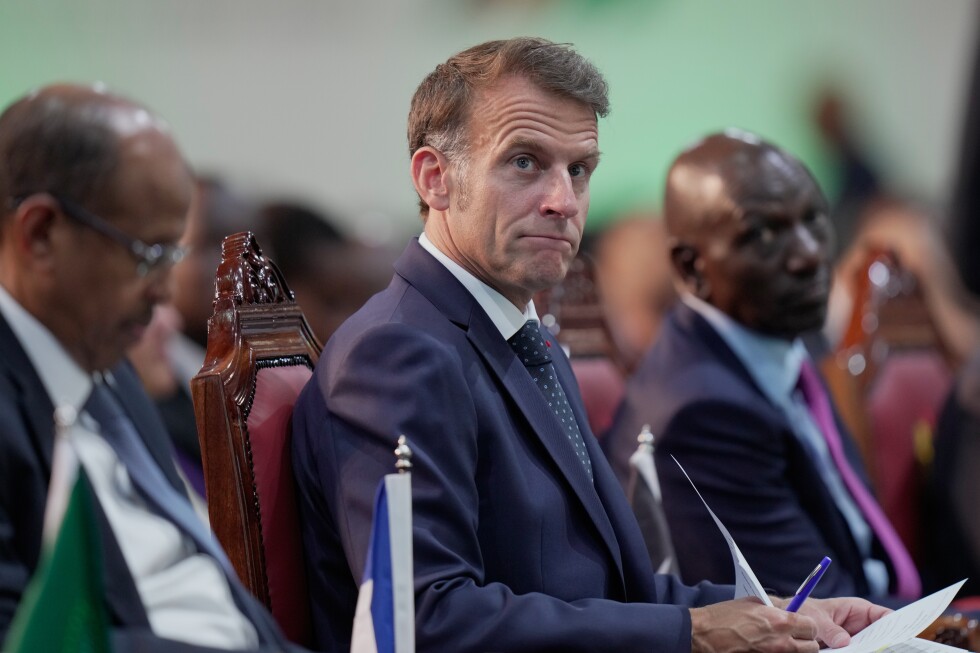
Shut Up Or Step Out- Macron Loses His Cool With Rowdy Audience At Nairobi Youth Forum

French President Emmanuel Macron briefly took on the role of “enforcer” at the University of Nairobi on Monday, May 11, after a panel discussion was disrupted by a rowdy audience. The incident occurred during the Africa Forward Summit, a high-level event co-hosted by Macron and President William Ruto aimed at reshaping the future of Afro-French relations.

A Moment of “Cold Leadership”

As a speaker attempted to address the auditorium on the importance of culture and digital innovation, the noise levels from side conversations became unmanageable. Macron, visibly frustrated, took the unusual step of walking to the stage and seizing the microphone to restore order.

“I’m sorry guys, but it’s impossible to speak about culture… with such a noise,” Macron admonished the crowd. “This is a total lack of respect! If you want to have bilaterals or speak about something else, you have bilateral rooms or you go outside. If you want to stay here, we listen to the people.”

The firm intervention, which the moderator later described as “cold leadership,” resulted in immediate silence followed by a round of applause before the French leader returned to his seat.

The Africa Forward Summit: A New Vision

The two-day summit (May 11–12) serves as a strategic platform for over 1,500 leaders, including African Heads of State, investors, and tech innovators. The goal is to strengthen cooperation in several key areas:

  • Economic Development: Driving investment and private sector growth.

  • Innovation: Highlighting Africa’s capacity for technological solutions.

  • Global Governance: Modernizing diplomatic ties between France and the continent.

Ruto Defends Education and Digital Shifts

During the forum, President William Ruto shifted the focus to Kenya’s internal reforms, specifically defending the Competency-Based Education (CBE) model. Ruto argued that the old system—which relied heavily on memorization—is being replaced by one that prioritizes Science, Technology, Engineering, and Mathematics (STEM) to meet the demands of the AI-driven labor market.

“The previous education system was about how much you could remember, memorise and regurgitate,” Ruto stated, emphasizing that the new curriculum prepares students for a “rapidly evolving” global economy.

Ruto also highlighted Kenya’s progress in digital infrastructure, noting the installation of 30,000 kilometers of fiber optic cable intended to solidify the country’s status as a continental tech hub.

Macron’s Call for Infrastructure

In his own address, President Macron lauded Kenya’s digital strides but issued a challenge to the continent. He urged African nations to prioritize “computing capacity” and sustainable energy generation, noting that a true AI revolution requires robust physical infrastructure and home-grown computing power to succeed.

Gachagua Wins First Round Of Legal Battle Against His Impeachment

Former Deputy President Rigathi Gachagua has secured a major procedural victory in his ongoing challenge against his 2024 impeachment. On Thursday, May 7, 2026, a three-judge bench at the Milimani High Court ruled to admit a supplementary affidavit into the official record, despite fierce opposition from state lawyers.

The affidavit, sworn by renowned cardiologist Dr. Daniel Gikonyo of Karen Hospital on April 28, provides expert medical testimony regarding Gachagua’s health during the final stages of his impeachment. The document confirms that Gachagua was admitted with severe chest pains on October 17, 2024—the same day he was unable to appear before the Senate for his trial.

The Ruto Phone Call Revelation

The most explosive detail in the admitted document involves a claim that President William Ruto personally called the hospital. According to Dr. Gikonyo, the President telephoned him directly on the day of the impeachment to inquire about Gachagua’s clinical condition.

Gachagua’s legal team, led by Senior Counsel Paul Muite, argues that this phone call proves the executive was fully aware of the Deputy President’s genuine illness, yet the impeachment process was allowed to proceed to a vote in his absence.

Why the State Opposed the Evidence

Lawyers representing the National Assembly, the Senate, and the Attorney General—including Senior Counsel Githu Muigai and Tom Ojienda—launched a spirited attempt to have the affidavit struck out. They raised several objections:

The Court’s Ruling: “Interest of Justice”

Despite noting the delay in filing, the bench—comprising Justices Erick Ogolla, Anthony Mrima, and Freda Mugambi—ruled that expunging the document would be a disservice to the case. Justice Ogolla stated that the affidavit would remain on record in the “wider interest of justice,” as it provides critical context to Gachagua’s absence during his removal.

This ruling sets the stage for a high-stakes cross-examination. The court has scheduled a further hearing for May 13, 2026, where Dr. Gikonyo is expected to appear in person to testify about the contents of the affidavit and the specific details of the President’s alleged phone call.

While Gachagua has abandoned his quest to be reinstated as Deputy President, this victory keeps his pursuit of damages and a declaration of an “unlawful” impeachment very much alive

Albert Ojwang’s father cries over false promises from Government of Kenya

The father of slain teacher and blogger Albert Ojwang has spoken emotionally about the challenges his family continues to face, claiming public support faded after he publicly thanked William Ruto.

His remarks come months after Albert Ojwang’s death in police custody in June 2025, a case that sparked nationwide outrage and demands for justice.

A family still struggling

Following Ojwang’s death in Nairobi detention, Kenyans rallied around the grieving family, contributing financially and offering emotional support. However, according to his father, that solidarity gradually diminished after he acknowledged the President’s condolences and assistance.

“They left me and stopped walking with me because I thanked the President,” he said.

He explained that the financial aid the family initially received has since been depleted, forcing them to rely on small-scale farming and poultry keeping to survive.

“Right now, even when I travel to Nairobi, I have to look for my own means,” he added.

Public reactions divided

His comments have reignited debate online, with reactions reflecting sharply divided opinions.

Some social media users criticised his decision to publicly thank the President, arguing it undermined calls for accountability.

“He exchanged his son’s justice with money… why thank a regime that killed your son,” one user commented.

Others suggested he could have acknowledged support differently while continuing to demand justice.

“You should have thanked everyone generally and still insisted on justice for your child,” another wrote.

Some commenters framed the situation as a lesson about trying to “play both sides,” while others responded mockingly.

Controversy over gratitude

The father pointed to the moment he publicly appreciated President Ruto’s support as the turning point. Reports at the time indicated that the President reached out to the family and contributed KSh2 million during their mourning period.

According to him, some Kenyans interpreted the gesture negatively because of wider criticism directed at the government following Ojwang’s death.

“When someone offers help when you are grieving, the best thing is to say thank you,” he explained.

Living with grief

Despite the intense public attention the case attracted, Ojwang’s father says the family’s current reality is one of quiet hardship and continued mourning.

“The money we received has all been used,” he said, describing a life now marked by financial strain, loss, and what he sees as growing isolation.

William Ruto Holds Talks With The UAE Amid Rising Fuel Prices

President William Ruto held high-level diplomatic talks with the President of the United Arab Emirates, Sheikh Mohamed bin Zayed Al Nahyan, in Abu Dhabi on Wednesday, April 22, 2026. The visit is set against a backdrop of shifting geopolitics, as Kenya continues to voice strong condemnation of recent attacks on Gulf nations by Iran.

The discussions were aimed at deepening the “Comprehensive Economic Partnership Agreement” framework, a strategic pillar that has increasingly linked the economies of Nairobi and Abu Dhabi.

Bolstering Energy and Infrastructure

A primary focus of the meeting was the expansion of cooperation in sectors critical to Kenya’s long-term development. The two leaders explored new frontiers in:

  • Renewable Energy & Technology: Aligning on green energy transitions and digital infrastructure.

  • Infrastructure Development: Scaling up investment in transport and logistics.

  • Sustainable Growth: Crafting investment pathways designed to withstand global economic volatility.

While the specific details of any new signed treaties remain under wraps, both leaders emphasized the need to build on existing momentum to unlock “emerging global markets” for mutual benefit.

The G-to-G Fuel Lifeline

The meeting carries significant weight for Kenya’s energy security. Under the current Government-to-Government (G-to-G) oil deal, Kenya relies heavily on the UAE for its fuel needs.

  • Import Volume: Kenya imports between 660,000 and 810,000 metric tonnes of petroleum products monthly from the UAE and Saudi Arabia combined.

  • Key Partners: UAE state-owned giants, including the Abu Dhabi National Oil Company (ADNOC) and Emirates National Oil Company (ENOC), are the primary suppliers guaranteeing a steady flow of fuel to the Kenyan market.

Deepening Diplomatic Ties

President Ruto’s visit highlights Kenya’s strategic pivot toward the Gulf as a major source of foreign direct investment. By positioning Kenya as a reliable ally in the face of Middle Eastern instability, the administration hopes to secure more favorable trade terms and infrastructure financing.

The UAE state media described the talks as a vital step in reinforcing a partnership that has become a cornerstone of Kenya’s recent economic policy.

Ruto’s Blue Economy Push Puts Siaya on Africa’s Research Map

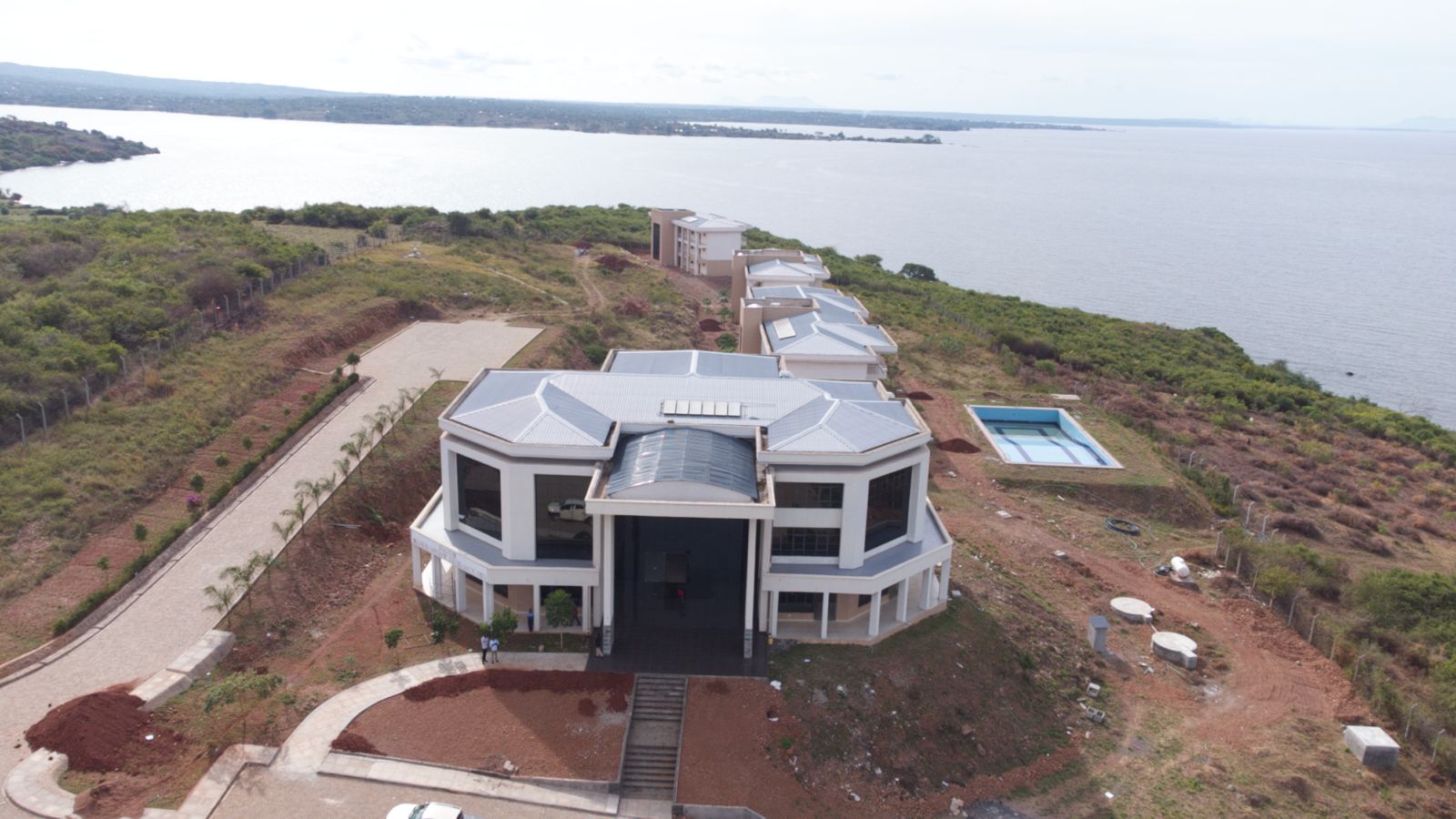
When President William Ruto launched the Blue Economy Research Hub at Jaramogi Oginga Odinga University of Science and Technology (JOOUST) in Miyandhe, Kenya’s economic future diversified the attention to focus on water ecosystems.

The facility positions the university as a key research centre for freshwater science linked to Lake Victoria, with a focus on fisheries, aquatic technology and environmental sustainability.

For Siaya County, the project places the region directly within the country’s broader Blue Economy agenda.

The Blue Economy refers to the sustainable use of water resources to support economic growth, jobs and environmental protection.

While often associated with coastal activities, Kenya’s strategy also includes inland water bodies such as Lake Victoria, which support millions of livelihoods through fishing and trade.

The JOOUST hub will support both postgraduate and undergraduate research, particularly in molecular research systems related to aquatic life.

Its location near major freshwater ecosystems allows the university to expand research in fisheries science and aquatic technologies.

Speaking during the launch, President Ruto called on universities to take a stronger role in developing research and innovation that can address real economic challenges.

He noted that specialised scientific skills will be increasingly important as Kenya builds a modern and competitive economy.

Beyond the Blue Economy hub, JOOUST has also attracted international research partnerships.

A drone view of the Blue Economy Research Hub currently under construction (Image: Files)

These include the World Bank-supported Africa Centre of Excellence in Sustainable Use of Insects as Food and Feeds (INSEFOODS) – which explores insects as sustainable protein for food and animal feed.

Researchers at the university are also working on projects such as sericulture, a silk production initiative developed in partnership with Silk Origin Limited.

Together, these programmes position JOOUST as an emerging research hub linking science, sustainability and local economic development.

For Siaya and the wider Lake Victoria region, the goal is straightforward:

Turn freshwater ecosystems into centres of research, innovation and opportunity – while protecting the natural resources that communities depend on.

US Suspends KSh207 Billion Health Deal with Kenya After High Court Freeze

The United States has temporarily suspended a $1.6 billion (KSh207 billion) health cooperation agreement with Kenya after the High Court halted its implementation over constitutional and data privacy concerns.

The framework agreement, signed on December 4, 2025, brought together U.S. Secretary of State Marco Rubio and Kenya’s Prime Cabinet Secretary Musalia Mudavadi, and was intended to strengthen bilateral collaboration in the health sector.

However, the deal quickly ran into legal headwinds.

Legal Challenge and Court Orders

The agreement was challenged in court by the Consumers Federation of Kenya (COFEK) alongside Busia Senator Okiya Omtatah.

The petitioners argued that the framework allowed for the transfer of sensitive health data to U.S. entities without sufficient safeguards. They also claimed the agreement bypassed mandatory parliamentary oversight, raising constitutional concerns.

In December 2025, High Court Justices Bahati Mwamuye and Chacha Mwita issued conservatory orders suspending the implementation of the deal.

In February 2026, the court declined to lift the freeze, maintaining the suspension pending a full hearing and determination of the case.

US Embassy Response

The United States Embassy in Nairobi confirmed that the agreement would be reworked once the court delivers its final judgment.

Susan Burns, the Embassy’s Chargé d’Affaires, reassured stakeholders that ongoing health programmes would not be disrupted. She said existing support for HIV/AIDS, malaria, and tuberculosis interventions would continue through established channels such as the U.S. Centers for Disease Control and Prevention (CDC) and the embassy’s foreign assistance office.

Potential Funding Gap

Meanwhile, researchers from the University of Nairobi Centre for Epidemiological Modelling and Analysis (CEMA) have warned that a prolonged suspension could create a funding shortfall of approximately KSh71 billion.

According to the centre’s analysis, such a gap could significantly affect the supply of essential health commodities and the delivery of critical services across the country, particularly in disease prevention and treatment programmes.

What Happens Next?

With the agreement currently on hold, attention now shifts to the High Court’s final determination. The outcome will not only shape the future of U.S.–Kenya health cooperation but could also set an important precedent on data protection, parliamentary oversight, and international agreements involving sensitive public information.

For now, both governments appear to be waiting on the judiciary — as Kenya’s health sector weighs the potential consequences of a stalled multibillion-shilling partnership.

Northern Kenya: What Comes After the New Road?

Maybe it’s just me – but often when a big road gets talked about, we tend to hear the length and cost – not the lives it might actually change.

The newly launched Isiolo – Mandera and Isiolo – Garissa – Lamu road project is not just about laying asphalt in the bush.

It’s part of the roughly 750-kilometre corridor that attempts to connect five counties – Meru, Isiolo, Garissa, Wajir, Mandera – and beyond.

Access Changes Everything

The First World mindset isn’t about shiny skylines or polished airports.

It’s about the quiet intersection where everyday choices meet everyday systems.

And, projects like this test that idea in reverse.

When systems finally show up – in the form of a road, fibre cables, faster transport – does behaviour rise to meet them?

When a place that once felt cut off becomes connected, does the economy respond?

Early signs suggest it does: traders begin moving goods again, farmers start thinking beyond the local market, travel times shrink and suddenly planning ahead feels possible.

Access changes how people calculate risk. If you can move faster, you can trade smarter. If you can connect digitally, your market is no longer just your town.

Still, a road is never just a road. It carries expectation, adjustment, even tension.

And, with connection comes change – new businesses, new migration patterns, new ambitions.

None of it is simple. But maybe that’s the real point.

If a stretch of tarmac can help a farmer in Garbatulla reach buyers in Eldoret, help a driver shave hours off a journey, help a mother reach a clinic in time – then we’re talking about something larger than infrastructure.

We’re talking about whether our systems – and our choices – are finally beginning to align with the kind of future we say we want.

So beyond the ribbon cuttings and speeches, what does this road mean where you live? Not in theory – in the everyday.

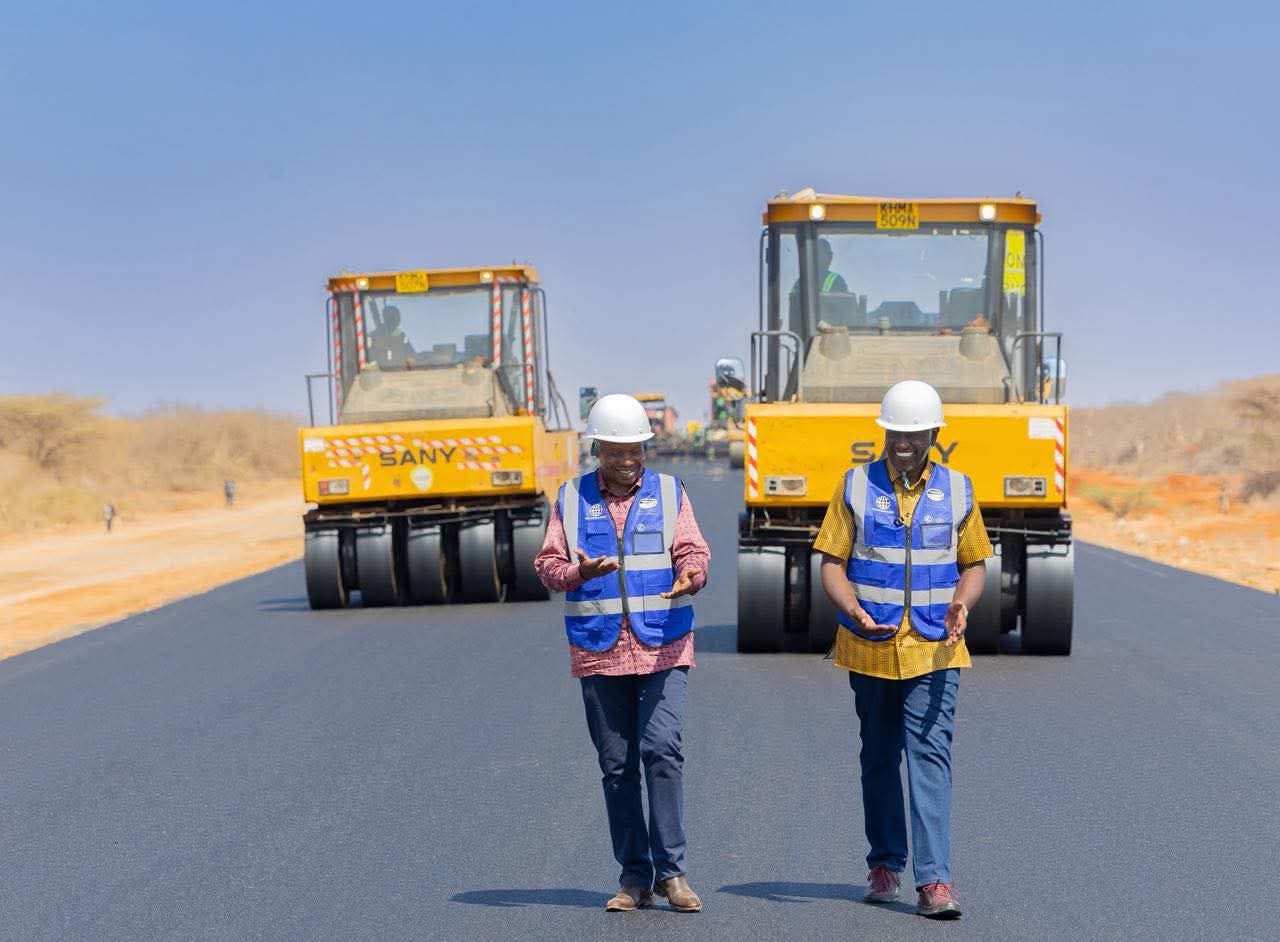
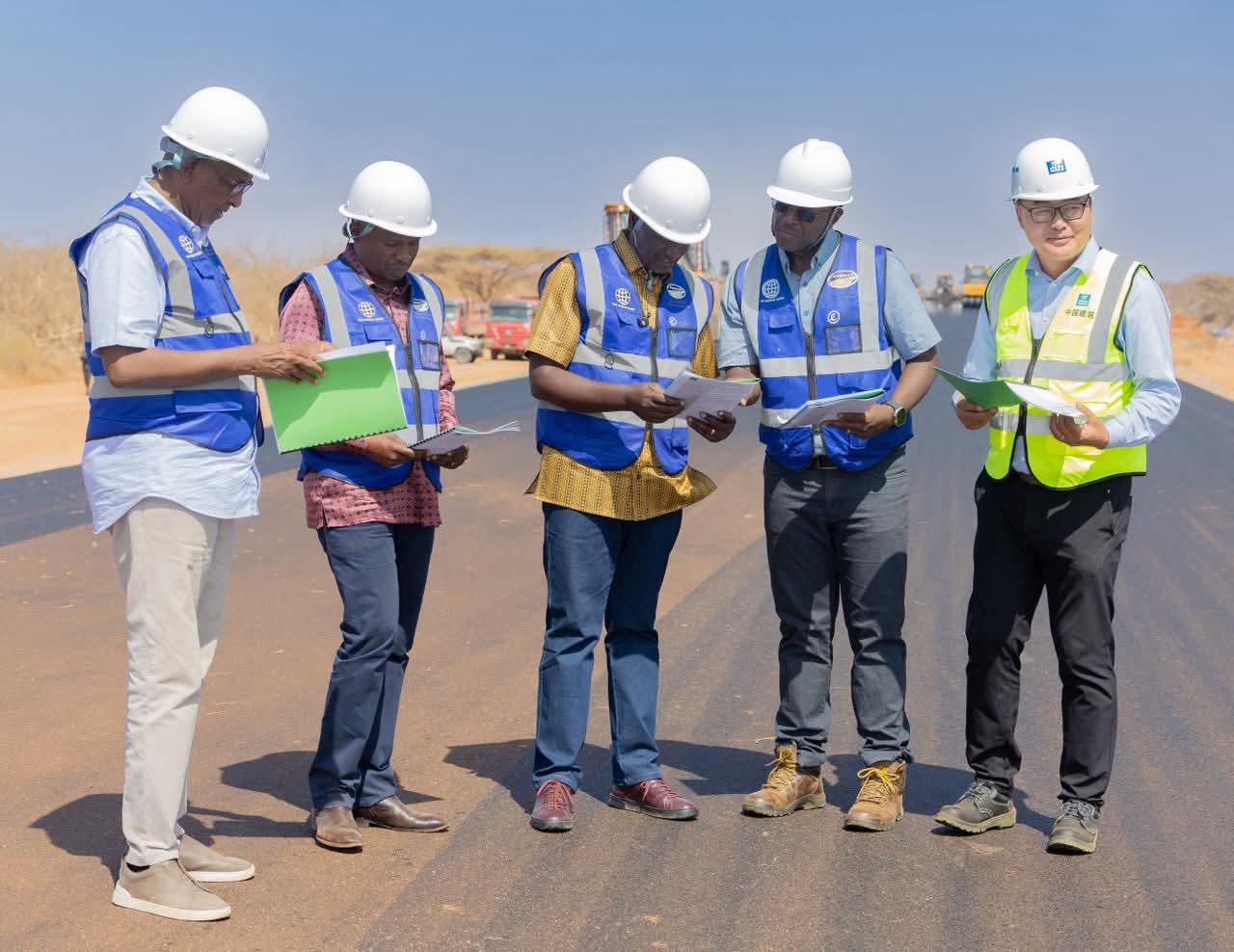
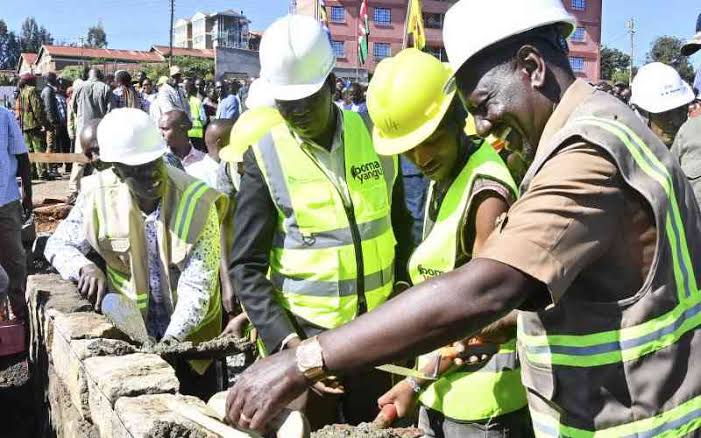
President William Ruto and VP Kithure Kindiki with contractors on the Isiolo – Lamu ongoing road project (Image: Files)

The Vision of The Project

It has a vision I can tap in three points:

1. This Road Will Change Lives

Before, maybe an expectant mother in Kulamawe had to hope a dusty road didn’t wash out in the rains so she could reach a clinic.

Now even halfway through construction, people say they’re reaching hospitals faster, staying safer, and carrying hope with them – not just worries.

That’s concrete impact.

2. This Road Means Access

It’s about farmer produce finally getting to markets, not rotting on the vine because the road was too rough.

It’s about livestock reaching buyers without the fear of injury or loss.

It’s even about internet cables being laid alongside the road – meaning towns that used to feel forgotten could soon have access to the digital world.

It’s better access for your goods, services and innovation.

3. Small Hustles, Jobs, Livelihoods

Far from being only about trucks and cargo, locals are already earning through jobs tied to the project – from construction labor to local transport and community services.

Good roads beckon manufacturing industries which blow up professional and casual labor demand in the region.

Those aren’t abstract numbers – they’re real paychecks for real families.

In a Nutshell …. 

This project will open up Northern Kenya as a serious contributor to the country’s food security, trade, and long-term growth.

It signals a shift in how we think about access, opportunity and inclusion.

If matched with consistent systems and local enterprise, it could turn the region into a dependable engine of productivity.

Nyota Fund : A Snapshot of Public Opinion

A new January 2026 national opinion poll by Infotrak Research offers a rare chance to listen to what Kenyans are saying about the fund.

First off, awareness of the Nyota Fund is high.

According to the poll, 78% of Kenyans have heard about the programme, with strong awareness across all regions – from Coast to Nairobi, Nyanza to Rift Valley.

Young people aged 18 – 35, the main target group, show especially high awareness.

Nyota Fund – The Perceptions

When asked what the fund actually focuses on, the message from the public is clear:

  • 65% believe Nyota is mainly about grants to start businesses.
  • 19% see it as training and mentorship for youth.
  • Only 4% associate it with savings or financial inclusion.

That shows that Nyota is being understood first as startup capital, not a long-term financial system.

Whether that perception matches policy intent is a conversation policymakers may want to lean into.

Who’s Benefiting from Nyota Fund? 

Engagement is growing, but it’s not universal.

  • 36% say they or someone close to them has participated.
  • 11% applied but were not selected.
  • 52% say they haven’t engaged at all.

Participation is higher in regions like Rift Valley and Western, while Nairobi – perhaps surprisingly – sits closer to the national average.

This shows that Nyota Fund is visible, but access still feels uneven.

Is the Nyota Fund system fair?

Ask Kenyans whether Nyota’s eligibility rules are fair, and you’ll get a divided room:

  • 44% say the criteria is fair.
  • 46% say it is not.
  • 10% are unsure.

That split runs across regions, age groups, and gender.

It suggests a programme that is well-intended, but still struggling with public trust around inclusion and selection.

Is Nyota Fund proofed against fraud? 

Nyota Fund is subject to fraud checks, quite necessary, but not painless.

Nyota’s in-person validation process – meant to reduce fraud – is largely supported.

  • 57% say it works without creating barriers.
  • 32% feel it still locks people out.

This is classic Kenyan logic: tupunguze wizi, lakini tusiumize watu.

The public largely accepts oversight but also wants it humane, accessible and efficient.

Who should Nyota prioritise?

Here, Kenyans are very clear:

  • 44% say unemployed youth should come first.
  • 26% want youth with business ideas supported, education aside.
  • 19% prioritise people living with disabilities.
  • Smaller numbers point to Jua Kali workers and graduates.

The overall message is that Nyota is seen as a lifeline for those locked out of opportunity, not just degree holders or polished entrepreneurs.

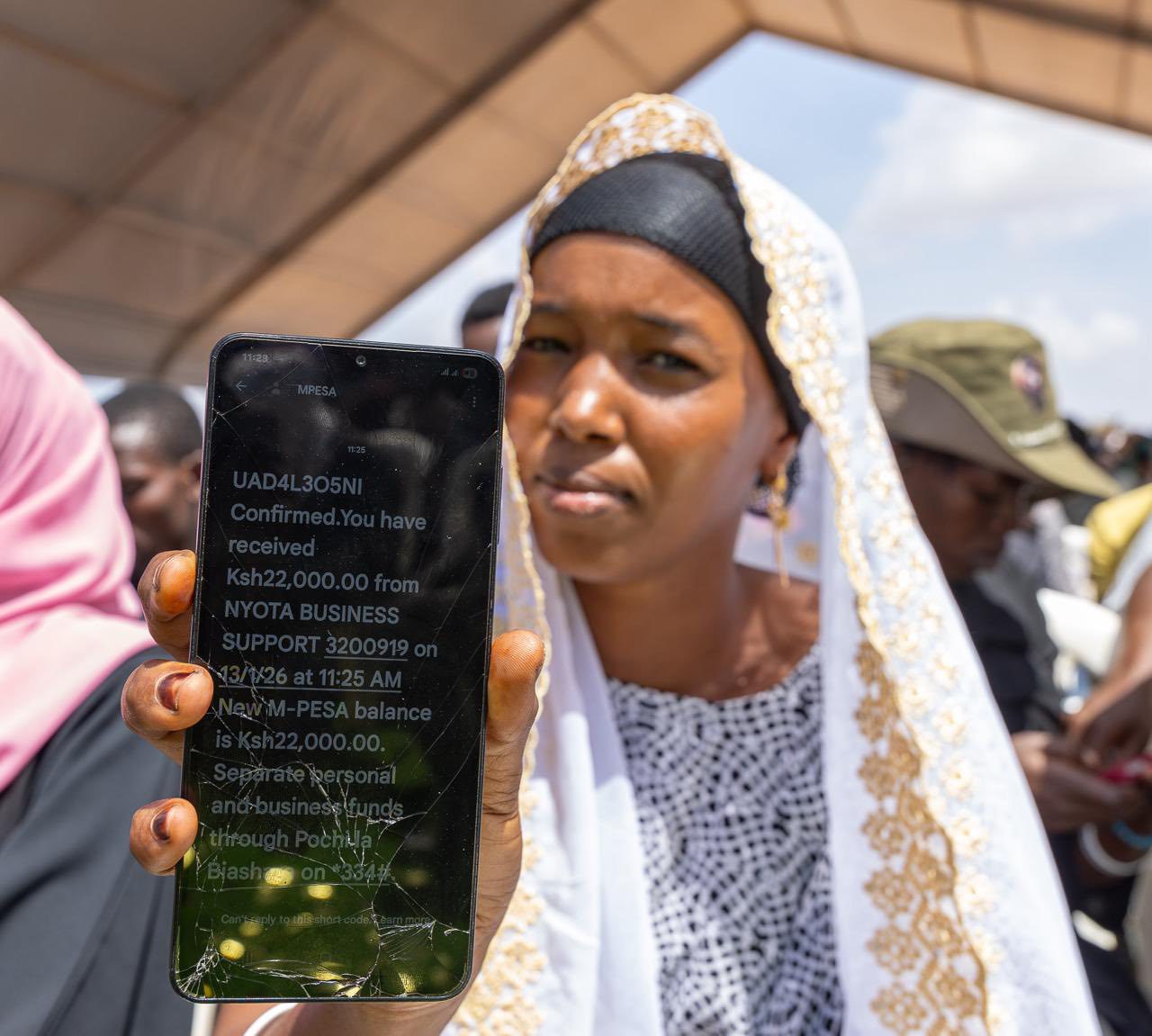
President William Ruto interacts with Nyota Fund beneficiaries during an activation event in Nyeri County (Image: Files)

Is KSh 50,000 enough?

Surprisingly – and this matters – 77% of respondents say Ksh50,000 is enough to start a business.

Only 19% say it’s too little, while a tiny fraction are unsure. This isn’t about building empires overnight.

It’s about getting started – stock on the shelf, tools in hand, momentum rolling.

Transparency issues on Nyota Fund

When it comes to transparency, opinions are again split:

  • 25% say the process is very transparent.
  • 32% say somewhat transparent.
  • 31% say not transparent.
  • 11% don’t know.

That tells us Nyota has credibility – but it’s fragile.

Communication, clarity, and consistent feedback will likely decide whether public confidence grows or stalls.

In a Nutshell …..

Strip away the charts and percentages, and one thing stands out: Kenyans want Nyota to work.

They understand its purpose and support its goals – because its easy to see its potential. But they are also asking for fairness, clarity, and follow-through.

Nyota Fund sits at the intersection of hope and accountability. If it listens closely to these voices – not just the applause, but the concerns – it could become more than a fund.

It could become a real engine for youth-led economic momentum.

And that, for many young Kenyans, would be the real star.

Police Deny Teargas Fired Inside Kariobangi Church Amid Chaos During Gachagua’s Visit

The National Police Service (NPS) has denied allegations that a teargas canister was lobbed inside the PCEA church in Kariobangi North on Sunday, November 30, 2025, where former Deputy President Rigathi Gachagua was attending a service.

The denial follows a chaotic incident outside the church premises that saw police intervene to disperse violent groups.

NPS Spokesperson Muchiri Nyaga released a statement correcting the misinformation, claiming the church management confirmed the canister did not land inside the sanctuary.

“The service also wished to correct misinformation alleging that a tear gas canister was thrown into the church. Church leadership has been contacted and has denied that this occurred. The service later resumed and concluded peacefully at 2 pm,” Nyaga said.

Clashes Erupt Over By-Election Victory

Chaos erupted outside the church after two rival groups of youths—one group allegedly sponsored to disrupt the event, and the other believed to be supporters of Gachagua—confronted each other.

Gachagua was leading a thanksgiving service for Democracy for the Citizens Party’s (DCP) Wanyoike Warui, who had won the Kariobangi North ward race in the by-elections held on November 27.

As the situation escalated, armed police officers quickly intervened, using teargas canisters and firing shots into the air to disperse the rowdy groups who had blocked the main road accessing the church. This confrontation temporarily halted the church service.

Six Injured, NPS Launches Investigation

The NPS confirmed that six individuals sustained injuries during the fracas, which they described as planned and premeditated.

NPS assured the public that the Nairobi Regional Commander, along with the Directorate of Criminal Investigations (DCI), has launched a full investigation to uncover the perpetrators and sponsors of the chaos.

“The NPS takes great exception to such callous acts, particularly when directed at a place of worship, which is considered a sanctuary. We also extend our sympathies to the six individuals who were injured and wish them a speedy recovery,” Nyaga added, urging witnesses to come forward with information.

Gachagua Blames President Ruto

Following the incident, Gachagua vehemently castigated the attack, laying the blame directly at the feet of President William Ruto and leaders from the United Democratic Alliance (UDA).

Gachagua accused the UDA administration of orchestrating a “sinister plan” and warned that such attacks would be detrimental to the administration’s public confidence.

“It is unfortunate and disturbing that William Ruto is turning Kenya into a militia Country where women, children, and churches have become his key targets of lethal attacks. You have desecrated the Altar and defiled a Holy Place, and for sure God will punish you,” Gachagua asserted.

He framed the attack as punishment for the people of Kariobangi North rejecting the UDA candidate in the recent by-election.

Kenya Breaks Ground on Nairobi – Nakuru – Mau Summit Highway

President William Ruto launched the Nairobi – Nakuru – Mau Summit Road and the Nairobi – Maai Mahiu – Naivasha Project, marking one of the most significant infrastructure undertakings in the country’s recent history.

The launch came through a public–private partnership (PPP) – a financing model designed to deliver large infrastructure without leaning on the exchequer.

Speaking during the launch, the president outlined the three challenges that come with every large infrastructure project:

1. Rely on the national budget (which can’t support mega-highways without crippling other services),

2. Borrow heavily (when debt limits are already strained),

3. Simply slow down development (which the government says is no longer an option).

To justify the PPP, he mentioned that waiting for budget availability would have taken decades; borrowing would stretch future generations; and standing still would mean accepting stagnation on a route that feeds multiple economies.

The Scope of the Project

The two projects combine into an ambitious upgrade of Kenya’s most important transport artery:

175 km: Nairobi – Nakuru – Mau Summit

58 km: Nairobi – Maai Mahiu – Naivasha

Together, they represent an investment of more than KSh170 billion.

Under the PPP model, the roads will be designed, financed, expanded, operated, and maintained by private partners, with government oversight.

Expected Changes on the New Highway

The Nairobi – Nakuru – Mau Summit section will be strengthened to handle extremely heavy commercial traffic, with additions such as:

  • New interchanges
  • Truck lay-bys
  • Pedestrian bridges
  • Improved lighting and barriers
  • Upgraded drainage systems
  • Intelligent transport systems for better safety

The Maai Mahiu – Naivasha section, known for steep gradients and heavy cargo, will be upgraded to seamlessly feed the Naivasha Inland Container Depot and the growing industrial zone around it.

Government says the upgrades aim to reduce congestion, cut travel time, reduce accidents, and boost regional trade across Uganda, South Sudan, Rwanda, Burundi, and the DRC.

What’s the Expected Impact? 

The highway is projected to employ about 15,000 young Kenyans during construction, offering training and skill-building opportunities in engineering, logistics, environmental management and construction technology.

Local businesses, suppliers, and transport operators are expected to benefit as well, with government emphasising that local content will take the lead even as Chinese partners provide technical expertise.

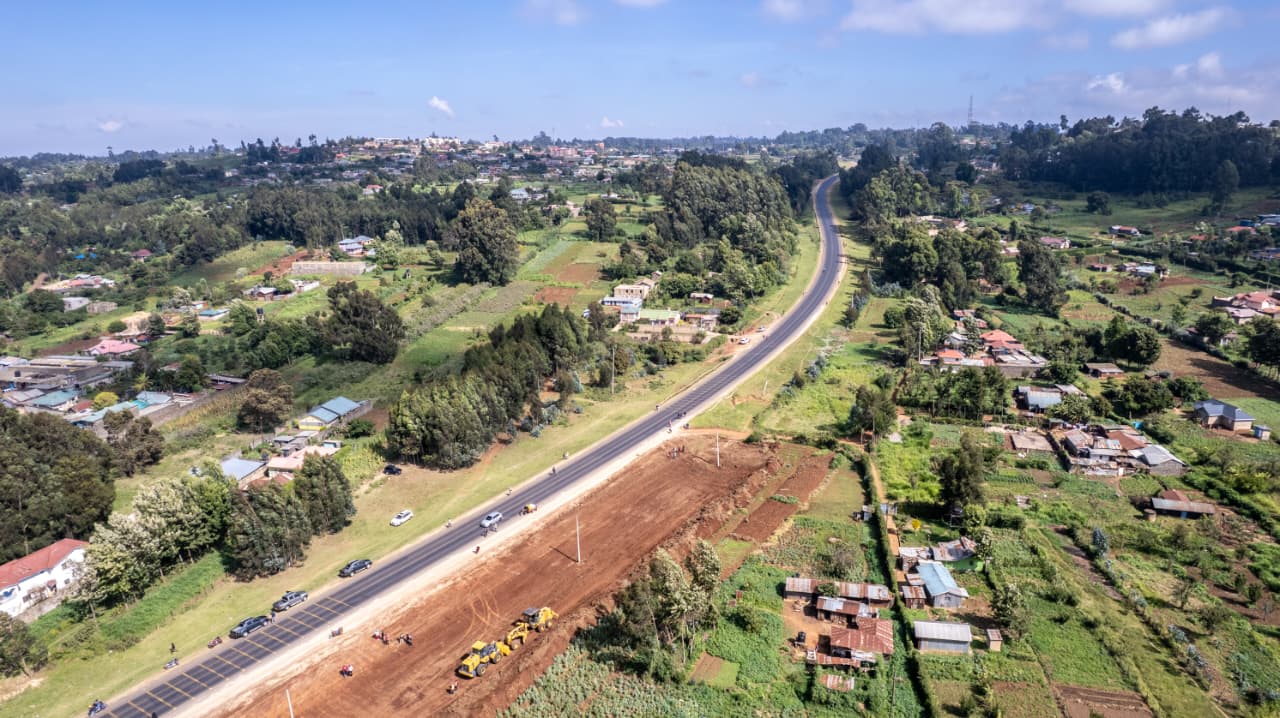
A section of the Nairobi – Nakuru – Mau Summit Road that’s been earmarked for an upgrade to dual carriageway level (Image: Files)

The Larger National Infrastructure Push

The launch signals the beginning of an aggressive infrastructure agenda.

Several other dual-carriageway corridors are scheduled to break ground soon, including:

  • Muthaiga – Kiambu – Ndumberi
  • Machakos Junction – Mariakani
  • Mau Summit – Kericho – Kisumu
  • Kisumu – Busia
  • Karatina – Nanyuki – Isiolo
  • Makutano – Embu – Meru – Isiolo
  • Mtwapa – Malindi
  • Mombasa – Lunga Lunga
  • Nakuru – Nyahururu – Nanyuki

And multiple Nairobi links such as the Northern Bypass and Bomas – Karen – Ngong are slated for expansion.

The government notes that since independence, Kenya has built about 22,000 km of paved roads – a figure dwarfed by global counterparts like Japan.

The new agenda, they say, is designed to correct this historic lag.

The Long-Term Vision

The President tied the highway launch to a broader transformation strategy, outlining parallel investments in:

  • Expanded STEM and research funding
  • Large-scale water harvesting and irrigation
  • New dams to boost agro-industrial output
  • An additional 10,000 MW of energy generation
  • Expansion of ports and airports
  • Extension of the Standard Gauge Railway from Naivasha to Kisumu and Malaba beginning January 2026

To fund this sustainably, government plans to operationalise a National Infrastructure Fund and a Sovereign Wealth Fund, drawing resources from budget allocations, privatisation revenues, natural resource royalties, and private sector investment.

In a Nutshell …

The Nairobi – Nakuru – Mau Summit project signals a new financing model, a new development philosophy, and a wider intention to modernise Kenya’s economic backbone.

Whether the PPP model delivers as promised will unfold over time.

But, for now, the country’s busiest highway is finally on course for the kind of transformation Kenyans have expected for years.

Makongeni: Making History in The Eastlands Urban Renewal Plan

Makongeni is the first beneficiary in the documented, structured, community-led process that now marks the transformation under the Eastlands Urban Renewal Masterplan (2016–2036).

For the first time since the vision was adopted in 2019, an old Nairobi estate is moving from blueprint to bulldozers, from aging blocks to a modern neighbourhood shaped with its residents at the centre.

Makongeni was chosen for her strategic location, long-standing congestion challenges, and the potential to anchor a new, green Eastlands.

A Systemic Relocation

What sets Makongeni apart is not just the scale of redevelopment – it’s the process.

The relocation has become one of the most documented and people-centred exercises ever done under the Affordable Housing Programme.

The Relocation Action Plan wasn’t a formal requirement ticked off; it became the backbone of the transition.

Key processes included:

  • Enumeration that mapped official tenants, sub-tenants, traders, churches and more – creating a factual base for all decisions.
  • Verification that honoured lived realities through IDs, rent records, testimony and official letters.
  • Grievance handling that resolved over 300 complex cases through a multi-agency desk involving elders and local leadership.
  • Tracing efforts that ensured no household was left behind – including sick, travelling or fearful families.
  • Clear communication through Swahili, Sheng, SMS, barazas, meetings and home visits.
  • Voluntary movement, supported only after disbursement of facilitation funds and signing of consent forms.

To date, more than 4,600 verified households and commercial spaces have been supported to move with clarity and dignity.

The Importance of Movement & Timing

Makongeni cannot be rebuilt while families still live on site. Roads, parks, housing blocks, water systems and commercial centres can only rise once the ground is clear.

The timing is deliberate:

  • Families needed time to plan before schools reopen in January.
  • December’s festive season brings higher rents and fewer available houses.
  • Facilitation funds have a clear usage window to avoid strain or misuse.
  • Construction work must begin soon for residents to return sooner.

This period marks the bridge between the old Makongeni and the future one – a shift from years of planning to physical progress on the ground.

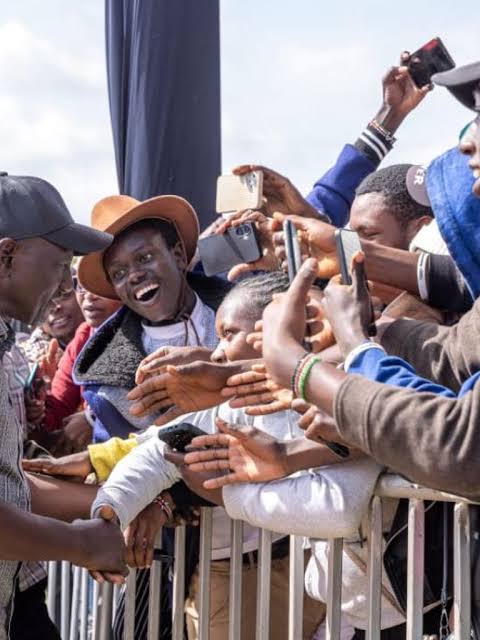
President Ruto greets the youths during a recent Affordable Housing launch in Siaya (Image: Files)

The Sights of the New Makongeni

The new Makongeni will sit on 139 acres acquired from the Kenya Railways Staff Retirement Benefits Scheme.

The redevelopment will deliver:

A homely neighbourhood

Homes, schools, clinics, parks, and markets within walking distance – aligned with the New Urban Agenda’s push for dignity, convenience and community.

Mixed-density homes

75 acres of social, affordable and affordable-market housing built with modern architecture and climate-resilient standards.

New economic engine for Eastlands

Commercial streets, co-working spaces, small industries, and thousands of jobs during and after construction.

Learning and wellness hub

Early childhood centres, primary and secondary schools, a vocational institute, and a modern community health complex.

Green spaces

20 acres of parks, playfields, green corridors, and public recreation – the largest green investment in Eastlands in decades.

Futuristic infrastructure

New roads, mobility hubs, stormwater systems, water and sewage treatment plants, and solar fields.

The Future of Makongeni

This redevelopment isn’t about demolitions – it’s about dignity, opportunity and continuity.

Residents will have priority to return and purchase units, keeping Makongeni’s generational story alive even as the surroundings transform.

Makongeni is where Eastlands’ next chapter begins – not by erasing the past – but by upgrading and building a future worthy of its people.

President Ruto Defends His Previous “Shoot-In-The-Leg” Order

President William Ruto has staunchly defended his controversial instruction for police to shoot protesters targeting key government installations, maintaining that the directive was necessary to uphold law and order and protect the lives of citizens.

In an interview published by Al Jazeera on Sunday, the President directly addressed accusations that his administration is using the police to suppress legitimate dissent, insisting that security agencies are acting strictly within legal bounds.

“I do not regret those comments at all because the law allows the police to use force when other people’s lives are in danger,” President Ruto stated. “The police know what they need to do and understand what is in their purview.”

Upholding Public Safety

The President clarified that his stance aimed to balance two constitutional rights: the right of citizens to protest peacefully, and the right of ordinary Kenyans to have their lives and property protected.

Ruto also insisted that his comments were not executive orders but rather an expression of his commitment to public safety, emphasizing the independence of the National Police Service (NPS).

“The police are independent, and there is nowhere in the law where I have the power to direct the police,” he asserted, pushing back against claims that he micro-manages security operations.

Accountability for Rogue Officers

When pressed on recent cases of alleged police misconduct and excessive force, including the reported death of activist Albert Ojawang’, President Ruto reiterated his government’s dedication to internal discipline and accountability.

“We have thousands of police officers, and you cannot miss a rogue one. That is why we have laws to deal with such elements. We will continue to make sure that the majority of the police know what to do,” he added, acknowledging the necessity of prosecuting officers who violate protocols.

Finally, addressing local media criticism that has labelled his administration as “rogue,” the President maintained that the press enjoys full freedom of expression, even when he disagrees with their commentary.

Moses Kuria Announces 2027 Bid For Nairobi Governor

Former Cabinet Secretary and Presidential Advisor Moses Kuria has declared his intention to run for Nairobi County Governor in 2027, setting up a challenge against the incumbent, Johnson Sakaja.

The former Gatundu South MP stated that his decision was directly motivated by President William Ruto’s recent public frustrations over the capital city’s deteriorating conditions, particularly concerning rampant filth, uncollected garbage, and general incompetence.

“Dear President William Ruto. Today you spoke to my heart. Like Prime Minister Baba Raila Amolo Odinga has told me countless times, Nairobi cannot continue to be the City of filth, garbage and incompetence. I have heard your cry. That is why I will offer myself to be the Governor of the great County of Nairobi in 2027,” Kuria announced via social media.

Ruto Slams City’s State

Kuria’s declaration immediately follows President Ruto’s strong condemnation of the city’s poor management. Speaking on Sunday, the Head of State announced a new partnership between the national government and Nairobi County to tackle the persistent waste management crisis.

“Nairobi cannot continue to be the city in the filth. You see that we have already started cleaning the Nairobi River. And now all estates are in the final stages of signing an agreement with the private sector on how we are going to clean this city. It cannot continue the way it is,” Ruto said during a Sunday Service at AIC Ziwani Church.

The initiative aims to involve private sector players to boost waste collection and disposal efforts, addressing mounting concerns over poor sanitation and waste accumulation negatively impacting public health.

READ ALSO; Akon’s Divorce- Wife Reportedly Left with Only $10,000 As Singer’s Wealth Under Mother’s Name

Pledges for Infrastructure

Beyond cleanliness, President Ruto also criticized the poor state of Nairobi’s road network, pledging national government support to allocate resources for necessary improvements.

“We must not have mud along our roads. This city will have streetlights so that we make sure that Nairobi is clean, becomes motorable and a city in the light, not in darkness,” the President pledged. “I have committed that the national government will provide resources.”

Protect The Game – Millionaires Powered by the 12th Man

Kenya’s journey at CHAN has shown that protecting the game is about more than what happens on the pitch – it is about how we, as fans, carry ourselves as hosts.

Progressively, Kenyans have heeded the call of discipline and unity, proving that Protect The Game was not just a slogan but a movement.

By showing passion without chaos, energy without violence, and pride without disruption, we safeguarded the dream of keeping this tournament in Kenya and strengthened our bid for AFCON 2027.

That discipline has carried the Harambee Stars into the quarter-finals, where the rewards are now as real as the dream itself.

The team has already earned 5.5 million shillings in prize money, and with the President’s pledge of 1 million shillings and a two-bedroom affordable housing unit for each player should they progress to the semis, the stakes have never been higher.

These boys, once grinding on dusty pitches in the grassroots, now stand on the verge of millionaire status.

They are not just chasing goals – they are chasing transformation.

And behind every step of their journey is the heartbeat of the 12th Man Army. But for that heartbeat to be felt, it must be channeled in the right way.

Stadiums have their limits, as per CAF regulations. Disruption risks our reputation.

That is why the true power of the 12th Man is being called to the Harambee Stars Villages – vibrant fan zones where the game comes alive just as loudly, just as proudly, and just as passionately.

Harambee Stars fans chill and follow the action at Kasarani Stadium during the Kenya Vs Zambia fixture (Image: Files)

With giant screens, DJs, MCs, local players and electrifying energy, the Villages are where all Kenyans can gather safely, celebrate freely, and lift the team higher without straining the stadium gates.

Fan zones are women and children safe zones and they are encouraged to come and take part in the viewing experience without fear of provocation or harassment.

This is the spirit that ties it all together. To protect the game is to protect our future. To gather in the Villages is to show the world that Kenya’s passion is matched by discipline.

And to roar as one is to power our players into millionaires, transforming their lives and inspiring a generation.

The Harambee Stars are ready, the promise is within reach, and the 12th Man Army must rise once again.

Together, we protect the game.

Together, we create millionaires. Together, we carry Kenya forward.

Kalonzo Hits Back At Ruto For Claiming Opposition Has No Plan

Wiper party leader Kalonzo Musyoka has responded sharply to President William Ruto’s recent assertion that the Opposition lacks a clear plan for leading Kenya. In a statement released on Wednesday, July 23, Musyoka countered Ruto’s claims that the Opposition is merely clinging to the “Ruto Must Go” slogan without offering any tangible development agenda for the nation.

On Wednesday, President Ruto had intensified his criticism, claiming that individuals pushing for his removal from office are part of what he termed the “wash wash” gang – a derogatory reference to fraudsters and con artists with no genuine plan for the country. Speaking during the Talanta Bell-Ringing ceremony at the Nairobi Securities Exchange (NSE), Ruto stated that his administration’s critics are adept at slogans but have failed to propose concrete solutions to Kenya’s pressing challenges.

“I hear some people say ‘Ruto must go’, and that is fine – my time will come like those who came before me. But what is your plan when I go?” the President posed, directly challenging his detractors to present alternative ideas if they genuinely believe the country is on the wrong path. “It is okay if you do not agree with my policies, but please provide us with your counterplan,” Ruto stated.

Man With A Plan

However, Kalonzo Musyoka, while revealing he is currently out of the country for “strategic planning,” asserted that he will present his plan for Kenya to Kenyans for review, and not to Ruto. Even so, he reiterated that the immediate and primary agenda remains for Ruto to serve only one term, aiming for his ouster in the 2027 General Elections.

“I’m currently out of the country for strategic planning for a better Kenya. I will make my plan for Kenya for Kenyans to review, not Ruto. Agenda No. 1 is Ruto Must Go,” Musyoka firmly declared.

Ruto had further mocked what he called empty opposition rhetoric, likening it to fraudulent schemes.

“The more I listen, the more it sounds like sloganeering without a plan. They are saying, ‘Let Ruto go, and we will figure out the plan later.’ That sounds like wash wash conmanship,” he added, directly challenging opposition leaders. “If you truly have a better economic, education, health, or jobs plan, you should be bold enough to table it.”

Despite the massive popularity slogans such as ‘Ruto Must Go’ and ‘Wantam’ have garnered over the past few months, a new dynamic has emerged in Kenyans’ assessment of opposition leaders like Kalonzo, former Deputy President Rigathi Gachagua, and former Interior Cabinet Secretary Fred Matiang’i. There is now a heightened scrutiny on what these leaders plan to do if they were to ascend to power. This shift in public expectation is particularly notable after the emergence of Chief Justice David Maraga, who, many have observed, is actively presenting his detailed plan for the country should he be elected, even as he seeks public support and funding.

Despite this evolving political landscape, Kalonzo and his allies have steadfastly reiterated that their ultimate goal remains to oust Ruto via the ballot box. They continue to argue that his administration’s policies, such as the contentious housing levy and the Social Health Authority (SHA), along with perceived oppressive tactics, are actively driving the nation backwards.

President Ruto Directs Expansion Of Private Sector Involvement In Affordable Housing Program

President William Ruto has issued fresh directives to the Ministry of Lands, Public Works, Housing and Urban Development, mandating the enlistment of more private companies and professionals into the Affordable Housing Programme.

Speaking on Tuesday, July 15, during the launch of the Affordable Housing Internship Programme at State House, Nairobi, President Ruto emphasized the critical need to expand partnerships with the private sector. This expansion, he stated, is essential to fast-track the delivery of housing units and meet the increasing demand across the country.

“When we started, we had to start with a few, maybe 39 consortiums,” Ruto explained. “We now need to take that to 60 or 70. We will be bringing on board more companies; engineering firms, architects, design companies, and real estate professionals.”

Ruto acknowledged that the initial capacity of the housing program had been overstretched by the sheer scale of the project, whose primary aim is to not only provide low-cost housing but also generate widespread employment. According to the President, the increased participation of private companies is no longer optional but a necessity to sustain the momentum of the Affordable Housing initiative.

“The Ministry will now embark on the exercise of bringing on board these stakeholders who want to be part of the Housing programme. We have a clearer plan today than we’ve ever had for job creation – and housing is a key pillar of that,” he added.

In a move to further boost the program’s technical capacity, the President also announced plans to onboard 4,000 young graduates from Technical and Vocational Education and Training (TVET) institutions and universities. These graduates will be attached to private firms participating in the program, where they will gain invaluable hands-on experience under a structured supervision framework. Ruto explicitly required all participating firms to mentor and monitor these young professionals, with the government working to establish a robust support framework to ensure accountability.

Referencing his key campaign promises centered on youth employment, President Ruto highlighted that the Affordable Housing initiative currently employs 320,000 Kenyans. He articulated an ambitious goal to nearly double this number to over 600,000 in the near future, through the implementation of a second shift system and a more aggressive rollout of construction projects nationwide.

Atheists in Kenya Threaten Legal Action Over Alleged State House Church Construction

The Atheists in Kenya Society (AIK), under the leadership of President Harrison Mumia, has issued a stern warning of legal action over what it deems the unconstitutional construction of a massive church within the grounds of State House, Nairobi.

This response follows mounting claims that an 8,000-seater church, reportedly costing Ksh1.2 billion, is being discreetly built at the official residence of the President. While government officials are yet to confirm or deny the reports, a front-page story in the Daily Nation has amplified public scrutiny and outrage.

In a press statement released on Friday, July 4, 2025, AIK condemned the alleged project as both “shocking and unacceptable,” accusing President William Ruto’s administration of promoting Christian nationalism and violating Kenya’s constitutional commitment to secularism.

“The Atheists in Kenya Society views this action as anti-democratic and a promotion of Christian nationalism by President Ruto. Kenya does not belong to Christians only,” the statement read.
“The construction of a church at State House directly threatens the constitutional principle of separation between church and state, as enshrined in Article 8 of the Constitution.”

AIK has instructed its legal team to prepare an immediate lawsuit aimed at halting the alleged construction, citing misuse of public funds and a clear breach of the Constitution.

The controversy has sparked heated debate online and among civil society groups, many of whom question the appropriateness of public resources being used for religious infrastructure within a government facility.

This isn’t the first time President Ruto’s public expressions of faith have drawn criticism. His term in office has been marked by frequent religious events at State House and overt Christian messaging in public addresses. Critics argue this behavior blurs the lines between governance and religious practice.

AIK, which has long advocated for strict enforcement of Article 8—which bars the state from adopting any religion—warns that if the allegations are confirmed, the construction could set a dangerous precedent for religious favoritism in government.

“We will not stand by as taxpayer money is funneled into faith-based projects that violate our secular framework,” Mumia said in a follow-up comment on X (formerly Twitter).

If the case proceeds to court, it could become a landmark legal battle testing the limits of religious influence in Kenya’s political sphere and reaffirming the constitutional divide between church and state.

Proposed Law Could Jail Kenyans for Spontaneous Protests Amid Gen Z Uprising

Kenyans could soon face up to one year in jail or a Sh100,000 fine for participating in spontaneous demonstrations if a controversial new bill is passed into law. The Assembly and Demonstration Bill, 2024, backed by the government, has reignited fierce public debate just weeks after nationwide Gen Z-led protests swept across the country.

The bill, which aims to overhaul the legal framework governing public assemblies and protests, proposes tougher penalties for individuals who engage in unnotified or unregulated demonstrations, a move critics say could criminalise constitutionally protected rights.

Bill Sparks Outrage Over Threat to Freedom of Assembly

Initially introduced by Public Service Cabinet Secretary Geoffrey Ruku during his tenure as Mbeere North MP, the bill faced public backlash earlier in the year and was shelved. However, it has now resurfaced in the wake of the youth-led maandamano movement, which has drawn thousands of demonstrators to the streets over issues including high taxes, governance concerns, and police brutality.

If passed, the bill would mandate prior notification and approval for all public demonstrations. Spontaneous or unregistered gatherings would be deemed illegal, with participants facing harsh penalties, including fines up to Sh100,000 or imprisonment for 12 months.

Civil rights groups and legal experts have slammed the proposed legislation, warning it could be used to suppress dissent and stifle free expression.

“This is an attack on democracy. The right to assemble is protected under Article 37 of the Constitution. Criminalising unplanned protests, especially in moments of national crisis, sets a dangerous precedent,” said a lawyer from the Law Society of Kenya.

President Ruto: We Must Balance Rights

Speaking on the matter, President William Ruto confirmed his support for regulating public protests and signaled plans to engage with the Judiciary and Parliament to shape the legislation.

“We will have a conversation with the Judiciary and all other actors—MPs included. I think it is time we have a law that will regulate how we carry out demonstrations in Kenya,” Ruto stated.

“We must protect the right of those who want to demonstrate, picket, and protest—but equally, we must also protect the right of those who don’t want to participate in demonstrations.”

His comments have drawn mixed reactions, with some citizens applauding the move as a way to curb violence and protect public property, while others view it as a thinly veiled attempt to muzzle protest movements, particularly those led by frustrated youth.

Growing Fears of Authoritarian Drift

The reintroduction of the bill comes at a time when the country is still reeling from the aftermath of the June 25 protests, during which at least 19 people were killed and hundreds injured, according to human rights watchdogs. Allegations of excessive police force, enforced disappearances, and sexual violence remain under investigation.

Activists warn that such legislation could embolden further state overreach, especially as the government faces increasing scrutiny from both domestic and international observers.

Online, hashtags like #RejectTheBill, #RightToProtest, and #StopSilencingYouth continue to trend, signaling growing public resistance to the proposed restrictions.

As Parliament prepares to debate the bill, all eyes remain on Kenya’s lawmakers—and on the thousands of young people ready to defend their right to be heard.

William Ruto: Affordable Housing Is Kenya’s Path to Shared Prosperity

In Naivasha this week, President William Ruto offered a sharp, unwavering defense of the government’s Affordable Housing Programme.

At the heart of his message: Kenya’s future must be built – literally and figuratively – on a foundation that outlasts political noise.

Speaking during the Second Kenya Urban Forum in Nakuru County, the President doubled down on his administration’s resolve to press ahead with the ambitious initiative, despite rising criticism and skepticism.

He positioned the housing agenda not as a political tool, but as a transformational instrument for economic empowerment, social inclusion, and urban renewal.

An artist’s image of the Affordable Housing project in Nairobi (Image: Boma Yangu)

“Leadership,” he said, “is not about the number of years one holds office, but the legacy laid for generations to come.”

It’s a message that strikes at the heart of Kenya’s development dilemma – where short political cycles often stall long-term national progress.

According to President Ruto, one of the biggest failures of Kenya’s political elite has been its obsession with elections at the expense of policy continuity.

Transformation doesn’t happen overnight. It demands vision, deliberate planning, and the courage to stay the course,” he noted.

The Affordable Housing Programme is a flagship in the Kenya Kwanza agenda, with promises to deliver thousands of low-cost housing units across both urban and rural landscapes.

But, it’s more than just shelter.

It’s an ecosystem play – designed to unlock jobs, stimulate local construction markets, and inject life into urban planning across the country.

At the forum, stakeholders from the urban development space gathered to exchange ideas on inclusive city planning, dignified solutions for informal settlements, and the sustainability of housing in the face of rapid population growth.

Ruto emphasized that informal settlements remain a key priority, framing the housing plan as a social justice issue, not just a structural one.

This wasn’t just a speech – it was a statement of intent. In Ruto’s view, this is not a time to play safe politics.

It’s a moment to lay down the bricks of a new era – one that lifts Kenyans from the fringes of survival into spaces of dignity, ownership, and opportunity.

Check out and book affordable housing units on the Boma Yangu portal.

President Ruto Hails DP Kindiki As Key To Kenya’s Progress, Criticizes Gachagua

President William Ruto has lauded his deputy, Kithure Kindiki, as a vital partner in advancing the nation, praising his deep understanding of government and unwavering support.

Speaking at Meru National Park on Monday, May 26, 2025, during the launch of Human-Wildlife Conflict Compensation funds, Ruto highlighted Kindiki’s instrumental role in assisting the cabinet and the presidency in implementing the government’s agenda.

“I want to thank the people of Meru for giving me this gentleman (Kithure Kindiki). Let me tell you, I now have a deputy president. He is helping me to move Kenya forward,” Ruto proudly stated. “I am very proud I have a deputy who understands government, agriculture, infrastructure, education and health, and he is supportive of the ministers and me to make sure Kenya is going forward.”

In a clear jab at his former deputy, Rigathi Gachagua, who was impeached in October 2024 and whom Ruto described as “quick to anger,” the President emphasized Kindiki’s calm demeanor and lack of tribalism.

“He does not harbour hatred, anger and tribalism and understands that the deputy president is not for the people of Meru but for the Republic of Kenya,” Ruto said. “Those people with anger, hatred and tribalism will never get anywhere in Kenya because Kenya does not belong to those kinds of people but to the united, prosperous one nation with a common destiny.”

Gachagua Impeached

Rigathi Gachagua became the first deputy president to be removed under Kenya’s revised 2010 constitution when the Senate voted to impeach him on October 17, 2024. This followed two days of hearings where Gachagua faced five out of eleven charges. The Senate session was notably disrupted when Gachagua was hospitalized with severe chest pains and was unable to testify in his defense.

No New Taxes for Kenyans in the Finance Bill 2025

In the wake of last year’s tax-related unrest, the Kenyan government has introduced the Finance Bill 2025, signaling a strategic pivot from introducing new taxes to enhancing tax administration and closing existing loopholes.

This move aims to bolster revenue collection without imposing additional financial burdens on citizens.

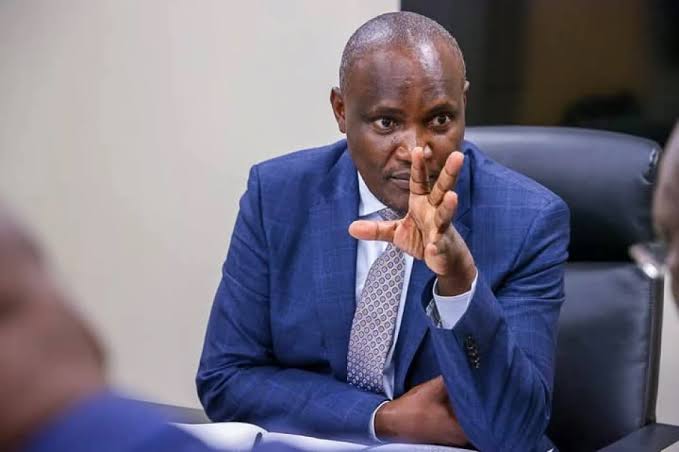
Cabinet Secretary for Finance John Mbadi explains the Finance Bill 2025 in a recent media interview. (Image: Files)

Key Highlights Are: 

1. No New Taxes Introduced

Learning from the 2024 protests the government has refrained from proposing new taxes in the 2025/26 budget.

Instead, the focus is on improving tax collection efficiency and sealing revenue leakages.

2. Fiscal Deficit Targeted at 4.5% of GDP

The budget outlines a total expenditure of approximately KSh 4 trillion, with a planned fiscal deficit of 4.5% of GDP.

This is a reduction from the previous year’s 5.1%, reflecting efforts to enhance fiscal discipline and reduce public debt vulnerabilities.

3. Enhanced Tax Administration Measures

Access to Financial Data: The Kenya Revenue Authority (KRA) may be granted access to individuals’ and businesses’ financial data to combat tax evasion, a proposal that has raised privacy concerns.

Digital Asset Tax Reduction: The tax rate on digital assets is proposed to be reduced from 3% to 1.5%, aiming to encourage compliance among digital asset holders.

VAT Refund Period Shortened: The waiting period for VAT refunds on bad debts is proposed to be reduced from three years to two, improving cash flow for businesses.

4. Adjustments in Tax Procedures

Tax Loss Carryforward Limitation: Taxpayers may be restricted to carrying forward tax losses for a maximum of five years, impacting long-term financial planning for businesses.

Mandatory Electronic Tax Invoicing: All registered persons making supplies, including exempt supplies, will be required to issue electronic tax invoices, enhancing transparency and compliance.

5. Reclassification of Goods and Services

Certain goods and services are proposed to be reclassified between taxable, exempt, and zero-rated categories, affecting VAT obligations for businesses dealing with these items.

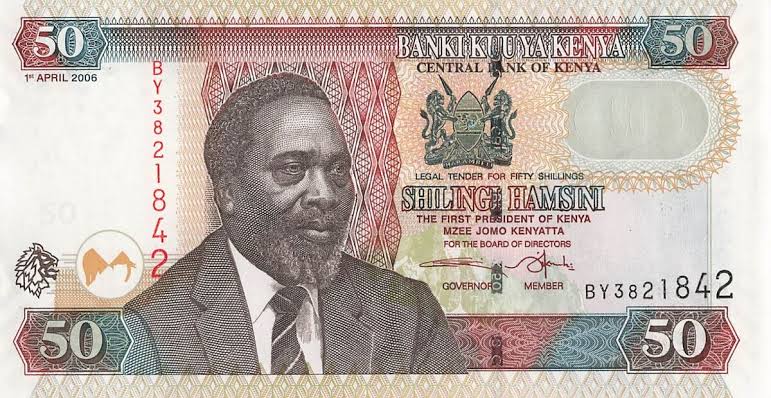
A sample image of a fifty shilling note in Kenya (Image: Google)

Public Engagement

The Finance Bill 2025 is currently under parliamentary review, with public participation forums expected to be announced.

Stakeholders are encouraged to engage in these discussions to provide feedback and influence the final provisions of the bill.

In a Nutshell ….. 

The Finance Bill 2025 represents a deliberate shift towards strengthening tax administration and enhancing fiscal responsibility without introducing new taxes.

By focusing on efficiency and closing loopholes, the government aims to increase revenue collection while maintaining public trust and economic stability.

For a more detailed discussion on the Finance Bill 2025, you can watch the following video:

2027 Mathematics: Kenya’s Voter Landscape of Regional Numbers Reveal Political Power Hubs

Kenya’s Voter Landscape: Regional Numbers Reveal Political Power Hubs

Kenya’s electoral landscape remains deeply shaped by regional voter distribution, and the latest figures paint a clear picture of how political influence is spread across the country’s counties and regions.

With over 22 million registered voters nationwide, data from the Independent Electoral and Boundaries Commission (IEBC) points to Nairobi and the Mt Kenya region as critical centres of electoral power.

Nairobi: The Capital’s Dominant Electoral Role

Nairobi leads all counties with 2,415,310 registered voters, making it the most populous in terms of voter numbers. Its position as Kenya’s economic and political hub makes it a key battleground during national elections. The capital’s diverse electorate carries significant influence, especially in presidential and gubernatorial races.

Mt Kenya Region: The Electoral Kingmaker

The Mt Kenya region commands the highest cumulative voter population, with 7,131,430 registered voters across ten counties.

  • Kiambu: 1,275,008
  • Meru: 772,139
  • Murang’a: 620,929
    Other contributing counties include Nyeri, Kirinyaga, and Tharaka-Nithi. The region’s large numbers have long positioned it as a decisive political bloc, making it fiercely contested during election cycles.

Rift Valley: A Political Stronghold

With 4,687,896 voters, the Rift Valley is another electoral powerhouse.

  • Nakuru leads the region with 1,054,856 voters.
  • Uasin Gishu: 506,138
  • Kajiado: 463,273
    As a vast and ethnically diverse region, Rift Valley has historically aligned with dominant political forces, playing a central role in presidential contests.

Nyanza and Western Regions: Opposition Base and Growing Influence

Western Kenya—which includes Kakamega, Bungoma, Busia, Vihiga, and Trans Nzoia—has a total of 2,616,929 registered voters, with Kakamega leading at 844,551.

Nyanza Region, traditionally an opposition stronghold, contributes 3,120,732 voters:

  • Kisii: 637,010
  • Kisumu: 606,754
  • Siaya: 533,595
    Both regions continue to hold significant electoral influence, especially in coalition-building and regional mobilization.

Coast and Eastern: Swing Regions with Urban Influence

The Coast Region has 1,963,144 registered voters, led by:

  • Mombasa: 641,913
  • Kilifi: 588,602
    Despite lower numbers than Mt Kenya or Rift Valley, the Coast’s urban centres and history of marginalization make it a strategically important bloc.

Eastern Kenya—comprising Machakos, Kitui, and Makueni—registers 1,699,724 voters, with Machakos at 687,565. These counties are often considered swing regions, with voter preferences shifting across election cycles.

North Eastern: Low Numbers, High Significance

The North Eastern Region has the fewest voters, at 882,677, including:

  • Mandera: 217,030
  • Wajir: 207,758
    Although smaller in population, the region’s geopolitical relevance and unique challenges give it a distinct voice in national discourse.

Youth Electorate and 2027 Outlook

In the 2022 General Election, over 8 million voters aged 18–24 were eligible to vote—the largest youth electorate in Kenya’s history. Their role will be crucial heading into the 2027 polls.

As political parties ramp up mobilization efforts, regions with high voter concentrations will be at the centre of strategic calculations. However, every vote—regardless of region—matters in building a representative and inclusive democracy that reflects Kenya’s diverse population.

Mt. Kenya at a Crossroads: Politics, Economy and the Way Forward

Mount Kenya remains a politically significant region, even in the wake of shifting alliances and leadership changes.

President William Ruto is making strategic efforts to rebuild relationships, emphasizing that development should transcend politics.

The old notion of siasa mbaya, maisha mbaya – where political leanings dictated economic fortunes – has begun to fade, replaced by an approach aimed at inclusivity and economic empowerment.

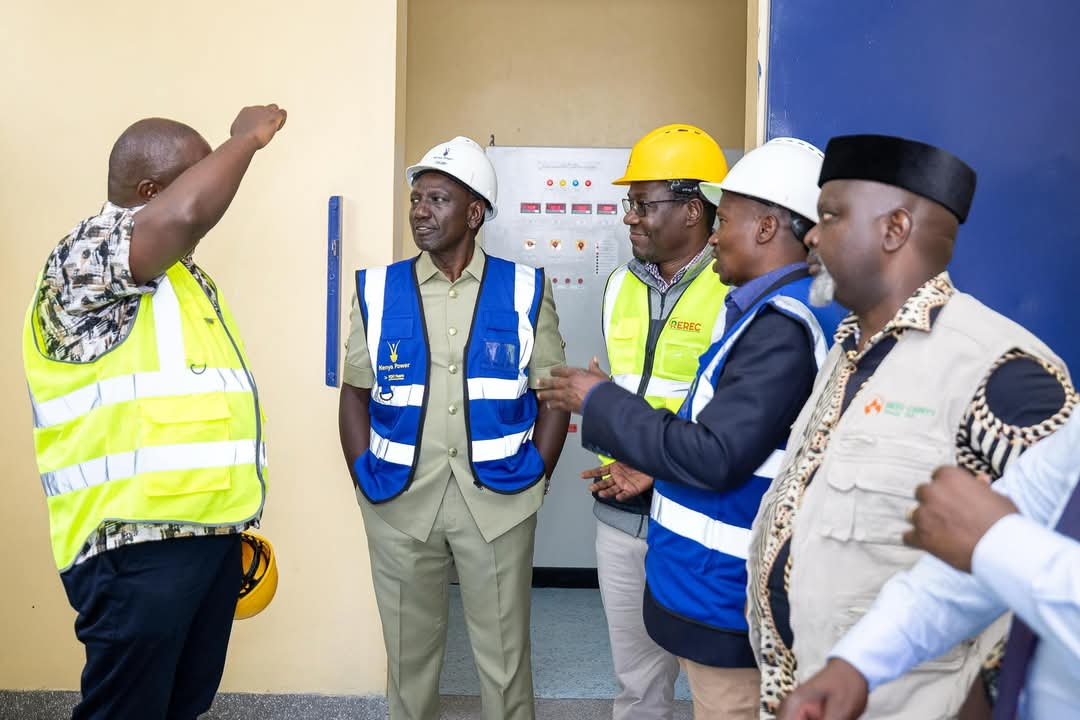
President Ruto, Meru Senator Kathuri Murungi and other leaders during inspection of the proposed Nkuene Power Sub-station in Meru County (Image: PPS)

However, a psychological shift is occurring within the Kikuyu community.

Once dominant in both business and politics, many now perceive a decline in their influence:

Business Competition: The Kikuyu economic stronghold faces increasing challenges from communities such as the Somali and Gusii.

Demographic Concerns: A perceived decline in population has sparked fears of being edged out politically and economically.

Leadership Vacuum: With past influential figures like Jomo Kenyatta, Mwai Kibaki, and Uhuru Kenyatta no longer in power, there is no clear successor commanding national leadership.

Perceived Isolation: A growing sentiment suggests other communities are gaining ground, while the Kikuyu struggle to maintain their standing.

At the same time, there is a growing realization that ordinary Kikuyus have not always benefited from the dominance of their elite class.

This moment presents an opportunity for economic and political realignment, allowing for more inclusive participation beyond traditional oligarchic control.

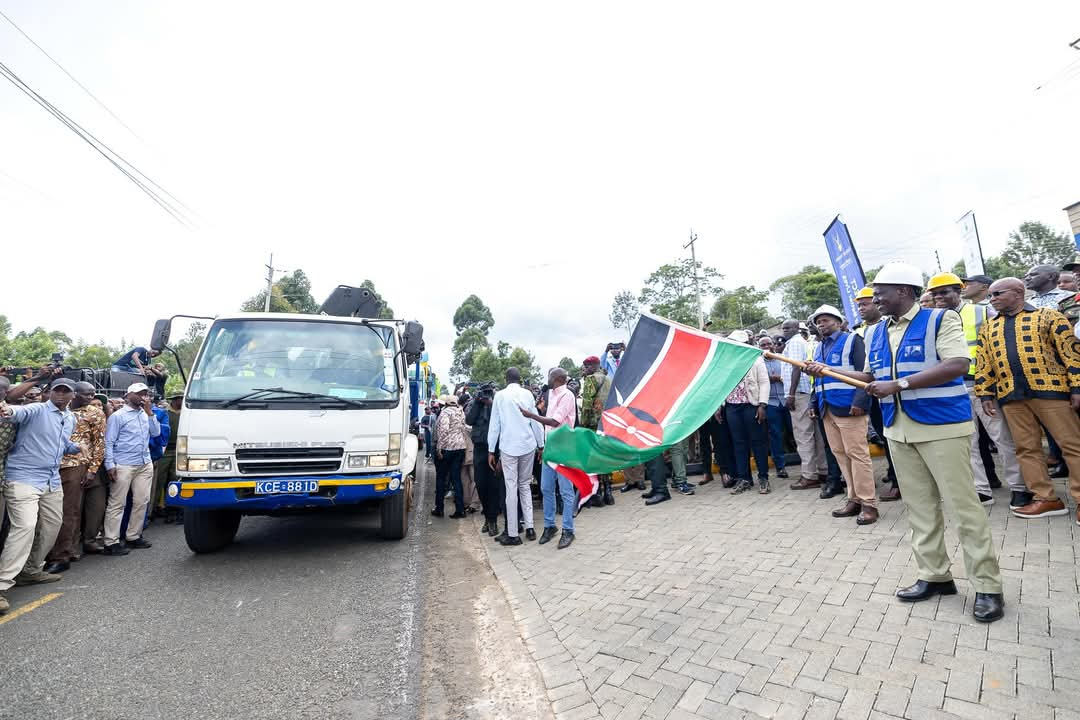
President Ruto flags off a Kenya Power truck to launch a Rural Electrification Program during his Mt Kenya tour (Image: PPS)

Economic Power & Government Interventions

Recognizing the region’s economic concerns, the government has rolled out targeted interventions in agriculture and trade to stabilize and grow Mount Kenya’s economy:

Agricultural Revamp

Tea Industry: With Mount Kenya producing a major share of Kenya’s tea, reforms include a guaranteed minimum price of Ksh 30 per kilo, subsidized fertilizers, modern tea processing factories, and KTDA reforms to eliminate cartels.

Coffee Sector: The government has introduced a Ksh 6.7 billion debt waiver, direct farmer payments, higher cherry payments (from Ksh 35 to Ksh 80 per kilo), and factory rehabilitations to boost value addition.

Avocado Expansion: With 60% of Kenya’s avocado output coming from Mount Kenya, initiatives include seed distribution, Global GAP certification, expanded inspection centers, and duty-free EU market negotiations.

Miraa Market Support: Recognized as an official cash crop, miraa farmers benefit from funding for value addition, improved road networks, and expansion into new export markets like Djibouti, Congo, and Israel.

Macadamia Industry Growth: To curb raw exports, the government has mandated local processing, provided subsidized seedlings, and launched farmer training programs.

Dairy Sector: Key interventions include artificial insemination programs, a Ksh 500 million Dairy Stabilization Fund, 100+ milk cooling plants, feed subsidies, and a price increase from Ksh 35 to Ksh 50 per liter.

The government’s broader economic approach emphasizes cutting out exploitative middlemen, ensuring direct payments to farmers, and expanding opportunities in online work and diaspora investments for economic resilience.

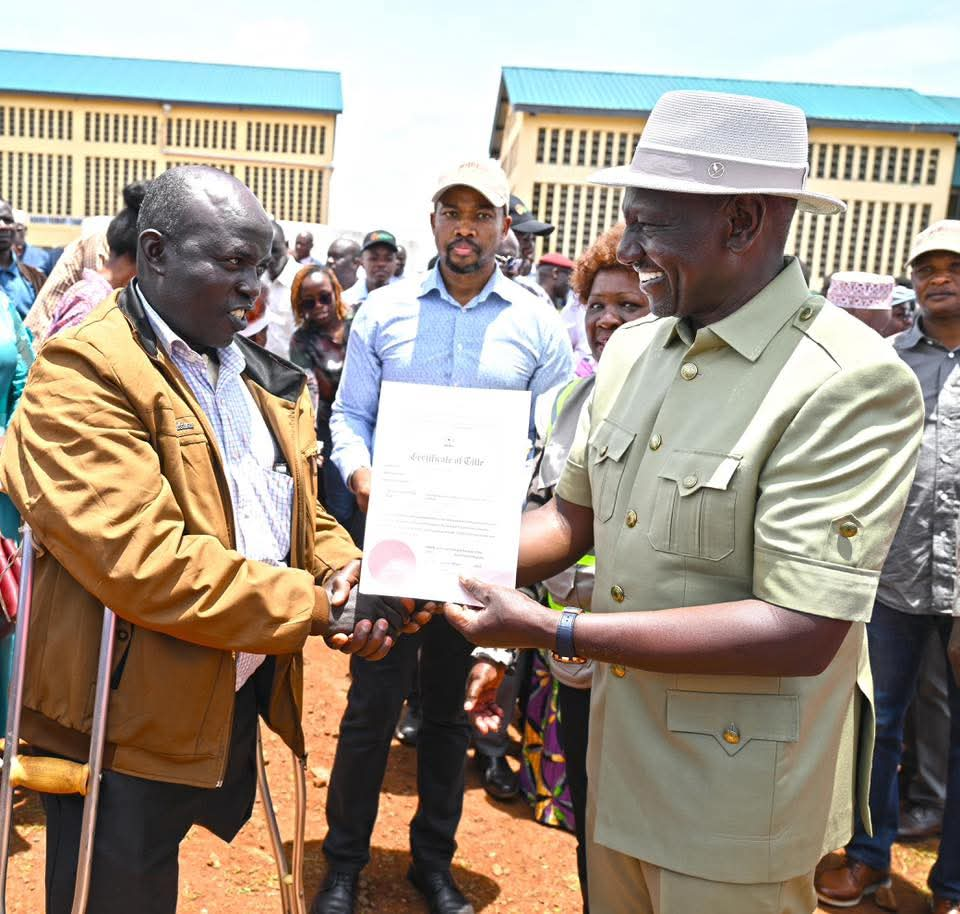
President Ruto issues a title deed to a resident of Kibiru, Tigania West Constituency in Meru County (Image: PPS)

The Case for National Integration

The government is actively encouraging a shift from ethnic-based leadership to national cohesion.

President Ruto’s administration has strategically appointed leaders from Mount Kenya, including PS Gathecha, PS Wachira, and KRA Chair Ndiritu, to reinforce the region’s continued relevance in governance.

The message is clear: the region must embrace collaboration with other communities for collective progress.

The call to trust the process seeks to reassure residents that the administration’s political strategies are aimed at long-term stability and inclusive development.

Mt. Kenya East – A Region Rising

With Deputy President Prof. Kithure Kindiki representing Mount Kenya East, the region is seeing an unprecedented focus on development.

Key projects include:

  • Irrigation farming in Tharaka Nithi to counter recurrent droughts.
  • Investment in high-value crops like tea, coffee, miraa, macadamia, avocado, and dairy.
  • Infrastructure upgrades to improve market access and facilitate trade.

A New Dawn for Mt. Kenya?

Mount Kenya stands at a defining moment, navigating its political realignments and economic transformations.

The government’s emphasis on agricultural revitalization, direct farmer support, and broader national integration signals a shift from traditional patronage to long-term sustainability.

As the region adapts to these changes, the challenge remains – can Mount Kenya redefine its role in Kenya’s political and economic future?

Ruto’s State of the Nation Address: A Story of Progress or Promise?

Kenya’s 2024 State of the Nation address was a moment to pause and listen.

President Ruto took to the podium, not as a politician seeking approval but as a leader balancing hope with hard truths.

Yet, as I sat through the long exposition of achievements and plans, one thought lingered: Is this progress we can feel, or is it just another promise wrapped in eloquence?

For once, though, it lingered with an almost tangible sense of honesty and conviction in the president.

Economy: Growth, or Games?

While economic indicators are undeniably strong, the real question is whether ordinary Kenyans feel the impact in their day-to-day lives.

Shilling appreciation: From KSh 162/dollar (Feb 2024) to KSh 129/dollar – a 20% gain. Sure, it eases external debt, but how long before external pressures bite back?

Inflation: From 9.6% (Sept 2022) to 2.7% (Oct 2024). This is the first time in 17 years we have seen this low.

Forex reserves: Now at $9.5 billion, covering 4.8 months of imports – the highest in a decade. This boost, however- means little in stability for low income businesses on the ground.

Interest rates: Declining, making loans cheaper and growth more feasible. Yet, can we count on this to stimulate long-term investments?

Tax revenue: This is up by 11.5% as at June 2024 – thanks to expanded tax measures. It is a solid step forward, but then alot of hiccups in translating this growth into tangible benefits for taxpayers.

Economic growth: 5.6% (2023) with projections of 5% (2024) and 5.6% (2025).

We wait.

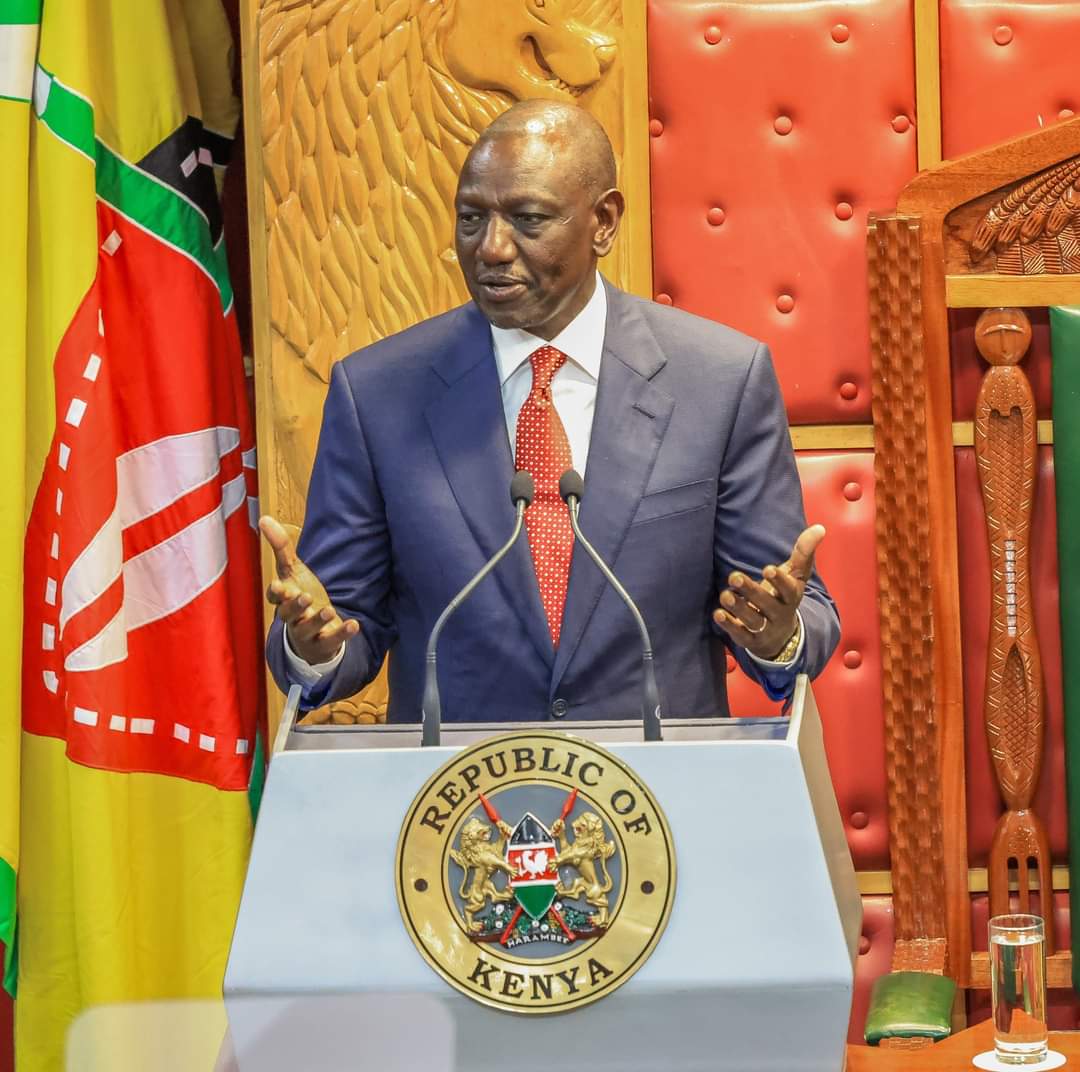
President Ruto arrives at parliament buildings for his 2024 State of The Nation address. (Image: Statehouse)

Taifa Care: Kenyans Hunger for Dependable Healthcare

The transition from NHIF to Taifa Care is bold – maybe even revolutionary. Finally, a healthcare system that promises inclusion, efficiency, and affordability.

It’s ambitious, but ambition needs execution. Are rural clinics ready to handle the influx?

Will this actually mean fewer Kenyans resorting to Harambees to pay hospital bills?

This is where the President struck a chord, reminding us of the countless families one illness away from financial ruin.

“Under Taifa Care, citizens are eligible for all services upon registration. I urge every Kenyan to take the most important step I’m securing dependable healthcare for themselves and their families: register now or at the earliest opportunity….” President Ruto said.

If his administration delivers even half of what Taifa Care promises, it could be a game changer.

Affordable Housing: Building Dreams or Boxes?

Housing was another big-ticket item in the President’s speech.

The affordable housing program has created over 164,000 jobs and nearly 5,000 units are ready for sale.

But here’s my dilemma: Is affordable housing a plan for dignity, or just a way to tick off a manifesto promise?

When he spoke about planned urbanization and its role in protecting agricultural land, I felt a spark of hope.

But I wonder – are these homes truly accessible to the average Kenyan, or will they end up as investment opportunities for the elite?

Agriculture : Turning Point for Food Security

As a fledgling farmer, I was very keen on the president’s remarks around it:

  • 6.45 million farmers in 45 counties have received subsidized fertilizer since February 2024. Impressive? Yes.

Small-scale farmers, though are yet to reap the real benefits, as middlemen still cling on the reins.

  • Over 7 million bags of fertilizer distributed through e-vouchers.

Efficient on paper – but the hardship lies in its accessibility for farmers in remote areas.

  • A projected 74 million 90kg bags of maize this season. A national record!

But let’s ask – will this reduce food prices, or will cartels still dictate the market?

  • 11 long-term deals with fertilizer suppliers to guarantee year-round availability.

Good news, finally – as long as this consistency can survive the 5-year political cycles.

The president’s goal is clear: Boost agricultural output, cut food imports, and make food affordable. If executed well, this could be a game changer.

Kenya’s agriculture sector has been stuck in cycles of inefficiency for decades. This intervention feels different – ambitious, but practical.

However, the devil is in the implementation.

A Nation’s Strength Lies in Its People

What struck me most wasn’t the economic jargon or lofty policy talk – it was the President’s plea for unity.

His call for “radical collaboration” felt genuine.

But unity isn’t built on words. It requires action, fairness, and trust – values that feel increasingly rare in our political space.

As a Kenyan, I want to believe in this vision. I want to feel the optimism he exuded. But belief needs proof.

Is this address a turning point, or will it join the pile of forgotten speeches that promised more than they delivered?

What are your thoughts? Let me know below in the comment section.

Ruto Awards 20 Million Kenya Shillings to Winning Olympians

In a resounding endorsement of Kenya’s athletic prowess, President William Ruto has awarded substantial cash prizes to the nation’s Olympic team following their impressive performance at the Paris 2024 Games. The celebration, held at State House in Eldoret, saw the distribution of Ksh19.75 million among the medalists.

Kenya’s Olympic delegation secured 11 medals, leading the African continent and ranking 17th globally. This achievement effectively silenced critics who had questioned the team’s capabilities.

Beatrice Chebet emerged as the standout performer, earning two gold medals and receiving Ksh6 million along with a promotion to Corporal in the National Police Service. Faith Kipyegon, with her gold and silver medals, was awarded Ksh5 million, while Emmanuel Wanyonyi, who became the youngest Olympic 800m champion, received Ksh3 million.

President Ruto expressed immense pride in the team’s accomplishments, dismissing any negative commentary as baseless. This gesture aligns with his ongoing commitment to recognizing athletic excellence, as evidenced by his previous honors bestowed upon Kipyegon for her world record-breaking feats.

The President’s support for Kenyan athletes extends beyond this event, with a standing offer of Ksh5 million for any athlete who sets a new world record, underscoring the nation’s dedication to fostering world-class athletic talent.