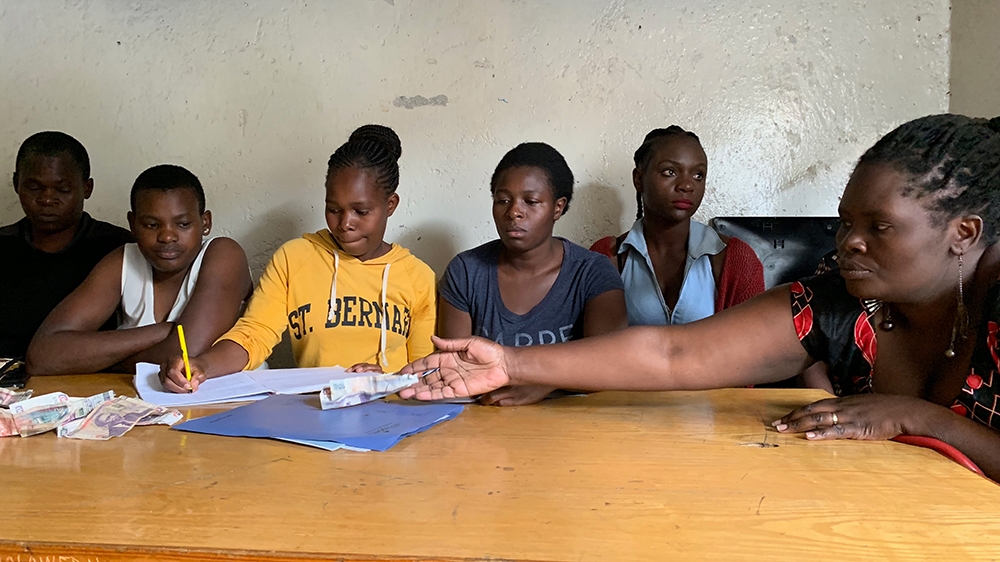
Coop Bank partners with African Guarantee Fund (AGF) to boost Green Financing in Kenya

Co-op Bank has signed a Loan Portfolio Guarantee Agreement with African Guarantee Fund (AGF) for Small and Medium-sized Enterprises.

The loan amounts to Kes.750 Million that’s set to increase financing of green transactions in Kenya.

The guarantee facility will enable Co-op Bank, on one hand to strengthen its commitment to financing Micro, Small and Medium-Sized Enterprises (MSMEs).

On the other end, to promote emerging corporates in Kenya that are involved in green energy and solar installation projects.
According to data from the International Renewable Energy Agency, increased demand and technological advances have contributed to a significant decrease in solar photovoltaic (PV) systems costs over the years.

Solar costs have fallen by over 80% since 2010 while the levelized cost of energy generated by large scale solar plants is under Kes 10/kwh, compared to about Kes 38/kwh ten years ago.

The figures further indicate that between 2018 and 2019 alone, the price of solar power fell by 13%.

Commenting on the signing of the agreement, the Director – Corporate & Institutional Banking at Co-op Bank Jacquelyne Waithaka said,

“The challenge that banks and other financiers face in the financing of solar energy regards the kind of securities that customers offer as collateral for credit.”

“Solar panels and inverters, for instance, are not a preferred security because they cannot be easily liquidated in case of loan default. Co-op Bank’s partnership with AGF has created an instrument that overcomes this challenge, thereby giving the bank considerable ability to finance solar energy programs effectively.” She adds.

“Energy costs remain one of heaviest input costs for many MSMEs. This partnership is expected to have large positive impact on MSMEs involved in manufacturing, light industry and agro-processing by reducing the cost of doing business thereby making them more competitive.” The director further says.

For the environment, a successful uptake of the scheme will lead to the reduction in Carbon emissions.

It is also expected that as the prices of solar technologies continue to come down and AGF continues to develop other products, a greater number of Kenyans will afford renewable energy products and services,” she added.

AGF Group Director of Business Development Franck Adjagba reaffirmed AGF’s commitment in promoting a sustainable economic growth in the country.

He said, “Banks in Kenya are in dire need of risk-mitigating instruments to support their lending activities to SMEs. However, we should aim for economic growth without degrading the environment.”

“Sustainability improves the quality of our lives, protects our ecosystem and preserves natural resources for future generations. Our partnership with Co-op Bank today reflects our commitment to increase financing of businesses in the green sector.” He adds.

Through this partnership, Co-op Bank will avail the opportunities to customers across the country.

Slayqueen drama as online girlfriend invades bachelor’s bedsitter on Forest Road

A new relationship? It’s like walking in the woods after dark.

There’s a lot of bumping into strange new things. There’s no knowing what kind of surprises lurk in the shadows of their partner’s personality.

Maina, fondly known as Maish – lives in a bedsitter in a residential block along Forest Road. It’s a bit cramped and pricey, but worth it. Shiny tiles, functional hot shower head, and close to his work place. He walks. Life has been pretty cool, till Brenda waltzed into his life.

Maish is now in a quagmire.

He met Brenda met on Facebook. The usual way. She liked posting memes. Maish first responded with emojis. Laughing emojis.

In between, she’d drop a selfie – and she was striking – filters notwithstanding. She had dimples, man. Dude graduates, emoji-wise. The love emoji. Red is a warm color.

Then he slid into her DM. He gets her Whatsapp number. They start chatting. Meaningless, at first.

How chilly is Nyandarua? Maish would want to know if it snowed there in July 1998.

Do you love chips? They are called fries, she’d remind him.

Can you operate a wheelbarrow? She confided that her dad owns 8 wheelbarrows.

Maish didn’t think it an engineering marvel that needed any sort of certification. Plus, he deemed himself an hustler.

He shares his grand life plan: save half of his salary to set up a business. He planned to buy a fleet of trollies to sell sausages and eggs on road intersections.

Brenda challenges him: Defend your thesis.

Easy. He’d rattled off a list – no overheads like rent, and council licensing. Profits are double-double. It seemed waterproof. He’d asked what she was doing.

Brenda says she’s a fresh graduate. Has a teaching degree from Maseno. But she intimates that she doesn’t look forward to a stint as a TSC employee.

She nails it further with a solemn declaration: Not even if ‘they tripled salaries’ at TSC.

Well, Maish had a rather noble regard for high school teachers. Brenda had started an online fashion business in campus. It had turned out rather well. She’d rattle off figures she’d achieved as profits. In campus.

If it wasn’t for her mother’s fragile heart, she’d have dropped out.

Maish was falling in love. Here’s an hustler. In the flesh – not just some hyped political rhetoric. He asked for a date, on her next resupply run to the city. She didn’t promise ‘anything’.

One Friday, Maish is at work. He receives a call from Brenda. She’s in town, she’d come in for some new stock. Maish says he cannot get off work in time – no worry, she’d be happy to come over see him at his place.

Send me a location pin on Whatsapp, she says.

What? For real? Dude’s heart is racing. A lot can go wrong for a first meeting. He starts ticking off the list in his head.

Did I flush the toilet this morning?

Did I get my dirty boxers off the coffee table? No, he’s still in them.

He feigns headache and gets off work half an hour earlier. He sprints home. Other than a flooded room, all is well. He’d forgotten to close the taps that morning. But he didn’t have a carpet, nothing to worry about.

Brenda arrives in a cab. That’s impressive,

Maish thinks. Not so much, though, when he started hauling up bales and cartons to the 8th floor. Brenda had a ton of luggage. It’s my new stock, babe. He blushes, she giggles – oops, I just called you babe. He gets a spring in his step.

Back in the bedsitter, there’s barely enough space left to breath. Or, fart. He’d had matoke and guacamole for lunch. Maish squeezes next to her on his two-seater. To break the ice, he asked her why they call an avocado, ‘guacamole’.

She didn’t hear him.

Brenda was busy. She had a phone on each hand. She was checking her social media accounts.

“Babe, am getting hits. How far is USIU from here” She asks.

If his life depended on it, Maish would have died on that day. He didn’t have a clue where USIU was – or what USIU stood for. Before he could figure it out, she was calling someone.

It was a boda boda guy. Yaani, barely ten minutes in his bedsitter, she had a boda boda guy.

“Babe, fungua hio box pale….no, no, si hio…this one. I marked it. Check for a pink kimono dress”.

Brenda is pointing with her phone to a box on the bed. It’s in the bottom row.

“Msee wa boda is coming to pick it. He’s delivering to USIU in the next few.” She says.

She speaks in a fast staccato – hardly the ‘memes girl’ Maish had imagined. He hefts and heaves on the boxes. A pink something, and something chiffon.

Brenda hands him the package.

“Babe! Hurry up! Go downstairs and give it to the boda guy at the gate. Thanks, babe”.

Maish runs down the stairs, gripping the rails.

The last time he did this, the KPLC guy was threatening to disconnect his power meter. The previous occupant of his bedsitter had ‘doctored’ the meter’.

He finds the delivery guy, hands over the package. He just rides off.

As Maish labors up the stairs, he’s in a dilemma. He realises living on 8th floor is not wise. Then, have we just been robbed?

He gets in. Mumbles something about the bike guy not giving him any money.

“Baaaaabe, don’t worry. That’s just a delivery guy. My clients pay online. Tushalipwa!” She says, hugging him. As he holds her, he smells her weave. It’s an expennsive synthetic. He could feel two phones in her hands digging into his back.

Instead of some TLC, Maish is treated to a business crash course on Co-op Bank e-commerce solutions. Brenda says she doesn’t have a business website – but, still……..

Co-op Bank e-Commerce solution works without a website. The merchant receives a unique link (Pay-By-Link) which they use to invoice their customers.

It works in a simple process:

  • Once the merchant and the customer agree on the pricing, the merchant sends the payment link to the customers email address.
  • The customer will receive an invoice with the link on their email.
  • The link will open up a portal where the customer will insert their card details and the amount they are to pay.
  • Once the payment goes through, the merchant will receive a payment confirmation via email and SMS.
  • The customer will also receive a notification via SMS in the event they have subscribed to SMS alert with their card provider.

Co-op Bank Group makes 10 billion in profit in six months

Co-op Bank Group is pleased to report a Profit Before Tax of Kshs.10.5b for the second quarter of 2021, a commendable 10% growth compared to Ksh.9.6b recorded in the second quarter of 2020.

This represents a strong Profit After Tax of Kshs.7.4b compared to Kshs.7.2b reported in second quarter of 2020.

The bank reported growth in different areas in the same period last year. Notably, Total Assets grew by Kshs.59.1b to Ksh.573b up from Kshs.513b.

In the credit department, net loans and advances book grew by Kshs29b above the previous years Kshs.272b.

Other notable growths include investments in Government securities from Kshs.182b to Kshs.301b.

The group attributes this growth to several factors: A robust Credit Management initiative and the De-centralization of Loan Portfolio Management

In credit management, there’s a Credit Risk Adaptation Project dubbed ‘Project Kilele’ that’s supported by a Global consulting firm which involves an end-to-end assessment of credit risk management practices, an effort to strengthen portfolio assessment and risk frameworks.

Besides, this seeks to enhance collection platforms aligned to the new business operating environment.

The Decentralization of Loan Portfolio Management to the Branches, Lending Units and Relationship Management teams has enhanced collection activities.

The project dubbed ‘3C’ (Connect, Collect, Cure) entails proactive management of the Credit book re-assigned from Remedial Credit to Branches and Business Segments.

Co-op Bank Group also attributes success to A Strong Digital Footprint.

This has enabled the bank move 93% of all customer transactions to alternative delivery channels, an expanded 24-hour contact centre, mobile banking, 576 ATMs, internet banking and over 25,000 Co-op Kwa Jirani banking terminals.

The key focus lies on digital banking, with the all-telco Mco-op Cash Mobile Wallet continuing to play a pivotal role in the growth of non-funded income with 5.2 Million customers registered and loans worth Kshs 33.5 Billion disbursed year-to-date, averaging Kshs. 5.6 Billion per month.

The bank also pursues a unique model of retail banking services through Sacco FOSAs that enables the bank provide wholesale financial services to over 479 FOSA outlets, and issue over 1.4 million Sacco-Link cards.

The group’s Subsidiaries, too, continue to post impressive statistics.

Co-op Consultancy & Insurance Agency posted a Profit Before Tax of Kshs 433.8 Million, riding on strong penetration of Bancassurance business.

However, Co-op Bank of South Sudan – that’s a unique joint venture (JV) partnership with the South Sudan Govt (Co-op Bank 51% and GOSS 49%) returned a monetary loss of Kshs 290 Million in Q22021 attributable to hyperinflation accounting due to currency devaluation of the South Sudanese pound.

Co-op Trust Investment Services contributed Kshs. 47.9 Million in Profit Before Tax in Q22021, with Funds Under Management standing at Kshs. 179.4 Billion.

Kingdom Bank Ltd (which Co-op Bank holds a controlling 90% equity interest), has contributed a Profit Before Tax of Kshs. 275 Million in Q22021.

This is compared to 2020 full year loss of Kshs. 124 Million.

In regard to Long Term Financing for MSME’s, Sustainable Agriculture and Health sectors, the Group secured a long-term financing facility from the IFC (International Finance Corporation) in 2020, amounting to Kshs. 8.25 Billion for on-lending to MSMEs at affordable terms.

The proceeds of the facility will support customers operating Micro, small and medium enterprises (MSMEs) and businesses undertaking climate-smart projects, including agricultural inputs and sustainable agricultural practices, renewable energy, energy efficiency and related areas.

Co-op Group has also partnered with IFC and Philips in a first-of-its-kind support in Africa, for health sector operators towards purchase of essential medical equipment and strengthen their response to COVID-19.

It makes available a US$ 300 million kitty to provide risk-sharing facilities to help small businesses acquire the equipment and tools they need by way of loans and leases.

The Co-op Bank Group continues to execute a proactive mitigation strategy anchored on a strong enterprise risk management framework, to enable uninterrupted access to banking services.

The easy way to safeguard your child’s pocket money from bullies and unethical seniors

There is more to high school, ain’t just about academics.

There’s a whole lot to learn. How to relate to people from other communities with strange languages, volatile temperaments and social standing.

A lot of students hail from poor to average backgrounds, high school is one long lesson on how to not compare self with others.

It is what it is.

A factor that remains constant is the clamour by senior students to take advantage of new, naive students.

While over the years the bullying dragon has largely been slayed, it still exists in other forms.

The typical bully’s magnet is the allure of pocket money.

The ingenious seniors employ all sorts of uncanny tricks to relieve newcomers of their pocket money.

Some were straight incredulous – say, a senior would come into the form one class dressed in smart casual clothes, pretending to be some club’s patron – and, he’s on a quest to recruit new members.

The wide-eyed freshers would be awed by the smartly-dressed club patron, and the registration fee would be fixed at a modest 100 bob.

Freshers would scramble to register.

That’s how freshers would be dubed to join fictitious clubs – The Forest Club, The Young Rotary Club, et al.
Some unethical senior students would break into the fresher’s lockers and boxes. The trick to safeguard this money was to think like a thief – how best to hide your money.

A lot of freshers would spend weeks walking around with money in their socks. Or, rolled up in polythene and buried somewhere in the school grounds.

It was hectic. A lot of prep time is spent wondering if the stash is safe.

Cue in the modern times, where digital banking has taken over, and this predicament is easily solved.

Co-op Bank has availed an innovative, safe and easy way to safeguard your child’s pocket money from risk of loss to marauding bullies.

As it is, a student can now worry less about their money’s safety and keep to their studies.

The Co-op Bank Pre-paid card allows a parent to load cash into a card which a student carries to school.

Whichever your choice of bank is, all one has to do is walk into the nearest Co-op Bank branch and sign up for the card, and your child’s needs are handled.

What are the benefits of a Co-op Bank Prepaid card?

  • No need for your child to carry loads of pocket money as they head to school, you can simply load it in the Co-op Prepaid card which is safer than carrying cash..
  • The student will be able to pay for items at their school canteens at No Extra cost.
  • Parents will be able to track their students sending by getting a Mini statement of the card at a Co-op Kwa Jirani agent or via SMS alerts
  • You no longer need to travel all the way to the school to hand over money to your child, you can simply load the card at any Co-op Kwa Jirani agent..
  • The students are also able to withdraw money using the card from any Co-op ATMs or Co-op Kwa Jirani agents outside school.
  • You don’t need an account with Co-op bank to enjoy the benefits of the card
  • No extra charges will be incurred in transactions using the card.

It’s prudent to visit the nearest Co-op Bank branch to learn about Co-op Pre-paid card, or click here.

Boda Boda riders set to benefit as Co-op Bank partners with German Dev’t Co-operation (GIZ)

Young people engaged in the ‘boda boda’ business are set to benefit from a partnership between the Co-operative Bank Foundation and the German Development Cooperation (GIZ) to enhance the employment and business growth for 3,000 boda boda riders.

The partnership will offer riders support in business skills, digital tools to run their business and more important, road safety to reduce the high rate of accidents and loss of lives involving boda boda riders across the country.

The project will be first implemented in the Coast, Eastern and Central regions of Kenya, after which it will be rolled out to other parts of the country.

To kick-off the project going, the Co-op Bank Foundation will be engaging the boda boda riders through their associations and groups, and also owners of motorcycle fleets, women who run boda boda businesses and riders who operate electric and solar-powered motor bikes.

Other key project partners offering support to the project include;

The National Transport and Safety Authority (NTSA) to provide training on road safety and compliance, SAFAL MRM Group Foundation to mobilise the riders for training, Mark Holdings Limited for providing service facility for the motorbikes, and Co-op Bank Bancassurance to provide insurance and training, mainly on benefits of insurance and risk mitigation.

The Deutsche Gesellschaft für Internationale Zusammenarbeit (GIZ) GmbH is implementing the project under the Employment and Skills for Development in Africa (E4D) programme.

The GIZ Country Director Mr. Bodo Immink, lauded the project as a key milestone towards increasing job opportunities in the sector, saying;

“Initiating and supporting sustainable development is what we do every day together with our partners. With this project we are setting the stage for urban and sustainable mobility,” said Mr. Immink.

The Head of the Co-op Bank Foundation Dora Waruiru lauded the partnership as a long-overdue intervention to mitigate the huge challenges of the otherwise promising boda boda sector, saying;

“The Boda Boda sector has emerged rapidly to become a great opportunity for creating jobs and incomes especially for young people, but has come with huge challenges not least of which is the unacceptably high rate of accidents and loss of lives.”

He adds: “It is therefore a great honour for us to partner with GIZ, NTSA and others to support Boda Boda riders run their business in a safe and profitable fashion.”

How the Back-to-School week made us the Best Behaved Kids on the block

In a few decades, I’ll be old enough to share a whisky with my old man. He’ll then be retired and, hopefully, pleasant.

Everyone becomes pleasant upon retirement, what with grandchildren stealing their walking stick and stealing fried eggs off his breakfast tray.

I’ll choose a chilly July evening when the fireplace in his study is lit, and he’s swathed in layers of woolen scarves and knitted leg warmers.

I’ll be grown, and making my own money – which means his twirled moustance won’t twitch when I stride over to his whisky cabinet and grab the oldest Scotch.

I’ll settle in the wicker chair next to his ageless leather coach. I’ll stare into the fire for a moment, and say nothing.

If you know my old man, his mind will be in a turmoil. No one walks into his study, grabs a whisky – without something important to discuss.

His mind will be on overdrive:

Has this guy finally made a decision to marry some Daughter of Eve?

Has this guy decided decided to demand his share of non-existent inheritance to sell off and travel the world and return like the Prodigal Son in the Bible? I’ll skin him alive.

After an eternity staring into the fire, I’ll remind my old man of our Back-To-School Dance.

This dance began a few days to the opening of schools. It was subtle, and a guest into our home wouldn’t notice – but, it was there, and lethal.

One, it would need me to be on my best behavior. Best behavior is perhaps, an understatement. Let’s roll with exemplary.

If a guest offered me hard-to-come-by pocket money as it was the norm in those days, I’d have to politely decline. I would spend a few sleepless nights after that to get over it.

At the same time, I’d be expected to fully keep them entertained, sometimes,up to,and not limited to actual dancing.

The last week to opening, I’d have to wake up at the crack of dawn to attend milking classes. To be honest, I loved animals – what I didn’t like is leaving warm covers to brave the chilly fog, and the trek to the dairy to make delivery.

All this while, my old man would be keeping tabs.

If this dance went well, father would treat me very well on the back to school day. We’d visit the local supermarket, and I’d have the run of the aisles.

I would have free reign to pick even the ‘luxuries’ – sugar, margarine, roll-ons, scented note books, et al.

On the flipside, it’d be rough.

Father would say: “Umekuwa kichwa ngumu. Enda ufunzwe na ulimwengu”.

That meant shopping is limited to the bare essentials: Bar soap (no toilet soap), tooth paste and shoe polish.

Well, how times have changed.

Present-day kids hardly get to endure the Back-to-School Dance. It’s a straight run to the shop for the essentials.

As it is, it’s advised to go cashless when shopping, partly due to health concerns with handling cash, security and a bit of ease in accountability.

Most shoppers have chosen Co-op Bank as their financial partner for a sound reason. The Co-op Visa card allows flexibility, safety and convenience when shopping.

To pay for Back-to-School shopping with a Co-op Visa card has no extra charge!

It’s as good as paying cash, only safer and more convenient

You can use it to pay for goods and services wherever you see the Visa Sign, and there’s no extra charge – the only deduction is the cost of the item or service you are paying for.

Nothing more.

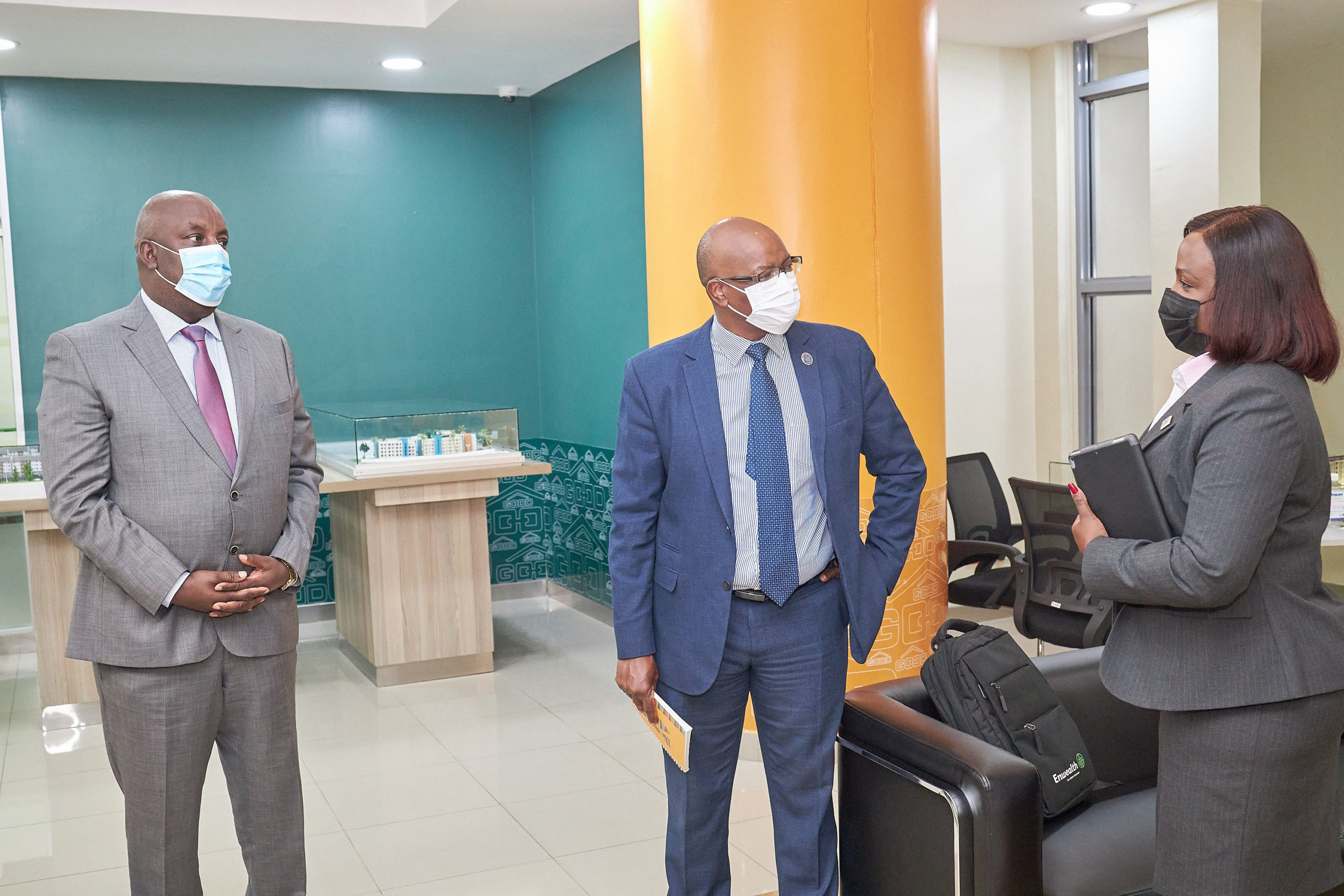
Co-op Bank partners with Enwealth Financial Services to unroll an ambitious pension-based mortgage scheme

The banker has launched a Pension-backed Mortgage loan facility for members of pension schemes.

The new facility is expected to enable the over 3 million members of pension schemes in Kenya, who otherwise would have found it difficult to raise enough funds to buy a home, to qualify for a mortgage.

In addition, the facility will enjoy an extended repayment period of upto 20 years, subject to the retirement age of the borrower.

The new mortgage is the first such facility in the market, and has been made possible by the recent changes to the law, specifically the Retirement Benefits (Mortgage Loans) Act, Regulations Amendment 2020 that now allows members of pension schemes to utilise up to 40% of their accrued pension benefits as down-payment to buy a home.

This facility is targeted at pension scheme members whose 40% of their pension benefits cannot cover the full cost of buying a house.

In those circumstances, a member will approach the Bank to access a credit facility to cover the difference.

With this facility, a pension scheme member can purchase a developed property anywhere in Kenya with a ready title deed or certificate of lease, provided that the house is a residential property for the members own occupation.

The application can be done by an individual pension scheme member or jointly with a spouse thereby consolidating their pension benefits to access a higher amount.

Speaking during the launch event held at the Co-op Bank Property Hub, the Director Corporate Institutional Banking at Co-op Bank, Mrs. Jacqueline Waithaka, lauded the partnership between Co-op Bank and Enwealth Financial Services that brought about the new home ownership solution, adding:

“This product is a deliberate response by the bank in support of the Governments affordable housing pillar of the Big Four Agenda. We are excited to pioneer this innovation that will enable a wider pool of Kenyans to realize their dream of owning a home.”

Speaking at the launch, the Chief Executive Enwealth Financial Services Mr. Simon Wafubwa said:

“Owning a home and having an adequate income at the point of retirement are most critical pillars for a lifetime of financial well-being and dignity. We are excited to partner with Co-op Bank to make available this innovative home-ownership solution that gives our clients access to affordable mortgages in line with the new Retirement Benefits regulations.”

Additionally, the Chairman of Enwealth Mr. Peter Waiyaki reiterated the need for innovative social security financial products that are responsive to the needs of times as a way of achieving economic resilience, noting:

The pessimist may complain about the wind while the optimist would expect it to change but through strategic synergies, the leader adjusts the sails. This partnership between Enwealth and Co-op Bank seeks to adjust the sails for the mortgage landscape in the country.”

The Avocado Guy: How a fruit incident in high school gave birth to a lifetime nickname!

If you had to pick a fruit as a prop when making a proposal to the love of your life, what would you choose?

It has to be as closest to your personality as can be……

Watermelons define an ambiguous person. Cucumbers, well, someone is cold blooded. A strawberry, that’s a happy-go-lucky soul – always happy. A pine apple, that’s the icy sibling with a short fuse.

In my case, its the Avocado.

The avocado fruit, alias the guacamole, has been the sun around which my life orbits rotate. The seasons, the fall and rise of my tidal fortunes, and misfortunes. Oh, avocado, the poems she deserves.

(All prized objects are classified as a ‘She’, right? – jets, super bikes, yatchs, avocados…)

This fruit must have been rigged out in the stories on the foetal stages of man, cue the Garden of Eden. The apple is too bland.

Otherwise, the survival of college students would be on the apple, but it isn’t. Its the eternal avocado.

I can’t help it, but I cringe everytime I meet a former classmate. The avocado is to blame.

Luckily, most are self-absorbed with the caste questions: What do you do nowadays? They want to know how much respect you deserve.

Occasionally, I meet the loudmouths, the former bullies. I’ve had a fellow whose name I couldn’t place (he was in Form 4S, I was in 4N) bawl my name across an empty banking hall.

Well, not my name exactly, but my high school nick name.

HEY, ZACK WA AVOCADO!

This guy remembers our first day, that the hallowed fruit allowed me to share her name.

It’s a she, we agreed.

The school had a central square on which we naively lined up with our boxes, for check in.

The square commanded a higher ground than the row of classrooms. The senior students spent most of the time making faces at us from the windows.

My turn came, and I popped open the overstuffed metal box.

Alas, and behold, a batch of avocados (a group can be called a batch, right?) tumble out!

Worse still, the fruits tumble the entire length of the raised square, down to the row of classrooms.

I later heard a boy was almost trumpled to death in the mini-stampede as students scrambled for them.

I became The Avocado Guy.

A week later, I receive a letter from my younger brother:

*Bro, hope uli manage kuuza ile Avo coz mi huskia wasee huchukua pocket money ya mono zote…..

I could strangle the little devil!

But he was right – later that night we lost most of our pocket money!

If you have a kid joining high school, anticipate money trouble. The risks of carrying hard cash are a dime a dozen.

An innovative idea by Co-op Bank gives a suitable solution.

The Co-op Prepaid Card is a new revolutionary cashless way to escape the perils of handling hard cash – students can safely carry their pocket money – and there’s no extra charges when shopping at the school canteen.

Another plus is that parents and guardians can remotely monitor their student’s spending habits, amount available and even load the card directly from their phones.

Hey, you don’t even have to be a Co-op Bank client to enjoy the benefits of the Co-op Prepaid Card.

To learn more about the Co-op Prepaid Card, click here.

Alternatively, walk into the nearest Co-op Bank branch to speak to a bank representative.

Avocado, anyone?

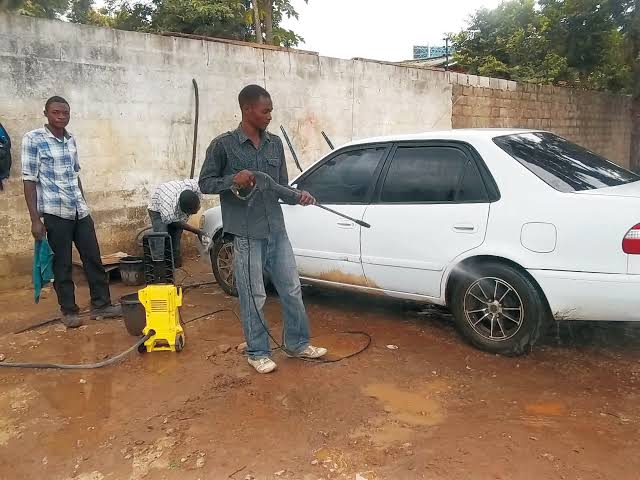
Why do men patronize the car wash as the ladies stick to the salon?

The car wash with an outdoor sitting set up is the modern masculine version of the ladies’ favorite hang out spot, the salon.

This brings to light the fundamental difference between the genders is that Sons of Adam easily compartmentalise their issues, unlike the ladies.

Ladies want a safe space to talk about their issues – love life, mother-in-law tribulations, kids….

Gentlemen want a safe space to think and worship their objects of desire.

That’s the reason the salon has the chatter reputation and energy of a busy newsroom. On the other hand, the car wash is largely cool.

A man parks in line, joins a gang on a table outdoors, asks for a drink. He’ll sit facing the cars getting the spray on the ramp.

A man makes new acquaintances at the car wash, valuable networking. But, first, usually by expressing adoration for some funky ride. Random questions will tumble out.

“Who does your paint work, man? He’s good”

“That scratch on the rear door? The kid from next door?” They’ll laugh a little.

“I don’t care if it costs me a kidney, but I’ll have to get that new Subaru Forester…..how long have you had it?”

Men won’t talk about their mothers-in-laws. Or, their demanding spouses. Or, the dishonest farm hand. They are not here for therapy.

The talk lingers on engine ratings, shocking petrol prices, conniving mechanics, and the hottest graffiti artist in town.

The biggest deal as an hang out spot is the networking angle. All sort of professionals will be trading banter here – lawyers, journalists, insurance agents, medics, street artists, name it.

It’s a blessing to own a ride, and besides the major opportunities it affords one – there’s lots of other benefits when you join the motoring fraternity.

What’s more there’s now an easy way to acquire a brand new moti…..

There’s a friendly financing partnership from Co-op Bank, after a groundbreaking partnership with World Navi – global leaders in vehicle acquisition and importation.

The campaign is dubbed Shika Dinga na Co-op, and here’s some of the perks attached:

  • 80% asset financing.
  • Access to high-end vehicles.
  • 100% safe & reliable vehicle importation to your doorstep.
  • 3 months warranty on engine & transmission.
  • A privilege of choosing from a wide choice of cars from various source countries.
  • All cars come with accident-free and genuine mileage certificates.
  • No risk of stolen parts or non-performance.

This is a chance to bring good tidings to your life and family. To learn more of the Shika Dinga na Co-op Campaign, click here.

IFC partners with Co-op Bank and Phillips to help African Health providers access essential medical equipments

IFC, a member of the World Bank Group, today launched a partnership with Philips and Co-op Bank to help smaller businesses in Africa’s health sector purchase essential medical equipment and strengthen their response to COVID-19.

The partnerships are the first under the IFC-led Africa Medical Equipment Facility, designed to provide risk-sharing facilities to help small businesses access up to $300 million in loans and leases.

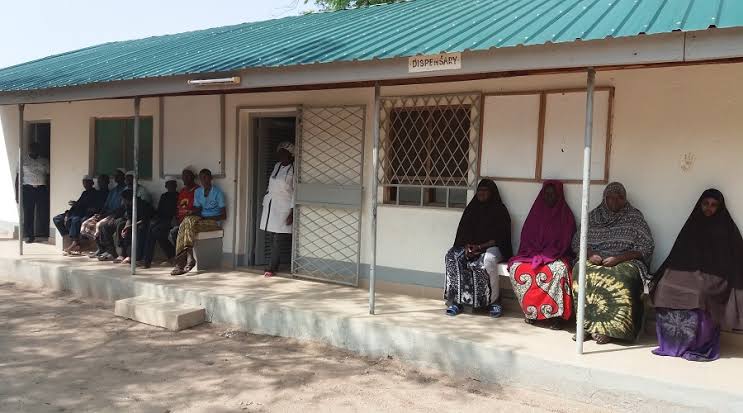
A local dispensary in rural Kilifi, Kenyan coast (file image)

Through the facility, IFC is partnering with medical equipment manufacturers and local financial institutions to support healthcare providers in East & Central Africa.

The loan size to smaller healthcare providers -which serve more than half of Africa’s population, including low-income patients – is expected to range from $5,000 to $2 million, to help them lease or purchase equipment.

Currently, most smaller healthcare operators in Africa cannot secure bank loans due to their perceived high investment risks, meaning they can’t afford medical equipment, renovations, or to recruit qualified personnel.

“Many smaller healthcare businesses in Africa don’t have the equipment they need to respond to COVID-19 and deliver other vital services,” said Makhtar Diop, IFC’s Managing Director.

Unlocking access to finance can save lives now and will, in the long term, strengthen healthcare systems across the continent.”

Supported by the International Development Association Private Sector Window (IDA-PSW) Blended Finance Facility and the Global Financing Facility for Women, Children and Adolescents (GFF), the facility falls under IFC’s Global Health Platform, which was launched to help developing countries fight the coronavirus pandemic and increase their healthcare systems’ resilience.

“Lack of access to affordable quality healthcare is one of the most pressing issues of our time,” said Winfried Jansen, Health Systems Leader, Philips Africa.

“Philips aims to contribute substantially to improving healthcare in Africa through innovative solutions that are tailored to local needs. Many clinics on the continent would like to invest in new medical technology but find it difficult to obtain the necessary finance. Together with Philips Capital and through this partnership with IFC we are enabling healthcare facilities to make quality healthcare available to a large group of people.”

IFC expects to expand the Africa Medical Equipment Facility to more countries and invites interested financial institutions and equipment manufacturers to contact IFC to explore partnerships

How I found out having a car is no longer a luxury but a necessity

You don’t really realize what a car can mean until you’re in dire need of one. I got to find out exactly what this truly means just the other day. It is actually like feeling more than knowing the old adage about not knowing the value of something until it’s gone.

Mine is a story very similar to a lot of others these days of Corona. I got a call at 3:30 AM in the morning. It was from my brother. Apparently, my father had been taken seriously ill and he needed to be rushed to hospital.

Now, of all the days when a mechanic could let you down, my father’s trusted mech had picked the previous day to delay in releasing the car which we had given him for a routine service. And with the curfew set up as it is, we couldn’t run the risk of attempting to pick it up so we agreed to claim it the following day.

And so there I was at the witching hour, my father in dire need of transportation to a hospital, his car at the garage and I have no car. My brother and I agreed that he would try to rouse the neighbours and see who would be willing to help. I advised him to call rather than WhatsApp the estate group because of the urgency.

On my end, I attempted to search for an available cab using one of these digital apps. There were none in my vicinity. I decided that rather than panic, I might aswell grab a quick shower and then check when I am done. In my haste, I forgot to switch on the heater so the cold water rushed down my body and caused my system to surge with a bolt of energy. I was truly awake.

I got out of my five-minute shower and attempted to search for a cab to no avail. I called my brother and he had managed to reach one of our neighbours who had rushed to our aid and they were currently en route to a hospital. I informed him of my situation and let him know that I was doing everything within my power to get to the agreed-upon hospital.

Panic had begun to set in and I decided to try my luck at the matatu stage. The reason I did not wake up my neighbours is that I had just moved into a newly built apartment and I was the first tenant. And without thinking, I set one foot ahead of the other until I made it to the stage.

To my shock, I found a solitary matatu. I thanked my God and hailed it, rushing inside. But if you have ever entered the first matatu ikifungua kazi, then you know they aren’t in much of a hurry as they attempt to get as many passengers as they can. And every minute felt like an hour to me.


Despite the agonizing wait, I patiently waited until we were on the way. My phone kept going off and I kept talking to my brother who appraised me on the situation as it unfolded. Fortunately, my father had suffered a heart attack and it was not another Covid case. Turns out the nosy driver had been eavesdropping on the conversation and when he heard I was in a rush to get to hospital, he struck a conversation with me asking me to pay for the empty seats and they would get me to the hospital.

I do not know how the heavens work but on this day, God’s machinations were such that I happened to see an ad that spoke to my very being. It was a Co-op Bank ad that promised 80% financing for a vehicle. I happen to bank at Co-op Bank but given the rush, I quickly threw this coincidence to the back of my mind and rushed in to the hospital after paying the matatu to find out what my father’s situation was.

Fortunately, it was stable. And it was only while I was narrating my morning odyssey to my brother that the ad I had previously seen flashed back in my mind. I knew what the next few days would entail for me. And you too can apply to buy a car. All you have to do for a flexible financial plan with Co-op Bank:

And lest we forget, one doesn’t need to be a client, even non-Co-op Bank customers can benefit from the deal.

The bank has partnered with World Navi to assist their clients to import vehicles safely, with up to 80% asset financing, in a drive dubbed Shika Dinga na Co-op!

What do you get when you Shika Dinga na Co-op?

  • 80% asset financing.
  • Access to high-end vehicles.
  • 100% safe & reliable vehicle importation to your doorstep.
  • 3 months warranty on engine & transmission.
  • A privilege of choosing from a wide choice of cars from various source countries.
  • All cars come with accident-free and genuine mileage certificates.
  • No risk of stolen parts or non-performance.

To learn more of this deal and options available, click here.

One can alternatively visit the nearest Co-op Bank branch and speak to customer care agents.

Do you have side hustle ideas and need a car? Here’s an easy to acquire one – brand new!

It’s a new era.

There’s an immediate need to re-examine traditional life tenets, basics and principles.

A century ago, what was used as the yardstick in society norma and expectations have taken a complete paradigm shift.

For instance, owning a car is no longer a luxury. It’s a necessity.

Modern day issues have forced people living in urban areas to rethink that bias in favour of the countryside or further off suburbs.

While one may still work in the city, the family can be based in the village. This means a lot of commuter hours.

A random weekend drive to the village means enough supplies on the return trip to last the family an entire week – fruits, vegetables or even live chicken!

The typical family car has become a means to provide for the family – what with job layoffs and salary cuts.

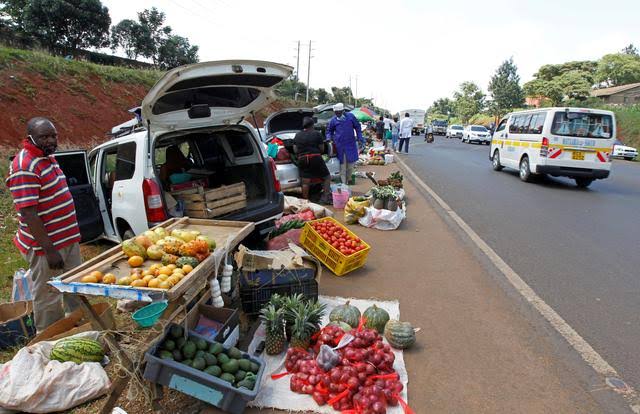
Perceptive family men are comfortably earning a decent income from boot sales, either in groceries, second-hand clothes or even parcel deliveries.

The list of possible side hustles owning a car affords is endless. The major problem for most entrepreneurs is acquiring one.

There’s a way one can easily get a brand new vehicle with a customised, flexible financial plan with Co-op Bank.

Wait, lest we forget, one doesn’t need to be a client, even non Co-op Bank customers can benefit from the deal.

The bank has partnered with World Navi to assist their clients import vehicles safely, with upto 80% asset financing, in a drive dubbed Shika Dinga na Co-op!

What do you get when you Shika Dinga na Co-op?

  • 80% asset financing.
  • Access to high-end vehicles.
  • 100% safe & reliable vehicle importation to your doorstep.
  • 3 months warranty on engine & transmission.
  • A privilege of choosing from a wide choice of cars from various source countries.
  • All cars come with accident-free and genuine mileage certificates.
  • No risk of stolen parts or non-performance.

Take advantage of this opportunity. Its time to get a brand new car for your family, and get another way to make extra money from a side hustle!

To learn more of this deal and options available, click here.

One can alternatively visit the nearest Co-op Bank branch and speak to customer care agents.

The five major ‘Not To Do’ things when hitching a lift in someone’s car!

There’s an unofficial creed to follow when riding in someone’s private car. It’s a little like crashing in someone’s crib. In Kenya, it goes a notch higher….

Here’s a few pointers to follow.

Agree to the owner’s views on contentious matters in the duration of the drive. Topical matters that demand loyalty or some societal bias, say politics or sports, the car owner enjoys a monopoly of ideas.

Just pray that he commands some decent acumen.

The trick is to steer the conversation from sports if his team is hanging by a thread from possible relegation.

It’s your duty to curse errant drivers you meet on the road. It doesn’t matter how incompetent he is, remember which team you rooting for.

A special bonus is earned if you roll down the window and scream at a clueless boda boda guy.

You hail from an angry republic – it’s time to vent that anger.

Thou shall not touch the stereo. I repeat, for all austerity. Aside, it makes sense: it is HIS stereo. Make a prayer that the tape cassette playing rhumba on loop gets jammed.

Sometimes, providence may smile in your direction and your host has an ear for good music.

Enjoy the ride, but do not sing along if the host is not – hitching a lift doesn’t give you an arena to showcase hour vocal prowess.

Asking for a lift in the village comes with additional tags. Cars get scratched by overgrown hedges. Cars get stuck in mud, or hit undersides on big rocks.

Follow the driver’s cue: if he wants to check out the car, get out too. Make a scene. Get sprawling on the ground to check the car’s innards. Is there a scratch?

This is the perfect time to remember high fuel taxes, county funds and how that doesn’t reflect in decent roads.

Be aware of your standing in society. Are you important? Or is there someone else more important’er?

Enroute, the host may be inclined to offer someone else a lift.

In Kenya, the front seat is sovereign. Be sure to offer your seat if you deem the other passenger as of higher social standing. Chances are they’ll turn it down, but, woe unto you if the host has to ask you to vacate the seat.

If you’ve been this embarrassed, then you’ll jump at the slightest opportunity to own your own ride.

Perhaps, it’s time to make your own playlist and enjoy it on a long drive.

There is a simple way – by taking advantage of an awesome, pocket-friendly financing deal thanks to Co-op Bank in partnership with World Navi – heavyweights in automobile acquisition.

Co-op Bank has partnered with World Navi to enable their clients to import vehicles safely, with upto 80% asset financing!

The importation process takes no more than 60 days. The car is delivered to your doorstep, like pizza!

This is a chance to make your opinions count on the long drive.

Click here to learn more about the financing deal.

Why is Joginder Singh such a timeless legend in the world of motorsport?

Joginder Singh.

If that name doesn’t ring a bell, and evoke pleasant Easter memories, well, you missed out on exciting exploits of a motoring sport legend.

Joginder Singh (file image)

Joginder is non-arguably the greatest driver to cast in the now-defunct Safari Rally, mid-60’s to late mid-70’s.

The Safari Rally was traditionally set over the Easter weekend, and for good reason – it’s the rainy season.

It was an endurance rally, and only the best in terms of driving skills, hands-on engine tinkering experience and physical endurance could hope to complete it.

Joginder, who later earned the moniker ‘The Flying Sikh’, proved his mettle in all aspects.

The legend had started out as a spanner boy in his father’s garage, and this greatly inspired his exploits behind the wheel.

The Flying Sikh grabbed his first victory in 1965, in a Volvo PV544, with his brother as the co-driver. He later switched to a Mitsubishe Colt Lancer 1600 GSR to clinch victory in 1974, and 1976.

It’s in this Colt Lancer that Joginder’s feats made him world famous.

For instance, the 1968 Safari Rally was planned to run the entirety of the Great Rift Valley, and end in Nairobi.

Joginder got the No.1 car tag – which, in rallying circles, is considered jinxed. And it proved so, halfway in the rally.

He was flagged off the ramp first, but, halfway, his Mitsubishi Colt developed clutch problems.

It was rainy and getting stuck was normal.

Somewhere on Mau Escarpment, he watched around 20 of his competitors zoom past in a spray of muddy water, as he tried fixing his transmission.

His Colt couldn’t engage forward gears, just the reverse gear.

Joginder, being Joginder, turned his Colt around and started playing catch up, in reverse.

Subsequently, he managed to overtake almost all of them, stuck in the mud along the route – in reverse gear!

In that rally, he finished 3rd – having driven the last half in reverse gear – in extremely muddy conditions.

Easter hasn’t always been so boring, and slow. It was a season of adrenaline-filled rally fiesta.

The menu was two-way: Either extremely muddy, or extremely dusty.

Motoring was raw. The rally cars were pretty basic – none of the fancy bells and electronic assists in modern cars. To triumph, you had to be in the game.

Easter would find us hogging cattle ruts in the route picked by the rally organisers. If beyond the region, it was a favorite past time following the live reports of the rally via the national broadcaster.

That’s how Joginder Singh gained immortality, and genesis of the saying: He drives like Joginder…

This year, Easter has been ruined by the ravaging pandemic that has resulted in curfews and lockdowns. There’s not much to choose from, in terms of marking Easter with your family.

However, while observing the measures, one can still have an Easter break in select restaurants, outdoor camp grounds and some bit of travel.

One easy way to be safe is to avoid tangible cash – as security against scheming thieves and the pandemic.

The use of Co-op Bank Visa cards is a sure fire way to keep safe from the virus, and take advantage of awesome discounts negotiated by Co-op Bank for their clients using the Co-op Visa cards, Co-op ATM’s and Co-op Credit cards.

You’ll have fun with family shopping for gifts, paying for fuel or food and accommodation – and still get to save a lot of money.

To learn more about discounts availed by use of Co-op Visa cards, click here.

Happy Easter!

Co-op Bank teams up with eco.business Fund to finance sustainable agriculture in Kenya

The eco.business Fund has provided its first investment in Kenya in the amount of $10 M to Co-op Bank.

The subordinated loan will be on-lent to sustainable agribusinesses, contributing to the fund’s mission of conserving biodiversity, promoting the sustainable use of natural resources, and mitigating and adapting to climate change.

The investment will provide much-needed financing for businesses to enhance sustainable measures in their agricultural practices, particularly important in light of the challenging operating environment created by the COVID-19 crisis.

Agriculture is the backbone of the Kenyan economy, employing approximately 75% of the rural population, and making up 34% of the country’s gross domestic product.

However, commercial lending to the agricultural sector remains disproportionally low. This funding gap limits the ability of producers and processors to invest in sustainable production practices, further compounded by the economic fallout caused by the global pandemic.

The investment aims to provide financial resources to those that need it most, while simultaneously promoting conservation finance as mainstream.

Co-op Bank is the third largest commercial bank in Kenya, and the primary bank for agricultural cooperative societies.

Through this new investment, the eco.business Fund and Co-op Bank will provide necessary credit to sustainably certified agribusinesses, such as those in the coffee, tea, and horticulture sectors, Kenya’s main agricultural exports.

By financing green measures such as solar and hydroelectric installations for tea factories that reduce reliance on fuelwood, and cold storage solutions that reduce post-harvest losses, the partners hope to boost sustainable production practices and conserve the unique ecological landscape of the country.

Dr. Jens Mackensen, Chairperson of the Board of Directors of the eco.business Fund, stated:

“We are excited about our fist investment in Kenya: A country rich in biodiversity and opportunities for sustainable development. This new partnership with Co-op Bank promises to be a fruitful one as the bank is well positioned to act as an enabler of sustainable production practices. Only by providing tailored financing to the agricultural sector, a key driver of economic activity and sustainable development in Kenya, can we collectively promote green finance with the goal of generating positive environmental and social impact.”

Commenting on the sign-off of this partnership, the Group Managing Director and CEO of Co-op Bank Dr. Gideon Muriuki said:

“Right from our founding as a bank for agriculture co-operatives, we have always strived to support farmers in their journey to achieve sustainable livelihoods. This new partnership with eco.business Fund that makes available USD 10 Million for on-lending to farmers is a winner on many fronts; it provides financing that is structured to suit the financing cycles of agriculture, and also comes with the support mechanisms to assist farmers to make a successful pivot towards sustainable, climate-smart agriculture.”

Co-op Bank leads the industry as it releases a 14 billion report for Year 2020

Co-op Bank Group is reporting a Profit before Tax of Kshs. 14. 3 Billion for the financial year 2020 compared to Kshs. 20. 7 Billion recorded in 2019, and a Profit after tax of Kshs 10.8 Billion compared to Kshs 14.3 Billion in 2019.

This is a 23% reduction on account of increased Covid 19-related loan loss provisions and the absorption of currency translation losses in our South Sudan operation.
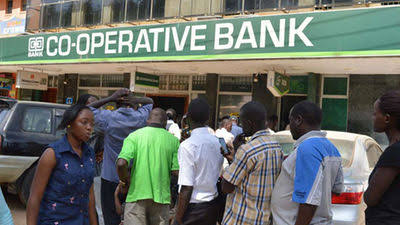
The Group has taken loan loss provisions of Kshs. 8.1 Billion,being a 220% increase from Kshs. 2. 54 Billion in 2019 in appreciation of the challenges that businesses and households are grappling with from the disruptions occasioned by the ongoing pandemic.

We continue to actively engage our customers to support them through this period, by re-aligning the servicing of facilities, funding and transactional needs as the situation unfolds. A total of Kshs.49 Billion in loans have been restructured to support customers impacted by the pandemic.

The Group has sustained the Balance Sheet growth with an Asset Base of Kshs. 537 Billion as at 31st December 2020.

The Group continues to implement proactive enterprise risk management initiatives to ensure uninterrupted business operations in the following ways;

Fortification of our digital channels to support uninterrupted access to banking services by customers; over 92% of our services are now on alternative bankingchannels.

Enhancement of digitization of internal bank processes and engagement platforms, to build contactless capabilities for both customers andstaff.

Adoption of a work-from-home model for the safety and wellness of bank teams,and ensuring safe spaces for staff who continue to serve in physical touch points.

Robust engagement with regulators to ensure full compliance andsupport.

Key financial highlights include; –

Balance sheet; The Group has seen sustained Balance Sheet growth as hereunder;

Total Assets grew by Kshs 80 Billion (+18%) to Kshs. 537 Billion compared to Kshs 457 Billion in the same period last year.

Net loans and advances book grew by Kshs 20 Billion(+8%) from Kshs.266.7 Billion to Kshs. 286. 6Billion.

Investment in Government securities grew by Kshs.44. 1 Billion (+37%) to Kshs. 161.9 Billion compared to Kshs.117.8 Billion in 2019.

Customer deposits grew by 13.8% from Kshs. 332.8 Billion to Kshs 378.6 Billion.

Borrowed funds from development partners grew by Kshs. 19.6 Billion (74.2%) to Kshs 46 Billion from Kshs.26.4 Billion in2019.

Shareholders’ funds grew to Kshs. 90.7 Billion (+14.4%) from Kshs. 79.3 Billion in 2019 enabling us to continue pitching for big ticket deals.

Profit &Loss

Totaloperatingincomegrewby11.1%fromKshs48.5BilliontoKshs53.8 Billion.

Total non-interest income grew by 1.9% from Kshs 17.2 Billion to Kshs 17.5 Billion.

Net interest income grew by 16.1% from Kshs 31.3 Billion to Kshs 36.3 Billion.

Total operating expenses grew by 41.7% from Kshs 27.8 Billion to Kshs.39.4 Billion on account of higher loan loss provisions.

Innovative Customer DeliveryPlatforms

Through our multi-channel strategy, the Bank has successfully moved over 92% of all customer transactions to alternative delivery channels, an expanded 24-hour contact centre, mobile banking, 576 ATMs, internet banking and over 23,000 Co-op Kwa Jirani banking terminals.

A successful Universal Banking model and the implementation of Sales Force Effectiveness has seen the Group serve over 8.8 million Account holders across allsectors.

Key focus on digital banking,with the all-telco Meo-op Cash Mobile Wallet continuing to play a pivotal role in the growth of non-funded income with 5 Million customers registered and loans worth Kshs 58.5 Billion disbursed in 2020.

Over 116,000 customers have taken up the MSME packages that we rolled out in 2018, and 10,750 have been trained on business management and planning. We have earmarked Kshs 23.5 Billion for MSME lending, with Kshs.16.8 Billiondisbursed to date through our E-Creditsolution.

Our unique model of retail banking services through Sacco FOSAs enabled us provide wholesale financial services to over 479 FOSA outlets, and issue over 1.4 million Sacco-Linkcards.

Co-op Bank has engaged a global consulting firm to conduct a Credit Risk Adaptation Project named ‘Project Kilele’.

Key objectives of the project are:

End-to-end assessment of credit risk management practices by undertaking a comprehensive diagnostic review touching on each area of credit risk, including credit risk management framework with a key focus on riskgovernance, credit risk appetite, origination and underwriting process, credit approval process, credit scoring/rating models, and pricing.

Strengthen portfolio assessment and risk frameworks.

Enhance Collection platforms aligned to the new business operating environment.

Subsidiaries

Co-op Consultancy & Insurance Agency posted a Profit before tax of Kshs 788.6 Million as at 31st Dec 2020, riding on strong penetration of Bancassurance business.

Co-operative Bank of South Sudan that is a unique joint venture (JV)partnership with Government of South Sudan (Co-op Bank 51% and GOSS 49%) made a Profit before tax of Kshs 107.8 Million in 2020.

This performance however translated to a monetary loss of Kshs 1.65 Billion attributable to hyper inflation accounting occasioned by currency devaluation of the South Sudanese pound.

Co-op Trust Investment Services contributed Kshs. 70 Millionin Profit before tax in 2020, with Funds Under Management standing at Kshs. 127.5 Billion compared to Kshs. 102.1 Billion as at 31st December 2019.

Kingdom Bank (former Jamii Bora Bank) has a profit before tax loss of Kshs.76.3 Million for the year.

Kshs. 49 Billion Loans Restructured to Support Customers on Covid-19 With the Covid-19 crisis, the Bank has proactively engaged all customers and reviewed the following;

Customers requiring an interest moratorium period,

Customers requiring a better structure/longer repayment period, and,

Customers requiring additional funding to manage the crisis.

In total, a portfolio of over Kshs. 49 Billion has been re-aligned to offer our customers this much-needed support.

Kingdom Bank Limited

Kingdom Bank Limited is a fully-fledged Commercial Bank, licensed and regulated by the Central Bank of Kenya, with over 444,000 customers in 17 branches.

The acquisition offers Co-op Bank the opportunity to cross-sell and deepen product offering to the enhanced customer base and create a niche bank to offer specialized credit offerings that include MSME Banking, Microfi nance, Youth & Women Banking, Asset Finance and Leasing.

The subsidiary reported a loss of Kshs.76.3 Million for the year 2020 and is expected to turn around its performance in 2021.

MSMEFinancing

The Group secured a long-term financing facility from the IFC (International Finance Corporation) amounting to Kshs. 8.25 Billion for on-lending to MSMEs at affordable terms.

The proceeds of the facility will support customers to better cope with the disruptions brought about by the pandemic, especially those operating in the following key business areas;

Micro small and medium enterprises(MSMEs)

Businesses undertaking Climate-Smart Projects, including agricultural inputs and sustainable agricultural practices, renewable energy, energy efficiency and relatedareas.

Corporate Social investment

Co-operative Bank Foundation has provided Scholarships to gifted but needy students from all regions of Kenya.

The sponsorship includes; fully paid secondary education, full fees for University education, Internships and career openings for beneficiaries.

The foundation is fully funded by the bank and has so far supported 7,713 studentssince the inception of the program.

The bank gave a cash donation of Kshs. 100 Million to the Covid 19 Emergency Respond Fund.

Being cognizant of the huge role that we play in supporting communities especially during this period, we continue to operate in an economically, socially and environmentally-responsible manner.

Dividend Payment

While maintaining adequate capital buffers in light of the current operating environment, the Board of Directors has approved a dividend payment of Kshs. 1.00 per ordinary share held (2019 – Kshs 1.00) to be paid on or about 14th April 2021 to the shareholders registered on the Bank’s Register at the close of business on 31st March 2021.

This will be a much-needed relief in a pandemic year to the over 15 million­ member Co-operative movement that predominantly owns the bank.

Accolades

It was another notable year as the Bank received recognition both locally and internationally, including the following;
Co-op Bank was named Bank of The Year in Kenya, in The FT Banker 2020 Awards run by the Financial Times of London.

Co-op Bank was named Best Bank in Kenya at the African Banking Awards 2020 organised by EMEA Finance.

This is the third time around, having also won in 2018 and 2019.

Co-op Bank signed up to the United for Wildlife 2018 Mansion House Declaration, thereby joining the United for Wildlife’s (UfW) Financial Taskforce committing to fight the illegal trafficking in wildlife, by way of building illegal wildlife trade into existing financial crime compliance programs.


A few simple gestures that scream ‘I Love You’ louder than words will ever do

In February, love gets intoxicating. It’s time to spoil your loved one, and it’s supposed to be an easy endeavor. A lot of times, it ain’t. The simple rule is to make love a daily thing – it then becomes easier to nail it over Valentine’s Day.

Here’s a few tricks to navigate this minefield.

The morning kiss

This speaks concern, and attention. It doesn’t have to be much – perhaps, just a peck to the cheek will do. In a lot of instances, it also serves a message to other members of the household.

Breakfast bites

Once in a while – and, more so in the run up to the D-Day of Love, surprise your partner. Get up earlier, and prepare their favorite snack for the breakfast table.it doesn’t matter how poor your baking skills are – she’ll still treasure your burnt pancakes….

Frequent, subtle hugs

Nothing beats the feeling of love and contentment a girl feels when unexpectedly hugged from behind – in the unlikeliest of places. As she folds the laundry, cleans the dishes – hug her. It’s priceless.

The random texts

Fancy this: You are in the middle of a lengthy, boring boardroom meeting. The phone buzzes and the text reads: “Can’t wait to see you at dinner, my love. I got your favorite wine….” Texts work miracles – she’ll always be in love.

Compliments

Everyone loves to feel good. Act normal, and, non-committal, say something nice about her morning outfit. If she likes make-up, you’d do well to wonder aloud why she does make up! Every lady wants to hear that she looks nice with or without make-up!

Silly laughter moments

Memes. Yes, memes. Share memes and silly clips on Whatsapp all day long. It’s silly, but it keeps you in her mind all day long. She can’t wait to get off work and see you!

Cards & sticky notes

Sticky notes on the fridge door, with an affectionate message – especially in cases when work schedule makes one leave the house before the other. Sometimes, remind you spouse of your love in a note on the dressing mirror. They’ll melt with pleasure. It’s romantic!

Offer to pay bills

In the event that you dine out, or spend some time in a social place, offer to clear the bill. It shows affection. Demand and be fussy about the bill.

Nowadays, it’s increasingly easier to deal with the bill. There’s a lot of cashless ways to clear bills when shopping, at fuel stations, restaurants or when travelling.

For instance, this Valentine’s Day season, Co-op Bank clients using their Co-op ATM’s do not incur any extra costs when paying for services using the card. When shopping for gifts at the mall, paying for dinner at restaurants, fueling at fuel stations, Co-op ATM’s attract np extra charge.

In addition, Co-op Bank has negotiated various discounts for Valentine’s Day treat at various getaways across the country. To enjoy these discounts, clients need to book for their holidays using the Co-op ATM cards.

To view packages available with the Co-op discounts, click here.

Co-op Bank sponsors the 40th edition of the KDF Annual Cross-Country Championships

Co-op Bank was once again the sole sponsor of this year’s Annual Kenya Defence Forces (AKDF) Cross-country Championships that took place on Friday 29th January, 2021 at Moi Airbase in Eastleigh, Nairobi.

The event happens every year in the month of January to enable KDF select its participants for the National, Africa and World Championship athletics events.

Gunner Kibiwott Kandie of Embakasi Garrison rips the tape to win the 10km Men’s Race at the KDF Annual Cross Country Championships.

The annual event was graced by the Cabinet Secretary for Defence Dr Monica Juma and the KDF top brass led by the Chief of the Defence Forces Gen. Robert Kibochi. The Director Retail and Business Banking at Co-op Bank William Ndumia attended as sponsors of the event.

This year’s event was the 40th Edition of the Cross-country Championship. KDF’s deep athletics talent pool was on display, with world-renown athletics featuring including the double World Champion in both the 5,000m and also Cross-country Hellen Obiri who was representing her Laikipia Air Base Team.

She won the 10 kilometre Women Cross-country race. Kibiwot Kandie of Embakasi Garrison won the men’s 10 kilometre Cross-country event.

Spte Joyce Chepkemoi of Laikipia Air Base, the 1st Runner’s Up in the 10km Women’s Race, just after Hellen Obiri of Moi Air Base.

Kawaha Barracks was crowned the overall winners, followed by Moi Airbase Nairobi and Thika team respectively.

Co-op Bank continues to strengthen the partnership with the KDF in grooming athletic talent within the force, which continues to produce world-beating talent in athletics.

Co-op Bank will continue to support this sport that is beloved by Kenyans, and which continues to earn the country tremendous glory and fame around the world in addition to inspiring millions to lead healthier lives.

Co-op Bank secures Ksh 8.25 billion MSME financing from International Finance Corporation (IFC)

The Co-operative Bank of Kenya has secured a long-term financing facility arranged by the International Finance Corporation (IFC) amounting to US$ 75 million (Sh 8.25 Billion) for on-lending to MSMEs at affordable terms.

The long term loan has a tenure of 7 years, coming in as Tier II Supplementary Capital.

Co-op Bank will apply the proceeds to of the facility to support customers to better cope with the disruptions brought about by the pandemic.

Co-OP Bank Group MD and CEO Gideon Muriuki during the recent virtual Bank AGM.

Specifically, the facility is intended to support customers operating in the following key business areas;

  • Micro, Small Medium Enterprises (MSMEs),
  • Businesses undertaking Climate Smart Projects, including Agricultural inputs and sustainable agricultural practices, Renewable Energy, Energy Efficiency and related areas.

Commenting upon the signing of the loan agreement, Co-op Bank Group Managing Director & CEO Dr. Gideon Muriuki said:

“The funding has come at a most opportune time as it boosts our ability to better support our MSME customers to stabilise and turn-around their businesses to meet the challenges brought about by the pandemic.”

Co-op Bank has leveraged its strong balance sheet with total assets at over Sh 510 Billion (as at 30 September 2020) and the IFC facility will substantially enhance the bank’s opportunities for growth and overall performance as here under;

  1. Support the key MSME business customers to not only survive the pandemic but also to remain operational and viable for the long term.
  2. Enhance the bank’s assets and liability match, with long-term loans to customers being financed using the long-term debt.
  3. Diversify the bank’s asset and funding portfolio by increasing long-term funding to support deposits funding.
  4. Boost the bank’s competitive position on account of affordable lending.

The key IFC facility comes in handy especially at this time as the bank is implementing mitigating strategies to help customers ride out the ravages of the pandemic.

Co-op Bank remains confident that the strategic initiatives that have been put in place focused on resilience and growth will give the business the impetus for sustained growth.

High school lesson number one: You don’t need to eat bread at every tea break

In a lot of ways, the plot in Barbara Kimenye’s popular book series – Moses – could have been set in my school. No wonder we loved those books so much.

High school in those days dished out much more than academic certificates – it was an all inclusive holistic life shaping – and how to survive in the harsh outside world.

First off, high school gave us a chance to venture outside the suffocating confines of our village and exposed us to other cultures.

He who doesn’t travel thinks his mother is the best cook.

We got used to weevil-ridden fare in smoky kitchens with sweaty, scowling cooks. In some occasions, we’d catch a whiff of kerosene in the githeri!

The village had embraced us in a loving embrace – then high school ripped us from that comforting embrace to the cruelty of sadistic bullies.

You learn that people can be unkind for no reason.

You learn the world doesn’t owe you a soft landing.

The basics of the social system – elite class, the middle class and the peasants – are first made apparent in high school. One learns there will always be people richer and wealthier, but not necessarily smarter. The grades in class is what mattered.

On money, lessons were served fast and harshly.

What may seem exorbitant to one may turn out to be mere chicken feed to another. In those days, I’d feel rich if my folks and relatives in the village sent me back to school with 500 bob as pocket money – shopping inclusive. Then I’d meet urban kids living like kings with unlimited funding!

High school taught us restraint – one doesn’t need to eat bread with margarine on every break.

The ingenious village kids would often come up with tricks to earn extra income.

I know a lad who cleaned the 4K club rabbit hutches for a fee. Most of the club’s members were averse to the tedious chores. He made a tidy sum after classes.

Another lad made a name as a data entry expert – copy writing notes and long assignments over the weekends. He’d also write fancy, wordy, perfumed letters to pen pals in neighbouring schools for a fee.

The harshest lesson was dished out in form one, second term. I lost a tidy sum of money to con artists at the bus terminus in town on the way to school.

It was the school fees – stashed in my socks. To date, it amazes me how they had realised I had money on me.

Nowadays, luckily, school kids do not have to expose themselves to con artists and pick pockets.

There are a million cashless ways to pay school fees safely and conveniently, from home, office or in between activities on the farm.

Co-op Bank clients have a myriad of options available to easily and safely pay school fees for their kids.

Parents can easily pay school fees through Co-op M-Pesa Paybill 400200, MCo-op Cash, PesaLink or at a Co-op Kwa Jirani agent at the local grocery, pharmacy or supermarket. All one needs is to fill in details of the school’s Co-op Bank account number and the money goes straight to the school’s account.

There’s no need to expose pupils and students to the perils of carrying hard cash.

ALSO READ: https://www.ghafla.co.ke/ke/the-choices-one-makes-on-the-first-week-in-high-school-makes-or-breaks-all-future-prospects/

Need ideas to surprise your family this Christmas? Try a signature Cassava-themed dish!

It’s time for healthier and more appealing food – to the eye, and the palate.

Here’s an often-ignored African food: The Cassava Tuber.

The cassava is versatile, but often suffers the blunt of masculine jokes. It’s a popular feature in fertility and virility jokes – there’s a conception that Cassava adds fuel to a man’s drive.

It’s true.

Besides, the root is gluten-free, grain-free and nut-free, making it a potential food substitute for people with allergies.

However, Cassava roots, skin and leaves contain cyanogen glycosides that are toxic, thus needs some preparation routines before consumption. Otherwise, it’s an important source of nutrients and energy.

This cyanide content is removed by peeling and cooking the tuber.

The Cassava tuber has an earthy, mild taste and starchy consistency. It can be used in a variety of recipes, basically as you might prepare potatoes – steamed, baked, mashed, boiled, or roasted.

Cassava can also be fried and made into chips, similar in preparation and taste to potato chips. The chips can be ingeniously flavored with native herbs and spices like garlic, cinnamon – and fried just as crispy and delicious as French fries.

This is a popular street delicacy in urban coast – peddled on the pavements and open-air markets.

Cassava can also be eaten similarly to mashed potatoes – combined with butter, roasted garlic, or grated cheese, or topped with a drizzle of extra-virgin olive oil or a large spoonful of caramelized onion.

To start, examine your Cassava tubers.

The roots should have a clean fresh scent and snowy white center when cut open. Break off the end of the Cassava. If the flesh has black specks, lines, or any discoloration, it should be discarded.

Before cooking, Cassava needs to be peeled and cut. Because of the thick skin and protective wax coating, use a regular knife.

Stand the root up on its end and slice vertically along the edges until the skin has been completely peeled off.

Next, remove the core. Some methods may have the core removed after cooking, but, pre-removal is the safer bet.

Stand the root pieces on end and cut the peeled root in half lengthwise to expose the woody core – curve and discard the woody, thread core.

The cassava is now ready to cook in a recipe or safely frozen for future use.

At this point, you can use the Cassava in essentially the same ways you’d use potatoes, or yams. There’s lots of recipes: Cassava-meat recipes, Cassava-flour bread, Cassava crisps and chips, et al.
This is a healthy family treat. In the village, the plus is that Cassava is fresh, as it’s widely grown. All you need to purchase is the auxiliary ingredients.

In the village, support local businesses by shopping for ingredients locally. It makes no sense to shop for garlic in the city – check at the local grocery – who’s also may be a Co-op Kwa Jirani agent.

Co-op Bank has a unique banking experience through its Co-op Kwa Jirani model that mirrors banking in conventional banking halls.

At Co-op Kwa Jirani, instant cash withdrawals and deposits from Co-op Bank account, SACCO Account or Fethalink are available, a real convenience.

This festive season, access banking services at your local Co-op Kwa Jirani outlet – and boost your neighbor’s business by shopping locally!

ALSO READ: https://www.ghafla.co.ke/ke/would-you-like-to-become-a-co-op-kwa-jirani-agent-it-doubles-traffic-and-increases-sales-at-your-business-premises/

Making a long drive upcountry for Christmas? Avoid getting stranded with a basic car check before the drive!

This festive week, lots of families will be making long drives to mark Christmas with their families or friends. Due to the prevalent Covid-19 conditions for most of the year, lots of these trips will be made upcountry.

There’s the comfort, flexibility and convenience a car affords one in this situation – and for some, they’ll be looking to hire a car for a few days.

There are a few individual checks one needs to make on the car before a long drive. No one fancies getting a break down at odd hours, middle of a forest.

What are (some) of the checks?

  • Have the tires checked for alignment and pressure.
  • Check the headlights and turn indicators – replace bulbs, or blinking frequencies.
  • The condition of brakes – replace brake pads, and have them tuned.
  • The AC – you don’t need your family stewing in the car on a long drive. They’ll be cranky.
  • Check & top up the coolant.
  • How’s the battery condition? Replace if it’s aged.
  • Check and replace engine oil and oil filters – if necessary.
  • Replace old, worn out wipers – if need be.
  • Make sure the spare tire is in good condition, and the tool kit to change tire if need arises.

Additional important things:

  • Obtain a small fire extinguisher for the car.
  • Tag along essential vehicle documents like registration, driving license and insurance.
  • Carry extra essential fuses of the car – if you have the skills to diagnose an electrical mishap.
  • An extra can of engine oil, brake and coolant fluids.
  • Have an emergency car kit – jumper cables, tire sealer, and tire Inflator with pressure check monitor
  • Basics like flash lights, a medical first aid kit and the triangle hazard signs

One other essential aspect is the fuel you purchase along the way. Avoid making purchases from unorthodox, road side dealers.

Most of this fuel is adulterated, and will eventually cause a vehicle break down – or greatly reduce performance.

Purchase fuel at established fuel stations only.

Another plus is that purchasing at established fuel stations allows one to make cashless payments – which greatly helps in general personal safety and in the fight against the pandemic.

For Co-op Bank clients, using the Co-op Bank Visa Cards comes at no extra charges.

Besides fuel purchases, Co-op Bank Visa Cards can also be safely swiped at restaurants, pharmacies, mall shopping, groceries, et al.

It’s convenient, safe and any transactions get instant notifications on mobile phone. It’s easier to track spending this festive season.

Get some helpful info on Co-op Bank Visa Cards by clicking here, or visit the nearest bank branch.

Have a Merry Christmas. Enjoy responsibly.

Have you ever had to manage rowdy, inebriated family members on a Christmas Day night out?

A teetotaler’s idea of a bad evening is hanging out with people enjoying a drink. It’s all fun at first, but the scale soon tips – and it’s all downhill.

It suddenly shifts from a good evening to a realization that hanging out in a pub with this crowd wasn’t a good idea.

It’s especially worse, if it’s the annual Christmas Day family night out at the village pub.

The family joins up half of the tables in the pub into one long ‘conference table’. At first, everyone sits randomly, but as the night gets merrier, alliances start.

As a teetotaler, everyone wants to buy you a drink. Like, I mean, how many packs of fruit juice can you take in a night? Pretty soon, your section of the inebriation conference table is packed with soda and fruit juice.

Then, drunk long lost cousins will suddenly remember how close you all are.

Someone will throw an arm across your shoulders, and slur into your ear:

“Bro, hii miaka yote nishawahi kukosea?”

“Bro, ulisema utanipa kuku moja nikakulie Nairobi? Kwetu Rongai kuku ni expensive sana!”

Before you can think of something cordially apt in response, a mild scuffle at the far end of the table catches your attention.

Uncle Tosh, the official family MC and acclaimed ‘entrepreneur’ is a drink or two past his threshold. He wants to know where he’s parked his jalopy. In normal circumstances, that query would be valid – except that on this night no one drove to the village pub – it’s within walking distance from home.

One of your cousins at some point has doused your fruit juice with whisky.

You realize it’s close to curfew hour, and no one seems in a hurry to leave….

Shortly, the pub’s owner and former classmate beckons for a private chat. He wants the bill cleared, as the law demands close down before the curfew.

“They haven’t paid?” You ask, pointing at the lot over your shoulder with your thumb.

Mentally, you are fast making count of all the fruit juice ordered in your name.

“Oh, they have paid, except Tosh. He has a bill….” The owner tells you.

Meanwhile, Uncle Tosh is trying some Lingala moves between the tables. It’d be hilarious to watch, if the little matter of his pending bill wasn’t looming so low overhead.

“How much?” You ask.

“Tosh has 6,600 not paid. He asked for The Whisky bottle”.

At the village pub, The Whisky is an expensive bottle of Scotch whisky that has gathered dust on the shelf for a couple of years. No one had dared ordered it!

You approach Uncle Tosh, and he chooses the moment to remind you how in his hey days, he had sacrificed everything to pay your father’s school fees. You owe him, see?

Reluctantly, you realize you are the only hope in saving the family’s face. You need to clear the bill. How now, at almost curfew time in the village?

As a Co-op Bank client, you have an open option.

Next door, the late-night pharmacy is also a Co-op Kwa Jirani agent. A withdrawal allows you to clear the pending bill, though prior marked as “Bedsitter Rent Money”.

Well, Uncle Tosh ain’t entirely safe – you confiscate his phone to make a claim for refunds in the morning.

It’ll be easy to prove – every transaction at a Co-op Kwa Jirani gets instant notification sent to your mobile number for easy account management!

Click here to learn more, or visit the nearest Co-op Bank branch.

Do you inwardly groan in agony each time your spouse mutters: “Aki sina pesa ya Chama hii mwezi….”?

Despite the effects of the pandemic, the festive season is gradually mellowing. It may not peak to usual levels in previous years, but, still, the festive fever is slowly spreading.

People seem happier on a general scale.

The urban dwellers are increasingly lighting up sleepy, dreary village paths. It’s a great change for new faces, new dialects and much-needed treats from the city.

The hilarious theatrics, though!

The inevitable Selfie’s are OK, and expected.

Grandma is patiently begrudging teenage grandkids with the odd Selfie. After all, she recently got funky new dentures – a set of heavenly white enamel jewels.

What’s not Ok, though, is the filters on every photo taken for Instagram. The village has a natural feel, a rusty aura that makes a fortnight away from the concrete jungle a worthwhile sojourn.

Be natural!

The men use the village vacation to bond with their age mates.

They’ll leave the homestead at break of dawn ‘to see Mwenda pale karibu na cattle dip’ – and, they’ll return at midnight, if at all.

They’ll return sloshed on local brews. But, true to self, they’ll chew their way through cold dinner to appease their spouses!

Men are simple in nature. No one cares about who bought a new ride, or who snapped up a lucrative tender with a local NGO. Their boyhood friendships are rekindled over a pot of local brew.

The urban women easily bond in secluded groups with their village peers and share funny tidbits about their husbands.

Women are generous – they’ll share wigs, weaves and Vitenge fabrics. They’ll share new recipes and coach each other on new beauty trends.

The urban ladies will call their urban friends and introduce them to their village friends – and it’s wonderful, basic networking.

“Aki wewe Mama Natasha, ukipatana na Mama Mike mnaweza kuwa marafiki sana”.

And, that’s how lifelong friendships are made.

Women tend to cement new alliances with future plans. They’ll make steaming pots of tea – and talk about forming new Chama’s. They’ll even elect new officials and form a conclusive constitution.

It matters not, if all members are in the village for X-mas. They’ll call lady friends they think are a fit for the new Chama.

It’s incredulous, but a section of the region’s most enterprising investments started with a group of ladies gushing about everything over a pot of tea.

The new Chama officials will hit the ground running. The treasurer role usually gets a grounded woman.

She’ll marshal the rest into opening a central Chama account.

For this account, each will get the number – and, like clockwork, each member channels monthly contributions.

The men? Well, the agony wrought upon by their spouses muttering:

“Aki sina pesa ya Chama hii mwezi….”

If you form an impromptu Chama with fellow ladies, it’s prudent to consider opening a central Chama account with Co-op Bank.

Co-op Bank has established a unique grass root banking experience through its Co-op Kwa Jirani model that mirrors banking in conventional banking halls.

These agents are your everyday grocer shops, butcheries, hardware dealers, et al.

At Co-op Kwa Jirani, one can make instant cash withdrawals and deposits from Co-op Bank account, SACCO Account or Fethalink.

That’s how conveniently new Chama members make deposits into a central account, right from next door!


Co-op Bank partners with Thunes to rollout Co-opRemit – a new global money transfer solution

Co-operative Bank of Kenya (“Co-op Bank”), a leading financial institution in Kenya and the larger East Africa region, has partnered with Thunes, a cross-border payment provider, to launch an alternative global money transfer solution branded Co-opRemit©.

Co-opRemit streamlines the process of real-time money transfers particularly within Africa, allowing Co-op Bank customers in Kenya to move funds across the world quickly at an affordable rate.

The Head of Diaspora Banking at Co-op Bank Pauline Kieme signs off the launch of remittance service Co-opRemit, as Thune’s Senior Vice President – Africa Ms. Sandra Yao looks on.

Customers may send money directly to a foreign bank account or mobile number. Money transfers through this platform will bear no extra charge beyond the tariff, thus offering full transparency on forex fees.

With access to Thunes’ fully-integrated global network, Co-op Bank will enhance its digital banking services and deliver a convenient and cost-effective money transfer experience to its customer-base of over 8 million.

Co-opRemit users will be able to access the new money transfer service from channels starting off with any of Co-op Bank’s over 150 branches across the country, and later mobile and internet banking.

“We are delighted to support Co-operative Bank of Kenya in their drive to increase and improve cross-border payment options for their customers. We look forward to expanding their services with real-time, reliable, and convenient payments across the world, and empowering the SME landscape in Africa – two contributions which are key to driving the region’s growth,” said Thunes CEO Peter De Caluwe.

Speaking at the launch, Co-op Bank’s Director Retail & Business Banking Mr. William Ndumia  noted that the new money transfer service would be especially significant for SMEs in Kenya, many of which face remittance challenges stemming from inefficiencies in cross-border payments.

“With Co-opRemit© SMEs, who are one of our key customer segments,  can now look forward to a more efficient trading experience with seamless international payments at affordable rates.”

Step aside, Santa Claus. The allure of new clothes is what made Christmas Day magical….

For kids, the Christmas week is certainly the favorite time of the year.

The usually strict parents loosen up a wee bit. Even the perennial frown on Aunt Jessica softens into occasional beaming smiles. Bedtime is allowed to stretch late into the night curled up on the sofa in pajama’s watching Santa-themed stories on national television.

Snacks? No rationing.

It’s the time to binge on a year’s worth of candy and cake. Speaking of kitchen treats, the menu chart on the kitchen wall showing what’s cooking on what day is ignored for a while – mother goes on overdrive churning up delicious, rare delicacies.

It’s awesome that no one remembers to send you to the study room citing how badly you flopped in last term’s end papers.

It’s a good week to be alive.

What’s more memorable is the family shopping trip to get new clothes. Oddly, most dads keep clear of this errand. It’s usually up mother’s alley. To be sincere, dads mostly keep away from shopping of any kind.

Ha! Ha!

The allure of new clothes would drive us crazy. I mean, we’d get new clothes through most of the year – but, special Christmas Day clothes had this magnetism.

Suppose we’d get them a week or so before D-day, we wouldn’t get much sleep. Most part of every night would be spent trying and re-trying them. It’d force discerning parents to keep them hidden, till the day.

New shoes? It gets hilarious.

If you didn’t spend a night wearing new shoes under covers, your childhood was a boring one, or at best, lackluster.

This year, make the right memories for your kids with a special Christmas Day clothes treat. If matters not how full their closets already are, kids will always go nuts over new stuff. To stay within the guidelines when out shopping in malls, avoid liquid cash when making payments.

Coins and notes are aiding the spread of the pandemic.

Embrace cashless payments.

The Co-op Bank Visa Cards are perfect for these scenarios.

What’s more, cashless payments done with Co-op Visa Cards attract no extra fees – payments are free.

All Christmas shopping – clothes, shoes, gifts, food, fruits, name it – can all be paid for by swiping Co-op Bank Visa Cards at payment points.

This scrapping of payment fees also includes payments at fuel stations, hotel and flight bookings.

This enhances a vibrant, cozier lifestyle as it enhances safety for your money, convenience and clear money management with instant notifications for every transaction.

To learn more about Co-op Bank Visa Cards, visit the nearest bank branch, or check online by clicking here.