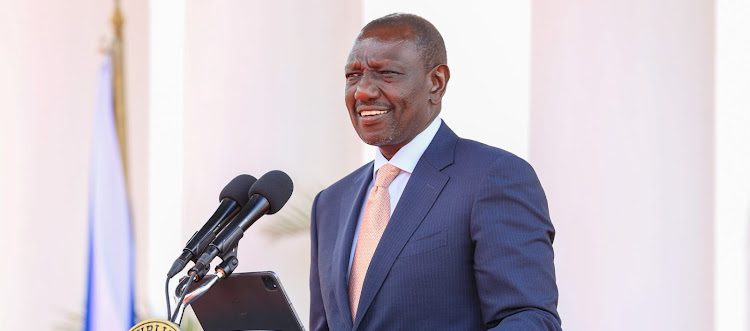
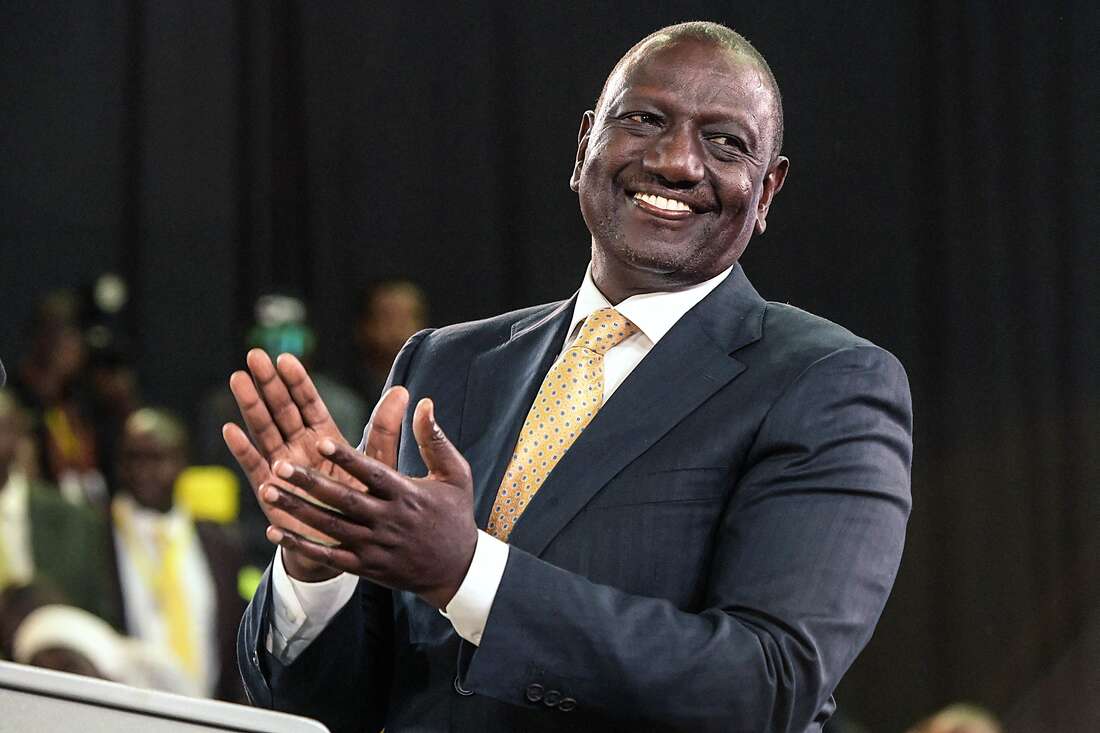
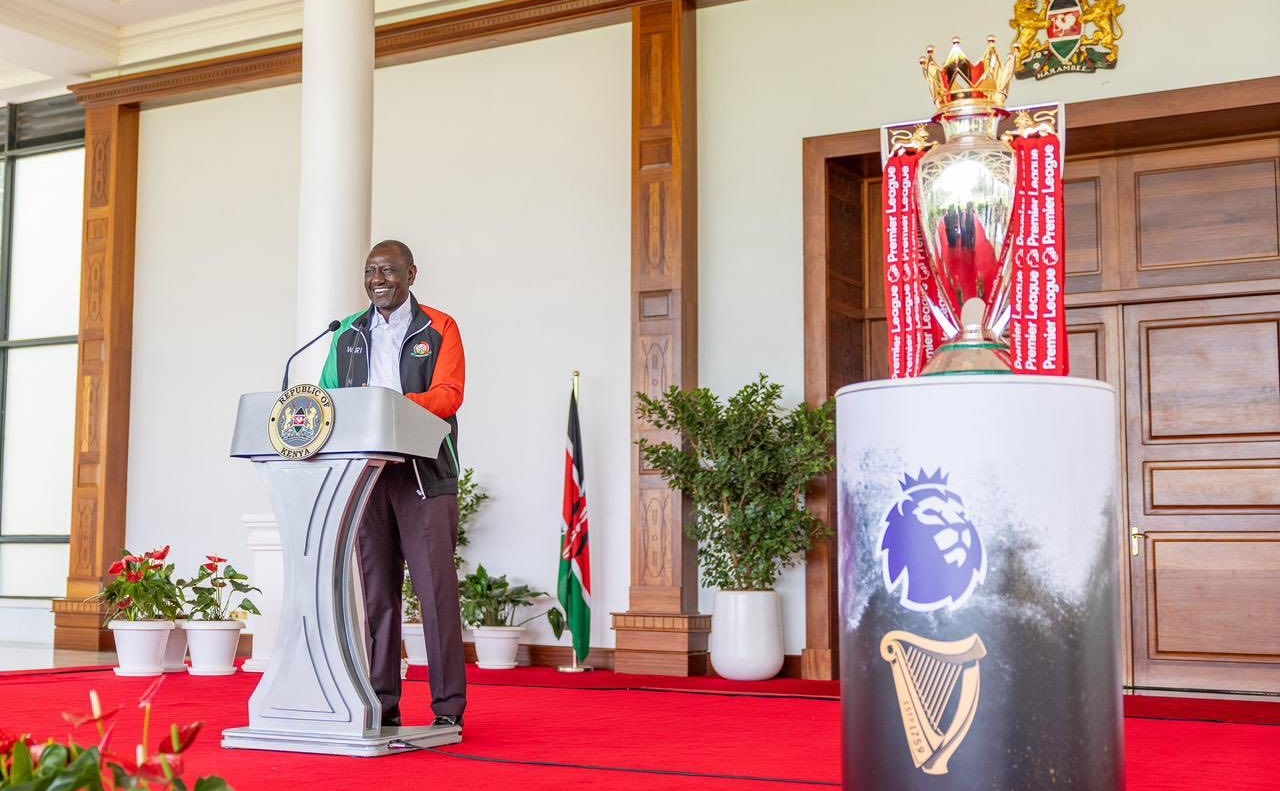
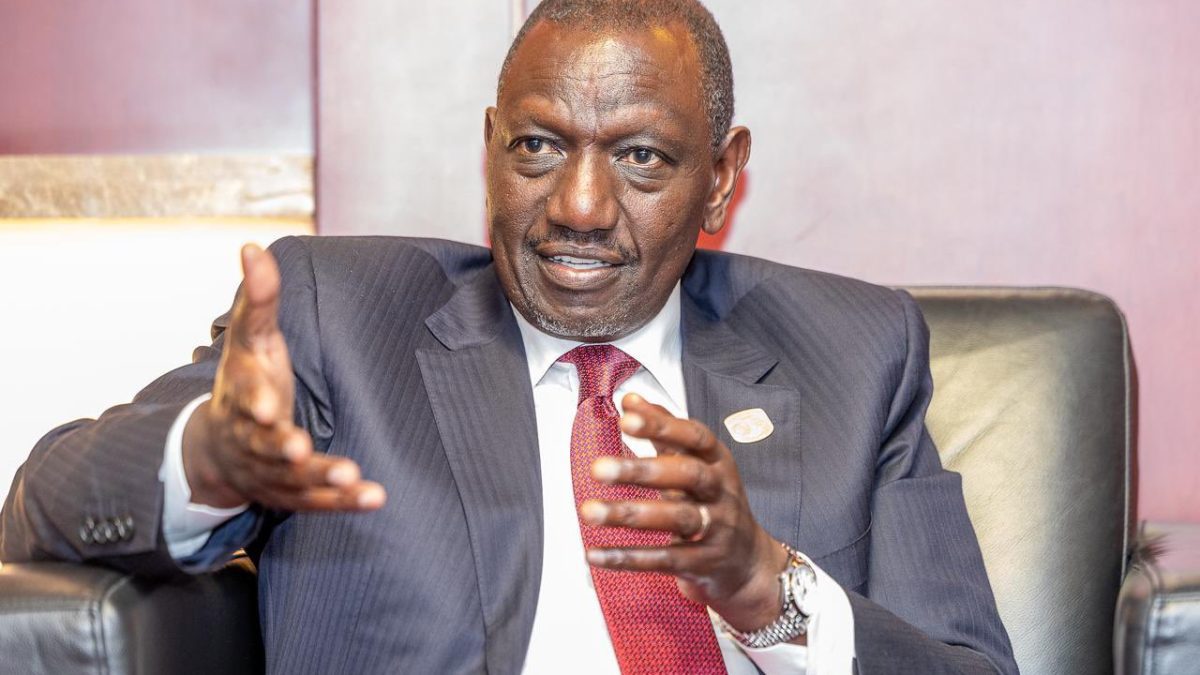
President William Ruto has officially invited the newly crowned English Premier League (EPL) champions, Arsenal, to tour Kenya next year.
Speaking during an interview on the sidelines of the G7 Summit in Evian, France, President Ruto admitted he was stunned by the massive, vibrant celebrations that erupted in Nairobi after the North London club clinched the title.
“Arsenal finally closed the gap, and it was a huge celebration. I was shocked in Nairobi,” President Ruto remarked. “I have sent an invitation because I think it would be a great moment for Arsenal to come to Kenya. They have great fans.”
Nairobi Brought to a Standstill
The invitation follows a historic month for the Gunners, who secured their first Premier League trophy in 22 years. Arsenal clinched the 2025/2026 title with one match to spare after rivals Manchester City drew 1–1 with Bournemouth, ending the season in spectacular fashion:
Arsenal: 85 points (Champions)
Manchester City: 78 points (Runners-up)
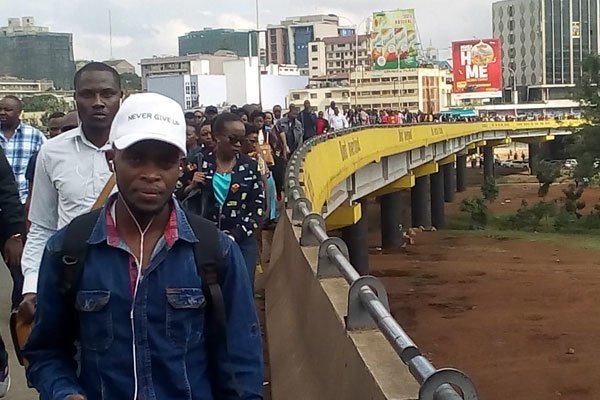
Following the triumph, ecstatic Kenyan Gooners donned their official jerseys, waved club flags, and took over the streets of the Central Business District (CBD) in a celebration that brought the capital city to a complete halt.
A Triumph of Resilience
The President had previously congratulated the team on May 20, praising their resilience, discipline, and unwavering belief throughout the grueling season.
“Tonight, the great reward is won. The team is victorious. Its faith and dedication is vindicated. And our commitment to succeed through work, discipline, and teamwork is affirmed. Congratulations to the Gunners,” Ruto stated at the time.
If the club accepts the Head of State’s invitation, the 2027 tour will mark a historic milestone for Arsenal’s massive East African fanbase.
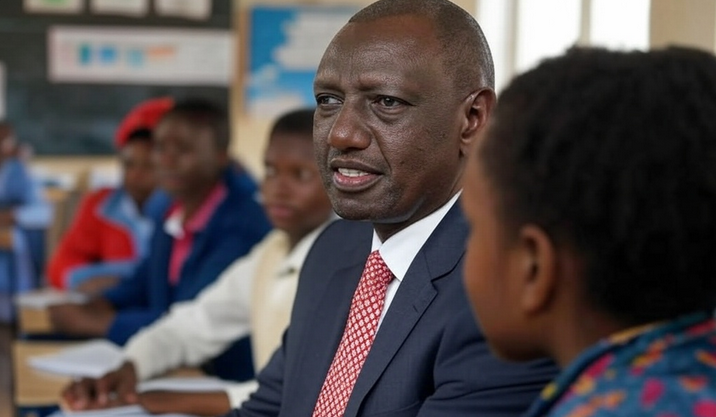
President William Ruto has strongly dismissed mounting criticism from education stakeholders who claim Kenya’s learning sector is plunging into a crisis. He maintains that unprecedented government funding, aggressive teacher recruitment, and massive infrastructural upgrades have stabilized the country’s academic ecosystem.
Speaking at State House, Nairobi, while hosting grassroots leaders from Marsabit County on Friday, June 12, 2026, the Head of State asserted that the sector remains the single largest beneficiary of state resources, reflecting a deliberate effort to guarantee social equality.
A Historic Quarter of the Workforce Hired in Three Years
Brushing off critics who have flagged structural gaps in the transition phases of national learning, President Ruto pointed directly to his administration’s aggressive human resource deployment as an undeniable marker of progress.
“There’s no government that has hired 100,000 teachers in three years since independence,” the President declared. “In other words, of the 400,000 teachers we have in the country, we employed a quarter of them in the last three years. You wonder, how is there a crisis in education today when we have achieved this, increased funding, and built 23,000 classrooms?”
The President, who recently returned from a diplomatic tour of Europe and South America aimed at securing international trade and labor markets, emphasized that the state has already constructed 23,000 new classrooms nationwide to comfortably accommodate learners under the country’s updated education framework.
Education Takes Lion’s Share of the National Budget
The President’s defensive brief follows a major financial boost from the National Treasury. Just a day prior, Treasury Cabinet Secretary John Mbadi unveiled the 2026/2027 financial year budget estimates, proposing a staggering Sh784.5 billion allocation to the education sector.
This massive Sh81.5 billion year-on-year increase from the previous year’s Sh702 billion cements education as the highest-funded sector in Kenya, gobbling up an unprecedented 26.5 percent of the total national budget. According to Dr. Ruto, this aggressive spending is vital to supporting the revised higher education funding model and stabilizing primary and secondary institutions.
The Evolution From CBC to CBE
Addressing ongoing policy updates, the President noted that the system—formerly referred to strictly as the Competency-Based Curriculum (CBC)—has officially matured and evolved into Competency-Based Education (CBE).
The ongoing structural reforms, he noted, are intentionally geared toward shifting learning away from traditional, rigid rote memorization toward measurable practical outcomes. By refining CBE, the government aims to directly align the skills of Kenyan graduates with local and international labor market demands, turning education into what the President termed “the ultimate social equalizer.”
Unfazed by mounting political backlash, President William Ruto has launched a scathing attack on his detractors—including his former Deputy President Rigathi Gachagua and opposition leaders—dismissing them as “incompetent” leaders who achieved nothing during their own time in power.
Speaking during a fierce media roundtable at the Wajir State Lodge on Monday evening, June 1, 2026, the Head of State brushed off criticism surrounding his administration’s performance and the decision to host the 63rd Madaraka Day celebrations in Northern Kenya.
Exposing Wajir’s Historical Neglect
President Ruto used the severe infrastructure deficits of the host county to take a direct swipe at Gachagua and past leadership regimes. He pointed out that despite previous administrations holding power for years, Wajir has been left to grapple with daily electricity rationing, a non-existent public sewerage system, severe water scarcity, and completely dilapidated feeder and highway networks.
The President argued that the very leaders now shouting the loudest from the sidelines are the ones responsible for this historical marginalization.
“Those who are complaining about us holding Madaraka here have done absolutely nothing in that part of the world,” Ruto fired back. “It is my administration that is changing Northern Kenya practically with roads, electricity, water, housing, and markets.”
“They Will Blame Everybody Except Their Own Ignorance”
In an unusually blunt assessment of his political opponents, the Head of State accused the opposition and internal critics of lacking a coherent national agenda, vision, or alternative policy framework. He asserted that their continuous attacks are merely a smokescreen to hide their past governance failures.
“It just confirms to you that those people have no vision, agenda, or plans,” the President stated emphatically. “They have nothing to offer except criticism for the sake of it. They will blame everybody except their own ignorance and incompetence. When they had an opportunity to lead, they did nothing. So I do not think we should bother ourselves with them. Those ones are just wasting our time.”
The President’s aggressive defense comes at a highly volatile political hour, as his administration simultaneously navigates intense street protests over femicide, missing children, and a controversial U.S.-funded Ebola isolation facility in Laikipia. By digging in his heels at the Wajir media roundtable, Ruto signaled that he has no intention of slowing down his administration’s development blueprint or accommodating the demands of his political rivals.
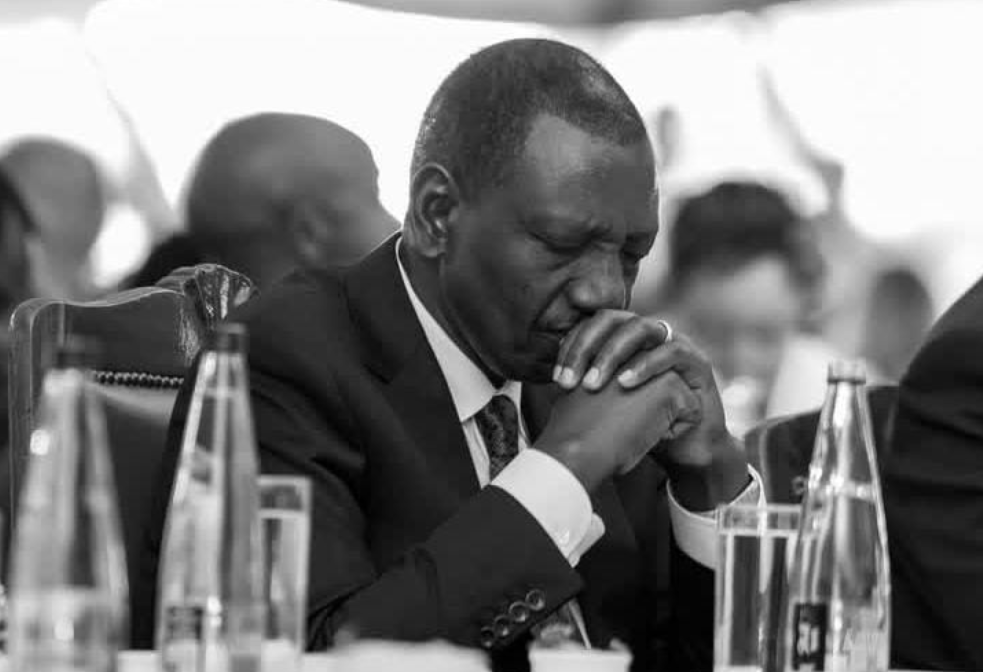
In an uncharacteristically raw and emotional address, President William Ruto moved the audience at the National Prayer Breakfast to a standstill by opening up about a deeply personal family tragedy: the loss of his and First Lady Rachel Ruto’s first-born son.
Speaking at the Safari Park Hotel on Thursday, May 28, 2026, the Head of State used his personal heartbreak to demand an aggressive, urgent overhaul of Kenya’s healthcare system to eliminate preventable maternal and newborn deaths.
A Living Reality of Loss
The President discarded his prepared political notes to remind the nation that the statistics surrounding healthcare failures represent real, agonizing human suffering.
“Mothers are losing their lives during childbirth and newborns continue to die. This experience is personal to me,” President Ruto shared somberly. “Mama Rachel and I lost our first-born son; it’s not something that is far-fetched, it is not something that is a story, it is a reality that we live through every day.”
“An Embarrassing and Tragic Moment in New York”
Ruto recounted a sobering confrontation that occurred on the sidelines of the United Nations General Assembly in New York last year, where an international advocate directly challenged Kenya’s maternal health track record.
The President recalled how the woman bluntly compared Kenya’s reproductive health mortality rates to war-torn nations, catching him completely off guard.
“I remember an incident when I was in New York last year, and a lady walked to me and told me, ‘Mr. President, women and children are dying in your country,’” he recounted. “I looked at that lady and it was a very embarrassing moment to me; it was tragic because she went on to tell me that you are in the league of Afghanistan.”
According to the Head of State, the advocate emphasized that for a progressive, tech-forward, and economically dominant nation like Kenya, continuing to lose mothers in labor is an institutional shame. The encounter, he noted, instantly forced him to confront his own past family grief and the systemic failures back home.
Defending the Universal Health Coverage (UHC) Agenda
Ruto strategically anchored this emotional revelation to defend his administration’s controversial and highly contested transition toward Universal Health Coverage (UHC) and broader social health insurance reforms.
Invoking constitutional mandates, the President insisted that access to life-saving labor wards and neonatal intensive care units must never depend on an individual’s financial liquidity.
“Health, as I have always said, cannot continue to be a privilege for those who can afford, those who have jobs, or those who have money,” Ruto maintained. “Health must be, as it is in the Constitution under Article 43, a right for every citizen of the Republic of Kenya, irrespective of who they are, where they come from, or their socioeconomic status. It is the reason why I am willing to do anything to make sure Universal Health Care succeeds.”
The President closed his address with a stern directive to healthcare stakeholders and the Ministry of Health to fast-track comprehensive infrastructural upgrades in public hospitals, vowing that no Kenyan mother should have to pay with her life to bring forth new life.
President William Ruto has moved to calm mounting political anxiety surrounding the 2027 General Election, confidently assuring the nation that the upcoming polls will be entirely peaceful, free, and fair.
Speaking during the National Prayer Breakfast at the Safari Park Hotel in Nairobi on Thursday, May 28, 2026, the Head of State dismissed claims that his administration is plotting to manipulate the vote, telling both critics and anxious citizens to “relax.”
“What God Has Decided, No Man Can Change”
The President’s remarks come at a time of heightened political tension, with opposition leaders and civil society watchdogs accusing the executive of systematically positioning itself to influence the 2027 electoral outcome. Ruto firmly pushed back against these claims, stating that his primary focus remains on delivering his administration’s development agenda rather than early campaigning.
“Between now and the next elections, we will drive the transformation of this country,” President Ruto declared. “And we are going to have elections, and they will be peaceful. And there will be no violence. And they will be free and fair. Yes, they will be free and fair. Because what God has decided, no man can change.”
Defiant Stance on a Second Term
Addressing the audience—which included senior state officials, lawmakers, religious leaders, and foreign diplomats—Ruto used a mix of English and Kiswahili to candidly address the growing speculation over his political future.
“Yes, so relax. People are in a panic. I don’t know why,” the President told the gathering. “Ile Mungu ameamua ndio itafanyika. Yes. Si namna hiyo? (Whatever God has decided is what will happen. Isn’t it so?) If God has decided Ruto will get a second term, he will. If God has decided otherwise, that’s what will happen and we will move on as a country. Yes. So relax. Hakuna problem (There is no problem).”
The Shadow of 2027
With just over a year left before official campaign activities are expected to peak, the 2027 race is already heavily influencing Kenya’s legislative and public discourse.
Ruto’s political adversaries have actively begun reshaping the battlefield, with intensifying whispers of new opposition coalitions, high-profile party defections, and competing electoral strategies. By invoking divine will and promising institutional neutrality, Ruto is attempting to project an image of absolute confidence and stability, even as the political clock winds down.
In a major policy shift aimed at easing the economic squeeze on working-class households, President William Ruto has announced a sweeping plan to entirely exempt low-income earners from Pay As You Earn (PAYE) tax deductions.
Speaking during the National Prayer Breakfast on Thursday, May 28, 2026, the Head of State revealed that he has directed the National Treasury to raise the tax-free income threshold to KSh 30,000, up from the current KSh 24,000 baseline.
Boosting Take-Home Pay for Low-Income Earners
Currently, Kenyan workers earning between KSh 24,000 and KSh 30,000 are hit with a 10 percent PAYE deduction. If Parliament approves the executive proposal, this entire bracket will be completely insulated from income tax, instantly increasing their monthly disposable income.
“I told the Treasury that it is time to look at how we can slow down, especially for the low-income earners, and remove some taxes from them,” President Ruto disclosed. “That is why we will be putting a proposal before parliament to say that all the low-income earners, the people who earn up to KSh 24,000 [and up to KSh 30,000], have been paying PAYE at 10 per cent, and we are saying they will not pay anymore.”
The President acknowledged that this aggressive tax relief will trigger a KSh 40 billion revenue deficit for the exchequer. However, he maintained that the government is engineered to plug this gap through innovative, non-burdensome economic reforms that spur production rather than over-taxing the vulnerable.
Banking Sector’s Push for Pay Slip Relief
The President’s directive comes on the heels of intense lobbying from corporate stakeholders who have warned that heavily depleted pay slips are suppressing consumer spending. On May 21, 2026, the Kenya Bankers Association (KBA) appeared before the National Assembly Finance Committee to present submissions on the Finance Bill, 2026, aggressively demanding a wider review of PAYE bands.
KBA argued that a broader 5 percent PAYE reduction across all tax brackets would inject liquidity back into the economy, ultimately expanding Kenya’s GDP by KSh 42 billion.
“The assurance is that the KSh 28 billion will be offset within the first year,” stated KBA CEO Raimond Molenje during the committee hearings. “What this will result in is the fact that in the second and the third year we will be able to generate much higher taxes, more than the KSh 31 billion that will be generated in the first year.”
By aligning the executive’s tax proposals with growing corporate and public outcry, the administration hopes to strike a delicate balance between generating revenue for the 2026/2027 fiscal year and providing essential economic insulation for Kenya’s workforce.
President William Ruto has led the nation in mourning following the horrific dawn dormitory fire at Utumishi Girls Academy in Gilgil, which claimed the lives of 16 students and left dozens of others severely injured.
In a statement shared via his official X (formerly Twitter) account on Thursday, the Head of State expressed deep sorrow over the catastrophe, describing the loss as a devastating blow to the nation.
“No Words Can Ease the Pain”
President Ruto extended his deepest sympathies to the grieving families, noting that the country stands in solidarity with the institutional community during this dark period.
“Our hearts and prayers are with the families who have lost their beloved daughters in the tragic fire at Utumishi Girls Academy in Gilgil,” President Ruto stated. “No words can truly ease the pain of losing young lives filled with promise, hope, and dreams for the future. As a nation, we mourn with the parents, guardians, teachers, and fellow students who are enduring this unimaginable tragedy.”
Emergency Response and Investigations Prioritized
The President assured the public that the government has mobilized multi-agency resources to handle the aftermath of the disaster, focusing heavily on medical stabilization and psychological support for the survivors.
“Our immediate attention is focused on the rescue of those affected, the treatment of the injured, and support for their families, while investigations continue into the cause of the fire,” the Head of State added.
National Outpouring of Grief
The catastrophic incident at the Gilgil-based national school has triggered widespread shock, anger, and heartbreak across Kenya. Security and police reports have confirmed a grim toll of 16 fatalities, with 74 other learners currently hospitalized across various medical facilities in Nakuru County, nursing varying degrees of burns and injuries sustained during the escape.
Political, religious, and community leaders from across the country have joined the school community in sending messages of condolence, as demands for stringent boarding school safety audits intensify nationwide.
President William Ruto’s administration is facing intense global and domestic scrutiny following explosive allegations that the government has weaponized advanced, illegal digital surveillance tools against ordinary citizens and political critics.
A hard-hitting investigative feature aired on Al Jazeera’s The Listening Post on Monday, May 25, 2026, revealed that the state has sharply amplified its eavesdropping capabilities since the historic 2024 anti-government demonstrations. The disclosure has heightened anxieties over the collapse of civil liberties and democratic safeguards as the country marches toward the 2027 General Election.
Security Tools Turned Against Civilians
The Al Jazeera report painted a grim picture of Kenya’s contemporary political landscape. It detailed how sophisticated surveillance technologies—originally procured under the guise of national security, intelligence gathering, and counterterrorism—have reportedly been repurposed to track, monitor, and intimidate human rights defenders, independent journalists, opposition voices, and ordinary citizens suspected of organizing dissent.
Human rights analysts contend that the unprecedented, youth-led Gen Z protests of 2024 marked a permanent, aggressive shift in the state’s approach to domestic dissent, prompting a quiet but massive expansion of the digital panopticon to map out decentralized networks.
A Paradigm Shift in Kenyan Organizing
According to human rights advocate Victor Ndede, the 2024 demonstrations completely blindsided the state machinery because they did not follow Kenya’s traditional, predictable blueprints of political mobilization.
“The 2024 protests were a pivotal moment in Kenya’s protest organising,” Ndede noted during the Al Jazeera broadcast. “It was the first time we were having youth-led protests because predominantly, protests have been organised either by political leadership or what you would call tribal leadership.”
Because the historic movement was leaderless, highly decentralized, and organically engineered on digital platforms like X and TikTok, the state allegedly pivoted heavily toward sweeping digital surveillance to unmask, profile, and neutralize key online influencers and coordinators behind closed doors. With international watchdogs now sounding the alarm, the Ruto administration faces growing pressure to account for its cyber-intelligence operations ahead of a high-stakes electoral cycle.
The National Police Service (NPS) has launched an urgent, high-level investigation following a major security breach during President William Ruto’s public address in Ganze, Kilifi County, on Sunday.
The security lapse occurred during a thanksgiving service for Youth Principal Secretary (PS) Fikirini Jacobs, when an unidentified man managed to bypass the President’s elite security perimeter and walked directly onto the stage while the Head of State was speaking.
While the individual was swiftly neutralized and whisked away by security personnel, Inspector General of Police Douglas Kanja emphasized that any breach involving the Head of State is a matter of grave national concern.
IG Kanja Demands An “Uncompromising Inquiry”
In a stern statement released on Sunday evening, IG Kanja announced the formation of a specialized team to dissect the operational failure.
“I have immediately constituted a special investigations team to conduct a swift, thorough, and uncompromising inquiry into how this breach occurred,” Kanja stated. “The President’s security is a matter of national security, and any threats against the President will be handled with the utmost force.”
The Police Boss sent a strong warning to the public, reiterating that strict adherence to security protocols is non-negotiable at any VIP function.
“We wish to make it clear that all persons attending public events, particularly those involving the President and other national leaders, must strictly adhere to established security procedures and protocols at all times,” he added.
Radical Shake-up in the Presidential Escort Unit
The fallout from the Kilifi incident was immediate. By Sunday night, Deputy Inspector General of Police Eliud Lagat announced sweeping structural changes within the Presidential Escort Unit (PEU) and the elite Recce Squad to seal vulnerabilities.
The administrative overhaul resulted in high-profile reassignments and forced exits at the top of the President’s security hierarchy:
Commandant Ousted: Mr. Noah Kirwa Maiyo has been removed from his prestigious role as the Commandant of the Presidential Escort Unit (PEU). He has been transferred to Kenya Police Headquarters under the Vigilance Department.
New PEU Boss: Mr. William Sawe, previously the Commanding Officer of the elite Recce Sub-Unit, has been promoted to take over as the new PEU Commandant.
Forced Retirement: Mr. Juda Mathews Gwiyo, the long-serving Deputy Commandant of the PEU, was directed to immediately proceed on leave pending his retirement from the service.
The rapid and severe restructuring signals the government’s zero-tolerance stance on lapses surrounding presidential security, as the new leadership moves in to permanently reinforce the Head of State’s protective detail.
The National Police Service wishes to address a serious security breach that occurred today, 24
May 2026, during a thanksgiving event in Ganze, Kilifi County, where His Excellency Dr. William Samoei Ruto, President of the Republic of Kenya, was addressing members of the public.
Although security agencies responded swiftly and decisively to contain the situation and restore order, any breach involving the security of the President is unacceptable and a matter of the gravest national concern.
As the Inspector General of the National Police Service, I have immediately constituted a special investigations team to conduct a swift, thorough, and uncompromising inquiry into how this breach occurred.
I have also ordered immediate changes to the security detail responsible for the President’s protection in order to strengthen protocols and seal any existing vulnerabilities.
The security of the Head of State is a matter of national security and will be treated with the
utmost seriousness.
We wish to make it clear that all persons attending public events, particularly those involving the President and other national leaders, must strictly adhere to established
security procedures and protocols at all times.
Any attempt to breach security will be met with the full force of the law.
The National Police Service remains resolute in its constitutional duty to serve and protect the
people of Kenya.
We will take every necessary measure to ensure such an incident is never repeated and that the highest standards of security are maintained for the President, national leadership, and the nation.
Matatu operators have officially called off the planned nationwide strike following high-level talks with President William Ruto at State House in Mombasa.
The announcement was made after a meeting between government officials and representatives from the public transport sector aimed at addressing concerns over rising fuel prices and operational costs affecting matatu operators across the country.
Speaking after the discussions, Matatu Owners Association Chair Albert Karakacha confirmed that operators had agreed to suspend the planned industrial action and continue offering transport services.
According to Karakacha, there will be no nationwide matatu strike next week as earlier threatened by transport operators.
The development comes as a relief to thousands of commuters who had feared major transport disruptions following days of tension within the sector.
The planned strike had emerged amid growing frustration among operators over high diesel prices, insurance challenges, and rising operating expenses that transport stakeholders argued were hurting business sustainability.
The meeting at State House followed fresh interventions announced by President Ruto, including a KSh10 reduction in diesel prices for the June–July pricing cycle and promises of broader reforms within the transport sector.
Among the measures discussed were plans to engage banks on cheaper financing for matatu owners, review insurance-related concerns, and introduce regulations targeting digital taxi platforms.
The decision to call off the strike is expected to restore normal transport operations across major towns and cities, especially in Nairobi where commuters had already experienced significant disruptions during recent protests and transport demonstrations.
President William Ruto has announced a major KSh10 reduction in diesel prices as part of a fresh government intervention targeting Kenya’s struggling transport sector amid rising economic pressure.
The new directive will see diesel prices in Nairobi drop to approximately KSh222.86 per litre for the June–July pricing cycle once the revised fuel rates are officially gazetted.
The announcement followed an overnight meeting held at State House in Mombasa between the Head of State and public transport operators, where concerns over soaring fuel prices and the financial strain facing the matatu industry dominated discussions.
Beyond the fuel reduction, Ruto also unveiled a series of sweeping reforms aimed at easing the burden on transport operators and restoring stability within the sector.
Among the key directives issued was an order to the Ministry of Transport to engage financial institutions in efforts to secure cheaper financing options for matatu owners.
The President also instructed the government to work closely with the Insurance Regulatory Authority (IRA) to address long-standing complaints from operators who continue paying repair and accident-related costs despite having insurance coverage.
In addition, Ruto directed that the Insurance Act be reviewed within the next three months as part of wider reforms intended to improve fairness and accountability in the industry.
The President further ordered the National Transport and Safety Authority (NTSA) to begin regulating digital taxi platforms, including the introduction of minimum fare guidelines for ride-hailing services.
According to Ruto, the measures are designed to stabilise fuel prices, shield consumers from further economic pressure, and bring order to Kenya’s transport sector during a difficult economic period.
The kind of country you only hear about during geography lessons, boxing tournaments or as a set on random Netflix flicks.
So when President William Ruto travelled there this week, the immediate question online was predictable:
Why Kazakhstan?
But beneath the politics and social media jokes, the visit was largely about markets, trade routes, investment and positioning Kenya in a part of the world that is becoming increasingly important economically.
And the numbers already explain part of the reason.
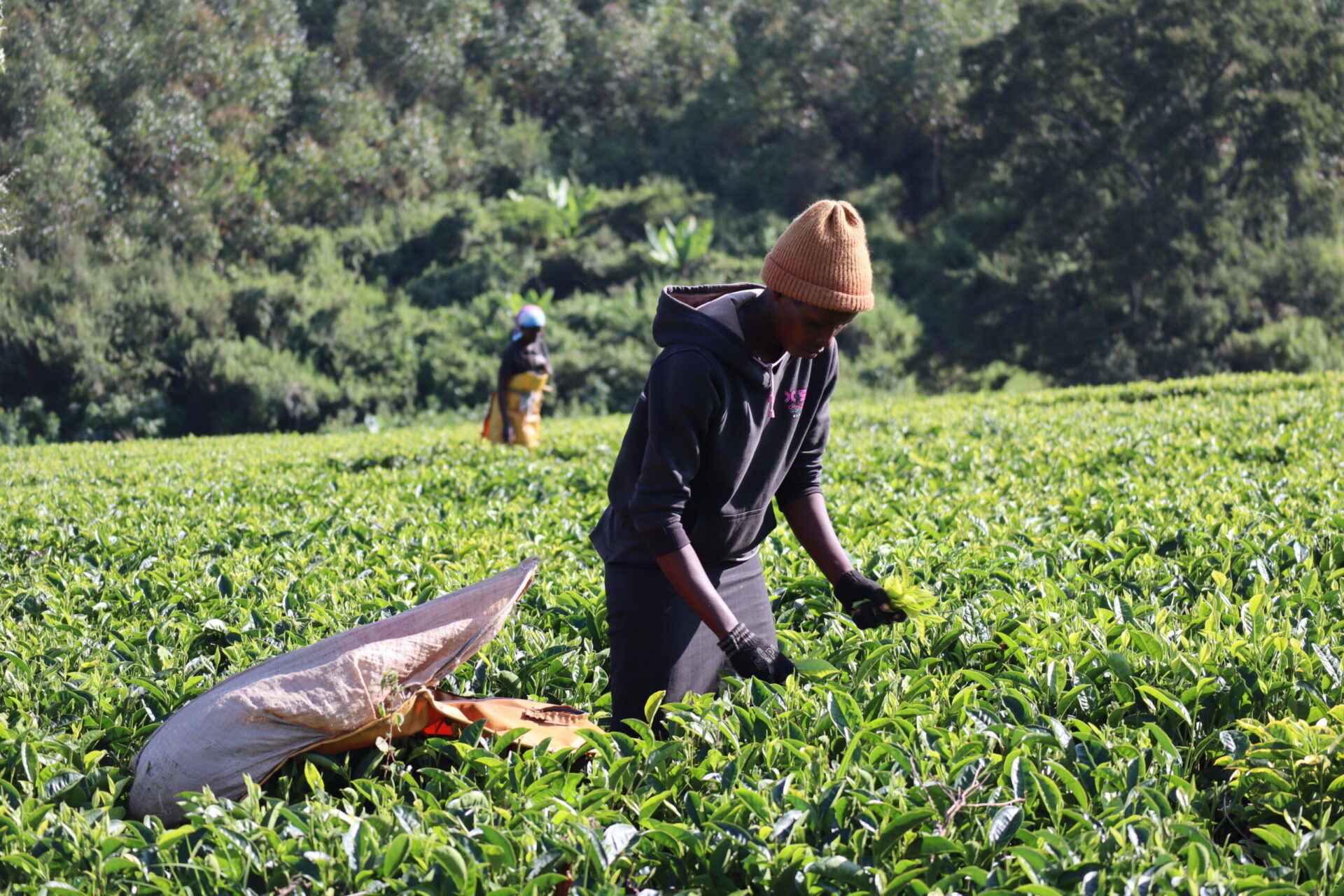
According to the Tea Board of Kenya’s 2025 report, Kenya’s tea exports to Kazakhstan grew by nearly 187% in a single year, reaching 24.44 million kilograms.
Kazakhstan is now Kenya’s sixth-largest tea export market, accounting for about 3.7% of total export volumes.
That matters because tea is not just another export.
The sector supports more than 750,000 smallholder farmers and roughly 6.5 million Kenyans directly and indirectly.
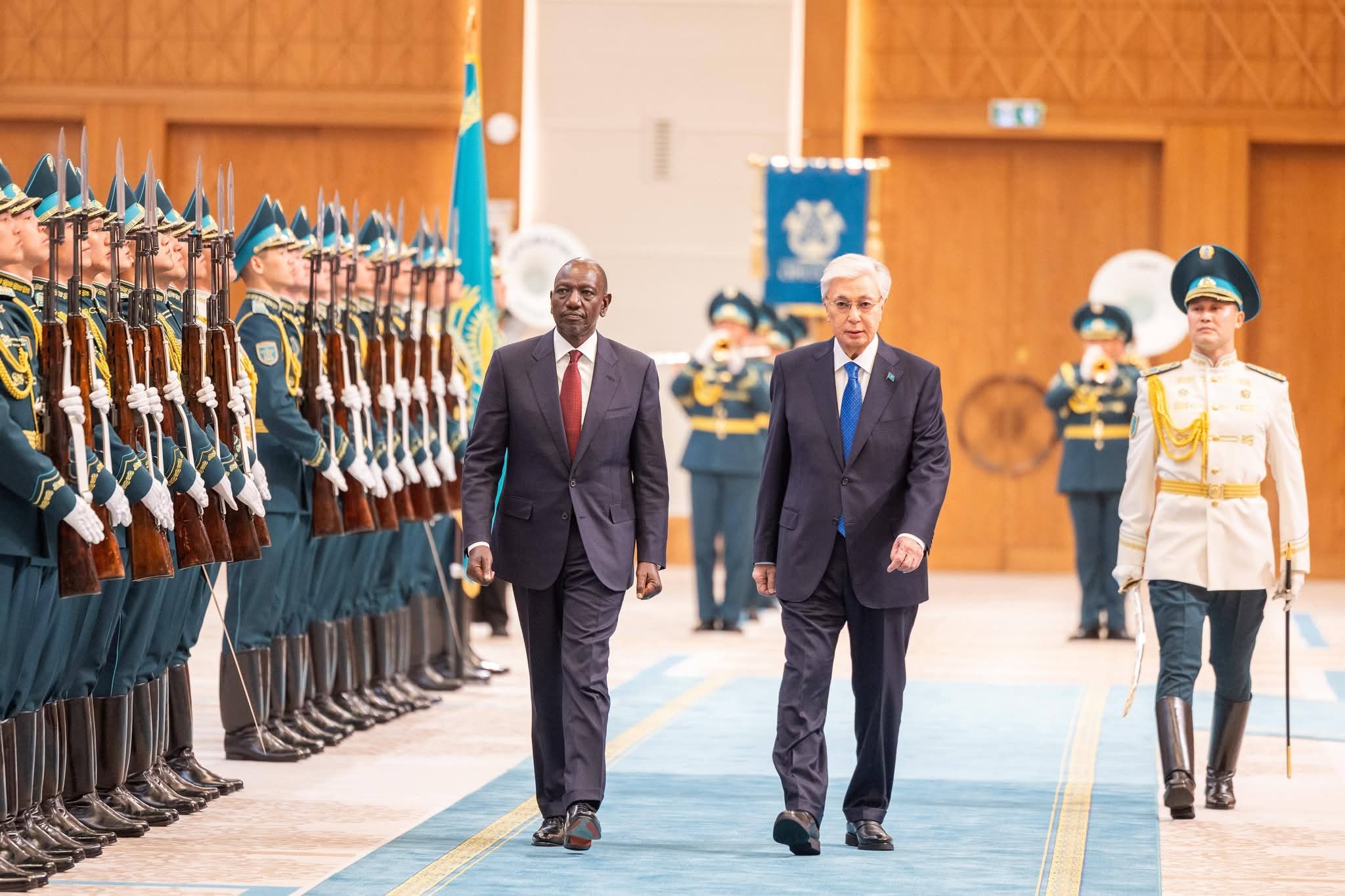
President Ruto inspects a guard of honour on arrival at Kazakhstan (Image: Files)
At the same time, traditional markets like Iran have become harder to rely on because of geopolitical tensions and sanctions-related risks.
Kenya is therefore under pressure to diversify where it sells its products – and Central Asia is increasingly becoming part of that strategy.
More importantly, Kazakhstan is not just a market on its own.
It also acts as a regional gateway into Central Asia, connecting Kenya to a wider consumer base stretching into countries like Uzbekistan, Kyrgyzstan, and parts of Russia – a combined market of more than 70M people.
That partly explains why the visit produced ten separate bilateral agreements covering sectors ranging from ICT and trade to mining, infrastructure, finance, tourism, and space technology.
One of the key agreements focuses on ICT and e-government cooperation, with Kenya looking to learn from Kazakhstan’s heavily digitised public service system – where over 90% of government services are processed online.
For Kenya, that directly links to ongoing expansion of platforms like eCitizen and broader public service digitisation.
Another agreement centered on transport and infrastructure cooperation, particularly around logistics and transit systems.
Kazakhstan currently plays a strategic role in the “Middle Corridor” trade route linking Asia and Europe – something Kenya appears keen to study as it positions itself as a regional trade and logistics hub in East Africa.
Trade and investment featured heavily throughout the visit.
Kenya’s National Mining Corporation signed cooperation agreements tied to mining, oil, gas, and rare earth exploration.
Investment agencies from both countries have established frameworks aimed at reducing barriers for investors and opening direct business links between private sectors.
Export promotion agencies also signed agreements targeting expanded market access for Kenyan tea, coffee, flowers, leather products and processed foods into Central Asia.
There were also deals around tourism, financial cooperation, diplomatic training and even space technology – particularly in satellite data and earth observation that can support agriculture, climate monitoring and disaster response.
Viewed from a distance, the trip may have looked unusual.
But economically, it reflects something Kenya has been trying to do more aggressively in recent years.
Kenya is looking beyond traditional partners, secure new markets, build new trade corridors, and place itself inside emerging global economic networks before competition becomes tighter.
Because in the current global economy, countries are no longer competing only through politics.
Increasingly, they are competing through access – to markets, logistics routes, investment capital, technology, and influence.
William Ruto sparked widespread reactions online in the early hours of Wednesday, May 20, 2026, after sharing a lengthy congratulatory message celebrating Arsenal F.C. following the club’s English Premier League triumph after 22 years.
In his message, President Ruto praised Arsenal’s journey, highlighting what he described as the power of “hope, resilience, focus and relentless hard work.” However, the post quickly triggered criticism from some Kenyans who questioned the timing of the message amid ongoing domestic challenges.
Online criticism over timing
One X user, Nana Wami (@AonjelaPel), was among those who reacted strongly, arguing that the President had remained silent on pressing local issues while quickly commenting on international football.
“President has a message for Arsenal but not for the fuel crisis. Awuoro bana,” the user posted.
The comment rapidly gained traction online, with several users echoing similar frustrations over the government’s silence regarding the ongoing fuel and transport crisis affecting many Kenyans.
“Literally every crisis in this country, he is silent. Only vocal about things that don’t relate to us,” Wami later added.
Other users described the football post as insensitive given the economic difficulties many citizens are currently facing. Some critics also questioned whether the President was genuinely invested in football or simply reacting to a globally trending topic.
Fuel protests and national concerns
The backlash comes at a time when Kenya is experiencing disruptions linked to a nationwide public transport strike and demonstrations over rising fuel prices.
Some social media users referenced reports of deaths, injuries, and property destruction during the unrest, arguing that the government should prioritise addressing those issues publicly.
One user, Isaac BOBO Mwangi, criticised the President for failing to comment on “12 people killed and reports of missing children” linked to the two-day matatu protests.
Others also pointed to what they described as a lack of visible support for local talent and local issues compared to attention given to international sports.
Travel spending debate resurfaces
The online discussion also revived criticism over President Ruto’s international travel expenses. Some users claimed that the government’s spending on foreign trips contrasts sharply with the financial struggles currently affecting ordinary Kenyans.
“Fuel crisis hakuna statement, but Arsenal wamepata congratulations,” another user, Ochieng™ (@OchiengKe_), wrote.
As online debate continues, the reactions have once again highlighted growing public sensitivity around leadership priorities, communication, and the cost of living crisis facing many households across the country.
Kenyan social commentator and influencer Cassypool Capon has proposed that Babu Owino be considered for the position of Deputy President under William Ruto ahead of the 2027 General Election.
Speaking during an interview with media personality Tony Mwirigi on Tuesday, May 19, 2026, Cassypool praised Babu Owino’s leadership qualities, saying the youthful lawmaker has grown beyond county-level politics and deserves a bigger national role.
According to Cassypool, Owino’s popularity among young people and his political influence make him suitable to represent Gen Z interests at the highest levels of government.
“Babu Owino is a good leader; he is better than me 100 per cent. Ni kijana ambaye amejituma na ameenda mbele sana, but I want to tell Babu Owino that he is bigger than Nairobi governor seat. Let him come I negotiate for him with William Ruto so that he can be the deputy president and represent the Gen Z,” Cassypool said.
“Babu Owino is a good leader; let him deputise Ruto to represent Gen Z,” he added.
Confident about Nairobi governor race
Cassypool, who has already declared interest in the Nairobi gubernatorial race, also claimed he would defeat both Babu Owino and current Nairobi Governor Johnson Sakaja if they all contest for the seat in 2027.
“Nitawashinda kwa sababu Sakaja atakuwa kwa ballot, Babu atakuwa kwa ballot na hao wengine watakuwa kwa ballot, mimi nitapita katikati yao,” he said.
The outspoken entertainer officially announced his gubernatorial ambitions in December 2025, saying he intends to vie for Nairobi governor without attacking his political rivals.
“Yeah, I’m vying for the governor’s seat. I want to be the governor of Nairobi. I don’t want to talk about Sakaja; he is doing his work. I don’t want to be the type of politician who talks ill of other politicians,” Cassypool previously stated.
“Sakaja is working; he is doing his best. Tukutane sisi sote 2027, Sakaja, Babu Owino. So I will not badmouth Sakaja, he is working, and I’ve worked with him on several projects.”
He further expressed confidence in his chances, insisting he is ready to challenge established political figures in the capital.
“Mimi nasimama kuwa Governor wa Nairobi. Bahati ni mtu unahesabu kusimama Governor? Nakuambia watu nitatandika ni Sakaja na Babu Owino,” he said.
Deputy President Kithure Kindiki has announced that the government may implement additional decisive interventions to lower fuel prices, but maintained that the state will not succumb to intimidation from violent protests.
The Second-in-Command spoke on Monday, May 18, 2026, in Tharaka Constituency, following chaotic nationwide demonstrations orchestrated by matatu operators. The protests, triggered by the Energy and Petroleum Regulatory Authority’s (EPRA) May 14 price hike, have left several people dead, dozens injured, and businesses looted.
Geopolitical Tensions Blamed for Price Spikes
Defending the administration against claims of local mismanagement, Kindiki attributed the energy crisis to escalating geopolitical warfare between Iran, Israel, and the United States. He noted that the conflict has severely disrupted global supply chains.
“The government has taken measures to mitigate against the unprecedented spike in global fuel prices occasioned by the US/Israel-Iran war,” Kindiki explained. “With the effective closure of the Strait of Hormuz, ships are taking longer routes and insurance costs have soared to record highs. The government has already reduced VAT on fuel from 16% to 8%, while 12 billion shillings from the fuel stabilisation fund have been applied to manage prices; otherwise, the prices would have shot to 300 shillings per litre by now.”
Ruto Orders Crisis Interministerial Talks
To defuse the transport paralysis that has stranded thousands of citizens and forced schools to close, the Deputy President revealed that President William Ruto has directed an immediate interministerial intervention.
The Cabinet Secretaries for the National Treasury, Energy, Transport, and Interior have been ordered to jointly engage transport stakeholders to establish immediate fiscal remedies and restore normalcy to the roads.
Stern Warning to Arsonists and Political Inciters
Despite hinting at further price reliefs, Kindiki issued a stern warning to opposition figures and protest organizers, emphasizing that public disorder would not dictate government policy.
Condemning the acts of arson, looting, and highway blockades that have characterized the past 48 hours—including the torching of commercial vehicles—the DP warned that the state would heavily punish criminals exploiting the situation.
“We will firmly deal with criminal acts of arson, obstruction of traffic, looting of property, and robbery of motorists disguised as demonstrations,” Kindiki stated, cautioning political actors against inciting public unrest for selfish mileage.
President William Ruto has broken his silence following the tragic passing of gospel singer Rachel Wandeto, promising that the state will ruthlessly pursue and prosecute her killers.
The Head of State issued a stern statement shortly after Wandeto succumbed to her injuries at the Kenyatta National Hospital, vowing that political status or affiliation would not shield the perpetrators from justice.
“The criminals that attacked this hardworking and promising lady will be held to account, irrespective of their affiliation,” President Ruto declared. “May God grant the family and friends comfort, peace, and courage to bear with the loss of Ms. Rachel Wandetto.”
A Brutal and Volatile Attack
Wandeto passed away barely 72 hours after unknown assailants doused her in petrol and set her on fire in Mwiki. According to her industry colleagues, the singer sustained devastating 70% body burns from the arson attack and was in critical need of blood transfusions before her condition worsened.
The attack has ignited nationwide outrage due to its apparent political undertones. Wandeto was widely recognized online for her vocal political stance and was an unwavering supporter of the ruling United Democratic Alliance (UDA) party—even recently getting a tattoo in honor of the President.
Government Vows Comprehensive Crackdown
The President’s remarks follow a hospital visit on Sunday by Interior Cabinet Secretary Kipchumba Murkomen, who had assured the public that security agencies were closing in on the attackers.
With both the President and the Interior Ministry issuing firm directives, the Directorate of Criminal Investigations (DCI) has placed the case under high priority. Authorities are working to unravel the identities of the hit squad amid growing warnings from the government against the weaponization of political and ethnic differences.
Treasury Cabinet Secretary John Mbadi has announced plans to hold urgent consultations with President William Ruto in a fresh effort to lower skyrocketing fuel prices. The move comes amid mounting pressure from motorists and transport operators who have threatened a crippling nationwide strike.
Speaking on Saturday, May 16, 2026, during an ODM grassroots mobilization tour in Nyakach, Kisumu County, Mbadi acknowledged the growing public frustration following the latest pricing review by the Energy and Petroleum Regulatory Authority (EPRA).
Government Defends Interventions, Blames Global Markets
While addressing the crisis, the Treasury CS defended the administration against fierce criticism, insisting that the government has already implemented several interventions to shield consumers from even steeper costs.
Mbadi highlighted the fuel stabilization program and previous reductions in Value Added Tax (VAT) on petroleum products, attributing the current price surge to international market dynamics beyond Kenya’s control.
“Even in the United States, which produces its own fuel, petroleum prices have risen by 60 percent. Everywhere in the world, the prices of fuel have gone up. We will do whatever it takes to lower fuel prices in Kenya,” Mbadi stated.
To address the immediate domestic fallout, Mbadi revealed that his ministry would meet with the President to explore fiscal interventions aimed at easing the financial burden on Kenyans and restoring stability to the transport sector. However, the CS did not provide a specific timeline for the high-level meeting or state whether other regulatory bodies would be involved.
Looming Transport Shutdown Over Record Price Hikes
Mbadi’s remarks coincided with a joint declaration by an expansive coalition of transport stakeholders—including matatu operators, boda boda riders, digital cab drivers, cargo transporters, and tourist vehicle operators—confirming a nationwide strike to begin on Monday, May 18.
Operating under the Transport Alliance, the groups accused the government and EPRA of enforcing “sharp and unjustified” price hikes that have severely worsened the cost of living.
The uproar stems from EPRA’s May 14 review for the May–June 2026 cycle, which introduced massive adjustments to pump prices:
Super Petrol increased by Ksh 16.65 per litre, pushing the retail price to Ksh 214.25.
Diesel surged by a staggering Ksh 46.29 per litre, bringing the new pump price to Ksh 242.92.
The sudden adjustments triggered immediate fare increases by Public Service Vehicle (PSV) operators and long-distance bus companies countrywide.
Parliament Pushed for Emergency Recall
As public anger intensifies, political pressure is also mounting from within the legislature. Member of Parliament Ndindi Nyoro has formally petitioned National Assembly Speaker Moses Wetang’ula to recall Parliament for an emergency sitting. The proposed session aims to deliberate on legislative interventions that could slash fuel prices by up to Ksh 27 per litre to cushion struggling citizens.
In a high-profile interview with France 24 conducted during the Africa Forward Summit in Nairobi, President William Ruto offered a firm assurance to both Kenyans and the international community regarding the country’s political future. As the 2027 General Election approaches, the President guaranteed that the process would be “free, fair, and peaceful.”
Expressing confidence in his track record and the country’s democratic trajectory, Ruto stated he is certain of securing a second five-year term “with God’s grace.”
Dismissing Fears of Instability
The President’s remarks come at a time of heightened anxiety among political analysts and observers. Recent months have seen a rise in reported tensions, with concerns focused on the use of armed groups by certain politicians to disrupt rival gatherings.
Ruto, however, dismissed suggestions that the country is at risk of sliding into chaos. He argued that Kenya’s democratic institutions have matured significantly and are capable of upholding the rule of law.
“The elections will be free and fair. They will be peaceful. That I can give you a guarantee. We are a solidly democratic country,” Ruto affirmed. “We believe in democracy; we believe in the power of the people to decide.”
Learning from the Past
Refencing the “painful lessons” of Kenya’s history—most notably the 2007/2008 post-election crisis—the President emphasized that his administration is committed to ensuring such a dark chapter is never repeated.
Ruto highlighted that maintaining national peace and safeguarding the integrity of the democratic process are among his government’s highest priorities. By positioning Kenya as a stable democracy, the President aimed to reassure investors and citizens alike that the upcoming electoral cycle will be defined by the ballot box rather than conflict.
In a scathing press briefing on Tuesday, May 12, former Deputy President Rigathi Gachagua took aim at President William Ruto, urging visiting dignitaries to confront the Kenyan leader over alleged human rights abuses and financial irregularities.
The briefing coincided with the Africa Forward Summit in Nairobi, an event Gachagua dismissed as a “sideshow” designed to provide the President with political “affirmation” amidst rising domestic pressure.
Appeals to the UN and France
Gachagua directed specific, pointed messages to UN Secretary-General António Guterres and French President Emmanuel Macron, framing President Ruto as a destabilizing force in the region.
Message to the UN: Gachagua labeled Ruto as “the greatest threat to Kenyan democracy,” alleging that under his watch, Kenya has become a “global hub for abductions and human trafficking.”
Transnational Repression: He cited the 2025 abduction of Tanzanian journalist Maria Sarungi in Nairobi, alongside cases involving Turkish asylum seekers and Ugandan opposition figure Kizza Besigye, as evidence of a dangerous trend in “transnational repression.”
Regional Security: He further accused the President of exacerbating regional conflicts, specifically mentioning the crisis in Sudan.
The “Mau Summit” Road Controversy
A significant portion of Gachagua’s address focused on Kenya’s bilateral ties with France. He alleged that French firms were the beneficiaries of a highly irregular compensation payout following the cancellation of the Nairobi-Nakuru-Mau Summit road project.
“Mr. Emmanuel Macron, you are an accomplice,” Gachagua claimed, referring to the fiscal fallout of the cancelled contract.
Key Allegations:
The Contract: Originally awarded to French firms for Ksh 159.27 billion in 2020, the project was cancelled by the Ruto administration before construction began.
The Diversion: Gachagua claimed that Ksh 7.3 billion to Ksh 7.5 billion was diverted from the Fuel Levy Fund—a move he says was flagged by the Auditor General—to pay compensation to these French firms.
The Switch: He alleged the project was subsequently handed to a Chinese contractor at a higher cost, despite a reduction in the project’s overall scope.
Shifting Alliances: The Ksh 150 Billion Deals
Gachagua’s criticisms come just as President Ruto and President Macron finalized 11 Memoranda of Understanding (MoUs) worth approximately Ksh 150 billion. These agreements are set to overhaul Kenya’s infrastructure and energy sectors.
In a major move to bolster Kenya’s appeal as a premier investment destination, President William Ruto has signed a trio of legislative reforms aimed at slashing the cost of doing business and streamlining corporate operations. The legislative package, headlined by the Income Tax (Amendment) Bill, marks a significant shift in the government’s economic strategy, focusing on removing fiscal bottlenecks that have previously hampered internal company reorganizations and large-scale capital investments.
The Income Tax (Amendment) Bill, spearheaded by Molo MP Kuria Kimani, offers a critical reprieve for companies looking to restructure their ownership. Previously, the Kenya Revenue Authority (KRA) viewed the transfer of assets or value to shareholders during internal reshuffling as a taxable dividend, often triggering hefty withholding tax penalties. Under the new law, property transfers within a corporate group will no longer be treated as taxable distributions, provided the assets are distributed in proportion to existing shareholding and involve subsidiaries within the same firm. By addressing Capital Gains Tax (CGT) for non-resident vendors and simplifying registration requirements, the government hopes to position Kenya as a more competitive hub for private equity and foreign direct investment when the law takes effect on July 1, 2026.
Ruto’s Plan
Simultaneously, the Special Economic Zones (Amendment) Bill has been enacted to provide long-term security for high-value industrial sectors. This law specifically targets the energy and petroleum industries, including the strategic South Lokichar Basin in Turkana. To ensure investors have the “security of tenure” needed for massive infrastructure projects, the law mandates a minimum 10-year license for petroleum zone operators. It further sweetens the deal by removing the previous 10-year cap on withholding tax exemptions for management fees and royalties, while zero-rating VAT on supplies to these operators to lower their day-to-day overhead costs.
Rounding out the legislative overhaul is the Technopolis Bill, which finally reached the president’s desk after a lengthy two-year journey through both the National Assembly and the Senate. This law provides the formal legal and administrative framework for Konza Technopolis, Kenya’s flagship “Silicon Savannah.” The Act establishes a dedicated Authority to manage the city’s development and creates a Technopolis Dispute Resolution Tribunal to handle specialized legal conflicts. With a clear regulatory framework now in place for technology parks, including defined incentives and penalties, the government has cleared the path for Konza to transition from a conceptual project into a fully operational engine for technological innovation.
Kirinyaga Governor Anne Waiguru has issued a firm defense of her political alignment with President William Ruto, characterizing it as a calculated move to secure major development projects for her county.
Speaking on Tuesday, May 12, during the launch of the Mwea Integrated Water Supply Rehabilitation and Expansion Project in Wang’uru town, Waiguru argued that the limited resources available to county governments make a close partnership with the national government a necessity, rather than a choice.
Strategy Over Sentiment
The Governor pushed back against critics of her loyalty to the Kenya Kwanza administration, noting that effective leadership requires strategic positioning within the government of the day.
“There is no governor who can develop a county fully without support from the national government,” Waiguru stated. “I have decided to be strategic and stay in government so I can get more resources for my people. Politics is about interests, not a ‘love affair.’”
She highlighted that this collaborative approach has historically benefited Kirinyaga, citing her previous work with former President Uhuru Kenyatta which helped secure significant road networks, modern markets, and hospital upgrades for the region.
Addressing Local Rivalries and the “Gachagua Factor”
Waiguru’s remarks come in the wake of a heated weekend in Kirinyaga politics. Former Meru Governor Kawira Mwangaza and former Kirinyaga Woman Representative Wangui Ngirici held rallies in the county, during which they accused the Governor of mismanagement and urged residents to seek new leadership in the 2027 polls.
Without naming them directly, Waiguru condemned the “abusive” language used by leaders who visited her home turf. She expressed disappointment that some of the individuals criticizing her were people she had previously defended in their own times of political trouble.
The Governor also addressed the lingering tensions surrounding the impeachment of former Deputy President Rigathi Gachagua.
Neutrality: She pointed out that she held no seat in the Senate or the National Assembly and therefore had no vote in the impeachment process.
Mt. Kenya Interests: She questioned why some remained “bitter” toward her, reaffirming her belief that President Ruto remains committed to the development interests of the Mt. Kenya region.
A Call for Issue-Based Politics
As the 2027 election cycle begins to loom over regional discourse, Waiguru cautioned residents against being swayed by what she termed “empty rhetoric” and propaganda from the opposition.
She urged the electorate to prioritize continuity and tangible progress over political emotions. “We should not destroy our progress because of empty promises. Let not our pain cause harm,” she advised, emphasizing that her focus remains on completing the multi-million shilling water projects and infrastructure developments currently underway in Kirinyaga.
CNN International Correspondent Larry Madowo has sparked a heated debate online after calling out the Kenyan government for what he termed a lapse in diplomatic presentation. The journalist took to social media to highlight a “worn-out” and “faded” presidential podium used by President William Ruto while hosting French President Emmanuel Macron.
The two leaders are currently in Nairobi for the high-profile Africa Forward Summit 2026, a two-day event that began on Monday, May 11. The summit, co-hosted by Kenya and France, has brought together over 30 African heads of state and global leaders, including UN Secretary-General António Guterres, to discuss global financial reforms and investment.
Diplomacy and Presentation
Madowo suggested that the state of the presidential equipment brought “shame to the nation” on the international stage, especially given the presence of a G7 leader and dozens of other dignitaries. In a viral post, he questioned why such a significant event, aimed at showcasing Kenya’s vibrant economy and leadership, would be marred by “neglected” aesthetics.
The summit’s first day was held at the University of Nairobi’s Taifa Hall and the KICC, where the visual contrast of the equipment caught the eye of the veteran journalist and thousands of online sleuths.
Kenyans Divided Over “Podium-Gate”
The observation quickly split opinion across social media platforms like X and TikTok. While some Kenyans defended the administration—arguing that the substance of the bilateral talks on trade and risk pricing was more important than furniture—others agreed with Madowo, citing that “details matter” in high-level diplomacy.
Critics of the government’s protocol team pointed out that:
National Image: The summit is being broadcast globally, and the podium is the central focus of every official photograph and news clip.
Contradiction: Some users noted the irony of hosting a multi-billion shilling summit while failing to maintain basic state symbols.
Substance vs. Style: Supporters of President Ruto dismissed the criticism as “frivolous,” focusing instead on the successful negotiation of new investment deals with the French private sector.
The Africa Forward Summit
Despite the social media stir, the summit continues to move forward. Today, Tuesday, May 12, the focus shifts to the Kasarani Indoor Arena, which is set to host the “Africa Forward Le Concert,” a cultural diplomacy event featuring major artists like Youssou N’Dour and Sauti Sol’s Savara.
The summit marks a historic shift in France’s engagement with Africa, moving toward non-Francophone countries like Kenya to build partnerships based on innovation rather than aid. While President Macron and President Ruto have been busy discussing the reform of the international financial architecture, it seems a certain piece of office furniture has, for better or worse, stolen a portion of the limelight.
President William Ruto has officially appointed Justice Mohamed Warsame to the Supreme Court of Kenya, filling the vacancy left by the late Justice Mohammed Ibrahim. The appointment was formalized in a Kenya Gazette notice dated May 5 and made public on May 6, following a recommendation by the Judicial Service Commission (JSC) on April 29.
“In exercise of the powers conferred by Article 166 (1) (e) of the Constitution… I, William Samoei Ruto, President of the Republic of Kenya… appoint HON JUSTICE MOHAMED ABDULLAHI WARSAME to be Judge of the Supreme Court of Kenya.”
The New Supreme Court Bench
With this appointment, the country’s highest court is now at full capacity. The bench consists of Chief Justice and President Martha Koome, Deputy Chief Justice and Vice President Philomena Mwilu, and Justices Smokin Wanjala, Isaac Lenaola, William Ouko, Njoki Ndung’u, and the newly appointed Mohamed Warsame.
A Distinguished Judicial Career
Justice Warsame joins the Supreme Court with over two decades of experience within the Kenyan judiciary. He has served as a Judge of the Court of Appeal since 2012. Before his elevation to the appellate court, he served on the High Court starting in 2003, where he presided over the Commercial and Criminal Divisions and oversaw the Judicial Review Division.
During his interview before the JSC, Warsame was specifically noted for maintaining a high case clearance rate. Chief Justice Martha Koome praised his performance, stating that he distinguished himself across all judicial areas and demonstrated the essential qualities required of a Supreme Court judge.
Potential Future Changes: The ICC Factor
While the bench is currently full, another vacancy could arise depending on international judicial elections. President Ruto recently nominated Justice Njoki Ndung’u as Kenya’s candidate for the International Criminal Court (ICC).
The elections for six new ICC judges are expected to take place during the 25th session of the Assembly of States Parties, scheduled for December 7 to 17, 2026, in New York. Justice Ndung’u is among the candidates from the African region vying for a seat at the global court. If she is successful in her bid, the JSC will be required to interview a new set of candidates to fill her position on the Supreme Court.
In a historic ceremony at State House, Nairobi, President William Ruto officially honored marathoner Sebastian Sawe for his monumental achievement in the London Marathon. The President awarded Sawe Ksh8 million following his record-shattering performance that saw him become the first person to break the elusive two-hour barrier in a competitive race.
A Feat for the Ages
On Sunday, Sawe stunned the world by crossing the finish line in London with an official time of 01:59:30. Unlike previous exhibition attempts, this mark was set under official competitive conditions, cementing Sawe’s place as the fastest marathoner in history.
“We are here to celebrate a historic achievement of what a human being can achieve,” President Ruto remarked during the reception. “Your return to London and setting a new record confirms one enduring truth: you were destined for greatness.”
Kenya’s Enduring Legacy
The President emphasized that Sawe’s victory is not just a personal win but a continuation of Kenya’s dominance in global athletics. Ruto extended his gratitude to Sawe’s teammates, noting that their support likely played a crucial role in pushing the limits of human endurance.
Key Highlights of Sawe’s Achievement:
Official Time: 01:59:30
The Milestone: First man to run sub-2 hours in a sanctioned competitive race.
The Reward: Ksh8 million from the Kenyan government.
By breaking the “sub-two” ceiling, Sawe has rewritten the record books and reaffirmed Kenya’s status as the undisputed powerhouse of long-distance running.
President William Ruto has dismissed the growing reports of teachers and civil servants rejecting the Social Health Authority (SHA), labeling the opposition as a “manufactured” campaign orchestrated by insurance cartels. Speaking at the World Health Summit on Monday, April 27, 2026, the President asserted that the resistance is not organic but rather a desperate attempt by “shrewd businessmen” to protect their profits.
Ruto claimed that the individuals who previously benefited from fraudulent schemes under the defunct NHIF are now using the media to paint SHA as dysfunctional in hopes of forcing a return to the old system.
The President provided specific figures to justify the transition, claiming that the shift to SHA has already resulted in massive savings for the taxpayer. He noted that the government previously spent $200 million annually on teachers’ insurance, a figure that has now dropped to $140 million.
“We have saved $60 million (Ksh 7.7 billion). The fellows who used to make that $60 million are the ones sponsoring headlines because they have lost business. This is the kind of resistance you go through when you make changes that create impact.” — President William Ruto
Ruto maintained that SHA offers superior benefits compared to the previous provider, including access to over 6,000 medical centers, all Level 6 hospitals, and higher daily limits. He stated he is “ready to pay the price” to protect public funds from those he described as “moguls” protecting their share of multibillion-shilling loot.
KUPPET Disputes “Superior” Cover
Despite the President’s assurances, the reality on the ground appears far more contentious. Teachers under the Kenya Union of Post-Primary Education Teachers (KUPPET) have staged protests, insisting that the SHA system is failing them in practice.
Union members argue that the transition has been a step backward, claiming that their previous provider, Minet, offered more reliable service. According to KUPPET:
Hospital Rejection: The majority of private and mission hospitals across the country are reportedly not accepting SHA, leaving many teachers stranded.
Inadequate Limits: Teachers claim the current insurance limits are too low to cover serious medical procedures.
Operational Gridlock: Protesters have decried the “dysfunctional” nature of the system, which they say has complicated access to basic healthcare.
A Battle of Narratives
The standoff highlights a significant gap between the government’s fiscal success story and the experience of the beneficiaries. While President Ruto frames the headlines as a product of “business interests,” the unions maintain that their grievances are real and rooted in a lack of access to essential medical services. As the government continues its push for SHA, the clash between administrative savings and service delivery remains the focal point of the nation’s healthcare debate.